
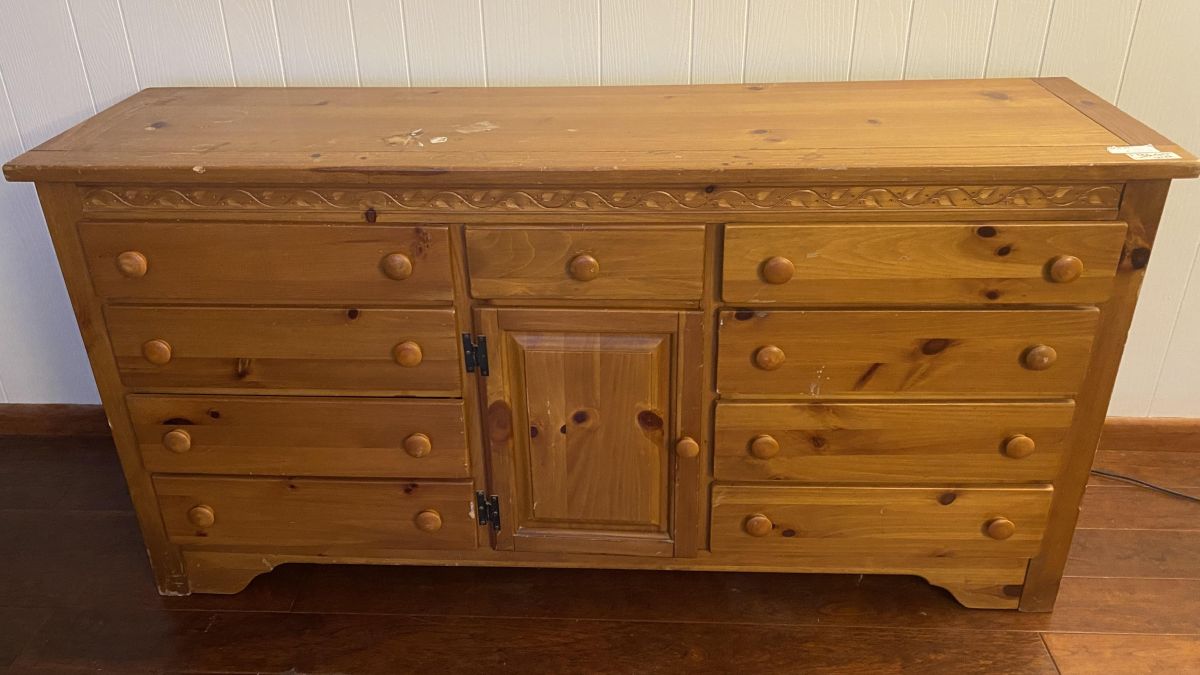
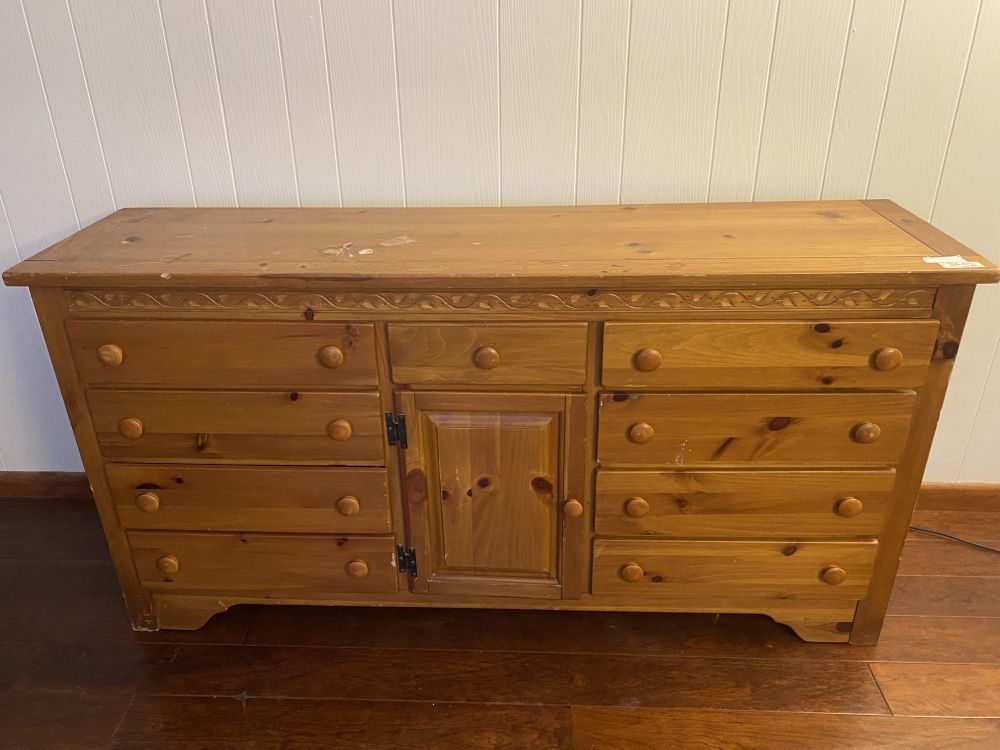
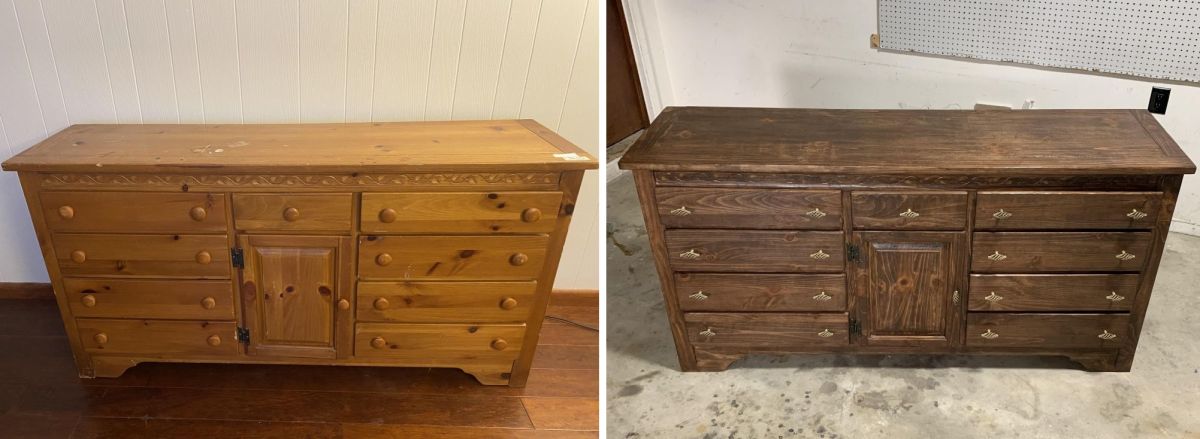
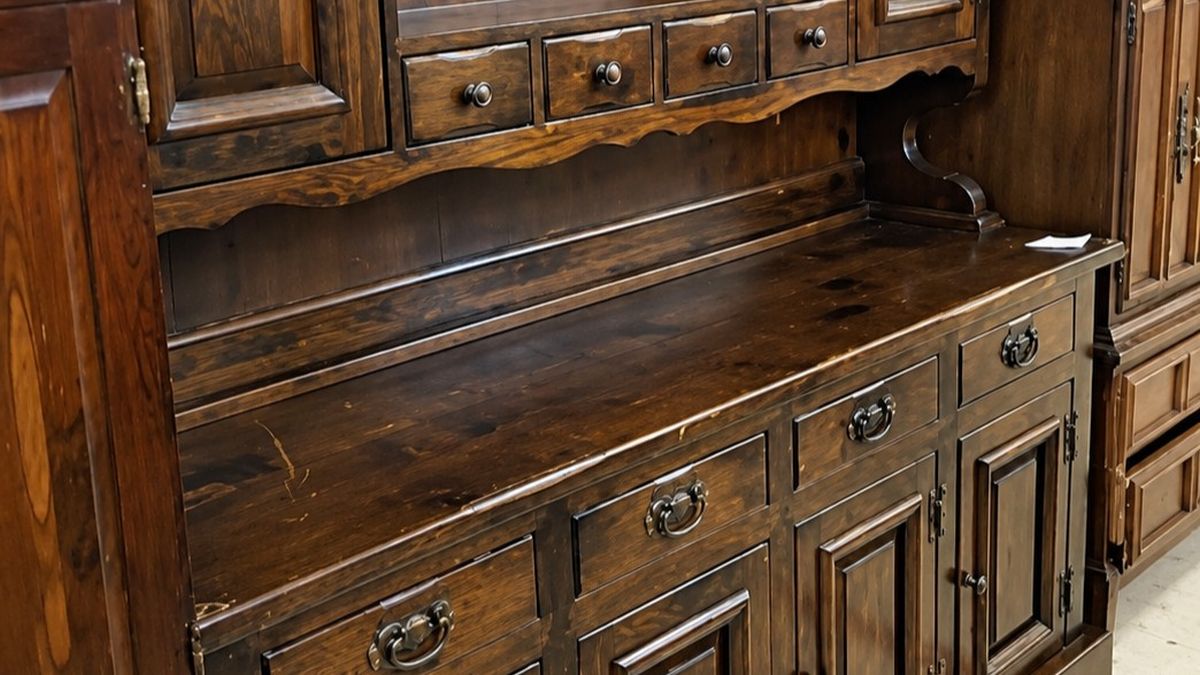
A worn look defined the old nine-drawer dresser, characterized by honey-brown pine, round wooden knobs, and a scratched top. The piece featured dark knots across the drawer fronts, a central cabinet door, and carved scrollwork situated beneath its top.
Reddit user u/Barnesanator and his wife acquired the dresser and several smaller items from local Habitat for Humanity stores for $150. They decided to apply a dark walnut stain rather than paint the wood, aiming to preserve the carved details and natural grain.
After sanding off the old finish, the couple applied the walnut stain and added two coats of polyurethane, using 400-grit sandpaper between coats. They relied on tools, stain, and replacement hardware sourced from thrift-store finds and previous projects.
Honey-Brown Pine and Wooden Knobs Covered the Original Dresser
The dresser design includes four drawers on each side and a smaller drawer above the central cabinet. Black metal hinges contrast with the cabinet door, while round wooden knobs match the golden-brown finish.
Shaped cutouts line the bottom rail, and carved scrollwork runs beneath the projecting top. The top surface shows scratches, chipped edges, and patches of worn finish, while knots and grain patterns appear across the fronts.
Worn Finish Covered a $20 Wooden Side Table
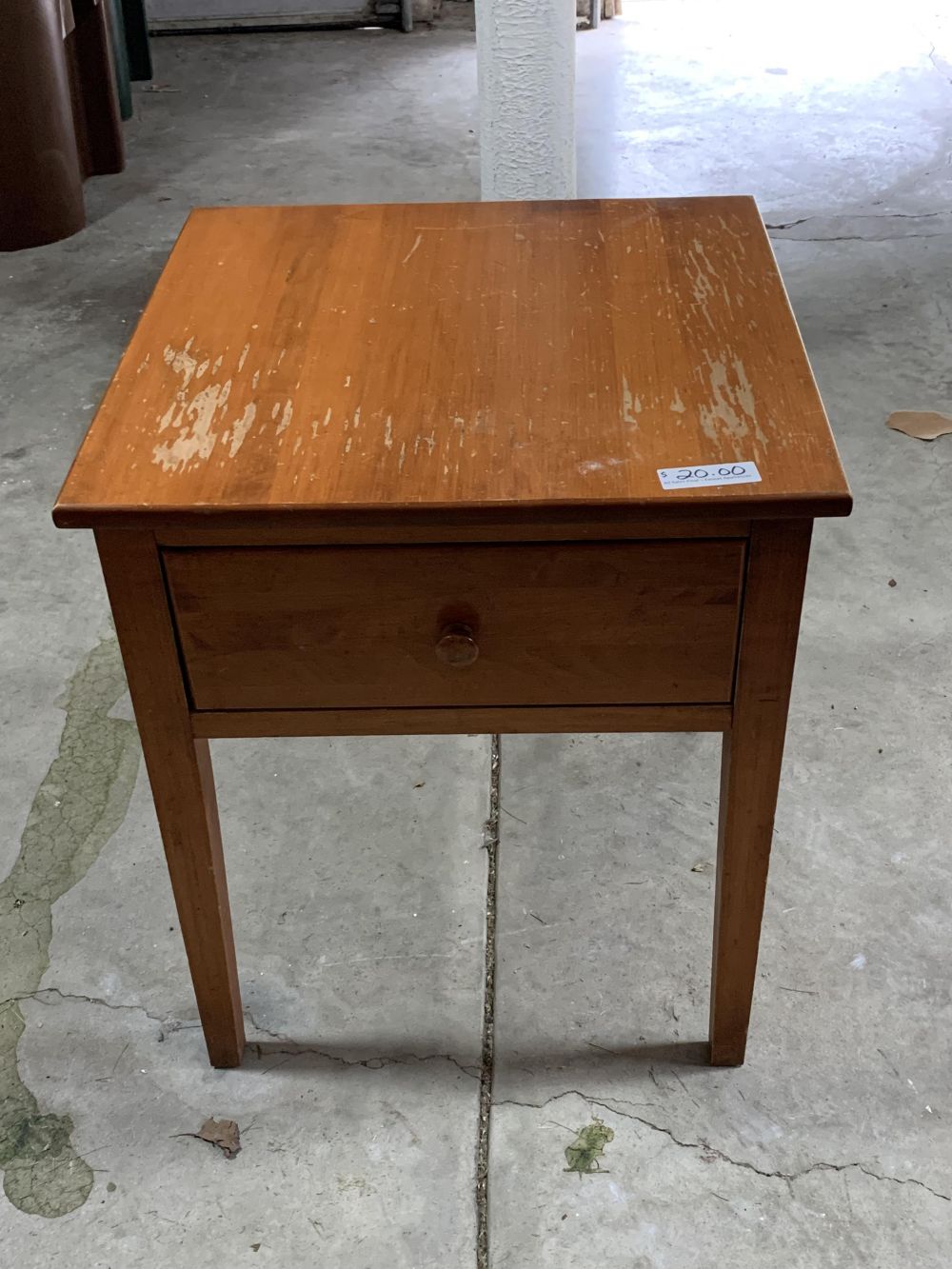
The couple also bought a one-drawer side table that bore a $20 price sticker on its top. Scratches had worn through the brown finish, leaving pale streaks across the surface.
Its plain design lacked decorative carvings or additional storage compartments. The table featured straight square legs, a rectangular top with rounded edges, and a single wooden knob.
Sanding Exposed the Bare Wood Beneath the Old Finish
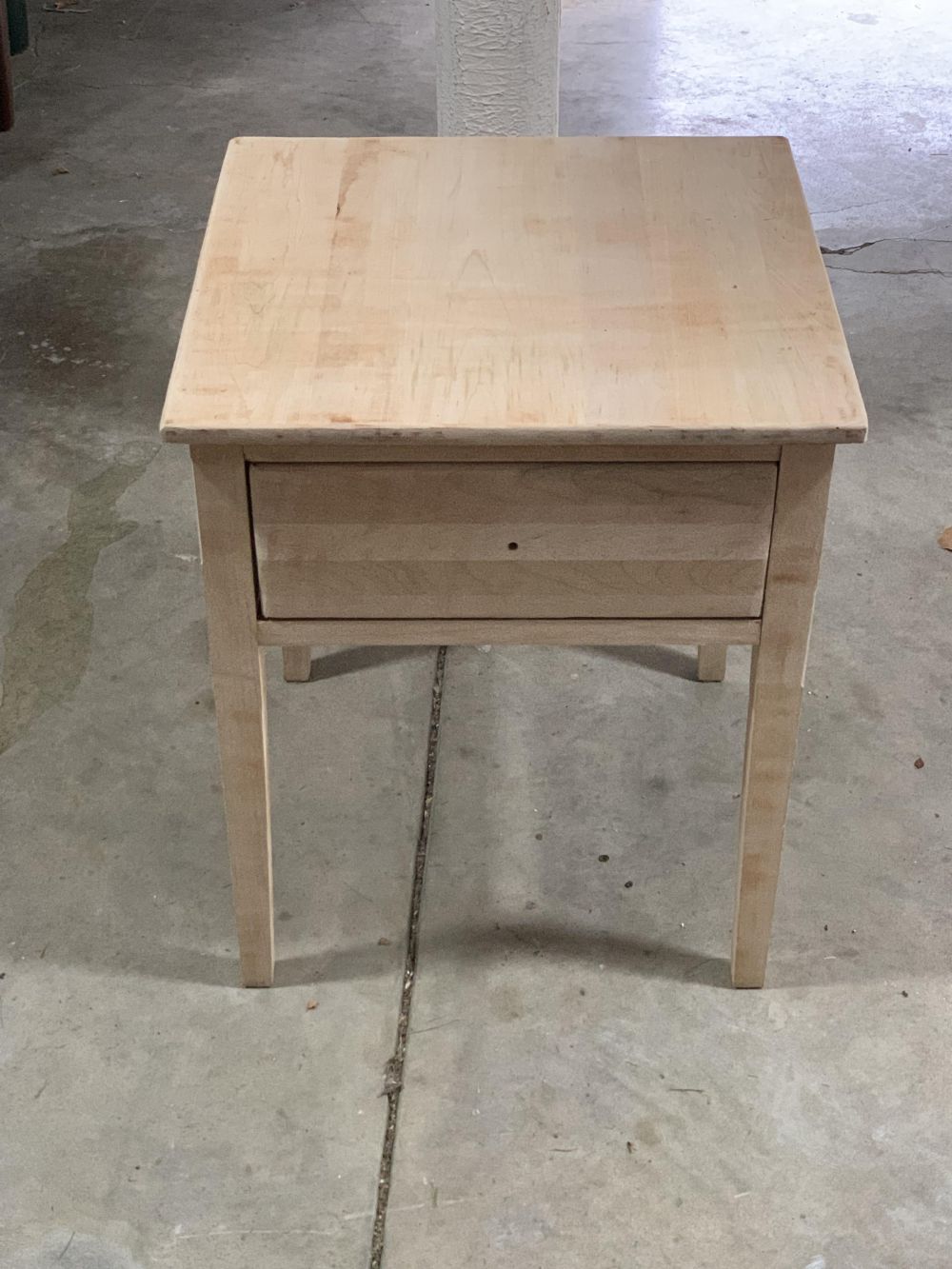
Sanding revealed a pale wood surface on the side table, extending from the top down to the legs. With the former brown coating gone, fine grain lines and a few darker marks within the wood became visible.
The drawer front was stripped, leaving a small hole where the wooden knob had been removed. Despite this, the frame and top retained their original shapes.
Dresser Drawers and Cabinet Door Came Out for Sanding
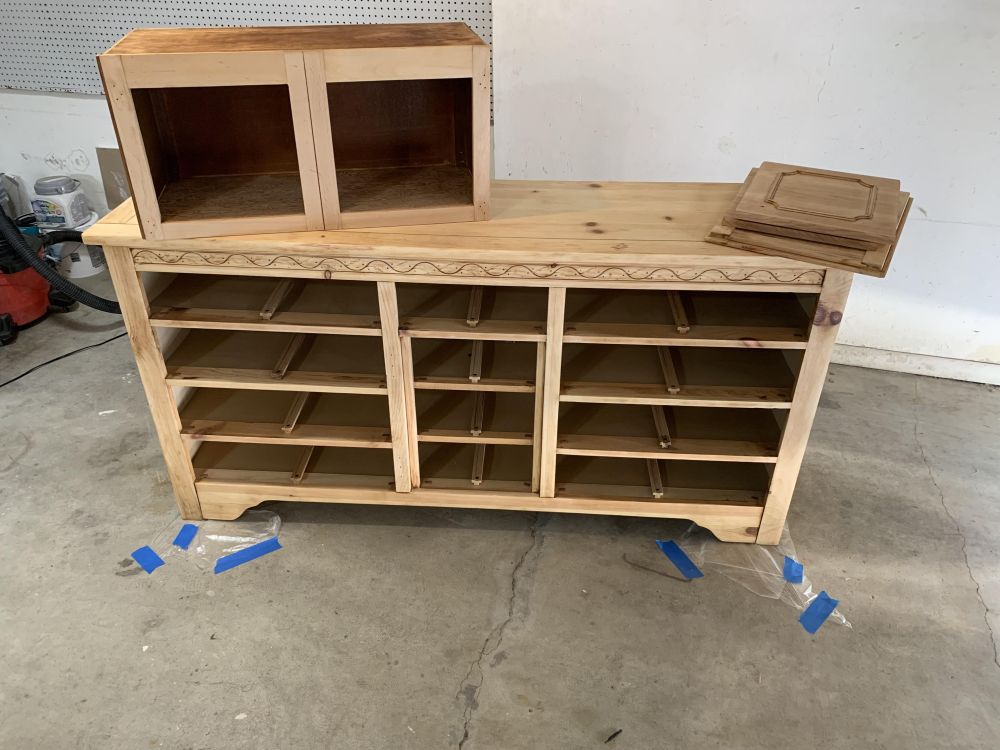
Nine empty drawer openings expose the dresser’s internal dividers and wooden runners. The central cabinet door, along with the knobs and other hardware, has been removed.
The sanded dresser now has a pale wood finish, though darker knots remain across the top and frame. The shaped lower rail and carved scrollwork above the drawers survived the stripping process.
Two small cabinets sit on the dresser top, while removed doors rest at the right end.
The Furniture Pieces Were Prepared in the Garage
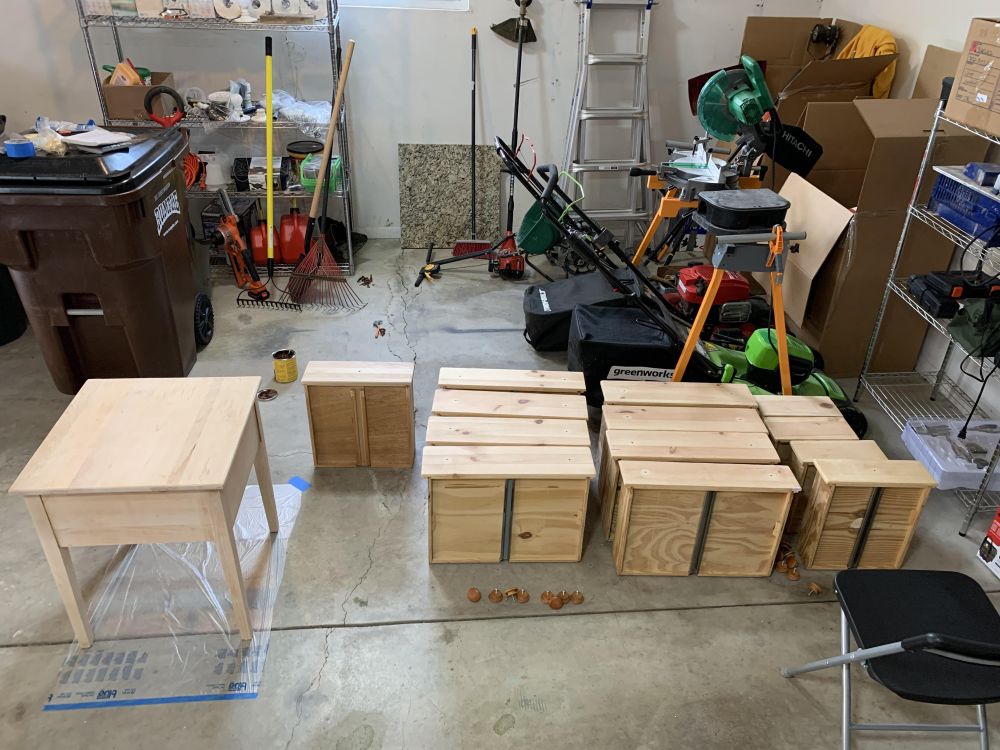
A photograph of the garage shows the sanded side table, detached drawers, cabinet doors, and smaller storage units arranged across the concrete floor.
Some drawer fronts feature flat recessed panels, while others display pronounced wood grain and knots. Removed wooden knobs sit in front of the pieces.
The photograph captures the furniture before stain was applied, with the old coatings stripped from the exposed surfaces.
Walnut Stain Changed the Two-Door Cabinet
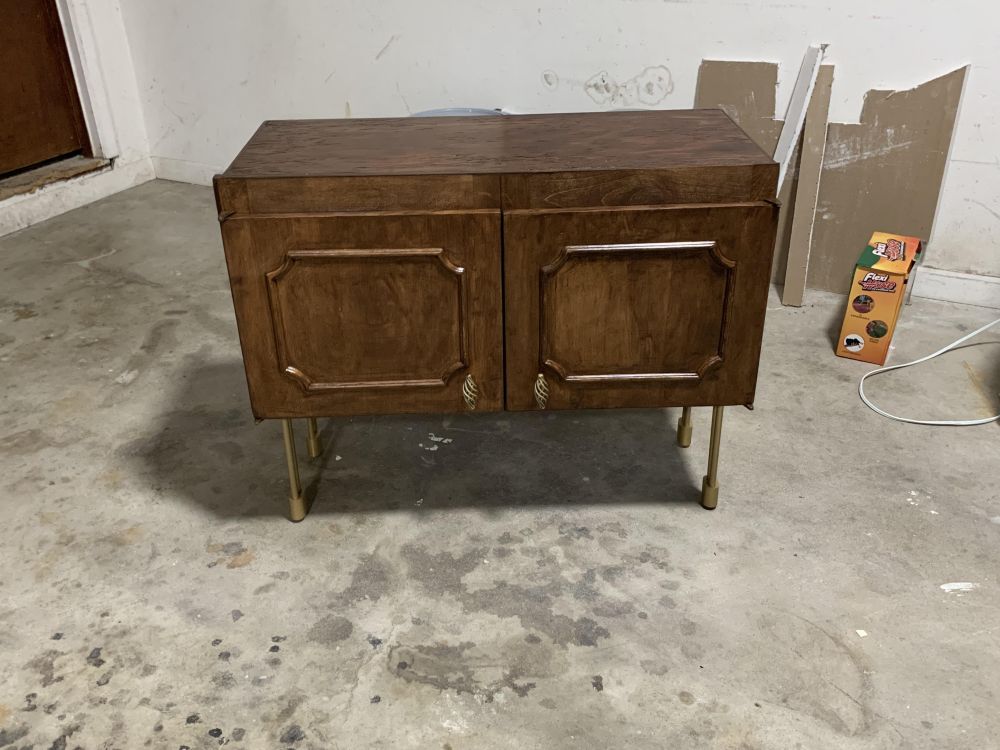
The refinished cabinet features two raised-panel doors and a dark brown top. Walnut stain highlights the grain across the door panels, creating darker areas around the molded edges.
Four short metal legs support the cabinet, with gold-toned feet beneath the dark wood case. Brass-toned leaf-shaped handles replace the former hardware.
One-Drawer Side Table Received a Walnut Finish
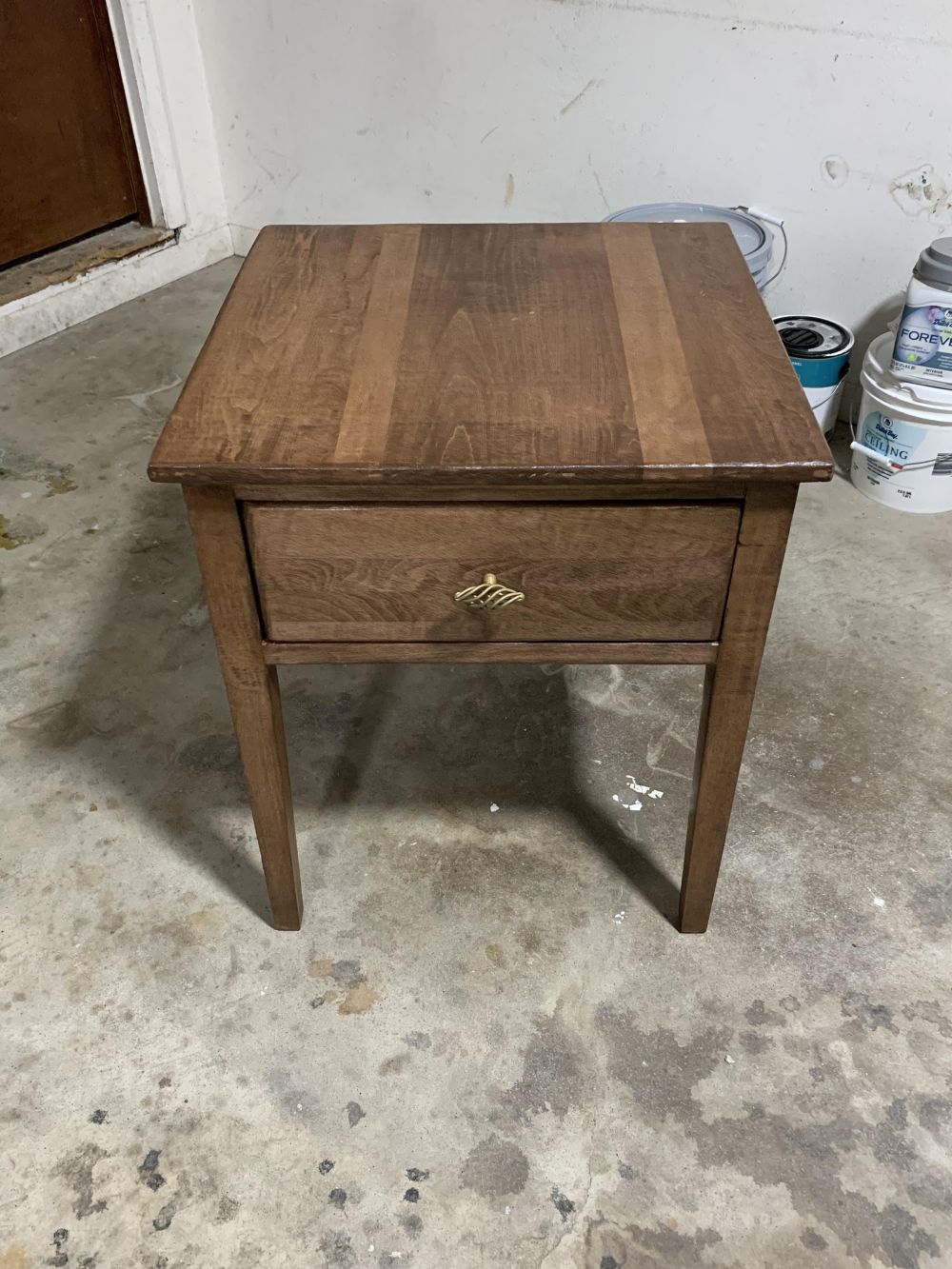
The finished side table has a walnut-brown top with contrasting grain patterns and two lighter strips running from front to back.
A brass-toned decorative drawer pull replaces the wooden knob. The drawer, legs, and surrounding frame share the stained finish, with the wood grain visible across the front.
Two coats of polyurethane protect the stained surfaces, with 400-grit sanding between coats.
Dark Walnut and Brass Hardware Replaced the Honey-Brown Finish
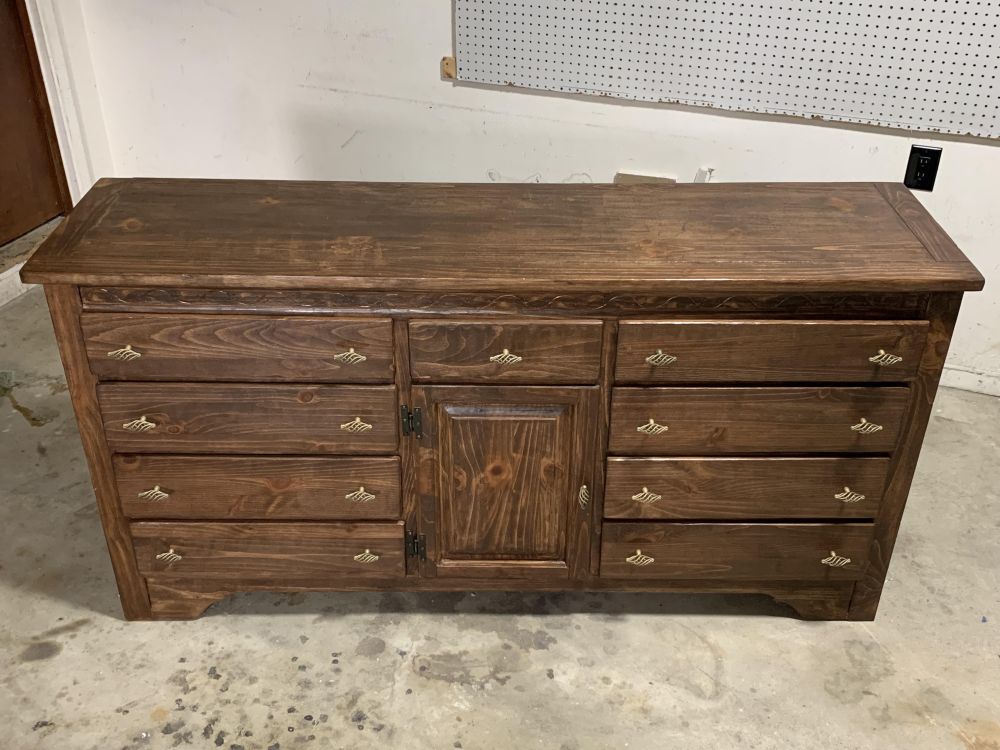
The completed dresser features dark walnut stain across its broad top, carved trim, drawer fronts, cabinet door, and shaped base.
Brass-toned decorative pulls replace the wooden knobs. Each of the eight side drawers has two pulls, while the smaller center drawer has two. A matching handle sits on the cabinet door.
The darker stain emphasizes the knots and flowing grain within the pine, including the patterns across the central door and upper drawers.
From Honey-Brown Pine to Dark Walnut for a $150 Furniture Haul
Before-and-after photographs show the dresser’s color change from golden honey brown to deep walnut. The original carvings, drawer arrangement, central cabinet, and shaped base remain intact, with brass-toned hardware replacing the round wooden knobs.
The couple paid $150 for the furniture collection, not just the dresser. Stain, tools, and hardware came from supplies they had on hand, so the purchase price does not represent the full replacement cost of the refinishing materials.
Would you have stained this old pine dresser dark walnut or kept its honey-brown wood finish?
Image credits go to u/Barnesanator
The post They Bought Old Wood Furniture for $150 and Stained It Dark Walnut Instead of Painting It appeared first on Homedit.


































Ah, the classic “dark walnut stain covers all sins” approach. Because nothing says “rustic chic” quite like masking a scratched pine body with another layer of brown goo. Truly groundbreaking stuff.
Haha, you’ve got a sharp eye! Dark Walnut is indeed a fantastic fixer-upper tool for hiding those imperfections. It really does create a cohesive, rustic look while giving old pieces a fresh, modern vibe. Thanks for the playful comment!