
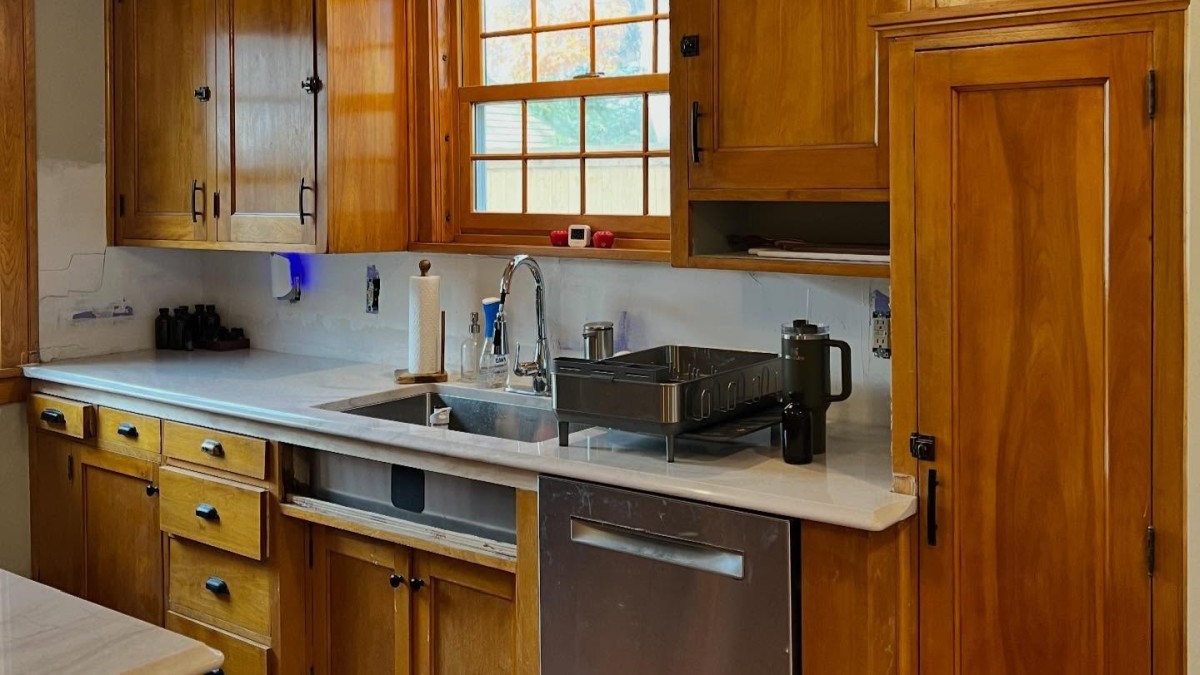
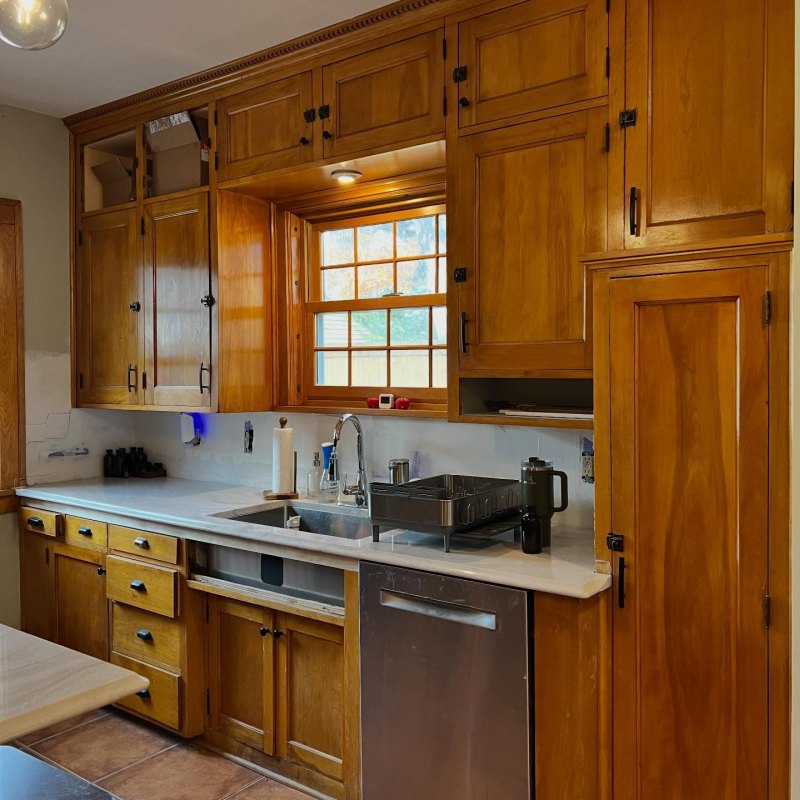
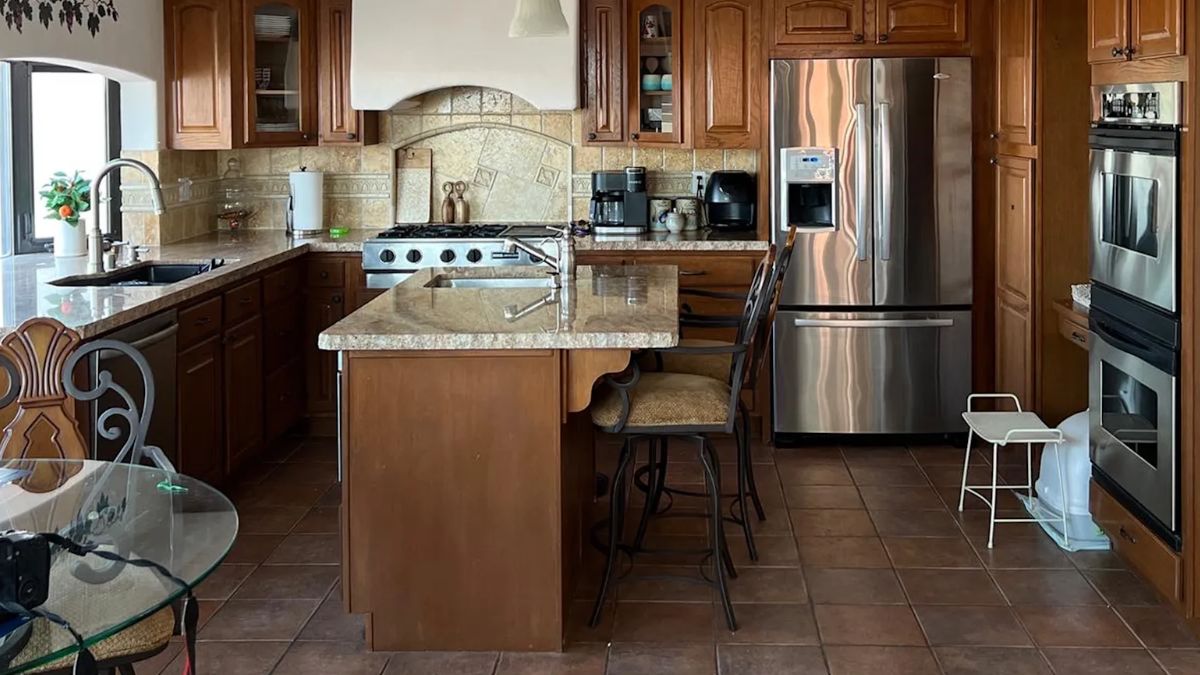
Floor-to-ceiling orange maple cabinetry wrapped around the kitchen walls, enclosing the sink, dishwasher, and windows. A glossy honey finish coated the wood, while black handles and hinges provided a sharp visual break against the doors. White countertops offered some relief from the dominant orange tones, yet the sheer volume of wood kept the space feeling warm and heavily wooded.
Minneapolis-based furniture painter @jasonpaintsmpls opted to refinish the existing units rather than remove them, which would have sacrificed storage built around windows and appliances. The upper cabinets were treated with a custom Rubio Monocoat blend, while the lower units were painted using Benjamin Moore Scuff-X. This strategy resulted in a two-tone design, pairing dark-grained wood above with white cabinetry below, linked by new brass fixtures.
Orange Maple Cabinets Covered the Original Kitchen
Raised-panel doors dominated the upper wall space surrounding the wooden-framed window, with smaller cabinets lining the ceiling line. A tall storage unit stood adjacent to the dishwasher, and the area under the sink was filled with drawers and lower cabinet doors.
Decorative crown molding traced the tops of the cabinets, while black metal hardware stood out against the honey finish. The original layout also included a stainless-steel dishwasher, white countertops, and a brown tile floor.
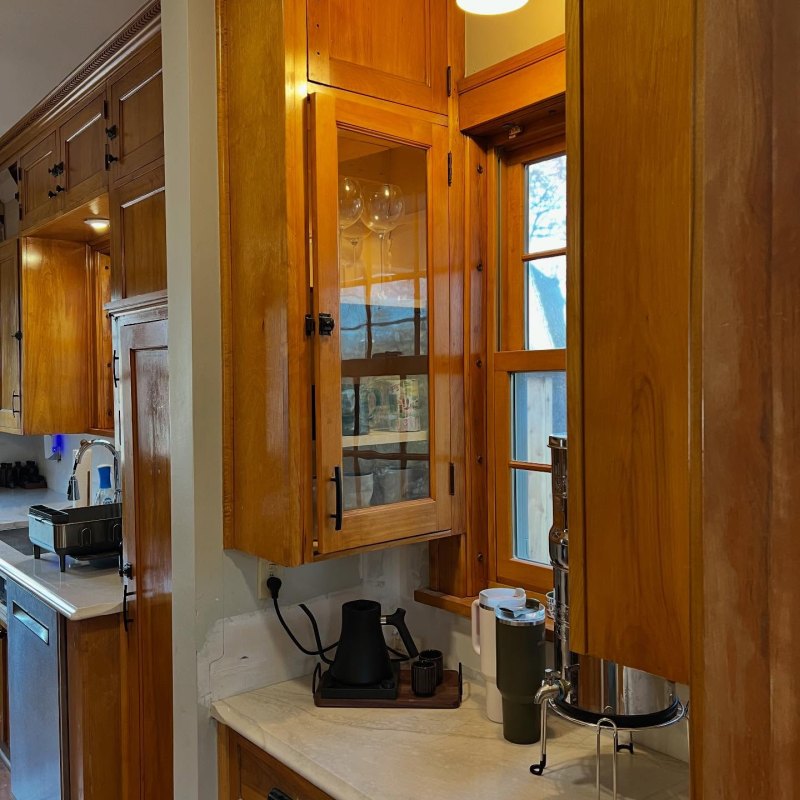
The Coffee Station Had Matching Orange Wood Cabinets
A narrow coffee station was nestled between a tall cabinet and a window in a separate kitchen zone. Glass-fronted upper doors showcased drinking glasses, and the counter space held a kettle alongside various coffee-making tools.
This area connected to the main kitchen through the consistent use of maple finish on both the cabinet frames and the window trim.
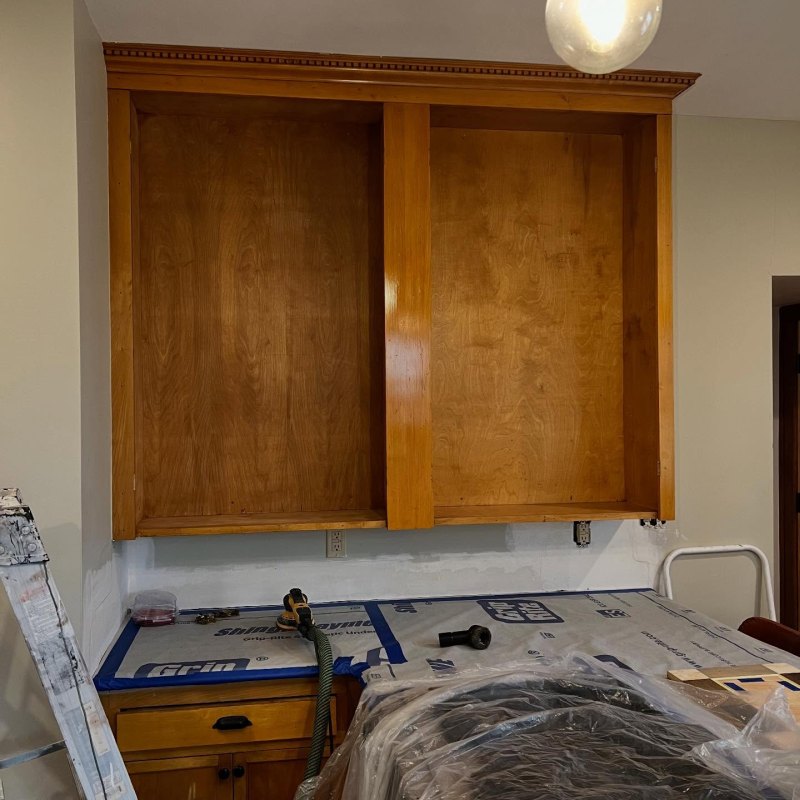
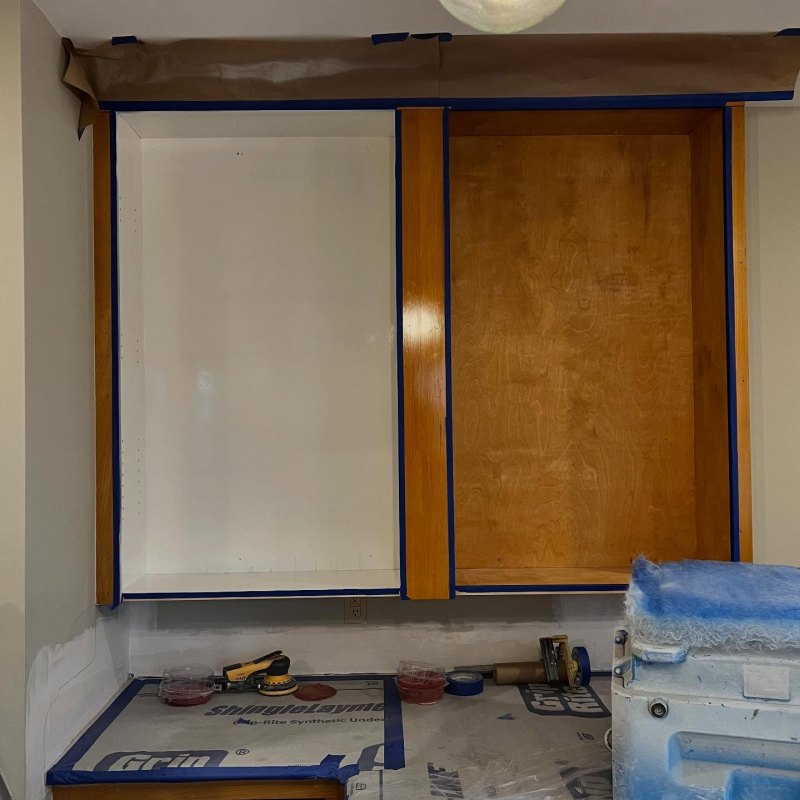
The Upper Cabinet Doors Were Removed for Refinishing
Taking off the doors revealed the wooden interiors and back panels of the upper frames. This step allowed workers to access and treat surfaces that had previously been hidden from view.
As work advanced, sanding tools and equipment were placed nearby, while the countertop below was shielded with protective material.
White Paint Covered the Cabinet Interiors
Photos of the prep work show one compartment freshly coated in white, while the next section still showed its original wood. Paper covered the crown molding above, and blue painter’s tape shielded the surrounding frame.
Coating the interiors in white created a deliberate contrast with the wood finish intended for the outer frames. These white surfaces would be visible whenever the upper doors were opened.
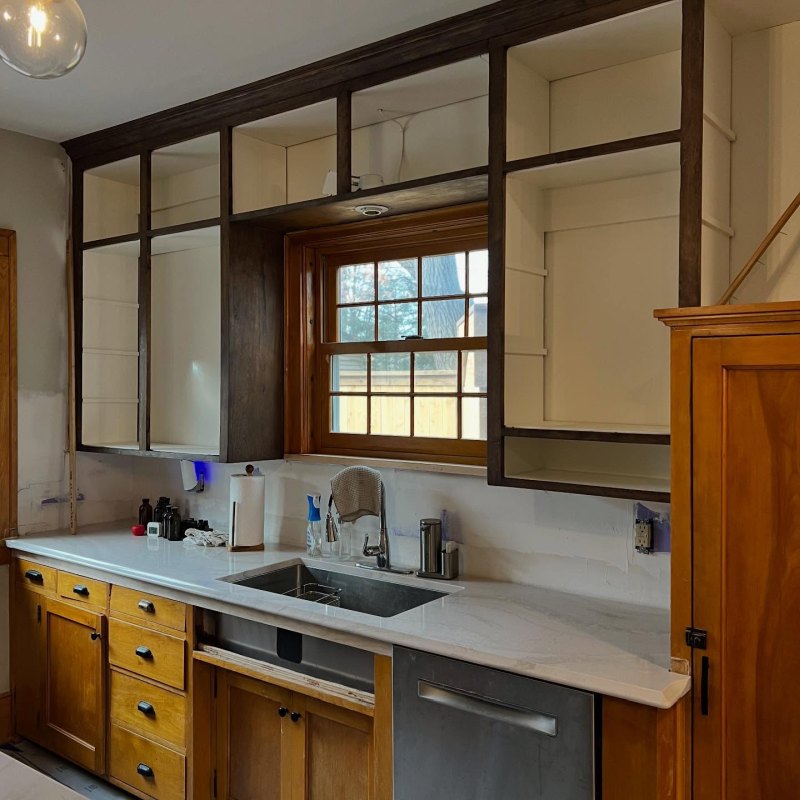
Rubio Monocoat Changed the Upper Cabinets to Dark Brown
A custom Rubio Monocoat mixture transformed the honey-orange maple into a dark brown hue, preserving the natural grain rather than obscuring it.
In the photo, the stained frame stretches across the sink window, revealing white interiors and shelves within. The original wooden casing of the window remained intact between the two sections.
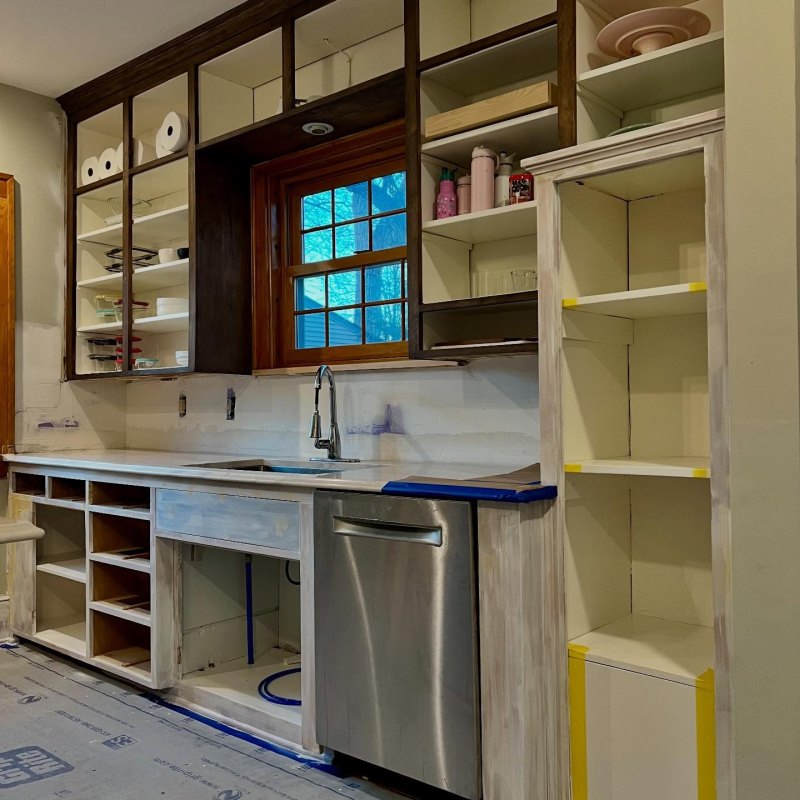
The Lower Cabinets Were Prepared for White Paint
After finishing the upper sections, attention shifted to the base cabinets and the tall unit next to the dishwasher.
Exposing the storage compartments required removing drawer fronts and doors. Yellow tape protected the countertop and shelf edges, while white prep coats covered portions of the lower cabinetry.
Benjamin Moore Scuff-X was applied to the lower cabinets and trim, creating a clear visual separation between the white base and the dark-stained wood above.
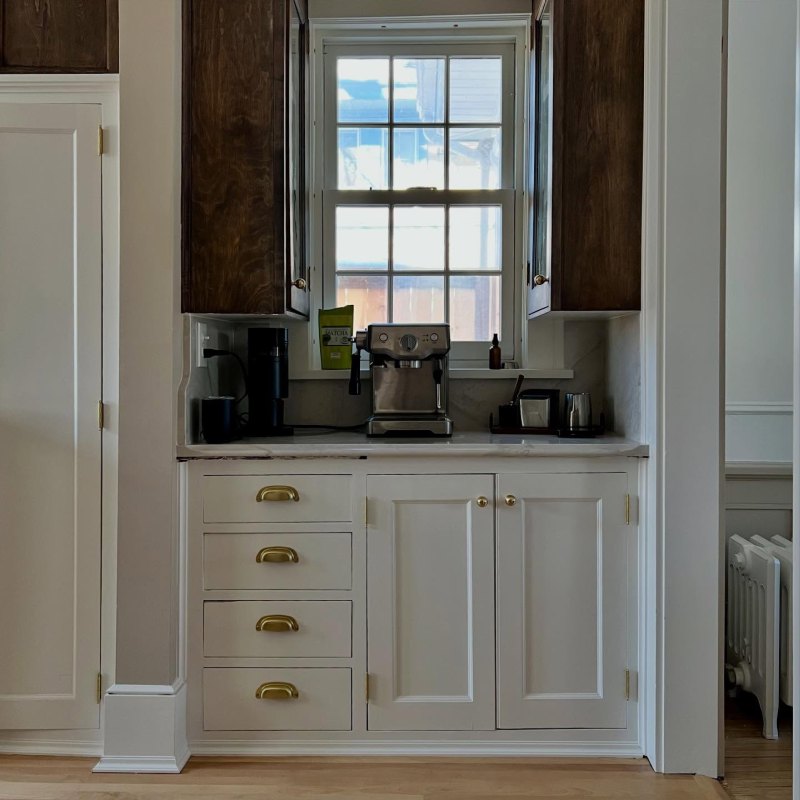
The Coffee Station Received White Cabinets and Brass Hardware
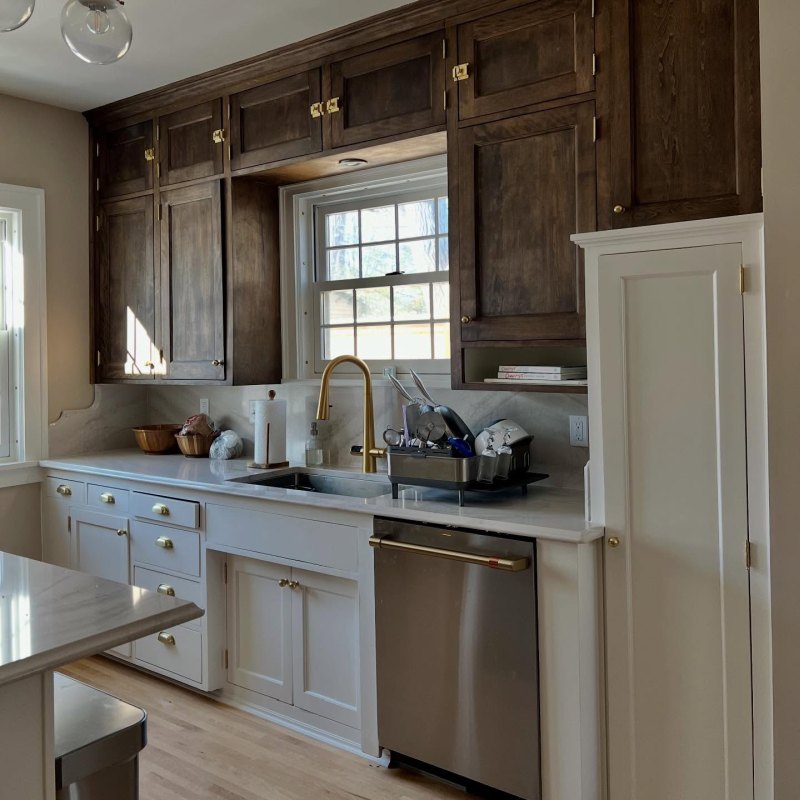
The completed coffee station features white lower drawers and doors, accented with brass cup pulls and round knobs. Dark-stained upper cabinets surround the window, while the white countertop supports an espresso machine and other equipment.
The original layout persists, featuring four drawers on one side and two cabinet doors under the counter. White trim frames the opening, linking the station to the adjacent walls.
Dark Wood Uppers and White Lowers Complete the Kitchen
The sink wall now features dark brown upper cabinets, with maple grain visible across the raised-panel doors. Brass knobs and hinges have replaced the original black hardware, and a brass faucet above the sink echoes this metallic finish.
White lower cabinets stand in contrast to the stained wood, while the painted tall cabinet next to the dishwasher acts as a buffer between the dark upper section and the neighboring wall.
Although the cabinet layout around the appliances and window remains unchanged, the dual finishes alter the perception of the original woodwork. Instead of painting every surface, the renovation highlights the maple grain on the upper walls.
A similar paint-and-exposed-wood combination was used in another project, where two vintage maple dressers were painted navy blue, leaving their wooden drawers with a stained finish.
Would you have stained the upper maple cabinets dark brown or painted the entire kitchen white?
Images and project details courtesy of @jasonpaintsmpls.
The post Orange Maple Kitchen Cabinets Get a Two-Tone Makeover With Dark-Stained Uppers and White Lowers appeared first on Homedit.



Another “two-tone” trend, really? Painting cabinets just to call it a makeover feels like a lot of effort for a coat of paint. At least the brass saves it from being totally generic.
Two-tone cabinets do more than just add paint; they create visual depth and balance, making spaces feel larger and more dynamic. While brass accents certainly elevate the style, the real magic lies in how contrasting tones define the kitchen’s architecture. It’s a strategic design choice that truly transforms the room’s character.