
During the summer heat, a front lawn in full sun often turns brown for weeks, creating a maintenance burden. The user u/RatherNerdy on Reddit chose to stop fighting this cycle at his home in Southern Maine.
He tore out the grass and replaced the majority of the yard with gravel walkways, curved planting beds, stone, and drought-resistant vegetation. The transformation took over a season to achieve its current state. The sod was removed by hand, soil was dug out to create a base for the gravel, three planting islands were established, and free rocks were used to form a broken-wall border.
The planting design blends Mediterranean garden aesthetics with native Maine species, selecting flora capable of thriving in the exposed location.
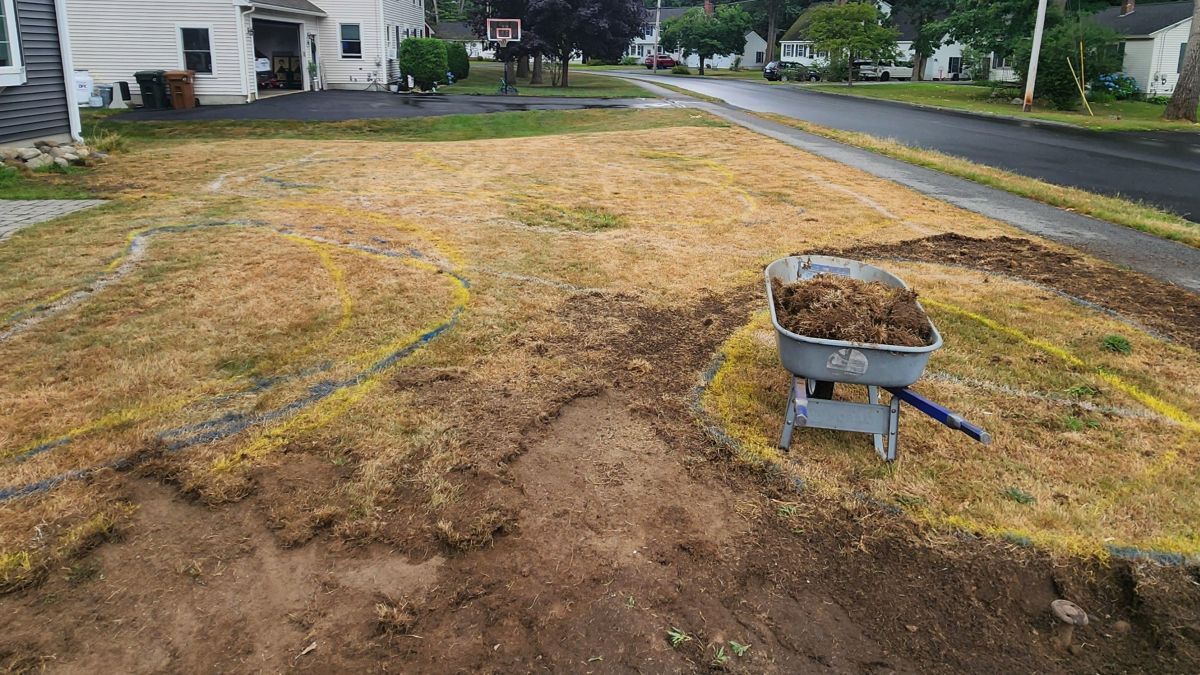
Colored Lines Mapped the New Yard Before Digging Started
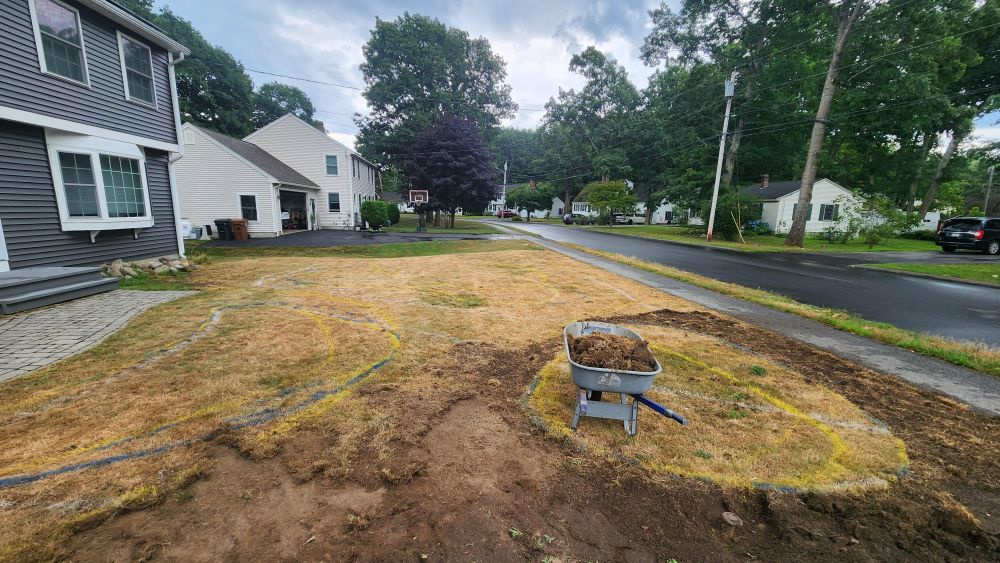
The original front yard consisted almost entirely of grass situated between the house, driveway, and sidewalk. Because full sun had turned much of the turf brown, the homeowner reconsidered the necessity of maintaining so much grass.
Before the sod was removed, several painted lines crossed the grass. Instead of creating rectangular beds along the house, these markings defined broad organic shapes with walking space between them. Three distinct garden islands would take up most of the former lawn area.
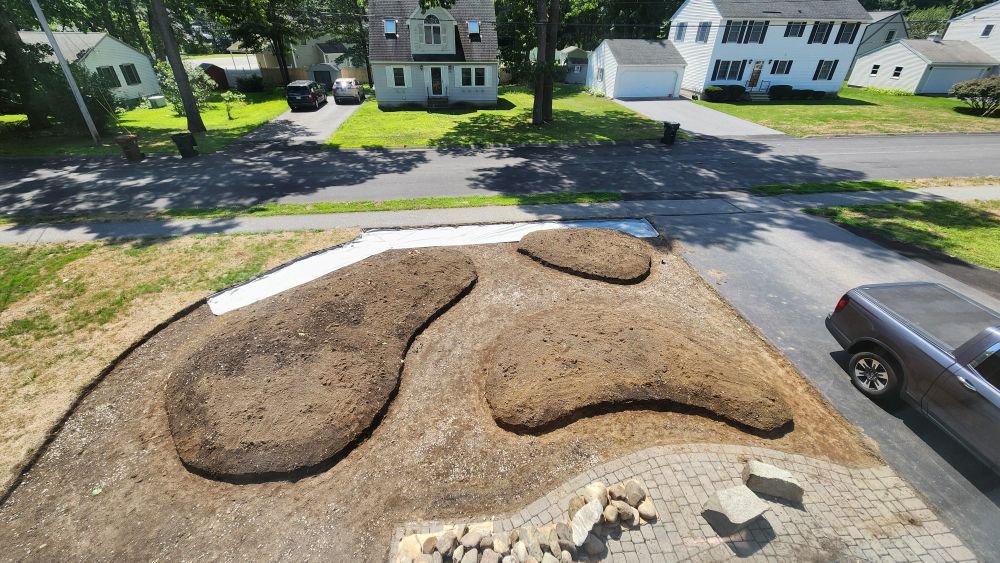
Removing the Lawn Exposed the Scale of the Project
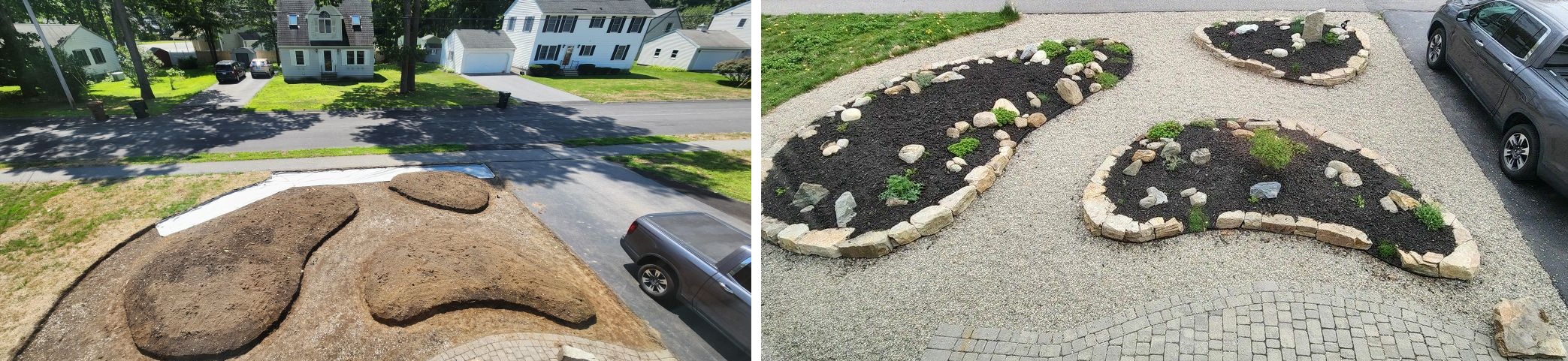
Once the sod and underlying soil were cleared, the painted plan materialized into three raised earth islands surrounded by excavated paths. The homeowner noted that removing the sod was slow work, with approximately half of the required area taking a full day to complete.
Related: Their Front Lawn Wasn’t Working, So They Ordered a "Garden in a Box"
The paths were excavated to accommodate the stone base instead of simply spreading decorative gravel over the existing lawn. This process established a defined grade between the beds, driveway, sidewalk, and the existing paver area near the house.
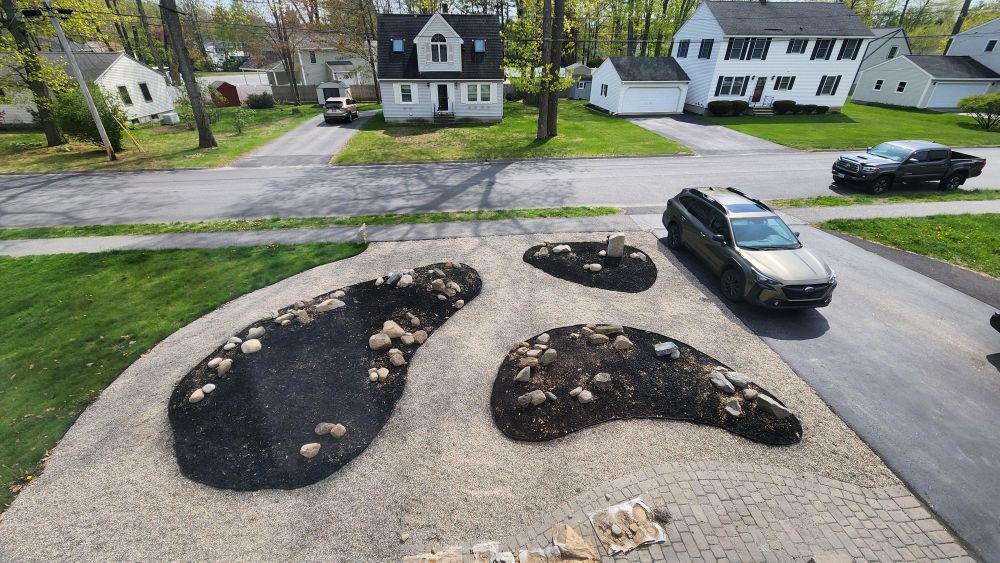
Gravel Replaced Most of the Former Grass
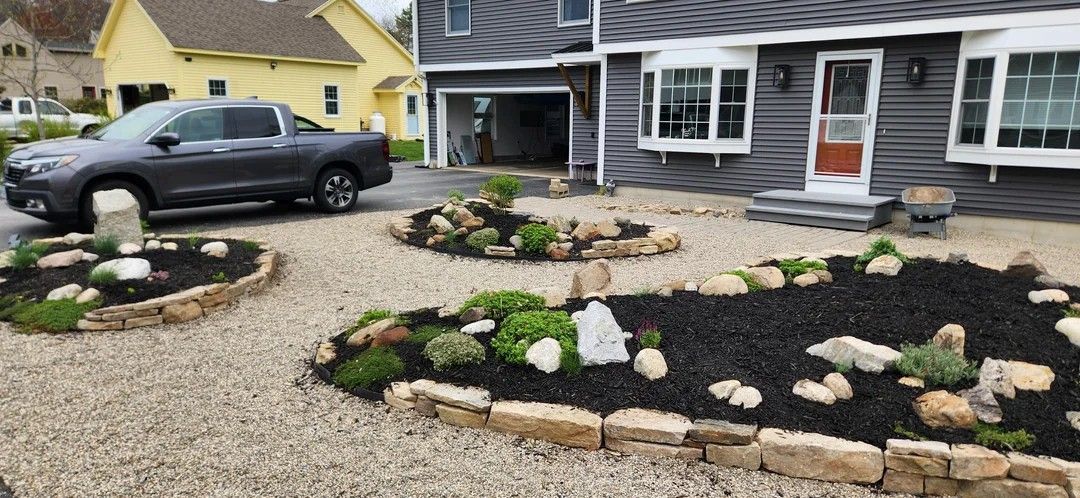
With excavation finished, pale gravel covered the space between the three beds. Dark mulch marked each planting zone, creating a clear distinction between circulation areas and soil.
Rocks were positioned across the beds before most of the planting was installed. Some rocks formed clusters, while larger upright pieces served as focal points. The homeowner aimed for a mix of Maine native planting and Mediterranean garden design rather than a traditional foundation landscape.
Ground Covers Started Filling the Rock Garden
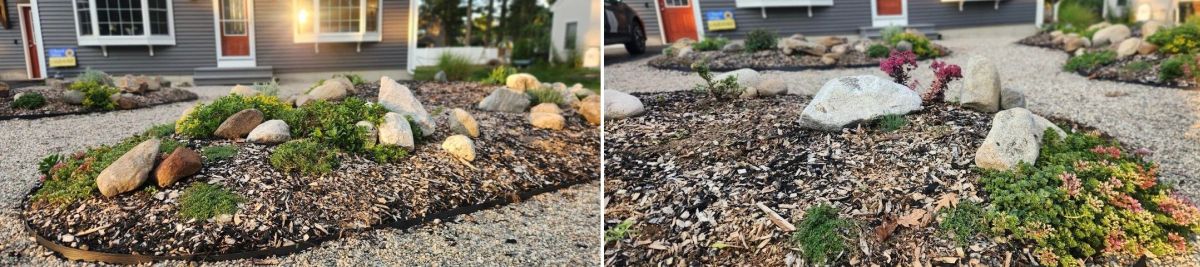
The first season left significant open mulch between young plants, but low-growing ground covers began spreading around the rocks. Selected plants for the project included sedum, stonecrop, creeping thyme, and phlox.
Rather than filling every gap with new nursery plants, the homeowner divided existing sedum and stonecrop and grew some thyme from seed. This method allows the planting to expand into open sections as each growing season adds more coverage.
Stone Borders Turned the Beds Into Garden Islands
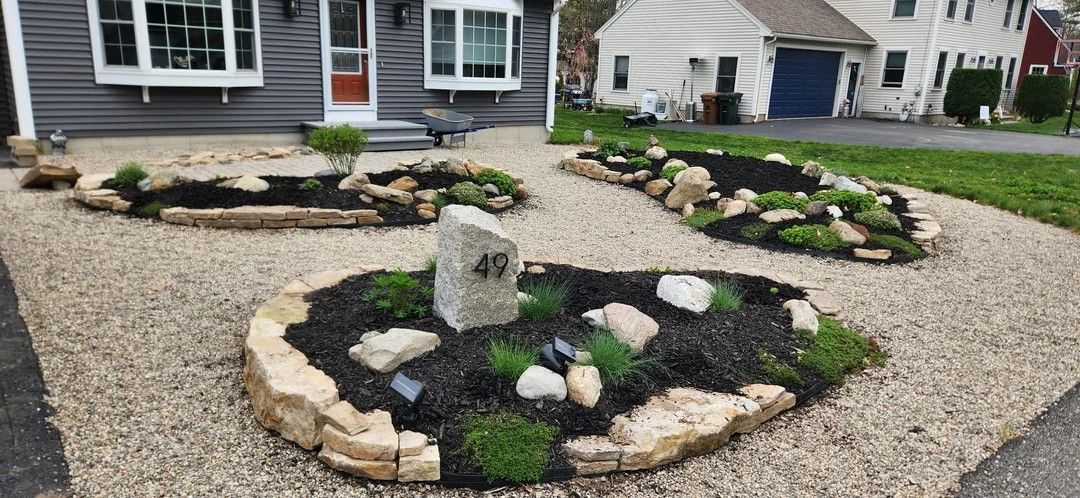
By the second season, loose rock arrangements had evolved into more defined edges. Flat stones were stacked around portions of each bed, while other sections remained open, creating what the homeowner calls a "broken wall" effect.
The stone was obtained for free after he posted on Facebook seeking rocks. Constructing the borders took about two weeks of trial and error, as different pieces were stacked and repositioned until they fit the curves.
Planting Became Denser Around the Larger Rocks
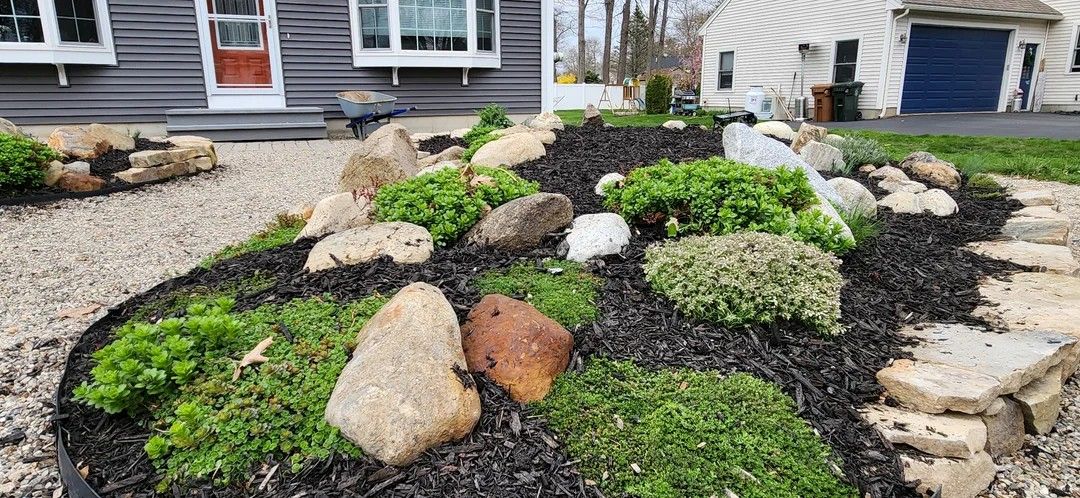
Closer views reveal how the planting strategy functions within the beds. Low mats of ground cover occupy the edges and gaps, while larger plants rise behind rounded boulders and upright stones.
Plants used across the garden include purple coneflower, lavender, butterfly weed, blue fescue, buddleia, lupine, thyme, phlox, sedum, and stonecrop. More height is planned for the centers, with spreading plants reserved for edges where they can extend toward the stone walls.
Broken Stone Walls Follow the Curved Beds
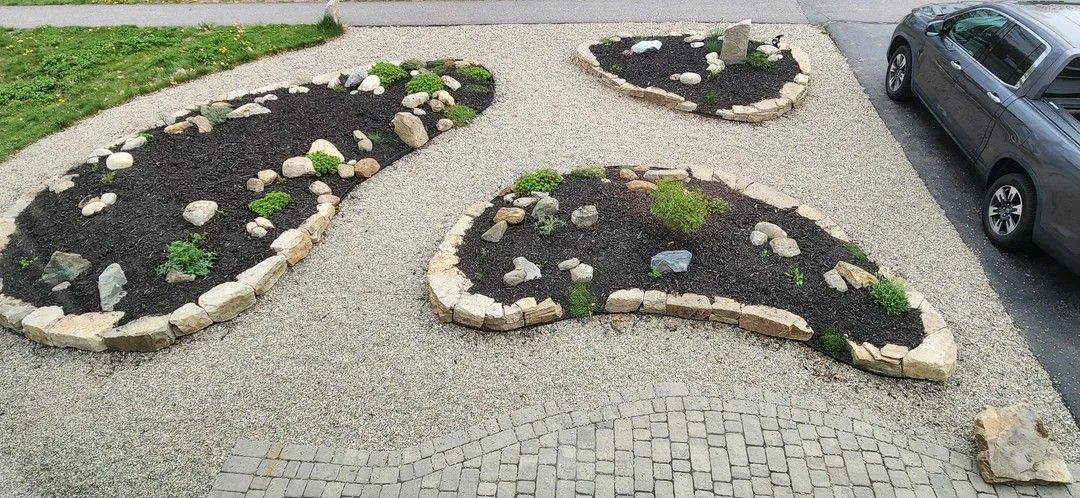
The borders do not form complete rings. Stacked sections stop and restart around each island, leaving parts of the mulch edge exposed and preventing the beds from appearing as three enclosed raised planters.
Different rock sizes reinforce this approach. Flat pieces create short wall sections, rounded stones sit inside the planting areas, and larger upright rocks interrupt the low profile of the ground covers.
Gravel Paths Connect the House, Driveway, and Sidewalk
From the house, the original lawn now appears as a network of paths moving around planted islands. There is no single walkway cutting from the front door to the street; gravel surrounds the beds and provides several routes across the yard.
The homeowner reported a substantial gravel build-up: about five inches of 3/4-inch gravel with another three inches of pea gravel. That depth explains why this project required far more excavation than a surface-level gravel conversion.
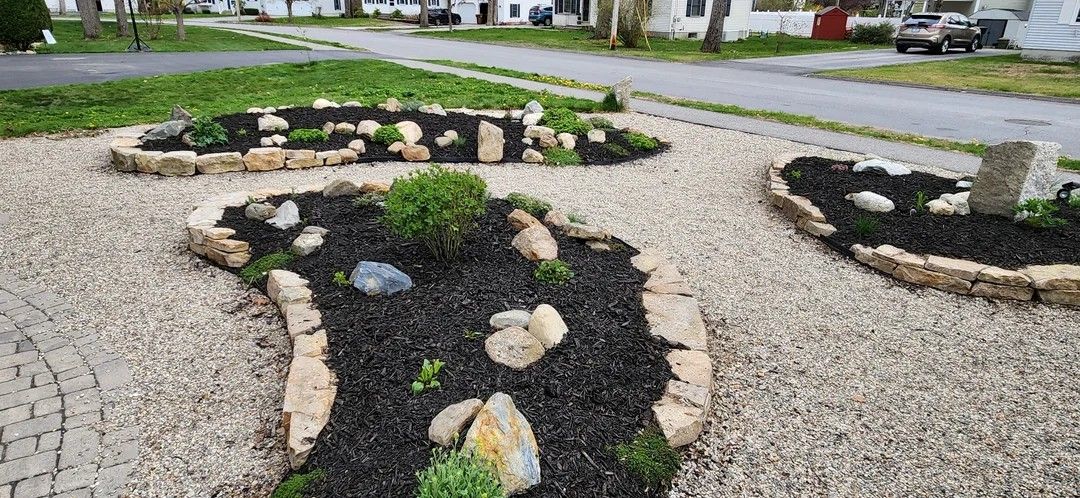
Three Curved Beds Replaced a Large Section of Lawn
Seen from above, the final layout follows the painted curves visible at the start. Three irregular planting islands occupy the former lawn while pale gravel fills the negative space between them.
The garden remains a work in progress as the ground covers spread and taller plants mature. A bench is planned, along with a better transition where gravel meets the remaining grass. Two seasons after the first sod came out, the front yard has shifted from a sun-baked lawn into a garden built around paths, stone, and plants selected for the conditions.
Front Lawn Disappeared Under Gravel Paths and Garden Beds
The comparison shows how closely the finished garden follows the shapes established during excavation. Three bare soil islands became planted beds, while the excavated ground around them now forms the gravel path system.
The change also shows how little conventional lawn was needed to organize the front yard. Gravel handles circulation between the driveway, sidewalk, entrance, and planting areas, while the curved beds use the former grass area for ground covers, shrubs, rocks, and future plant growth.
All image credits: Reddit user u/RatherNerdy.
The post He Removed His Front Lawn and Rebuilt It With Gravel Paths and Garden Beds appeared first on Homedit.













































Wow, just what we needed. Another pristine, gravel-covered wasteland where a little green might have grown. Because nothing says “neighborhood harmony” like a dusty, dusty, dusty desert right next to the sidewalk. Thanks for saving us all the water.
I appreciate the honesty! While gravel does reduce water usage, it doesn’t offer the same ecological benefits as greenery. The goal was low maintenance and drought tolerance, but I agree—adding more plants could have made it feel less like a desert. Thanks for sharing your perspective!