
A former bedroom contained two entrances, yet only one served a functional purpose. The redundant opening lay hidden behind a wooden secretary desk, creating a shadowed recess that would have benefited from a window to brighten the area. It was not necessary to remove the door or cut into the wall structure to improve the visual appeal of the space.
By combining a square IKEA LED panel with window blinds and a custom wooden frame, the resident created the illusion of natural daylight filtering through a window. Once the blinds are positioned, the light shines through the horizontal slats, hiding the panel and making the old doorway look like a window situated above the desk.
Reddit user u/SpelledareKarl documented this DIY solution in r/ikeahacks, detailing how an IKEA JETSTRÖM LED panel and VECKLARFLY blinds were installed over the unused door. The frame suspends from hooks placed over the door, which allows the original door to stay in place behind the new structure.
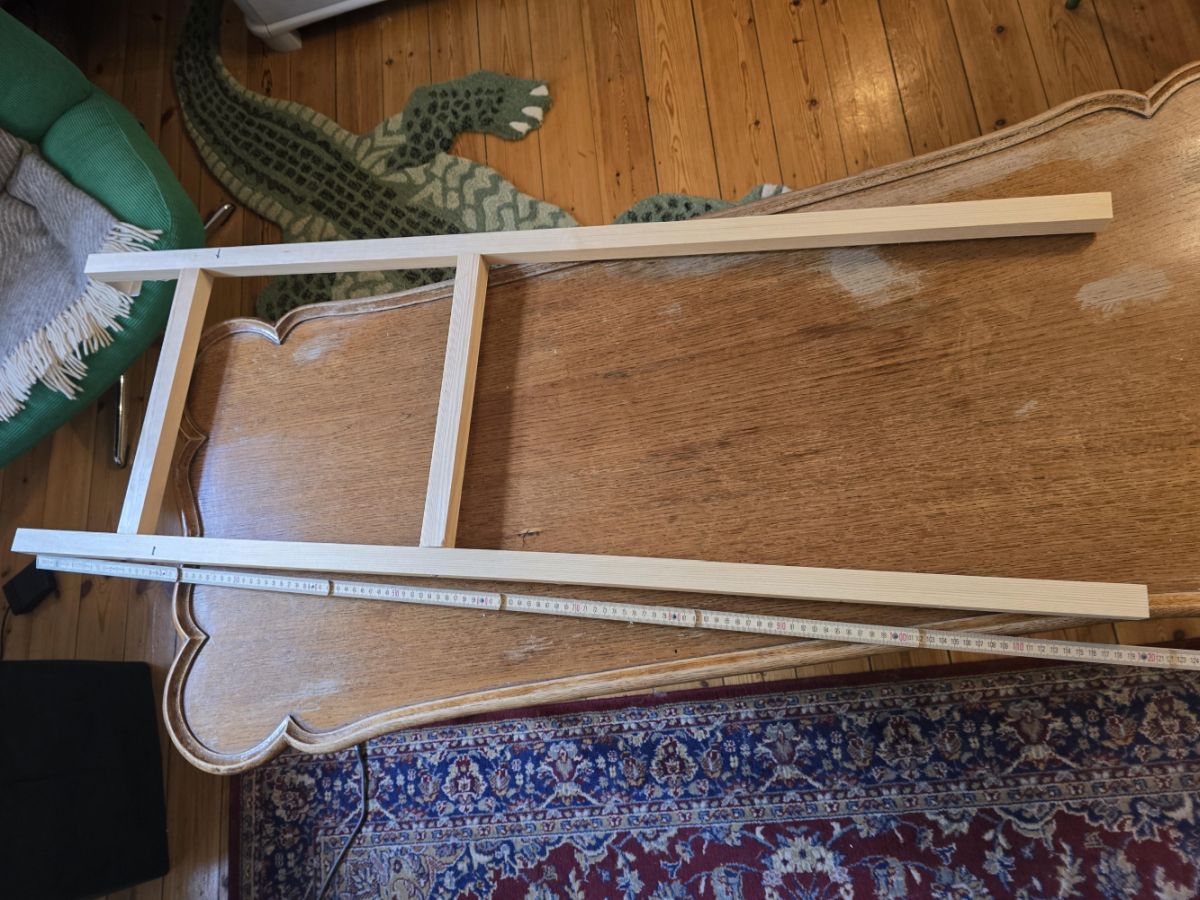
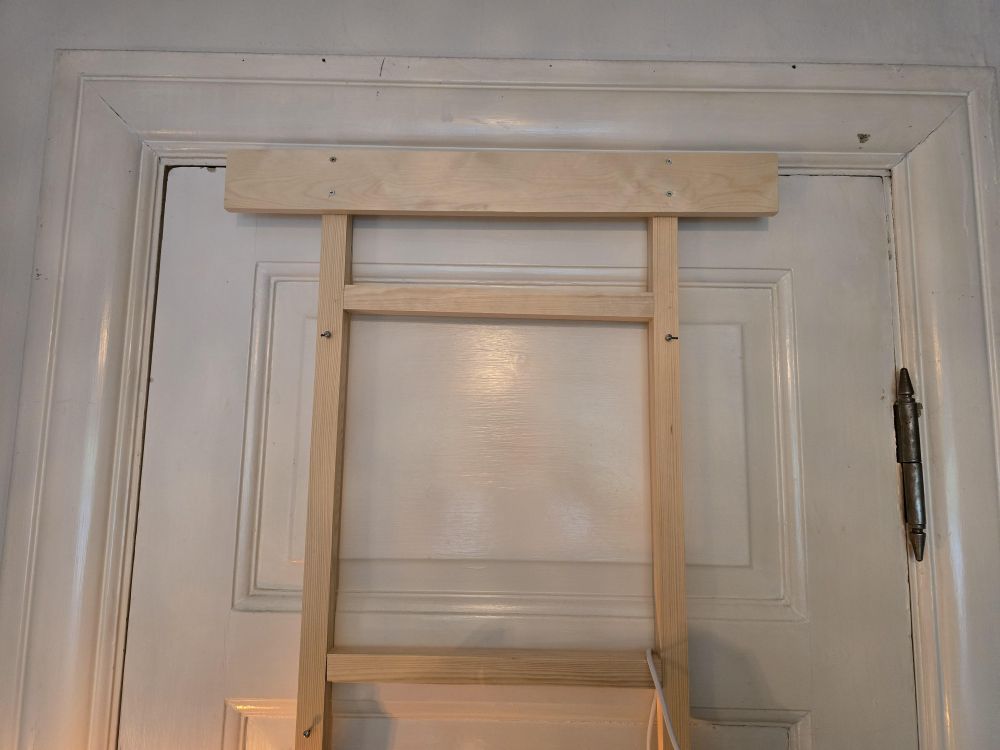
A Wooden Frame Serves as the Foundation for the Illusion
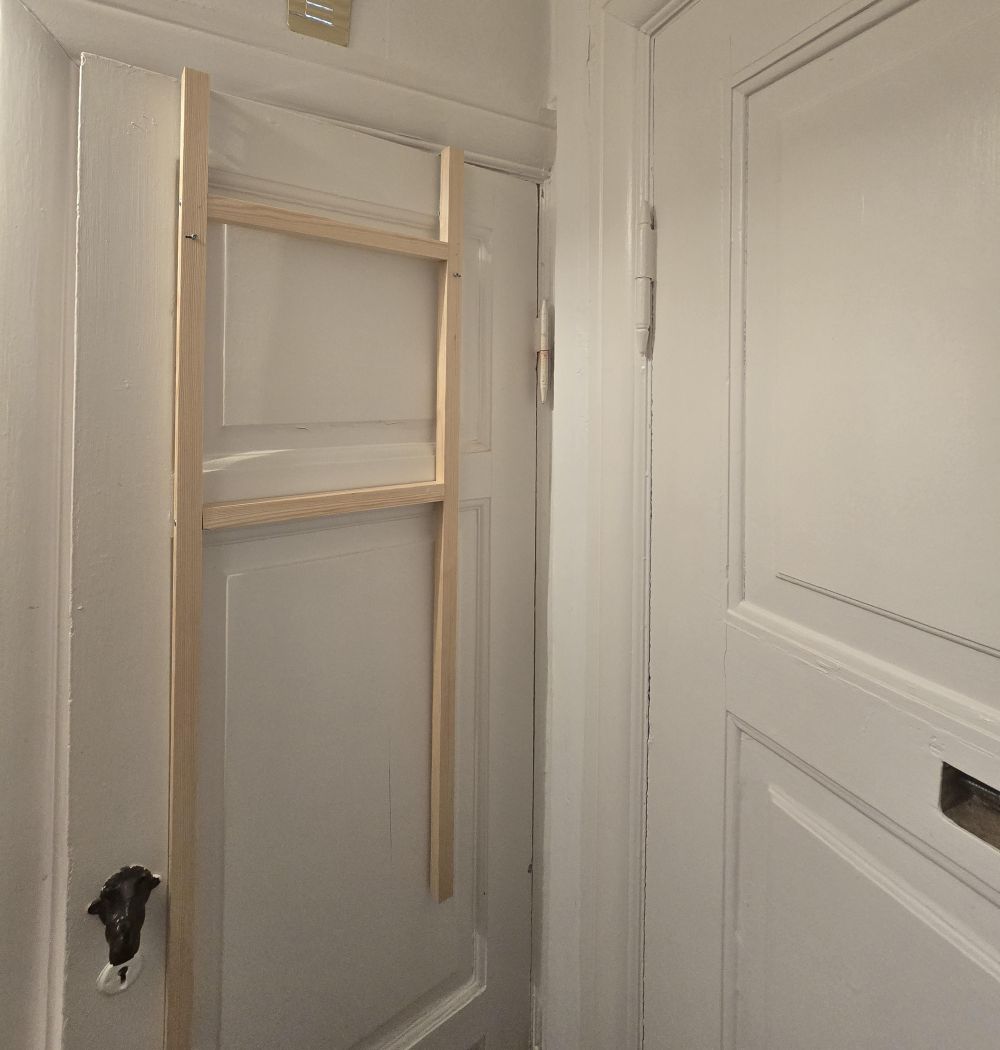
The resident constructed a rectangular frame using wooden boards, reinforcing it with crosspieces between the long sides. The size was selected to fit the mounting points of the 60 × 60 cm IKEA JETSTRÖM panel and the mechanism required for the blinds.
This frame offers a surface to attach both elements without needing to fasten them directly to the old door.
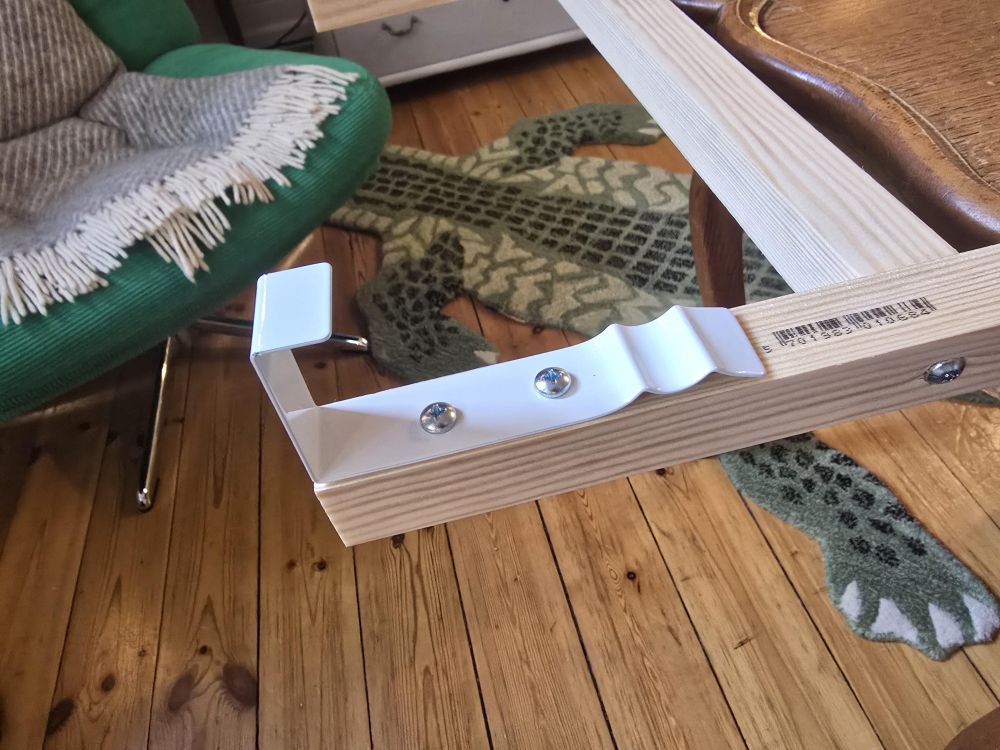
Metal Hooks Enable the Frame to Hang Over the Door
Screws secured metal hooks to the top of the frame, allowing the entire assembly to hang over the door. This method prevented drilling into the existing panel, which the resident noted was uneven and approximately 120 years old.
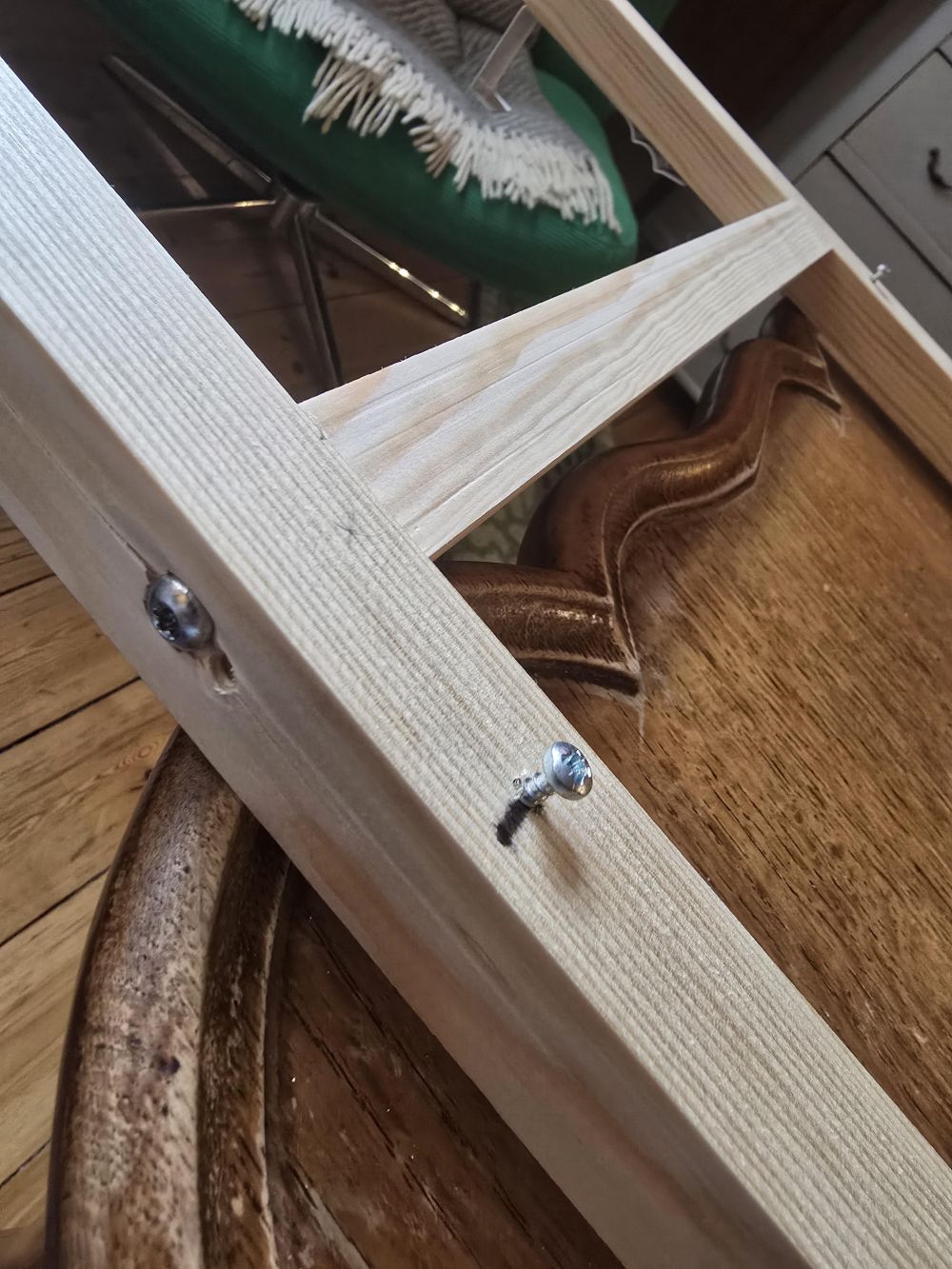
Crosspieces were fastened with screws to create a sturdy support for the light panel. Additionally, a board was added near the top to ensure there was enough space for the blind mounting brackets.
The Frame Aligns with the Unused Bedroom Door
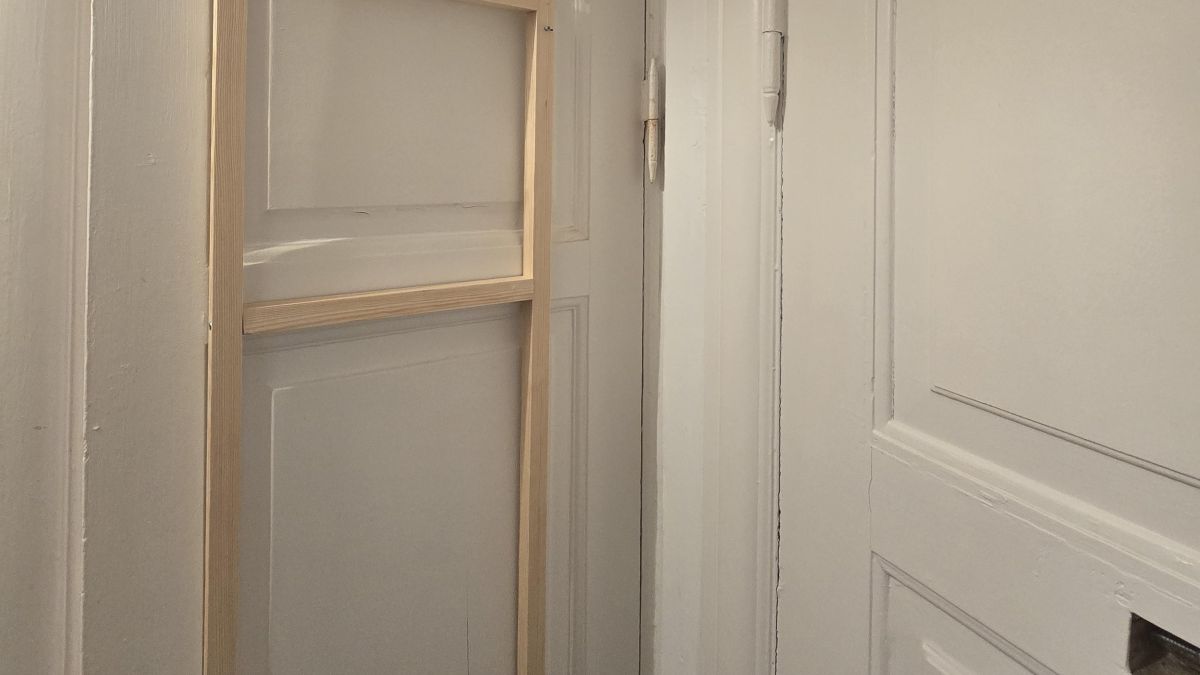
The frame was positioned against the door, with its upper part extending above the area designated for the LED panel. The installation fills the recessed doorway instead of protruding from the surrounding wall.
The original door panels stay visible behind the wooden supports while the construction is underway.
An IKEA JETSTRÖM LED Panel Supplies the Illumination
The resident attached the square JETSTRÖM LED panel to the wooden frame. The back of the panel houses the LED strips and electrical parts, while the flat front serves as a diffuser.
Although the panel is intended for artificial lighting, this project repurposes it to mimic daylight behind window blinds.
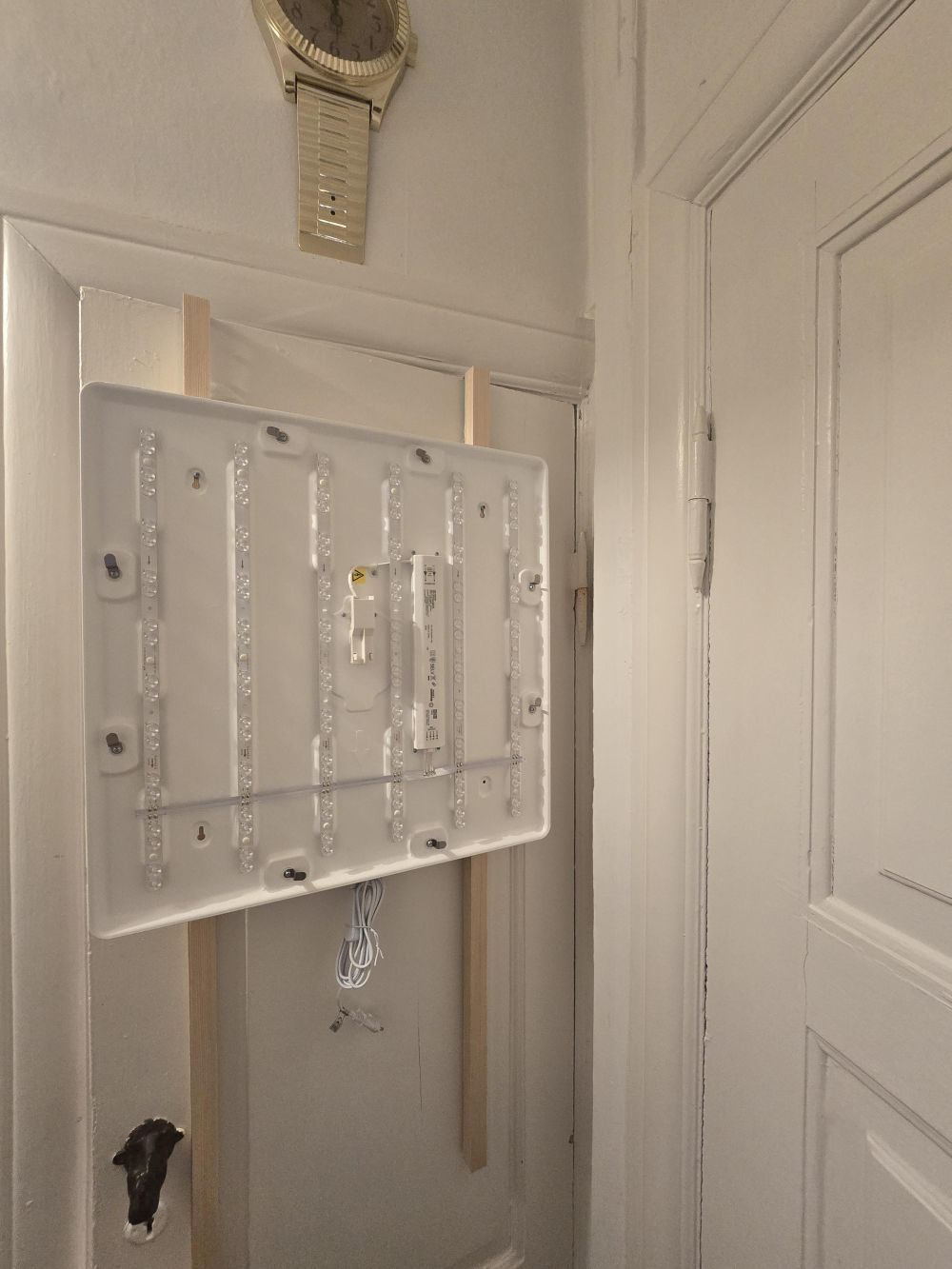
The Panel Is Positioned Above the Secretary Desk
Once the assembly is mounted, the white panel sits above the desk without requiring the removal of the old door. Wooden supports remain visible above and below the light, leaving space for the next installation step.
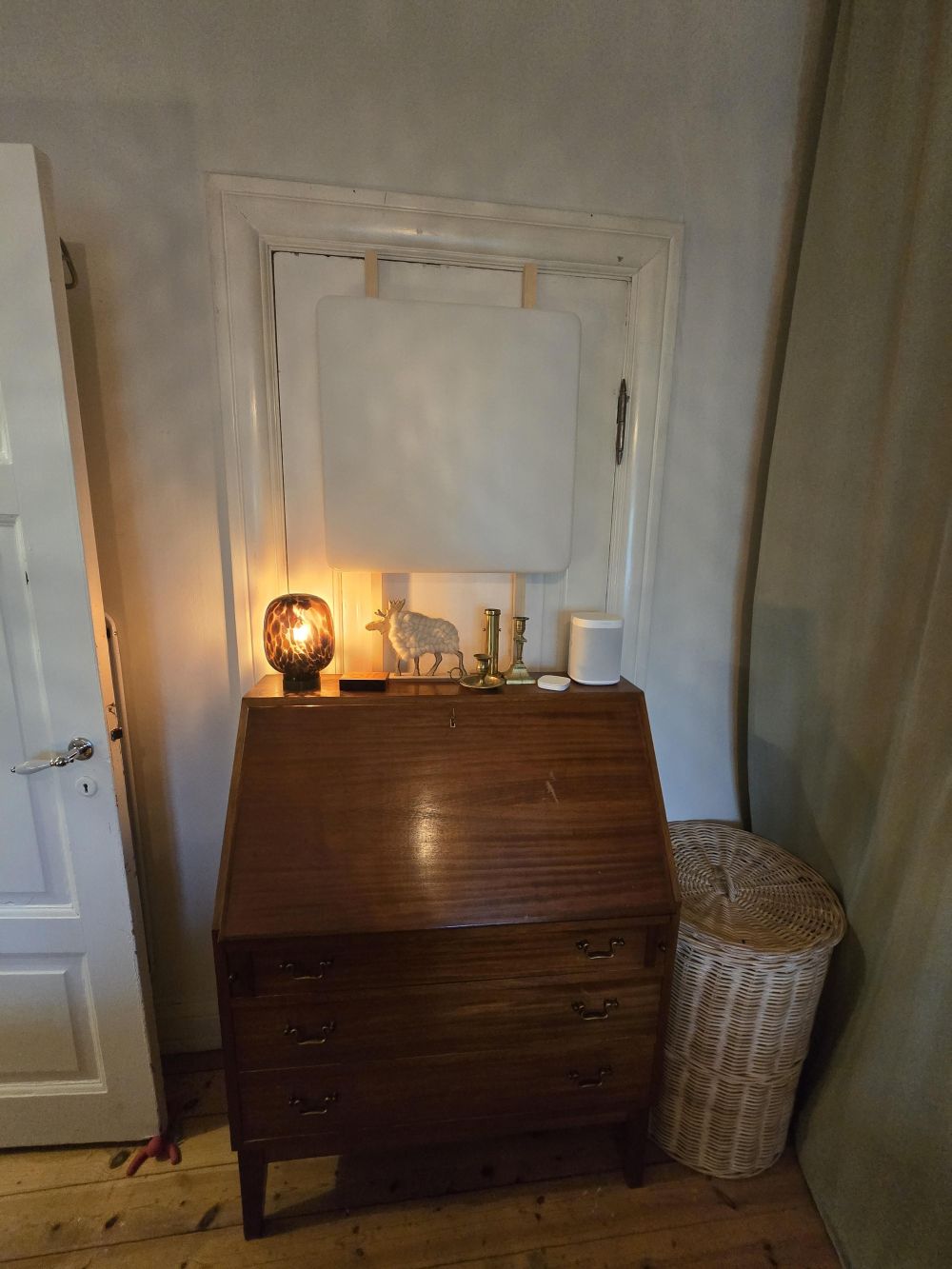
A small table lamp, decorative items, and speakers are placed on top of the secretary desk beneath the panel.
Activating the Light Transforms the Doorway’s Look
When the LED is off, the panel looks like a plain white square mounted in the doorway. Its smooth surface does not resemble a window until the final covering is added.
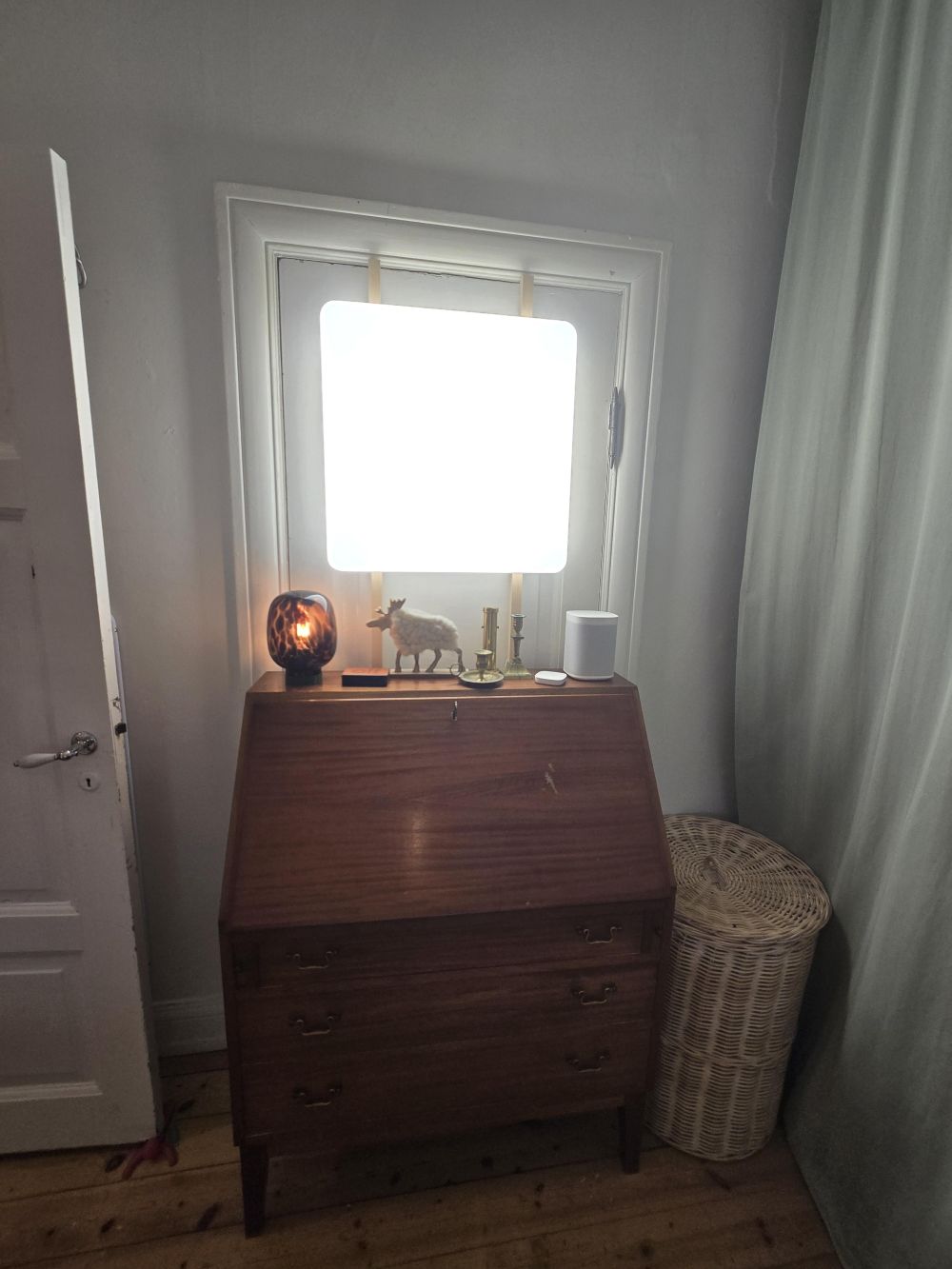
When turned on, the panel emits a broad area of white light above the desk. The resident connected it to a remote control, which allows for adjustments to both brightness and color.
IKEA Blinds Hide the LED Panel
The resident installed IKEA VECKLARFLY blinds in front of the panel, using the extra wooden support to fit their mounting mechanism.
The horizontal slats divide the light into bands, creating the effect of sunlight passing through a window. A small red pendant-style decorative lamp hangs in front of the blinds, finishing the illusion.
The Unused Door Now Looks Like a Window Above the Desk
The finished installation hides the square LED panel behind the blinds. Light filters between the slats, while the old doorframe surrounds the setup, making it look like a window built into the wall.
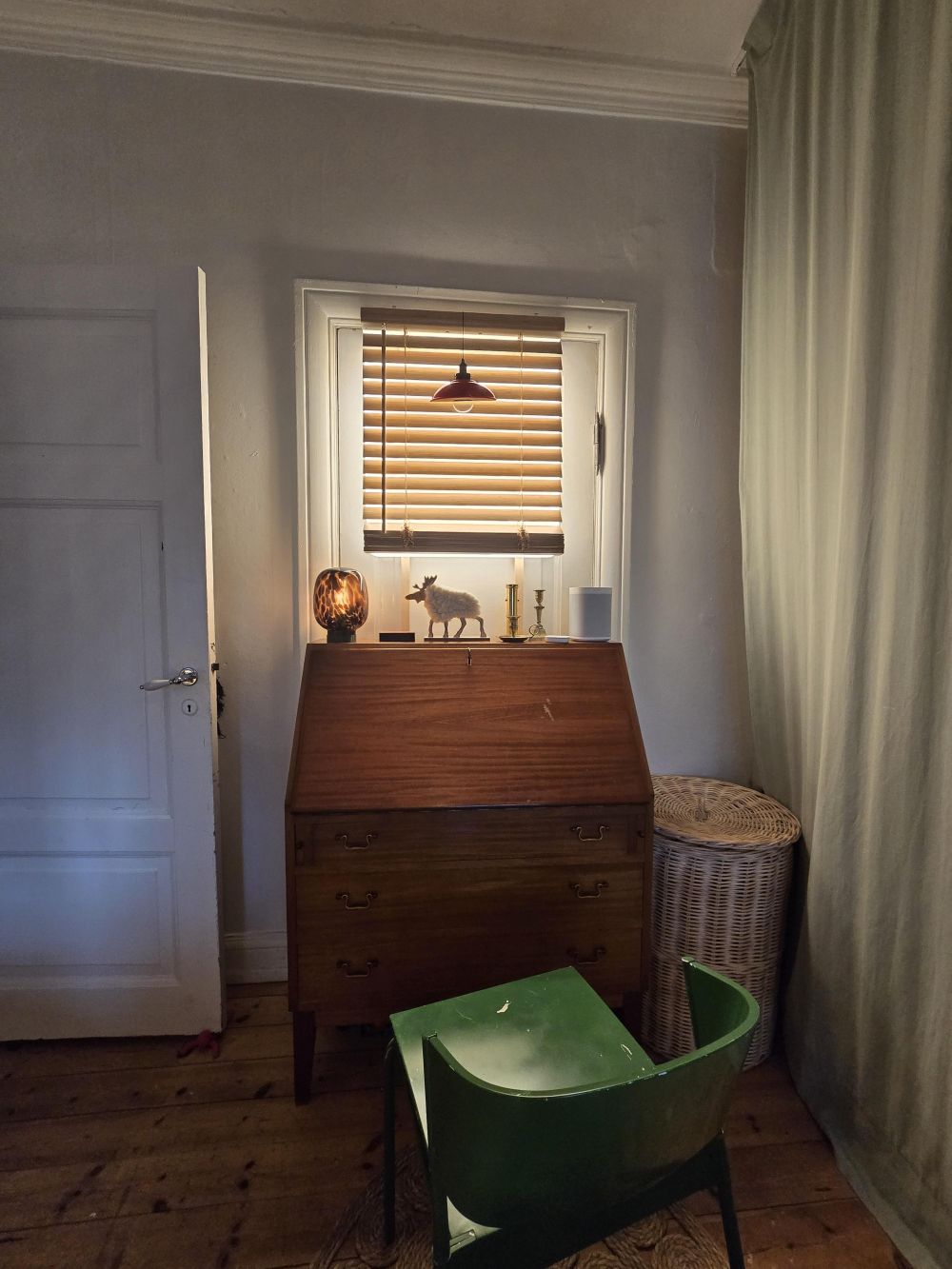
The project alters the appearance of the dark corner without cutting through the exterior wall or removing the original door.
The Desk Continues to Function as a Workspace Beneath the Fake Window
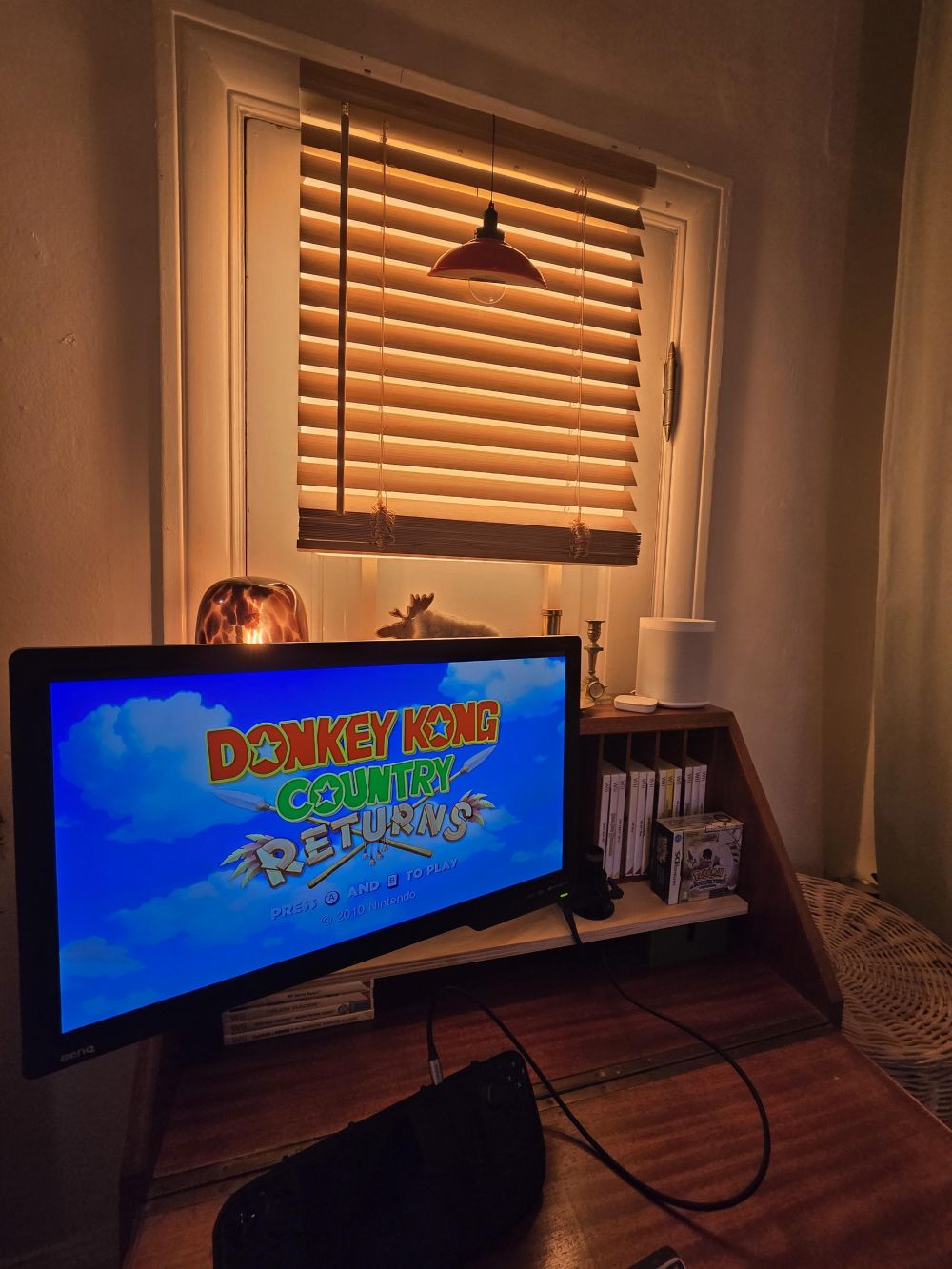
When the secretary desk is open, a computer monitor sits above the fold-down work surface, along with a keyboard and gaming equipment. The illuminated blinds remain visible behind the monitor, giving the desk area the look of a workspace next to a window.
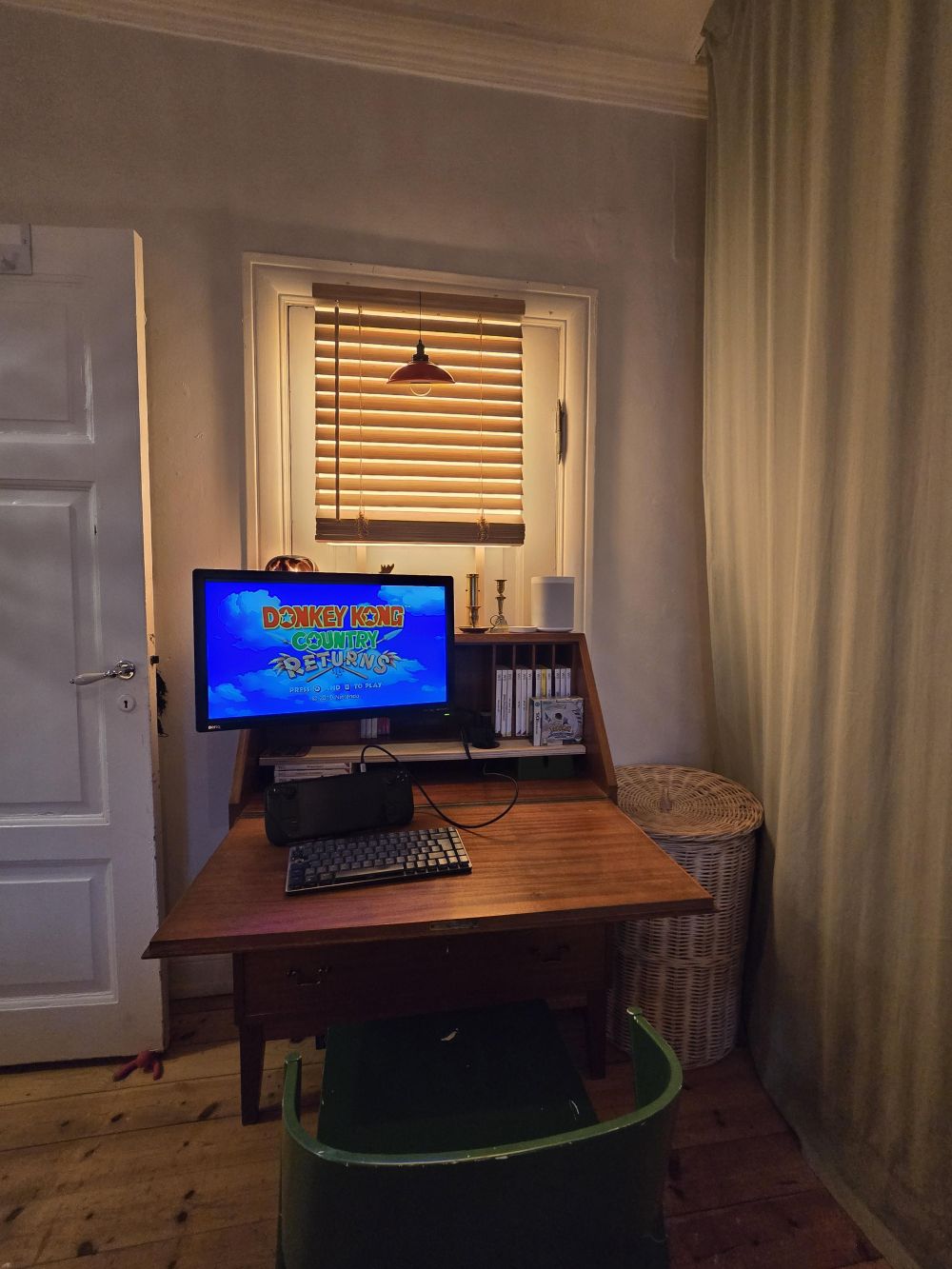
The resident explained that the JETSTRÖM panel can be dimmed and adjusted via its remote control. The installation provides artificial light rather than real sunlight, but it changes how the unused doorway appears from the room.
Another resident used IKEA furniture to rearrange a room’s layout, arranging six BILLY bookcases and a sliding door to create a separate bedroom inside a studio apartment.
Images and project details courtesy of Reddit user u/SpelledareKarl, who shared the project in r/ikeahacks.
Source: Homedit.





















This is such a brilliant hack! I love how you transformed that shadowy recess into a bright, inviting space without major renovations. The illusion of natural light looks incredibly realistic. Great work on the DIY!
Thank you so much! I’m thrilled you liked the transformation. It really does make such a difference to have that illusion of natural light without the hassle of major construction. Enjoy your bright new space!