
Traditional kitchen sinks consume valuable counter real estate even during periods of inactivity. Items such as colanders, drying racks, and cutting boards require additional room adjacent to the basin, which often restricts the area available for meal preparation.
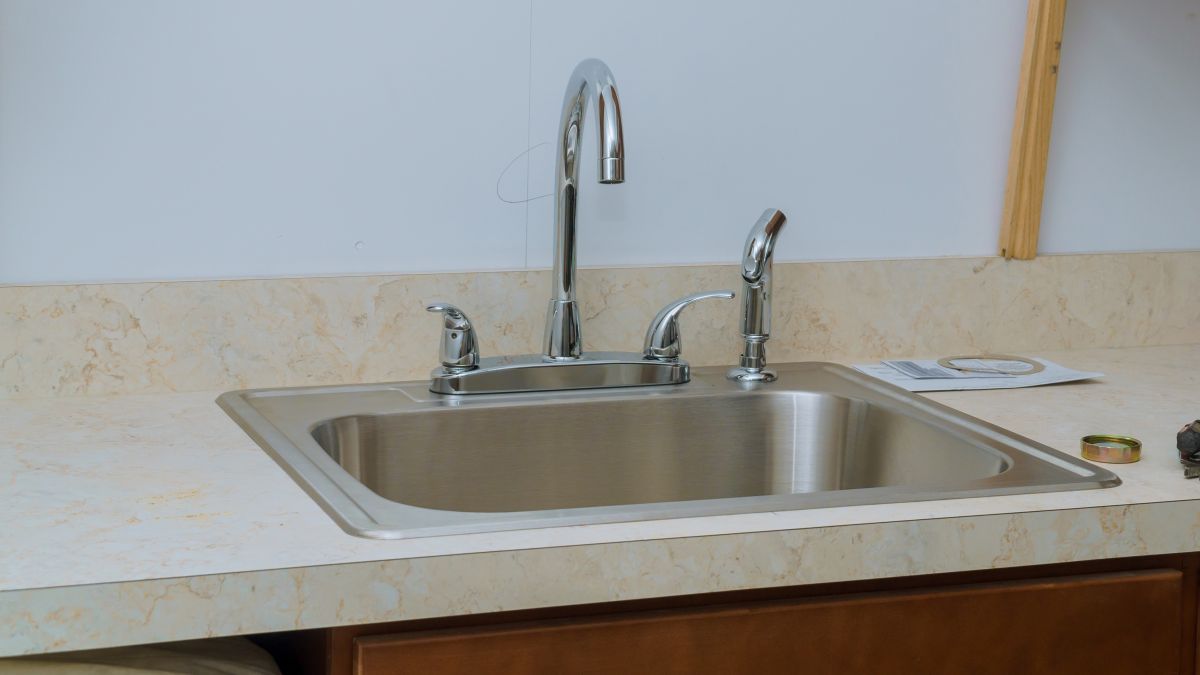
Modern iterations utilize this wasted volume effectively. Certain models feature sliding cutting boards that traverse the basin, while others incorporate fitted trays, drying racks, or distinct compartments. This evolution transforms the sink into an active component of the food preparation zone, rather than a static vessel dedicated solely to cleaning.
Manufacturers including BOCCHI, BLANCO, LEICHT, STOSA, and Arrex present varied solutions. These range from black farmhouse sinks equipped with movable accessories to integrated stone basins and comprehensive stainless steel workstations.
BOCCHI Integrates a Sliding Cutting Board Into a Black Farmhouse Sink
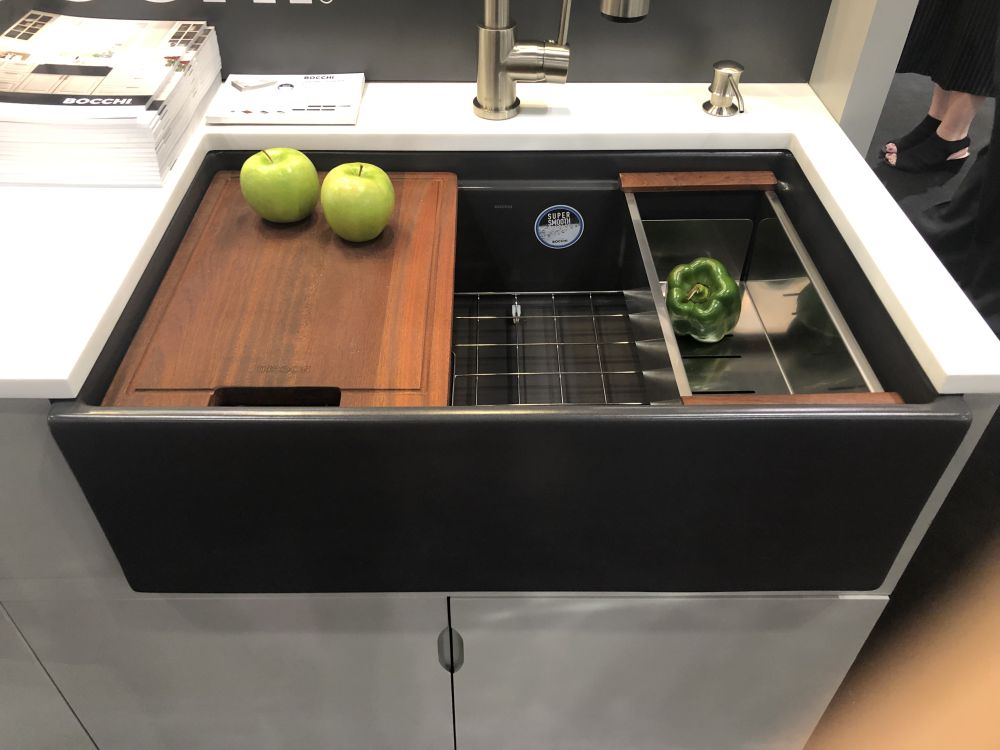
The basin’s bottom is protected by a metal grid, and parts of the surface remain uncovered because a metal tray hangs over the right area and a wooden slab spans the left side of this apron-front sink.
The board can be repositioned or taken away entirely when full sink capacity is required, enabling food preparation and washing to occur within the same footprint.
BOCCHI Adorns the Farmhouse Sink With a Decorative Black Front
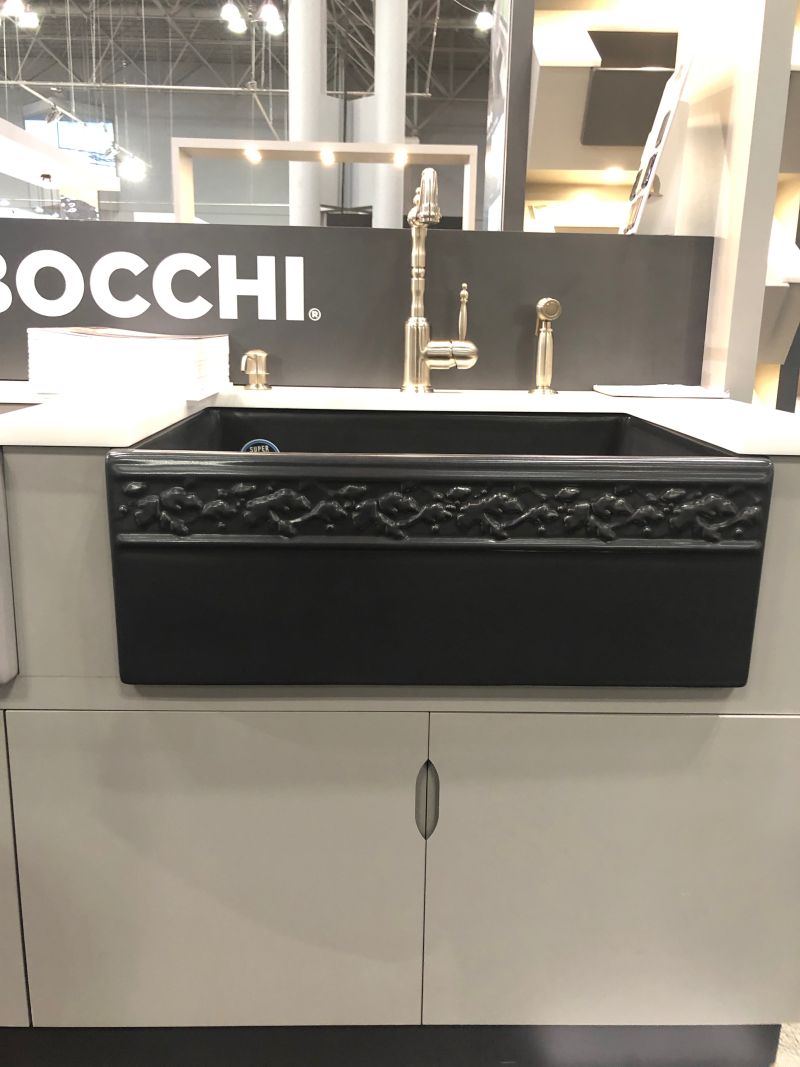
A different BOCCHI model swaps the standard farmhouse apron for a raised floral pattern. This decoration spans the upper front of the deep black basin, bordered by a smooth lower section and a thick rim.
The exposed front integrates into the cabinetry design, providing a distinct aesthetic compared to conventional white fireclay or stainless steel finishes.
Valdesign Embeds the Sink Within the Stone Countertop
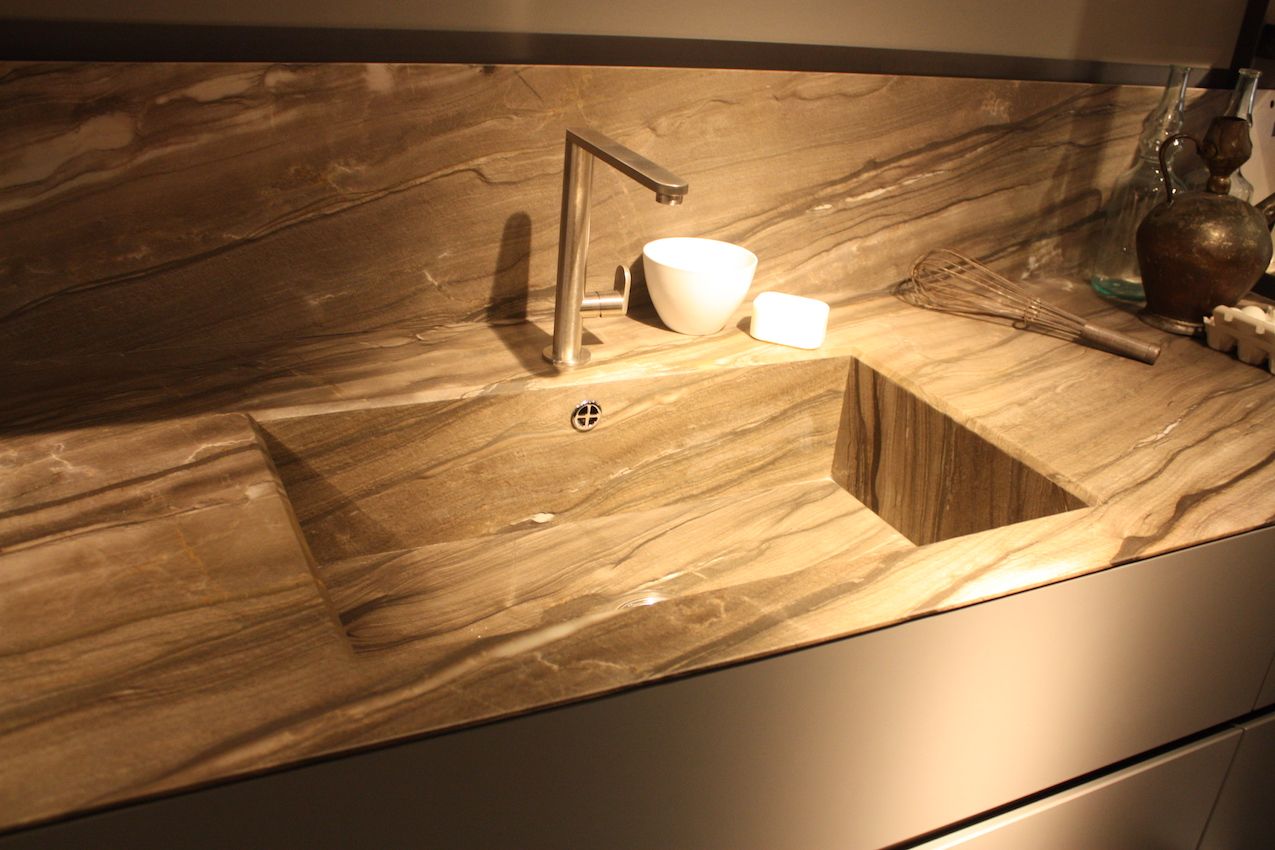
This rectangular sink shares the same veined stone finish as the adjacent countertop and backsplash. The pattern extends into the basin, eliminating the contrasting metal rim that typically separates the washing area from the worktop.
Straight sides and a flat bottom create the visual effect of a sink carved from the surrounding material.
LEICHT Merges Two Basins With a Built-In Draining Area
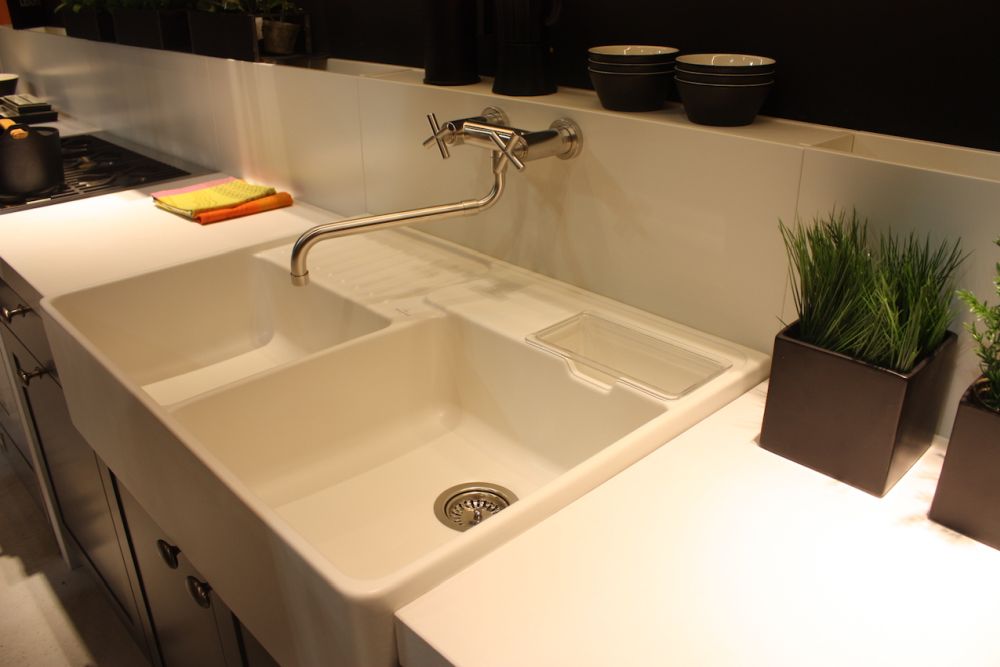
The LEICHT sink features a smaller basin on the left and a larger bowl on the right, accompanied by a raised draining section behind them. A removable insert offers an additional surface for rinsing ingredients or holding cleaned items.
A wall-mounted faucet extends over the divided sink, keeping the countertop behind it clear of a faucet base.
BLANCO Positions Cutting Boards and Tools Above the Sink
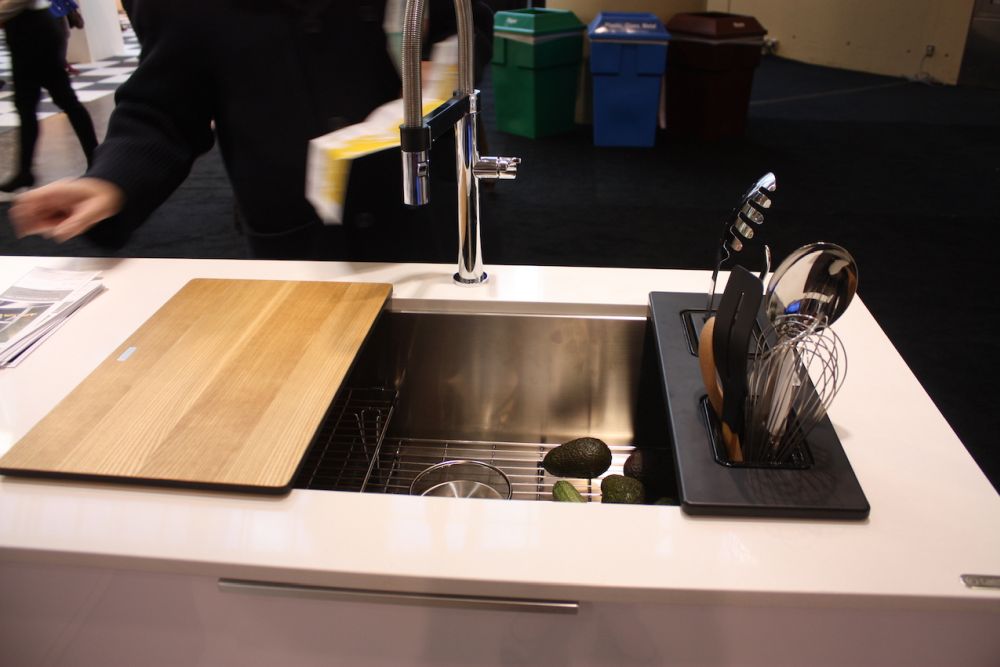
On the opposite side of the stainless steel basin, a fitted black holder maintains knives and other utensils in an upright position, while a wooden cutting board covers part of the basin.
Instead of placing a knife block and chopping board on the counter, these accessories occupy space above the sink and can be removed when washing larger cookware.
STOSA Employs Removable Compartments for Food Preparation
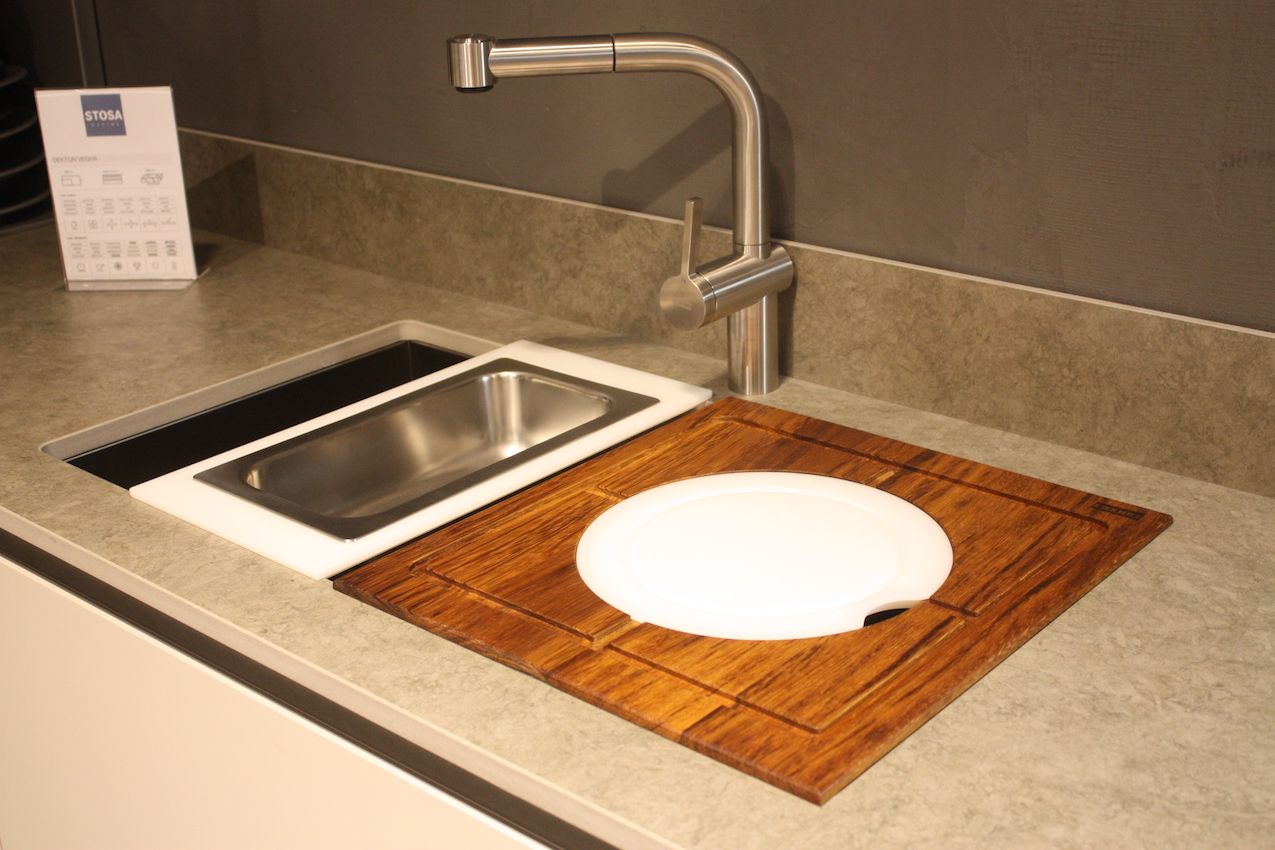
A wooden board sits adjacent to the sink opening, pairing with a rectangular stainless steel container in the STOSA design. This metal compartment serves to hold ingredients while rinsing, and the board offers a distinct area for food preparation.
The accessories sit within the countertop opening rather than occupying the surrounding worktop.
Arrex Includes a Roll-Up Rack and Removable Colander
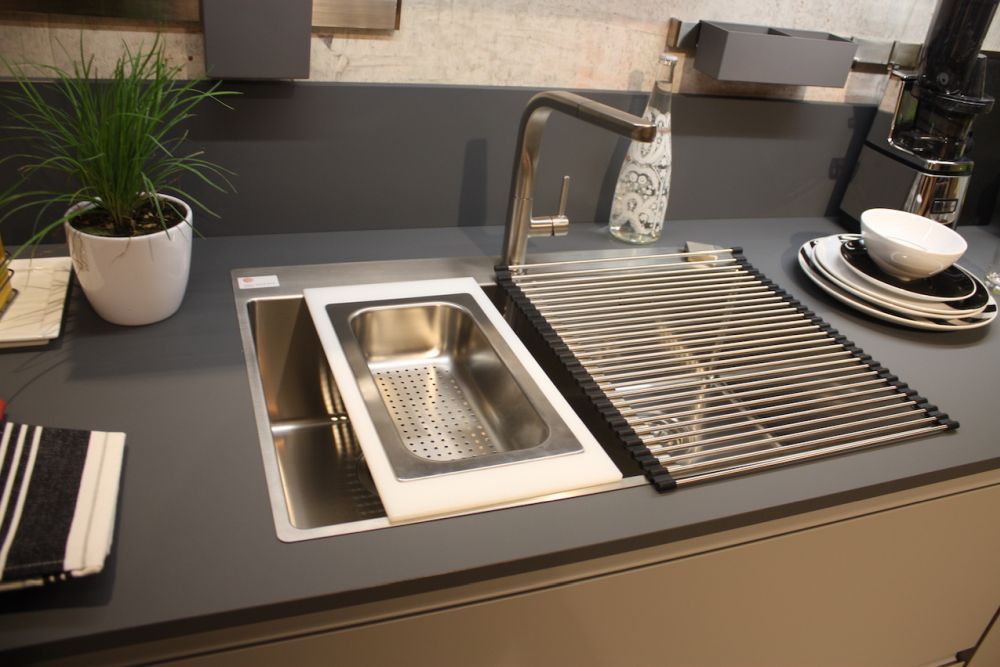
Parallel metal bars form a roll-up rack positioned on the other side of the Arrex sink, while a colander with perforations that let water flow into the basin sits over one edge.
The rack can support dishes or washed produce, then be rolled up when the sink needs to accommodate large pots.
Stainless Steel Sink Sits Flush Beneath a Dark Stone Counter
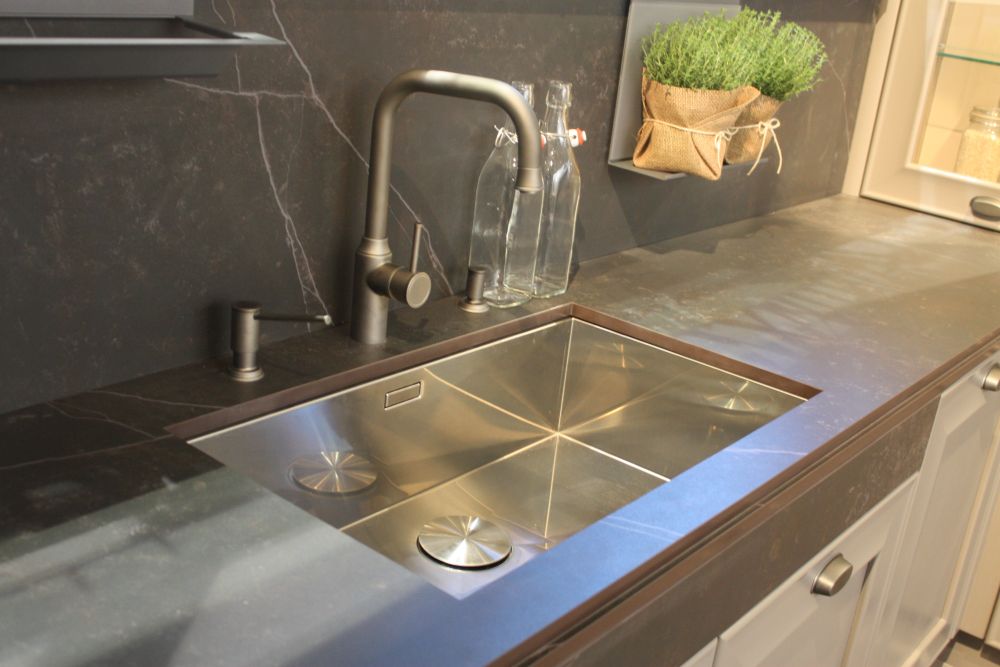
Beneath a dark stone countertop, this basin features an undermount configuration with flat sides and square corners, positioning its rim below the surrounding surface to eliminate any raised edge around the opening.
By employing countertop installation, the design maintains an open basin, thereby establishing a seamless connection between the two surfaces, which differs from sinks that rely on accessories.
Black Sink Covers Turn the Basin Into Extra Counter Space
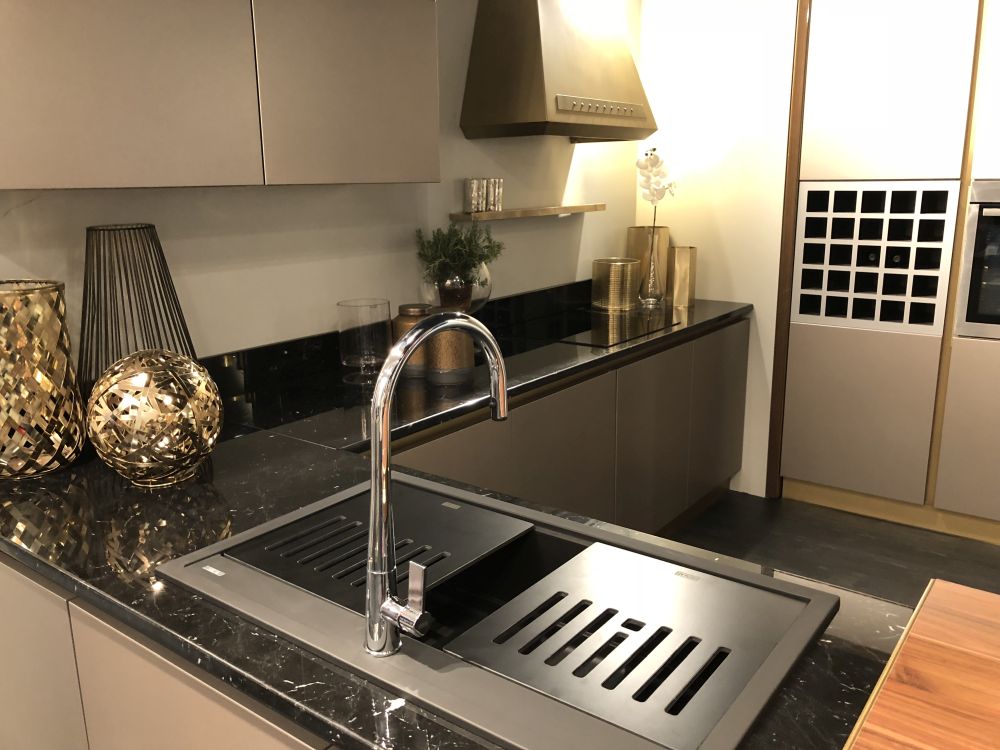
Positioned across the basin are two black slotted covers that coordinate with the dark stone countertop. While these covers hide most of the sink opening, they still allow water to pass through their slots.
These panels can be taken away to reveal the sink underneath, while also providing a more consistent surface around the faucet compared to a cutting board that sits above the basin.
Arrex Uses a Deep Farmhouse Sink With a Stone-Look Finish
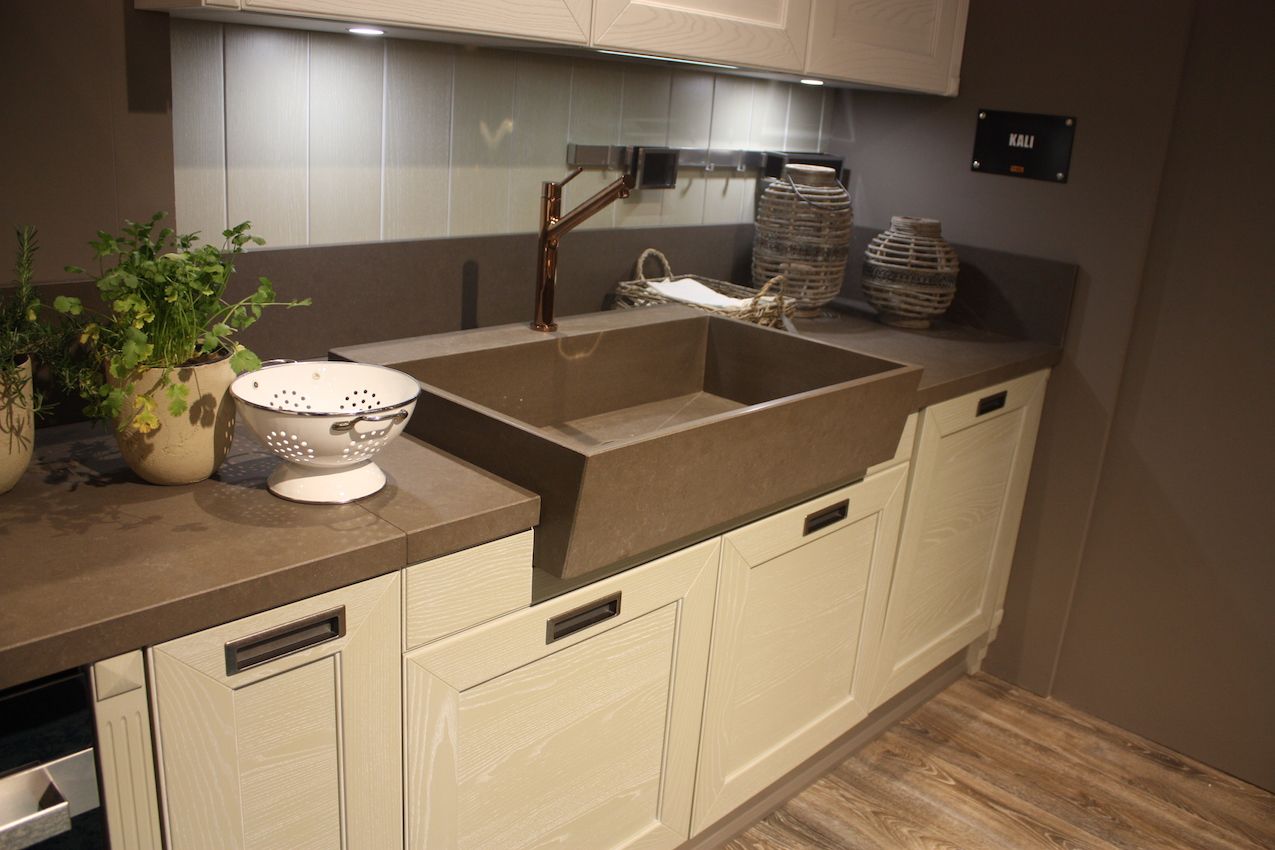
Encircling the deep rectangular basin is a countertop that matches the sink, which boasts a gray stone-look finish and is set within the Arrex kitchen. The thick front apron of this wide farmhouse sink projects past the cream cabinet doors.
The bowl remains undivided into smaller compartments, offering ample space for washing pots and trays through its large opening. Positioned above the basin is a faucet with a bronze tone that is mounted on the wall, ensuring the rear edge is free from a faucet base.
The Galley Combines a Large Sink With Sliding Prep Surfaces
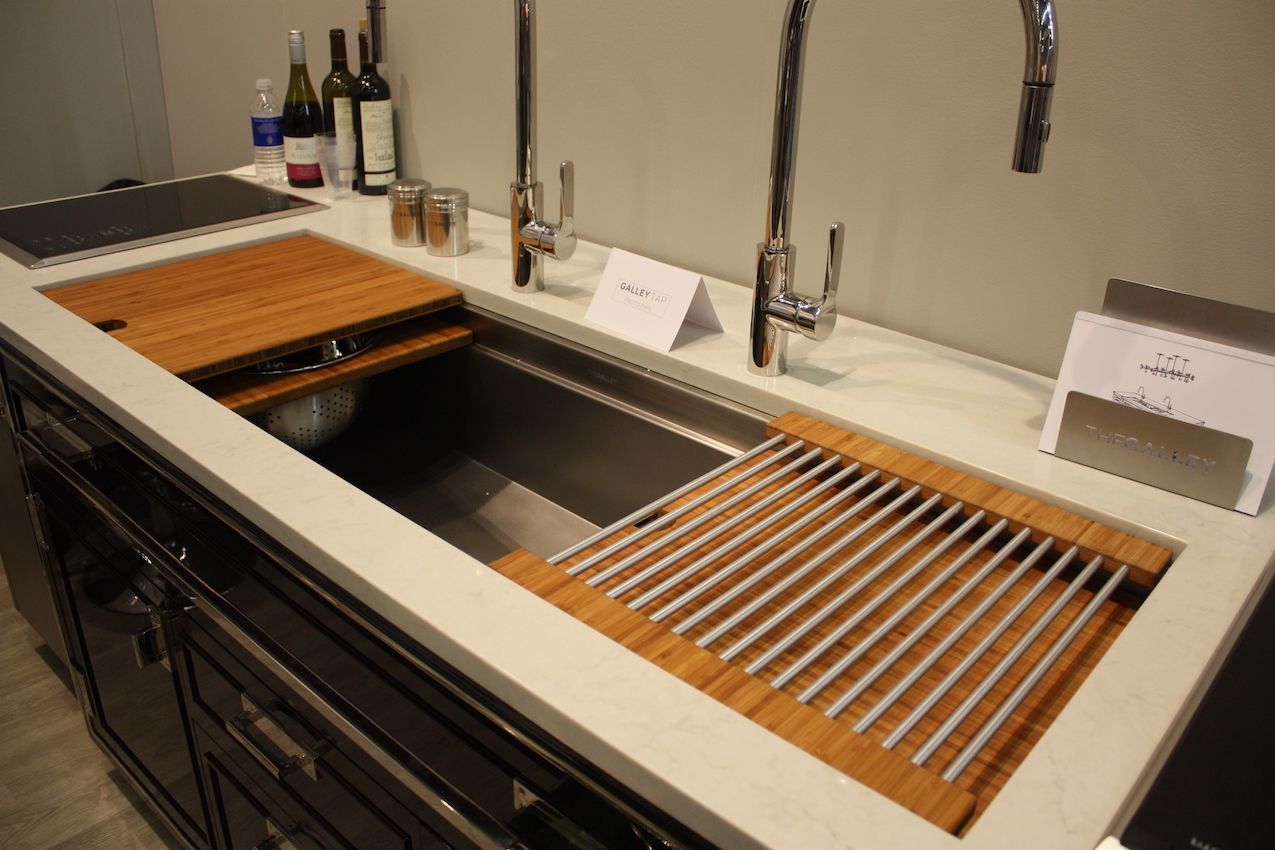
Beneath a white countertop, the Galley workstation features a long stainless steel basin, while a metal drying rack and bamboo cutting boards are placed across its opening.
Positioned at varying heights within the basin, the components include a cutting board on the left and parallel metal bars on the right for draining or rinsing. The center opening stays open for washing, and these movable elements let you alter the workspace without requiring additional countertop area.
Image credits: Homedit.
Source: Homedit.




















So we’re paying extra for a fancy tray that just slides over a hole? Revolutionary. Because nothing says “modern kitchen” like a wooden board that looks suspiciously like it belongs on a porch.
You’re not wrong—the aesthetic can lean rustic! However, these trays are designed for durability and seamless integration, not just looks. They often feature stainless steel or composite materials that resist scratches and stains, unlike typical porch wood. It’s about functionality meeting style, though I get the skepticism!