
Once associated with formal dining rooms, sideboards offered a place for linens, serving dishes and cutlery behind heavy wood doors. Simpler cupboards later took over some of that role. The designs featured by Homedit for 2027 bring storage furniture back into focus through its form and surface treatment.
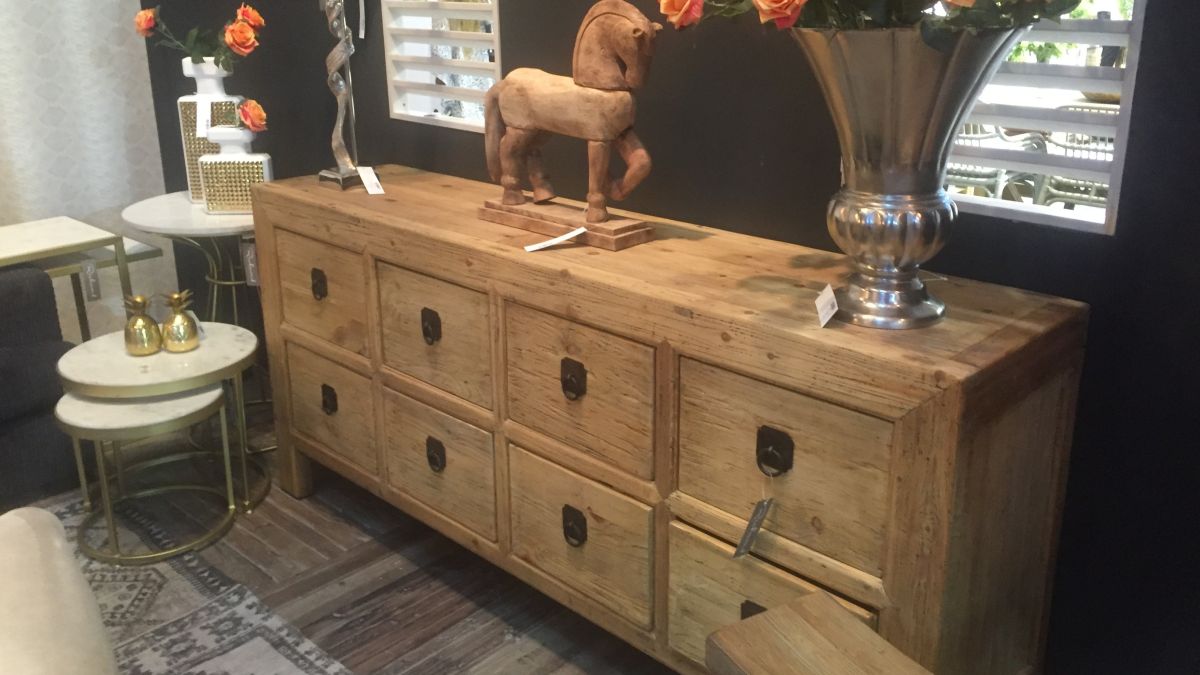
Rounded ends, concealed openings, oversized pulls and patterned wood fronts give these pieces a different appearance from an old dining buffet. Some rely on natural grain, others on color or carving. Long, low proportions also let them work in living areas and hallways as well as beside a dining table.
Raised geometry in pale wood
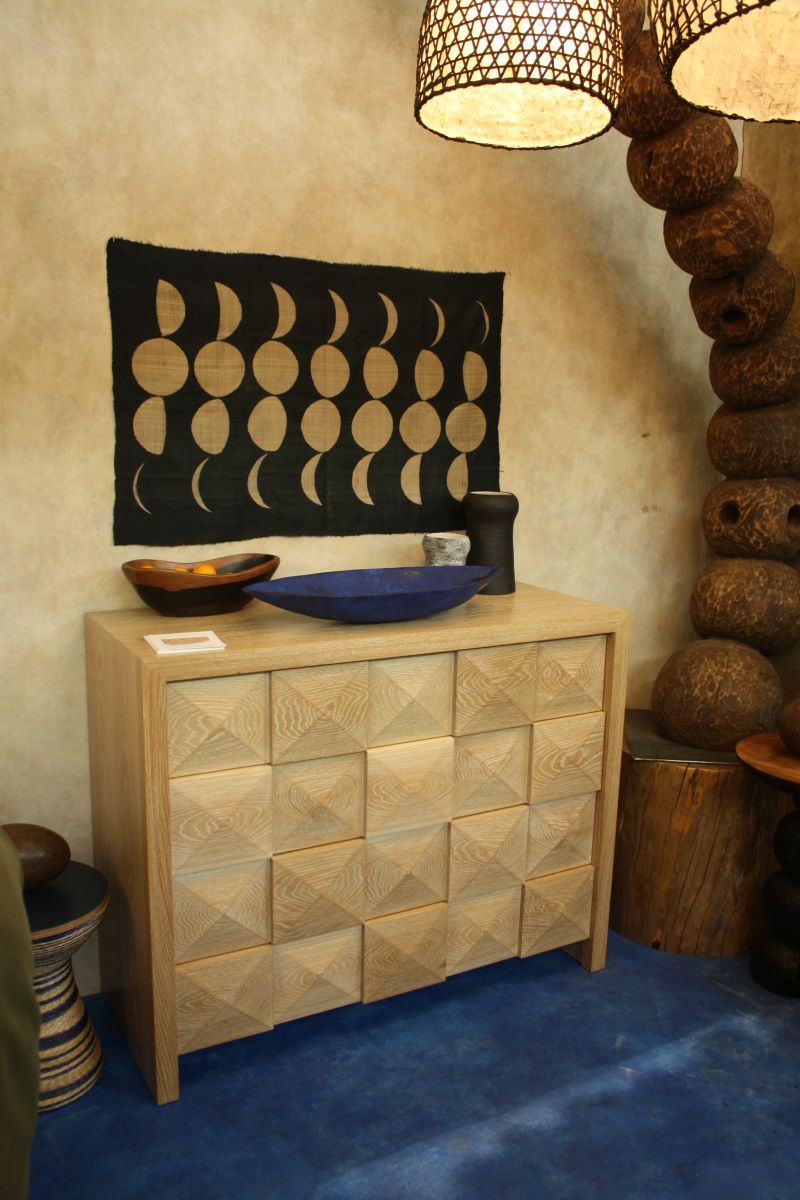
Square door panels are divided into triangular sections, with grain running in different directions over the angles. That relief creates a three-dimensional pattern without paint or another material. A rectangular cabinet and short legs keep the familiar proportions of a sideboard, while the front resembles carved wall art.
Rounded corners and a prominent handle
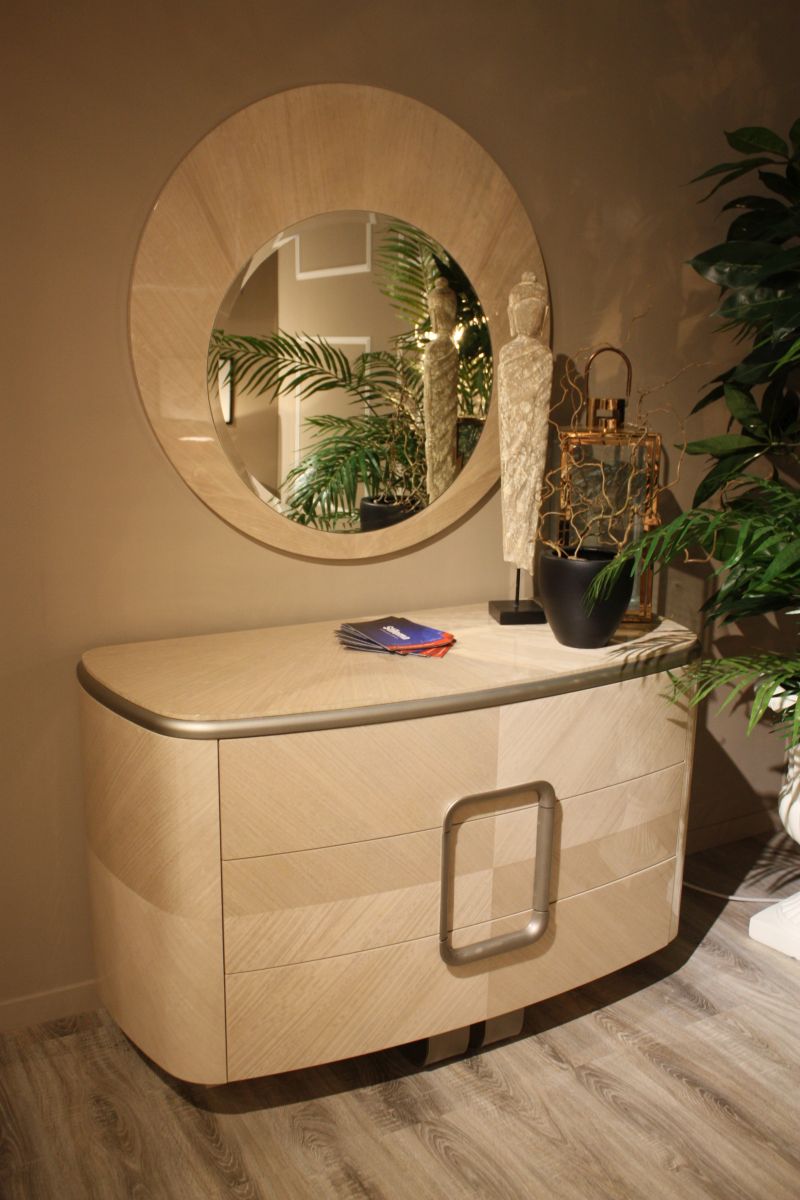
On another pale wood piece, curved ends continue through the cabinet body. A large square metal pull spans the drawers. Above it, a round mirror in matching wood repeats the finish and extends the furniture arrangement onto the wall.
A mix of exposed and concealed storage
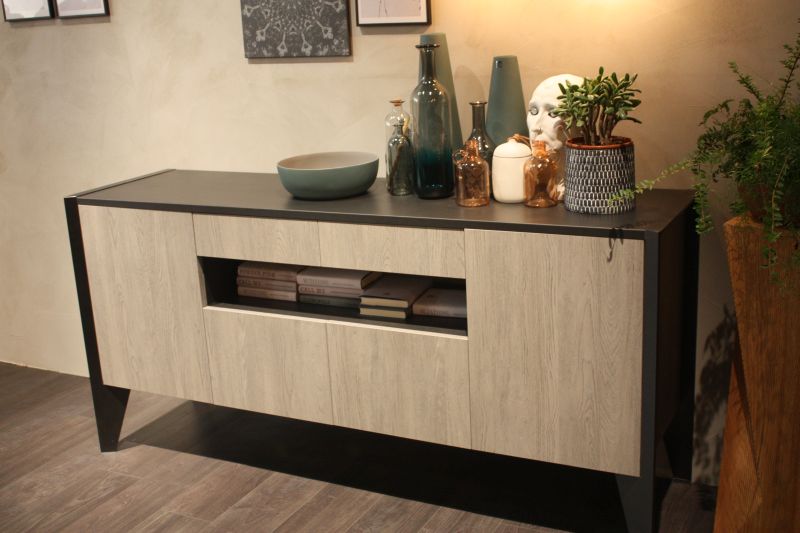
A dark frame surrounds light wood doors, with an open shelf across the upper middle. Closed compartments occupy the sides, leaving books and selected objects visible in the center. Broad surfaces and contrasting timber tones replace decorative molding and conventional knobs.
A long cabinet on slim black legs
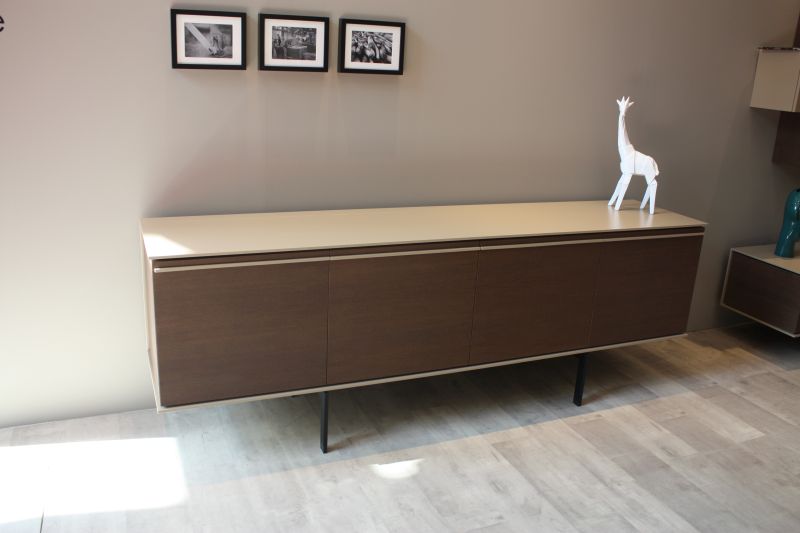
This low piece occupies much of a wall. Dark doors sit inside a pale frame, and a narrow horizontal opening just below the top supplies the handle detail. Its length offers a generous storage surface without the height of a dining hutch, making it an option for living and dining rooms.
Walnut sliding fronts
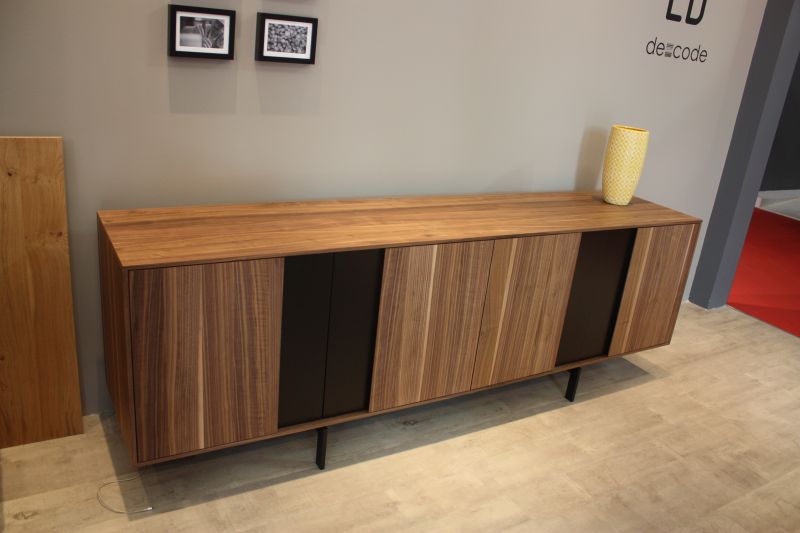
Vertical grain on the sliding doors contrasts with dark recesses behind them. As doors overlap the openings, the balance of walnut and black changes. A broad wood top and slender legs complete the long cabinet.
Gray doors beneath a wood top
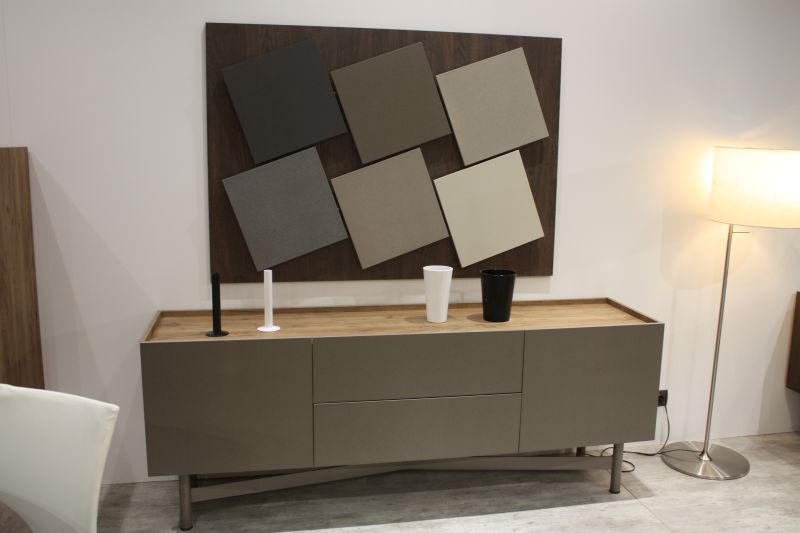
Center drawers and outer doors form a continuous gray front, divided only by fine joints. Visible handles are absent. A natural wood countertop with a narrow raised border supplies the contrast that decorative metalwork or molding might otherwise provide.
Four uninterrupted pale wood doors
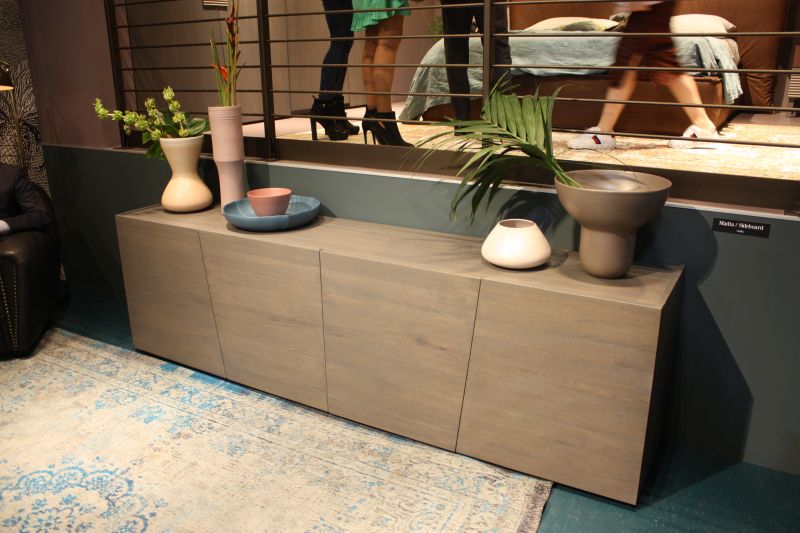
A low, straight-edged cabinet lets the grain continue across four broad doors. Neither handles nor raised panels interrupt the surface. It gives a plainer alternative to framed fronts with applied decorative sections.
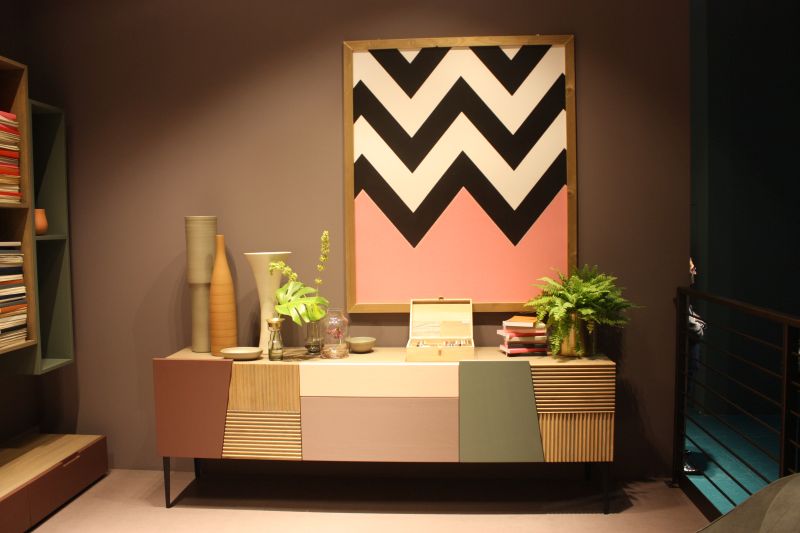
Color and ribbing across the front
Terracotta, cream, muted green and ribbed timber are combined into an irregular geometric arrangement. Horizontal and vertical grooves vary from section to section. Here the storage piece becomes a visible feature, rather than blending into the wall.
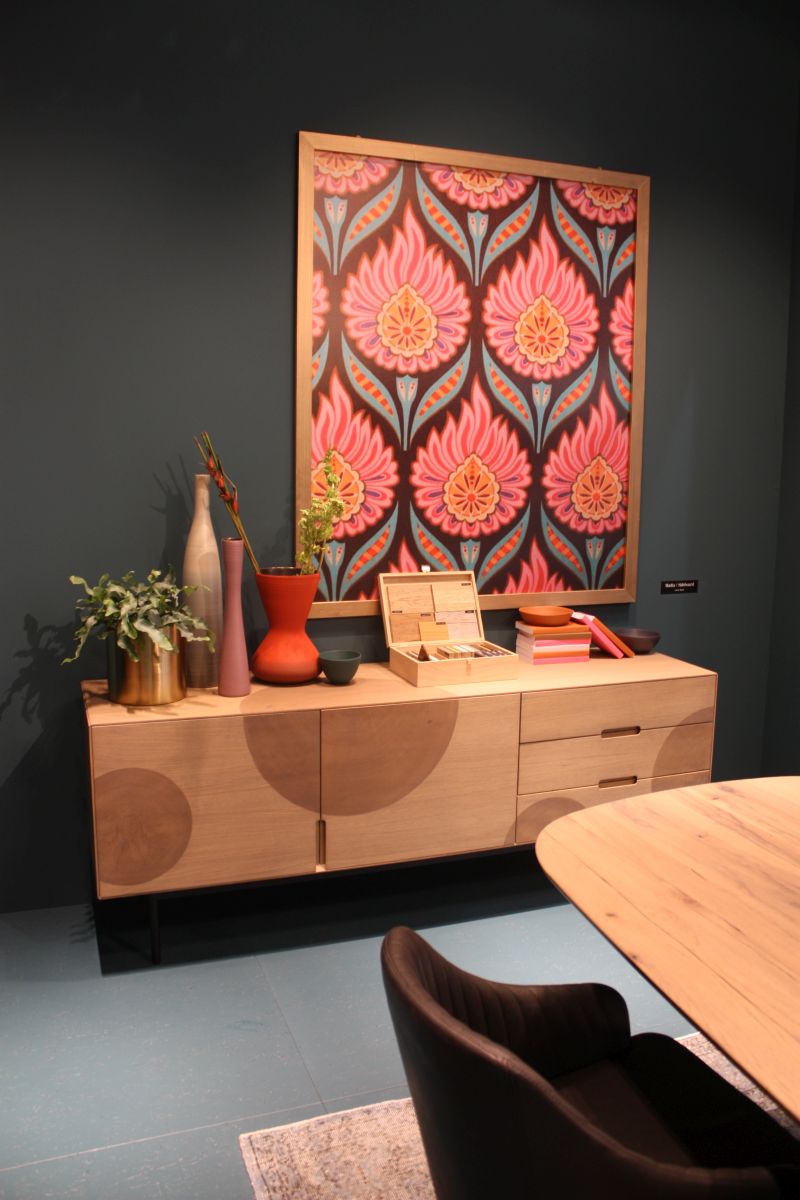
Circles set against straight cabinet edges
Large circular shapes span the doors of a pale wood sideboard. Narrow horizontal drawer pulls and dark legs provide straight lines around those curves. A framed floral print above it offers another graphic element without requiring traditional carving on the furniture.
Carving across a dark credenza
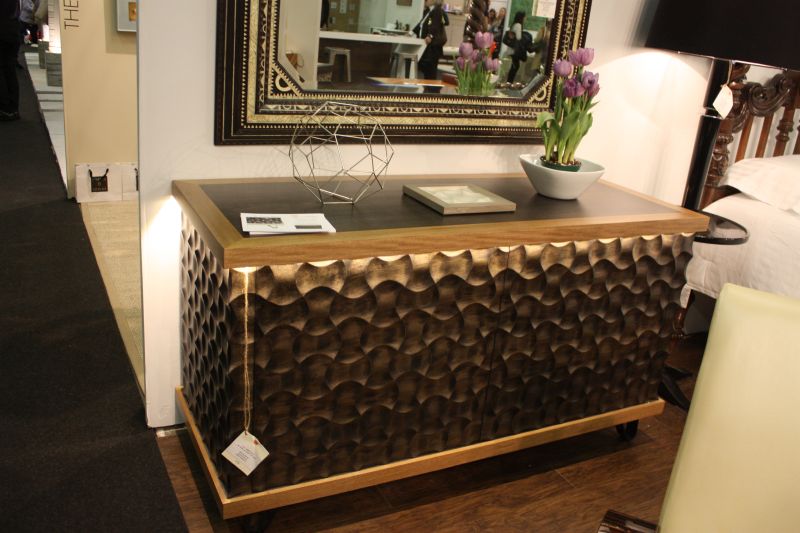
Repeated relief forms cover the front and sides of a dark wood cabinet. Curved recesses pick up highlights along their edges, and the door openings disappear into the pattern. A flat, wood-framed top contrasts with the textured base.
Vertical strips on a cream cabinet
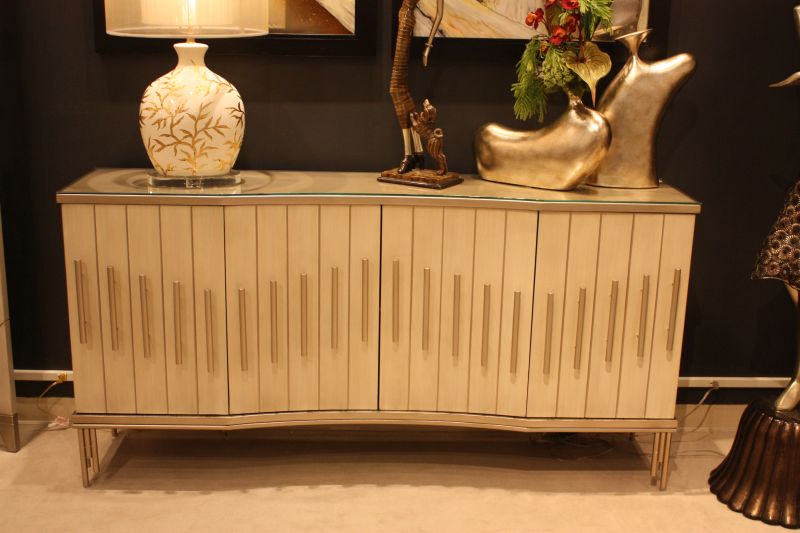
Thin timber strips run down the doors beside long metal handles. The front curves along its bottom edge, and slender feet raise the body from the floor. Repeated vertical lines make the divisions between doors less obvious than on plain panels.
A front built from staggered blocks
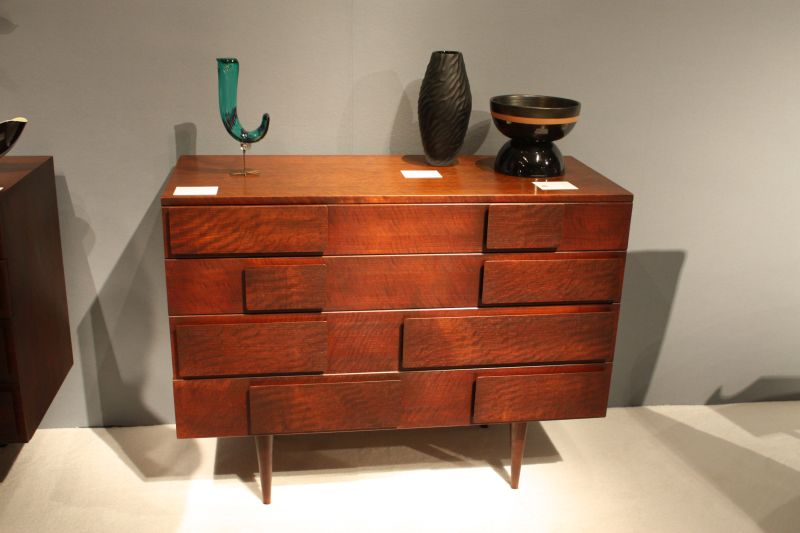
Rectangular reddish-brown wood pieces project at different depths and extend to different lengths. Their offsets suggest rows of timber bricks, with no ordinary pulls breaking up the surface. Four tapered legs connect the cabinet with midcentury furniture proportions.
Slats around a glass display section
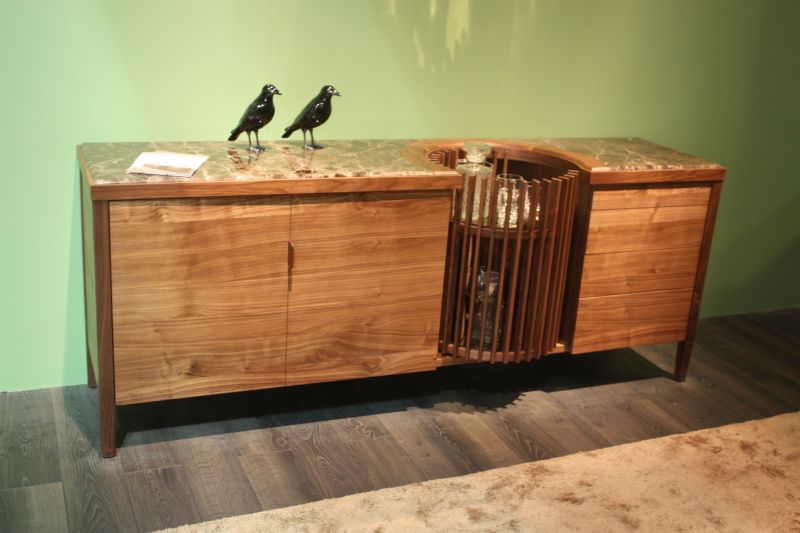
Broad walnut fronts sit on either side of a curved middle section formed from narrow upright slats. Glassware can be seen behind them. Veined stone covers the top, while the curved center introduces display space between the closed compartments.
Weathered slabs across the doors
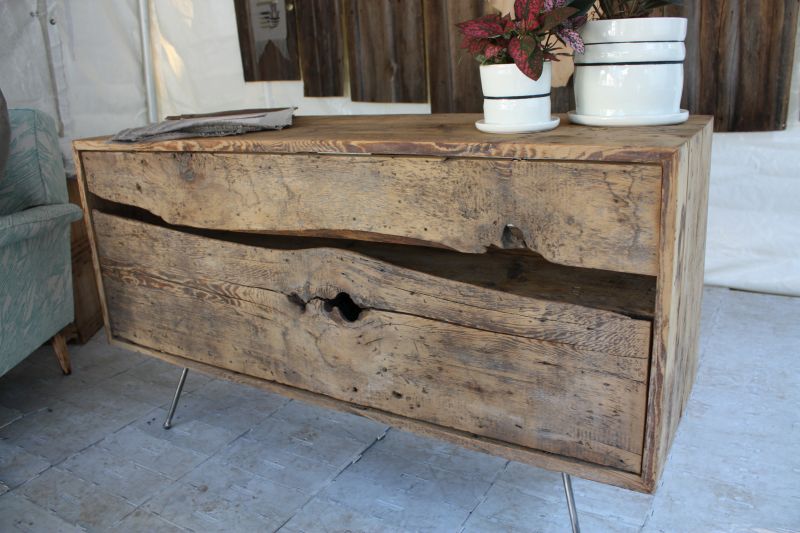
Thick reclaimed wood brings knots, cracks and irregular edges to the final cabinet. The gap between horizontal pieces follows the timber’s natural shape instead of a straight join. A rectangular frame contains the rough surfaces, and thin metal feet contrast with their visual weight.
Across the selection, hidden openings, varied profiles and unusual woodwork expand the role of a sideboard beyond dining storage. The pieces still hold household belongings, but their grain, carved surfaces and geometric shapes also contribute to the room’s design.
Photography credits: Homedit.
Source: Homedit.


















I’m fascinated by how these sideboards blend sculptural artistry with practicality. How do you balance the bold geometric textures with everyday storage needs? I’d love to hear your thoughts on integrating such statement pieces into living spaces.
Thanks for your insightful comment! The key lies in proportion and material warmth. Curved edges soften bold textures, while hidden compartments keep daily clutter invisible. By anchoring these sculptural pieces with neutral surroundings, you create a harmonious balance between striking design and functional living.