
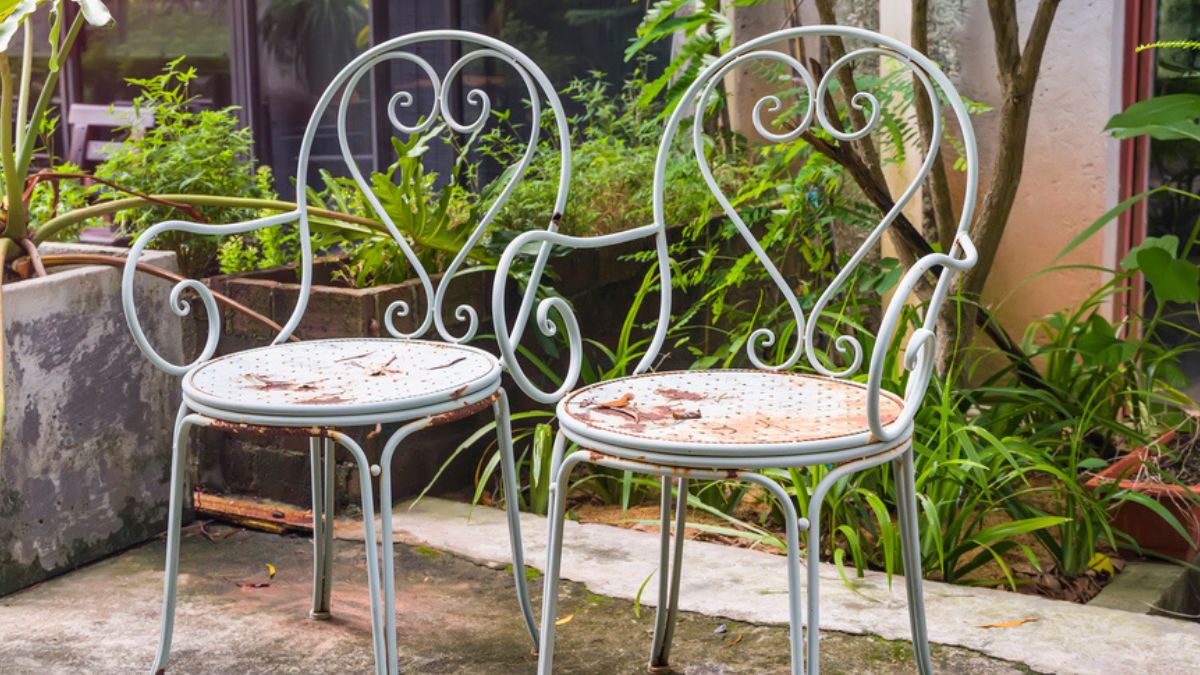
For three consecutive summers, a metal chair rested beside the shed. Its cushion lost its shape and developed mildew, while the frame oxidized to an orange hue, rendering it undesirable for seating. It feels too melancholic to remain on the patio, yet it remains too robust to discard casually.
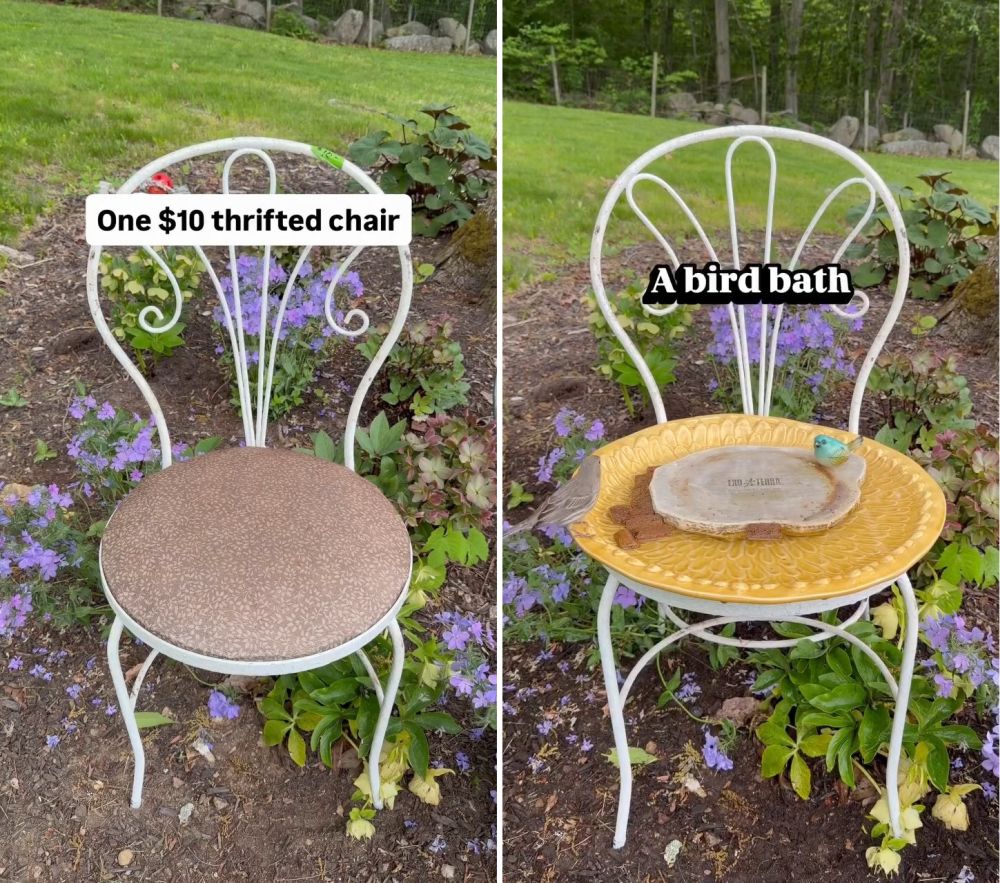
The issue was never the chair itself, but rather its seat. Removing the cushion reveals a sturdy metal frame positioned at an ideal height to support a shallow basin. A creator known as @gigisgardentips demonstrated this solution in a brief video by detaching the seat from a weathered metal garden chair and placing a large ceramic tray into the resulting frame.
Bird Bath Requirements and Common Mistakes
Many DIY bird baths remain unused because they are excessively deep. Small birds prefer to wade rather than swim. According to The Cornell Lab of Ornithology, the water should be no deeper than 1 inch at the edges and no more than 2 inches in the center, with a gentle slope. A wide, flat ceramic tray approximates this ideal, and placing a stone in the center provides a dry resting spot for drinking.
Location is equally important. Cornell advises maintaining open ground between the bath and nearby dense shrubs, allowing birds to spot predators like cats before they strike.
Converting a Padded Seat to a Basin
Follow these steps to replicate the design using your own chair:
- Strip the chair. Remove dirt and spiderwebs, then detach the padded seat using a drill if necessary. Retain only the metal frame.
- Address the rust. Use a hard-bristled brush to remove flaking rust, ensuring a smoother surface for paint adhesion.
- Prime and paint. Primer enhances the metal’s durability outdoors, though a 2-in-1 paint and primer combination also works. Allow the coating to dry completely before proceeding.
- Select the basin. Measure the seat frame’s diameter and choose a wide, shallow tray that rests securely without falling through.
- Secure the tray. Position the tray on the frame. If it wobbles, use weatherproof double-sided mounting tape or an outdoor-safe adhesive to stabilize it.
- Install a perch. Place a flat stone inside the tray, ensuring it is no more than about 2 1/2 inches thick.
- Fill with water. Aim for a depth of approximately 1 inch near the edges.
- Maintain freshness. Cornell recommends changing the water every day or two to reduce droppings and prevent mosquito breeding.
If your yard requires more color than a water source, a similar rusty patio chair can hold fall mums in a chicken wire basket, with fabric lining the interior to retain soil.
Old Paint, Winter Conditions, and Height Considerations
Exercise caution during the brushing step if the chair retains old paint. The Minnesota Department of Health advises treating painted vintage items as containing lead until tested, recommending against dry scraping or sanding. Use water to suppress dust and wash your hands afterward.
Winter introduces specific guidelines. Cornell notes that keeping the bath ice-free is not essential, as birds can obtain water from snow. If you install a heater, plug it into a ground-fault interrupted circuit, and avoid adding antifreeze or glycerin to the water.
Raising the bath off the ground may deter some species, as Cornell states many birds prefer ground-level baths. Ensure the chair stands level and remains stable when the tray is full.
The key is to remove the seat, keep the water shallow, and change it frequently.
Source: Homedit.









































You cite Cornell, but did you verify the tray’s actual depth? Most ceramic trays are too deep for small birds. Show me the measurements, not just the aesthetic.
Great point! I used a 12-inch tray with a 2-inch depth, perfect for small birds. Cornell’s guidelines confirm this is ideal for shallow bathing. I’ll add specific dimensions to the article soon to ensure clarity for all our feathered friends.