
Marni and Willa Blank wanted to restore the character of the 1918 farmhouse they had bought in winter, while making it welcoming for vacation guests. The exterior still had white siding, yellowed off-white details on the gable, trim and front door, and overgrown barberry around the entrance.
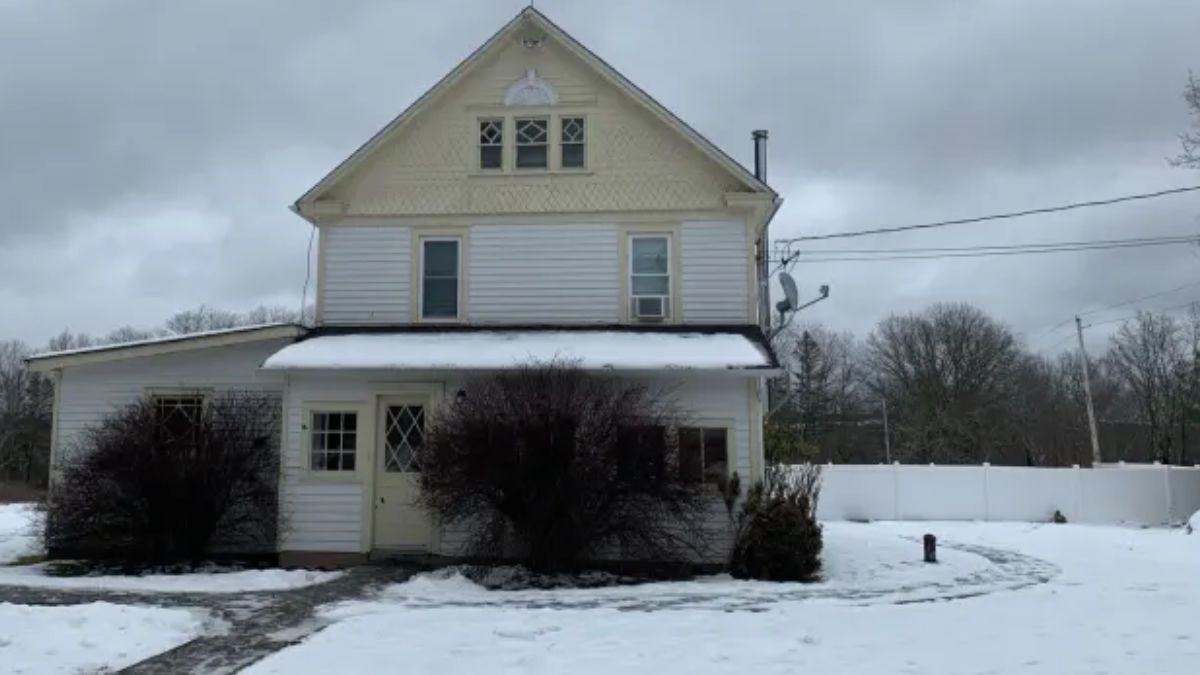
The sisters, who document the project as @theblankfarmhouse, kept the house and changed its palette. Marni described a home full of dated finishes and fixtures. Their aim was to respect its original character while giving it a modern refresh.
Choosing a dark finish on the house itself
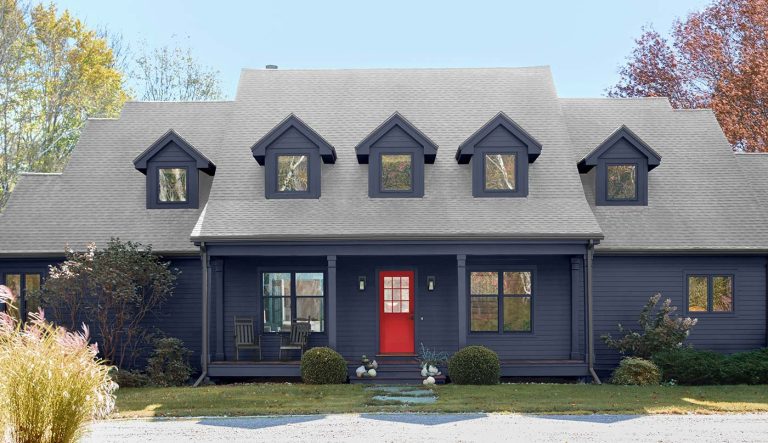
A lasting appearance mattered more than following a short-lived color trend. Marni felt a darker exterior would help the farmhouse look classic. Charcoal ultimately replaced the faded-looking white and yellowish paint across the front.
Before deciding, they put four charcoal samples onto the sides of the building and returned to look at them throughout the day. Benjamin Moore Soot, 2129-20, won over the other three shades. Testing the paint directly on the siding let them see more than an indoor color chip could show.
A separate front-door project illustrates the same principle. That homeowner tried several samples against brown stone and the surrounding trim before choosing a pale blue-green. Daylight and neighboring materials affected how each sample looked.
Finding help and uncovering repairs
Booking a painter proved difficult during the pandemic-era surge in home projects. Once they found someone available, the painting itself moved quickly.
Winter had concealed a more expensive problem. Rotten decking was hidden beneath snow when the sisters bought the property. Repairing it absorbed a substantial part of their budget and left less for the remaining work.
Changing the planting around the entrance
They removed the barberry at the front that Marni thought gave the house a haunted appearance, and trimmed the shrub at the side. The stamped concrete path stayed. New planting came from a local farm, selected for its texture and appearance, and included fruit trees and evergreens.
Their father joined them on weekends to help plant. Combined with the new paint, that work changed the view from the street. Marni recalled neighbors slowing down or stopping to say how much they liked the color and the difference it had made.
For a smaller initial budget, the source suggests beginning with the landscape. Removing an overgrown shrub and trimming another can improve the entrance before committing to a full repaint.
Checks before working on an old exterior
Paint on a house of this age deserves attention before scraping or sanding. The EPA says approximately three-quarters of U.S. homes built before 1978 still contain some lead-based paint. Its Renovation, Repair and Painting Program requires lead-safe certification for covered paid work that disturbs those surfaces. The sisters’ account does not establish whether their paint was tested, so ask a contractor about certification before work begins.
Inspect the timber as well as its coating. Rotten decking needs repair before guests use it, and soft siding or trim should be replaced instead of concealed beneath paint. High gables call for a professional with appropriate ladders or scaffolding. As this project demonstrates, assess the color on the actual building at several times of day.
Source: Homedit.









































Benjamin Moore Soot sounds stunning on a farmhouse. How did you decide between those charcoal samples? Did the lighting change significantly throughout the day, or was it mostly about matching the existing stone and trim?
We tested several charcoal samples against the existing stone and trim. Lighting played a huge role; we chose Soot because it balanced the cool morning light with the warm afternoon sun, perfectly complementing the natural textures without overwhelming the space.