
The rear exterior of a North Carolina patio featured white vinyl siding, basic seating, and a bamboo shade suspended between wooden posts. Humidity caused the previous bamboo coverings to mold, forcing their removal. The homeowner sought additional color for the seating zone but avoided replacing the siding or applying new materials. Instead, she opted to paint oversized poppies and peonies directly onto the wall.
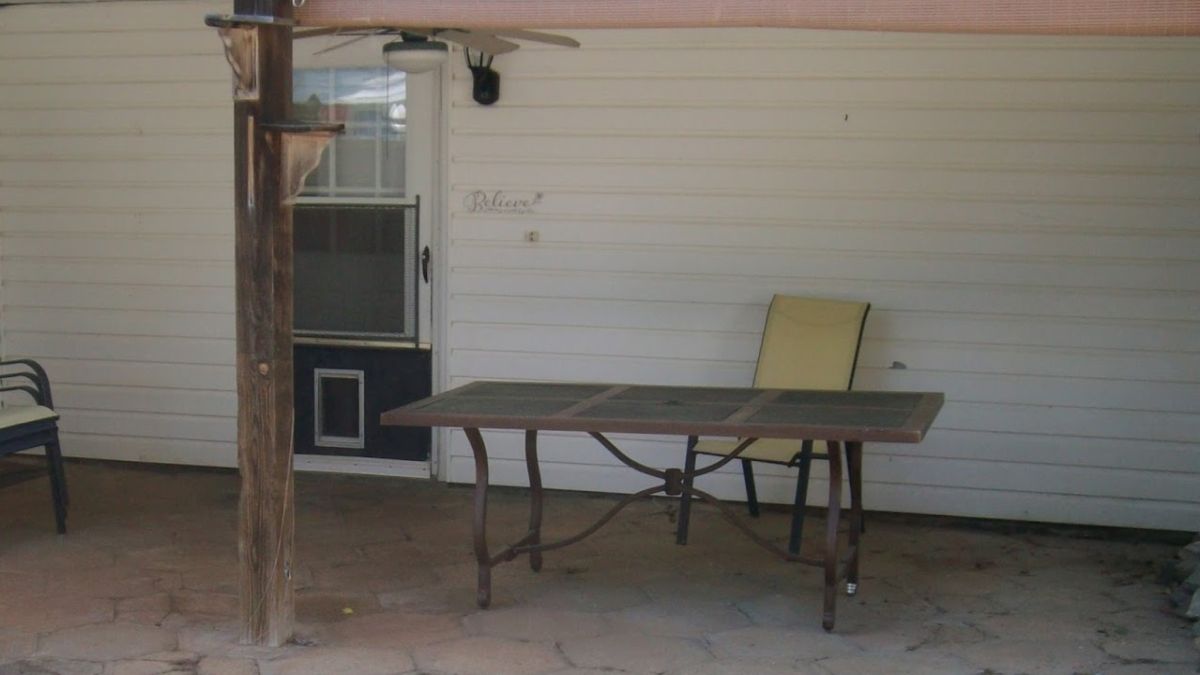
Dianna Wood, who documents her work on The Wood’s Secret Garden, began this project after relocating to North Carolina with her husband, Michael. She selected orange-red blooms and green foliage to harmonize with furniture acquired from local thrift stores.
The Patio Had White Siding and a Few Pieces of Outdoor Furniture
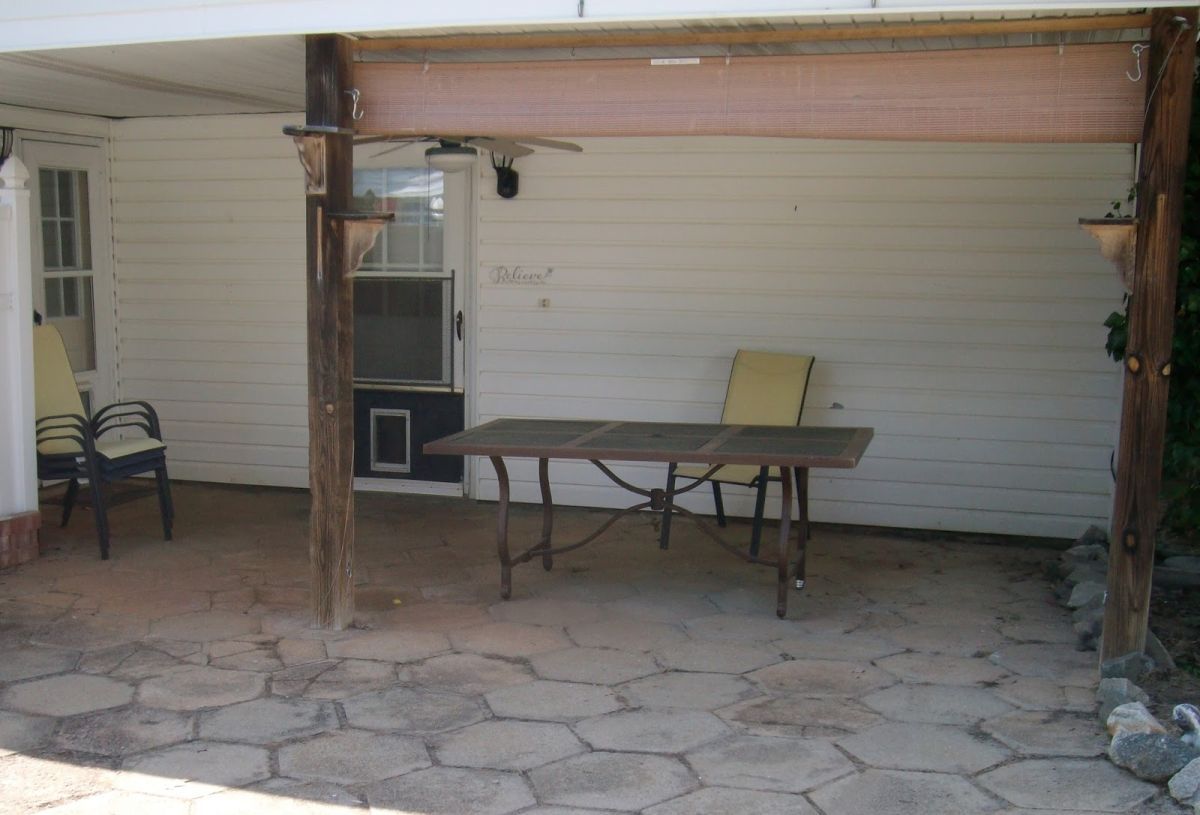
Before the transformation, the covered area included a long white wall, a stone-patterned floor, wooden support posts, and a glass-topped table. This seating space served as a connector between the main house and the in-law quarters occupied by Dianna’s mother.
The color palette was established using two green chenille chairs bought for $20 each, a $20 glass table, and various secondhand dining chairs.
Pastel Chalk Provided the Outline for Giant Flowers
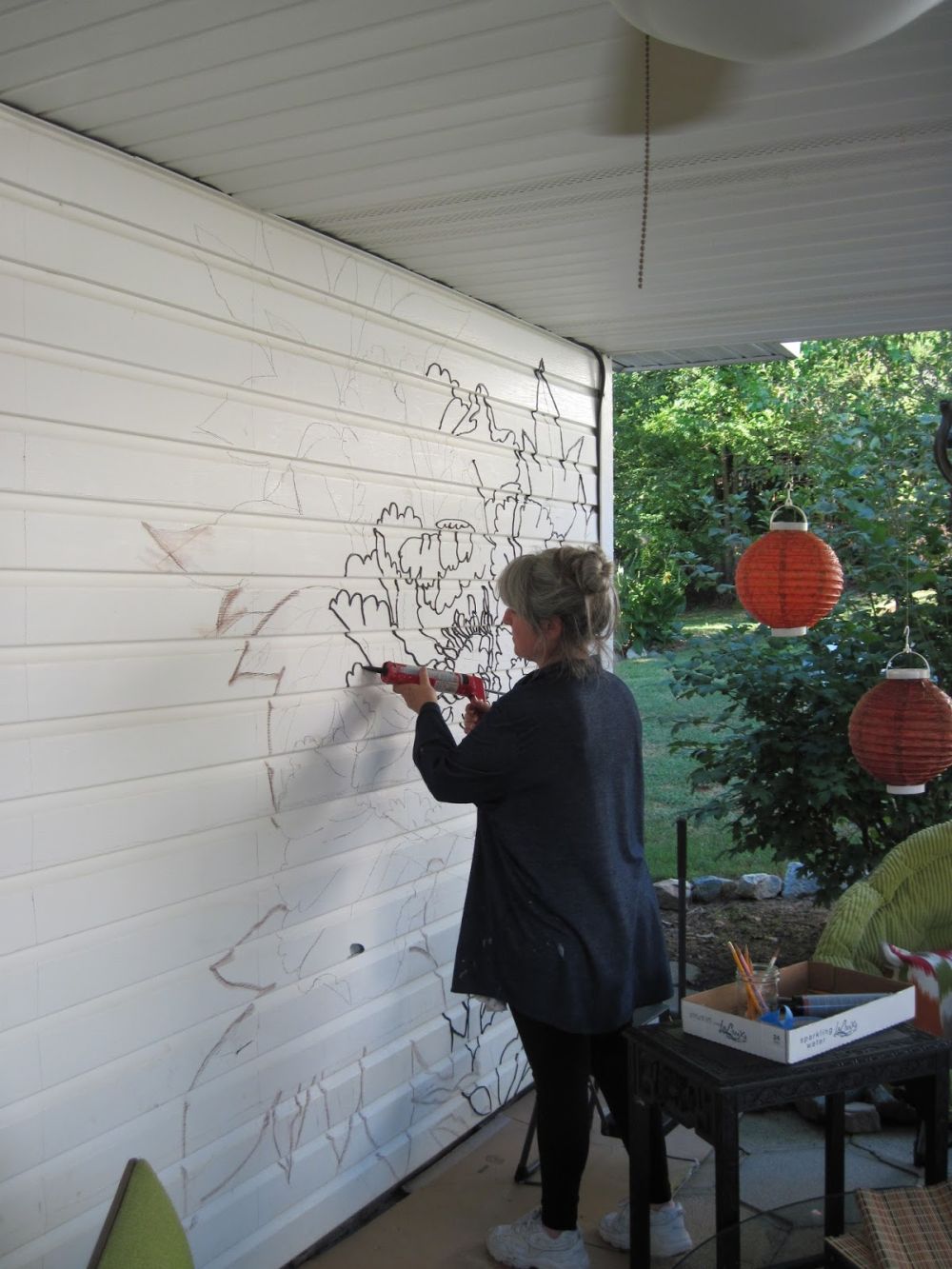
Dianna utilized pastel chalk to sketch the design across the horizontal siding, treating the wall as her canvas. The illustration featured broad petals, stems, leaves, and buds, with the largest flowers stretching from near the floor to the ceiling.
These chalk marks served as a temporary guide for the next phase, allowing for adjustments without leaving permanent lines.
Black Caulk Replaced Paint for the Flower Outlines
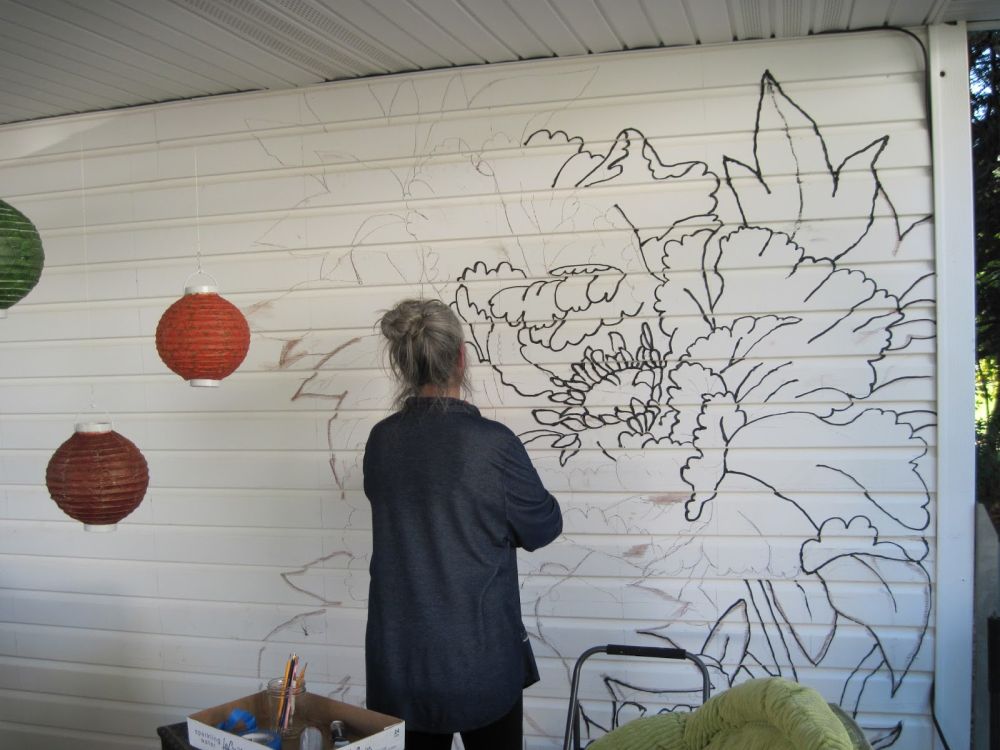
Using a caulk gun, Dianna traced the flower shapes with black caulk, following the curves of the petals and leaves. This material created raised outlines against the siding, separating sections that would receive different paint colors.
She kept a damp cloth nearby to wipe away mistakes and remove excess caulk from the applicator tip. After allowing the lines to dry for several hours, she pressed down any raised points before painting.
Yellow and Green Paint Established the First Colors
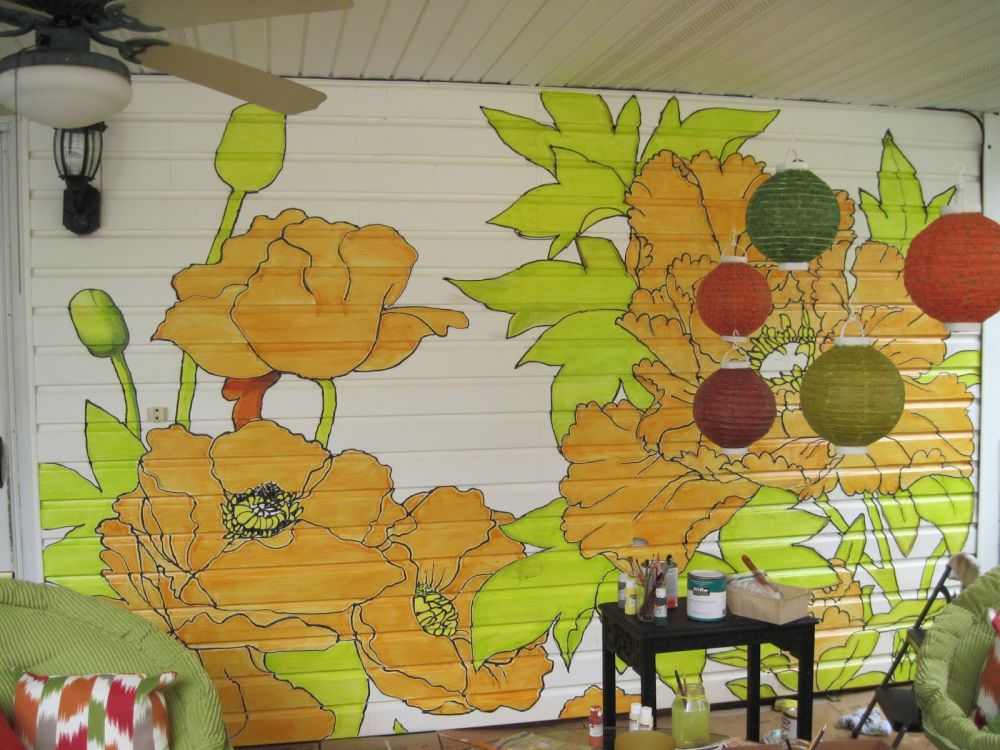
The design features black outlines that define the individual petals and the centers of the blossoms. The initial application of color resulted in yellow-orange petals for the flowers and a light green finish for the leaves.
Dianna used exterior latex semi-gloss paint, applying more than one coat where the colors needed greater coverage.
Red Paint Changed the Flowers From Yellow to Orange-Red
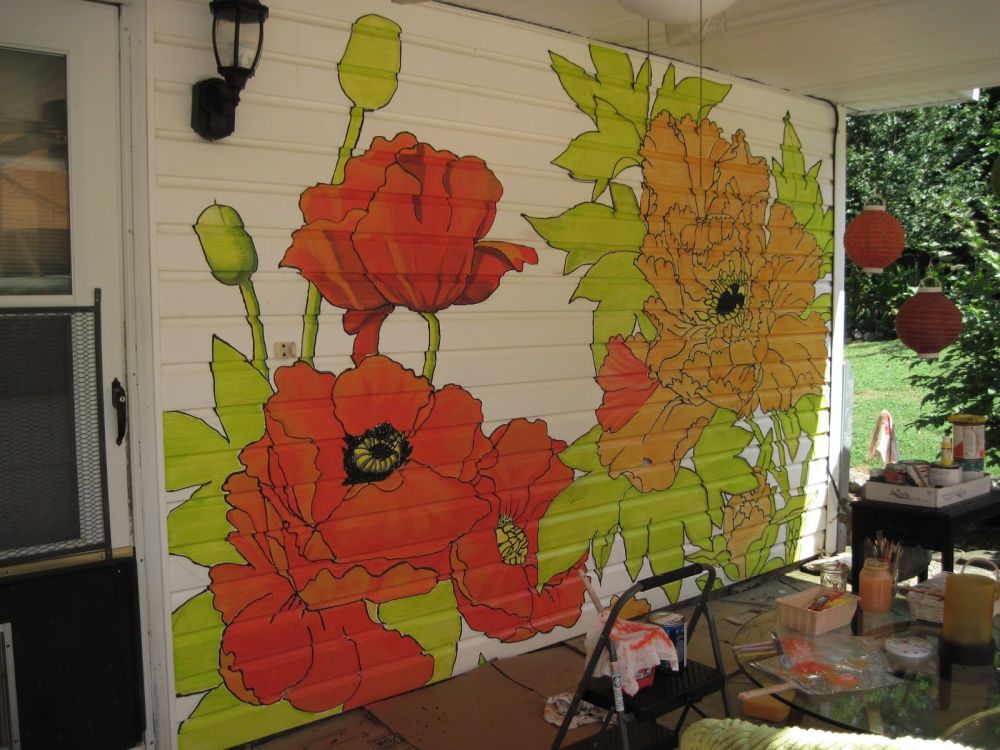
Orange and coral hues emerged on the petals as yellow base areas were covered by red paint, with darker shades delineating the folds and some yellow persisting around the centers and edges.
The flowers took on different shades without requiring a separate color for each petal.
Dark Green Leaves Completed the Floral Wall
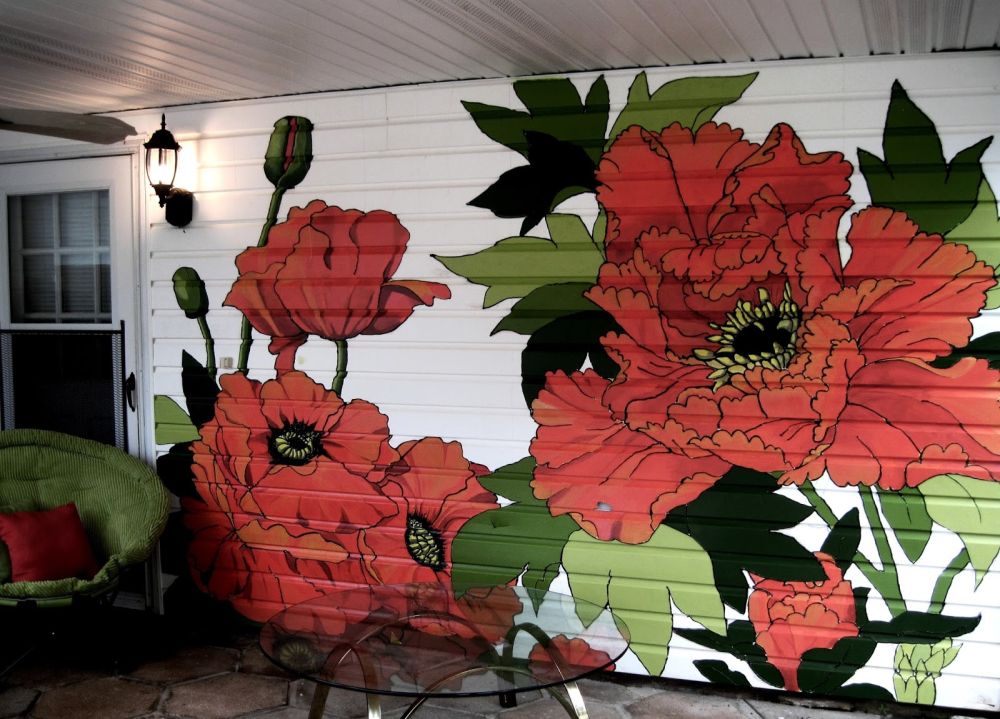
Large red-orange blossoms, green leaves, and dark flower centers adorn the horizontal siding in the completed mural, while the black caulk outlines persist, tracing the floral contours.
The original white wall still shows between the painted sections, while the ceiling, door, and wall-mounted light remain unchanged.
The Outdoor Seating Area Became Part of the Mural
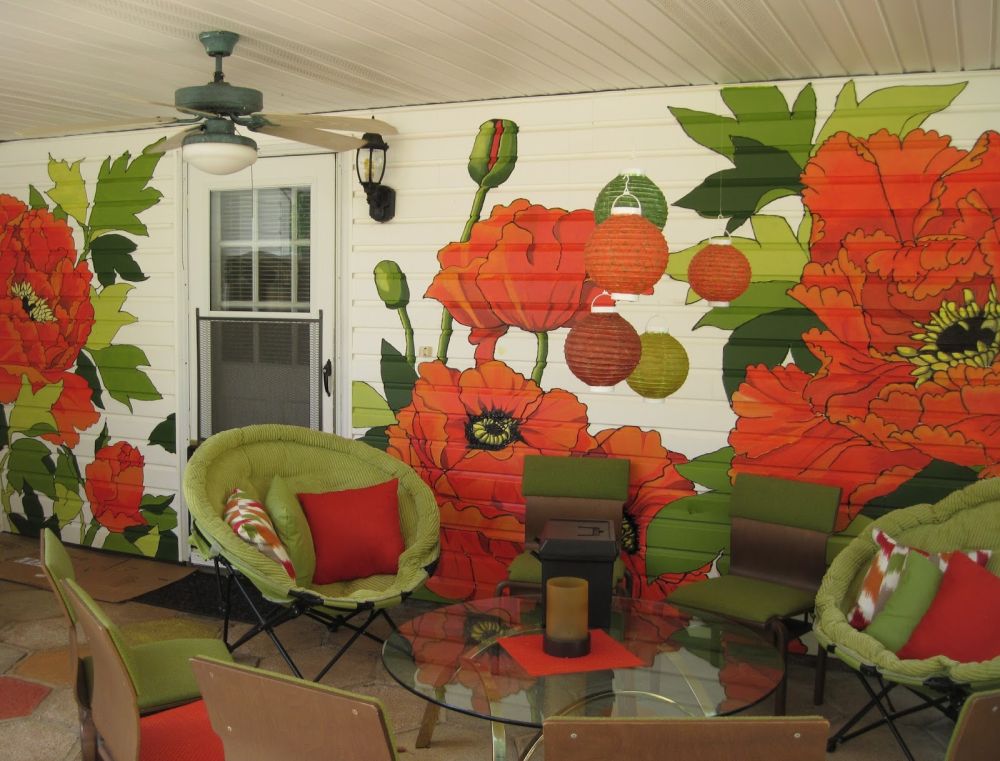
Behind a glass table, green lounge chairs, and hanging paper lanterns in orange, red, and green, the finished wall is positioned. The hues of the furniture echo the leaves and petals, linking the mural to the remainder of the patio.
The artwork was allowed to flow across the seating area instead of halting at a single section, as the design was expanded by Dianna to encompass the door and the adjacent wall.
The Before-and-After Shows the Change Without New Siding
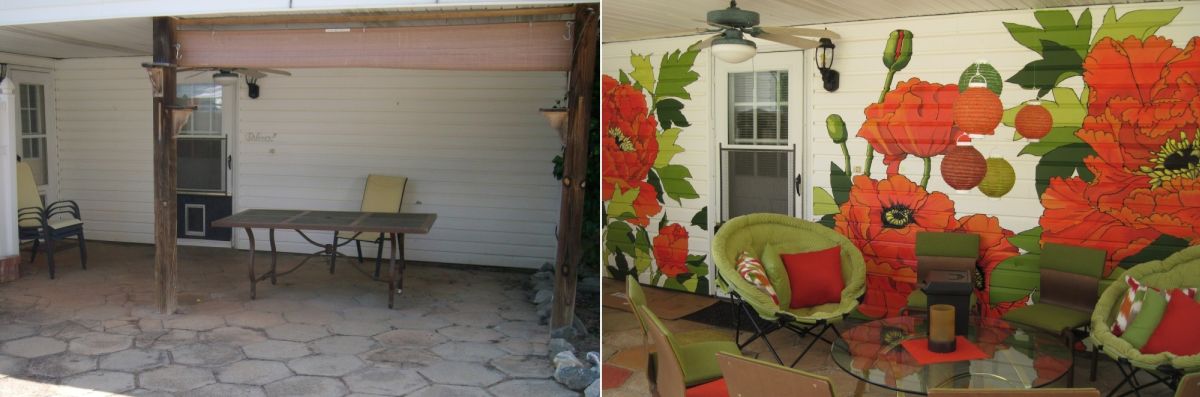
Following the renovation, oversized flowers now adorn the walls, whereas the original siding, roof, door, and stone-patterned floor remain in place. Previously, plain white siding was visible behind a small table and chairs.
The makeover replaced the failed bamboo wall covering with painted artwork, using the exterior wall as the foundation for the design.
By applying painter’s tape and two distinct paint hues, one homeowner successfully replicated a tile design on her concrete patio without the need for new tiles, demonstrating how paint can also alter the appearance of the patio floor.
Original project and photographs: Dianna Wood, The Wood’s Secret Garden, “Painted Patio Wall Transformation – Our New Secret Garden,” published August 23, 2017.
Source: Homedit.

















So we paid for a house just to treat the exterior like a cheap sketchbook. Because nothing says “premium outdoor living” like giant flowers drawn in pastel chalk that will inevitably get blown away by the first decent breeze.