
After wiping the cabinet doors near the stove, your fingers may still detect tackiness an hour later. The areas surrounding the handles feel sticky, while the tops of the upper cabinets are covered in a gray, gummy layer. Often, applying more spray simply spreads the grime rather than eliminating it.
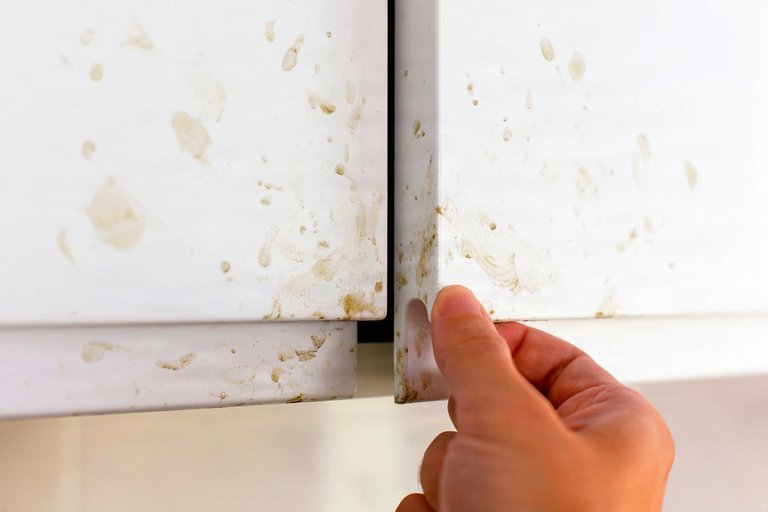
Your cabinets are not dirty due to a lack of cleaning effort. Cooking releases a fine mist of grease that settles on nearby surfaces, where dust adheres to it. The result is not loose dirt that wipes away easily, but a film that requires time and mild abrasion to release. The solution is already in your pantry: baking soda.
Why sprays often fail to remove the stickiness
It is easy to reach for vinegar or a degreaser spray, which can handle light films. However, the thicker, sticky buildup around handles, edges, and cabinet tops behaves differently. A spray tends to hit the surface and run off before it can penetrate and work.
A paste remains in place. According to New Mexico State University Extension, baking soda serves as a mild abrasive in homemade cleaner alternatives. When mixed with water, it clings to sticky spots long enough to soften them. This provides just enough scrubbing power to lift the film without requiring a harsh scouring pad.
Steps to clean sticky cabinets using baking soda
Begin with the gentlest method and proceed to stronger steps only if necessary:
- Start with soap. Add a few drops of dish soap to a bowl of warm water. Dampen a soft cloth, wring it until barely wet, and wipe the surface. For light grease, this step may be sufficient.
- Create the paste. Stir baking soda with just enough water to achieve a spreadable consistency.
- Apply to sticky areas. Spread the paste on the regions around handles, door edges, and the tops of upper cabinets.
- Let it sit. Allow the paste to sit for 5 to 10 minutes. Then, rub gently in small circles using a soft cloth or sponge.
- Wipe and dry. Remove all paste traces with a clean, damp cloth. Dry the surface with a towel to prevent water from sitting on the wood.
-
The tops of upper cabinets typically hold the thickest layer of grime because they are rarely seen. Use a step stool and apply a second round if the first attempt leaves a dull film.
Residue causes a clean surface to feel sticky again. This phenomenon also occurs on floors: wood floors that feel sticky after mopping often have leftover cleaner or grease on the finish. Adding more product in this situation only worsens the problem.
Precautions for painted or glossy doors
Although baking soda is gentle, it remains an abrasive. High-gloss cabinet fronts can scratch, so skip the paste on these surfaces and stick to the soap-and-water method.
Painted cabinets require similar caution. Test the paste on a hidden spot, such as the inside edge of a door, and use light pressure with a soft cloth.
Minimize water exposure on wood. Wring cloths thoroughly and dry each door as you go to prevent moisture from soaking into seams or edges.
If the finish is worn through to bare wood, cleaning will not restore it. This condition requires refinishing rather than additional scrubbing.
A spoonful of baking soda, ten minutes of patience, and a dry towel constitute the effective method.
Source: Homedit.

















































We mistake stickiness for dirt, but it is time’s residue. Sprays fail because they flee; baking soda stays, grinding the past into dust. We must endure the mild abrasion to truly release what clings.
Spot on! That “time’s residue” is a perfect way to describe built-up grease. Baking soda’s gentle abrasion really does work wonders where sprays fall short. Glad the paste method helped you tackle those stubborn cabinets!