
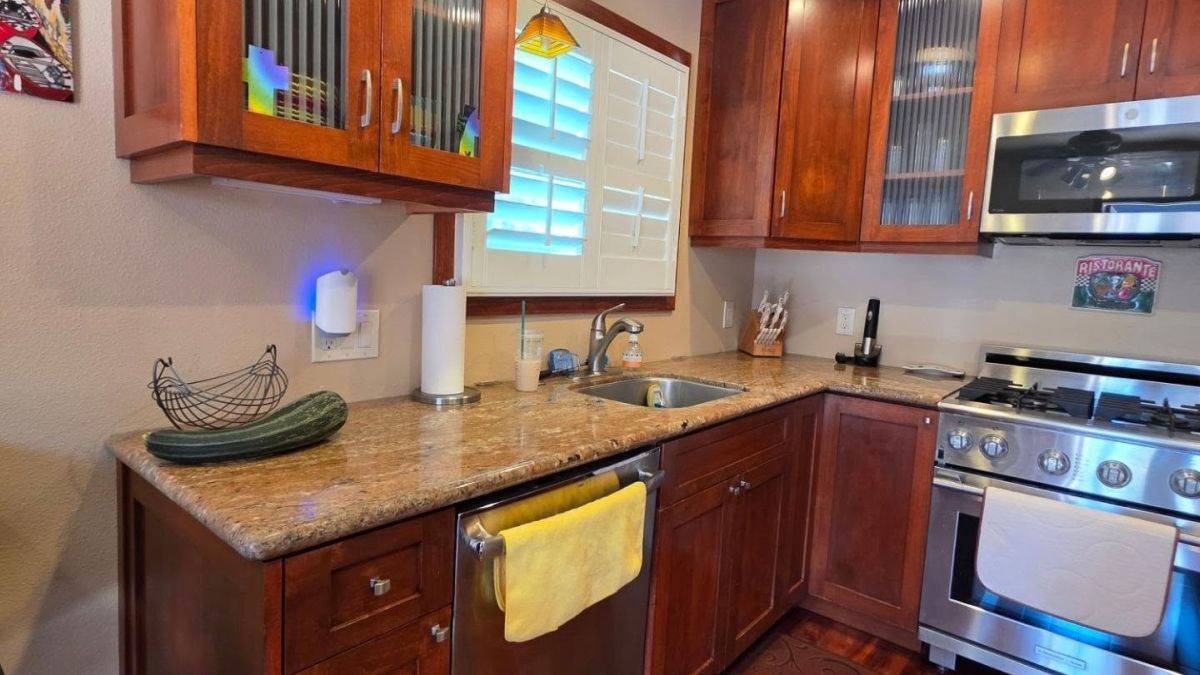
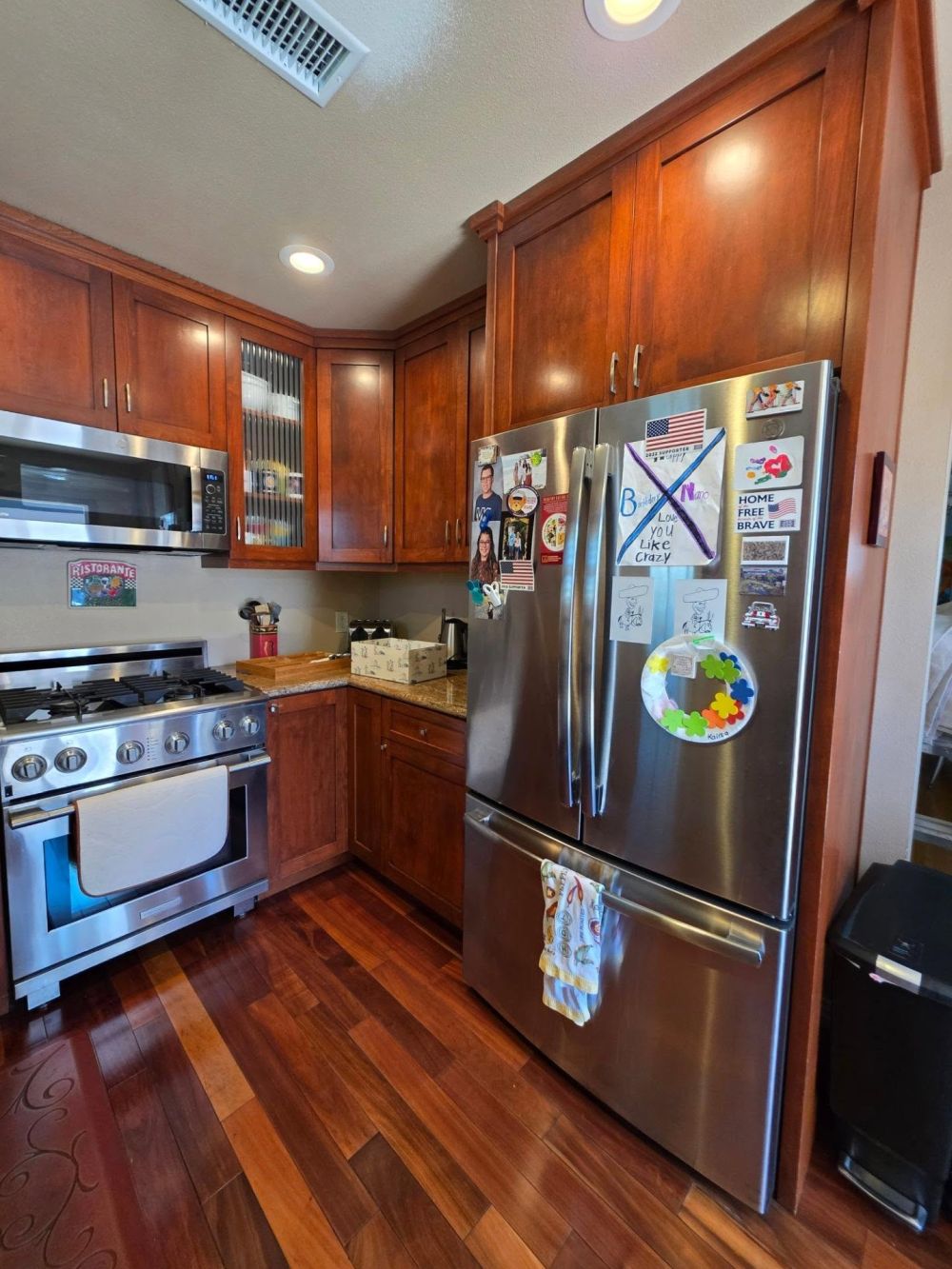
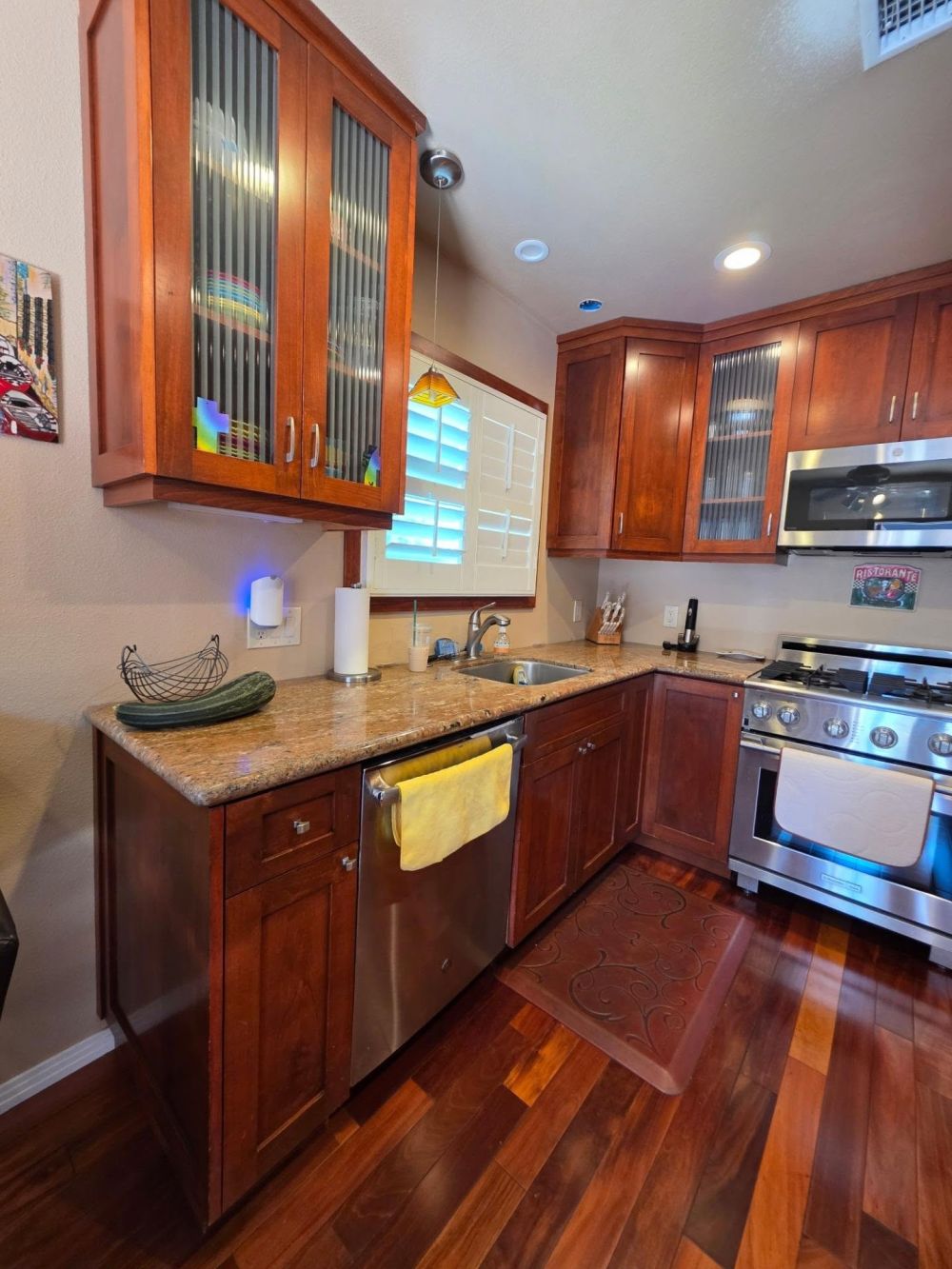
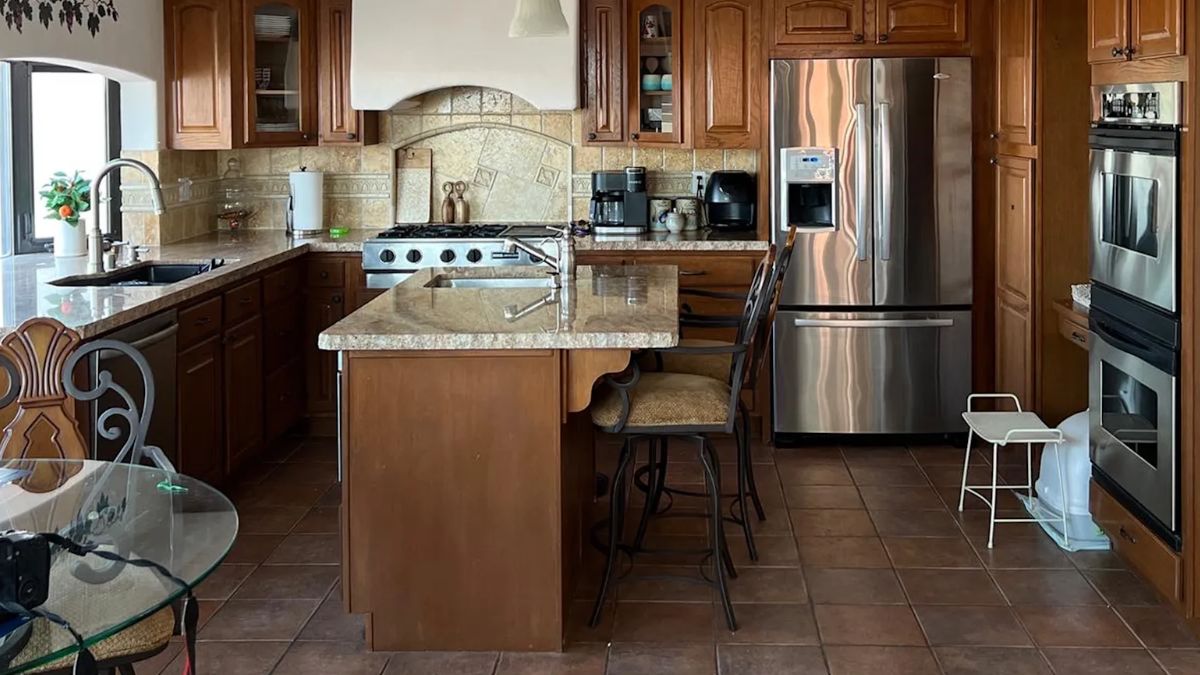
Almost every wall in this California kitchen was lined with dark reddish-brown cabinets, and the same wood material extended from the refrigerator to a separate storage area located next to the back door. The homeowners decided to retain the existing cabinetry instead of demolishing it, even though they desired a different aesthetic for the room.
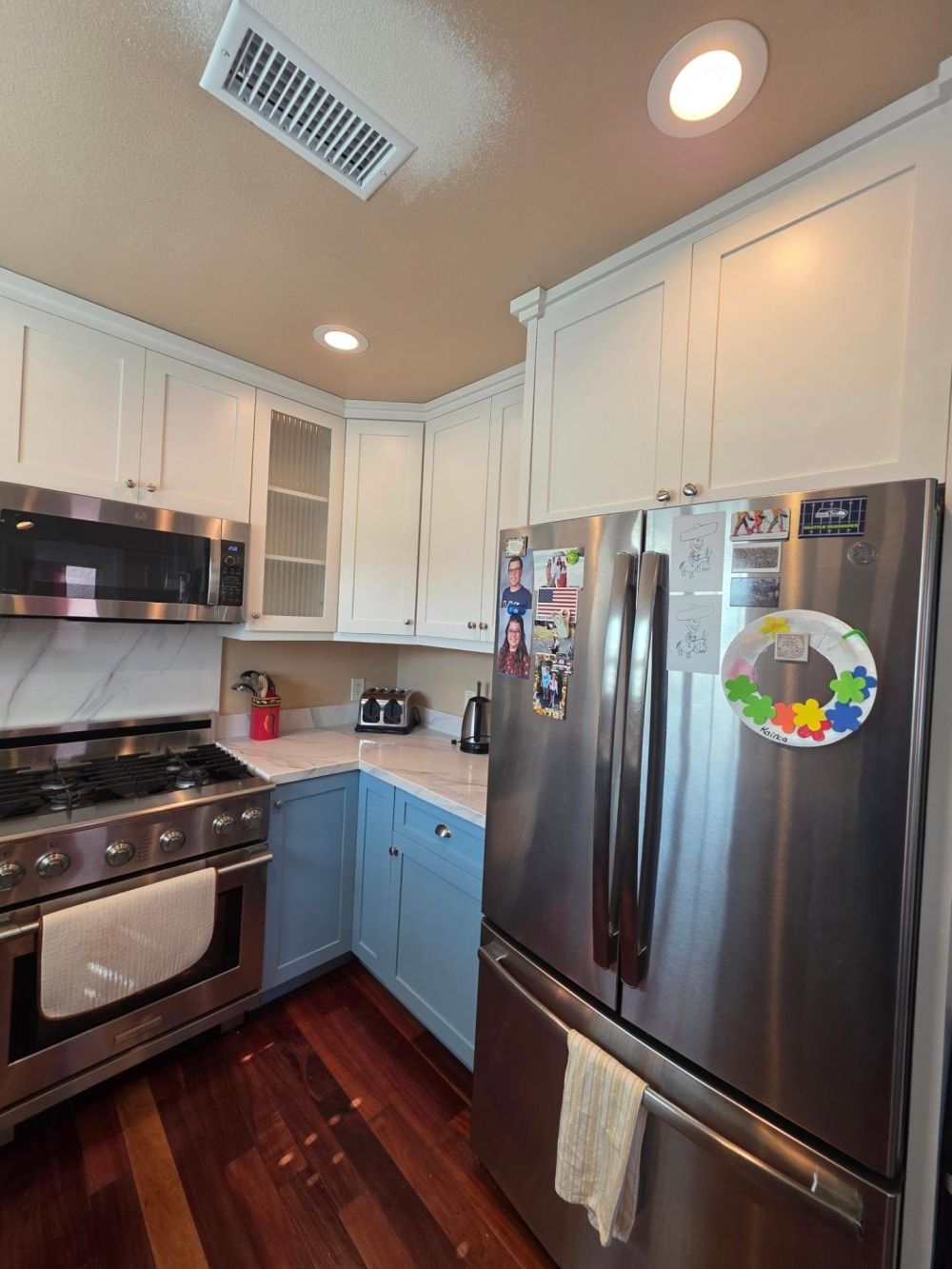
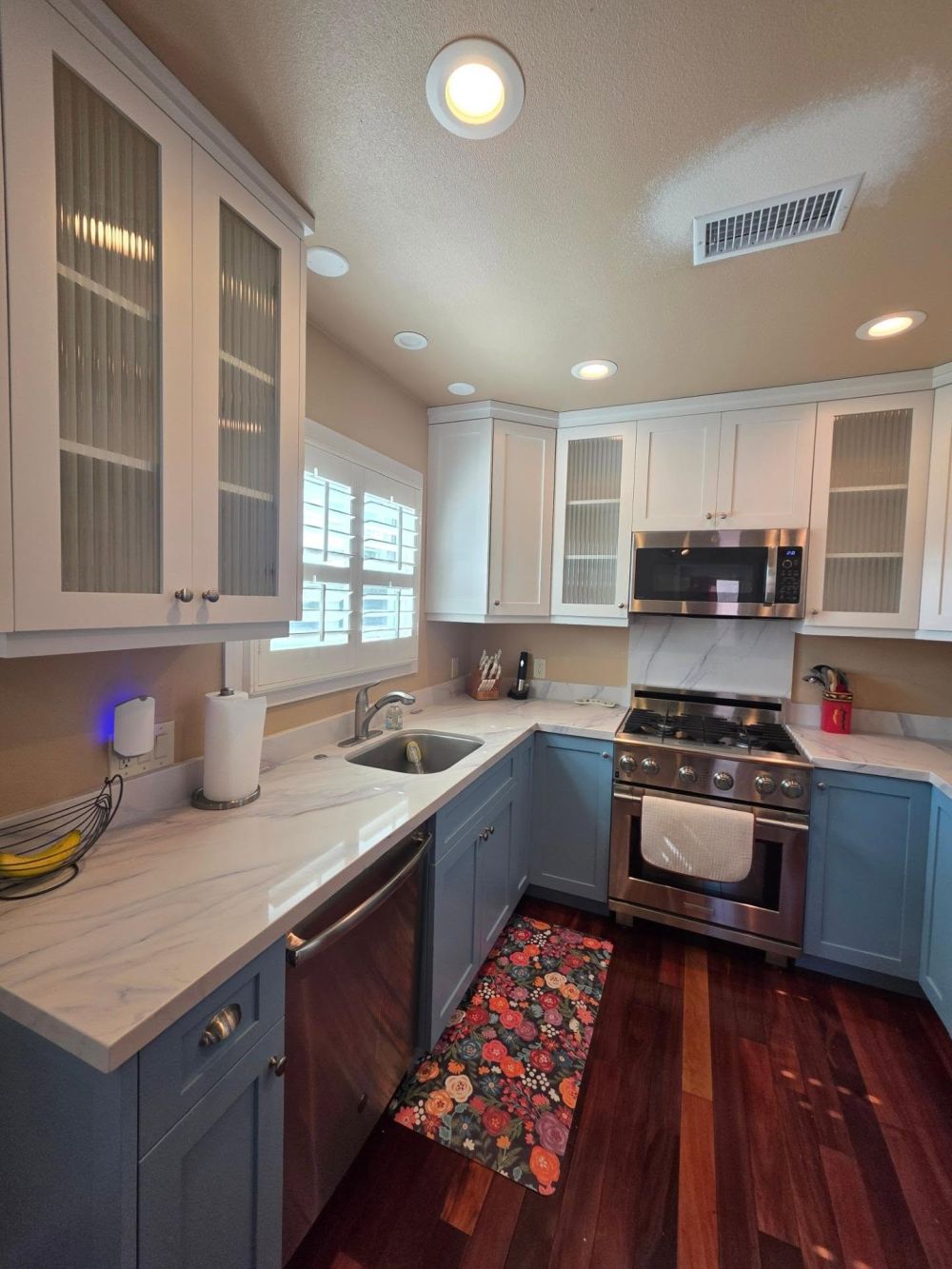
In a renovation documented by Instagram creator @fabspainting, the upper cabinets were spray-painted white while the lower cabinets received a dusty blue finish. A contractor applied a professional two-component coating system to the original doors, achieving a smooth surface that mimics the look of brand-new cabinetry.
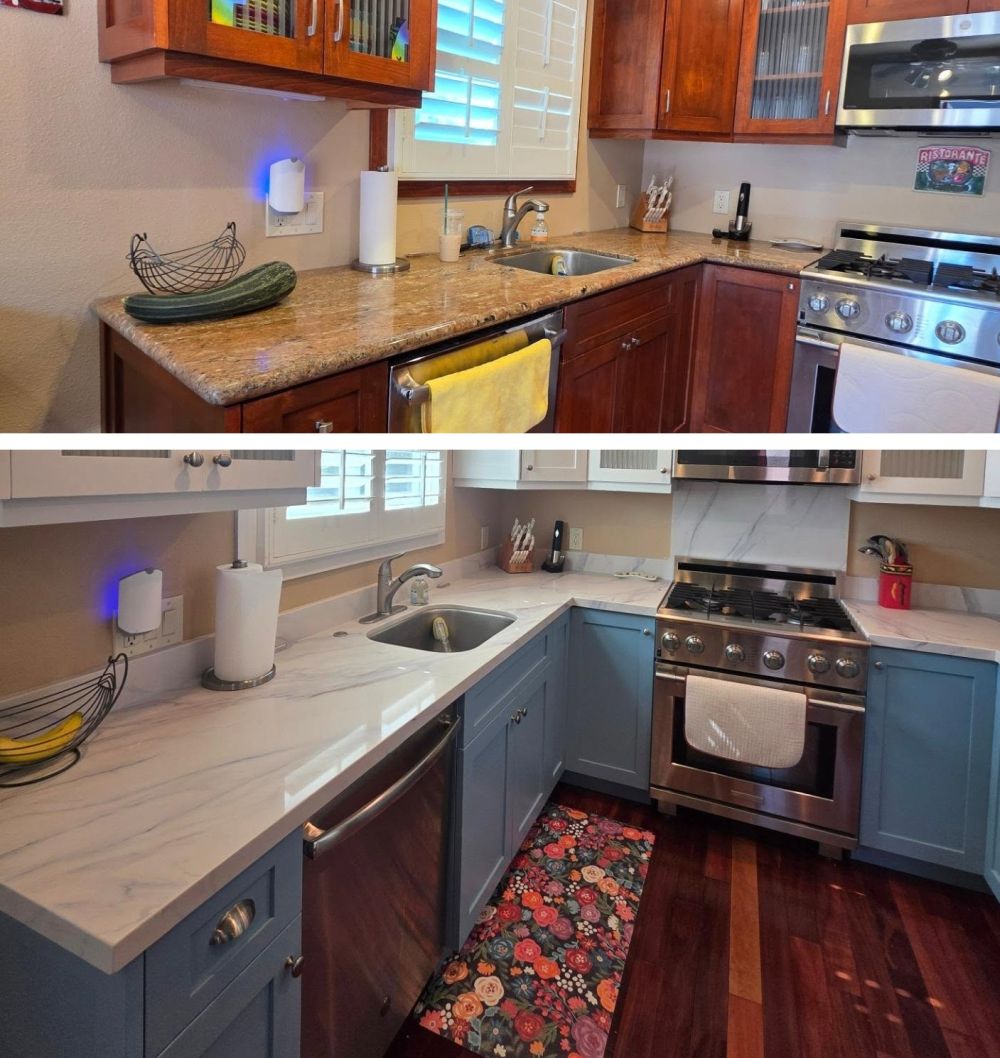
The renovation extended beyond painting, as lighter worktops and updated hardware altered the appearance of the original cabinets against the dark hardwood floors. The before-and-after photos are particularly striking because they highlight how much of the kitchen's structure remained in place despite the dramatic change in style.
Dark Wood Cabinets Dominated the Original Kitchen
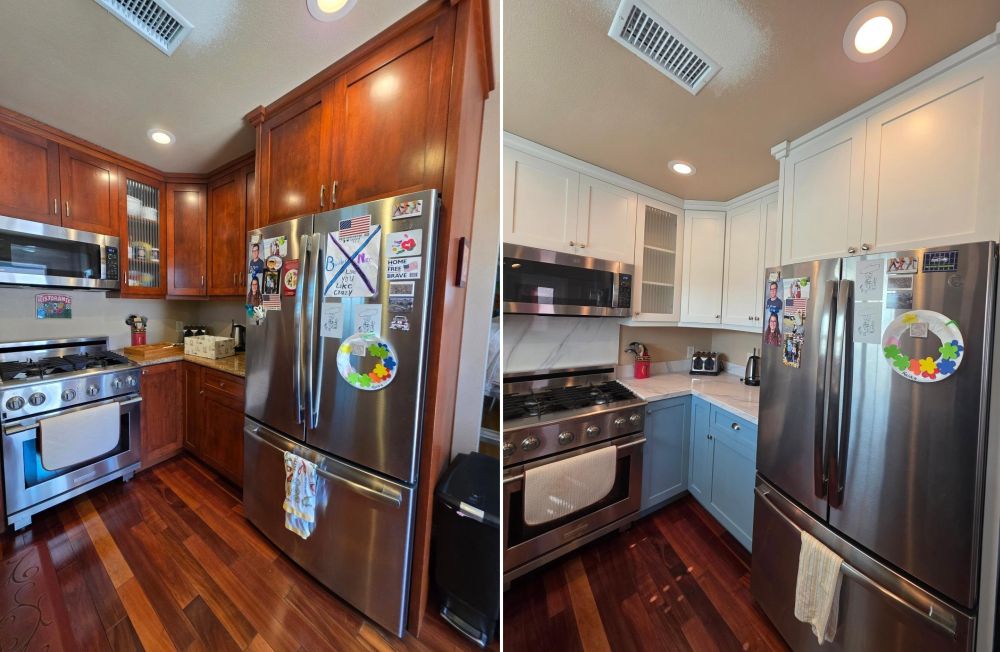
The original kitchen featured reddish-brown Shaker-style cabinets that ran from the sink to the stove and refrigerator, with tall upper cabinets installed above the appliances to provide additional storage.
Brown speckled countertops complemented the wood tones, while glass-front cabinet doors broke up the visual monotony of the solid panels. The kitchen maintained a U-shaped layout that included a stainless steel range, a dishwasher, and a French-door refrigerator.
Matching lower cabinets continued across the sink wall beneath a window, and a suspended glass-front cabinet was positioned near the entrance to the adjacent room. The cabinetry was in sufficiently good condition to be refinished rather than replaced entirely.
White Upper Cabinets and Dusty Blue Lower Cabinets Replaced the Dark Finish
The painter applied a white finish to the upper cabinets and selected a dusty blue color for the lower doors and drawers. This two-tone approach separates the storage zones, replacing the continuous reddish-brown look with a lighter upper section and a contrasting base.
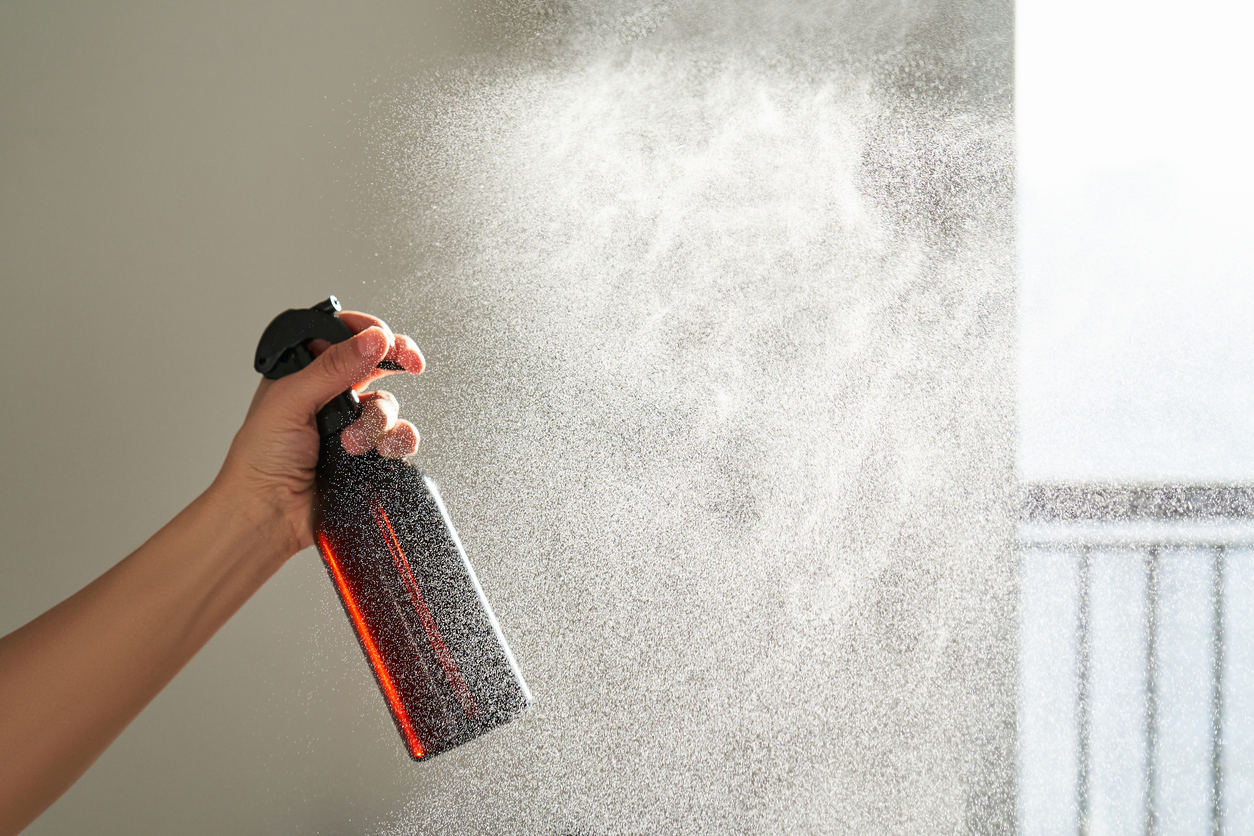
According to Fab’s Painting, the cabinets were treated with an all-spray application using a premium two-component (2K) primer and topcoat system, eliminating the need for brushes or rollers. The company also verified that Centurion Wood Coatings products were used for the project.
The original Shaker-style doors and ribbed-glass inserts were preserved, including the tall cabinet panels located beside the stove. Small metal knobs and cup pulls replaced the old hardware, and the sprayed coating gave the existing doors a smooth, factory-finished appearance.
Marble-Look Countertops and Backsplash Changed the Cooking Area
The original brown speckled counters were swapped for white marble-look surfaces characterized by thin gray veining. Behind the gas range, a matching panel extends from the countertop up to the microwave, replacing the previously plain wall surface.
The new counters create greater contrast against the blue lower cabinets, while the stainless steel appliances remain in their original locations. The kitchen’s footprint required no changes to accommodate the new finishes.
The Cabinets Beside the Back Door Received the Same Treatment
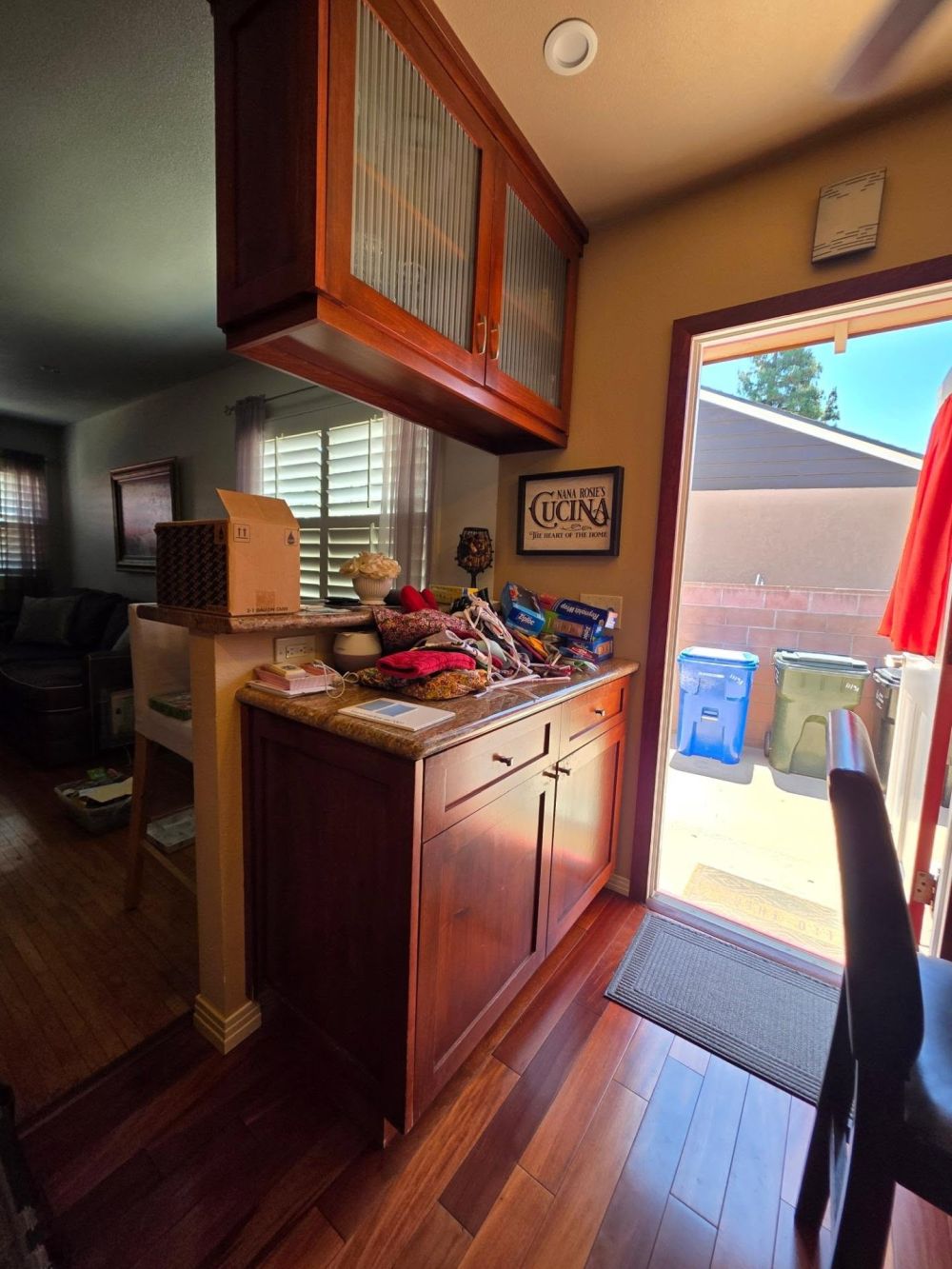
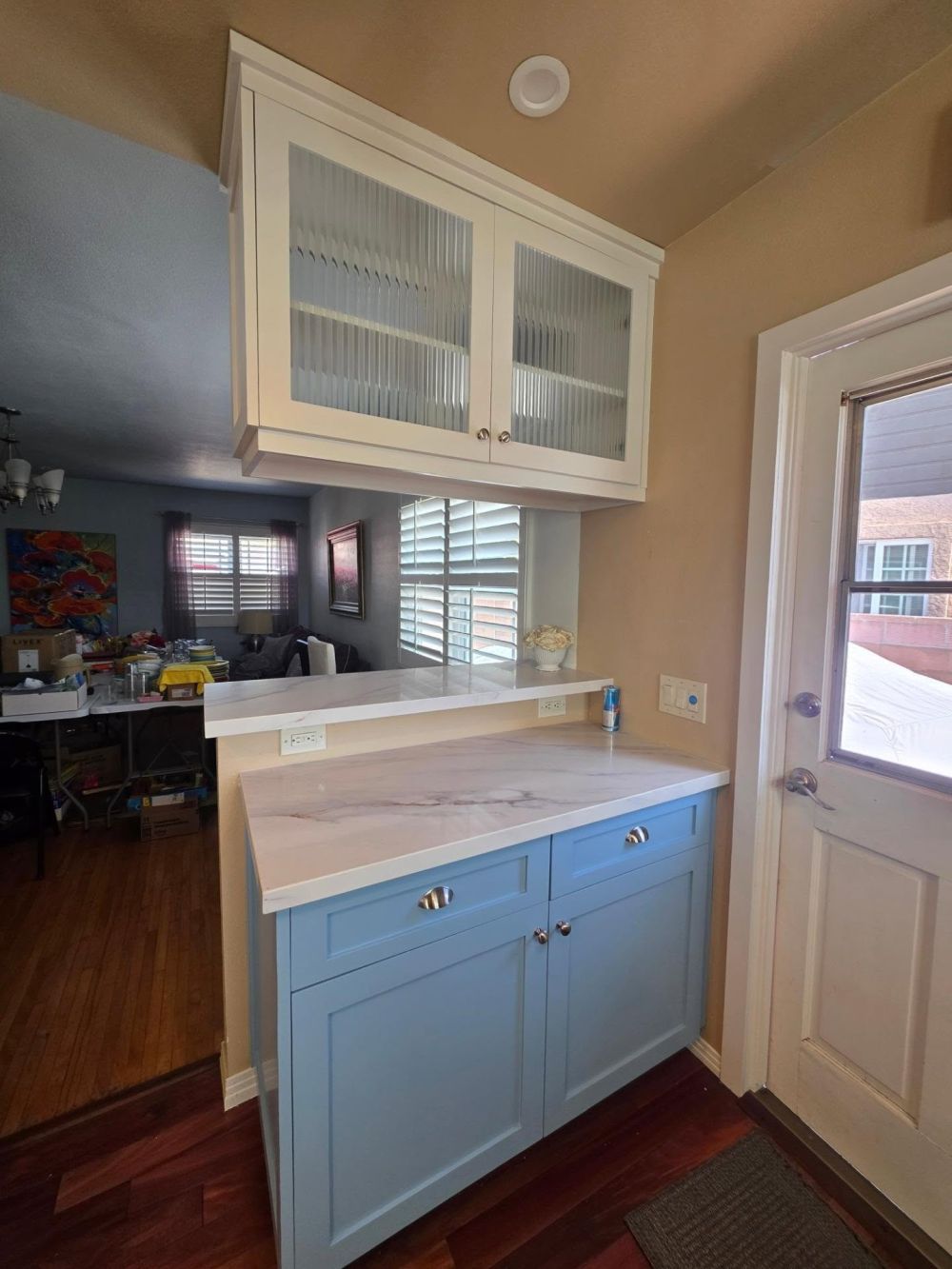
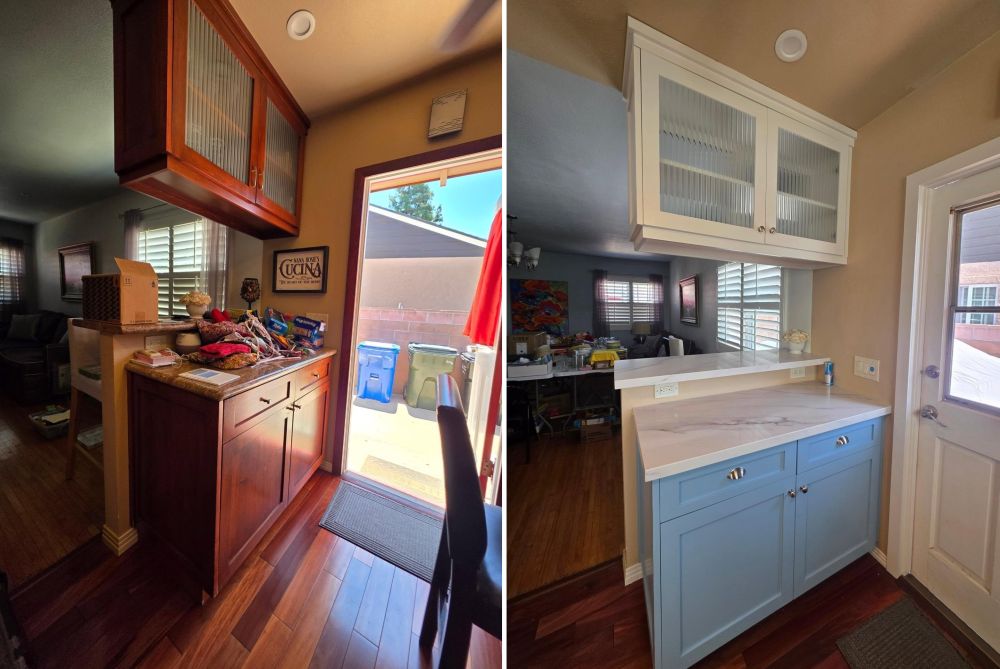
A separate storage area next to the back door originally contained a brown base cabinet beneath a suspended glass-front cabinet. Its countertop extended toward the adjacent living space, forming a small pass-through ledge.
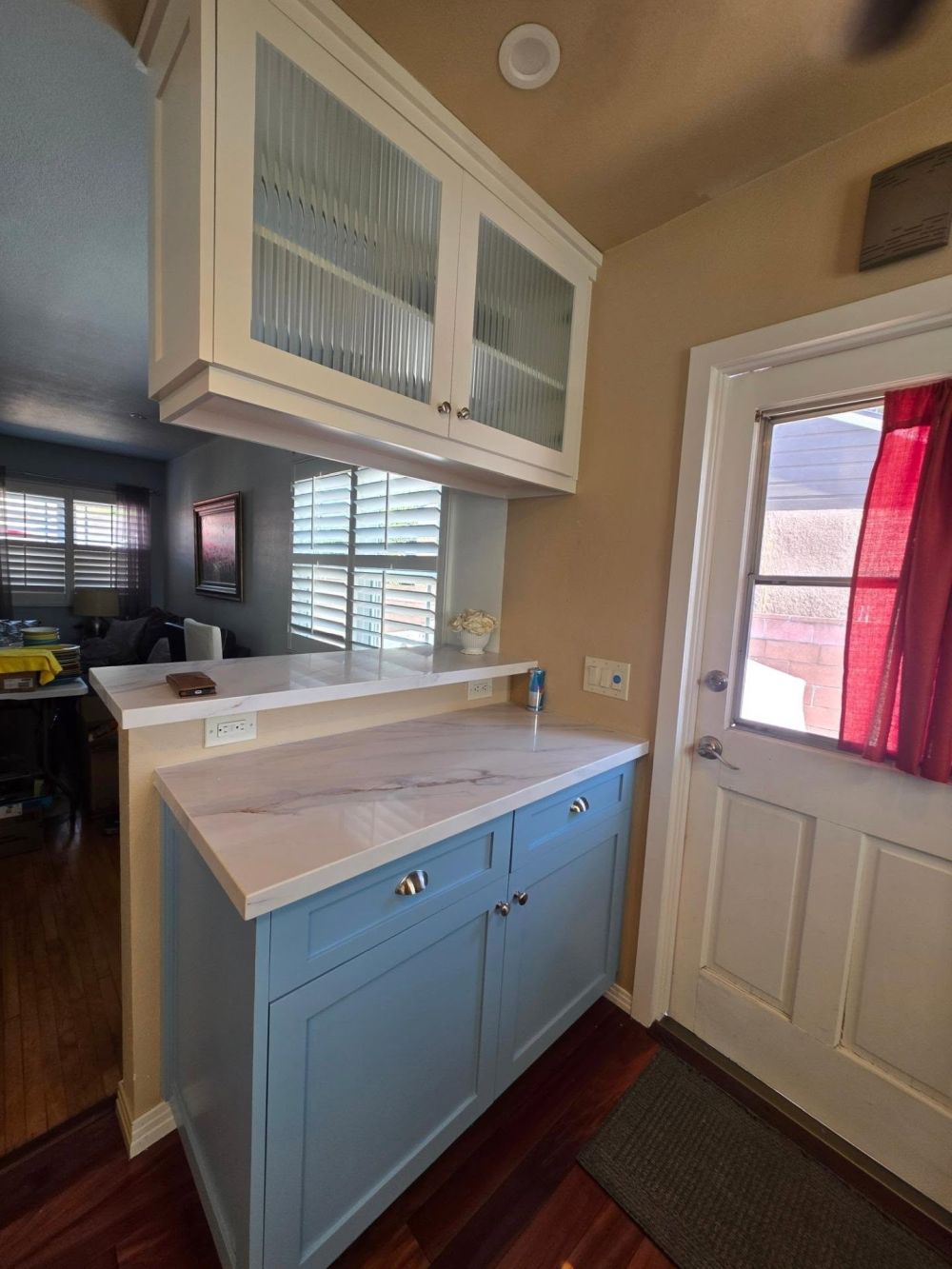
The lower doors were painted dusty blue, while the overhead cabinet was finished in the same white used throughout the main kitchen. White marble-look surfaces replaced the brown countertop and pass-through ledge, and new cup pulls were installed on the drawers.
The ribbed-glass panels, the arrangement of the cabinets, and the opening toward the living room remained unchanged, demonstrating how the existing storage could be integrated into the two-tone design.
The Original Hardwood Floors Stayed
One major surface was left untouched during the renovation: the reddish-brown hardwood flooring. Its dark planks previously coordinated with much of the cabinetry, but the new white and blue finishes now stand in contrast to the wood.
The before-and-after comparison also reveals that the tall cabinets surrounding the refrigerator, the overhead microwave, and the range occupy the exact same positions as before.
The pass-through area underwent a similar transformation, with brown cabinets and counters replaced by painted fronts and white surfaces, while the original storage arrangement remained intact.
For this project, refinishing the existing cabinetry and replacing the countertops created a fresh appearance without removing the cabinets or altering the kitchen layout.
Would you have kept the reddish-brown hardwood floors with the white and dusty blue cabinets, or chosen a different flooring finish?
The post They Spray-Painted the Dark Wood Cabinets White and Dusty Blue, and the Kitchen Took on a Custom-Built Look appeared first on Homedit.






So we painted over the rotting wood instead of fixing it? Classic. I guess “dusty blue” is just code for “we couldn’t afford new cabinets.” At least the irony looks chic.
It’s a valid critique! We did paint over the existing structure to preserve character and save costs, rather than a full replacement. While “dusty blue” might feel ironic, it was a deliberate choice to blend modern trends with the home’s vintage charm. Thanks for sharing your perspective!