
The conventional method for spray-painting an antique dresser involves removing the drawers first. Leaving them in place can cause paint to accumulate in the narrow gaps, leading to sticking or thick ridges along the edges. This particular piece contained seven drawers within a single wooden frame, creating numerous opportunities for such issues.
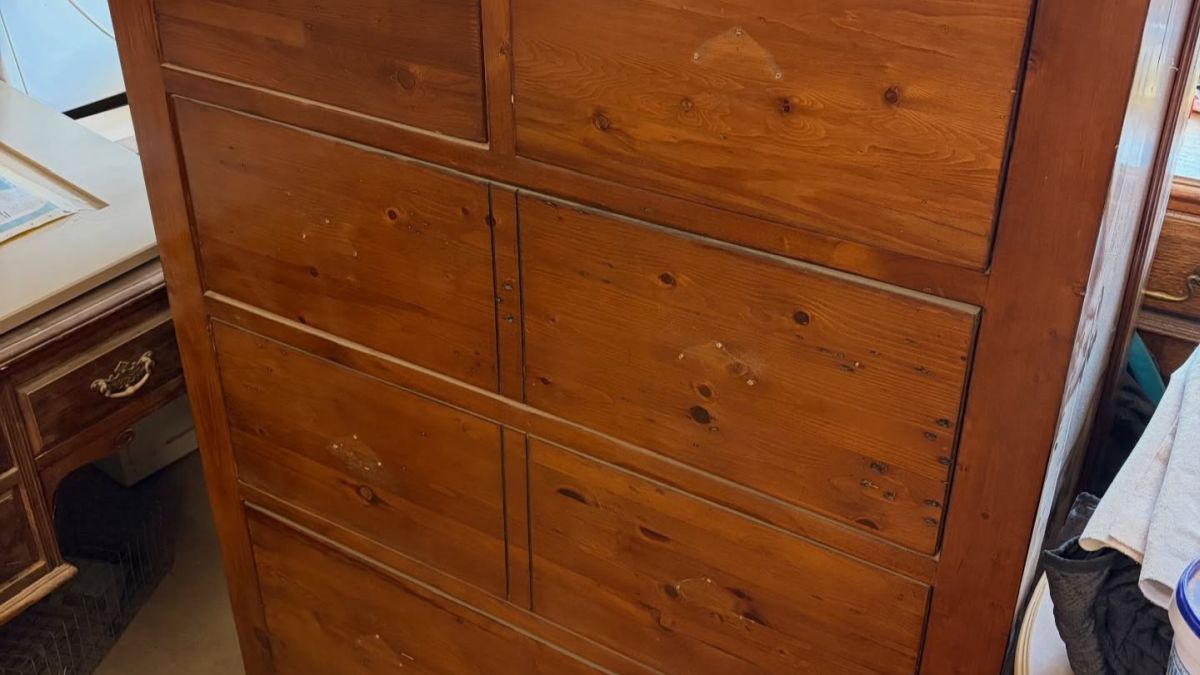
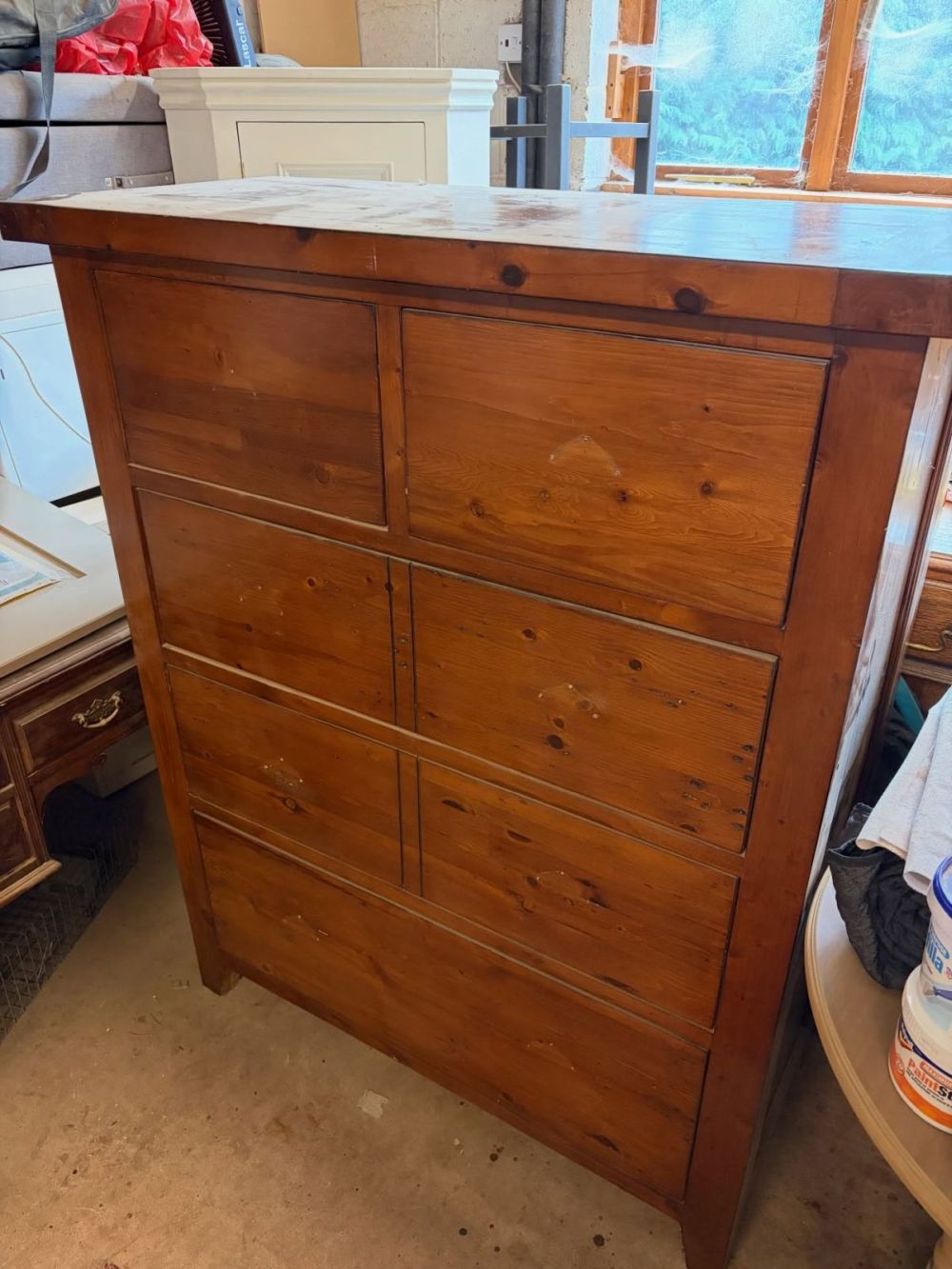
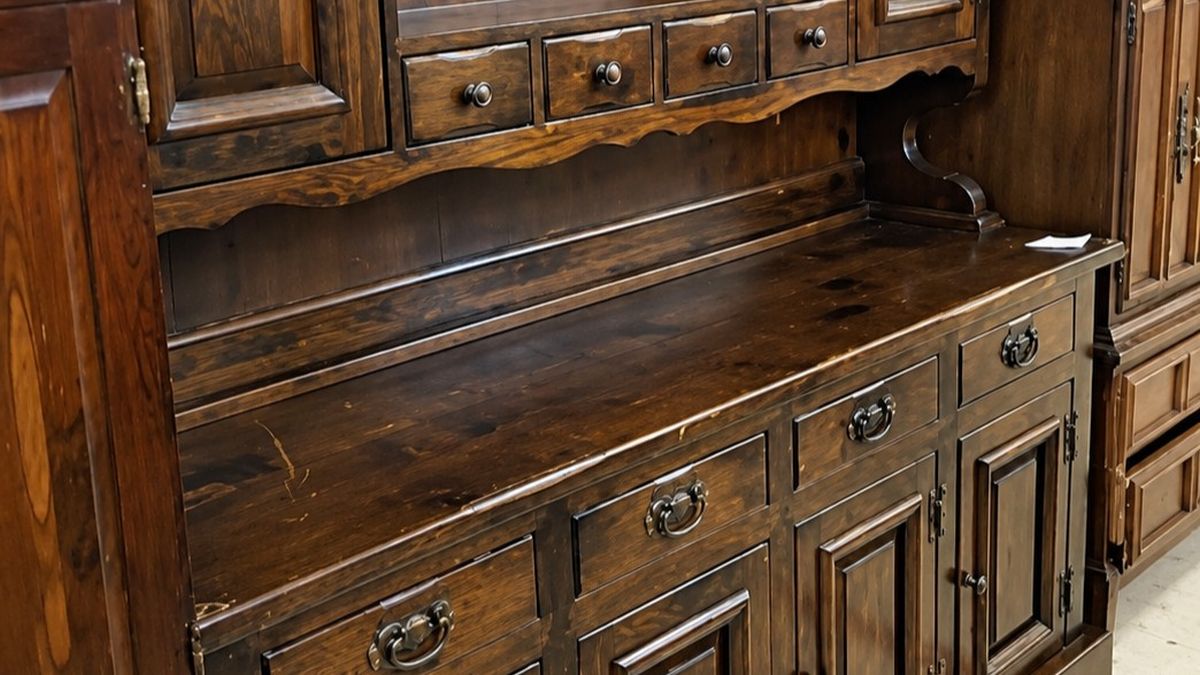
The entire piece was originally covered in a dark brown stain, from the thick wooden top to the bottom legs. Signs of its age included marks from missing handles, scratches, and exposed wood grain. The goal was to replace this brown finish with Little Greene’s Heat, a vibrant orange shade, while preserving the original construction.
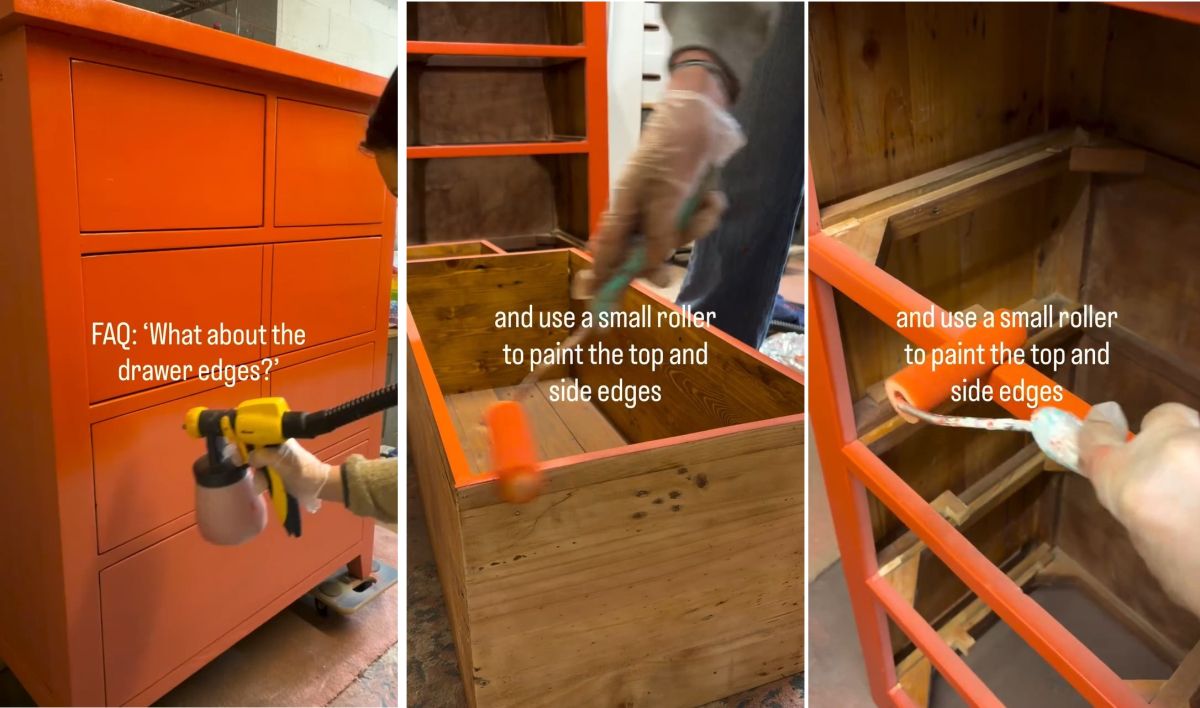
North Wales furniture painter @ty_paent21 adopted an unconventional method. She kept all seven drawers inside the frame while spraying, then used a roller and brush to cover the areas the spray gun missed.
Seven Drawers With Missing Handles and Worn Wood
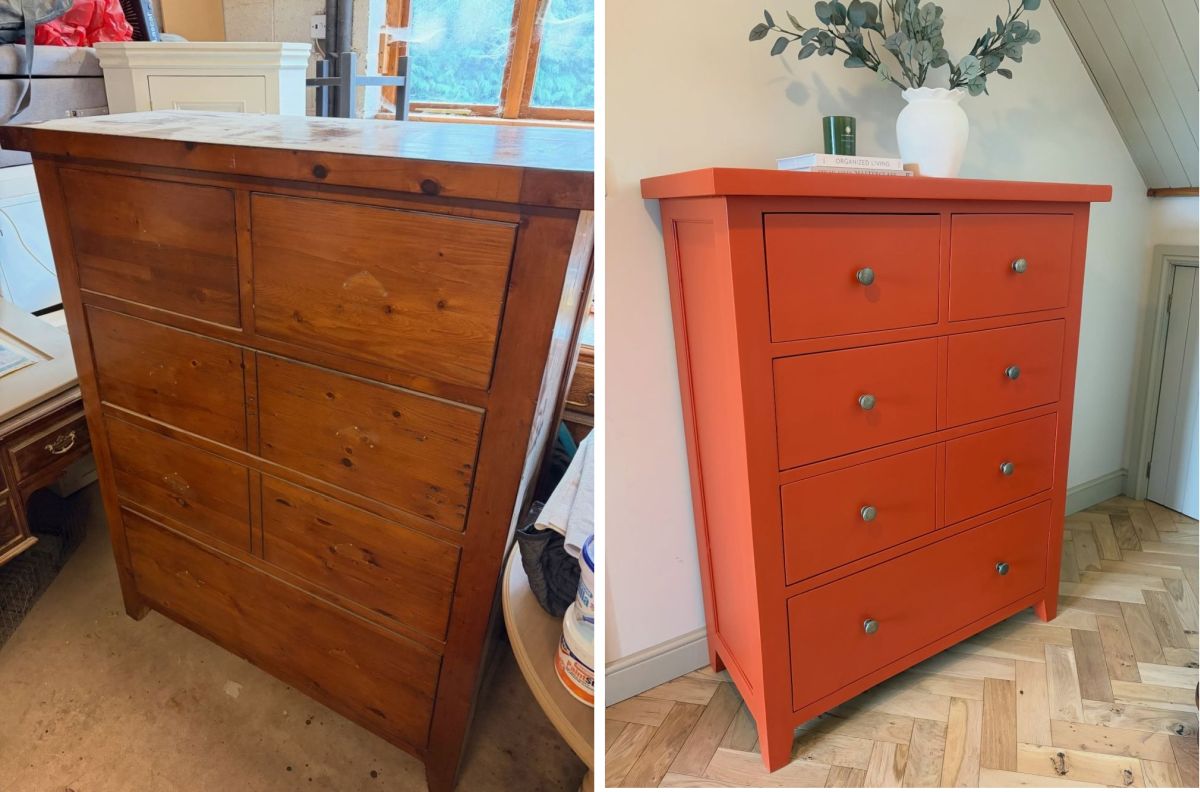
The pine dresser was coated in a brown stain, with knots and grain patterns visible across the wide drawer fronts. Pale patches indicated where former handles had been, and scratches and wear were evident across the top.
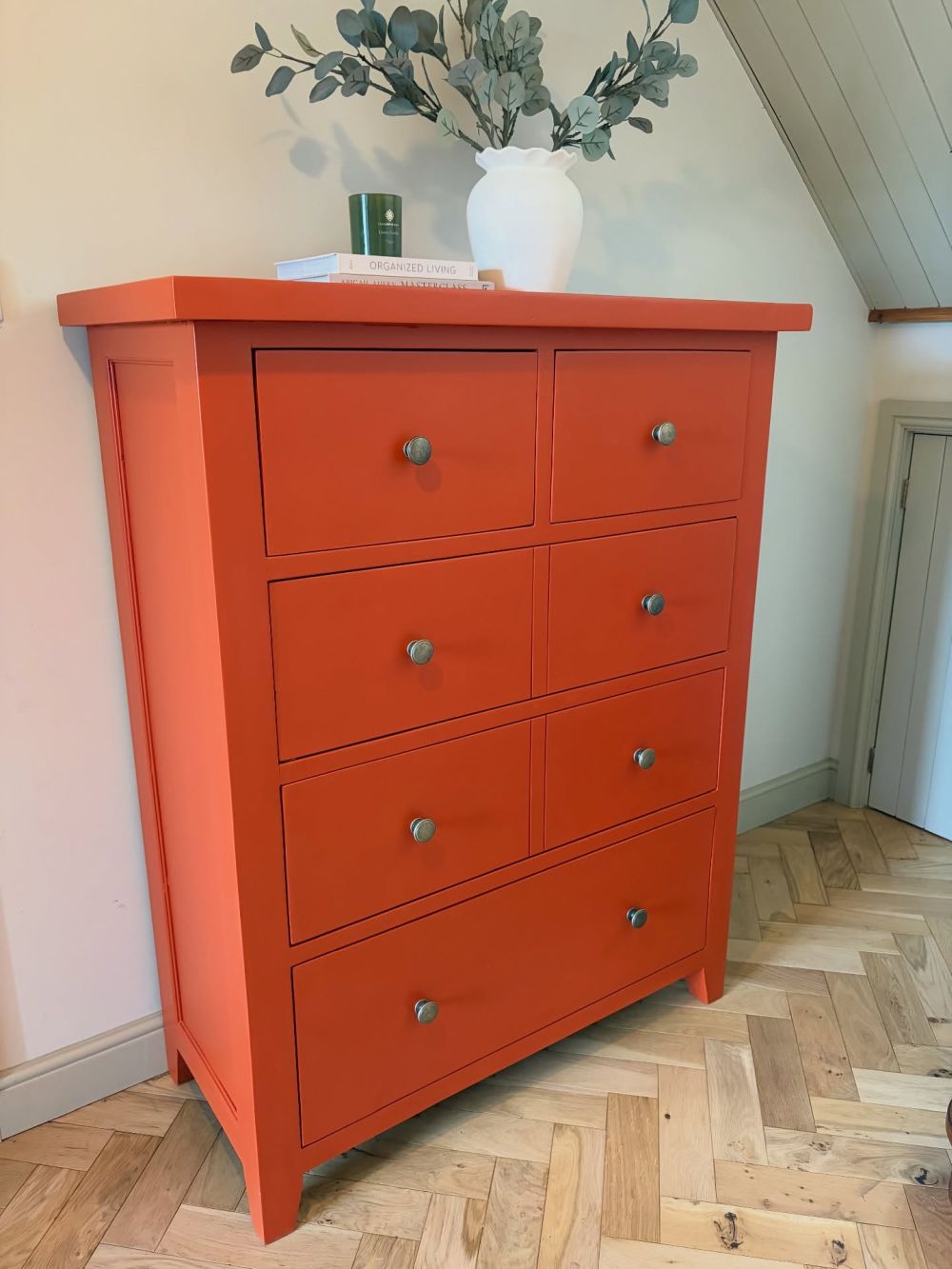
The upper three rows contained six smaller drawers, with a single wide drawer at the bottom. The dresser featured thick corner posts, recessed drawer fronts, and short square legs, giving it a simple, unadorned shape.
She Sprayed the Dresser With Every Drawer Still Inside
Instead of removing the drawers initially, the painter kept them closed and sprayed across the fronts and the surrounding frame. This technique allowed the orange paint to cover both surfaces in a single pass.
After coating the fronts, she removed the drawers and used a small roller on their top and side edges. This approach reached areas hidden within the frame without introducing more spray into the narrow gaps.
This process also meant that the interiors of the drawers retained their original wood finish, rather than being covered in orange paint.
Dovetail Joints Received Paint From a Small Brush
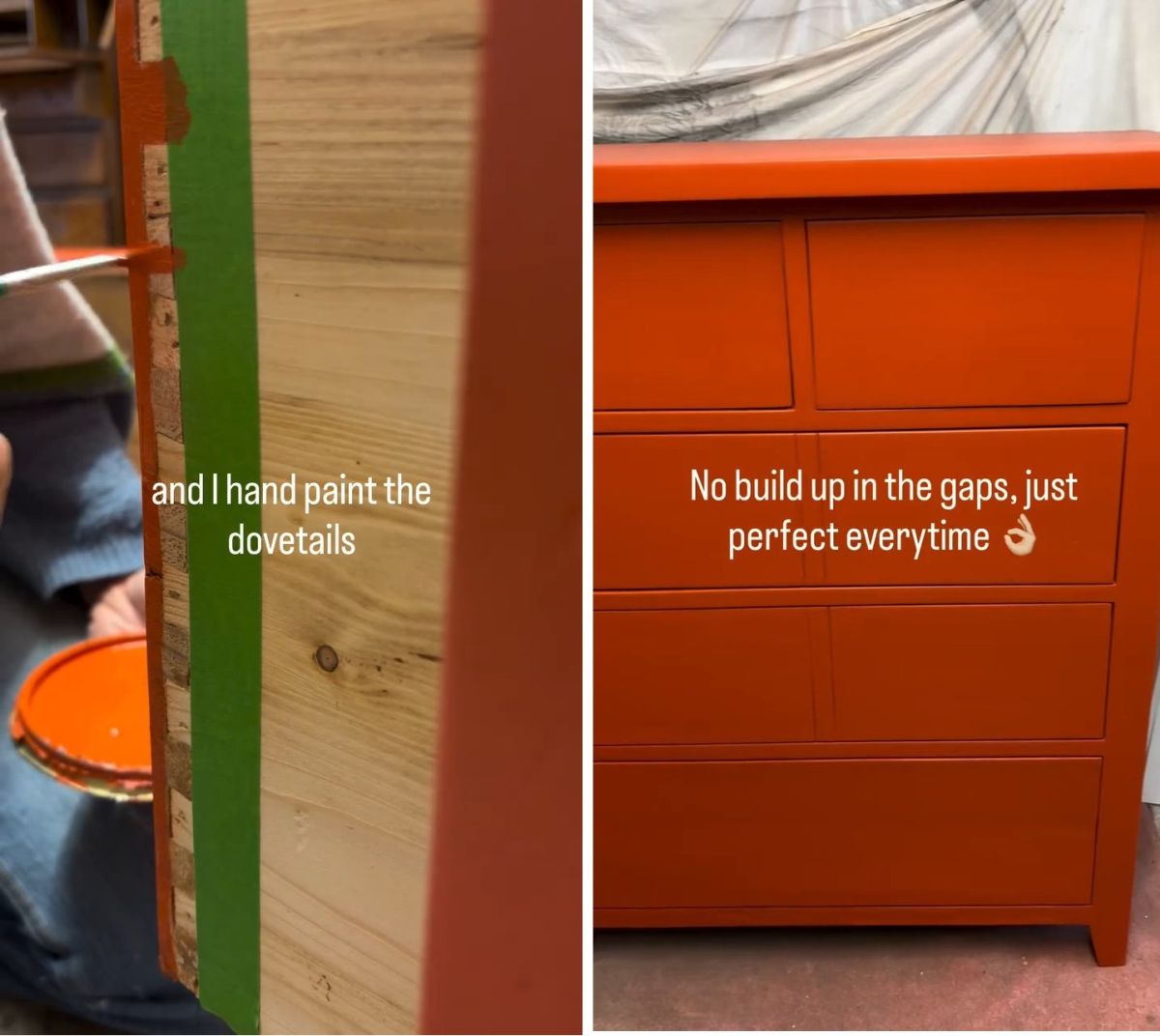
The construction of the drawers required an additional step. The exposed dovetail joints along the front corners needed painting, but spraying these areas risked coating more of the wooden sides.
She used a small brush to apply orange paint into the dovetails, using green masking tape to separate the painted section from the unfinished wood.
The result, shown alongside a process photo, features narrow dark lines between the closed drawers rather than thick paint buildup around the openings.
Little Greene Heat Replaced the Brown Stain
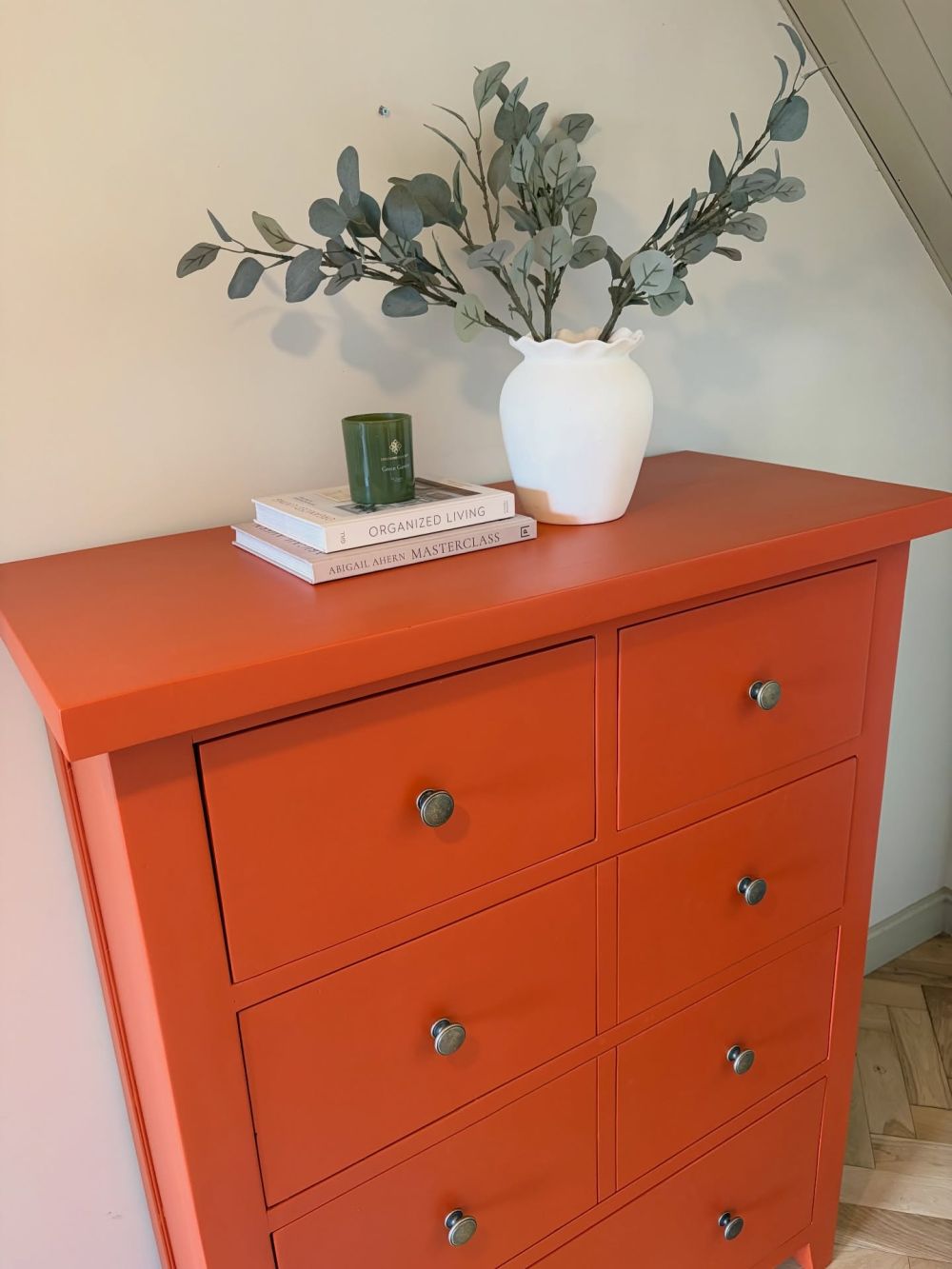
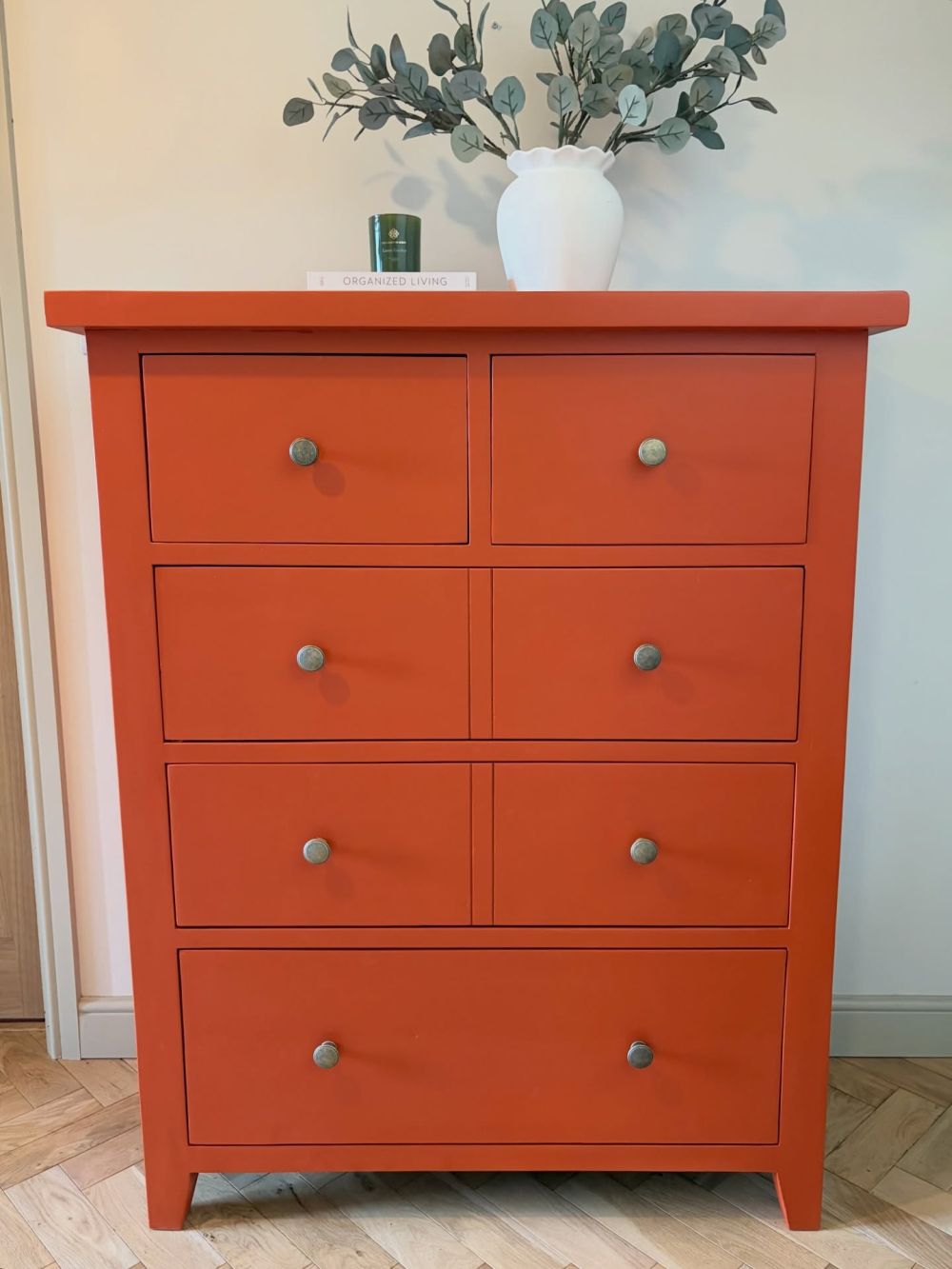
Orange paint now covers the dresser from the top down to the legs. Little Greene’s Heat provides a red-orange tone that resembles terracotta in the finished room, with no contrasting paint color on the exterior.
Small round metal knobs replace the missing handles. Six are positioned at the center of the upper drawer fronts, while two serve the wider bottom drawer.
The original thick top remains intact, including its overhanging edges and broad wooden surface, but the knots that previously stood out against the brown stain are much less noticeable under the paint.
Narrow Drawer Gaps Remain Visible After Painting
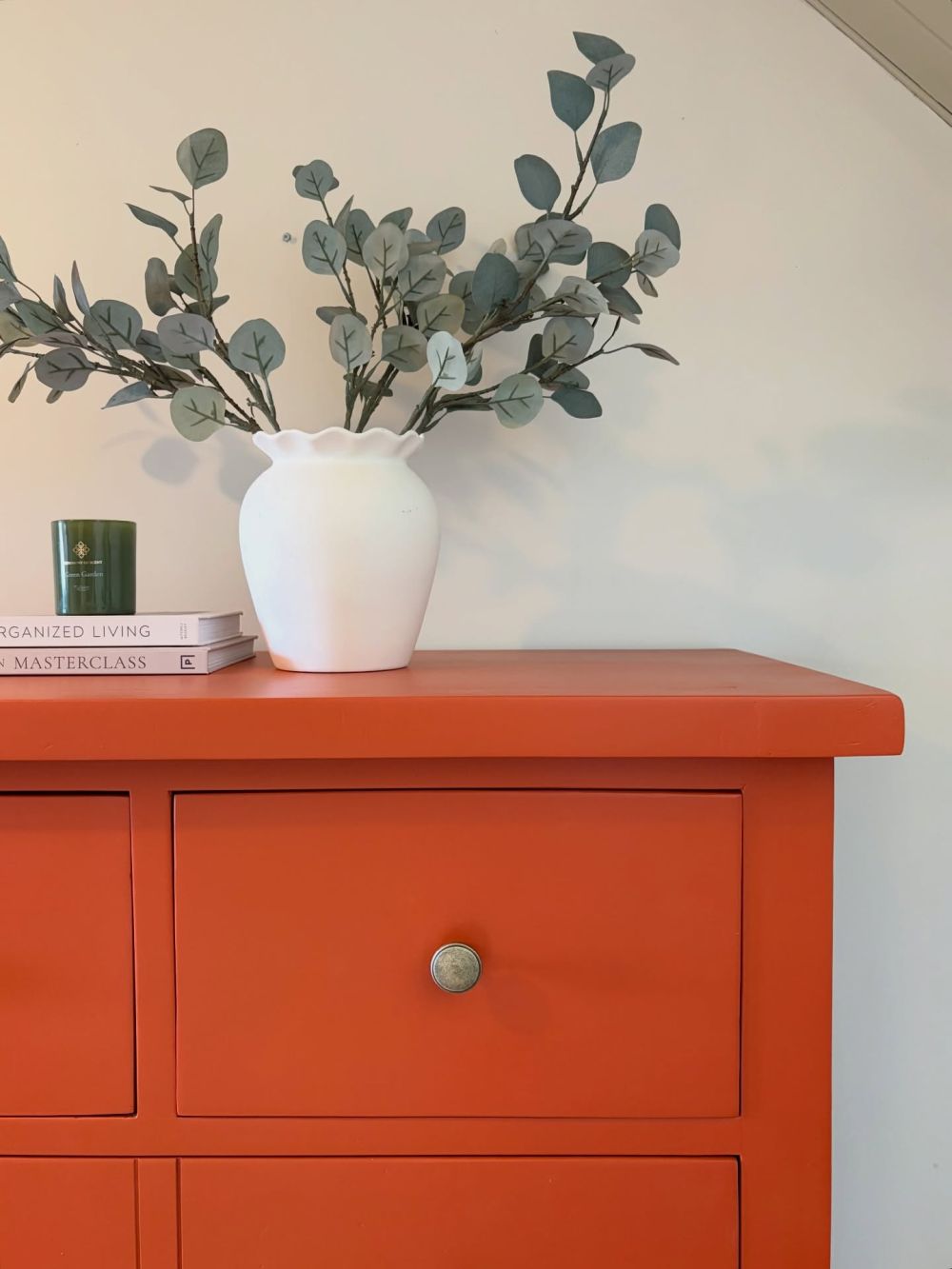
A closer view shows orange paint extending across the drawer fronts and horizontal rails, with thin shadow lines separating each section.
These gaps are why the spraying method is significant. If excess paint had formed bridges between the fronts and the frame, opening the drawers could have damaged the finish.
Metal knobs with an aged finish contrast against the orange, while recessed panels and straight dividers maintain the dresser’s original proportions.
Orange Dresser Finds a Place Beneath a Sloping Ceiling
The finished dresser stands against a pale wall beneath a sloping paneled ceiling. Light herringbone flooring, muted green-gray trim, and a small door beside the piece provide a neutral setting for the orange paint.
Its top holds a white vase with eucalyptus-style branches, two stacked books, and a green candle. These accessories do not cover much of the surface, leaving the wide painted top visible.
One Paint Color Covers the Top and Drawer Fronts
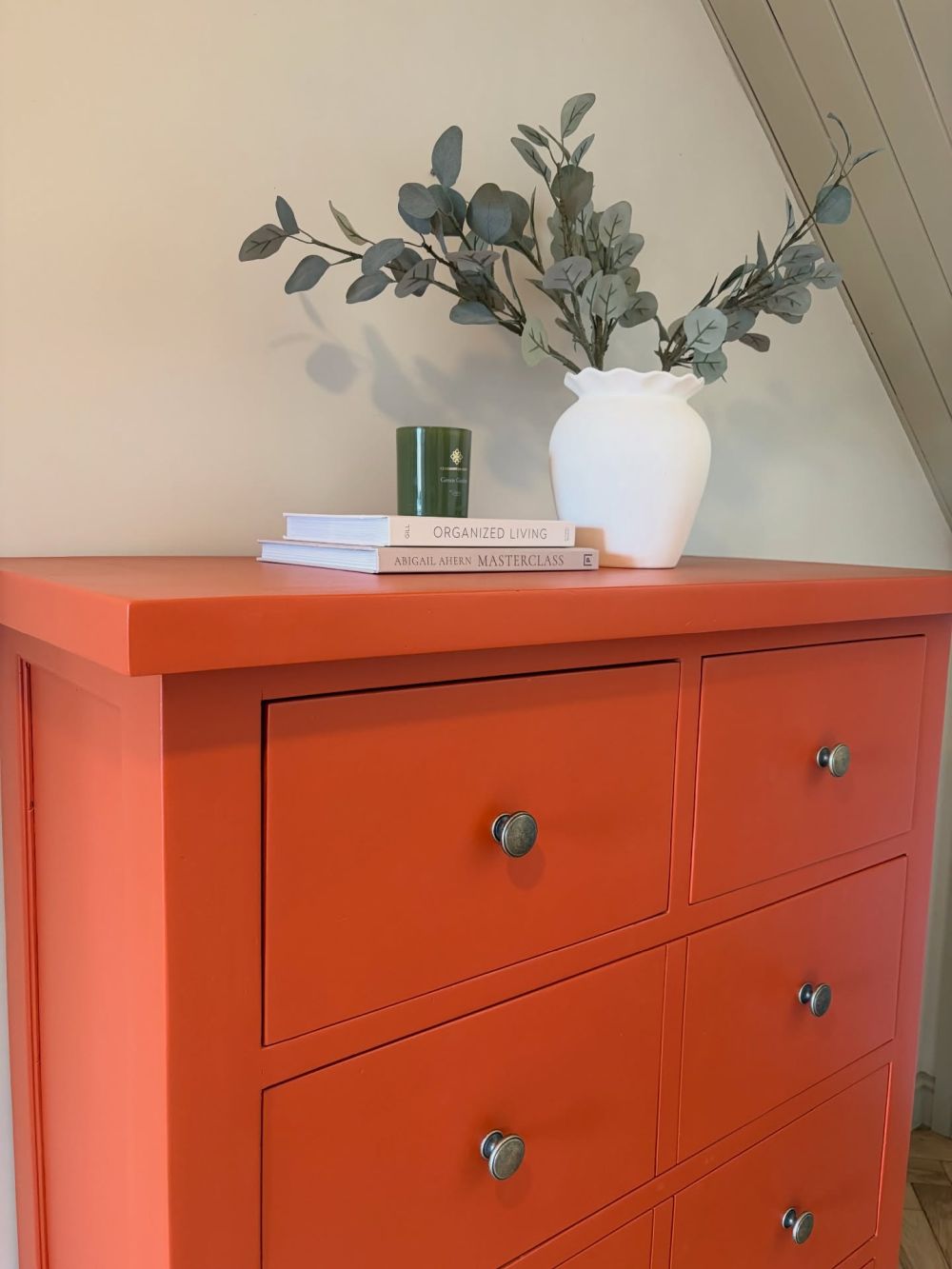
A close-up of the upper section shows how the orange finish continues over the thick top, its front edge, the frame, and the recessed drawer panels.
Faint traces of the wood’s original grain remain visible beneath the paint in some areas. The finish has a soft, low-sheen appearance rather than a high-gloss coating.
Round knobs introduce a darker metal finish without interrupting the orange surfaces.
All Seven Drawers Retain Their Original Layout
From the front, the dresser’s construction is clear. Three rows of paired drawers sit above one large bottom drawer, with vertical dividers forming a central line down the upper section.
Eight metal knobs now serve the seven drawers. Short legs lift the bottom edge from the floor, and the overhanging top extends past the side posts.
Unlike a Welsh dresser makeover that combined two paint colors with an exposed wood counter, this project uses one orange shade across the exterior while leaving the drawer interiors unfinished.
Same Wooden Dresser, From Brown to Orange
Side-by-side photos demonstrate the transformation without replacing the drawers, altering the frame, or adding decorative trim. The dark brown stain and missing handles are gone, replaced with Little Greene Heat and eight round metal knobs.
Spraying the drawers while they were inside the frame gave the fronts and rails a consistent finish. Removing them afterward allowed the painter to coat the edges and dovetails without filling the gaps with excess paint.
Would you paint an old wooden dresser such a bold orange, or keep the natural wood?
Image credits: Instagram / @ty_paent21
The post She Painted This Dark Wood Dresser Bright Orange but Left All Seven Drawers in Place While Spraying appeared first on Homedit.





























How did she prevent the drawers from fusing together? I’ve always assumed removing them was non-negotiable. Did the roller technique successfully hide the overspray in those narrow gaps, or does it show upon closer inspection?
Great question! She left them slightly ajar to allow airflow, preventing fusion. The roller technique actually minimizes overspray in those tight gaps, making the finish look seamless. You’ll barely notice the difference unless you’re looking for it!