
Paint usually serves to hide damage, but this renovation did the reverse. A black coat was applied to a century-old chest, yet it fractured to expose the original brown wood, mimicking decades of natural wear.
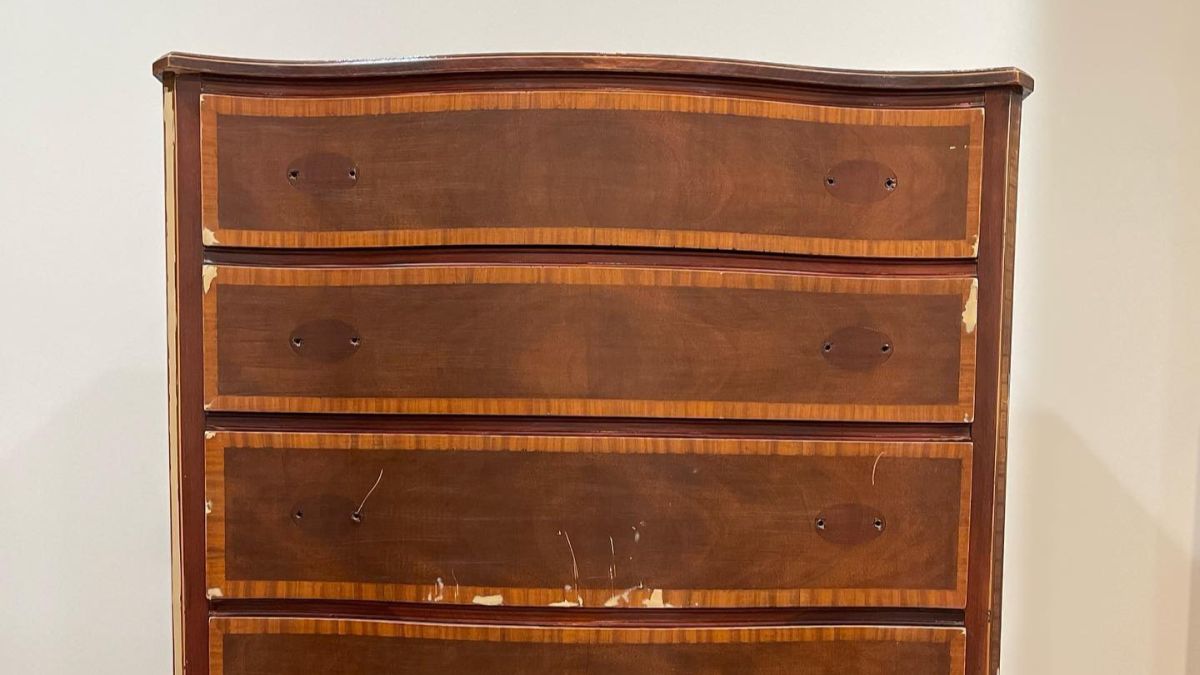
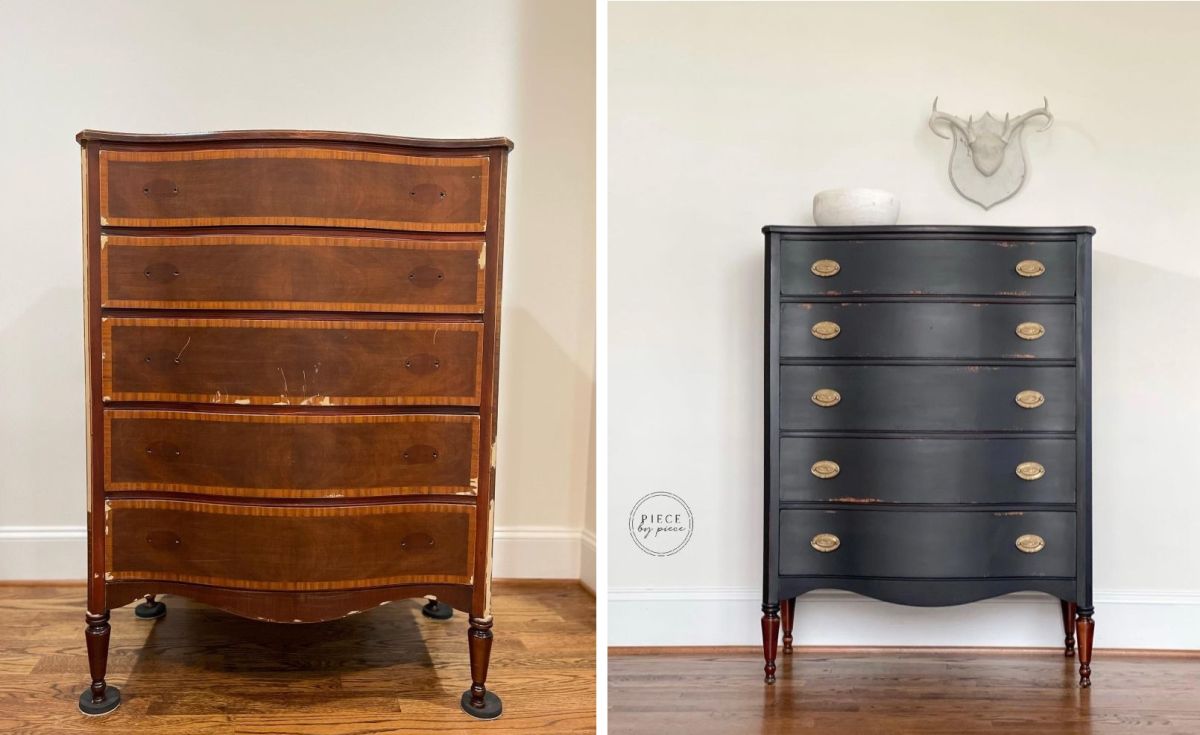
The antique piece featured five arched drawer faces, delicate inlaid borders, turned legs, and absent hardware. While scratches and worn spots marred the brown surface, the structure preserved its historic character. Instead of smoothing over every imperfection, the update incorporated those marks into the final aesthetic.
Creator @piecebypiecefinds selected black milk paint, which adhered in some spots while peeling in others. New brass handles, visible wooden legs, and patterned interior linings finished the look without erasing the piece’s history.
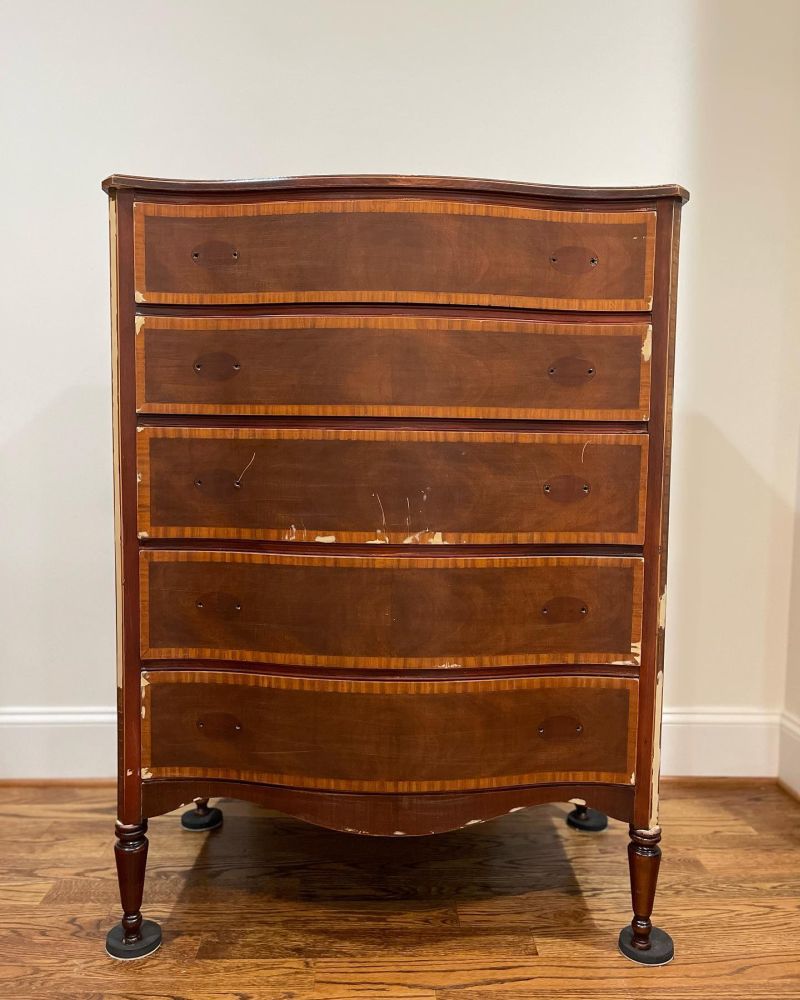
The Nearly 100-Year-Old Dresser Had Five Curved Drawers
Starting with a dark brown surface, the chest included five drawers with arched fronts and a scalloped lower apron resting on turned legs. Contrasting wood strips lined the drawer edges, and holes from missing handles remained visible across the fronts.
Several drawers displayed scratches and flaking finish, though the frame and legs maintained their original structure.
Black Milk Paint Covered the Drawers and Cabinet
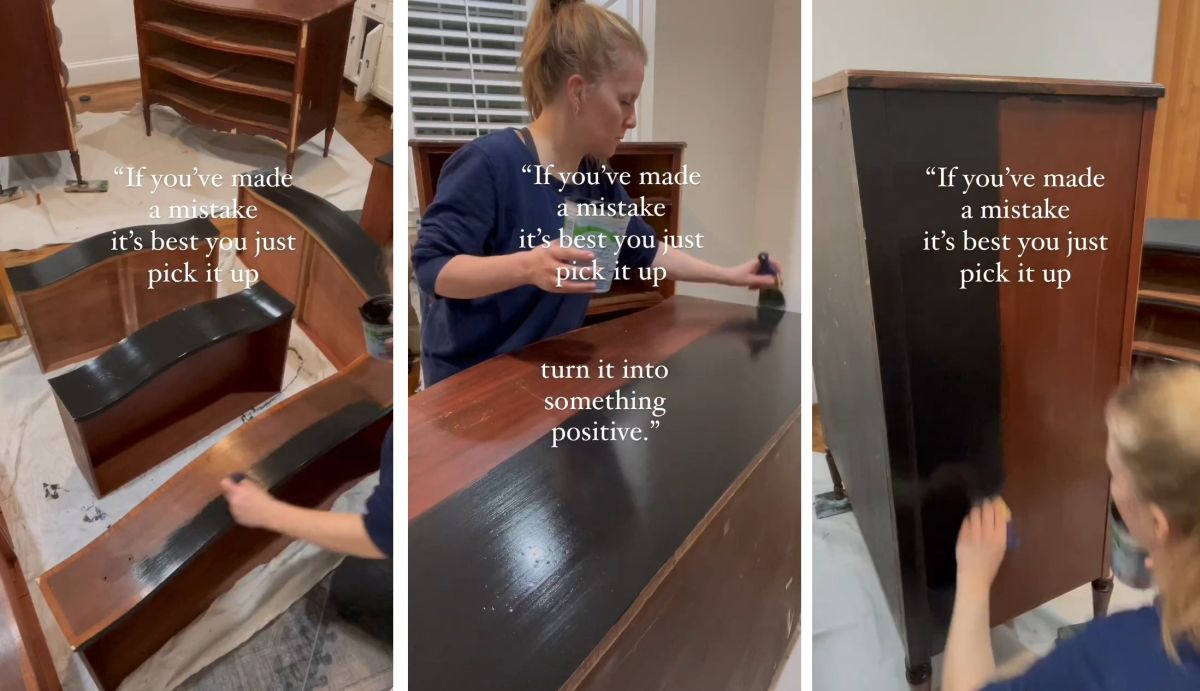
The creator took out the drawers and painted their fronts, plus the top and sides. Video footage captures wide brushstrokes of black paint obscuring the brown wood, with varying degrees of coverage across different sections.
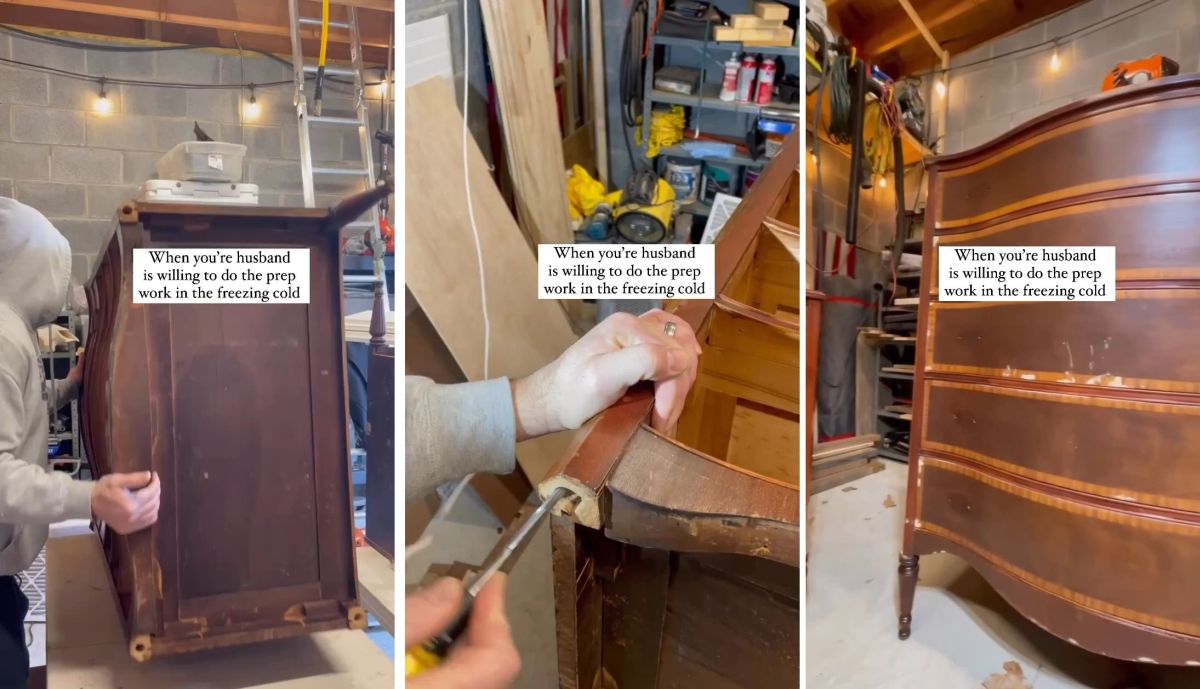
Her husband assisted with prep work in a chilly workshop, addressing the frame and damaged areas before painting resumed. The original arched drawer fronts and turned legs stayed integral to the piece.
The Milk Paint Chipped to Reveal Brown Wood Beneath
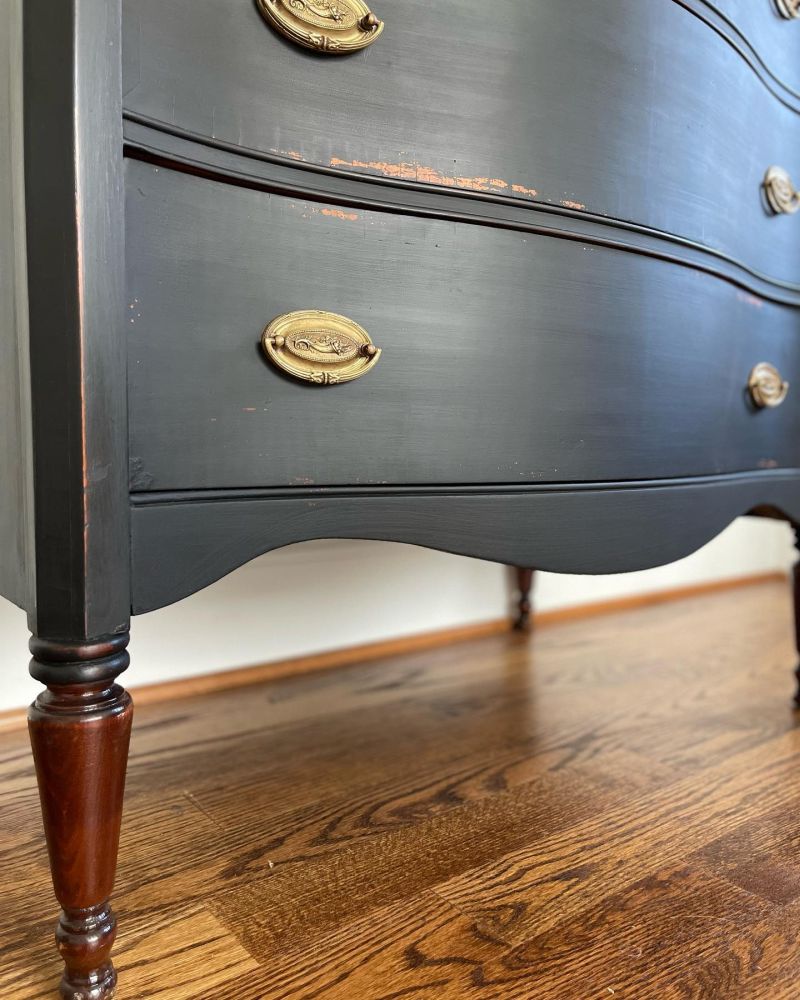
The black milk paint created a weathered look along the drawer edges, leaving thin patches of brown wood visible. The creator avoided covering every exposed spot, embracing the uneven texture as a design element.
Milk paint bonds differently depending on the existing finish and prep work. Results vary by piece, meaning this chipped effect cannot be guaranteed on every surface.
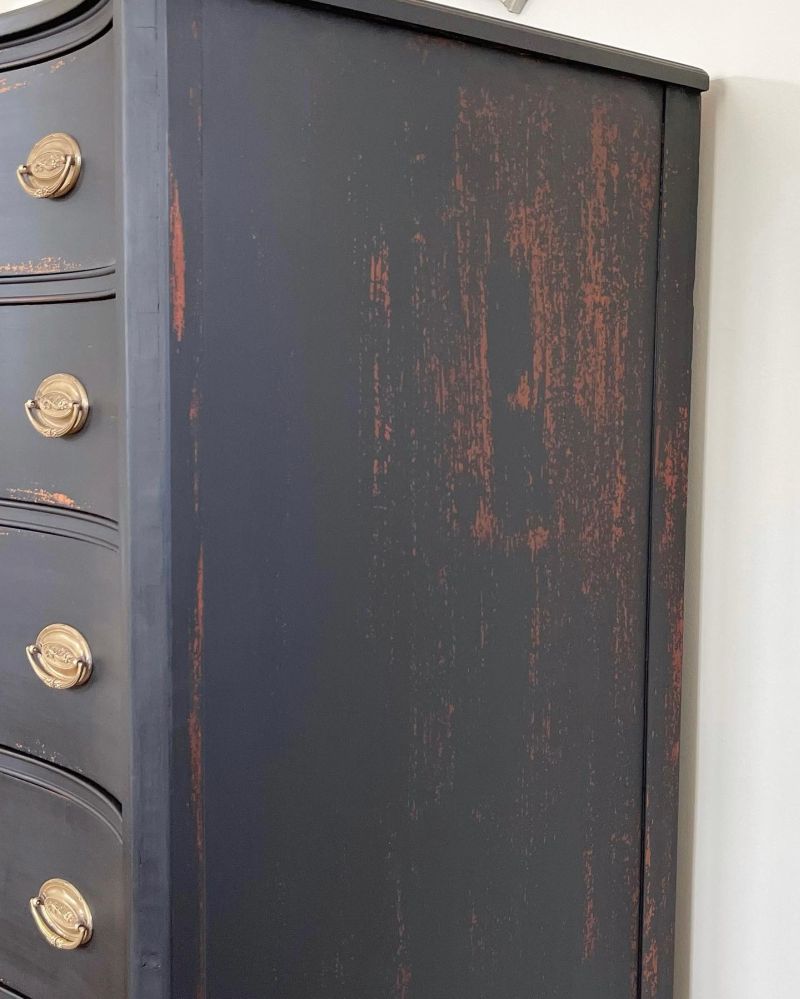
Larger areas of exposed brown appear on the side panels beneath the black coating. These marks disrupt the dark surface without altering the cabinet’s original form.
The Drawers Received Black-and-White Floral Lining
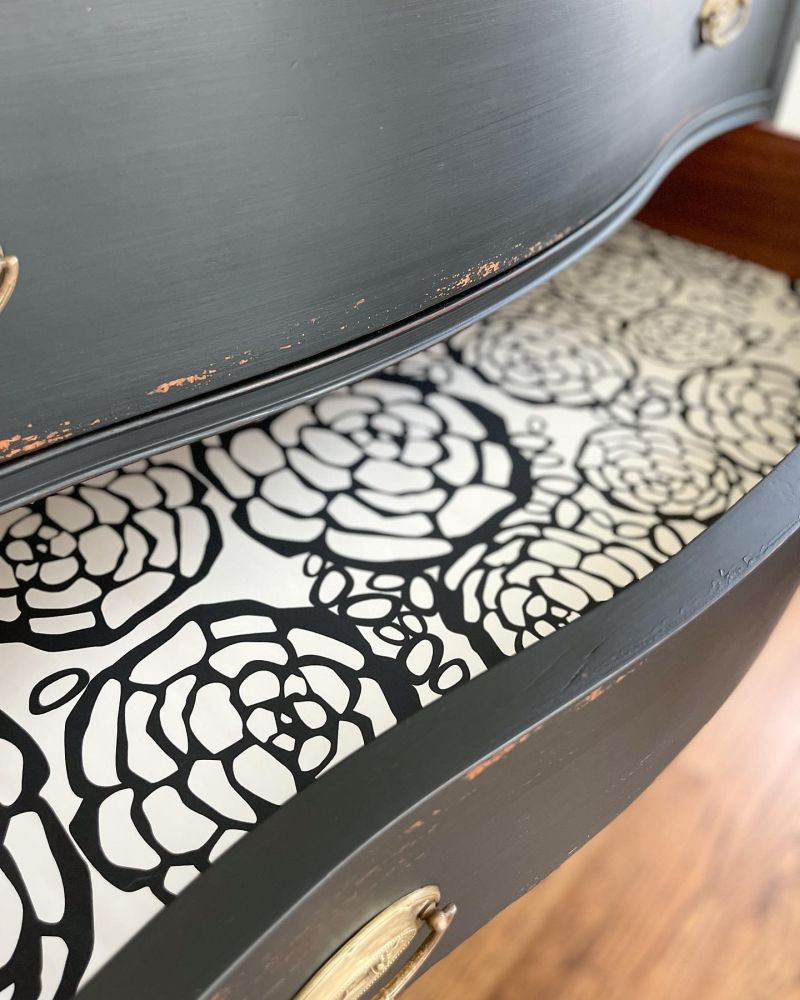
One drawer displays a black-and-white floral pattern on its bottom. This interior finish contrasts with the dark exterior and the brown wood visible around the worn edges.
Brass Pulls Completed the Antique Dresser
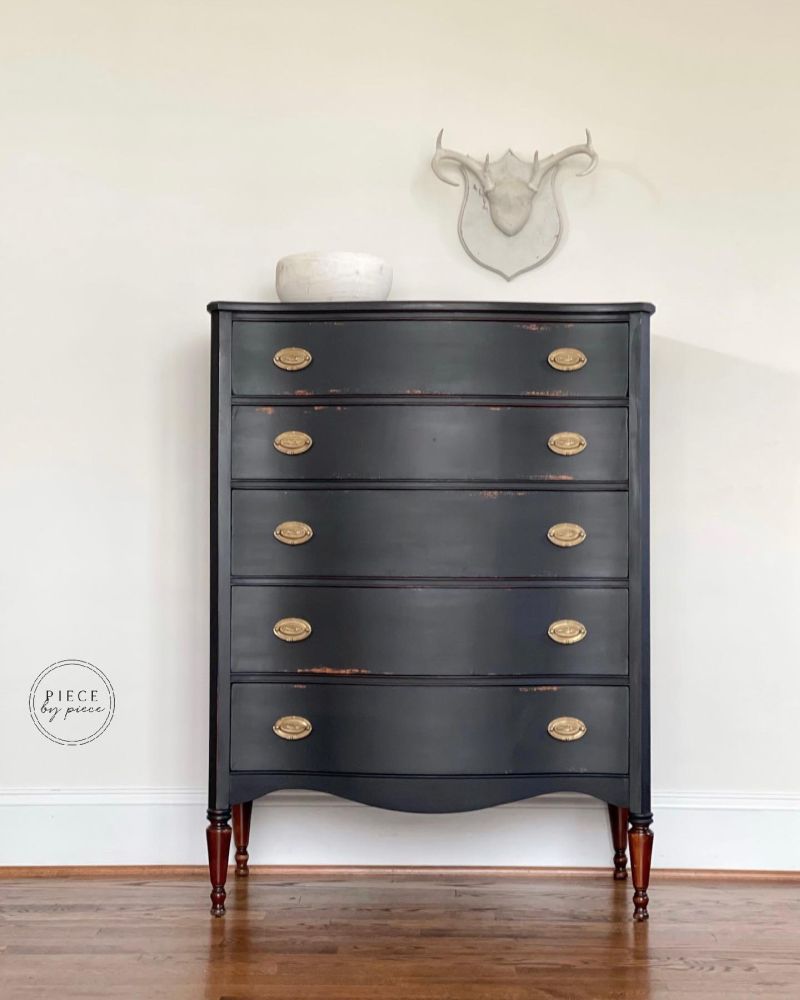
The finished piece features five black drawer fronts fitted with oval brass handles. Brown wood peeks through the paint along specific edges, while the original turned legs remain exposed beneath the cabinet.
The creator preserved the chest’s curved profile and aged look instead of creating a smooth, modern piece. The chipped finish gives the new paint the appearance of having aged alongside the furniture for years.
Project and photographs: @piecebypiecefinds.
Source: Homedit.
































Ah, yes. Because nothing says “luxury” like paying premium prices to intentionally break your furniture. Truly, the pinnacle of modern interior design is just damage with a marketing budget.
I get the sentiment! It definitely looks like a step backward at first glance. But the charm lies in that lived-in, cozy feel. It’s less about “breaking” it and more about embracing imperfection to make a space feel truly unique and personal.