
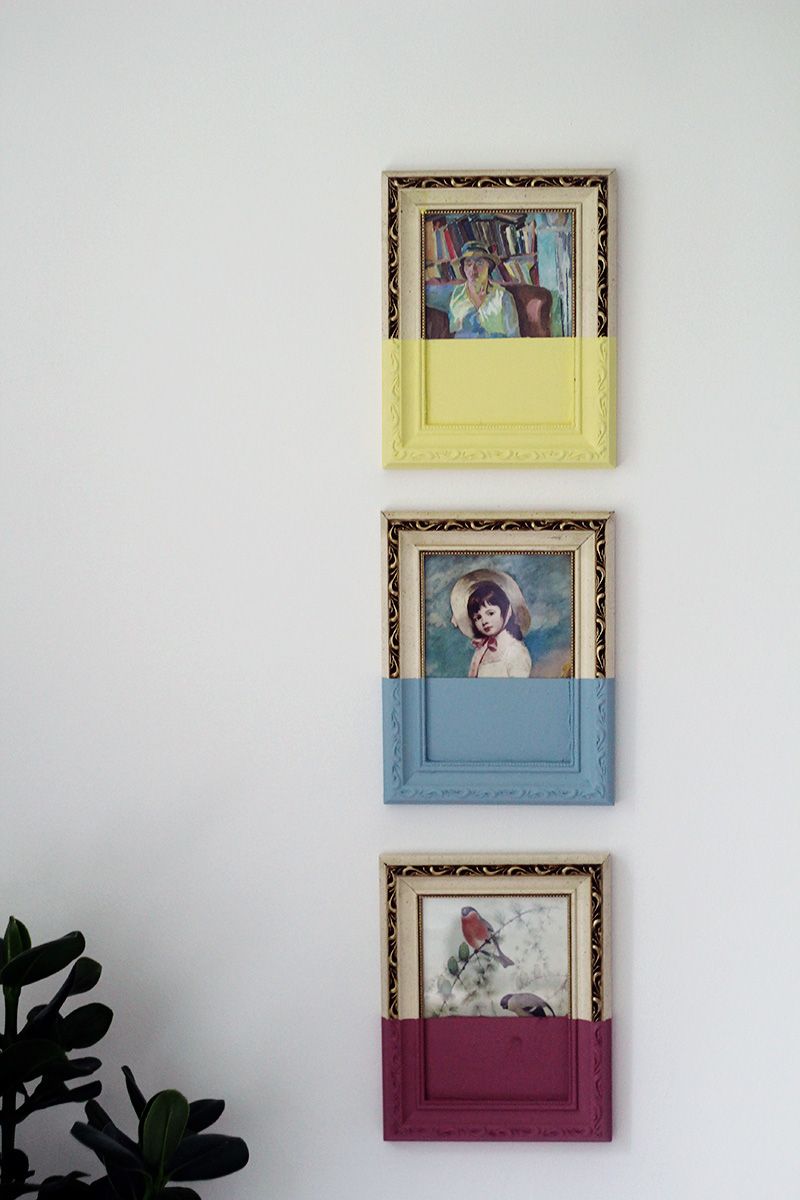
Vintage thrift store prints often feature ornate frames that are worth preserving, even if the artwork itself appears outdated. The conventional method involves removing the prints, sourcing new images, and reassembling the frames.
DIY creator Francesca Stone from Homedit opted for a different method. Rather than swapping the prints or painting only the frames, she applied paint directly over the lower portion of the glass covering each piece.
This technique displays the upper part of each vintage print while using blue, yellow, and burgundy paint to hide the rest. This approach transforms three unrelated images into a cohesive wall display without altering the artwork behind the glass.
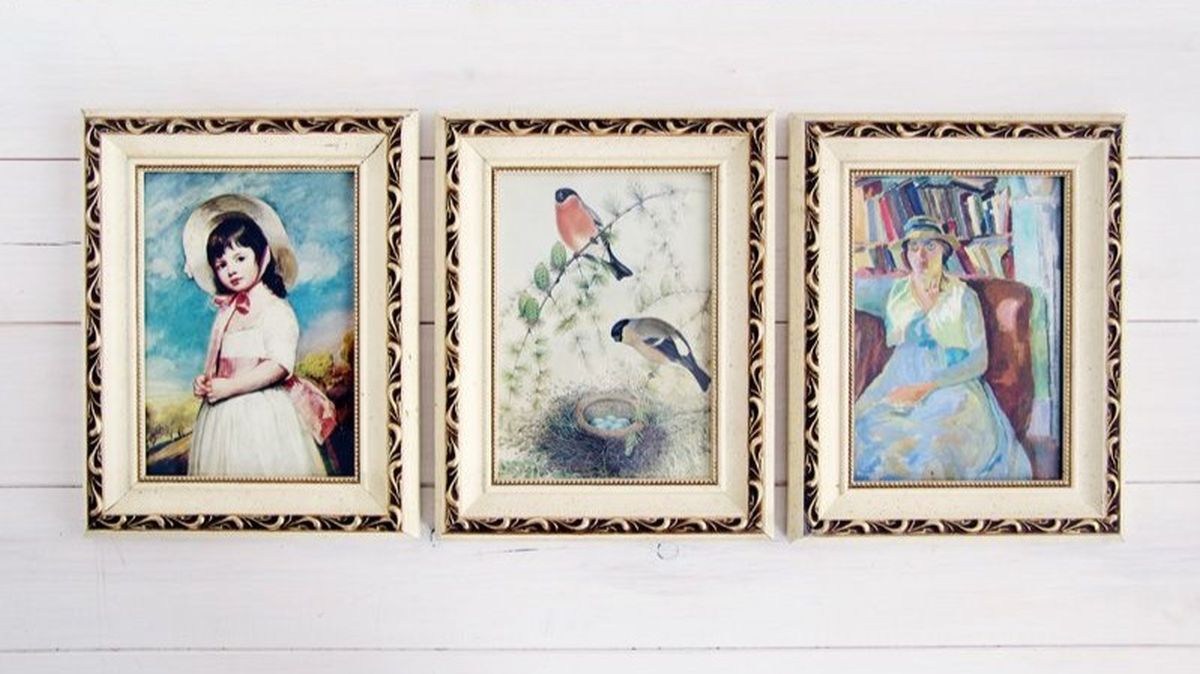
Three Old Pictures With Ornate Gold Frames
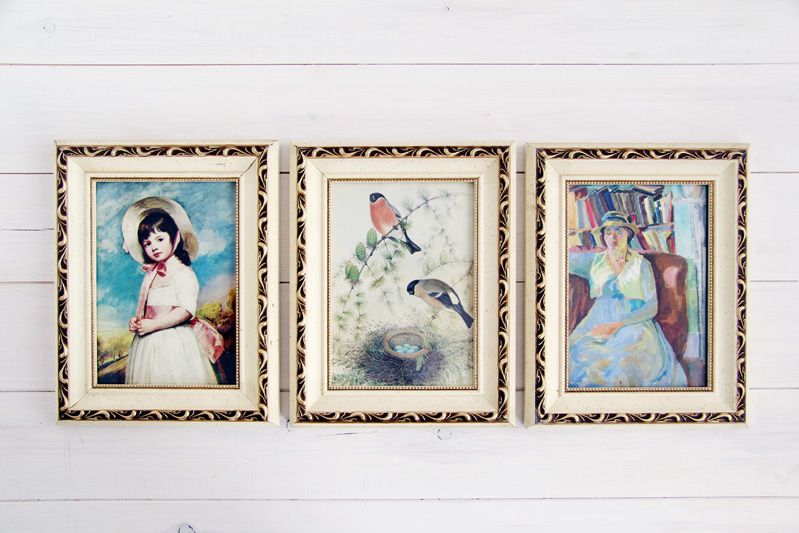
The initial collection consisted of a portrait of a young girl, an illustration depicting birds near a nest, and a painting of a woman sitting next to bookshelves.
Each piece featured an ivory frame with gold trim, a dark decorative border, and carved details. These elements were preserved as part of the final project rather than being stripped or painted over with a single color.
No Need to Remove the Pictures or Glass
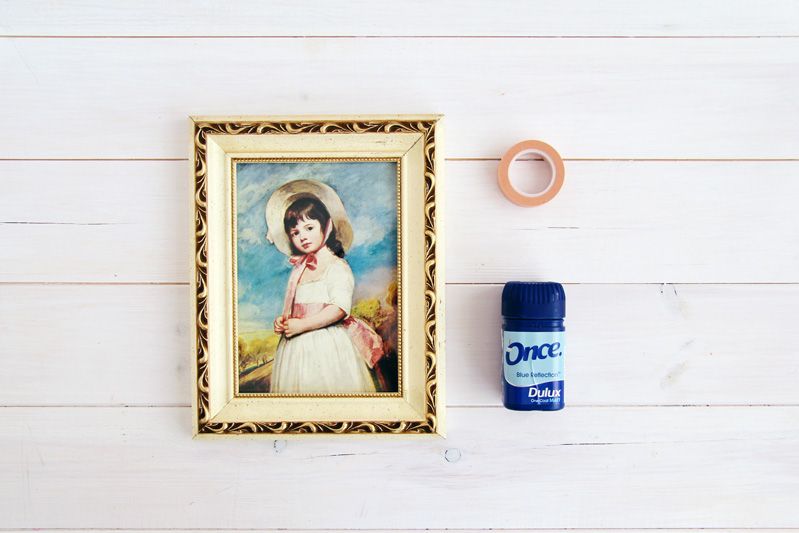
For the makeover, Stone used masking tape, paint, and a small applicator. The blue paint displayed next to the first portrait is Dulux Once, while the other two frames were finished in yellow and burgundy.
The pictures remained inside their frames for the entire process.
Tape Went Straight Across the Artwork
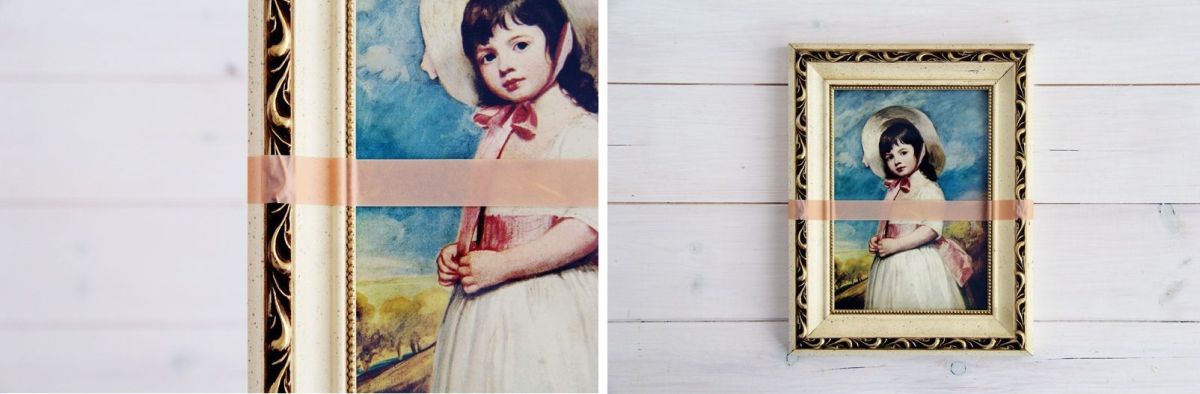
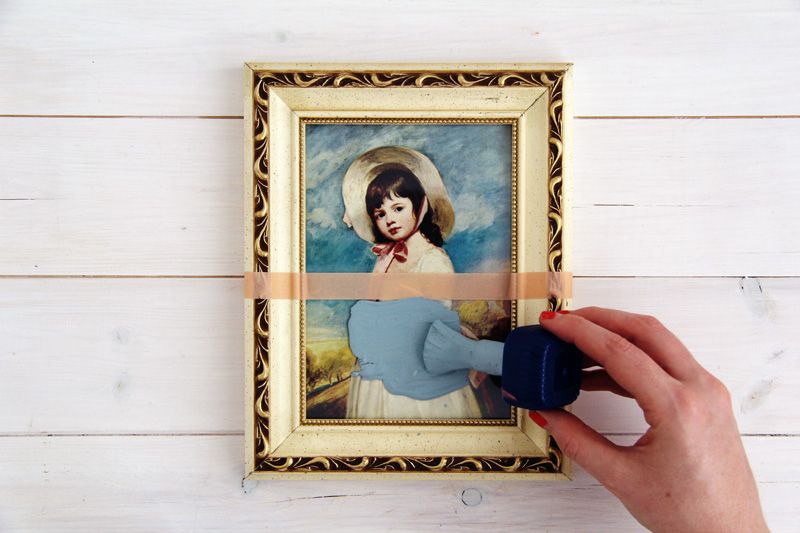
A strip of masking tape was placed across the center of the first picture, covering the glass and extending onto both sides of the frame.
Pressing the tape against the raised molding separated the exposed upper section from the area to be painted. The lower part of the girl’s dress and the surrounding border were concealed by the new color.
Blue Paint Covered the Glass and Frame
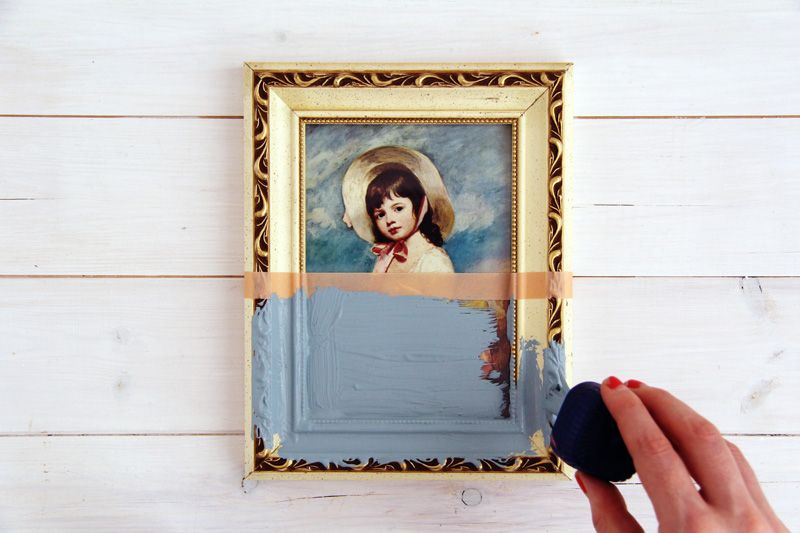
With the tape positioned, Stone applied blue paint across the glass. This covered the girl’s hands and dress but left her face and hat visible above the tape line.
The paint was also applied to the inner trim, carved outer border, and lower corners. Recessed areas required more coverage than the flat glass, aiming for a single continuous painted area.
A second coat was applied after the first dried, with the tape remaining in place until the finish had set.
The Finished Picture Has Two Different Halves
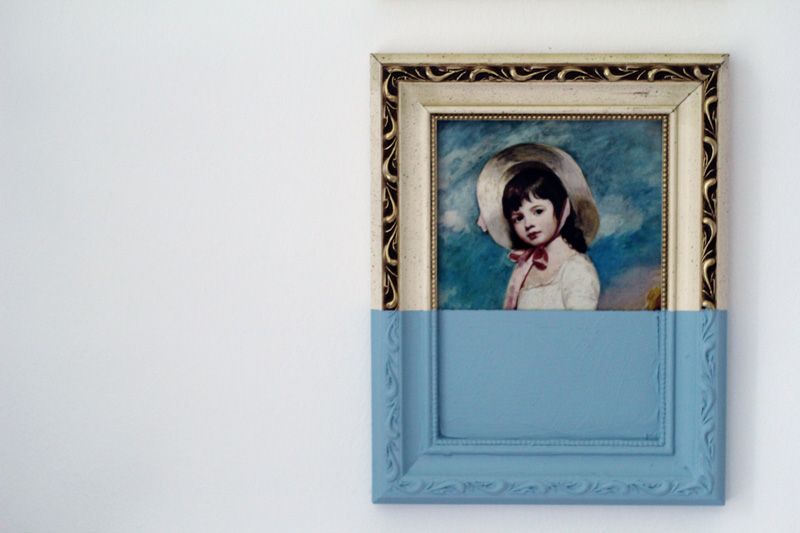
After removing the tape, the blue section created a straight boundary across the portrait. The upper half retained the ivory-and-gold frame and the girl’s face, while the lower half became a solid blue block.
The paint also covered the decorative molding, leaving its raised pattern visible beneath the new finish.
Three Different Pictures Became a Matching Wall Display
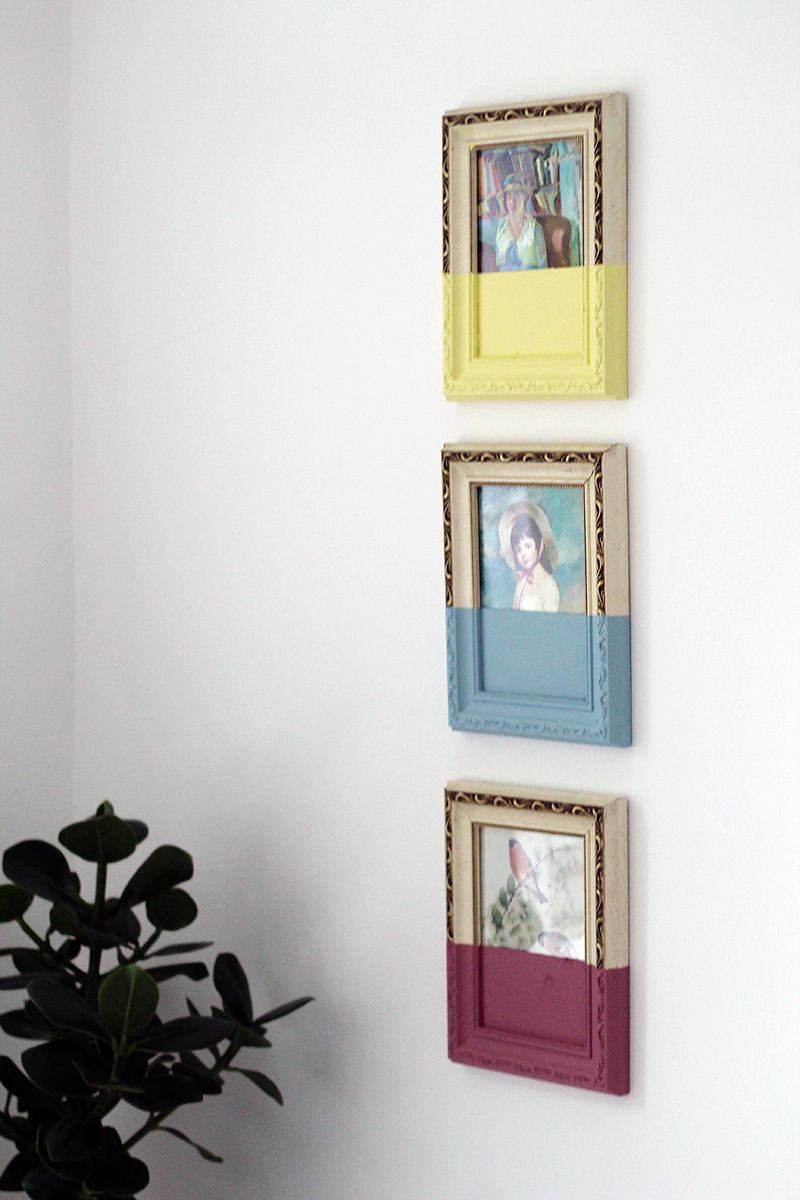
Stone applied the same treatment to the other two frames, selecting pale yellow for the woman beside the bookshelves and burgundy for the bird illustration.
Arranged vertically, the pictures share the same painted division despite their different subjects. The yellow frame is positioned at the top, the blue portrait in the middle, and the burgundy bird picture at the bottom.
The final display retains the old artwork, original glass, and ornate frames. Paint covers the sections Stone chose to hide, while the exposed portions preserve enough of each picture to identify its subject.
Would you paint across an old picture rather than replace the artwork inside?
The post Not Worth Hanging? She Painted Right Over the Glass of These Thrift Store Pictures appeared first on Homedit.

























Ah, yes, because nothing says “curated vintage chic” like painting over your grandmother’s portrait of a girl with a bird. It’s not like the bird is judging us. Truly revolutionary.
Haha, the bird’s judgment is real! But honestly, repurposing that portrait with a fresh coat of paint breathes new life into it. It’s less about preserving the past and more about making it uniquely yours. Thanks for the laugh!