
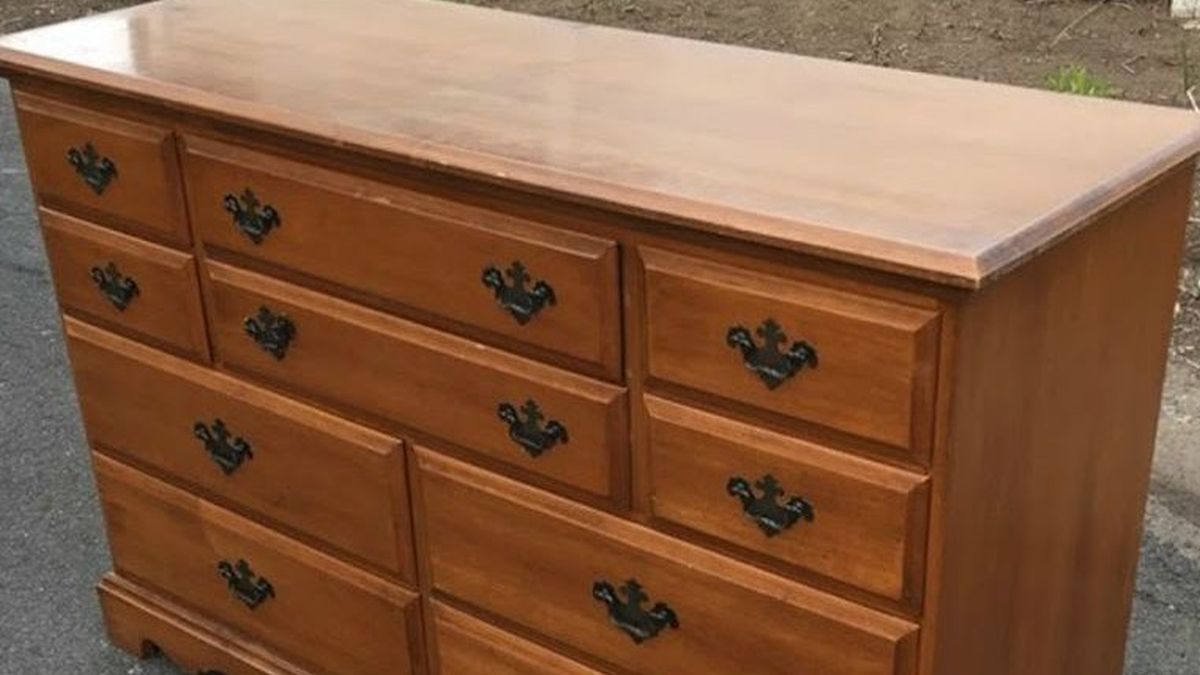
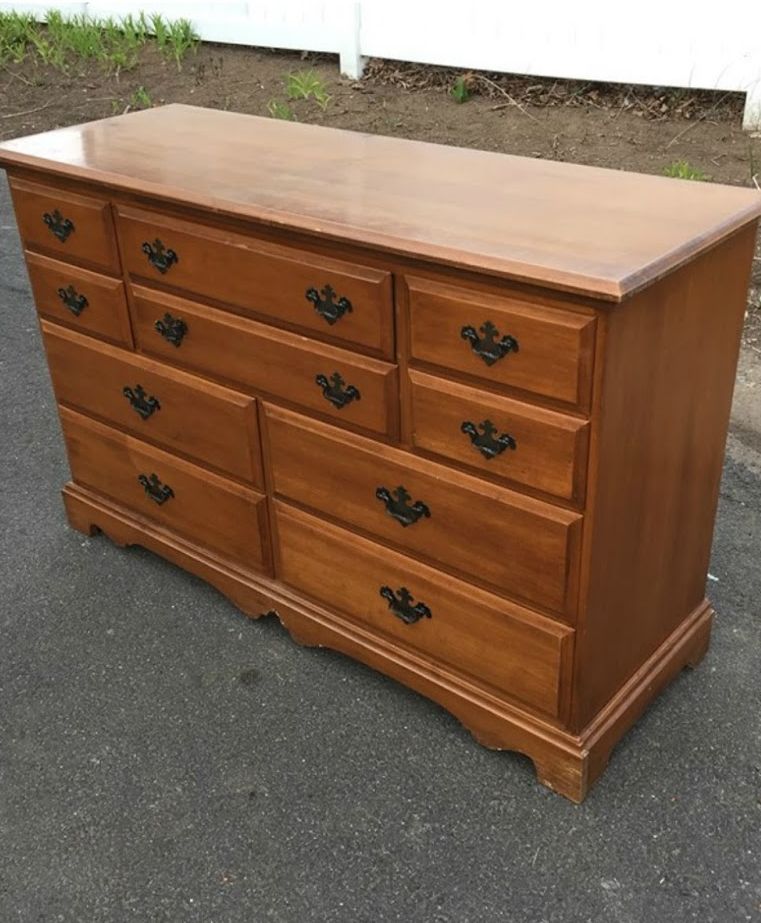
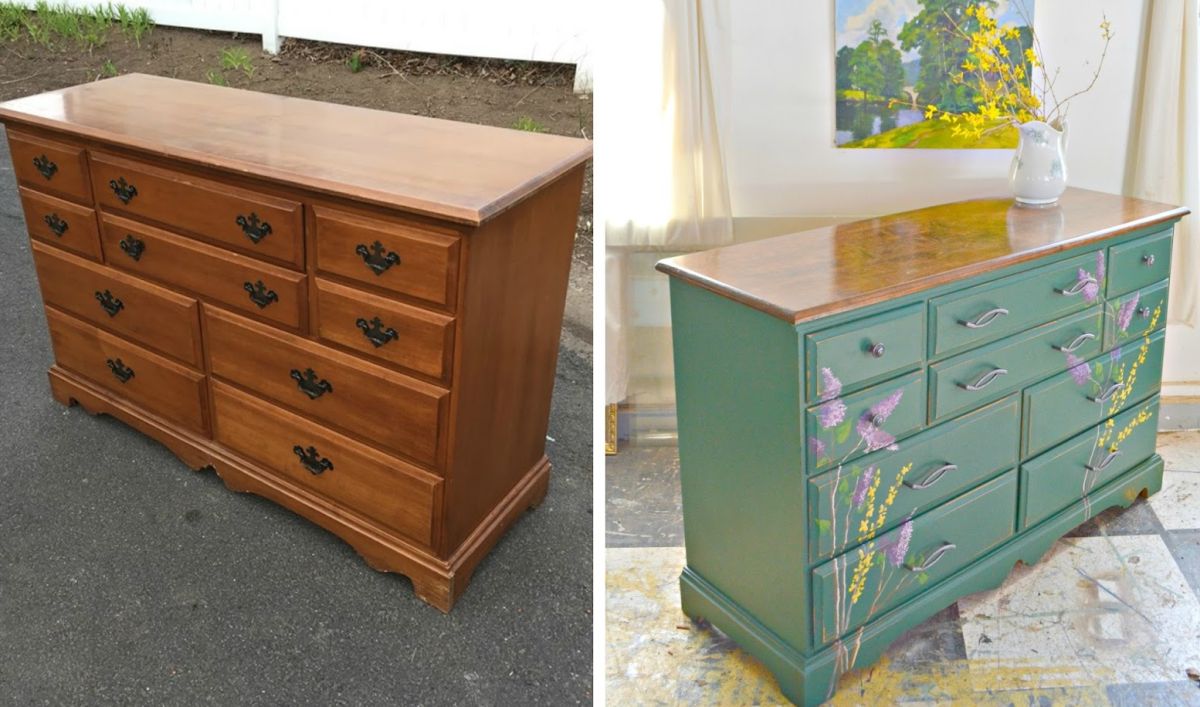
This vintage maple dresser boasted warm brown wood that stretched from the drawer fronts all the way to the sides. Dark traditional pulls interrupted the nine-drawer front. While the solid construction remained intact, the finish was poised for a transformation.
Kate from Heir and Space undertook the refinishing for a client seeking a deep bottle-green base. Her favorite flowers were integrated into this design. Rather than repeating a motif on each drawer, purple lilacs and yellow forsythia formed two loose arrangements rising from opposite sides.
The nine drawer fronts were not treated as isolated surfaces. Instead, floral stems crossed their edges, continuing from one level to the next. Original wood persists across the top, establishing a second finish above the green case and the painted flowers.
Brown Maple Gave the Dresser Its Starting Point
Before the makeover, solid rock maple provided the dresser with a traditional aesthetic. The case already included raised drawer fronts, a shaped apron, and molding around the top and base. Consequently, altering the furniture did not necessitate changes to its construction.
A brown finish caused these details to merge into a single wood tone. Dark ornate pulls introduced another traditional element that vanished when the dresser received new paint and hardware.
Bottle Green Replaced the Brown Finish
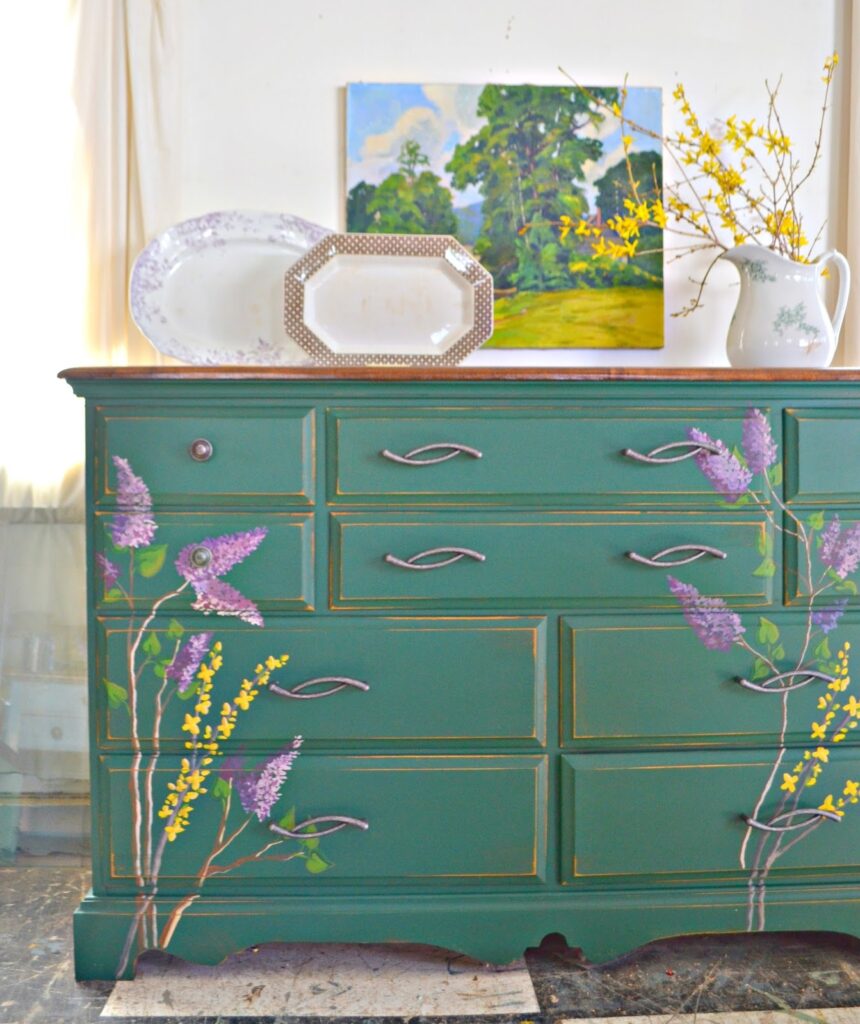
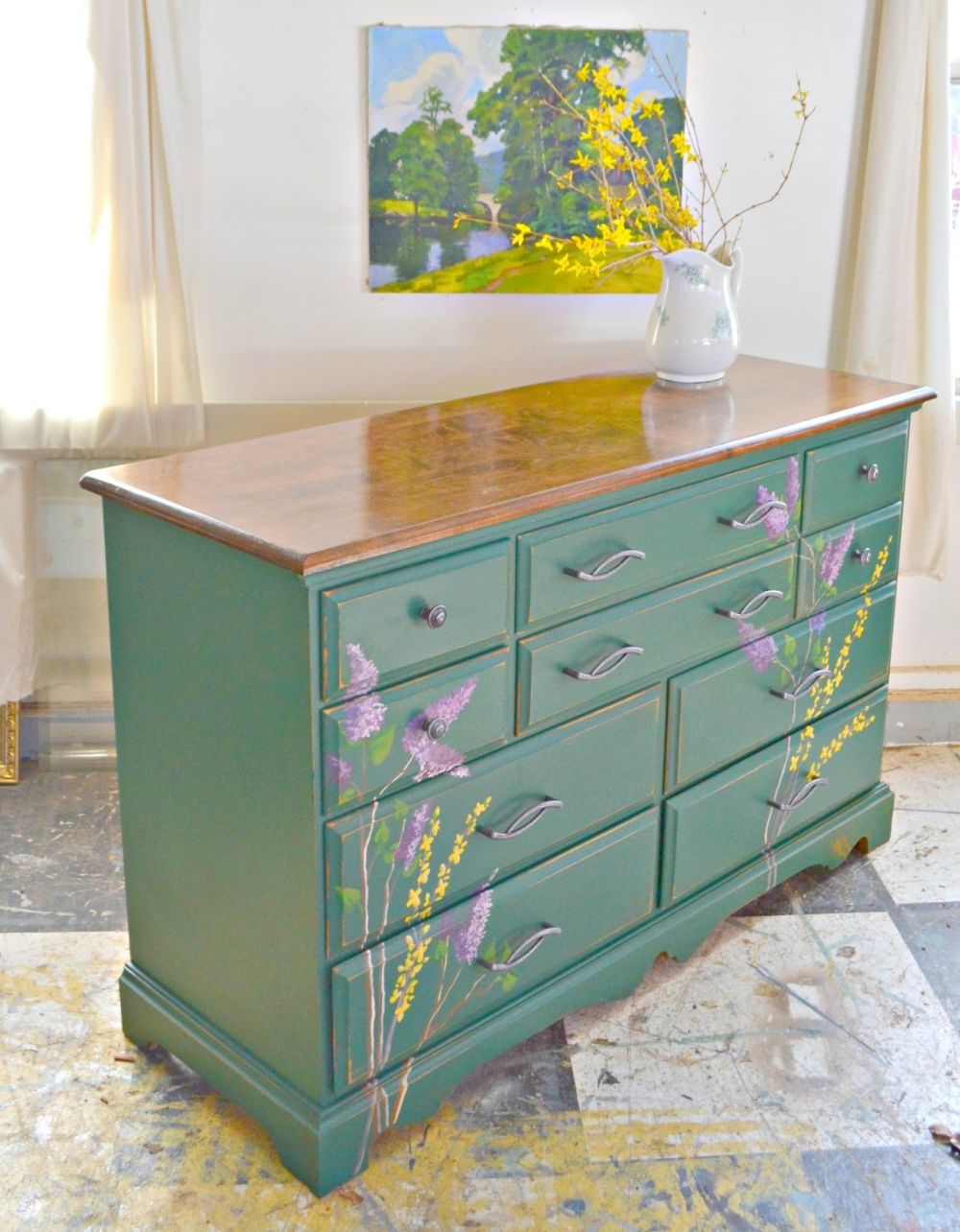
Deep bottle green now covers the case and drawer fronts, while the original wood remains exposed across the top. This broad wood surface breaks up the painted finish and preserves a portion of the dresser’s former appearance.
Thin distressed areas around the drawer edges reveal warmer tones beneath the green. Dark wax settles into molding and recessed areas, adding depth to the new color without obscuring the shape of the drawer fronts.
Lilacs Rise Across Several Drawers
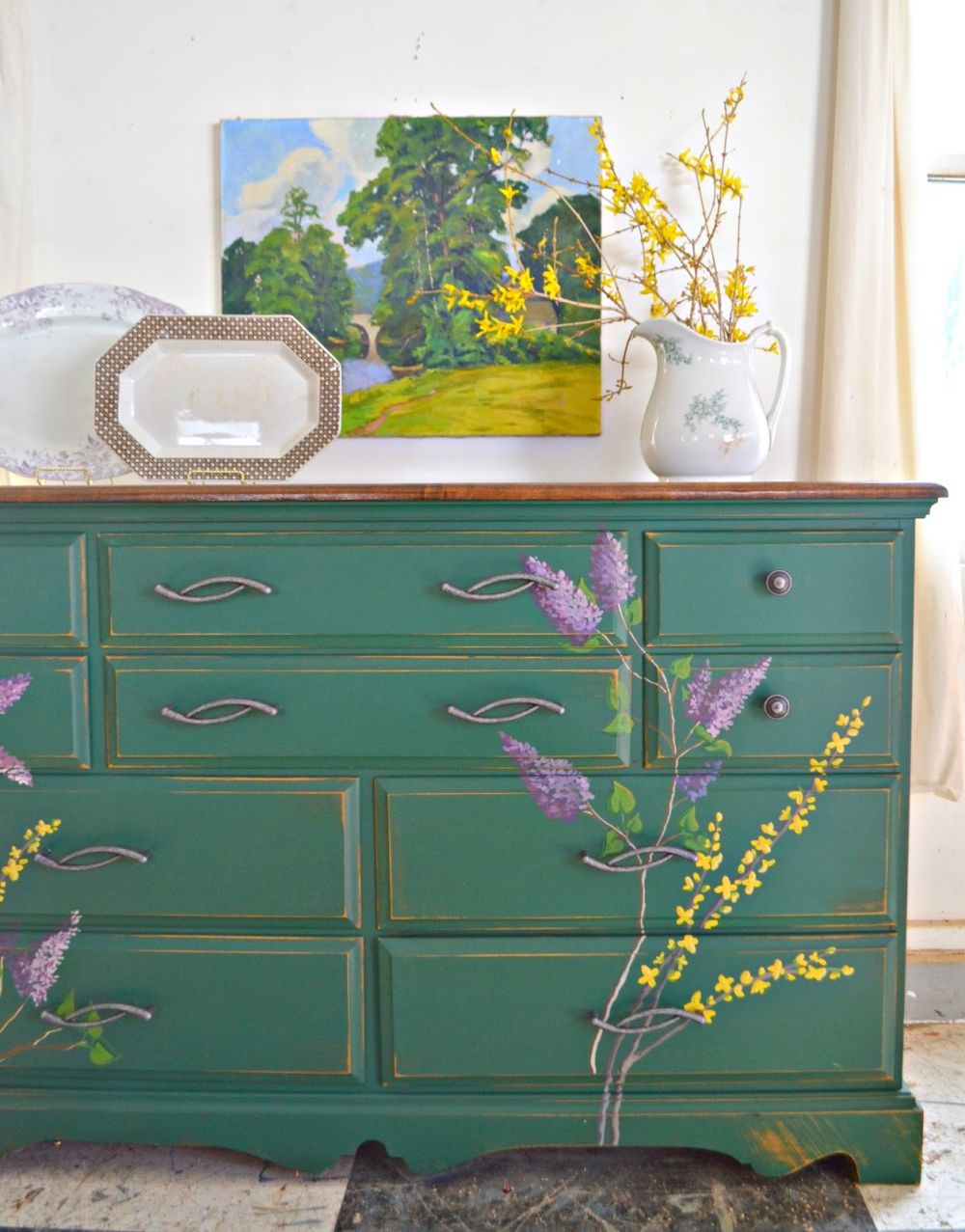
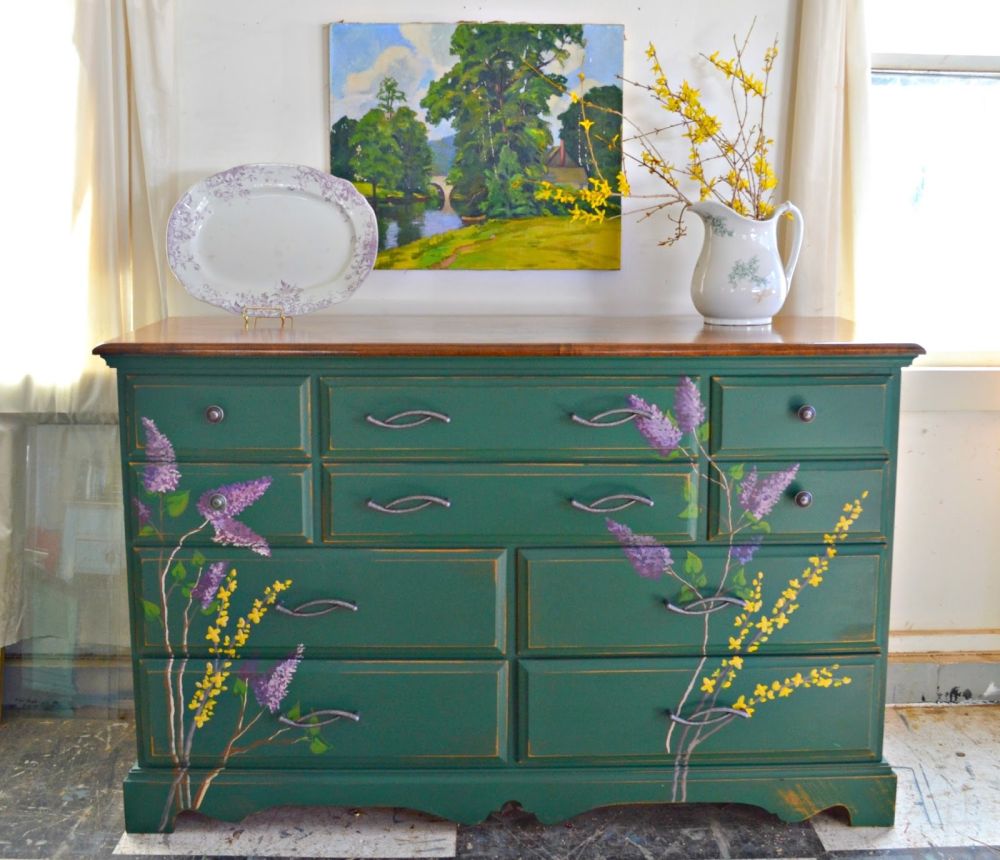
Purple lilacs start near the lower edge and climb across separate drawers instead of staying within their raised borders. Brown stems traverse the green background, while green leaves fill the gaps between the blossoms.
The composition allows drawer divisions to remain visible. Opening a drawer would separate part of a flower or stem from the rest, but closing it reconnects the design across the dresser front.
Yellow Forsythia Breaks Up the Purple Flowers
Yellow forsythia introduces a second flower type instead of repeating lilacs across both sides. Small blossoms follow thin branching stems, creating a different shape from the dense purple flower clusters.
Green paint offers sufficient contrast for both colors to stand out. The loose placement leaves large sections of the dresser undecorated, resulting in two growing arrangements rather than an all-over floral pattern.
New Hardware Sits Inside the Painted Design
Curved metal pulls replaced the dark traditional handles on the wider drawers, while round knobs were installed on the smaller ones. Several stems and flowers pass behind or beside the hardware instead of stopping before each pull.
This overlap helps connect the artwork across the dresser. Although drawer fronts still function as separate pieces, the flowers make the entire face read as one surface when everything is closed.
Wood Was Left Exposed Across the Top
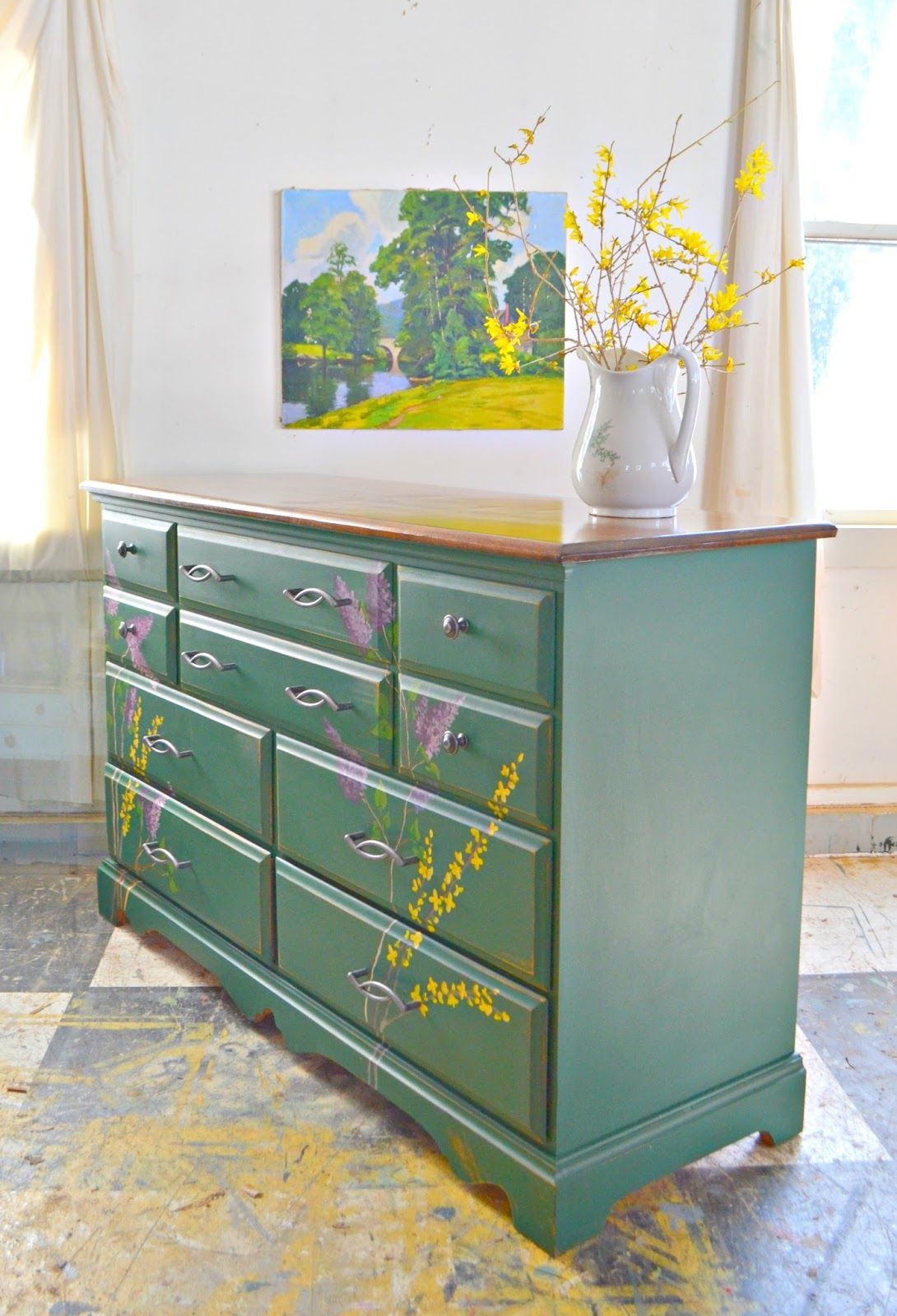
Green paint stops below the dresser top, leaving its warm maple tone visible above the floral case. This strip of wood connects the finished piece back to the brown dresser it started as without competing with the flowers below.
From the side, the contrast becomes stronger: plain green covers the case, natural wood caps it, and the floral artwork remains concentrated across the front.
Lilacs and Forsythia Turned the Drawers Into One Canvas
The finished dresser retains the same drawer arrangement, raised panels, molding, and shaped base seen before the makeover. Bottle green changes the background, while lilacs and forsythia move across boundaries that once divided the front into nine separate sections.
Purple, yellow, and green now carry the eye from the bottom corners toward the upper drawers. The exposed wood top keeps one large part of the original maple visible.
Floral artwork doesn’t have to stop at drawer edges. Another old cabinet used giant painted poppies that crossed doors, trim, and a bottom drawer to create one continuous composition.
Would you let a floral design travel across an entire piece of furniture, or keep each flower contained within one drawer or panel?
Image credits go to @heirandspace.
The post She Painted Lilacs and Forsythia Across This Old Maple Dresser Instead of Using One Color appeared first on Homedit.

























True beauty lies in the dialogue between eras. By letting the lilacs cross drawer boundaries, Kate honors the wood’s history while embracing renewal. We do not erase the past; we let it breathe into something new.
Thank you! I love how the lilacs soften the dresser’s lines while honoring its vintage character. It’s all about letting old pieces breathe and find new life. I’m so glad you noticed that delicate balance between past and present.