
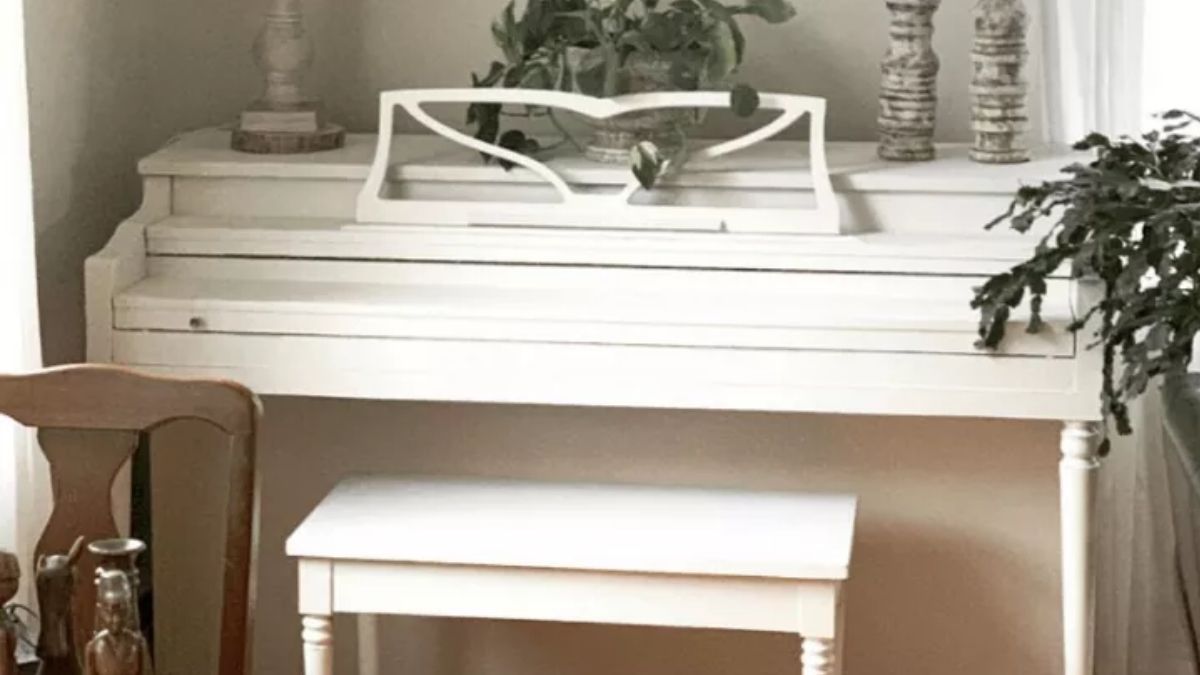
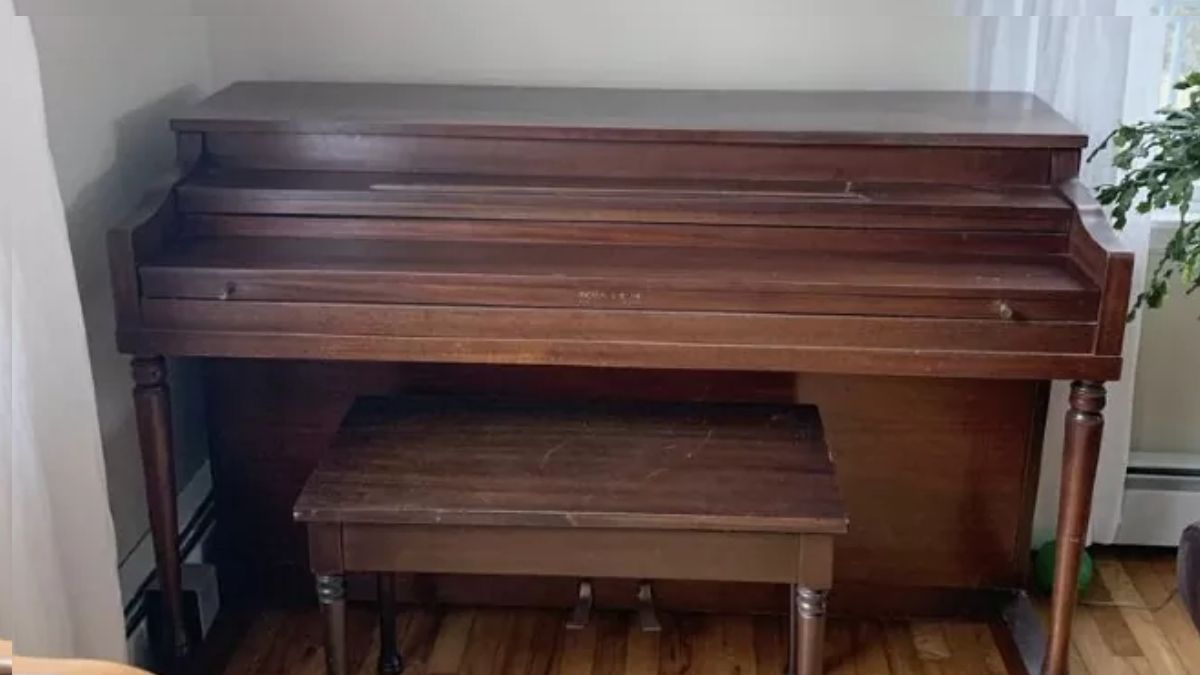
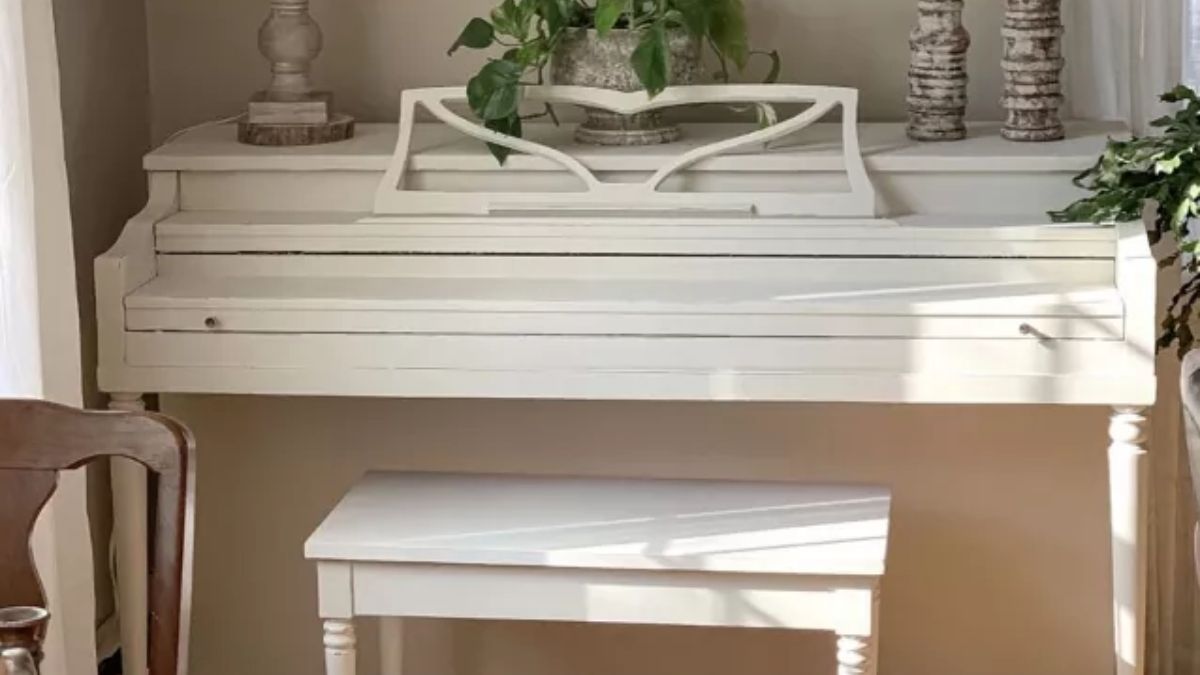
Certain pieces of furniture are too significant to donate yet too visually burdensome to leave unchanged. For Stacy Ling, this dilemma applied to the upright piano from her youth, a family heirloom accompanied by a matching bench. Positioned in the living room of her 1850 farmhouse beside dark brown leather sofas, the instrument's dark wood created a heavy atmosphere in that corner.
A closer inspection revealed further issues. She characterizes the surface as "dark, dinged, and absolutely damaged" marred by nicks, scratches, missing trim, a broken music rack, and a permanent sweat stain. While the piano's structure was sound, the finish was what made it appear dated. Placing a dark finish next to dark furniture effectively doubles the visual weight the room must support.
Reasons for skipping the full sanding process
Stripping a piano is a substantial task due to its curves, legs, and keyboard. Seeking a low-preparation method, Stacy selected Fusion Mineral Paint instead of chalk paint because it requires minimal sanding and includes a built-in topcoat, eliminating the need for wax. She chose the color Raw Silk, a gentle off-white.
Her materials list was concise: a paintbrush, painter’s tape, a sanding block, a dry rag, a drop cloth, corrugated cardboard, and optionally, an antique glaze. The process unfolded as follows:
Take off any hardware that you do not wish to paint.
Elevate the bench using items like paint cans to make the legs more accessible.
Gently scuff the entire surface with the sanding block, then remove dust with a dry rag.
Apply paint, allowing each coat to dry completely before adding the next. Due to the darkness of the original finish, three coats were necessary.
Open the lid, lightly sand any drips, then paint around the keys, using cardboard to secure and protect them.
Allow it to dry for several days, and wait at least 24 hours before beginning the distressing process.
Lightly sand the edges to create a worn appearance, wipe them clean, then apply glaze with a damp cloth or brush and wipe it back off to achieve an aged look.
She estimates the active work took about half a day, excluding drying time, and describes the experience as "a little more time-consuming than I expected." The keys presented the greatest challenge. Keeping a wet cloth nearby helps if paint gets on the wrong surfaces.
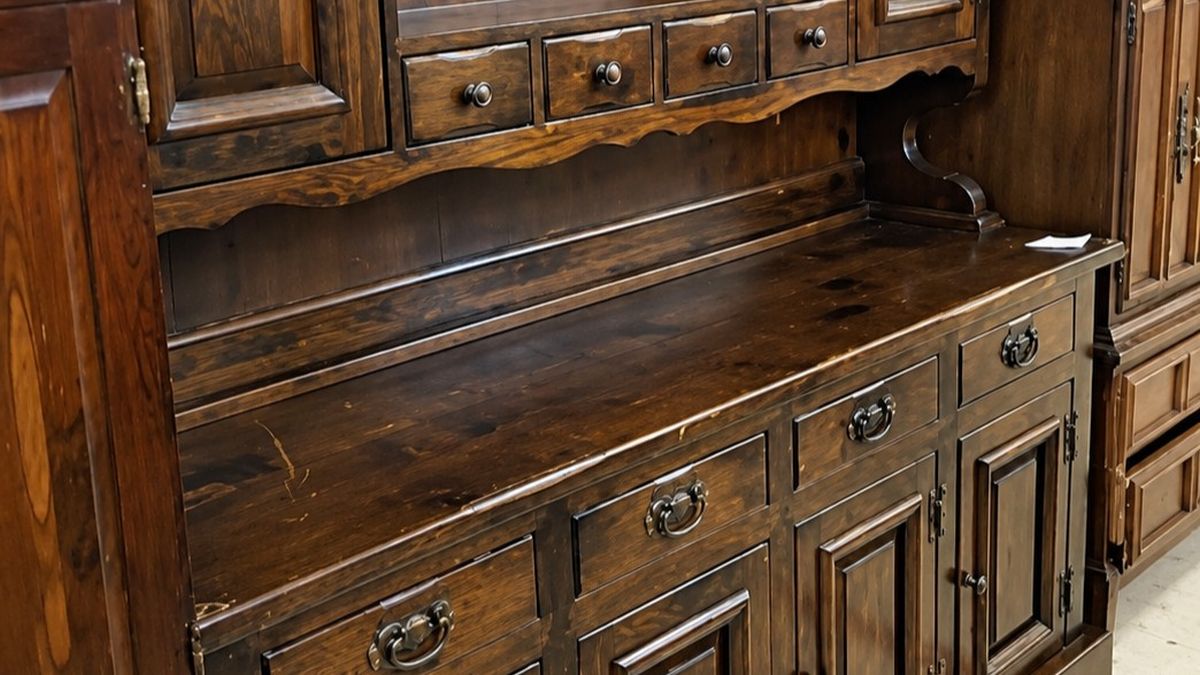
Using light paint is one method to rescue dark wood, but not the only one. A reddish-brown china cabinet took a different approach: after sanding and applying an oil primer, it was coated in a glossy deep green. The high shine now reflects the room like glass, while its brass pulls and moldings remain visible.
Limitations of paint on old pianos
Paint alters a piano's appearance but not its acoustics. Stacy confirms that painting did not affect the sound of her instrument, noting that many pianists and tuners believe it makes little difference as long as the back, where the soundboard is located, is left untouched. Nevertheless, a musician friend disapproved, and she advises readers to "proceed at your own risk." Consult a piano technician before painting if the instrument is valuable or plays well, and have it tuned and repaired according to its own schedule.
Old finishes also require careful handling. The EPA identifies refinishing old furniture as a job that can expose workers to lead, noting that homes built before 1978 are more likely to contain lead-based paint. If a piece might have paint from before 1978, it should be tested first. If sanding is necessary, the agency recommends wetting the area first, sanding minimally, and cleaning up thoroughly.
A painted finish is prone to chipping at the edges where hands and feet make frequent contact. Light distressing makes these marks look intentional. Years later, Stacy notes that the paint "has held up beautifully, even with daily use." "I love how much lighter it looks!" she says. It now "looks so much lighter and brighter in this corner of the living room." That’s the trick.
The post Instead of keeping this dark piano, she painted it Raw Silk, and it looks so much lighter appeared first on Homedit.



























This is a brilliant transformation! I love how you solved the visual weight issue with Raw Silk. It’s inspiring to see such a meaningful heirloom get a fresh, modern look without the hassle of heavy sanding. Great work!
Thank you so much! I’m thrilled you love the transformation. Raw Silk truly is magical for balancing that visual weight without the heavy sanding. It’s an honor to give this heirloom a fresh new life while preserving its character. I really appreciate your kind words!