
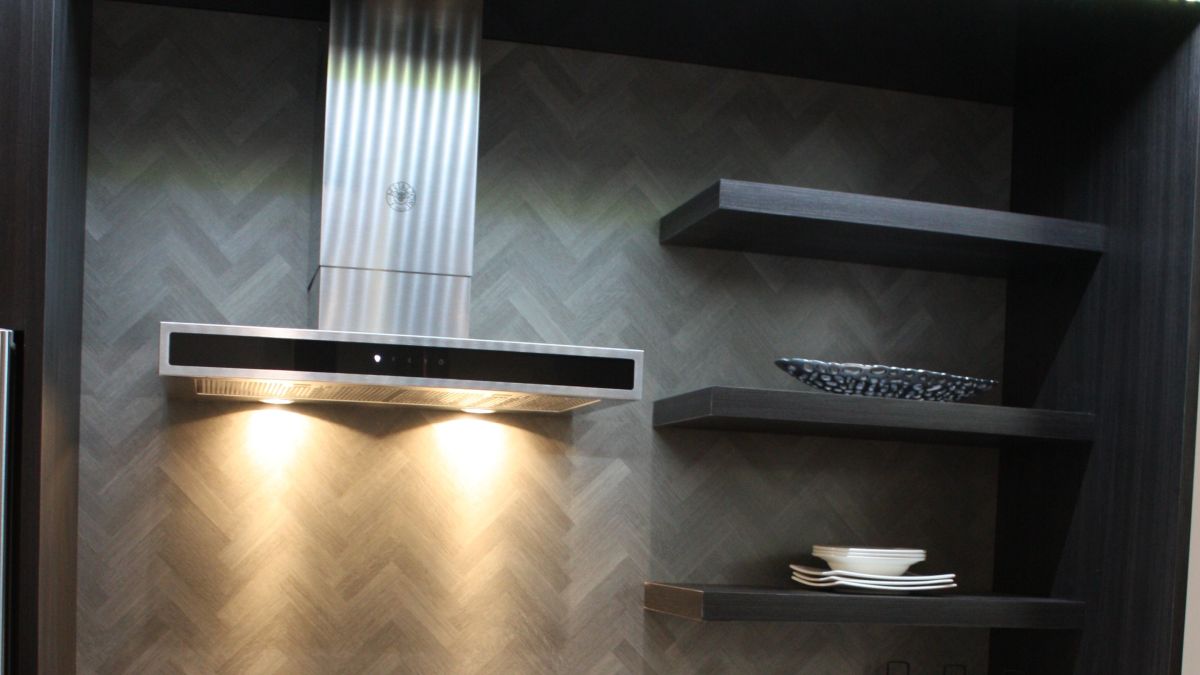
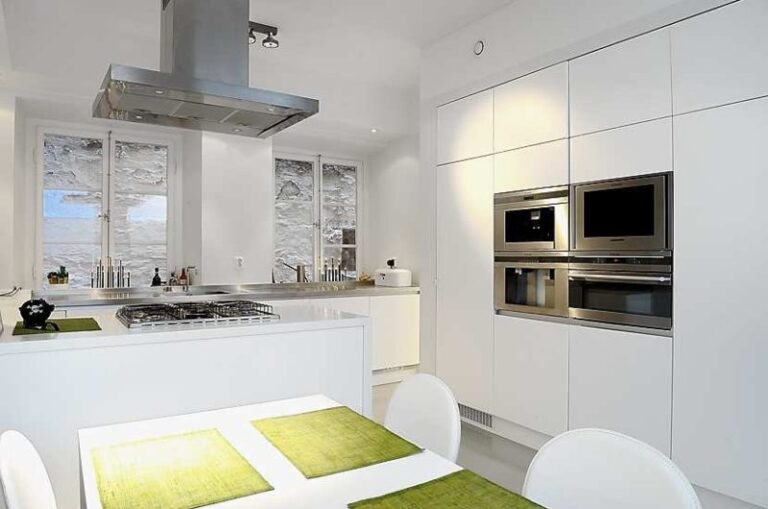
For many years, stainless-steel range hoods have been the standard fixture above kitchen stoves. These units vary in design, with some featuring tall metal chimines reaching toward the ceiling, while others are installed beneath upper cabinets, displaying a narrow steel canopy. Even when the surrounding cabinetry, backsplash, and countertops are coordinated, the ventilation unit often stands out as a distinct, separate element.
As we move into 2027, kitchen designers are adopting a new strategy. Rather than leaving the metal housing visible, they are integrating range hoods into painted cabinetry, custom architectural surrounds, and broader design schemes. The ventilation function remains essential, but the traditional stainless-steel exterior is no longer the default choice.
Stainless Steel Range Hoods Are Often Built Into Cabinets
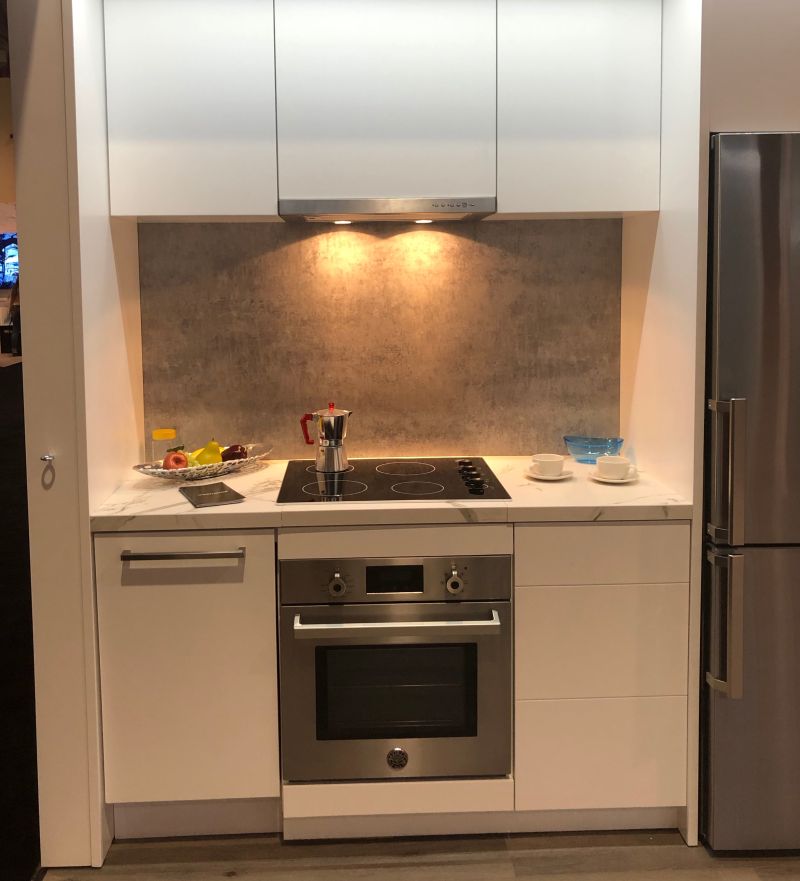
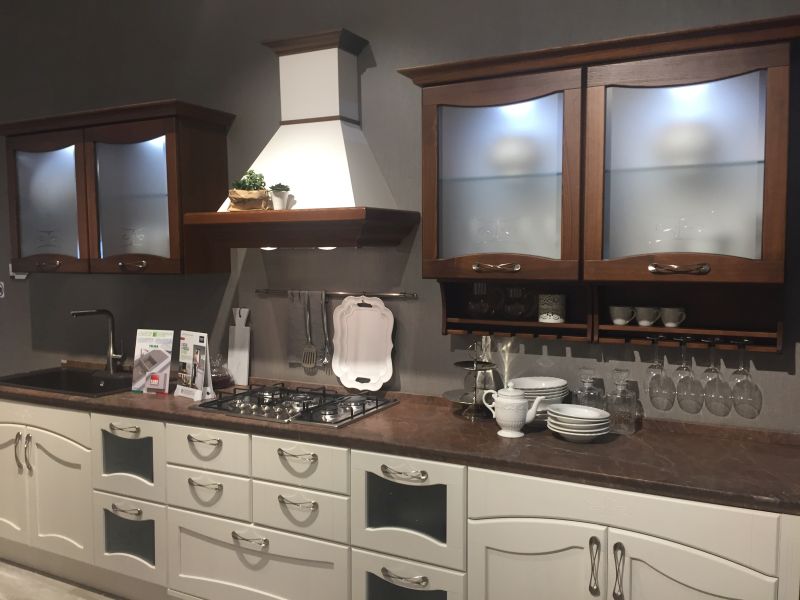
Under-cabinet hoods provide a subtler alternative to the classic stainless-steel chimney design. In one example, the hood is positioned between white cabinet doors, with only a thin metal strip visible above the cooktop. Integrated lighting highlights the gray backsplash, while the adjacent cabinets hide the majority of the ventilation housing.
This configuration preserves wall space and maintains the presence of cabinets above the stove, though the metal finish may still contrast with the rest of the kitchen. Custom hood surrounds enhance this concept by covering the visible housing with materials and finishes that harmonize with the cabinetry.
White Hood Surrounds Blend Into the Cabinets
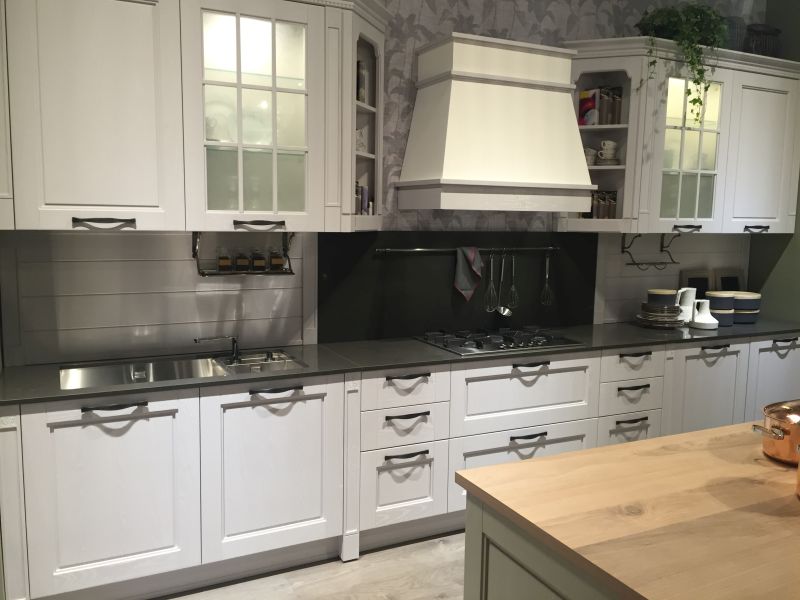
A white hood surround replaces the exposed metal chimney above the cooking range. Its tapered shape and projecting trim align with the nearby upper cabinets, creating a seamless visual flow across the wall.
The ventilation mechanism is housed behind the decorative exterior, making the white finish the primary visual element. This style complements Shaker-style cabinets, traditional kitchen layouts, and designs featuring crown molding.
Painted Range Hoods Match the Kitchen Cabinets
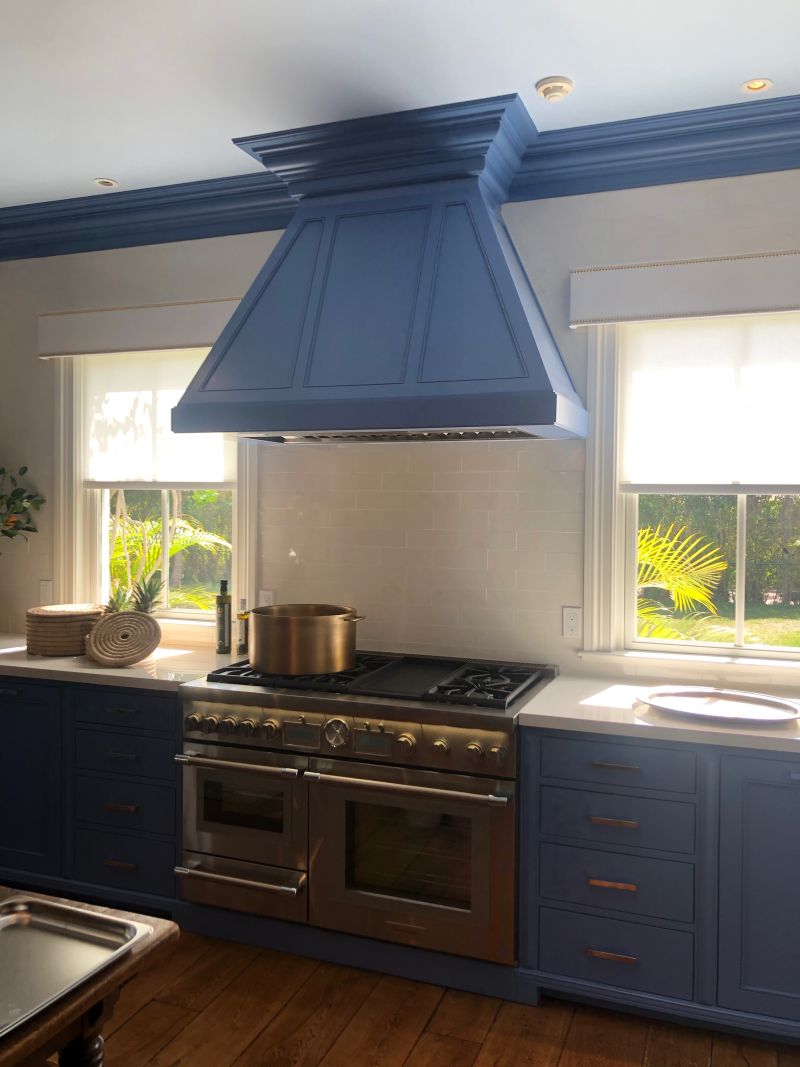
A custom hood painted in the same blue as the surrounding cabinetry integrates seamlessly into the kitchen space rather than appearing as a standalone appliance. In this instance, the tapered hood extends upward toward the ceiling, with molding linking its upper section to the crown trim.
Matching the cabinet finish also permits the hood to adopt a larger profile without introducing a conflicting material above the stove.
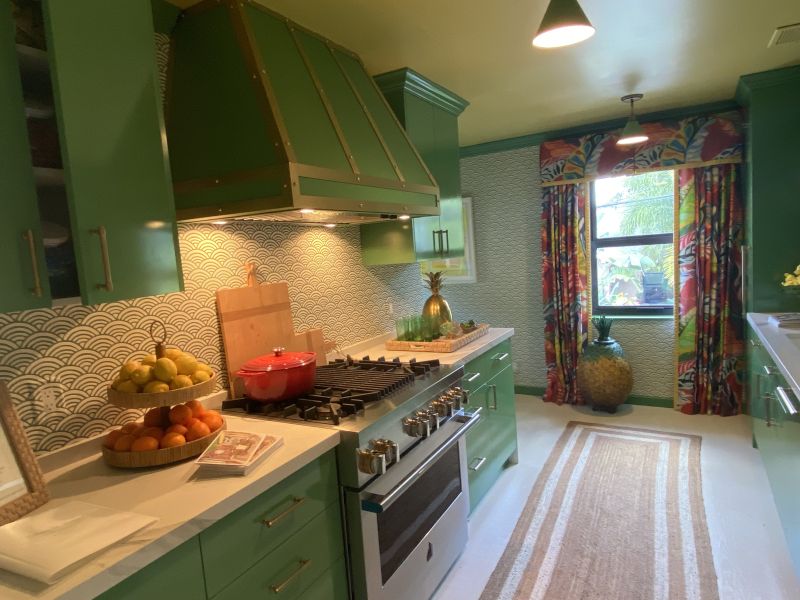
Green Range Hoods Become Part of the Color Scheme
Green cabinetry paired with a matching hood surround illustrates another variation of the built-in aesthetic. Gold-colored trim accents the sloping sides of the hood, while the patterned backsplash extends behind the stove area.
Although the hood remains a focal point, its color ties it visually to the cabinets. Instead of a stainless-steel canopy breaking up the wall, the ventilation housing becomes an integral part of the kitchen’s overall design.
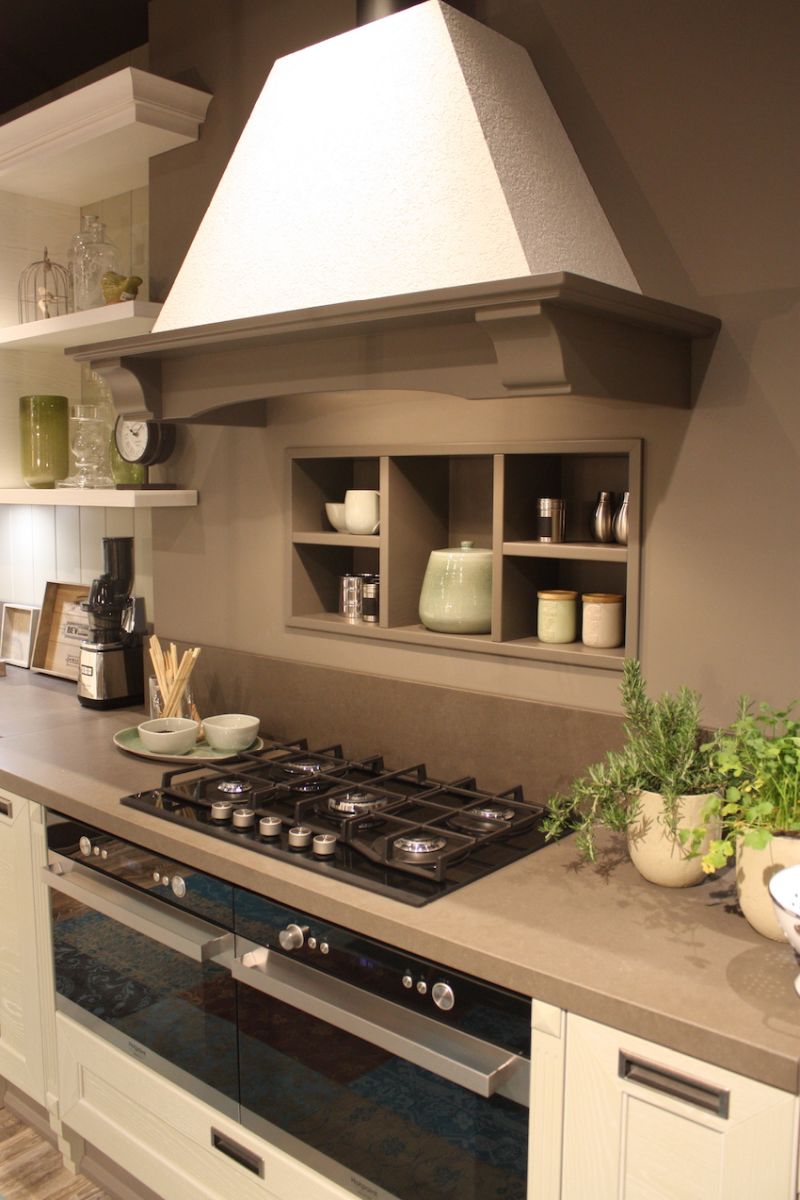
Traditional Mantel-Style Hoods Offer Another Alternative
Mantel-style range hoods draw inspiration from traditional fireplace surrounds. They feature a broad projecting shelf, decorative supports, and a tapered upper section that effectively conceal the ventilation equipment.
This style is well-suited for kitchens with raised-panel cabinet doors, wood countertops, and classic molding details. It also provides ample space for a wider custom surround when the cooking range requires a larger ventilation insert.
What to Consider Before Replacing a Stainless Steel Hood
Altering the hood’s appearance does not remove the need for adequate ventilation. According to the Home Ventilating Institute, a wall-mounted range hood should deliver approximately 100 CFM of airflow for each linear foot of cooking range. For a standard 30-inch range, the recommended airflow is approximately 250 CFM.
Even a concealed insert requires appropriate ductwork, sufficient airflow capacity, and proper clearance from the cooking surface. Additionally, custom surrounds made of wood or plaster must comply with the hood manufacturer’s installation guidelines and fire-safety standards.
Interest in architectural designs is on the rise. The 2026 Houzz Emerging Summer Trends Report revealed that searches for "arched range hood" increased by 177%, indicating a growing preference for hoods that are integrated into the kitchen’s design.
Stainless-steel hoods remain a practical option, particularly for kitchens featuring exposed metal appliances. The design shift heading into 2027 provides homeowners with more opportunities to conceal ventilation or blend it into the cabinetry.
Would you keep an exposed stainless-steel hood or replace it with one that matches your cabinets?
The post Goodbye to Exposed Stainless Steel Range Hoods, the Kitchen Designs Taking Their Place in 2027 appeared first on Homedit.












Loved this insight! Integrating hoods into cabinetry truly elevates kitchen aesthetics. Great job highlighting this 2027 design shift—it’s a fresh, cohesive look for modern homes.
Thank you! I’m glad you agree. Blending hoods into cabinetry creates that seamless, modern aesthetic we’re seeing more of this year. It really does transform the kitchen’s overall look. Thanks for reading!