
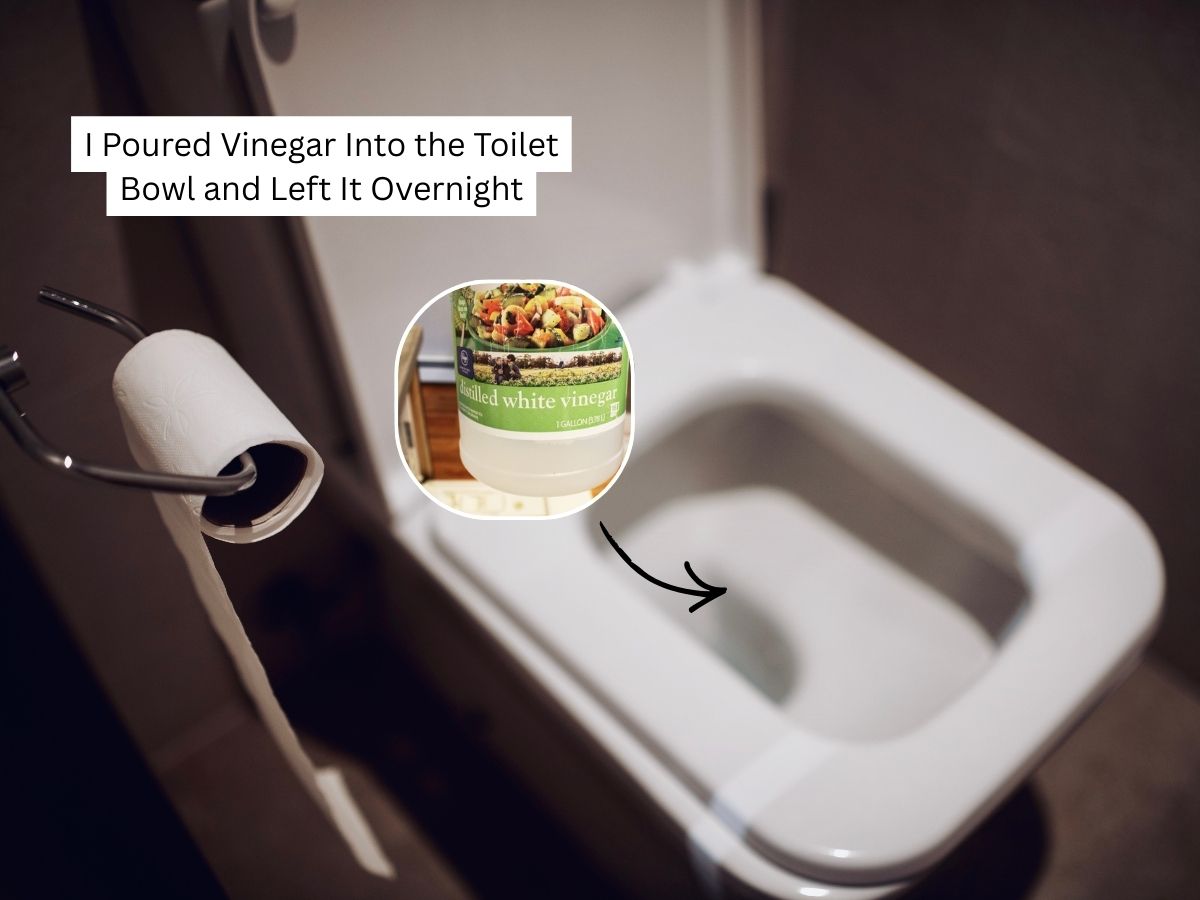
I started with a modest experiment: leaving vinegar in the toilet bowl overnight. The fixture already looked clean. Regular scrubbing and frequent flushing kept obvious stains at bay. Yet, a faint odor persisted. A thin ring also reappeared at the waterline within days. These issues were not dramatic, but they were persistent enough to notice.
The persistence of these issues suggested that routine cleaning was missing something.
Why I Tried Vinegar
Even when a toilet looks clean, mineral residue accumulates. Hard water deposits calcium and limescale along the waterline and under the rim. Water flows slowly in these areas and sits longer. This creates a thin, rough layer that traps bacteria. The surface loses its smoothness, even if the bowl appears fine.
Standard cleaners often just freshen the bowl and disinfect exposed porcelain. They rarely break down mineral layers, especially if contact time is short. Consequently, the smell returns because the source remains.
Vinegar operates differently. Its acidity reacts with calcium and mineral deposits instead of coating them. I wanted to test this specific reaction.
The New York City Department of Environmental Protection suggests leaving a cup of white vinegar in the bowl overnight to tackle hard-water buildup. The acetic acid in vinegar helps dissolve mineral deposits that ordinary scrubbing might leave behind.
What I Did
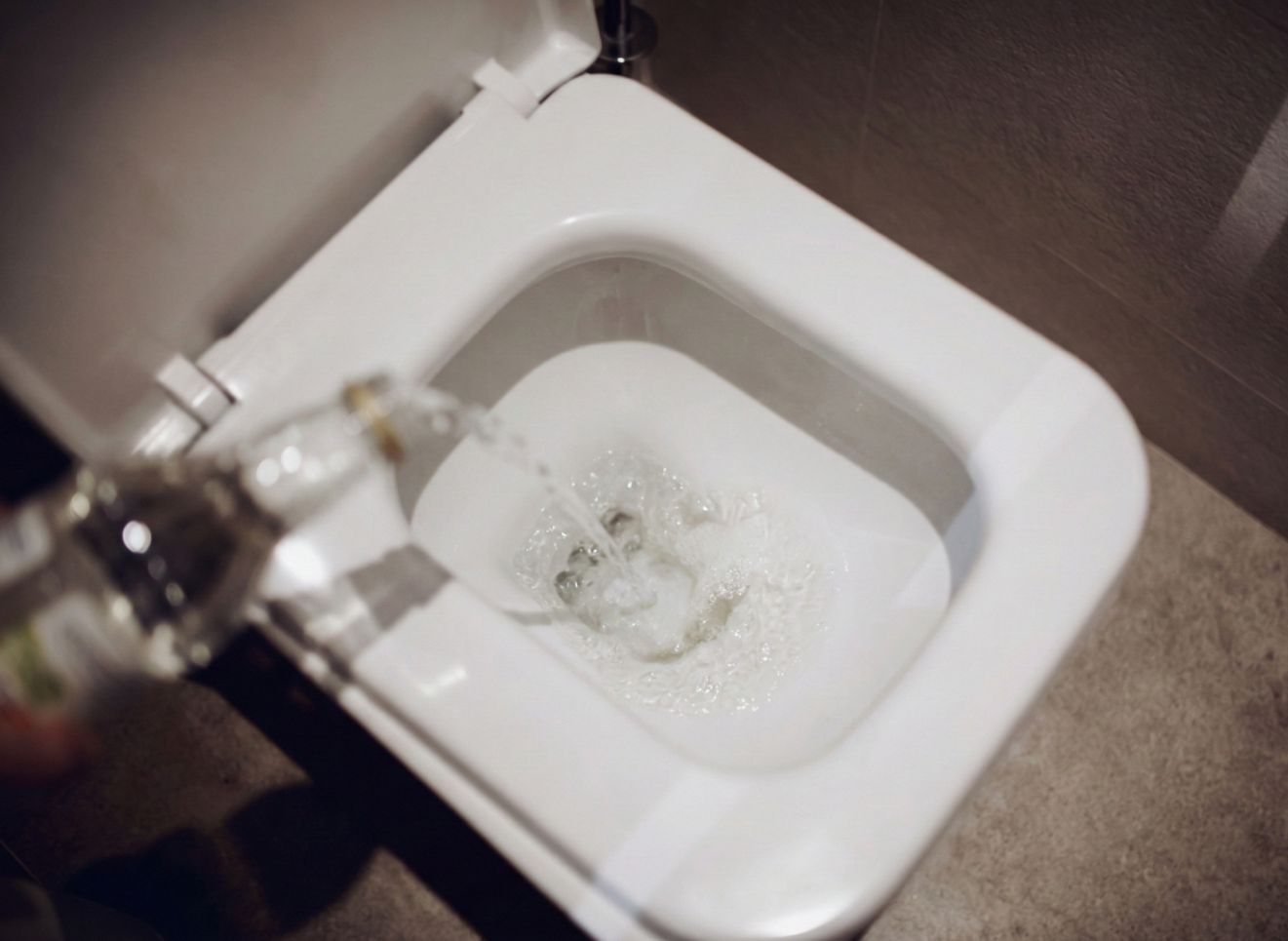
I waited until nightfall, ensuring the toilet would not be used. I poured two cups of white vinegar directly into the bowl. I aimed the stream to reach under the rim and coat the sides. I did not dilute the vinegar. I did not scrub. I did not flush.
I left it overnight.
The next morning, I scrubbed the bowl once with a toilet brush and then flushed.
That was the entire process.
What Changed by Morning
The first noticeable change was the absence of smell. It was not a vinegar scent, nor a clean fragrance. It was just nothing. The faint stale note that usually lingered for hours was gone.
The brush moved differently when I scrubbed. The waterline no longer felt gritty. The resistance that typically marked the ring was missing. What usually required several passes released quickly.
After flushing, the bowl looked identical to before. There was no visual transformation. The difference revealed itself over time.
What Changed Over the Next Weeks
The waterline ring did not return after a few days. It did not return after a week either. The bowl stayed smooth for longer periods between cleanings. Scrubbing felt easier because buildup had less time to attach.
The smell did not creep back. Even after long, hot showers or with closed bathroom doors, the bowl remained neutral.
That consistency was the result. It was not about brightness or shine. It was about behavior.
What Vinegar Actually Reached
Mineral residue bonds tightly to porcelain. It creates microscopic texture that holds bacteria even when invisible. Water alone cannot remove it. Many cleaners pass over this layer without enough contact time to break it down.
Leaving vinegar in overnight allowed it to fully soften that layer. Scrubbing in the morning removed what had already loosened. The odor disappeared because the bacteria had nothing left to cling to.
A 2021 Virginia Tech study found that cleaning vinegar containing 6% acetic acid dissolved more than 99% of tested calcium carbonate scale within two hours. The experiment involved water-heater deposits rather than toilets, but the results help explain why vinegar can loosen limescale before scrubbing.
How I Use This Now
I repeat this every few weeks, depending on water hardness. I reserve overnight soaking for when the bowl starts feeling rough again. For routine cleaning, I let vinegar sit for 15 to 30 minutes during the day.
I do not mix it with other products. I do not use boiling water. Time does the work.
Other Toilet Bowl Cleaning Options That Work
Vinegar is effective, but not exclusive.
Baking soda adds abrasion and helps with stubborn rings, especially after vinegar softens buildup.
Hydrogen peroxide reduces bacteria and odor without affecting porcelain texture.
Bleach disinfects but leaves mineral residue behind, which is why smells can return quickly.
Lemon juice works on light mineral deposits but lacks the strength for thicker buildup.
What I avoid are heavily scented cleaners that leave the bowl smelling clean while residue stays intact.
What This Changed
The bowl did not look different. It stayed smooth longer. Scrubbing took less effort. The smell stopped returning.
The problem was never visible dirt. It was a layer that routine cleaning never addressed. Vinegar reached it by staying long enough to matter.
Never mix vinegar with bleach or bleach-based toilet cleaners, because the combination can release toxic chlorine gas.
The post I Left Vinegar in My Toilet Bowl Overnight and Didn’t Expect This appeared first on Homedit.






















































So we’re paying for plumbing to eat sour liquid because our water is too tough? I’ll stick to my expensive chemicals. At least they smell like money, unlike this cheap acid bath.
I get the appeal of that fresh scent! While hard water does make vinegar more necessary, it’s a cost-effective way to tackle mineral buildup without harsh chemicals. It might not smell like luxury, but it keeps your pipes happy and your wallet fuller in the long run.