
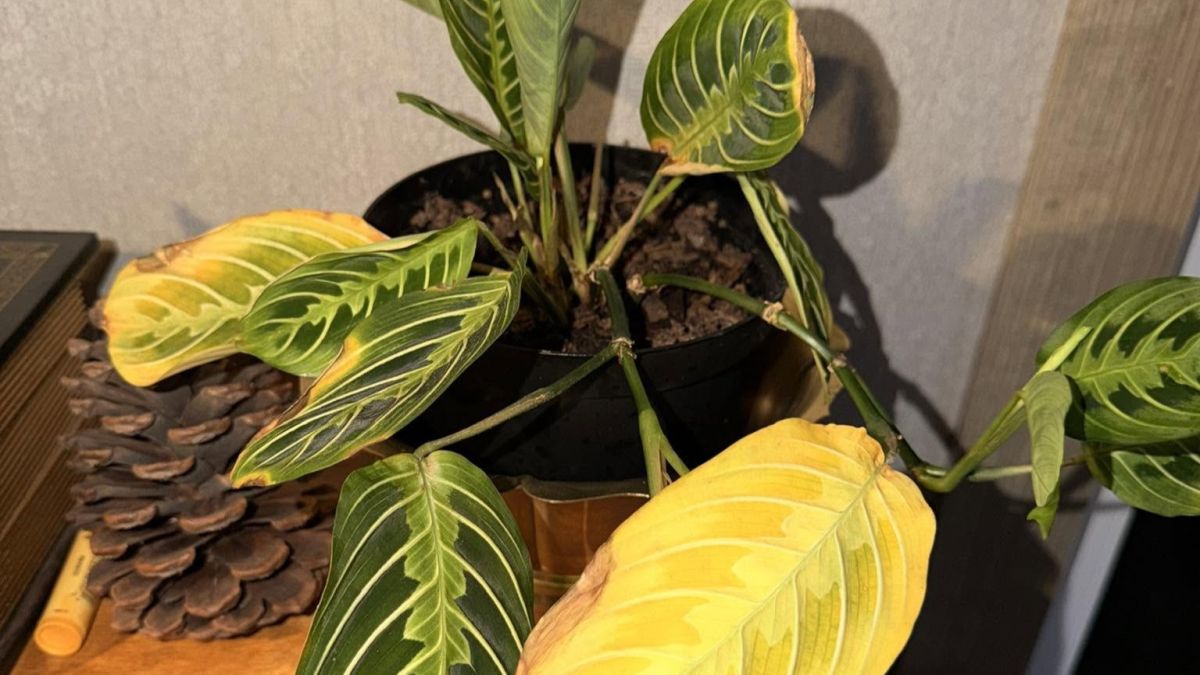
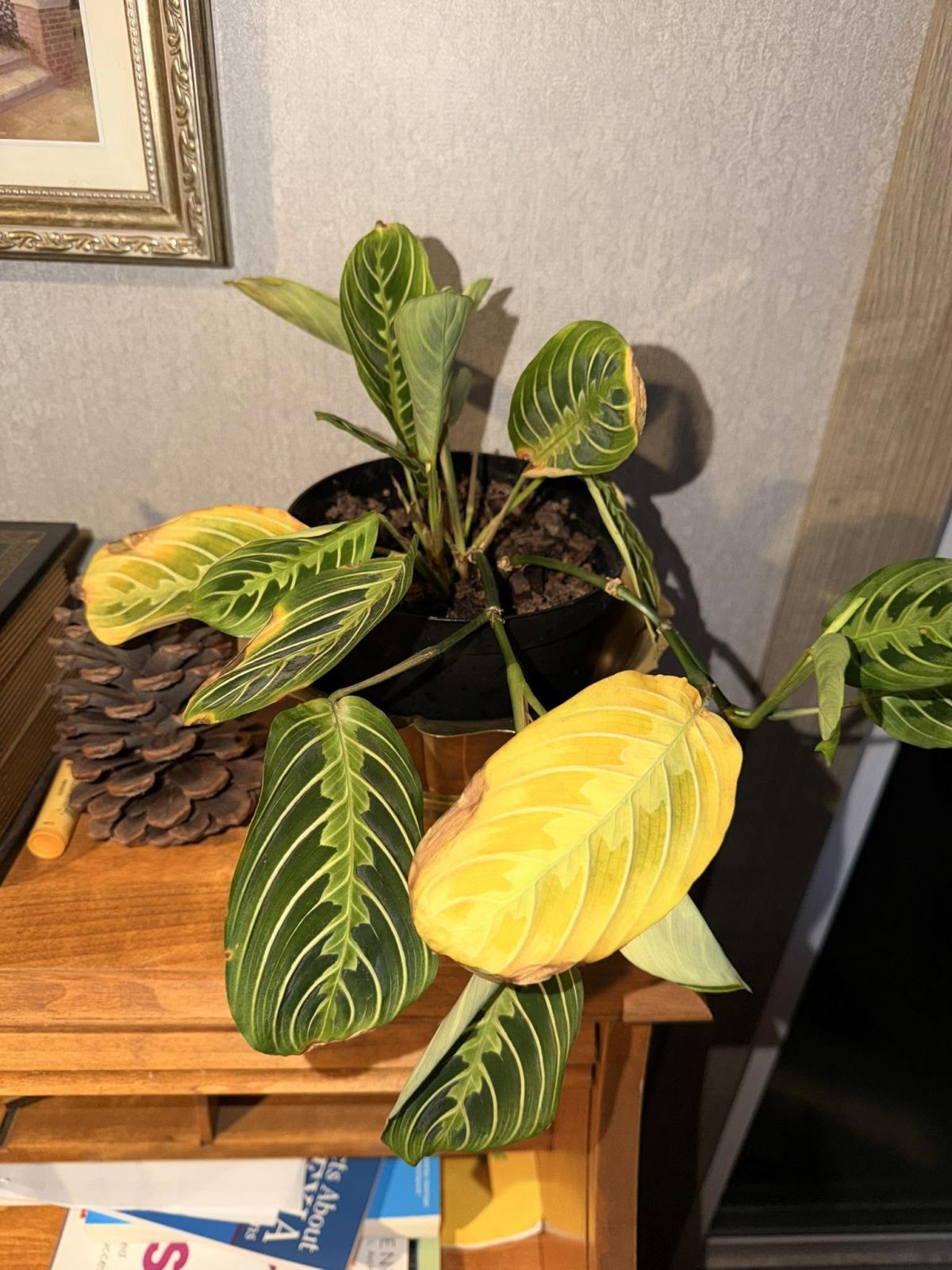
Although new foliage continues to emerge, the plant’s older leaves are yellowing and dying. Adding more water might seem like the logical solution, yet this approach could actually worsen the situation. The presence of fresh growth does not guarantee that the roots are free from underlying issues.
Jocelyn Crittenden shared this specific scenario during a Facebook discussion about plant care. Her prayer plant was simultaneously generating new leaves and shedding older ones. She kept the plant away from direct sunlight and questioned if a pebble tray would supply the necessary humidity.
This inquiry led to a variety of conflicting suggestions.
Plant Owners Couldn’t Agree on the Cause
"Humidity Humidity Humidity," Tony Anderson contributed his perspective, adding a warning that the soil should not be allowed to dry out completely.
Marissa Finley suspected a different issue was at play: "Looks over watered or poor drainage."
Melissa Bellevue shared a contrasting experience: "No humidity for mine. I just water maybe once a week and indirect sun."
Renee Vass provided an alternative explanation: "Some leaves just die. Sometimes we don’t know why."
While each comment highlighted a potential cause, yellowing leaves alone do not indicate whether the plant requires more water, less water, or a shift in its environment.
New Growth Doesn’t Rule Out Stress
The University of Maryland Extension examined a nearly identical situation in 2023. In that case, a owner noted that while new leaves were sprouting, other leaves were turning yellow and brown.
A horticulture specialist clarified that shedding a few older leaves is a normal part of the growth cycle. As new foliage pushes forward, the leaves located furthest from the plant's center may naturally die off.
The key indicator to monitor is how quickly leaves are being lost.
If older leaves are dying at a faster rate than new ones are forming, or if the yellowing is spreading throughout the entire plant, the issue likely goes beyond normal aging.
Too Much Water Can Look Like Too Little
Yellowing often triggers an instinct to water the plant again. However, if the potting mix is already wet, this extra watering can harm the roots.
According to Utah State University, when soil becomes saturated, it pushes out the air pockets around the roots. This reduces oxygen availability and hinders the plant's ability to absorb water, potentially causing yellowing and wilting even when the plant is surrounded by moisture.
Prayer plants require consistent moisture in the soil, but their roots cannot survive being constantly waterlogged.
Before adding water, feel the top inch of the soil. If it remains wet, hold off on watering. If it has started to dry, water the plant until water drains out, then immediately empty the saucer.
Inadequate drainage can leave the lower roots wet for extended periods, even after the surface soil appears dry.
Humidity Isn’t the Only Thing to Check
While prayer plants thrive in humid environments, a pebble tray may not resolve every issue causing leaf problems.
The North Carolina State University Extension advises providing bright, indirect light, moist soil, and high humidity for Maranta leuconeura. They also note that poor drainage can lead to root rot.
Water quality is another factor to consider. The University of Maryland Extension points out that fluoride, minerals in the water, and salt buildup from fertilizer can all damage prayer plant leaves.
Different conditions can cause brown tips, yellow patches, or fading foliage. Simply adding a humidifier or switching to distilled water without verifying soil moisture levels might leave the root cause unresolved.
Should You Cut Off Yellow Prayer Plant Leaves?
Once a leaf has turned yellow, it will not return to green. Use clean scissors to cut the stem close to its base instead of pulling it out by hand.
Removing yellow leaves does not address underlying issues with watering, humidity, or root damage. It simply removes the dying foliage without disturbing the new growth.
Sources: University of Maryland Extension, Utah State University Extension, North Carolina State University Extension
The post New Leaves Don’t Always Mean Your Prayer Plant Is Healthy: Why the Older Ones Keep Turning Yellow appeared first on Homedit.





















































What specific root stress signals should we watch for before the new growth fades? How do we distinguish natural aging from environmental neglect in Prayer Plants?
Watch for yellowing lower leaves, mushy roots, or a foul odor indicating root rot. Natural aging affects only one or two older leaves, while neglect causes widespread yellowing, drooping, or browning across the entire plant.