
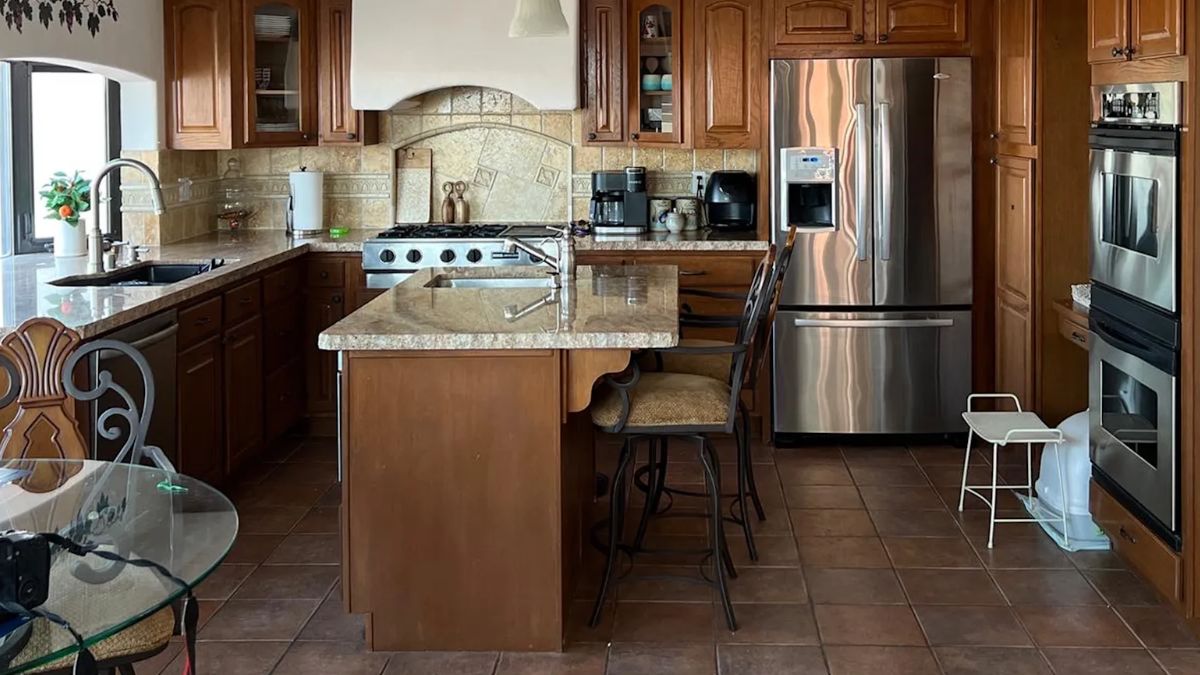
For years, white paint served as the go-to solution for kitchens featuring outdated oak cabinets. Today, homeowners are shifting back toward wood, a trend confirmed by recent data. According to the 2026 U.S. Houzz Kitchen Trends Study, 29% of homeowners renovating their kitchens selected wood cabinets, while only 28% opted for white. This marks a significant shift, as wood usage increased by six percentage points from the previous survey, whereas white declined by five percentage points.
This resurgence of wood does not imply a return to the orange-toned oak cabinets and matching trim of the past. The 11 kitchens highlighted here demonstrate various modern interpretations, ranging from flat-front designs and striped finishes to dark stone surfaces and wood-paneled appliance walls.
Flat Wood Cabinets Without Traditional Door Frames
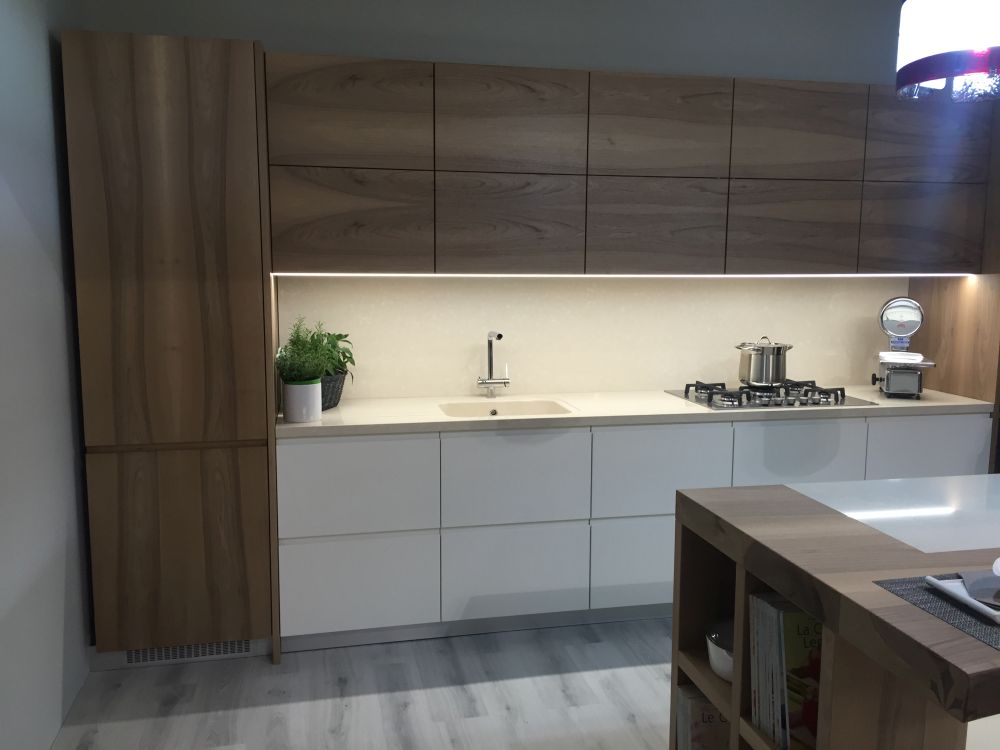
Upper cabinets featuring horizontal wood grain are positioned above white handleless drawers, with a continuous LED strip dividing the two materials. A tall cabinet clad in the same wood finish hides the refrigerator, and this matching wood treatment is also applied to the island.
These cabinet doors lack raised panels, knobs, or visible handles. Their smooth, flat surfaces allow the natural grain pattern to become the primary visual feature.
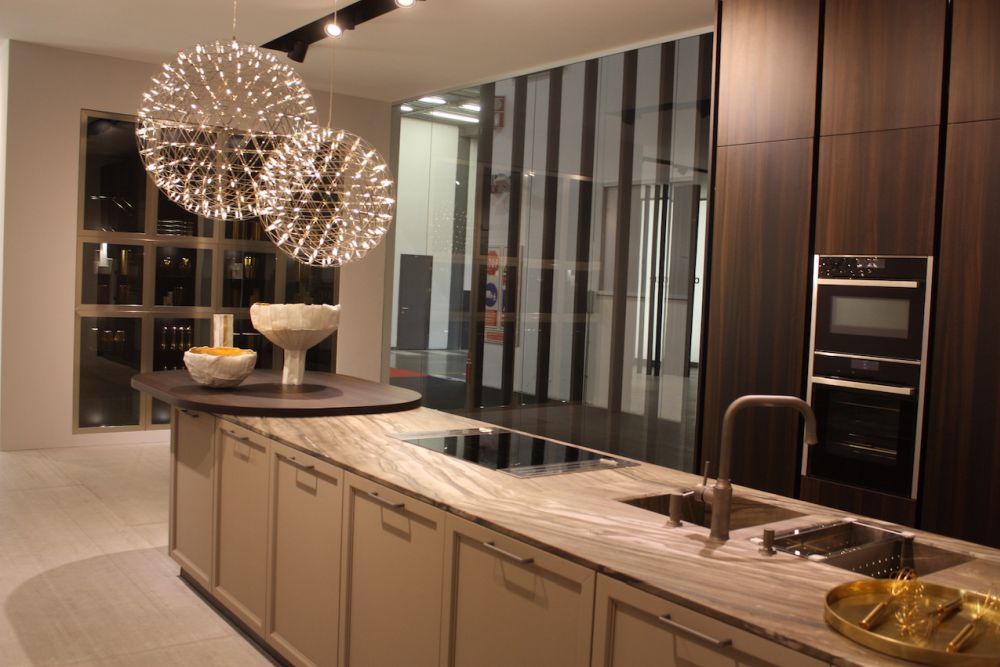
Full-height cabinets in a walnut tone create an appliance wall behind a light-colored stone island. Built-in ovens are installed flush with the cabinetry, eliminating the gaps typically found with freestanding units.
An oval wooden counter extends from one side of the island, establishing a dining area distinct from the main cooking zone.
Wood Cabinets With Black Stone and Exposed Brick
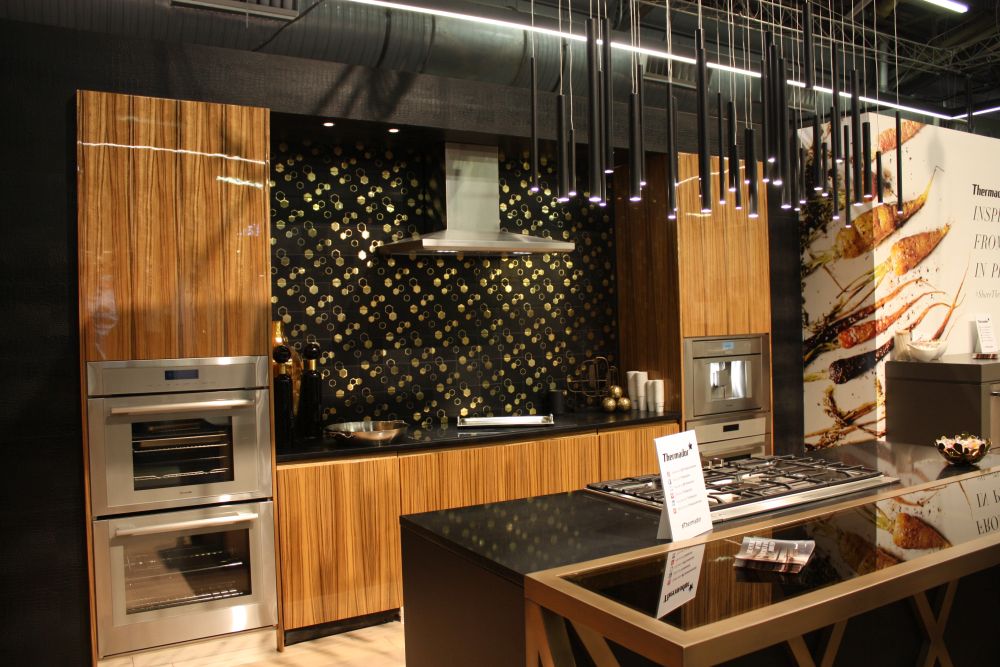
High-gloss striped wood fronts surround a black backsplash adorned with small gold circular patterns. Stainless steel double ovens are housed in one cabinet tower, while a large black island accommodates the cooktop.
The surface finish mimics polished striped veneer rather than traditional stained oak.
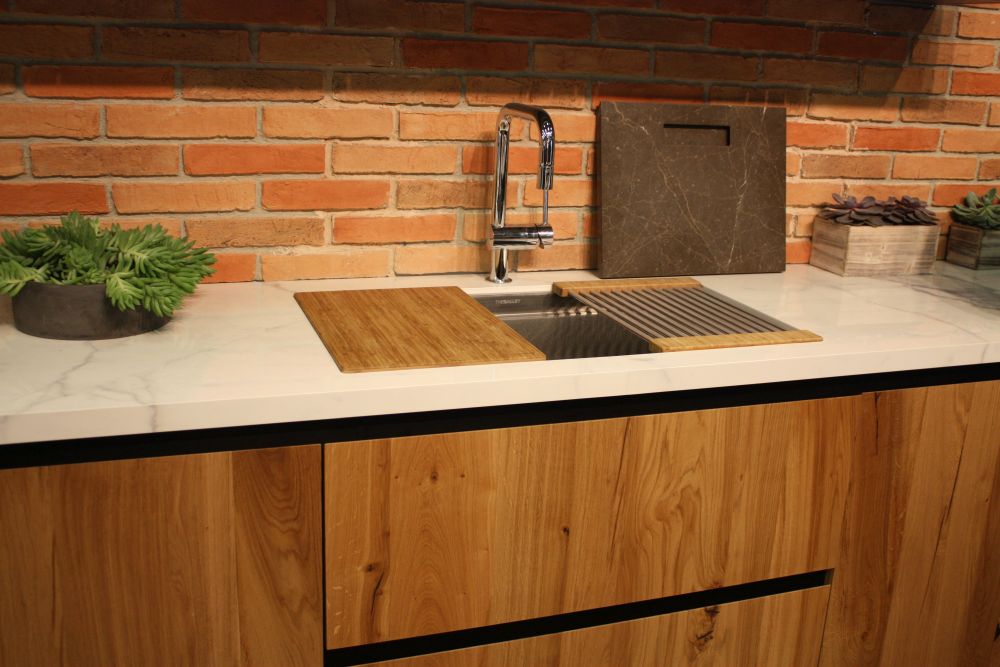
Exposed red brick acts as the backdrop for flat wood drawers and a white countertop. Thin black channels replace traditional protruding handles, allowing the wood grain to flow uninterrupted across the drawer fronts.
A built-in sink is integrated into the counter space, accompanied by a wooden cutting board and a metal draining rack.
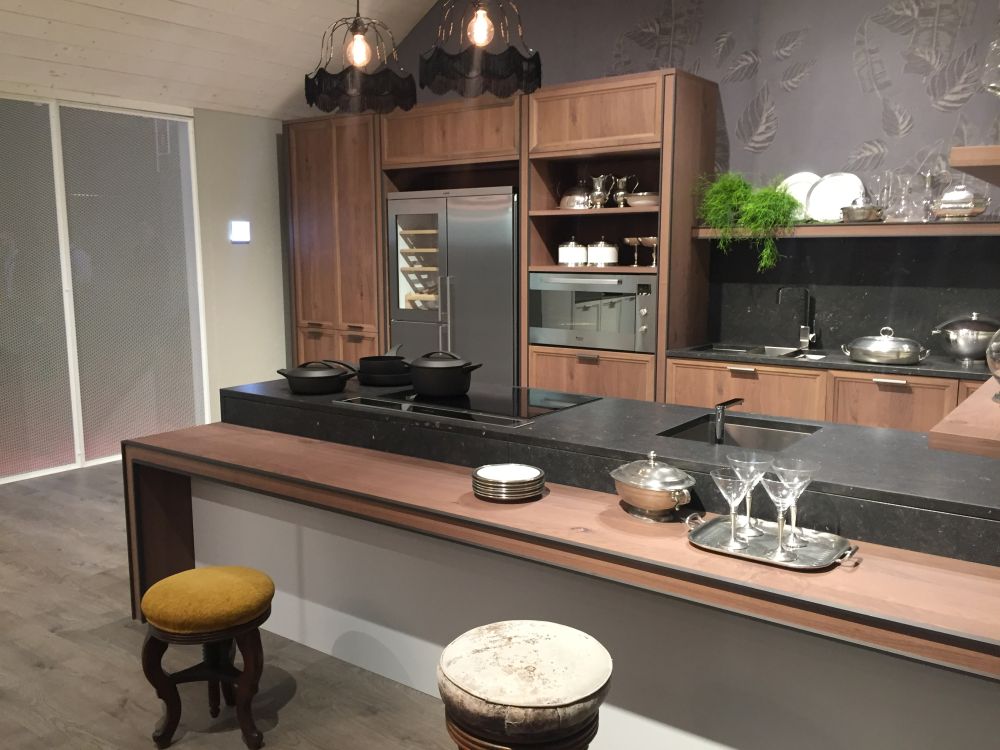
Medium-brown cabinets enclose a built-in refrigerator and oven, with open shelving located on the right side. A black cooking island extends toward a raised wooden breakfast bar.
This raised counter effectively separates seating areas from food preparation zones without requiring an additional island.
Wood Cabinets With Decorative Details
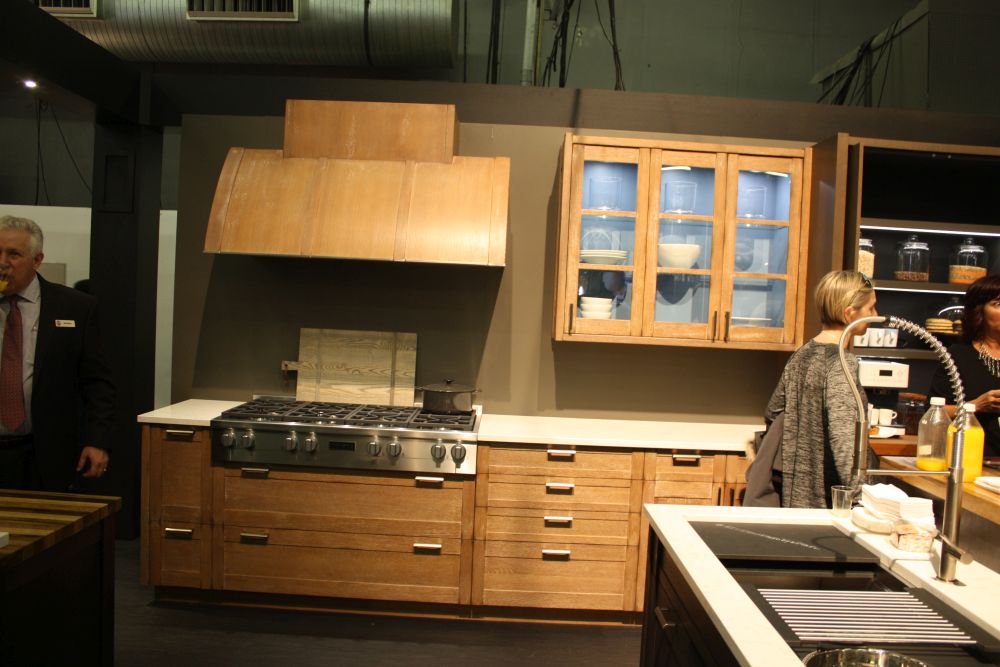
An oversized range hood clad in wood replaces the standard stainless steel extractor. Its curved upper section harmonizes with the surrounding wood cabinets, while glass-front doors and wide drawers are situated below.
The hood creates a focal point along the cooking wall without introducing a contrasting material.
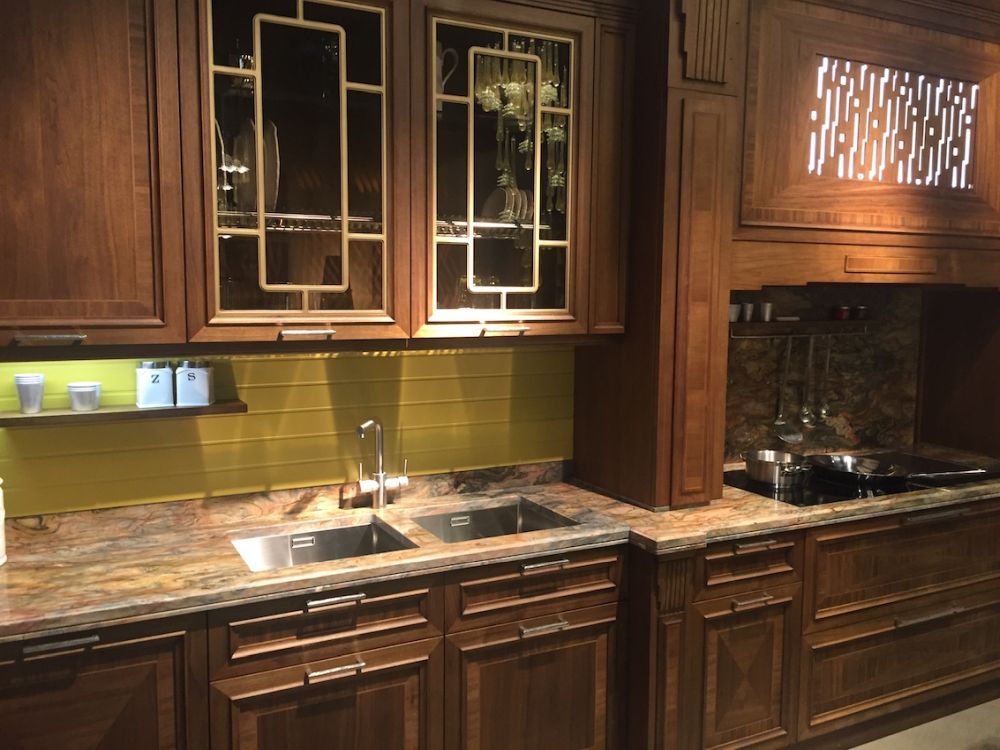
Dark wood cabinets feature geometric gold-toned inserts across their glass doors. A mustard-green horizontal backsplash runs behind the sink, positioned above a heavily patterned stone counter.
In contrast to flat-front designs, these doors utilize recessed panels, decorative trim, and metalwork.
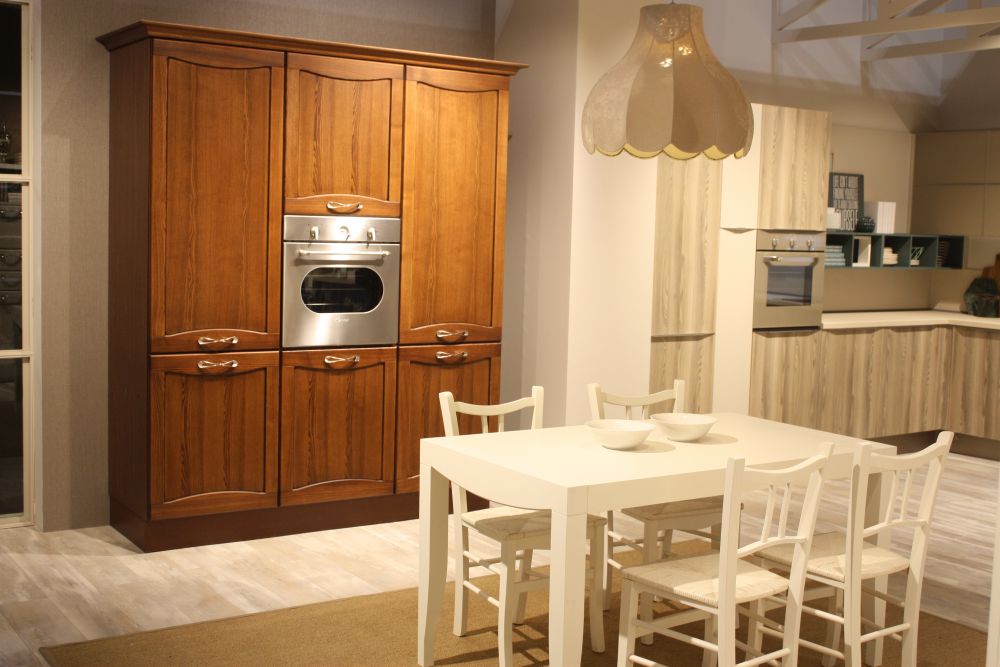
A freestanding-style wood cabinet houses a built-in oven between paneled doors. Crown molding along the top and a continuous base give the unit the proportions of a traditional cupboard.
This cabinet is positioned next to a white dining table rather than spanning an entire kitchen wall.
Wood Around Sinks and Built-In Appliances
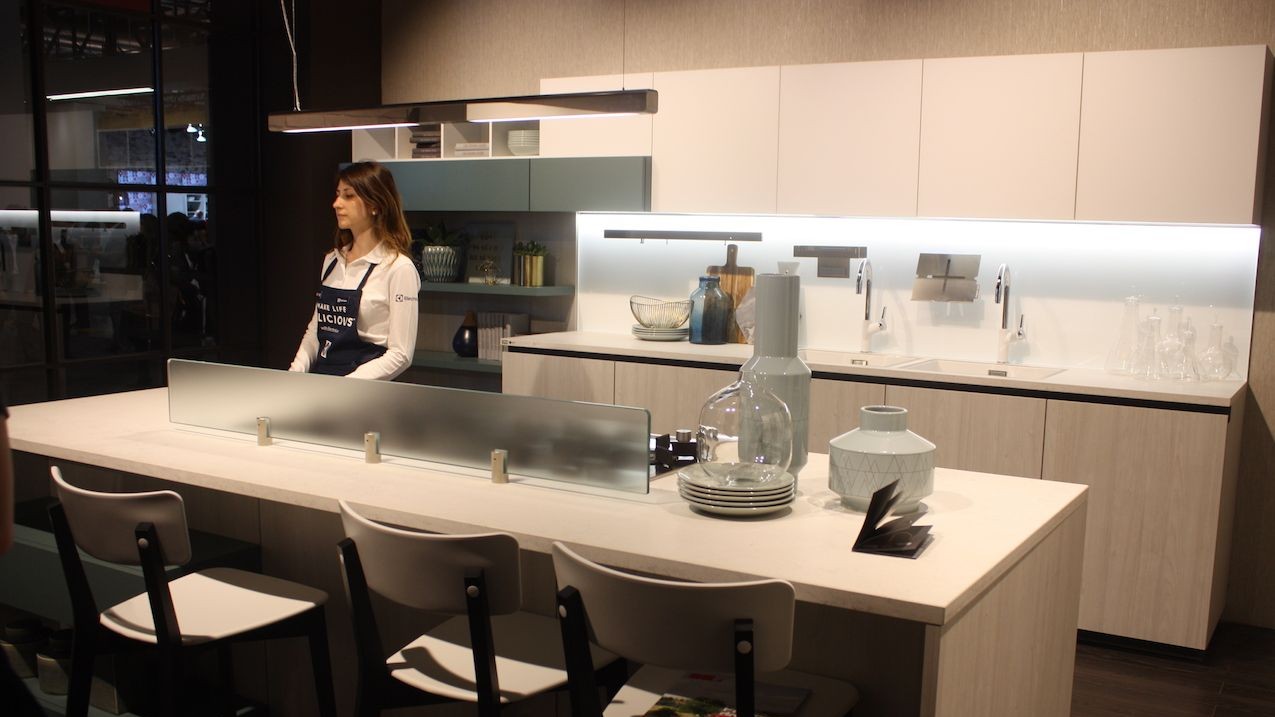
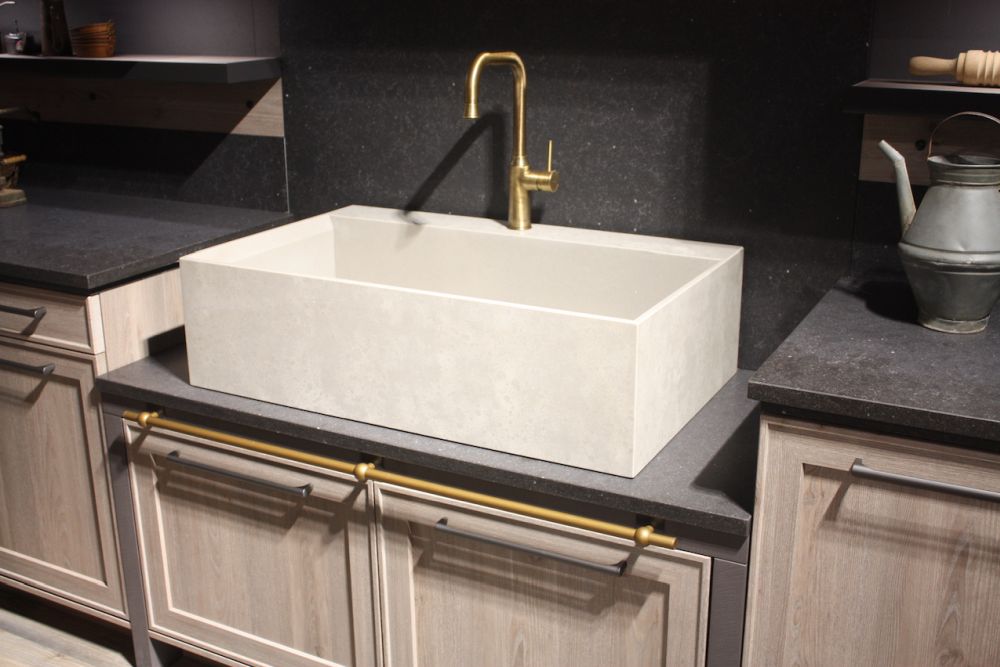
A thick, rectangular farmhouse sink sits above pale wood cabinet fronts, framed by black countertops and a black backsplash.
The sink’s straight edges and brass faucet contrast with the horizontal grain and slim metal handles located beneath it.
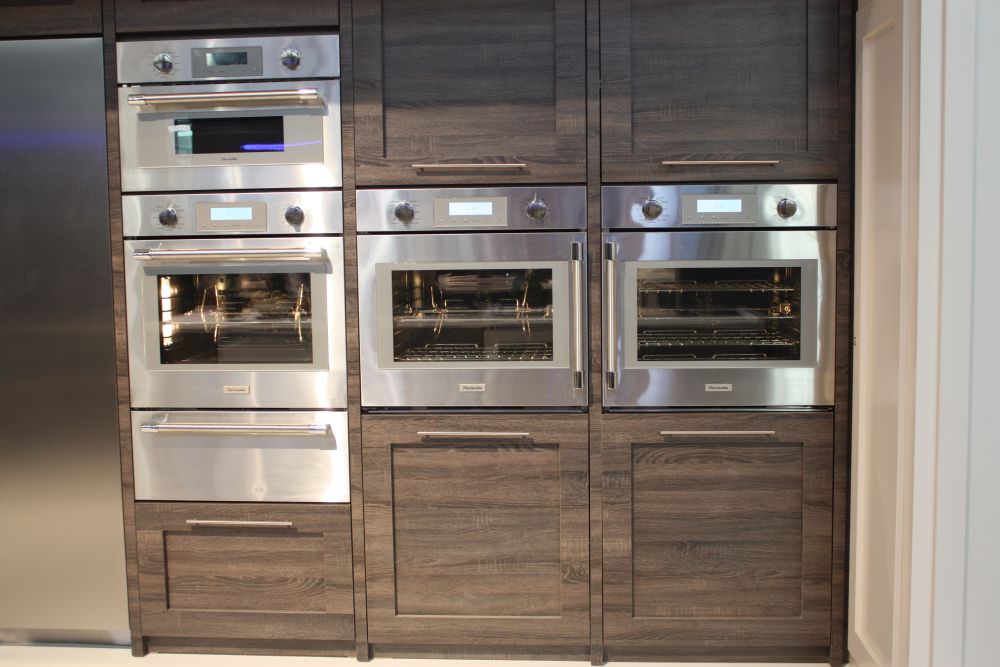
Gray-brown wood-grain cabinetry surrounds a bank of stainless steel cooking appliances, with matching cupboard doors and drawers filling the remaining wall space.
One vertical appliance pair is situated beside two additional built-in ovens. This layout concentrates cooking equipment within a single cabinet wall rather than dispersing it across countertops.
Wood cabinet design has evolved beyond simply selecting oak, walnut, or a specific stain color. Factors such as flat doors, appliance integration, contrasting materials, and grain direction determine whether the final result feels like an older kitchen or a new one.
The post Homeowners Spent Years Painting Wood Cabinets White, but Wood Just Overtook White in Kitchen Remodels appeared first on Homedit.









I love this shift! Could you share which wood species are gaining the most traction? I’m curious if the modern flat-front style helps disguise the grain better than raised panels.
Thanks! Walnut and white oak are currently leading the charge. You’re spot on about flat-front styles; their smooth surfaces minimize visual clutter, allowing the natural grain to shine without competing with panel details. It’s a sleek, modern look that really highlights the material’s beauty.