
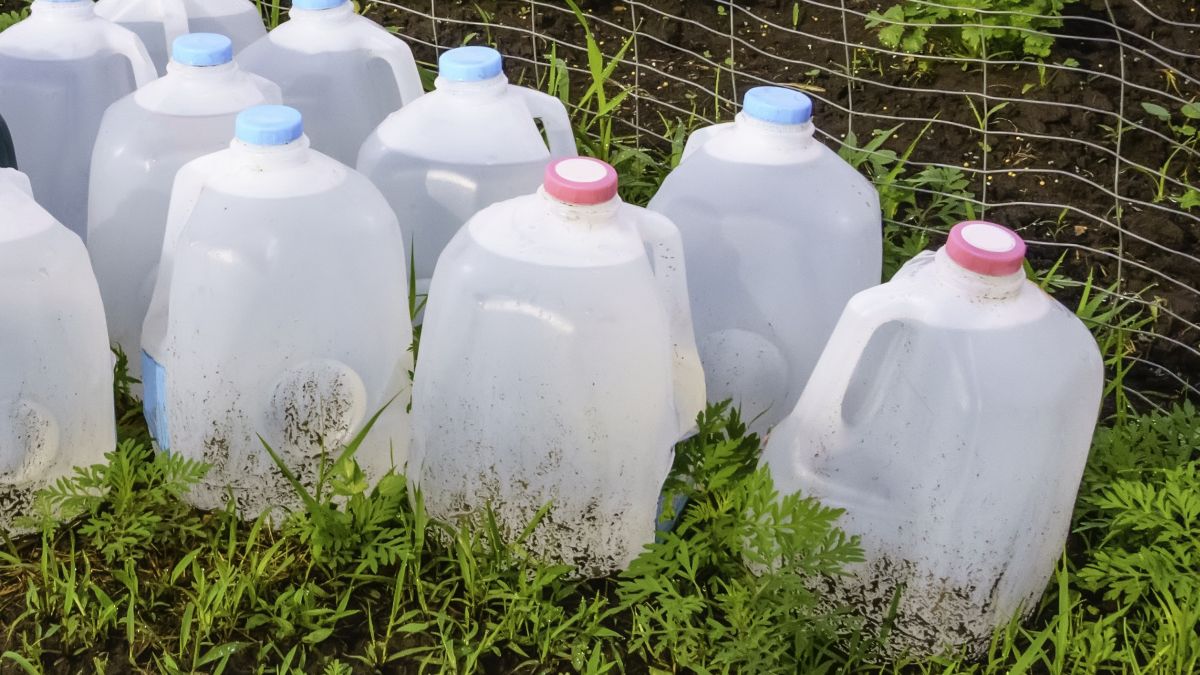
Building stone garden paths often involves high costs before the initial paver is even placed. While concrete molds offer a cheaper alternative, they produce repetitive shapes that create a noticeable, uniform pattern. Achieving the irregular edges and varied sizes of genuine cobblestone without the high price of natural stone presents a challenging compromise.
TikTok creator @krystleconfusesherself discovered a solution using empty milk jugs. She sliced the jugs into plastic rings and filled each with a sand and cement mixture to create a curved garden path measuring 28 feet, all for approximately $90 in materials. This cost saving required a trade-off of four weeks of labor.
Milk Jugs Became Molds for Concrete Stones
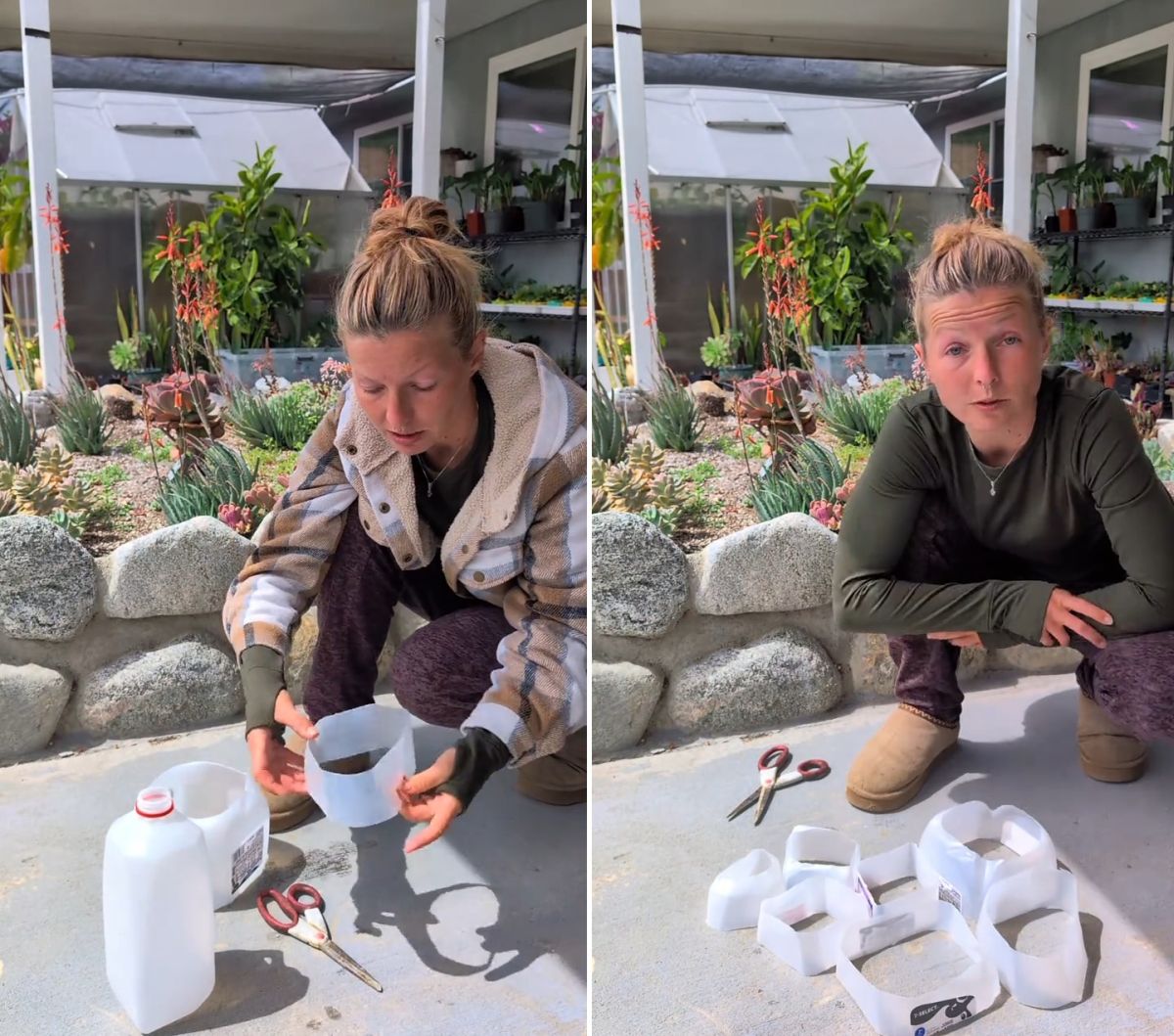
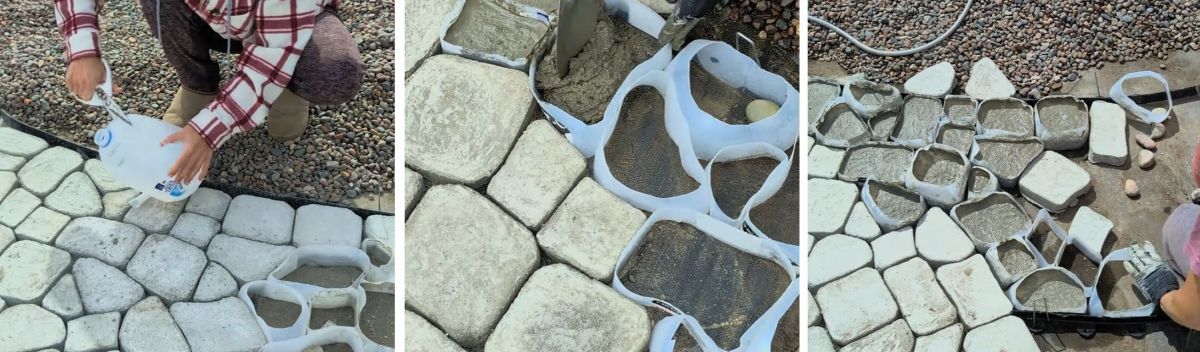
She removed the tops, bottoms, and handles from empty milk jugs, then cut the remaining plastic into short rings. Each ring served as a mold capable of holding enough cement mixture to form a single paving stone.
Sections cut from the top and bottom retained more of the jug's original cylindrical shape, whereas the flexible middle sections could be bent to fit into gaps between larger stones.
The process began with gallon and half-gallon containers, after which she collected additional jugs to increase the number of stones produced in each batch.
She Positioned the Plastic Rings Along a Curved Route
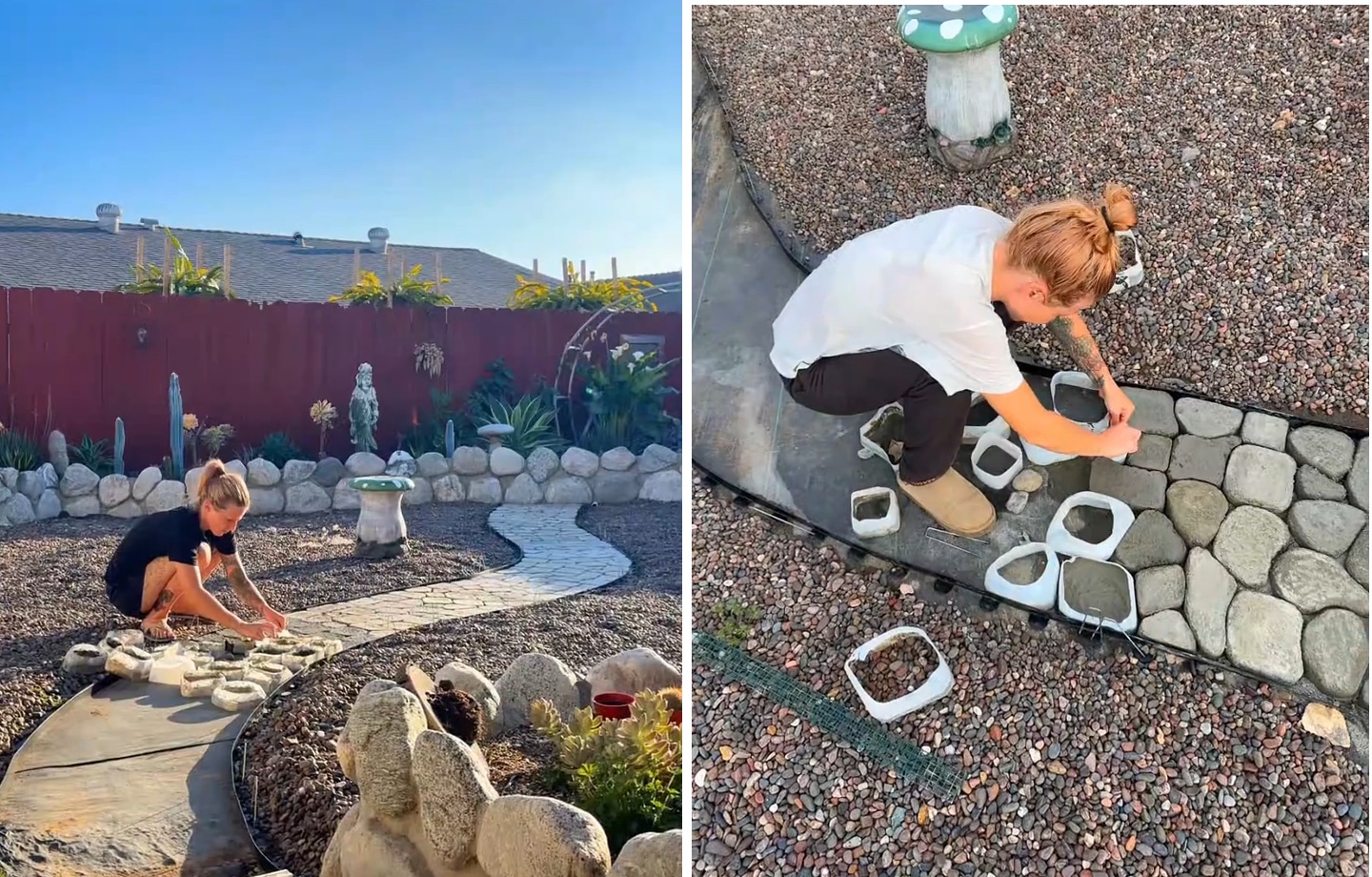
Prior to mixing the cement, she leveled the ground and used spare garden edging to outline the walkway's path.
Larger rings formed the primary sections, while smaller ones were inserted into open spaces. She bent some of the plastic to alter their outlines and used rocks to secure the molds in place.
The arrangement left gaps between the concrete pieces, resulting in a segmented surface rather than a continuous slab.
Sand and Cement Filled the Plastic Molds
Her mixture consisted of three parts sand to one part cement, combined with water. She used a trowel to transfer the mixture into the rings, pressed it into the corners with gloved hands, and tapped the plastic sides to settle the material.
The translucent nature of the jugs allowed her to visually judge the height of each piece relative to the surrounding stones.
She Removed the Molds Before the Cement Hardened
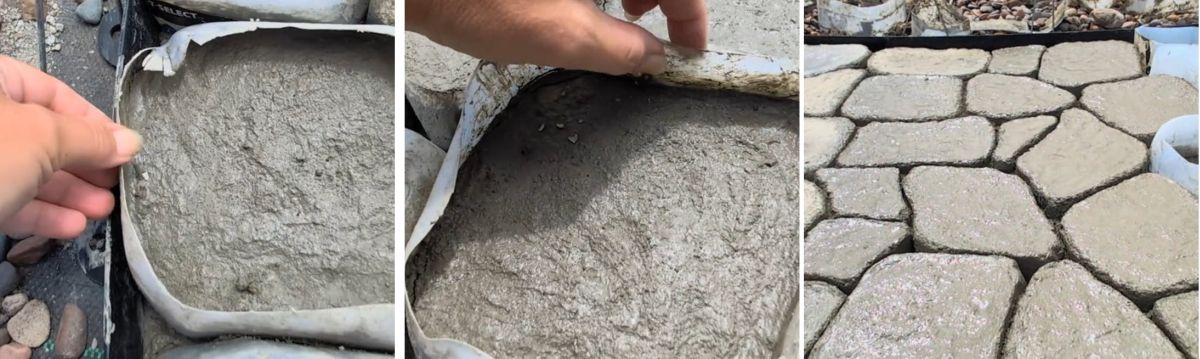
Once the mixture could maintain its shape, she removed the plastic rings while the cement was still soft enough to allow for adjustments.
High spots could be scraped down, and edges could be refined before the pieces fully hardened. The same rings were then reused for another section of the path.
Working in batches enabled her to extend the walkway without needing to purchase new molds for every individual stone.
Her 28-Foot Garden Path Took Four Weeks and Cost About $90
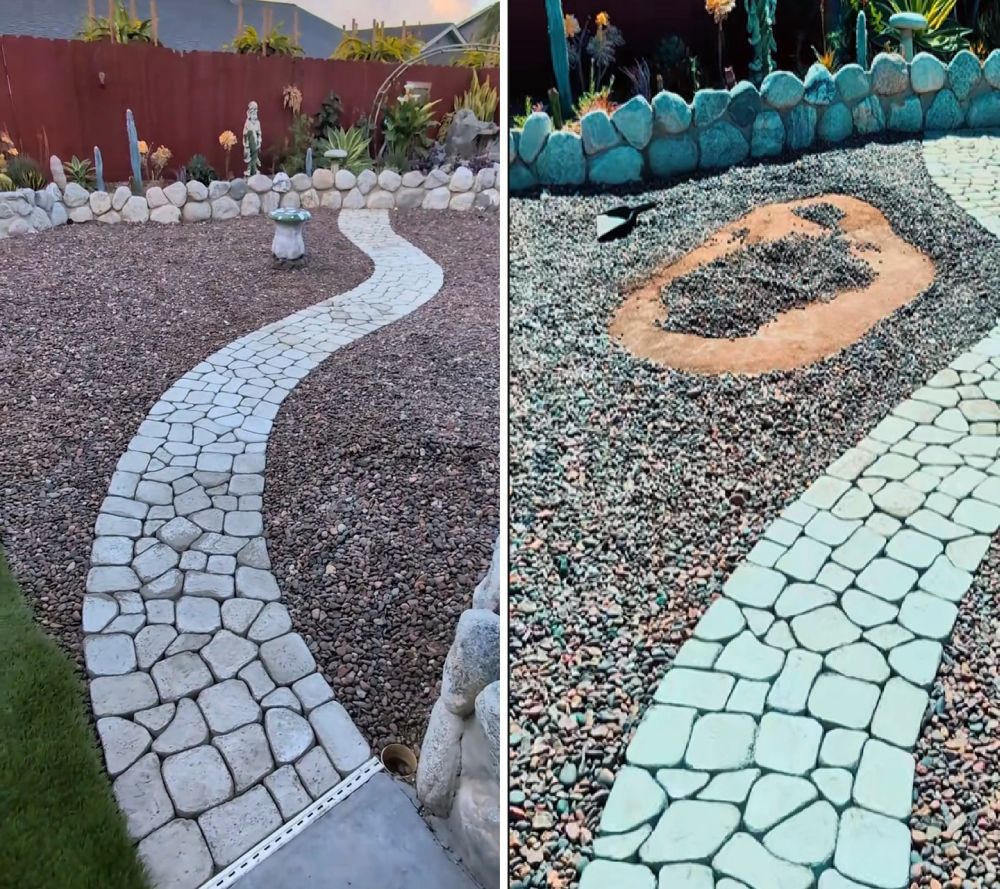
The finished path covers approximately 56 square feet. According to the creator, the project utilized two bags of cement, 11 bags of sand, and a five-gallon bucket mixer, with a total cost of around $90.
The material weighed approximately 730 pounds, and the work spanned four weeks. While cutting the molds eliminated the cost of manufactured paving forms, filling and setting hundreds of separate stones required significant labor.
After the concrete had set, she removed the temporary edging and brought the surrounding gravel up to the sides of the path.
The finished walkway curves through the yard, with pieces of varying sizes fitted together to resemble cobblestone. From the completed path, there is little indication that discarded plastic containers shaped every piece.
Would you spend four weeks making your own cobblestones to get a 28-foot garden path for about $90?
Image credits: TikTok @krystleconfusesherself
The post She Cut Up Old Milk Jugs to Make a Backyard Path That Looks Like Cobblestone appeared first on Homedit.

















































So we traded four weeks of backbreaking labor for a path that looks like it was laid by a toddler with a plastic bucket. Because nothing says “luxury garden” quite than the subtle curvature of a gallon milk jug.
Haha, fair point! The rustic, organic charm of milk-jug molds is definitely their unique selling point. While they may lack perfect precision, they offer a whimsical, eco-friendly alternative to traditional stone. Embrace the quirky curves for that one-of-a-kind, handmade garden vibe!