
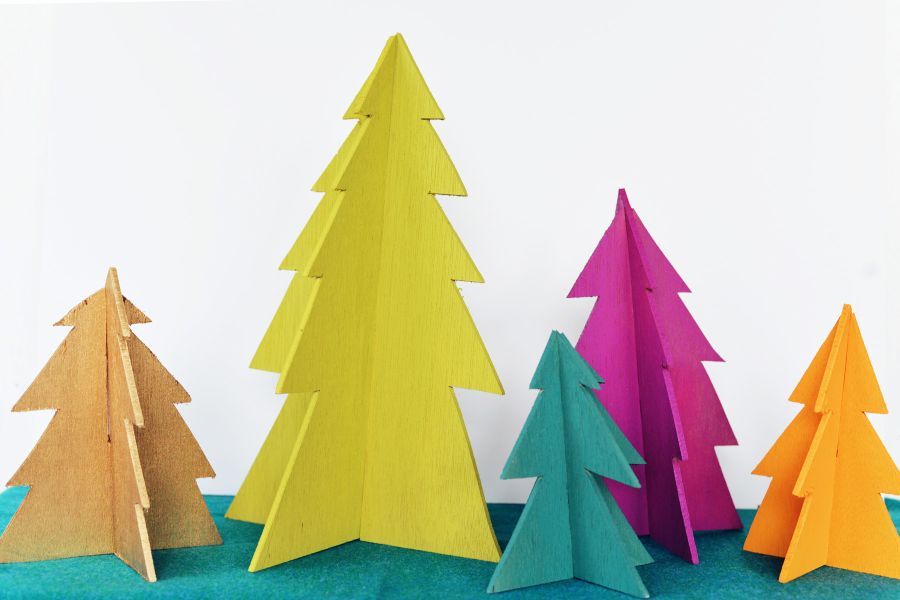
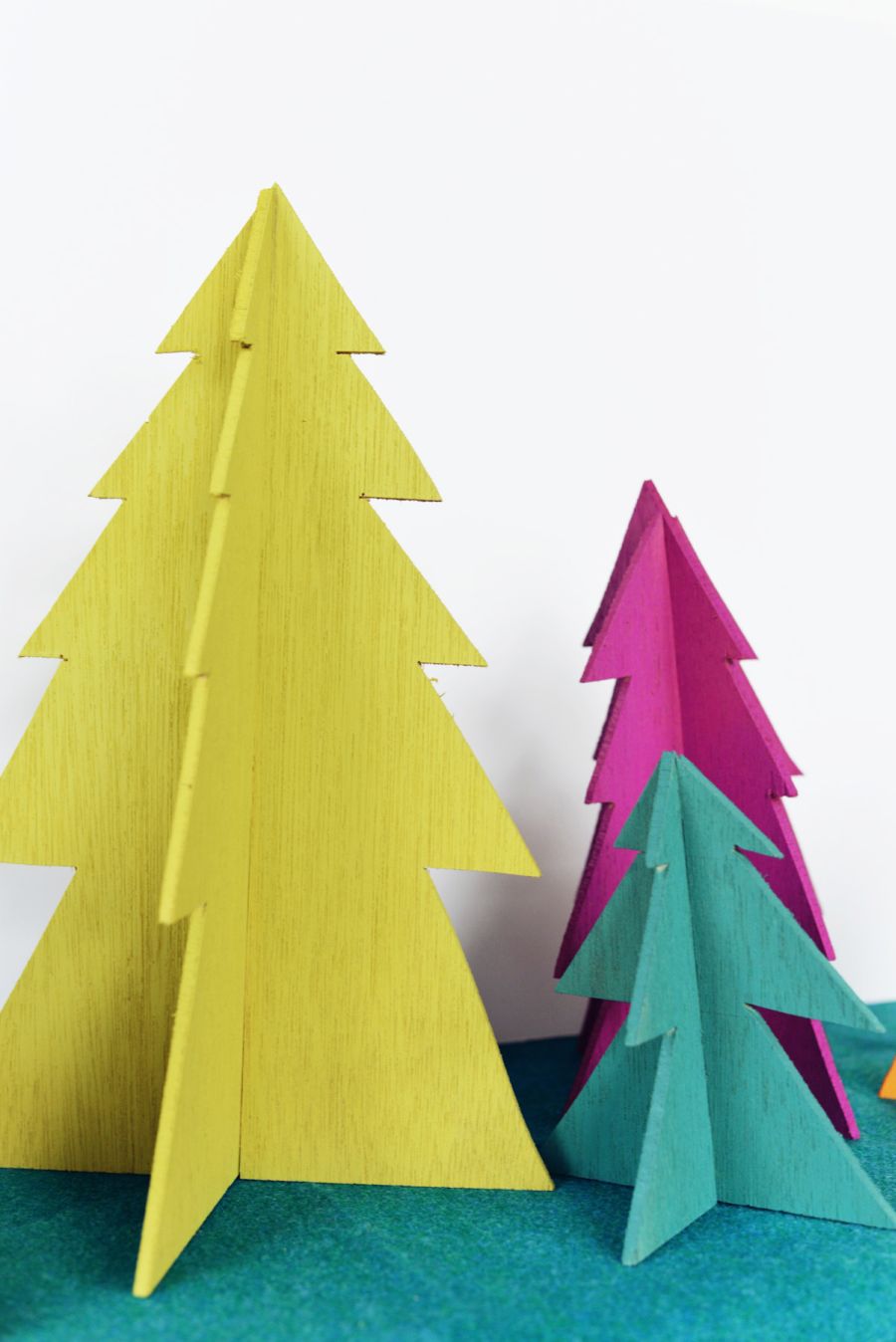
You can build a freestanding Christmas tree using just two flat plywood cutouts, avoiding the need for glue, screws, or a separate base. The two pieces share the same tree-shaped outline, but they feature complementary slots: one is cut from the top edge and the other from the bottom, which allows them to slide into each other.
Homedit DIY contributor Chelsea Mohrman crafted a set of wooden Christmas trees in various sizes by using thin plywood, a band saw, and paint. Instead of relying on fasteners, the design keeps each tree upright through the use of two interlocking pieces.
Once assembled, the trees have four supporting sections. You can paint them in various colors or leave the natural wood exposed, and they are designed to come apart for easy storage after the holidays.
Two Plywood Cutouts Form Each Christmas Tree
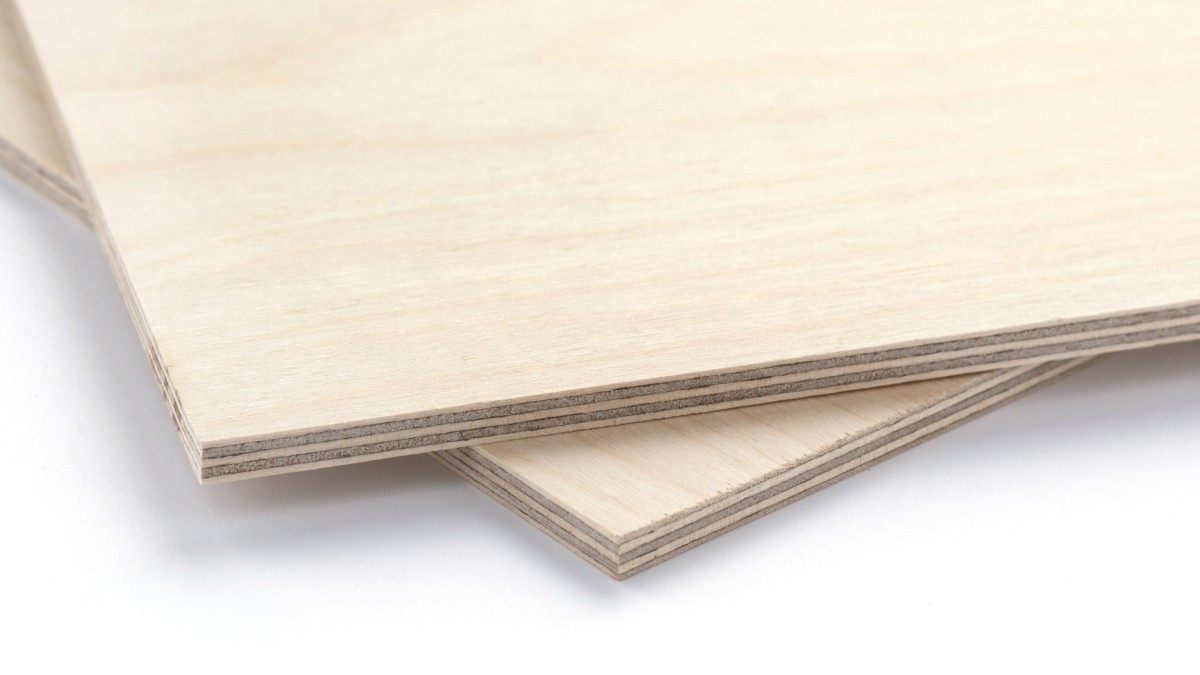
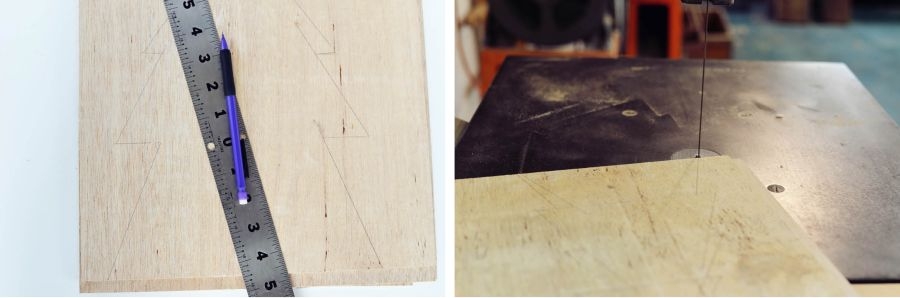
Start the project with two pieces of thin plywood, ensuring each is large enough for the tree you plan to make. Chelsea used a ruler and pencil to sketch the pointed top, the angled branches, and the wide base.
To ensure the shapes match, stack the two boards while you mark and cut them. You can use a clamp to hold the boards together during the cutting process, using a band saw to follow the outlines.
Draw a straight line down the center of the wood to mark where the pieces will connect.
Opposite Slots Allow the Wooden Pieces to Interlock
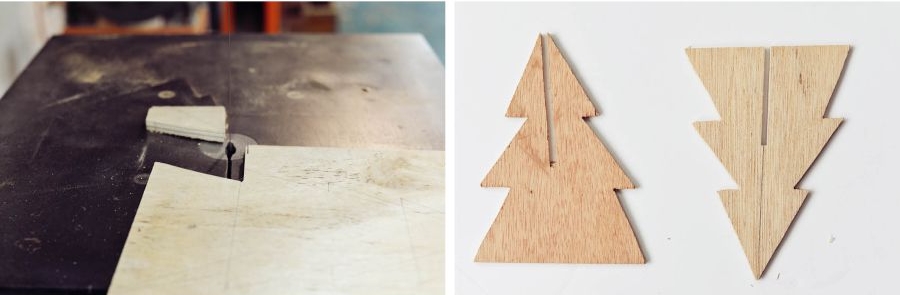
Once you have cut out the tree outlines, Chelsea cut a narrow slot from the tip down to the middle of one piece. She then cut a matching slot from the base toward the center of the other piece.
The openings must match the thickness of the plywood so the two sections can fit together. When assembled, the cuts meet near the middle of the tree, with the wood extending in four directions.
This slotted design holds the pieces at right angles to each other without the need for additional hardware.
The Wooden Trees Stand Without a Separate Base
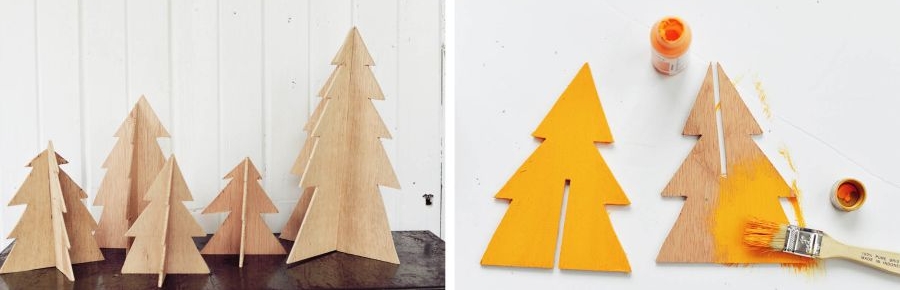
Chelsea created several tree shapes with varying heights, ranging from small tabletop decorations to taller pieces that feature wider branches.
The unfinished plywood shows off the grain and cut edges. Once the two halves are joined, the wide lower sections provide support, allowing the trees to stand on a flat surface.
Since each piece remains removable, you can store the decorations flat rather than keeping them assembled.
Paint Changes the Look of the Plywood Trees
Chelsea painted the wooden trees in yellow, pink, teal, and orange, while leaving one with its natural plywood finish.
You can apply acrylic paint with a brush, or use spray paint as an alternative. The flat faces of the design ensure the colors are visible from different sides once the pieces are joined.
The basic tree shapes remain consistent, but the differences between them come from the painted surfaces and the exposed grain.
The Finished Trees Create a Colorful Christmas Display
The final collection features trees of different heights, with a large yellow piece standing next to smaller teal and pink versions. Their stepped branch profiles give each tree a distinct geometric outline.
This design differs from a conventional miniature Christmas tree because it uses no central trunk, separate stand, or attached branches. The two plywood sections make up the entire decoration.
Would you paint these wooden Christmas trees in bold colors or leave the plywood with its natural finish?
The post Two Pieces of Plywood Slide Together to Make Christmas Trees Without Glue or Screws appeared first on Homedit.










































So, glue is too hard now? I suppose we’ve reached peak DIY exhaustion. Two boards, a saw, and zero structural integrity—because who needs a tree that doesn’t fall over when you look at it wrong?
Glue is certainly an option, but the interlocking design relies on precise cuts for stability. It’s meant to be a quick, mess-free build for those who prefer simplicity over adhesives. As long as the cuts are accurate, these trees stand proudly without any glue at all!