
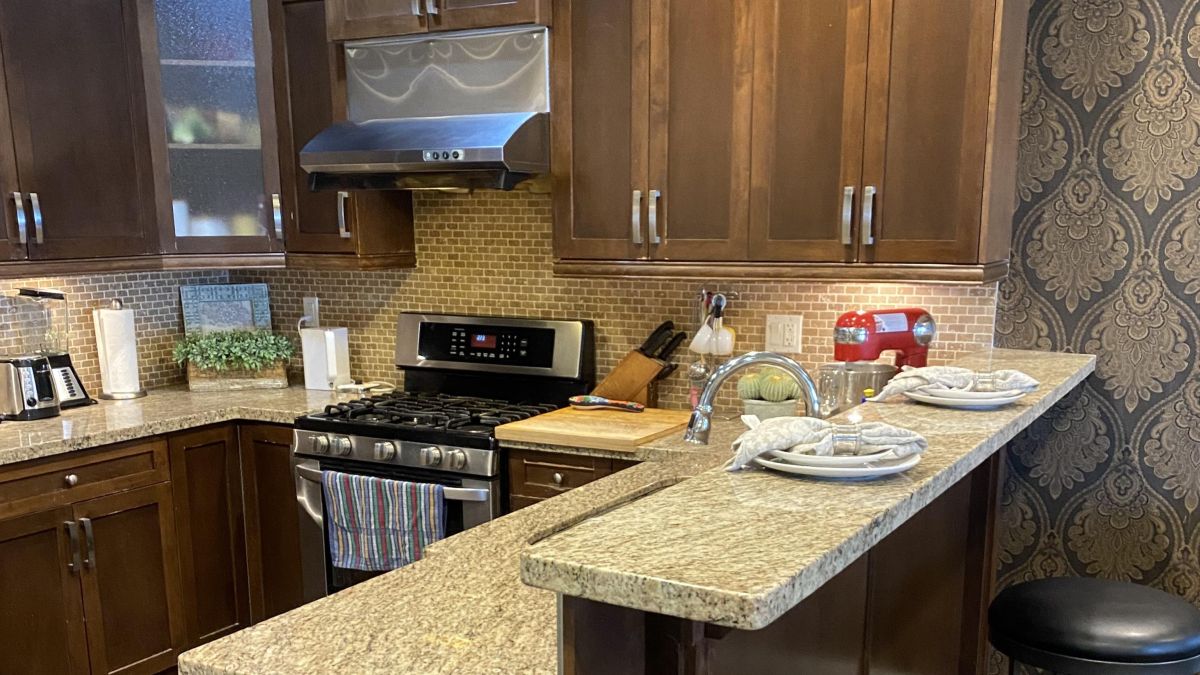
Dark wood cabinetry, granite surfaces, and a raised breakfast bar created a finished look. Glass-front upper units extended upward, while stainless steel appliances and mosaic tile accents defined the cooking zone. Visual inspection suggested the space required styling updates rather than a total reconstruction.
Structural issues extended beyond cosmetic wear. Black mold, decaying timber, and moth infestations had established themselves within and behind the cabinetry. Grease accumulation on the gas burners was severe enough to prevent ignition.
Reddit user u/peakedinthirdgrade documented the transformation in r/kitchenremodel, detailing why the initial strategy of preserving and painting the existing wood failed. The residents installed Sherwin-Williams Secret Garden green cabinets, expanded the layout within a small footprint, and added elements that altered the small room’s atmosphere.
Dark Wood Concealed Issues Paint Could Not Resolve
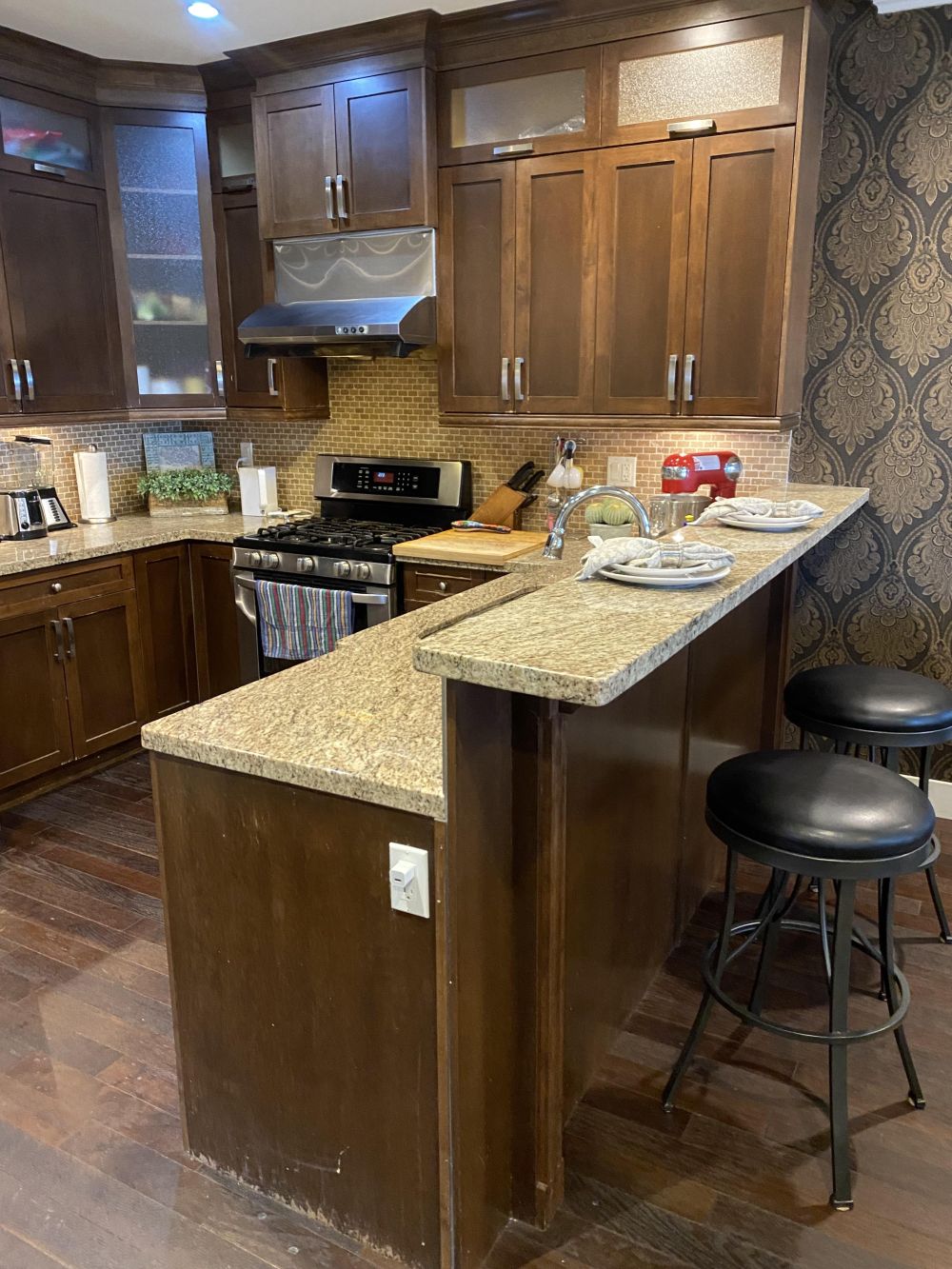
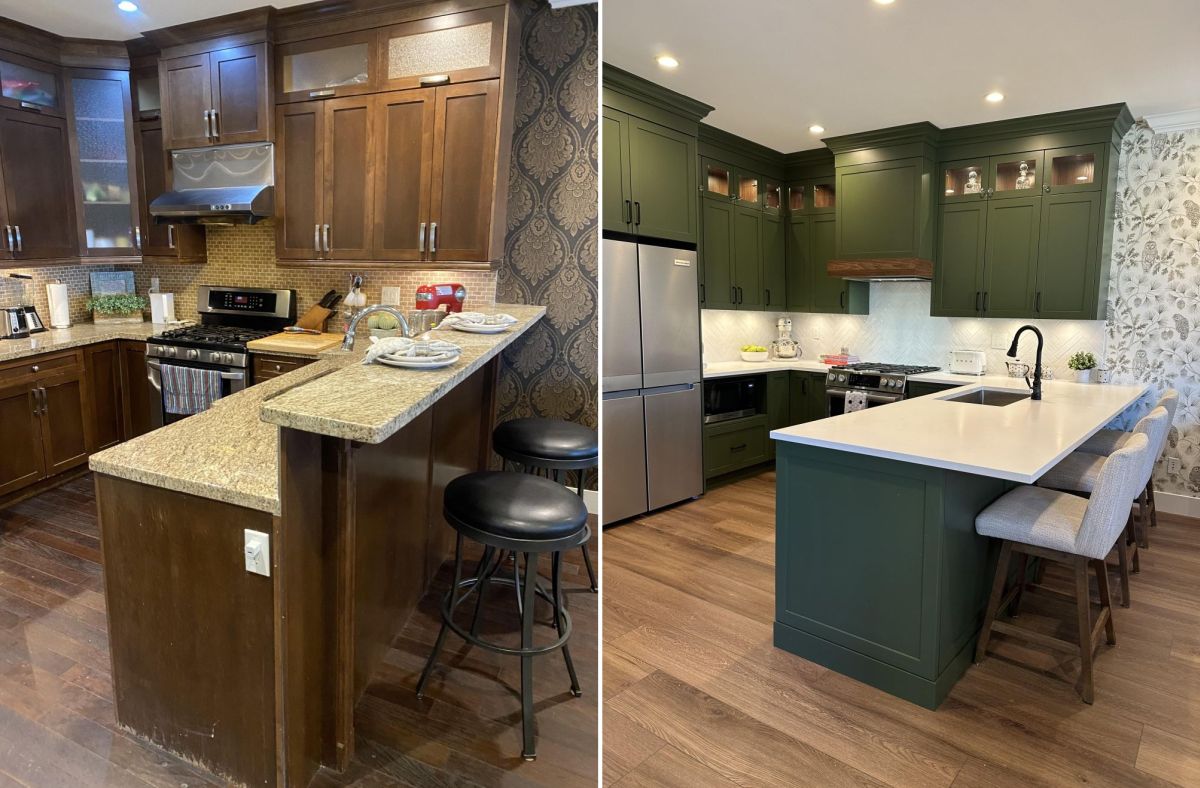
Rich brown cabinetry lined the walls of the initial kitchen, featuring frosted glass panels above the primary doors. Granite countertops spanned the cooking zone and extended into a raised breakfast bar supported by dark wood structures.
A stainless steel range stood beneath a metal hood, surrounded by small rectangular backsplash tiles. Dark flooring and patterned wallpaper introduced additional brown and gray hues to the environment.
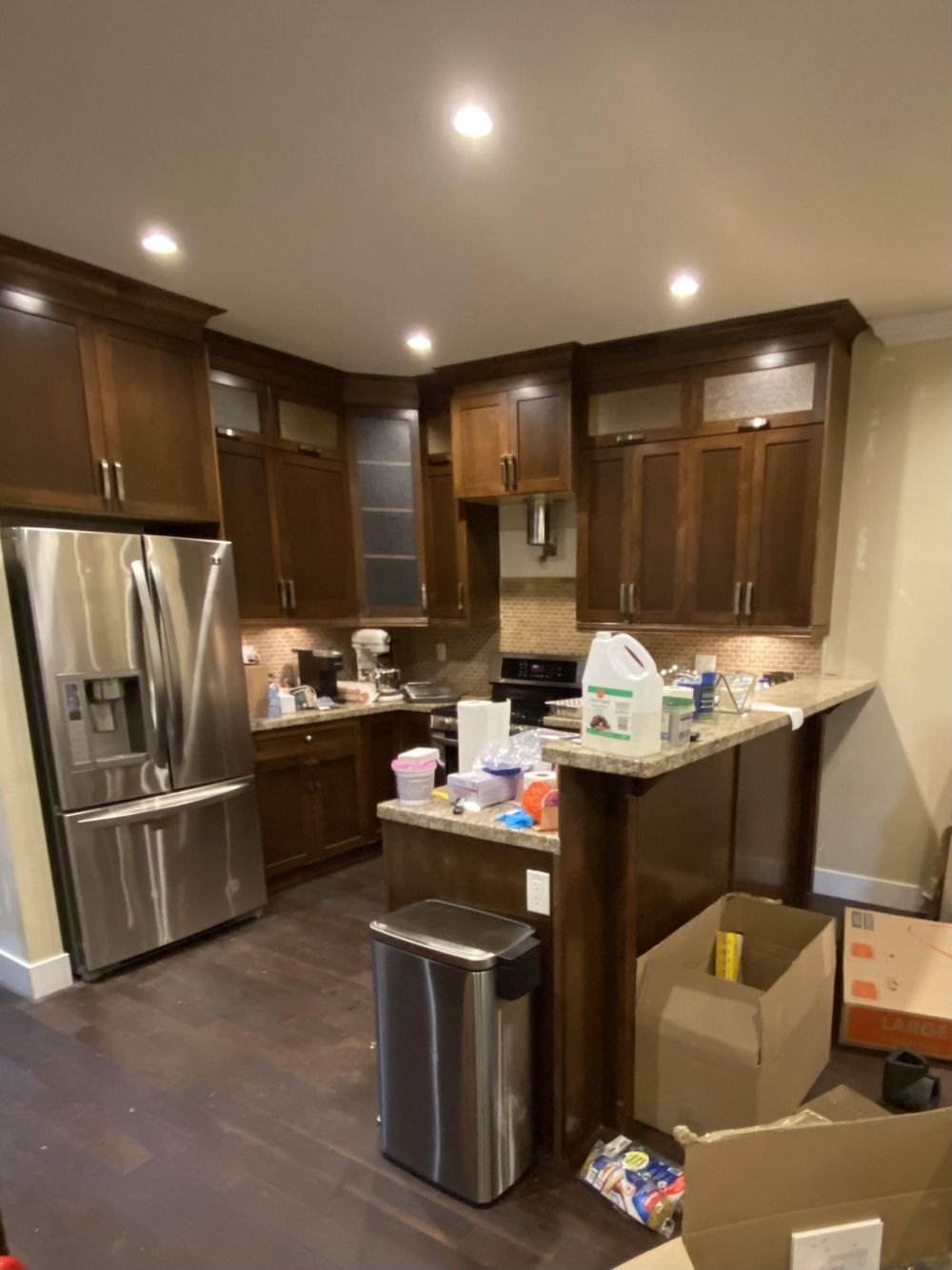
The refrigerator was positioned at the opposite end of the kitchen, adjacent to the counter and breakfast bar. Storage space reached near the ceiling, but residents discovered damage that rendered keeping the cabinets unfeasible.
The Reddit post indicated that black mold had spread throughout the kitchen, the cabinet wood had warped and rotted, and moths had infested areas inside and behind the units.
The homeowners initially hoped to repaint the wood instead of replacing it. After evaluating the extent of the damage, this option became unviable.
Demolition Revealed the Previous Layout
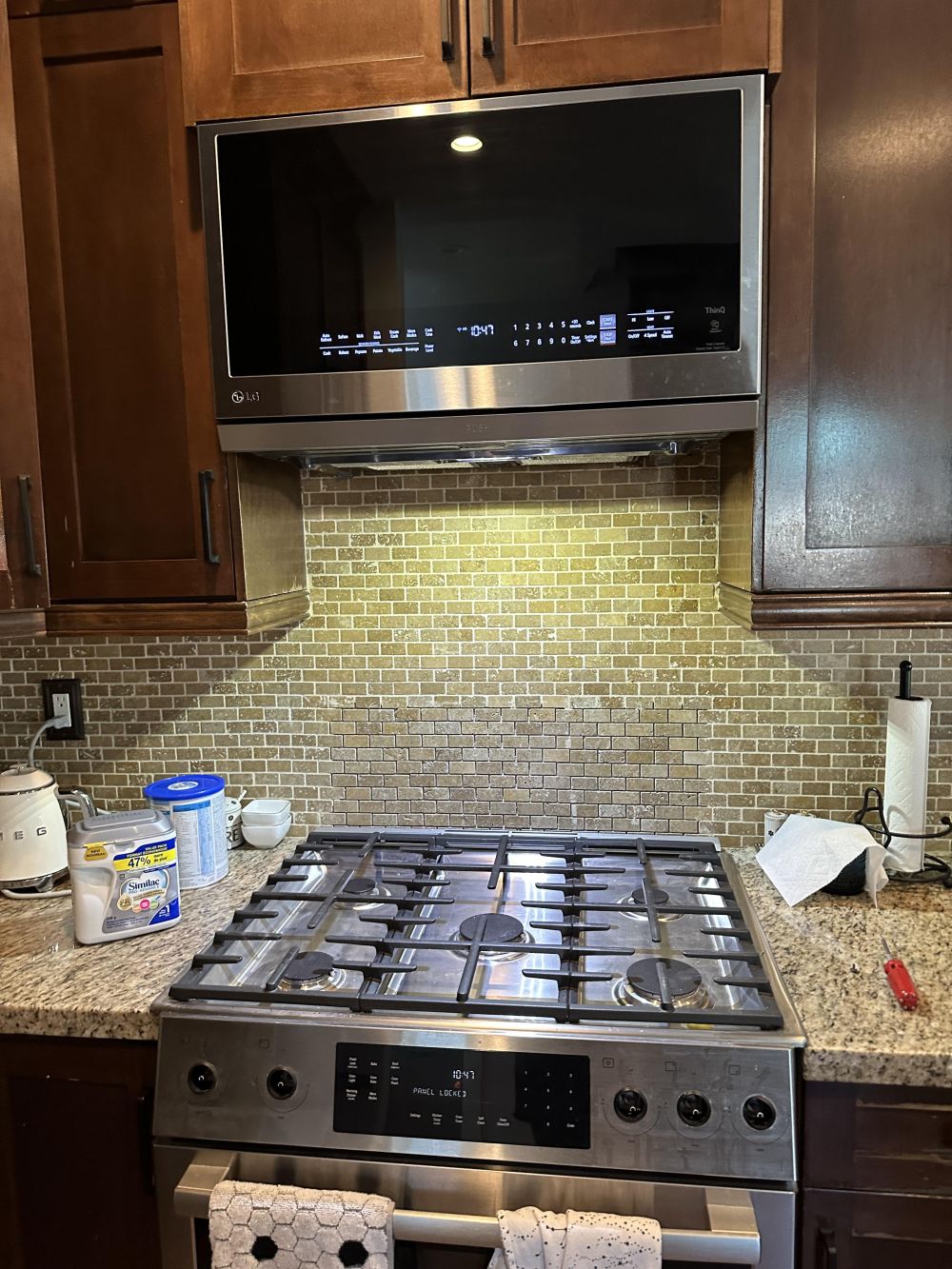
Removing the range uncovered another issue. The builder had left sections of the backsplash without grout behind the appliance, finishing only the visible areas.
Grease buildup had also rendered the original gas burners unable to ignite. The homeowners replaced some appliances before accumulating enough funds to address the cabinet renovation.
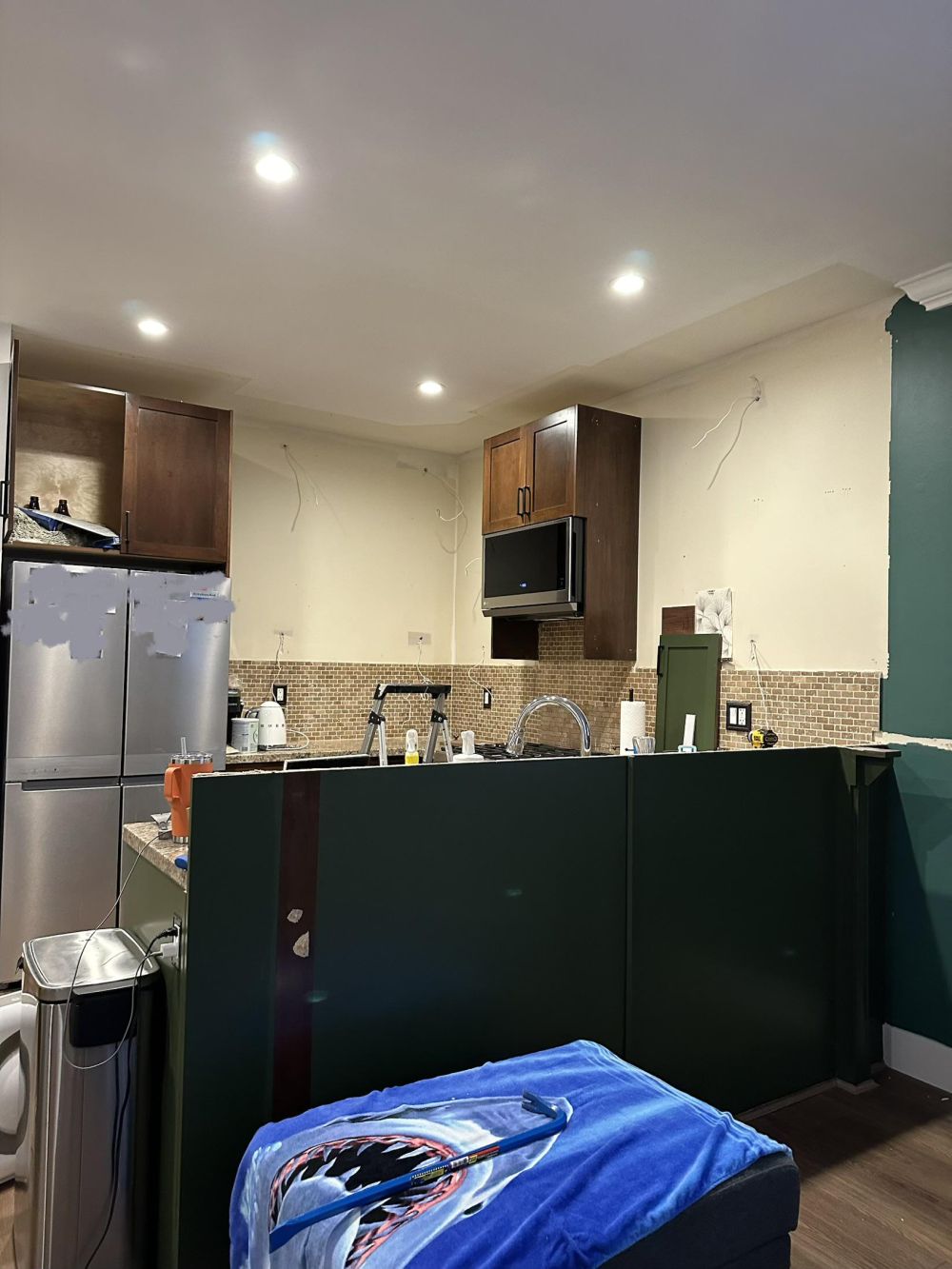
With the upper cabinets removed, the kitchen opened toward the adjacent room. Exposed wiring, unfinished walls, and the remaining mosaic backsplash highlighted the amount of work required before new cabinets could be installed.
The homeowners maintained a small kitchen footprint but expanded the layout to increase storage and improve the counter arrangement.
Secret Garden Green Superseded the Dark Brown Finish
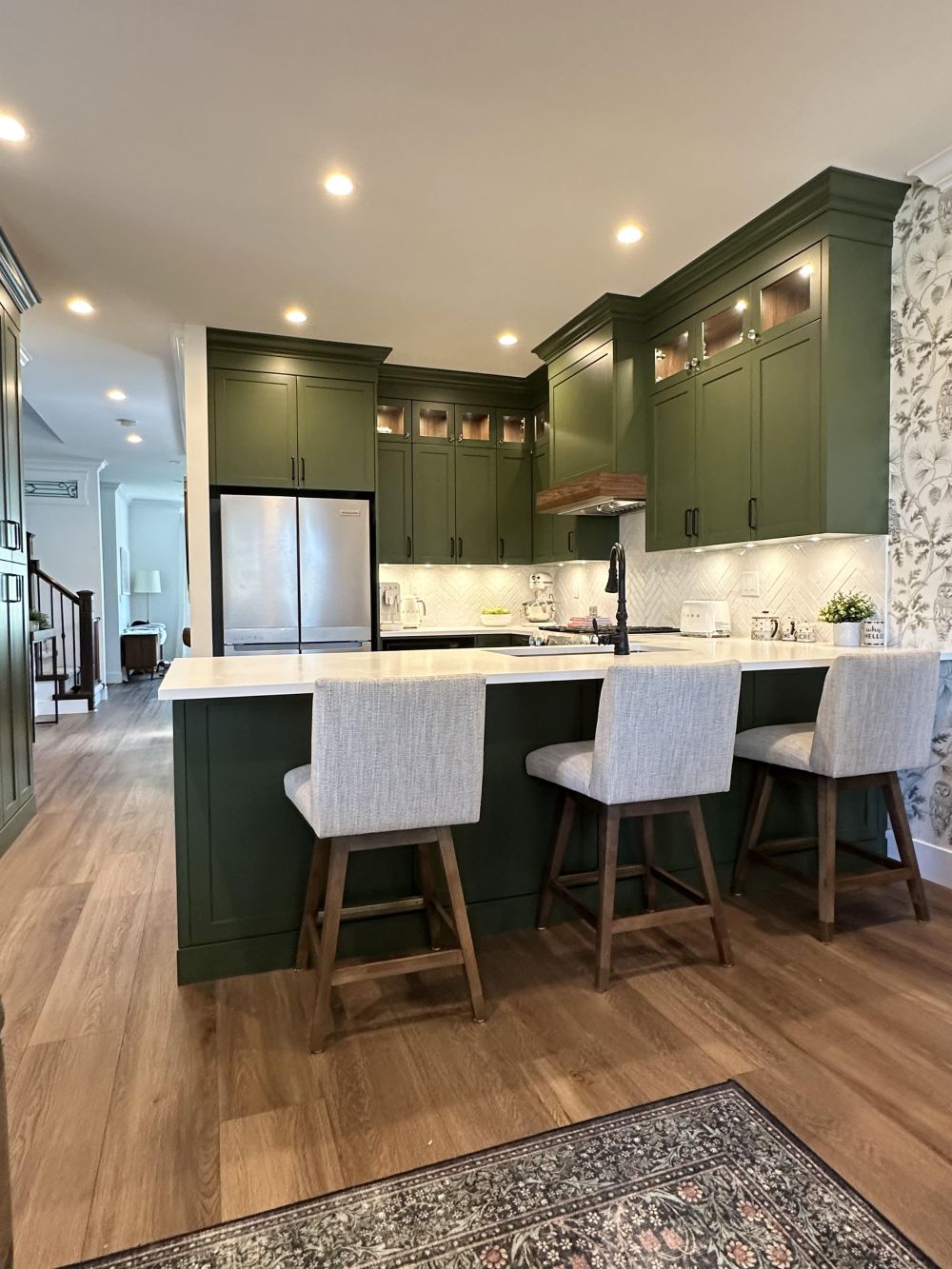
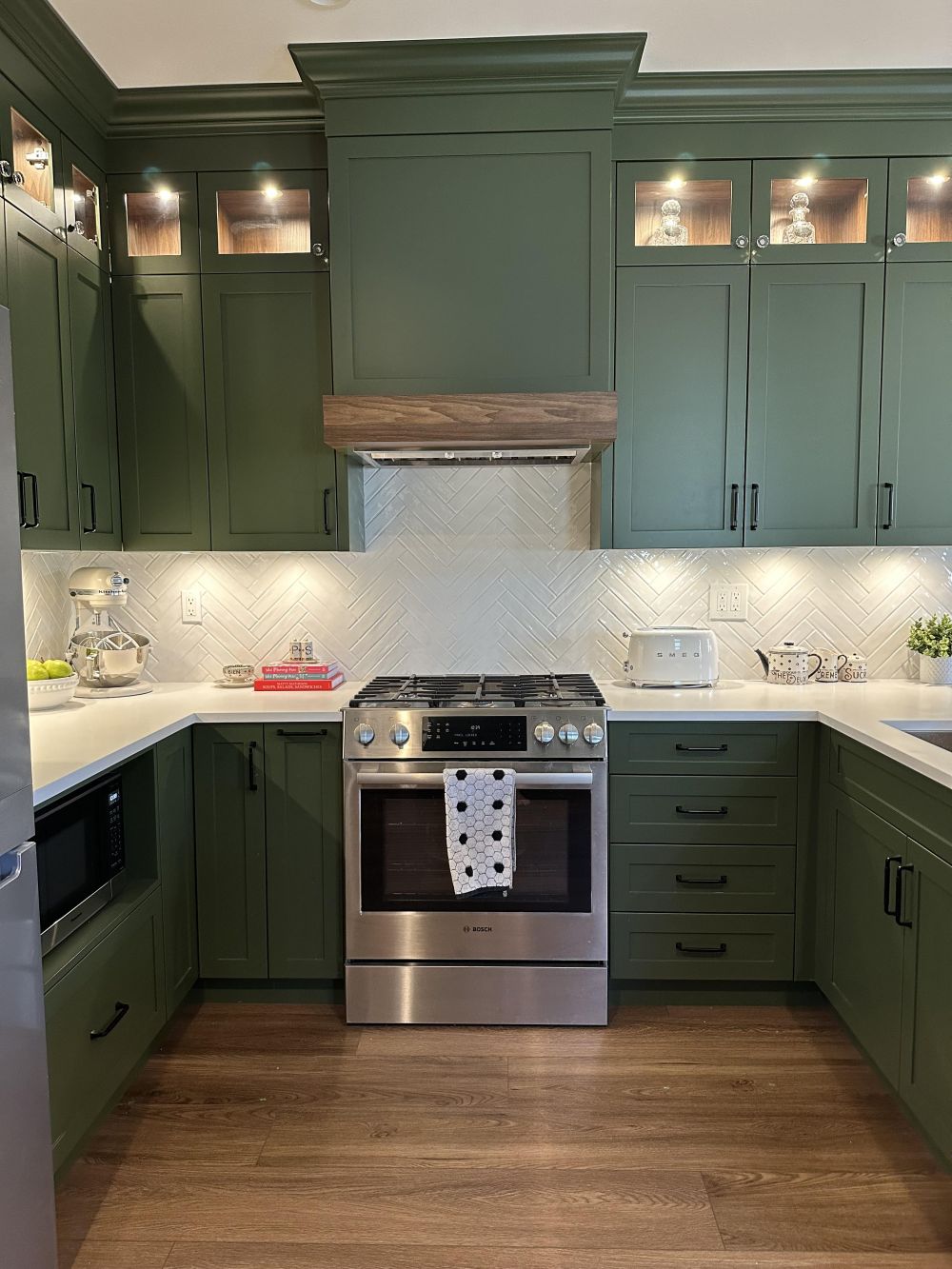
Sherwin-Williams Secret Garden became the defining color of the new kitchen. Deep green shaker cabinets now extend to the ceiling, featuring matching crown molding, black hardware, and illuminated glass-front compartments above the main doors.
The homeowners initially considered a turquoise green but changed their minds after viewing Secret Garden at the cabinet company’s showroom. The selected shade appears different under varying lighting conditions.
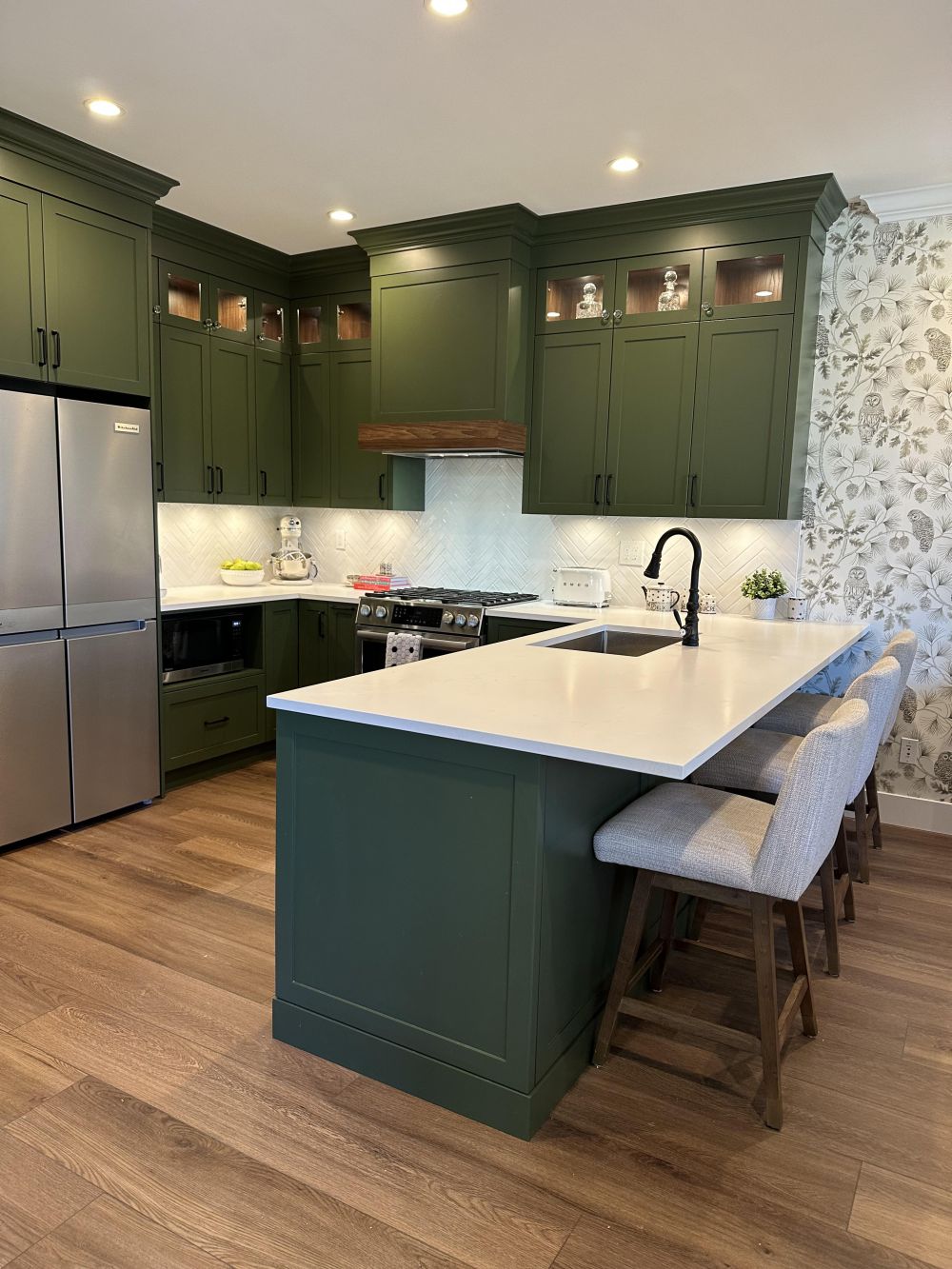
A single-level peninsula featuring seating for three occupants has taken the place of the former raised breakfast bar. Meanwhile, the speckled granite has been swapped out for white countertops, and a black faucet with an undermount sink sits in the new counter, facing the adjacent room.
A cleaner layout now defines the cabinetry surrounding the appliance, which retains its stainless steel finish. Green cabinets are adjacent to botanical wallpaper that adds a pattern, while the black metal seats have been substituted with light-colored upholstered stools.
White Herringbone Tile and Wood Trim Transformed the Cooking Wall
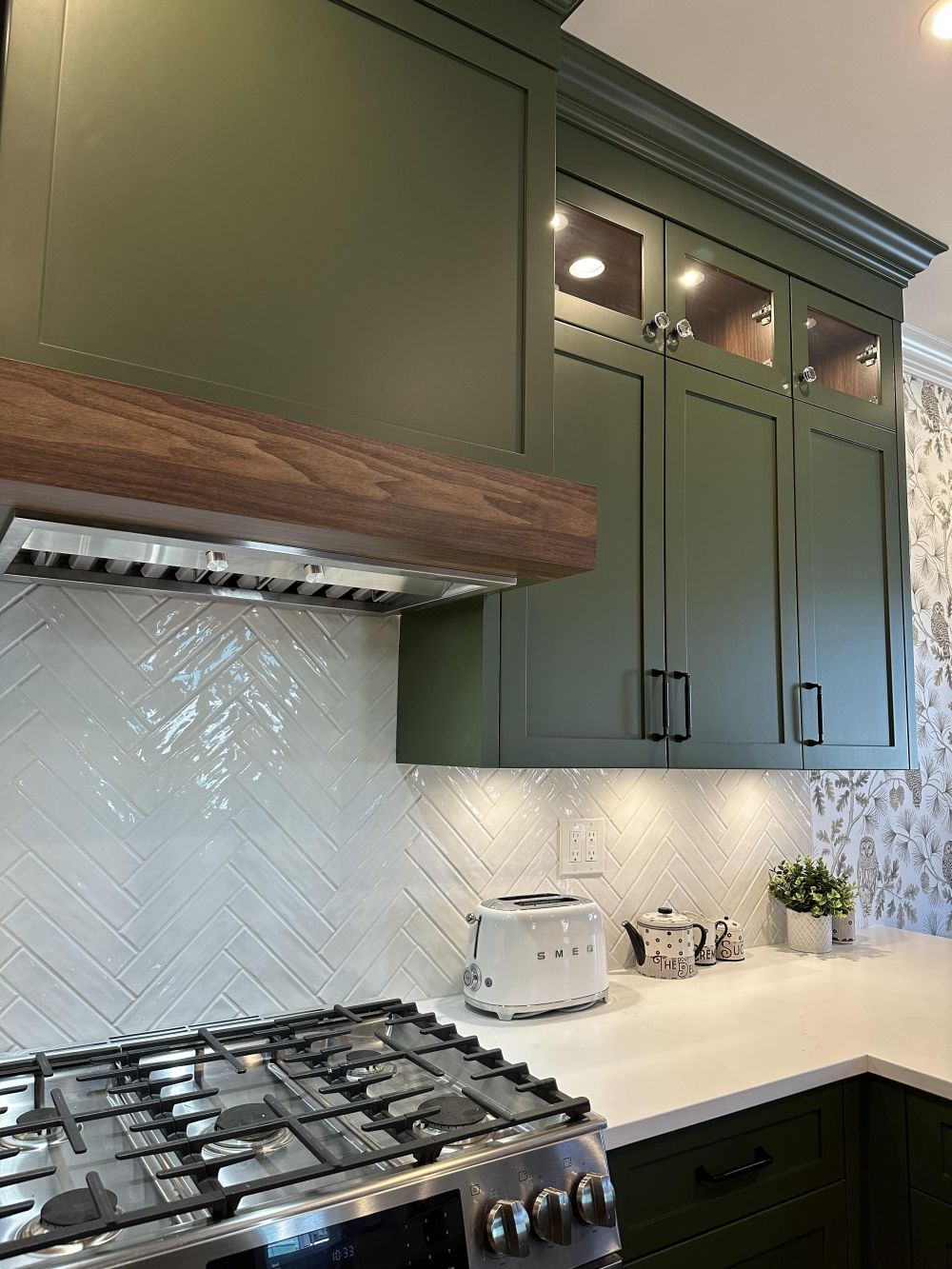
Under-cabinet fixtures illuminate the backsplash, where an angled layout of shiny white herringbone patterned material now resides in place of the previous small brown mosaic tiles, providing visual depth without introducing additional dark tones.
The new range hood features a green cabinet surround with a contrasting wood trim band. Its wood grain connects the design to the home’s older character without reintroducing the original brown cabinetry.
Illuminated glass-front cabinets flank the JNR Cabinets custom range hood, which features a wood trim accent. By relocating the microwave to a lower cabinet adjacent to the refrigerator, the homeowners freed up space above the Bosch gas range.
Tall Green Cabinets Added Storage Beyond the Kitchen
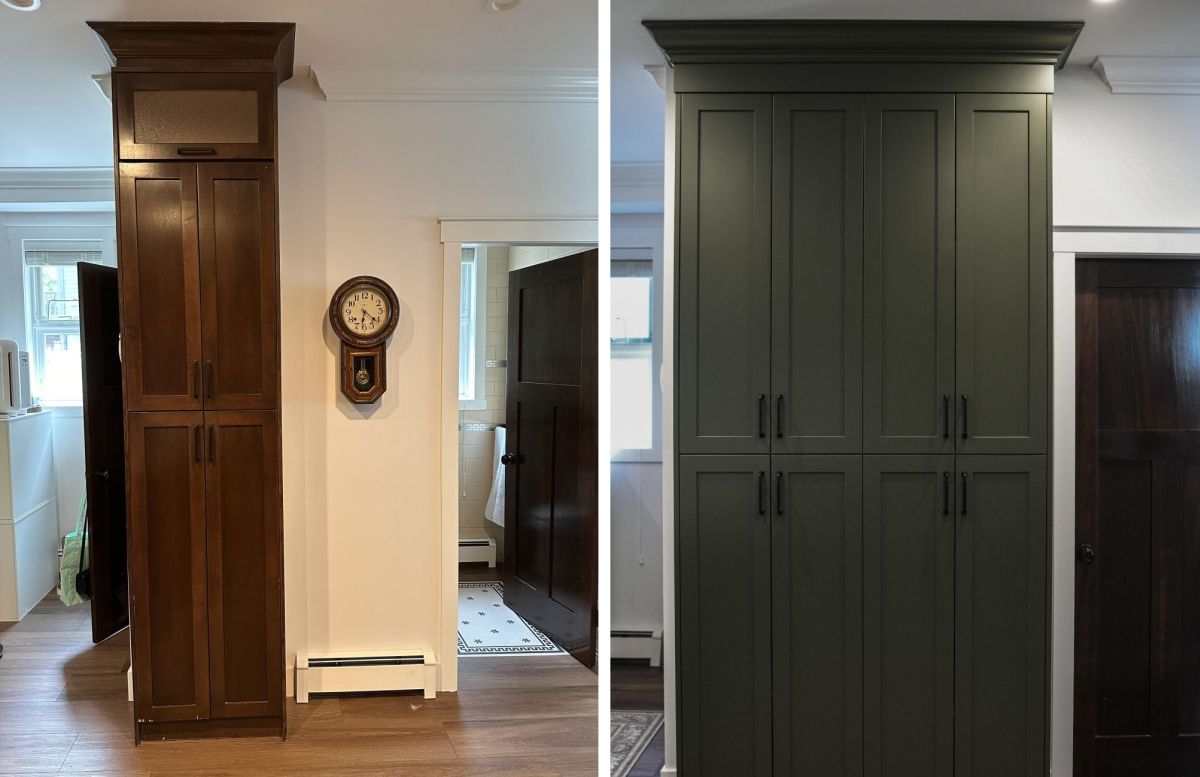
Located between two doorways, the pantry was updated by the homeowners who swapped out the initial dark wood cabinet featuring frosted glass above its doors for floor-to-ceiling Secret Garden green shaker units equipped with black handles and increased enclosed storage.
Green Cabinets and a Wood Hood Define the Kitchen’s Character
The wood hood should remain as a key detail, complementing Secret Garden green which I would select as the primary color. This warm finish establishes the cooking wall as a focal point and introduces wooden elements into the new design, thereby avoiding a space dominated by brown cabinetry.
Opting to keep the hood unpainted rather than matching it to the green cabinetry creates a visual break, particularly when white countertops and tiles frame the surrounding units. This contrast provides a spot for the eye to rest.
Image credits go to u/peakedinthirdgrade
Source: Homedit.













Wow, what a bold transformation! I love how you embraced the green cabinets. It’s refreshing to see such creativity in solving those tricky mold and rot issues. The new design looks stunning and so much more functional than the old dark wood setup.
Thank you! I’m thrilled you love the new look. The mold issue was definitely a surprise, but it pushed us toward a brighter, more functional space. Green cabinets were the perfect choice to bring life back into the kitchen. Enjoy the transformation!