
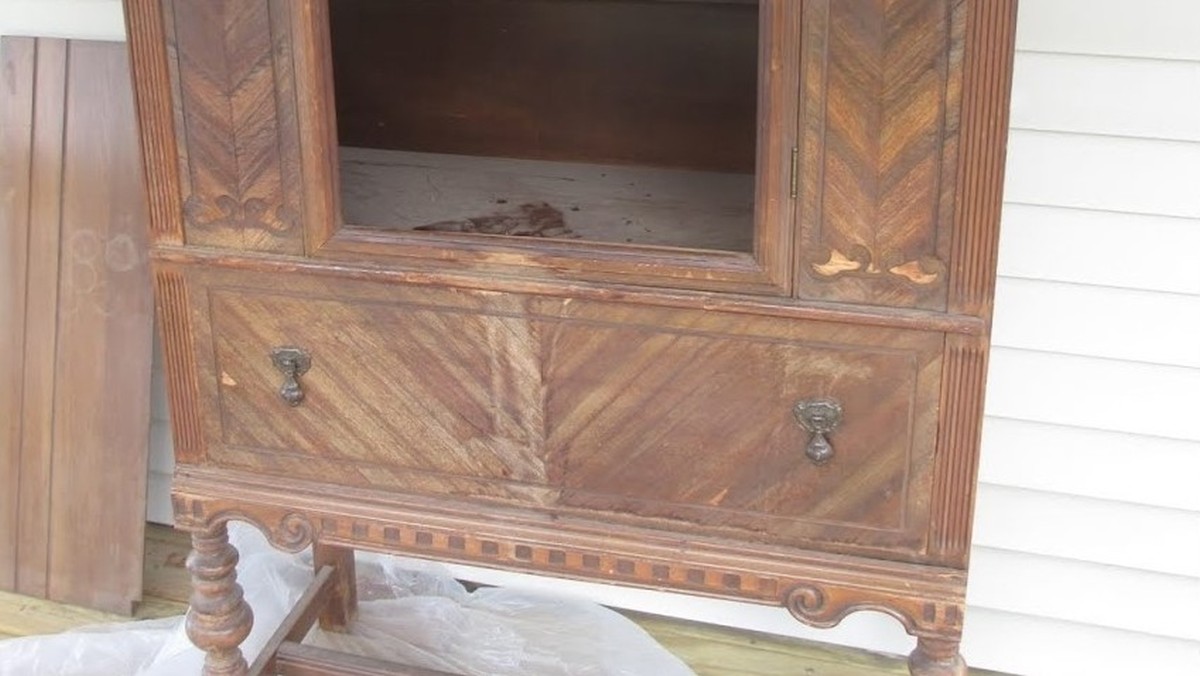
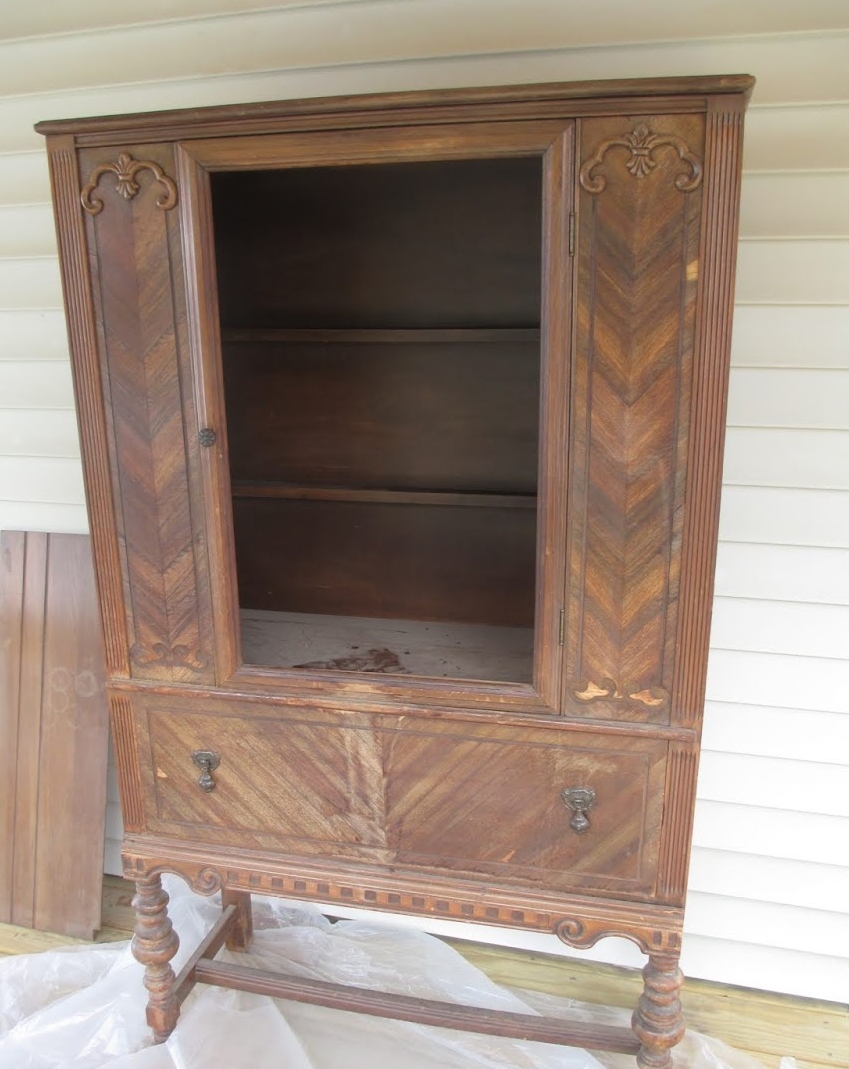
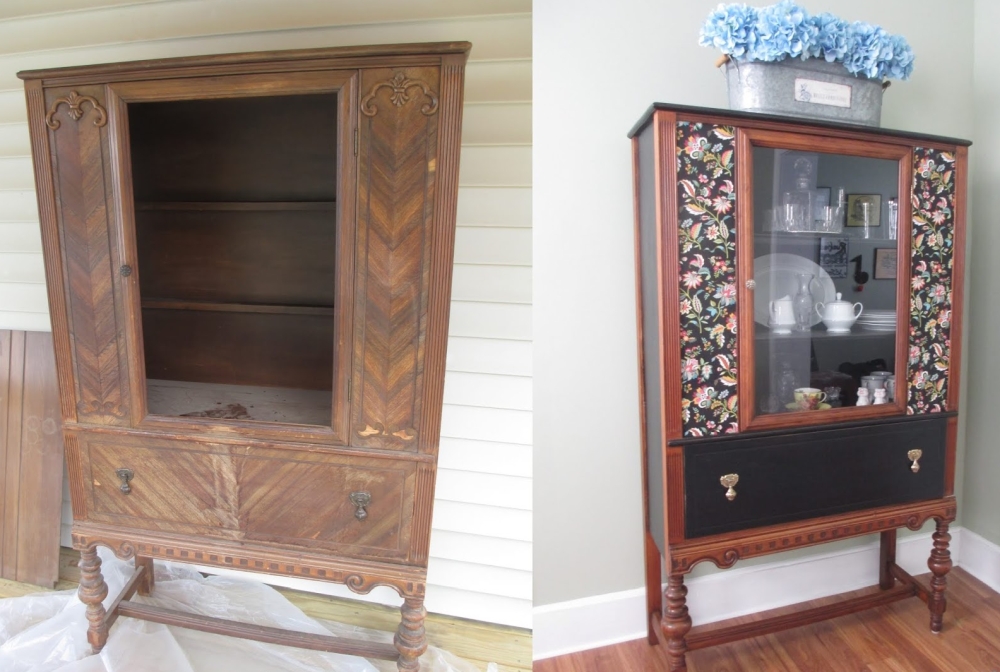
A wooden china cabinet sat exposed to the rain, suffering from warped panels, peeling veneer, and split wood. The glass door was gone, leaving an empty frame, though the carved decorations and turned legs remained intact. While the structural elements survived, the water had severely damaged much of the finish.
Ann, who runs The Apple Street Cottage, found the cabinet outside an old factory where she kept a storage unit. The owner had left it in the rain during a cleanout and allowed her to take it for free. After moving into her new house, she brought the piece home and began her restoration project.
Initially, Ann intended to glue the loose veneer back down and blend the damaged spots with stain. However, sanding revealed additional damage hidden beneath the surface, prompting her to change plans. The final design would instead feature restored wood, black paint, and colorful floral fabric.
Rain Damage Had Lifted the Cabinet’s Wood Veneer
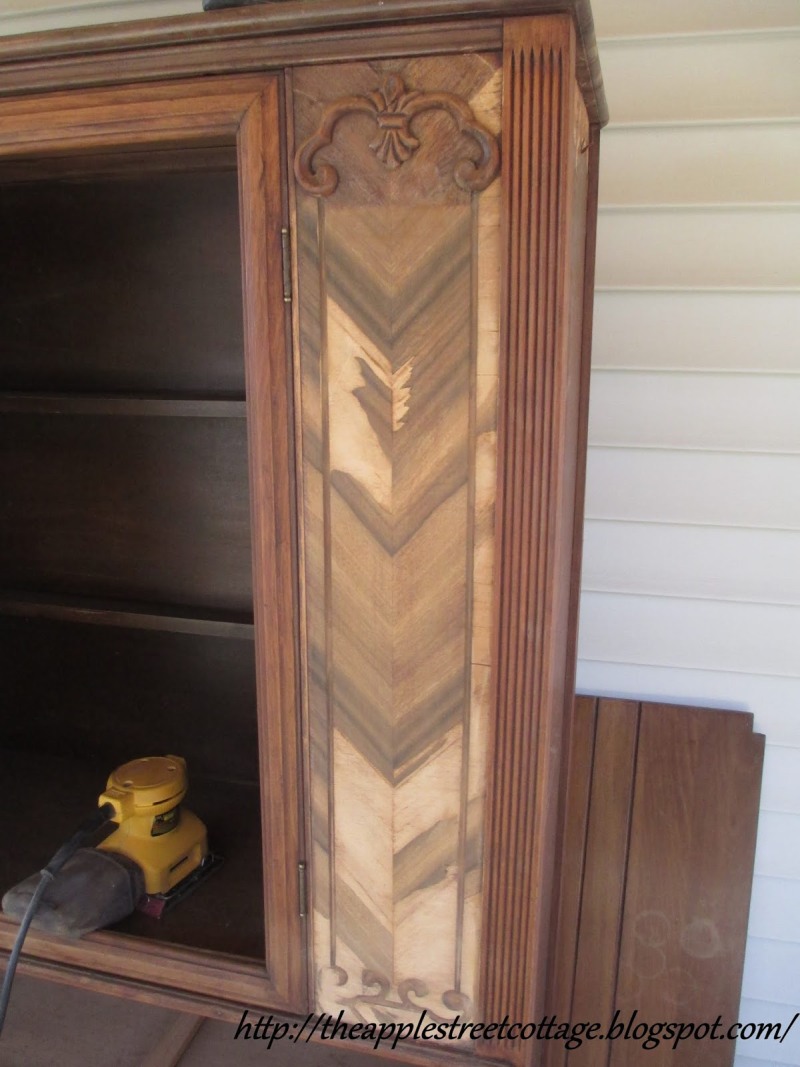
The upper section of the cabinet was tall and contained two shelves behind a framed door opening. Narrow panels on both sides were covered in chevron-patterned veneer. Carved floral ornaments adorned the top, while scrollwork decorated the bottom area.
A wide drawer filled the lower section, resting on turned legs connected by a wooden stretcher. Fluted corner columns, decorative molding, and metal drop pulls gave the piece an ornate look.
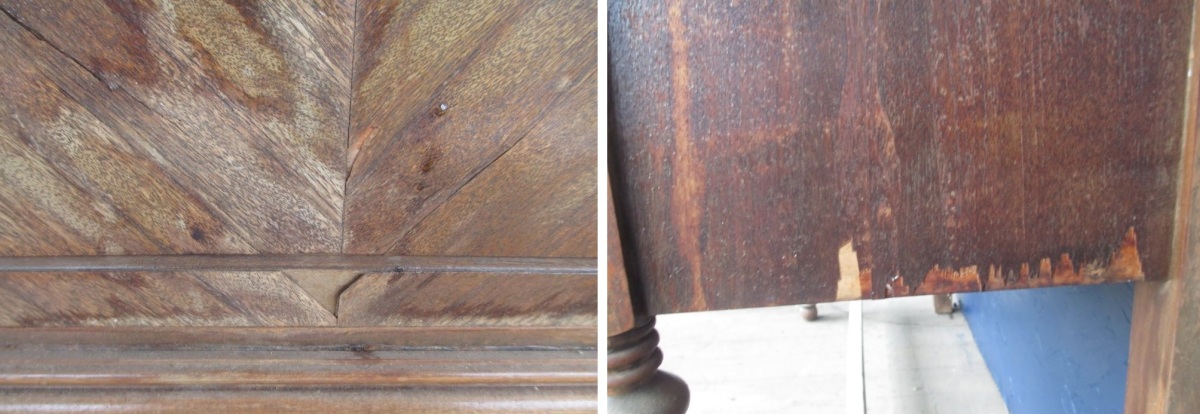
Water damage affected the veneer on the drawer front, causing cracks near the center and lifting the edges along the lower trim. A separate photograph highlights finish loss along the bottom of the cabinet.
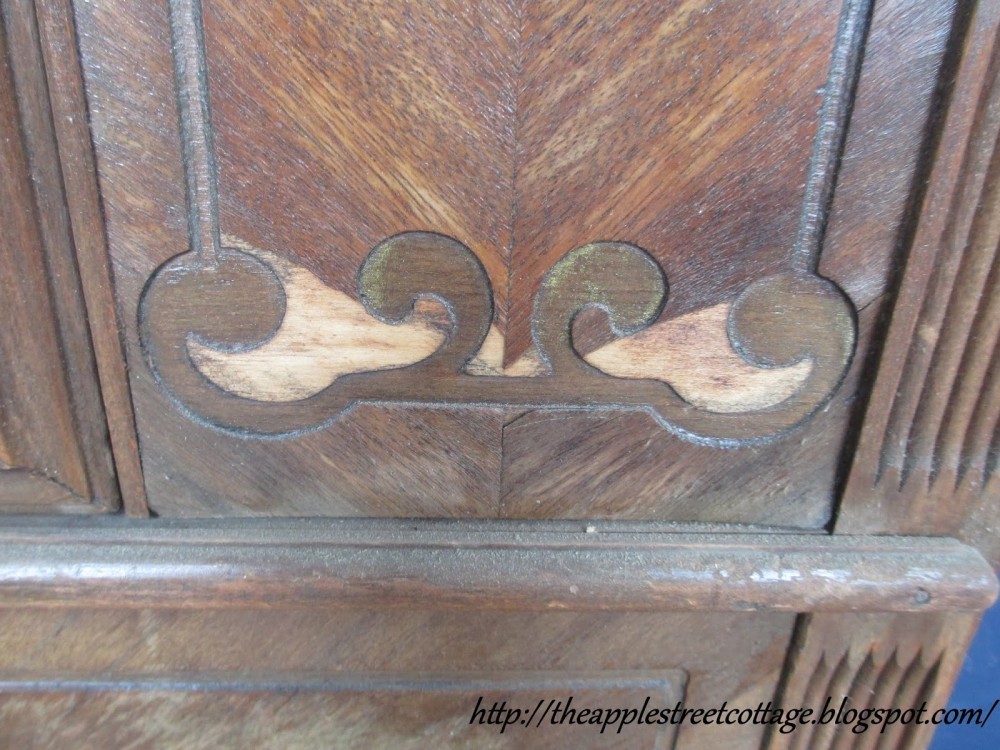
Certain carved details had lost their dark finish, revealing pale wood beneath the scrollwork. This damage went deeper than simple surface scratches, making a repair using stain-matching difficult.
Sanding Revealed More Damage Beneath the Veneer
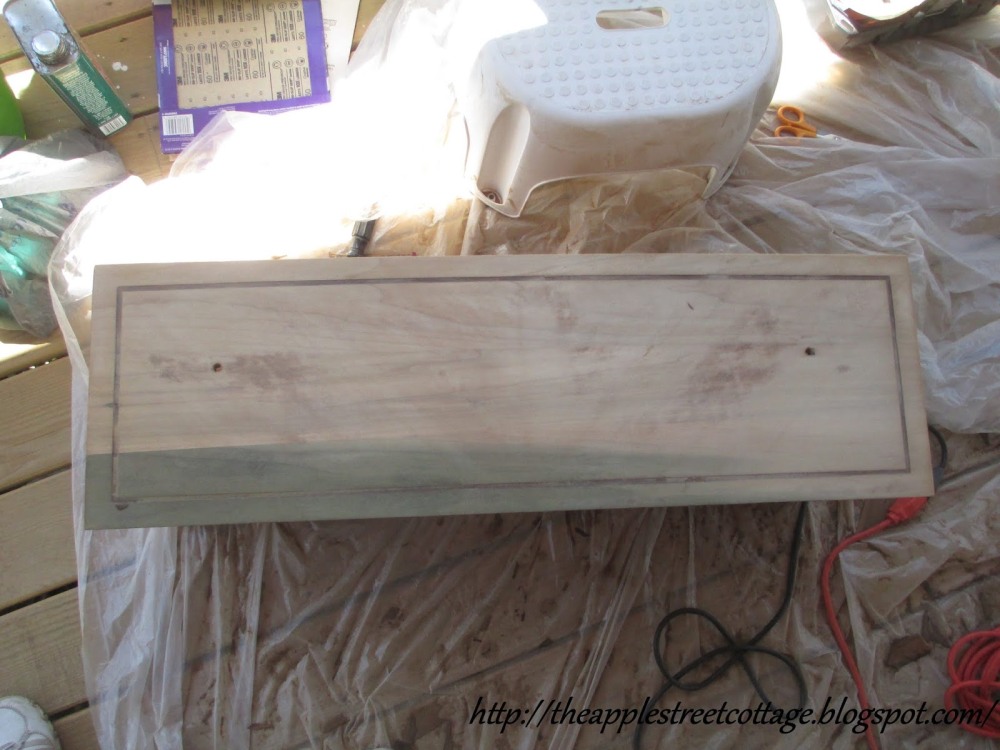
Ann started working on the drawer, where sanding removed the damaged veneer to expose pale wood underneath. The wood showed green-tinted sections, which the owner identified as poplar.
Because of this underlying condition, the drawer was no longer suitable for the stained finish she had originally planned.
Sanding one of the upper side panels removed parts of the chevron veneer, leaving pale patches between the darker wood strips. The carved ornament above stayed attached, but the decorative surface underneath started to fall apart.
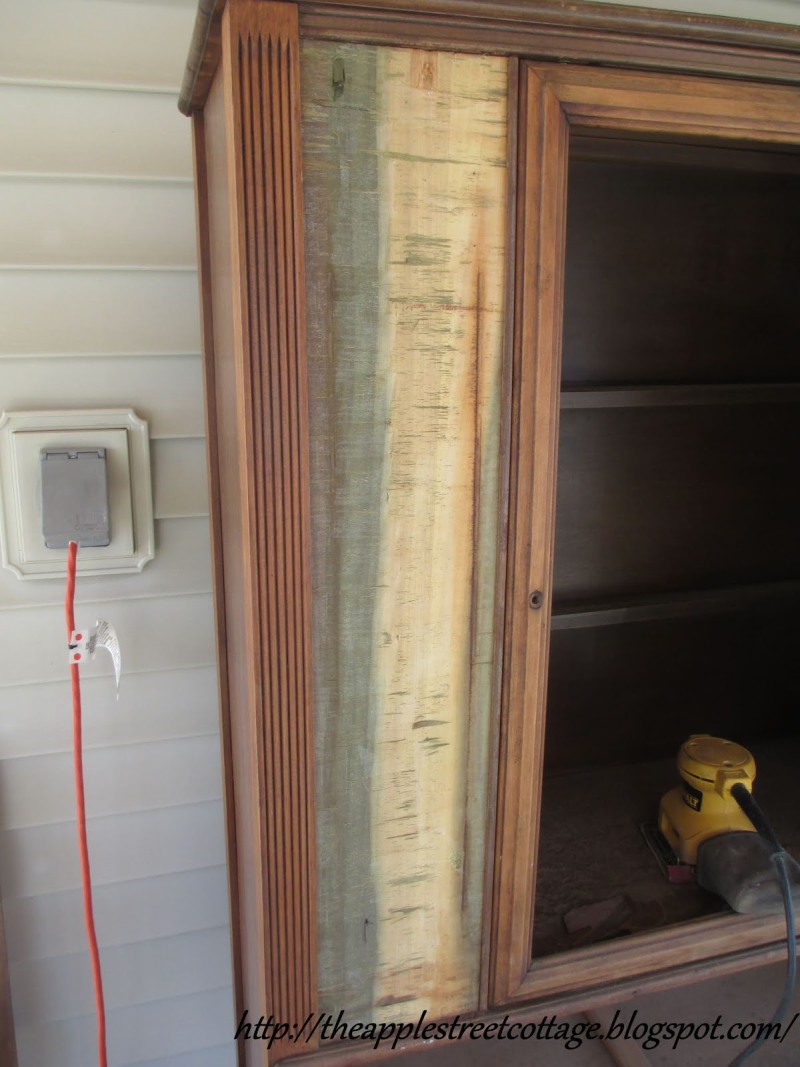
The opposite panel revealed another issue: a second layer of veneer beneath the first had also become loose. Instead of trying to reglue both damaged layers, Ann and her husband chose to remove them entirely.
The remaining poplar panels would be covered with paint and fabric rather than receiving replacement veneer.
Carved Wood Trim and Turned Legs Were Restored
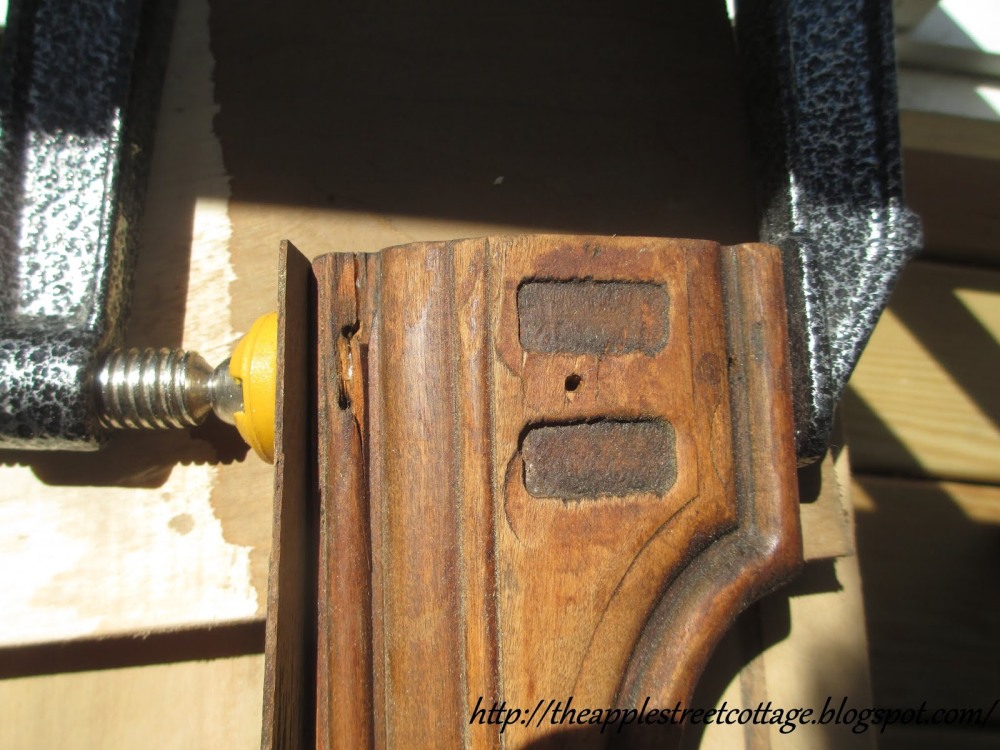
Ann saved the decorative moldings by prying them off with a putty knife. A close-up image shows one carved piece held in a clamp during repairs, preserving details that could be reattached to the cabinet.
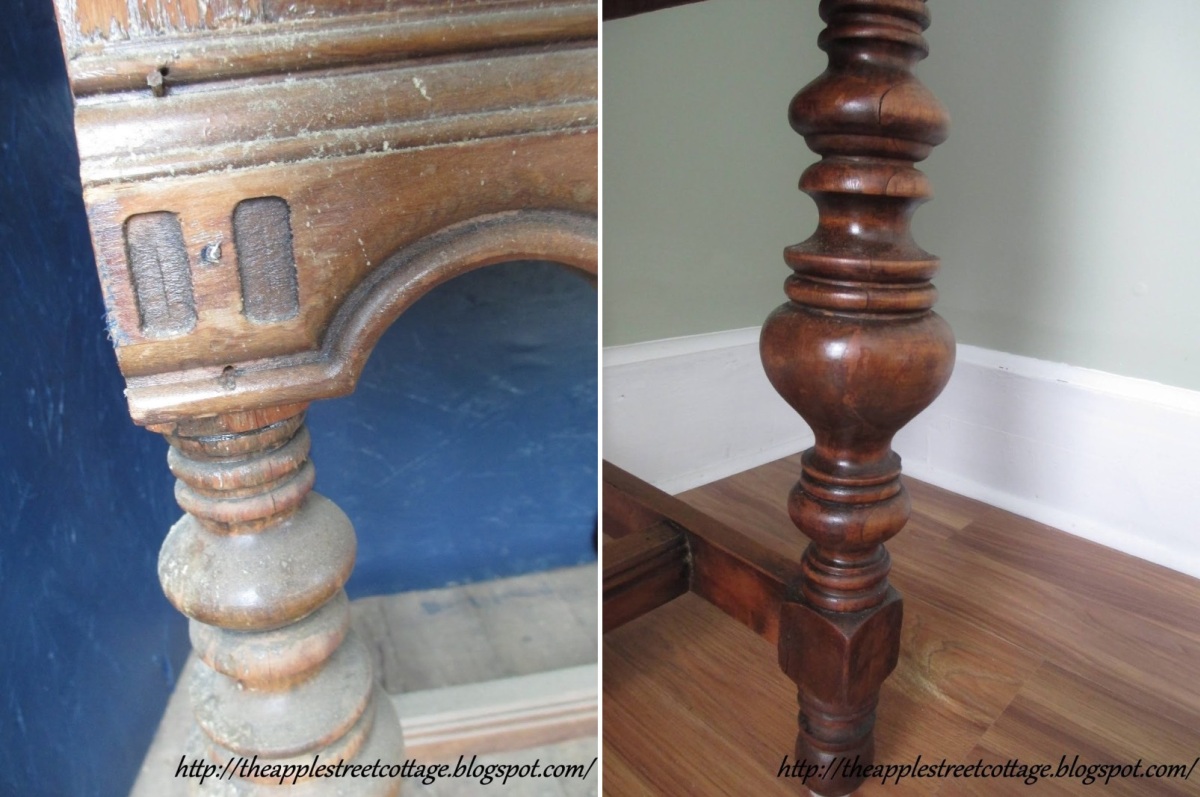
The turned legs received a different treatment than the damaged panels. Rather than painting them, Ann used Formby’s Furniture Refinisher and Tung Oil to restore the brown finish.
A before-and-after comparison highlights the difference between the worn, pale surface and the restored wood. The rounded sections and narrow grooves retained their carved profiles throughout the process.
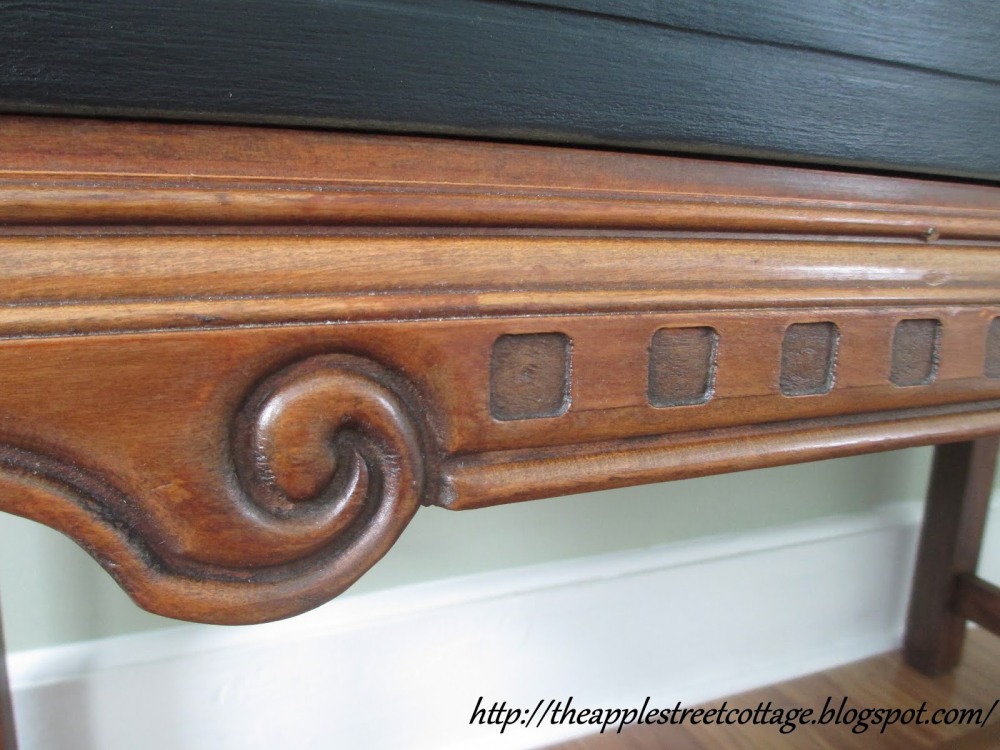
The lower apron also kept its wood finish. Dark accents remain visible inside the rectangular cutouts, while curved scrolls frame the ends above the legs.
Restoring these elements preserved the cabinet’s ornate base beneath the painted sections.
Black Chalk Paint Covered the Damaged Surfaces
Two coats of black chalk paint covered the cabinet’s top, sides, drawer, and interior. Since the top had warped and split from water exposure, Ann screwed it back together before applying the paint.
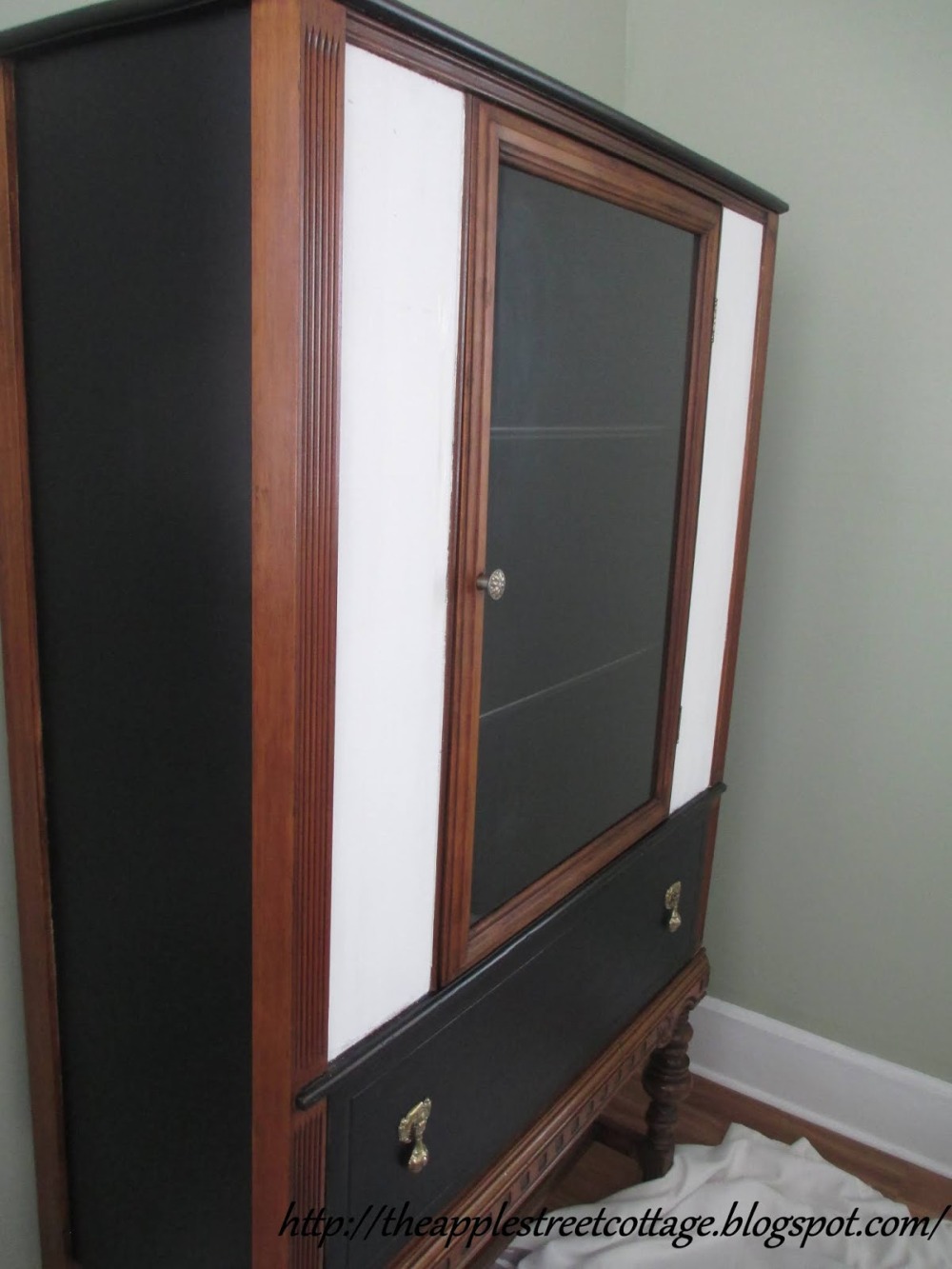
The door frame, fluted columns, and other solid-wood trim kept their brown finish. White paint was applied to the two narrow front panels to prepare them for the fabric.
Sandpaper was used to add wear to selected painted edges.
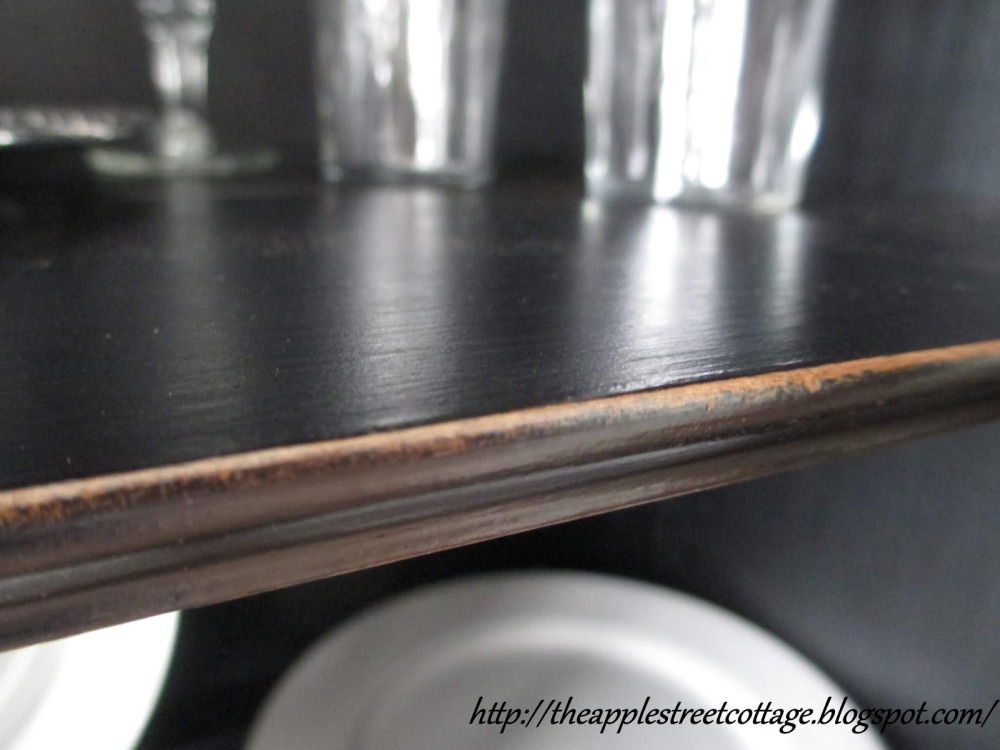
A close-up of the interior shelf shows black paint covering the broad surface, with a narrow strip of brown wood left visible along the front edge.
This contrast between the black interior and wood trim extended to the restored exterior.
Floral Fabric Replaced the Missing Chevron Veneer
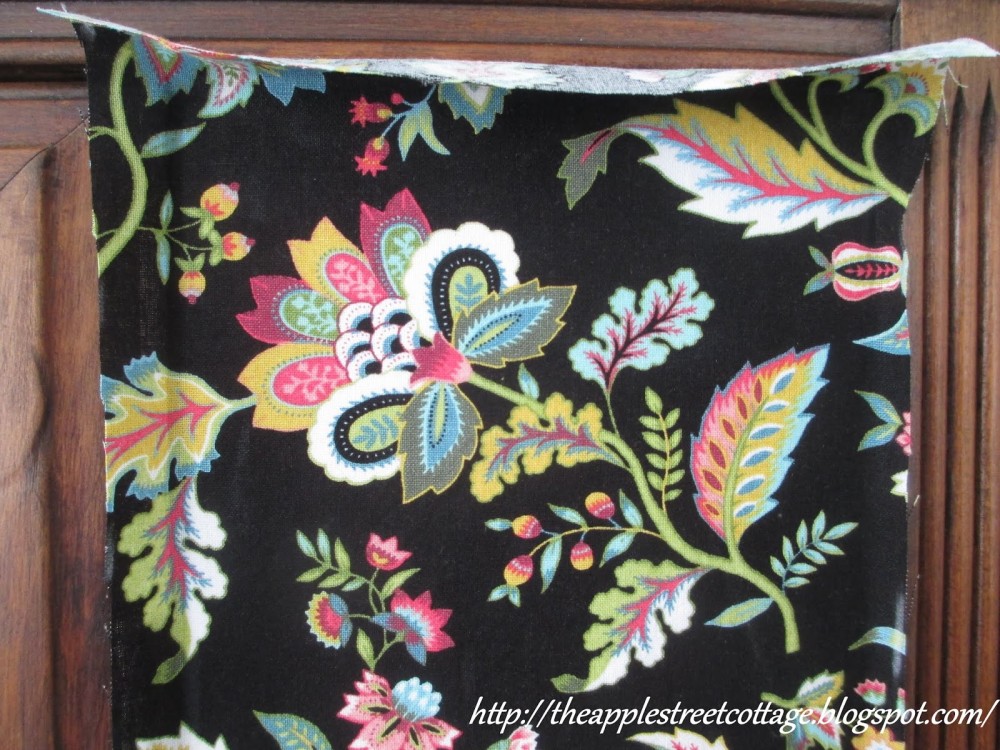
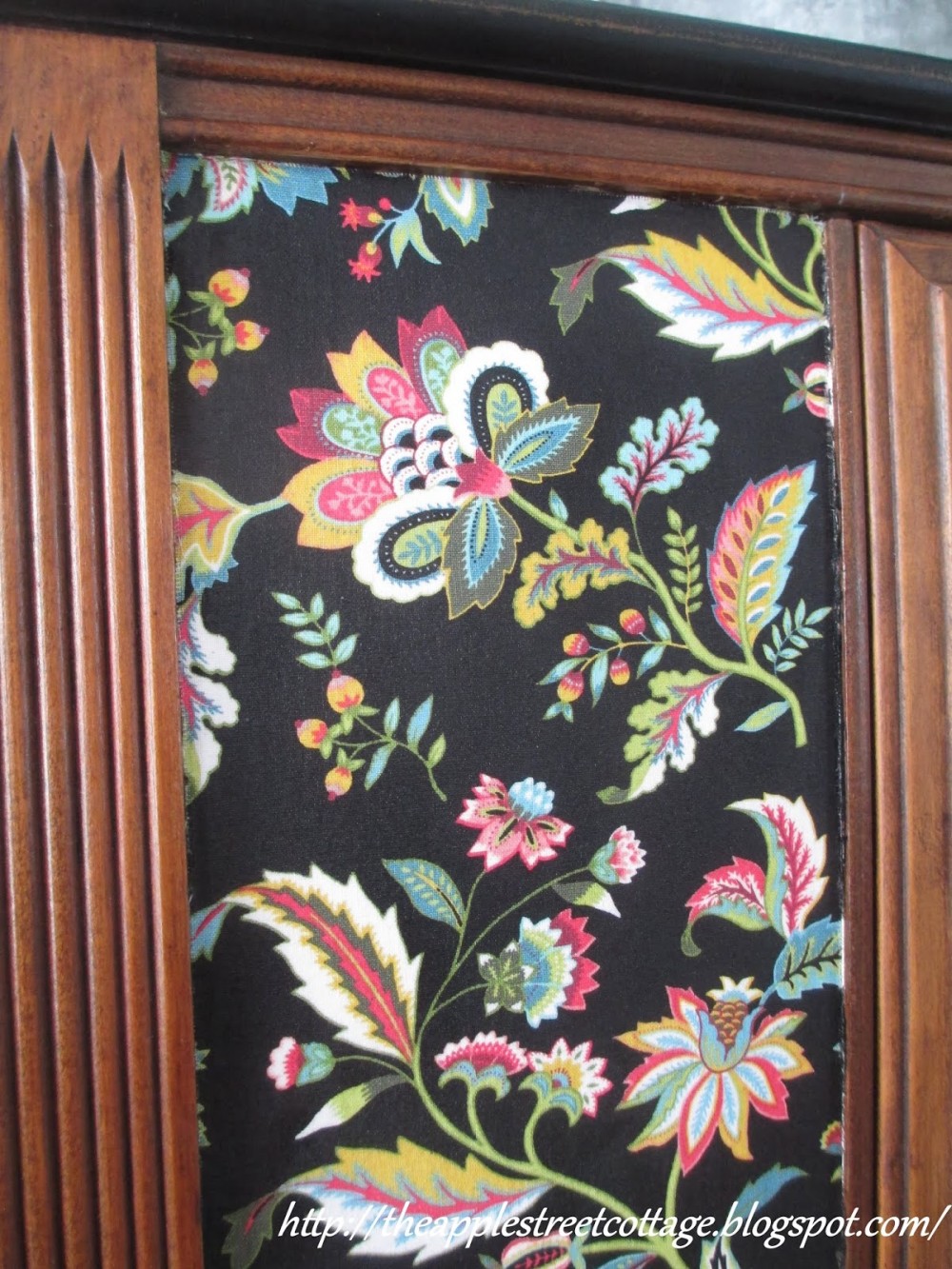
The replacement fabric features a black background covered with pink, yellow, blue, green, and white flowers and leaves. This bright pattern replaces the cabinet’s former brown chevron veneer.
Before attaching the fabric, the owner applied two coats of white paint to the poplar panels to hide their green tint.
Ann cut each fabric piece slightly larger than its panel and attached it using Mod Podge. After the adhesive dried, she trimmed the excess fabric along the wooden frame with an X-Acto knife.
A second coat of Mod Podge was applied over the fabric. The narrow panels now display a black floral design bordered by the restored brown trim.
Original Metal Drawer Pulls Received a Polish
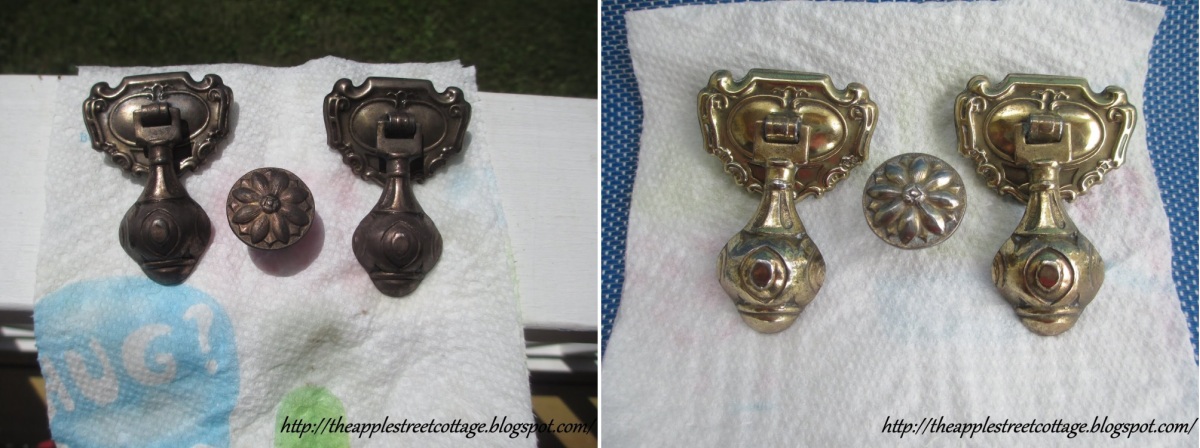
The two ornate drop pulls and small floral door knob had a dark, tarnished finish. Metal polish removed much of the discoloration, revealing a brighter brass-toned surface.
The original hardware was returned to the cabinet instead of being replaced with modern handles. Their curved shapes complement the carved details along the wooden base.
Black Paint, Floral Panels, and New Glass Completed the Cabinet
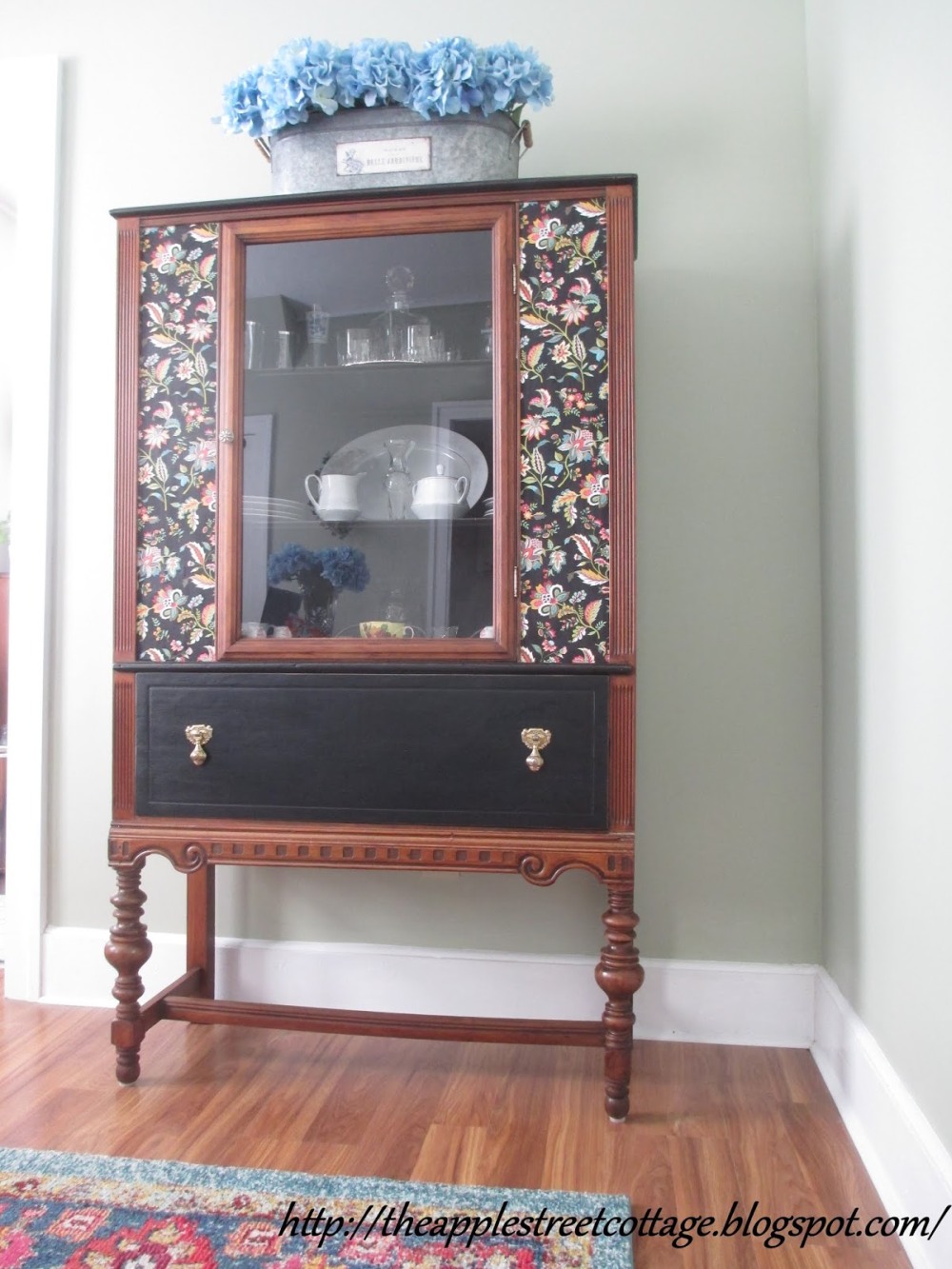
A new glass panel filled the upper door frame, allowing the cabinet to display dishes and glassware. White plates, cups, a teapot, and clear glass pieces sit on the dark interior shelves.
The floral fabric panels frame the door, while the black lower drawer provides contrast against the polished metal pulls. Restored wood trim separates the painted surfaces from the decorative legs.
A galvanized metal container holding blue flowers sits on the cabinet top.
From Rain-Damaged Veneer to a Black and Floral China Cabinet
Before-and-after photographs show the transformation from a damaged brown cabinet with missing glass to a finished display piece with patterned panels and a black drawer.
What started as a plan to repair and stain the veneer evolved into a combination of paint, fabric, and restored wood after sanding exposed damage beneath the original surface.
Would you have kept the cabinet’s brown wood appearance or chosen the black paint and floral fabric?
Image credits go to @theapplestreetcottage.
The post She Got a China Cabinet Left in the Rain for Free, Then Replaced Its Ruined Veneer With Floral Fabric appeared first on Homedit.



































Water reclaims what we build, yet here it offers a canvas. By stripping the veneer, Ann didn’t hide the damage; she transformed it. The black paint doesn’t conceal the past, but rather dignifies the resilience of the wood beneath.
Thank you for that beautiful perspective! I truly believe water damage doesn’t have to mean the end for a piece. It’s wonderful to see how stripping and painting can honor the wood’s history while giving it a fresh, dignified new life.