
Alternative Hardware for Cabinet Shelves
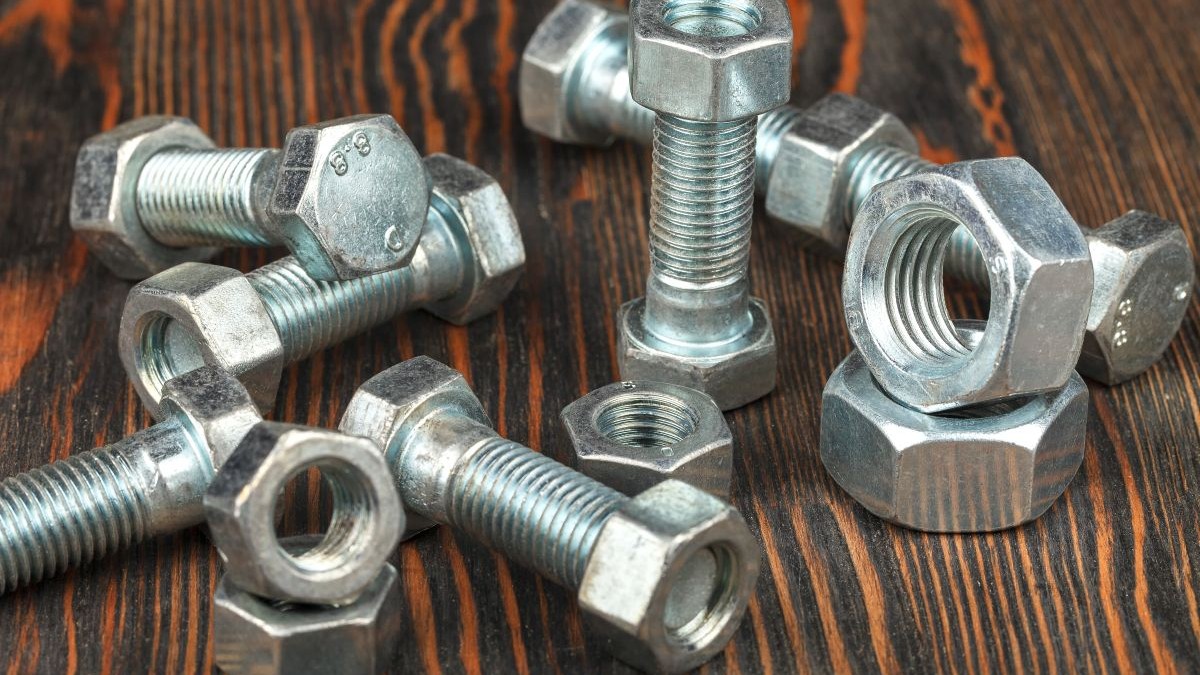
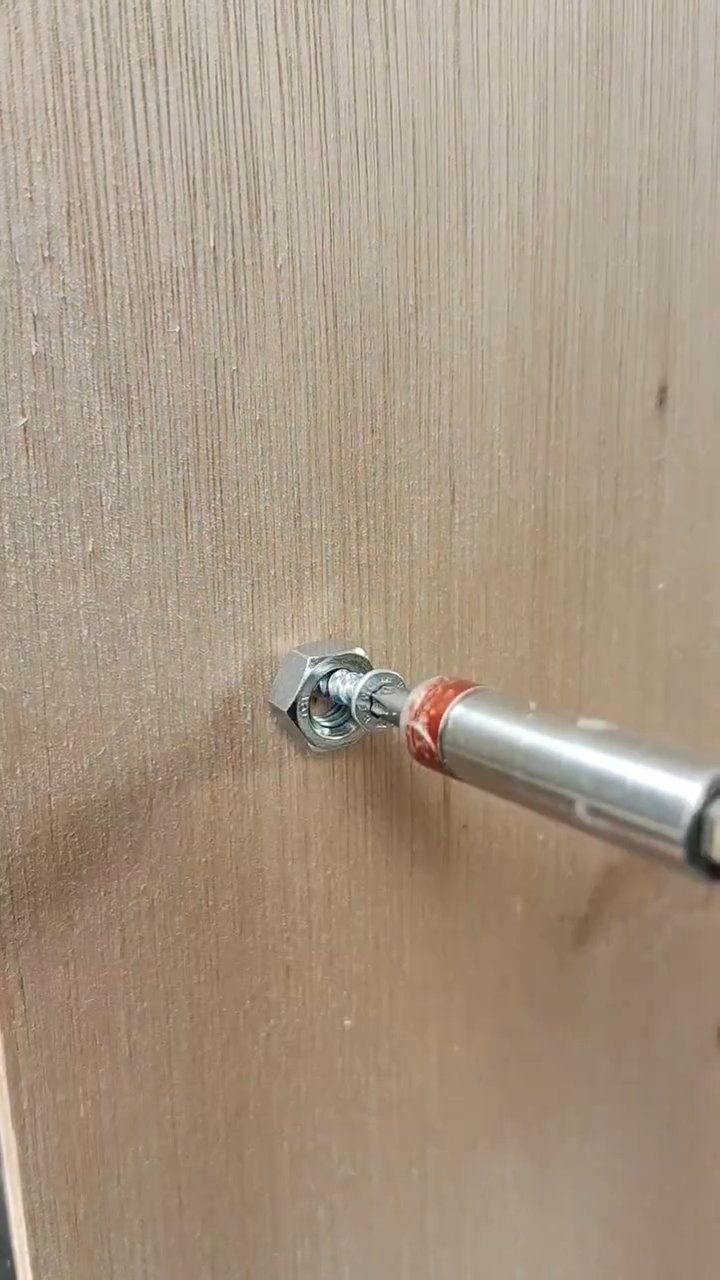
While most cabinet shelves depend on small metal pins or brackets for stability, a screw threaded through a hex nut offers a different method of support. In this setup, the metal nut presses against the interior wall of the cabinet, creating a rest for the shelf without requiring standard hardware.
The technique relies on the interaction between two common items. The screw secures the nut, while one of its flat sides serves as a ledge for the wooden board. This arrangement eliminates the need for a separate bracket in the demonstrated configuration.
Instagram creator Frédéric demonstrated this method by installing two screw-and-nut supports beneath a shelf inside a wood-look cabinet. This approach provides an option for light-duty storage when conventional brackets are unavailable, though the weight capacity remains untested.
Installing the Nut Around the Screw
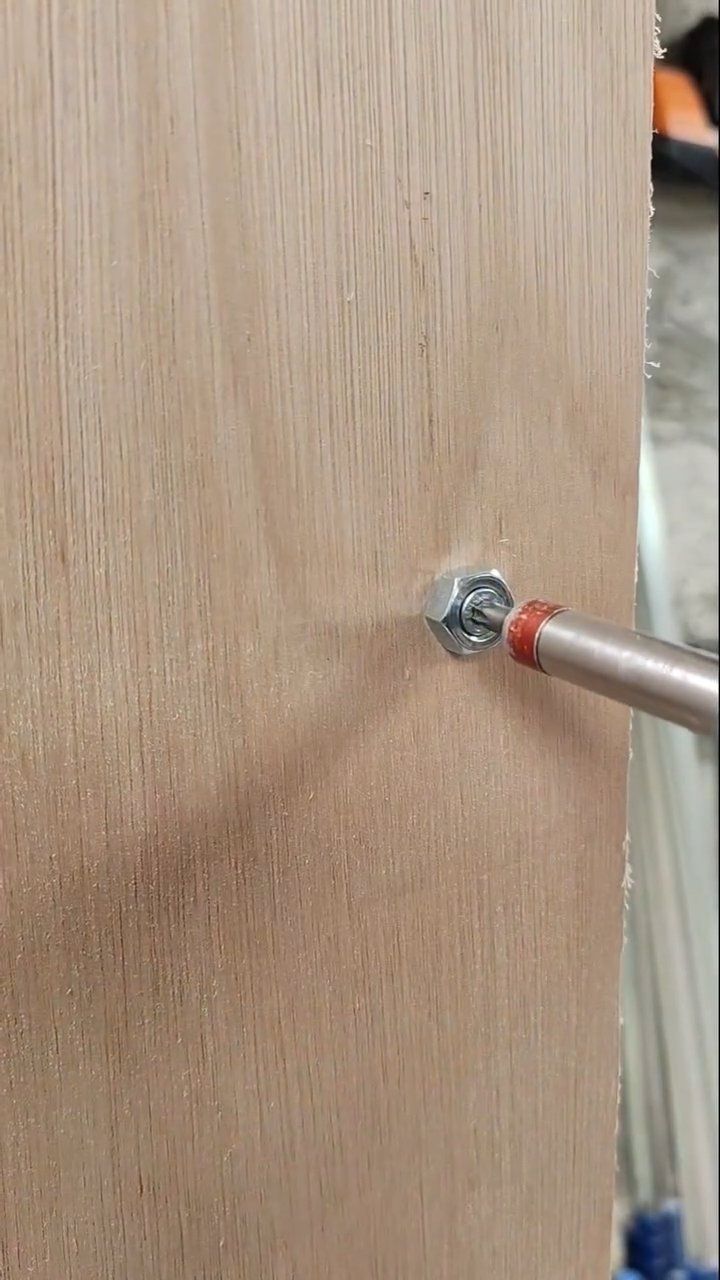
The screw passes through the center of a metal hex nut and enters the cabinet panel. The nut stays outside the wood, surrounding the screw head to create a wider bearing surface than the screw provides on its own.
A driver tightens the screw against the nut, securing the metal piece in place without a separate mounting plate.
Positioning the Nut Against the Wall
As the screw tightens, the nut rests against the flat cabinet wall with one side facing upward. The six-sided shape of the nut creates a short horizontal edge for the shelf to rest on.
The screw must engage solid material beneath the cabinet finish. Thin particleboard, damaged wood, or an oversized pilot hole may not provide enough holding strength for this arrangement.
Using Pliers for Stability
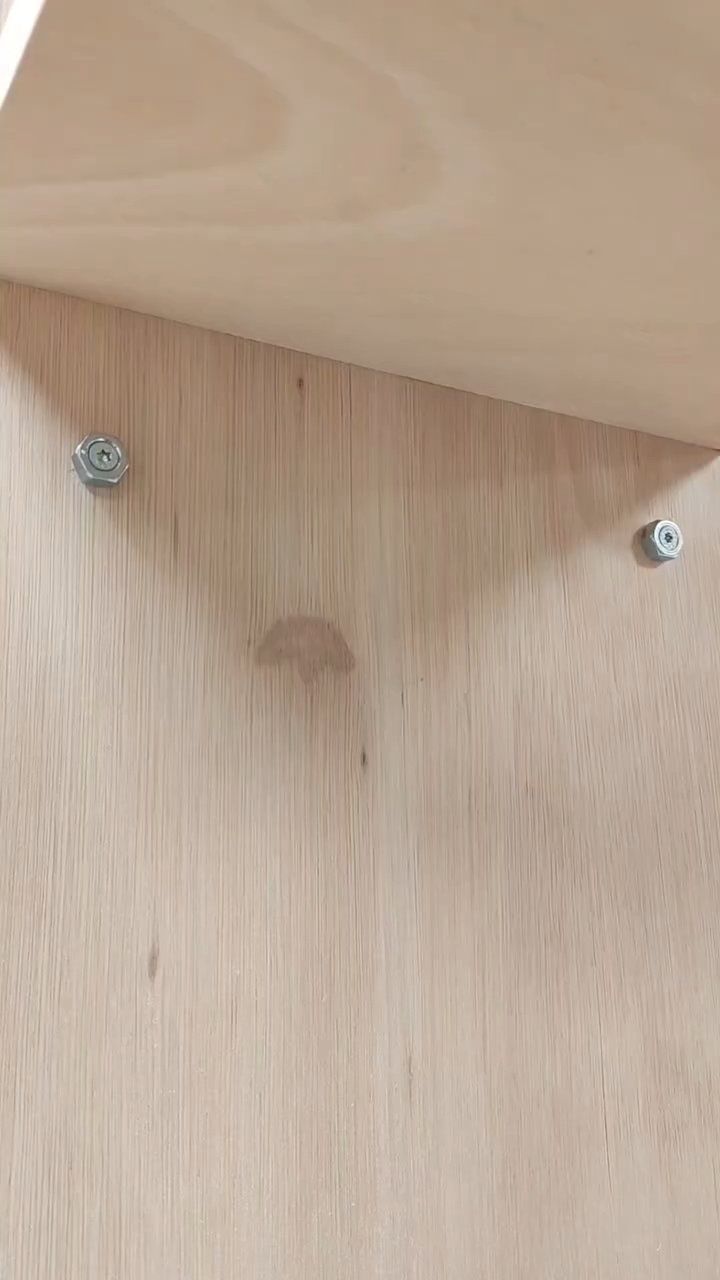
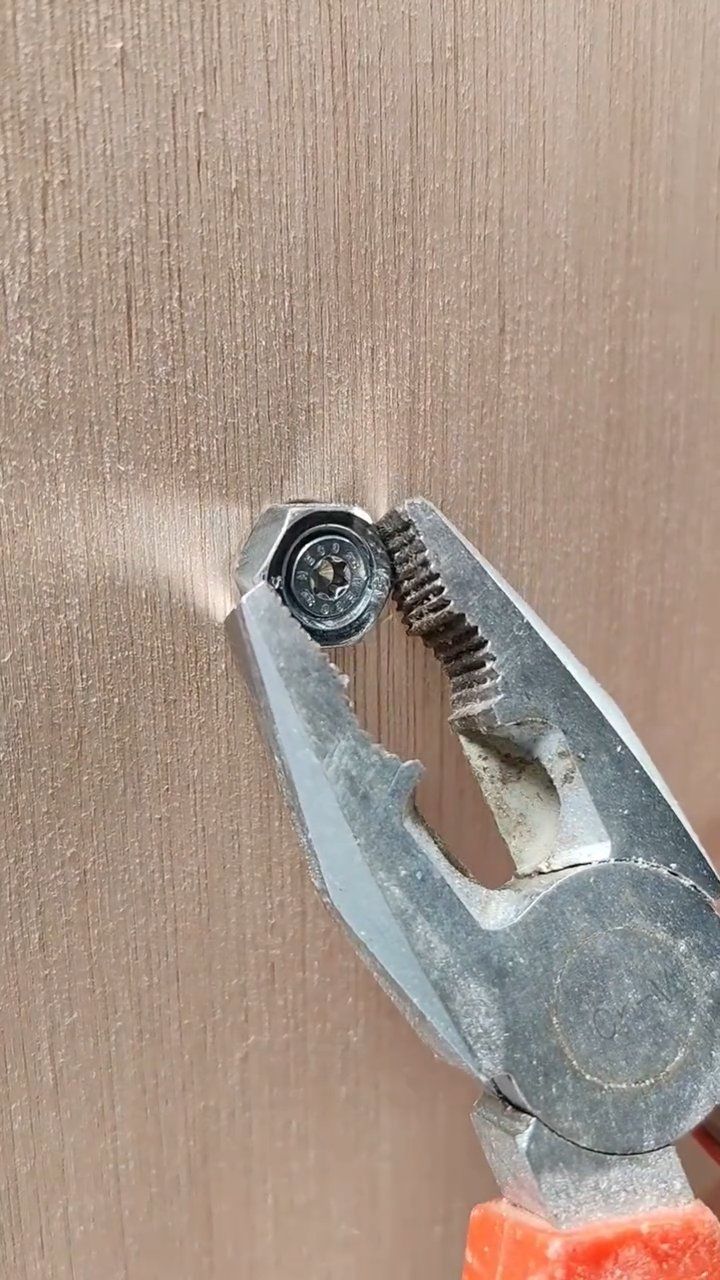
The demonstration shows pliers gripping the outside of the hex nut while the screw sits within its opening.
Holding the nut prevents it from turning during adjustment and helps keep one flat face positioned toward the underside of the shelf.
Creating Support Points
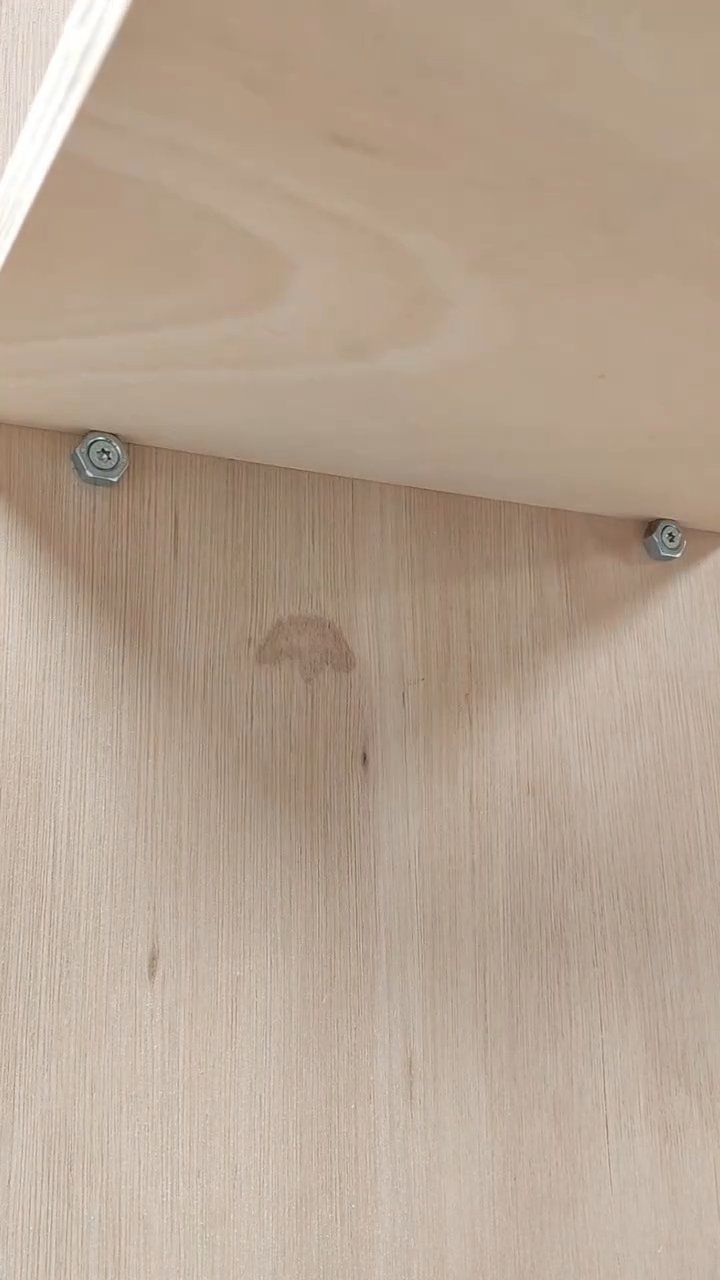
Positioned beneath the shelf on the rear panel, two nuts are mounted near opposing sides within the enclosure. These fasteners are set at identical elevations to serve as support points for the board.
These supports occupy less space than standard shelf brackets, leaving most of the area beneath the shelf open.
Placing the Shelf
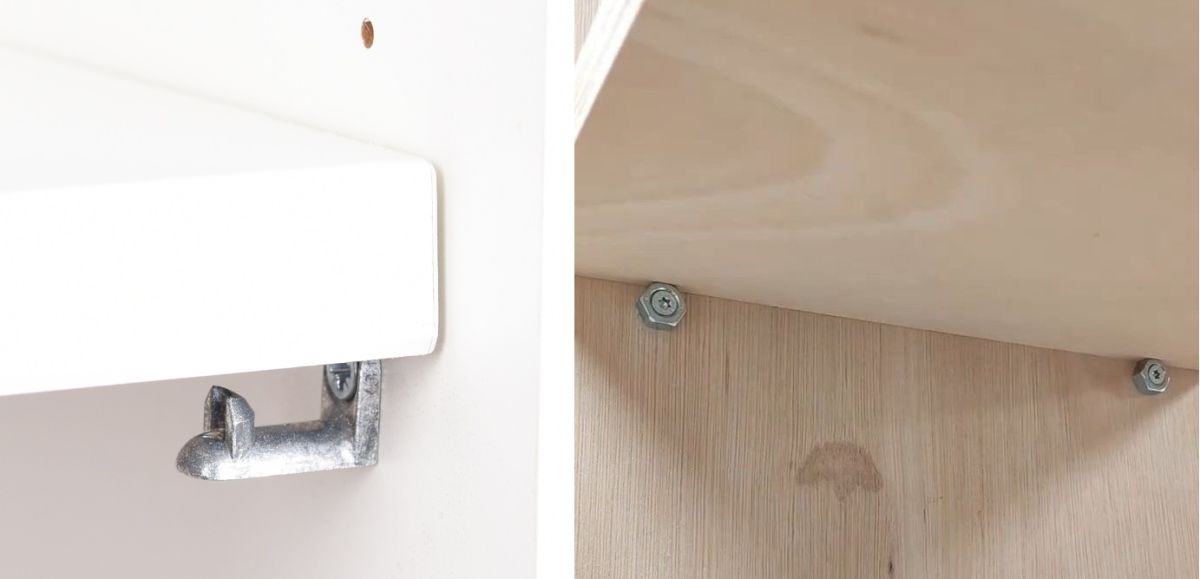
The final view shows the shelf positioned over the two metal supports, with the nuts close to the underside of the board.
It remains unclear from the demonstration the maximum load capacity of the setup. Additionally, a shelf held by just two supports might shift or topple if its remaining edges lack securing mechanisms.
For shelves carrying dishes, books, or heavy appliances, properly rated shelf pins or brackets are a safer choice, particularly in particleboard cabinetry.
For a light cabinet shelf, a screw paired with a hex nut may function as a makeshift support in the absence of conventional brackets or pins, as long as the assembly is stable and the shelf is prevented from tipping over.
Image credits @latelier_billy: Original DIY demonstration.
Source: Homedit.











































It is remarkable how a humble hex nut transforms into a silent architect. In simplicity, we find profound stability; the shelf rests not on complex machinery, but on the quiet, steadfast geometry of basic materials.
Thank you for that beautiful reflection! I’m glad the hex nut concept resonated with you. Sometimes, the most effective solutions really are the simplest. I appreciate your kind words on the geometry of basic materials.