
Formal European residences were once characterized by crystal chandeliers, carved door frames, heavy velvet curtains, and gold-covered furniture. As interior design trends shifted toward straight-lined furniture, plain walls, and minimal decorative details, much of this ornamentation vanished. These rooms adopt the opposite strategy, pulling inspiration from classical European, Rococo, and Baroque design traditions.
Rather than removing ornamentation, these designs expand it across upholstery, doors, wallpaper, lighting, and furniture. Architectural details feature gold finishes, patterned fabrics sit beside carved wood, and elaborate window treatments become integral parts of the room's overall design.
Twelve examples illustrate a style where few surfaces remain undecorated. While some displays emphasize matching arrangements and grand furniture, others incorporate architectural features, elaborate textiles, and ornamental glass that evoke European palaces.
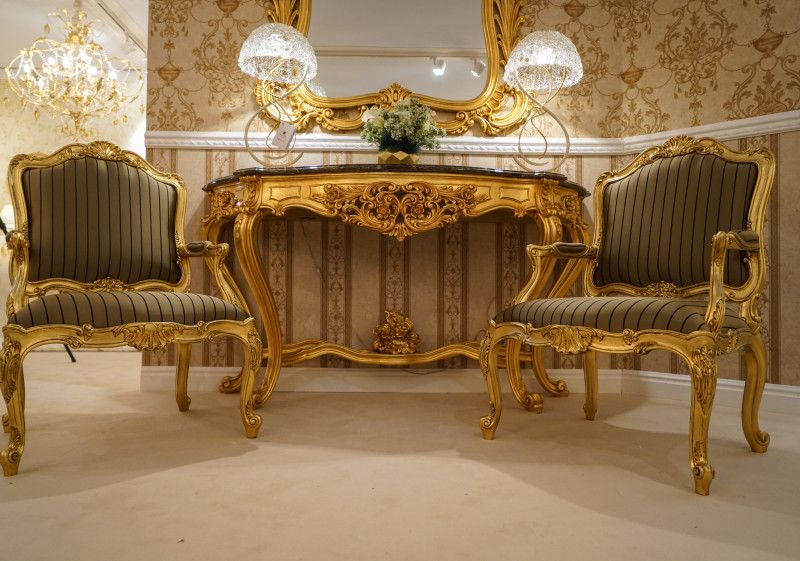
Gold-Carved Furniture With Matching Upholstered Armchairs
This formal seating arrangement is defined by curved wooden frames finished in gold. The console positioned between two matching armchairs features an elaborate floral carving across its front apron and a dark top. The armchairs themselves boast cabriole legs, rolled arms, carved crests, and striped upholstery.
An oversized gilded mirror with curved forms mirrors the furniture’s shape and sits above the console. A small floral arrangement fits in the center space between two glass lamps with twisting metal supports at either end. Gold-patterned wallpaper and a white chair rail extend the decorative theme across the wall, linking the furniture to its environment.
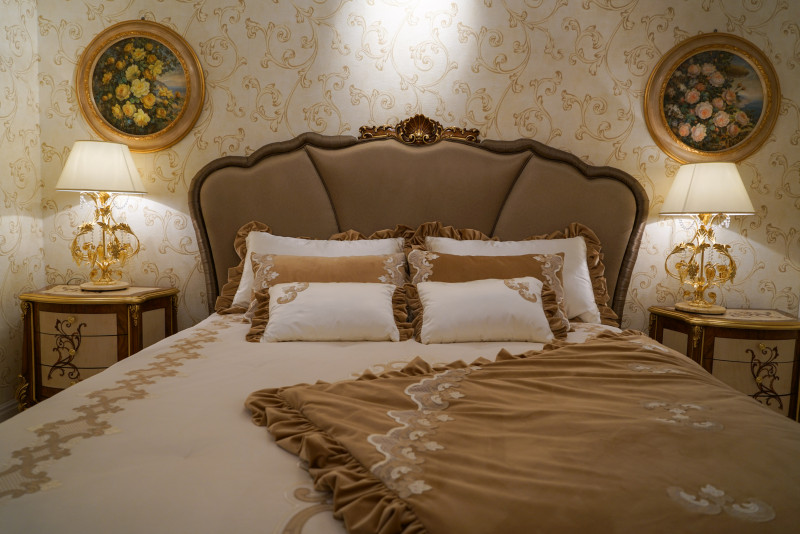
An Upholstered Headboard Framed by Floral Artwork
A carved gold ornament sits at the center of a tall headboard covered in taupe upholstery with a scalloped upper edge. This padded outline rises above embroidered bedding, where a folded bedspread, ruffled borders, and matching pillows maintain a consistent brown and cream palette across the bed.
Symmetry is established by matching lamps and oval floral paintings positioned above the nightstands. Each lamp features a cream shade and a gold floral base. Decorative wallpaper with scrolling botanical patterns fills the wall behind the bed, while the curved headboard offers a distinct outline compared to the rectangular furniture typical of contemporary bedrooms.
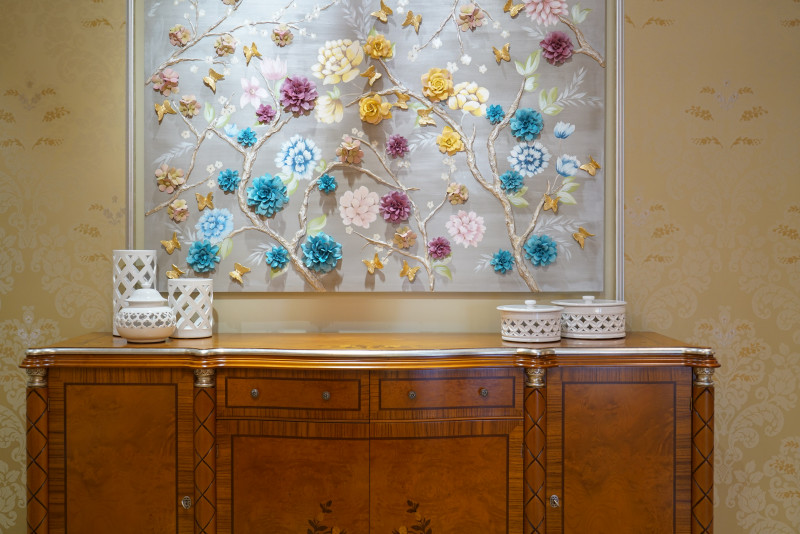
Floral Wall Art With Raised Flowers and Gold Butterflies
A large decorative panel above a wooden sideboard displays blue, pink, yellow, and purple flowers. Silver-toned branches connect the blossoms across the composition, while raised floral elements project from the surface. Small gold butterflies appear between the flowers, adding an additional ornamental detail to the botanical design.
The center of the sideboard remains open beneath the artwork, with covered containers and white ceramic lanterns placed at opposite ends. Their lattice patterns repeat geometric shapes without adding more floral motifs. The cabinet’s curved front edge, decorative columns, and wood grain provide a traditional foundation for an artwork that blends painting with three-dimensional elements.
Patterned Upholstery With Fringe-Trimmed Pillows
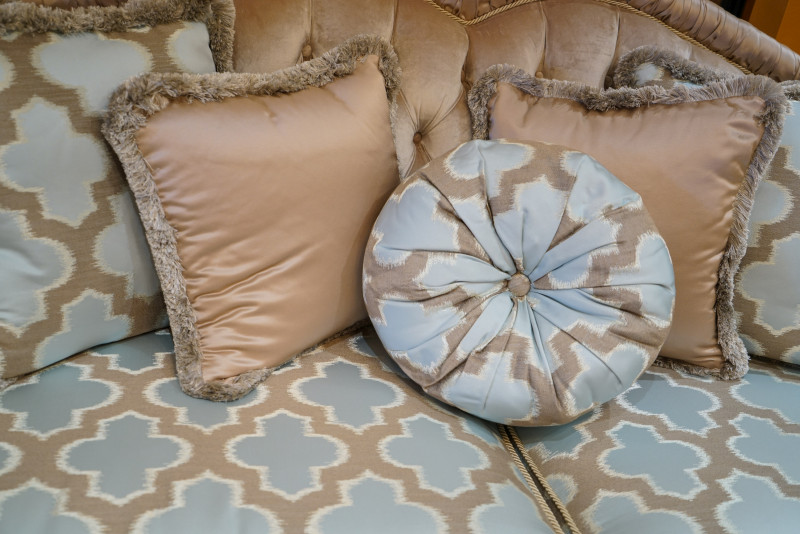
This traditional sofa features pale blue and beige upholstery with a repeating quatrefoil pattern on the seat cushions. Additional patterned pillows repeat the seat fabric's colors, while square satin cushions with thick fringe borders surround a central round pleated pillow. The central pillow has fabric gathered toward a covered button.
The combination relies on different textile finishes rather than introducing new colors. Patterned upholstery, raised fringe, pleated fabric, and smooth satin give each cushion a distinct appearance within the same palette. Decorative cord trim along the sofa frame and tufted back cushions continue the upholstered detailing beyond the pillows.
A Gilded Doorway Framed With Heavy Drapery
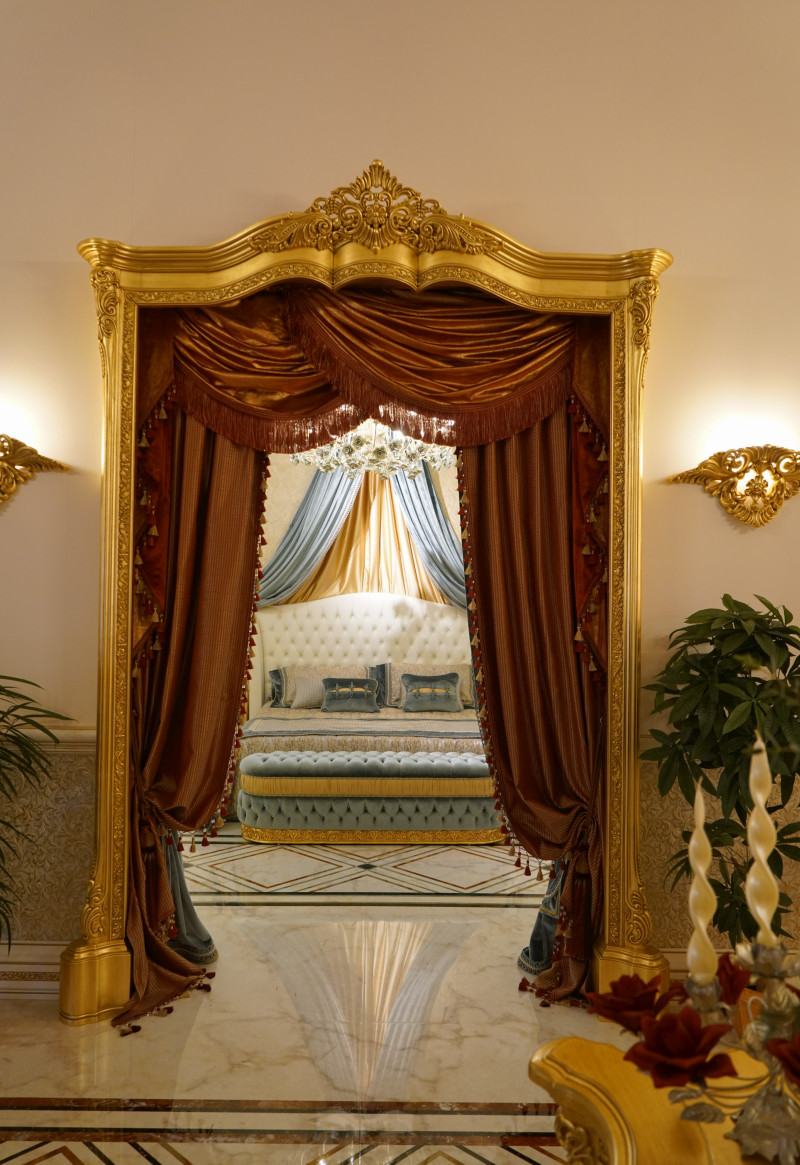
An oversized gold frame turns an interior opening into an architectural feature that resembles a theater entrance. Burgundy fabric hangs from a deep swag valance, with fringe and tassels following the fabric edges to extend the decorative treatment toward the floor. Carved floral ornaments cover the vertical supports and upper crest.
Pale blue curtains frame a tufted bed with gold detailing beyond the opening, creating a second view through the fabric-covered entrance. The darker foreground curtains separate the spaces without a solid partition. This approach highlights the doorway itself, using textiles and carved framing instead of a conventional door surround.
Floor-Length Curtains With a Sweeping Swag Valance
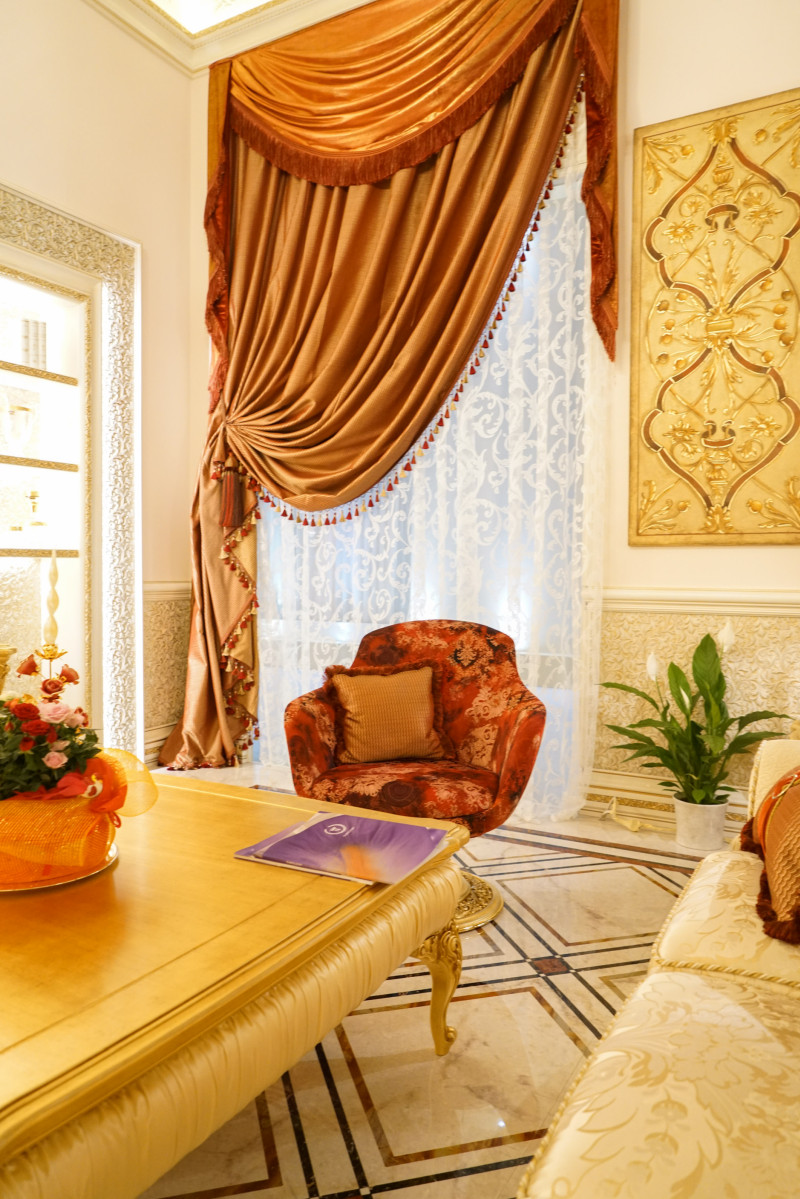
Copper-colored fabric gathers toward one side of a tall window, hanging from near the ceiling. An upper swag crosses the window opening before dropping into a curved panel finished with fringe and tassels. Beneath the heavy outer curtain, a sheer white panel with a damask pattern allows light to pass through.
An upholstered armchair with red floral fabric sits below the window, connecting the curtain color to the seating area. Gold decorative wall panels and a cream-colored table continue the historical references throughout the room. The curtain arrangement uses multiple fabric sections to frame the window, making the treatment an architectural feature rather than a plain covering.
An Ornamental Glass Door With Gold Scrollwork
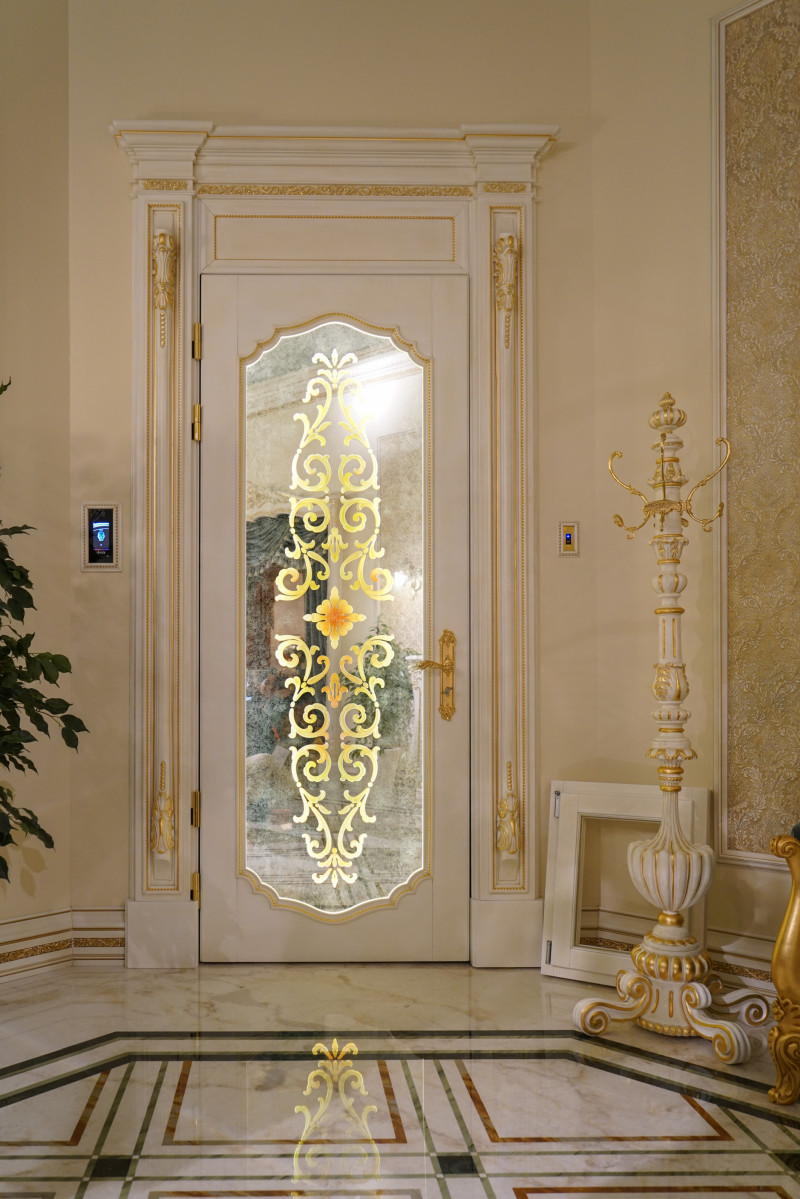
White painted wood surrounds a tall glass panel decorated with gold floral scrolls. The pattern runs down the center of the door, combining leaf forms, mirrored curves, and a central flower. A shaped inner border follows the glass opening, while the surrounding frame includes an extended cornice, carved ornaments, and fluted columns.
A tall white-and-gold coat stand sits beside the doorway, featuring curved hooks and a base supported by scrolling feet. Its decorative finish matches the door trim without repeating the same pattern. The polished stone floor introduces rectangular borders in contrasting colors, extending the formal treatment from the walls to the ground.
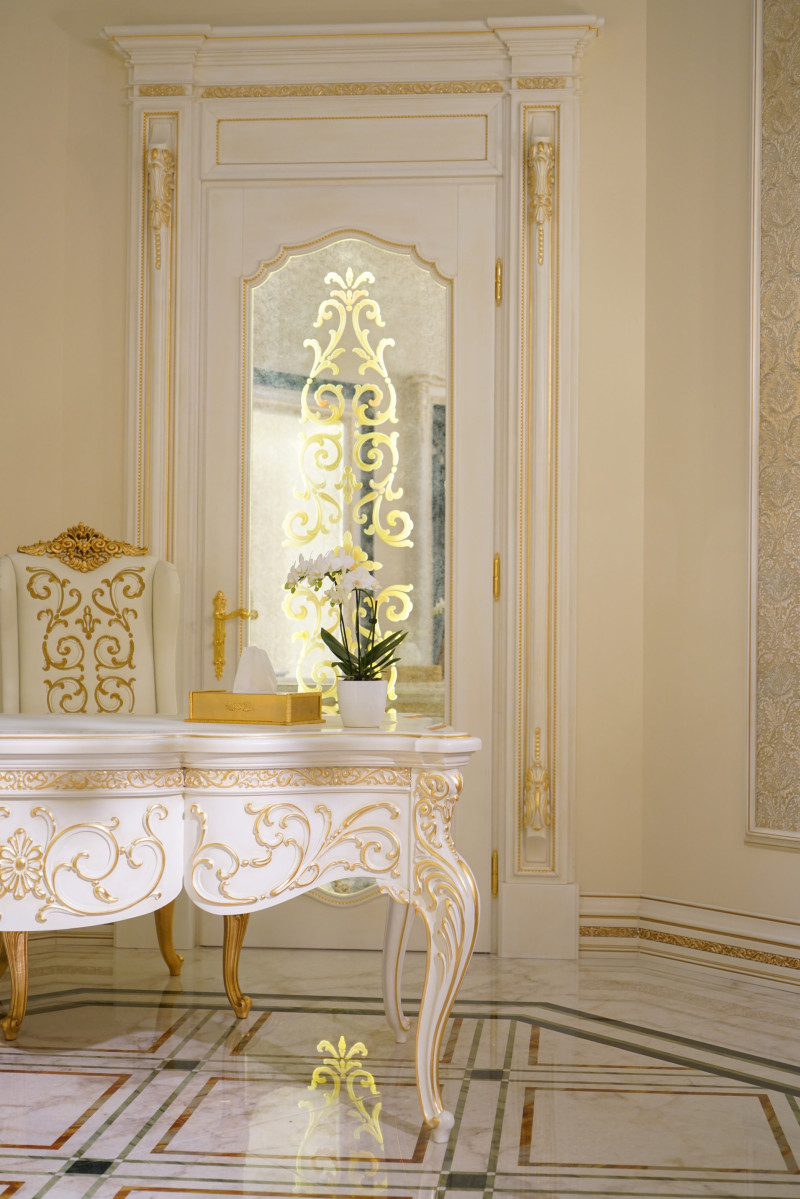
White Furniture With Gold Ornament Around a Decorative Door
Ivory and gold finishes continue across a console table, door frame, wall molding, and patterned floor. The door contains a tall glass panel with gold scrollwork, while carved ornaments accent the surrounding columns and cornice. Its reflective surface picks up portions of the room beyond the entrance.
In front, a white console table has gold edging, curved legs, floral carvings, and a shaped apron. A rectangular tissue box and a small potted orchid occupy the top without covering the ornamental woodwork. The table demonstrates how carved furniture can take part in the architectural design when its finishes correspond with the door surrounds and wall trim.
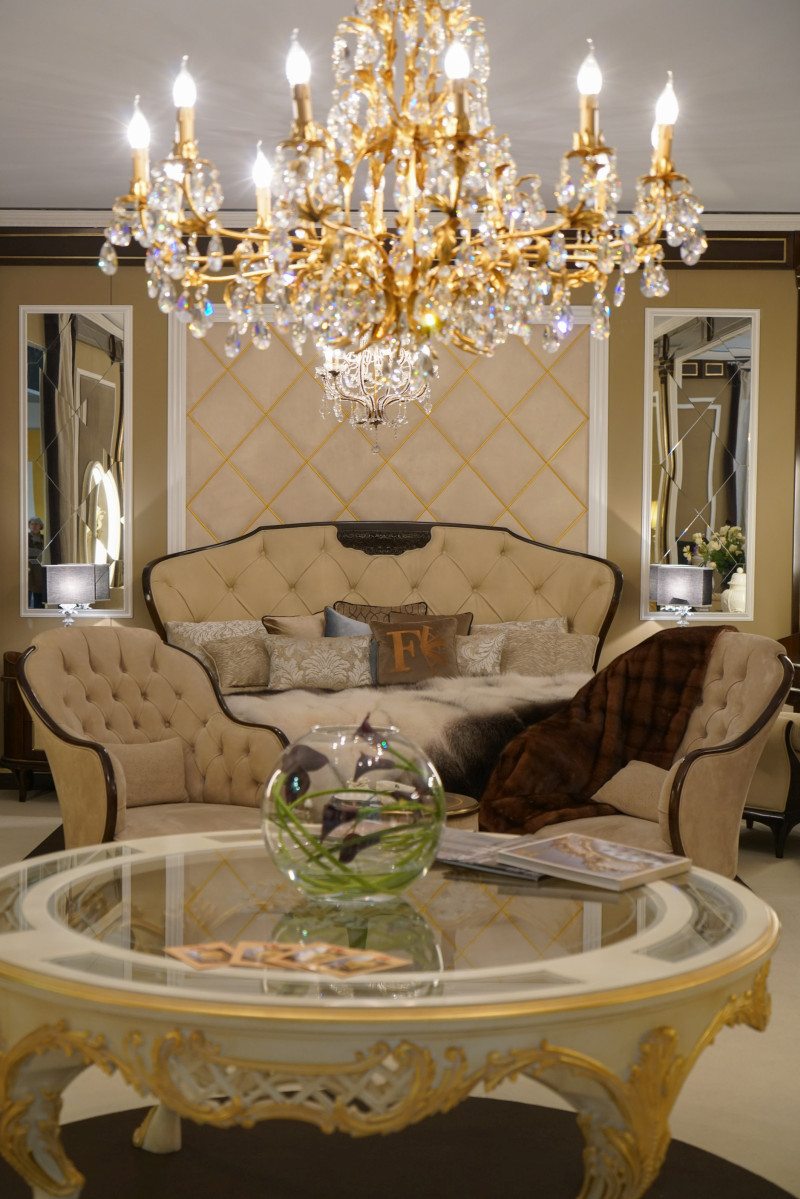
A Crystal Chandelier Above Tufted Living Room Furniture
Crystal drops hang from a large gold chandelier with branching arms and candle-shaped bulbs. The fixture occupies much of the upper view, placing its metal framework and suspended glass elements above a seating group upholstered in cream fabric.
Tufted sofas and armchairs sit around a circular glass-topped coffee table with a carved white-and-gold base. Tall mirrors flank the seating area, while thin gold lines create a diamond pattern across the wall behind the main sofa. The chandelier serves as the centerpiece of the arrangement, with the upholstered furniture and reflective surfaces continuing its formal design language.
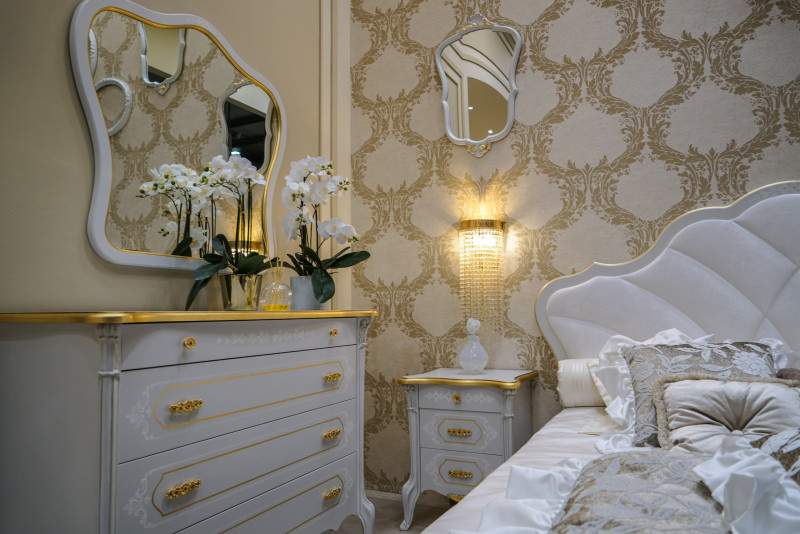
Irregular Mirrors Against Damask Bedroom Wallpaper
Two mirrors with curved, asymmetrical outlines hang above a white dresser and against a gold-patterned bedroom wall. Their frames have pale finishes with thin gold borders, offering an alternative to the rectangular mirrors used above conventional bedroom furniture. White orchids sit on the dresser, with their stems reflected in the larger mirror.
Beside the bed, a crystal wall sconce hangs above a small matching nightstand. Its suspended glass elements contrast with the patterned wallpaper and upholstered headboard, while gold handles and furniture edging connect the pieces. The mirrors introduce a less formal shape into a room dominated by classical patterns and ornamental furniture.
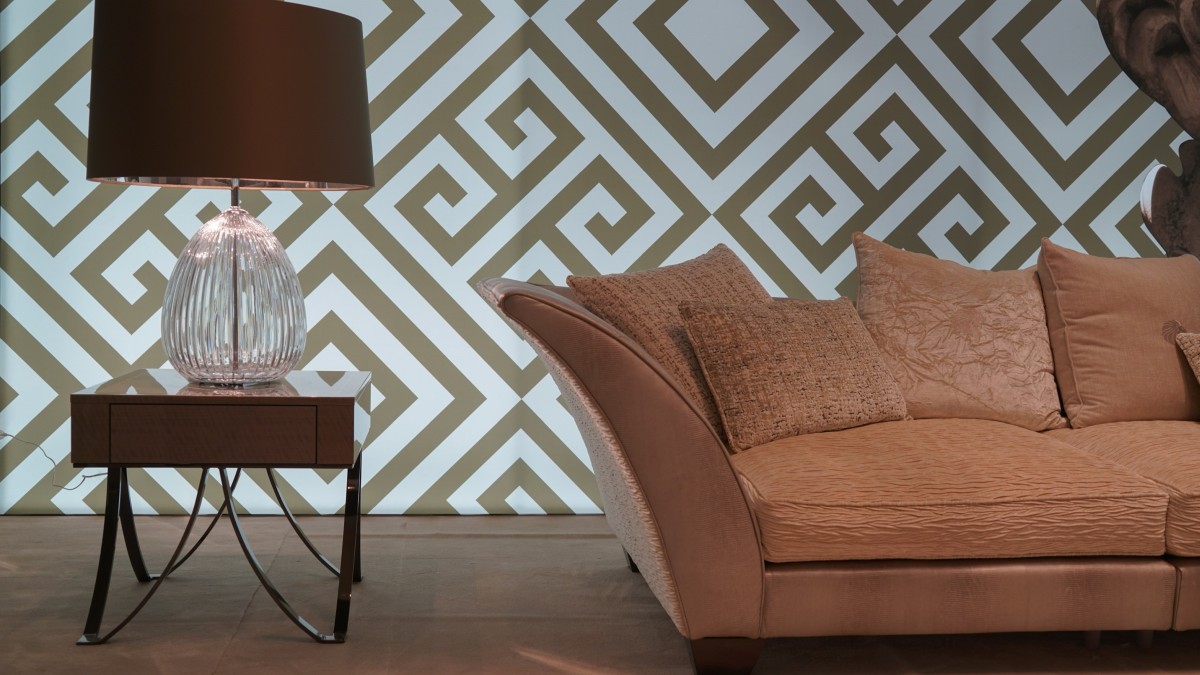
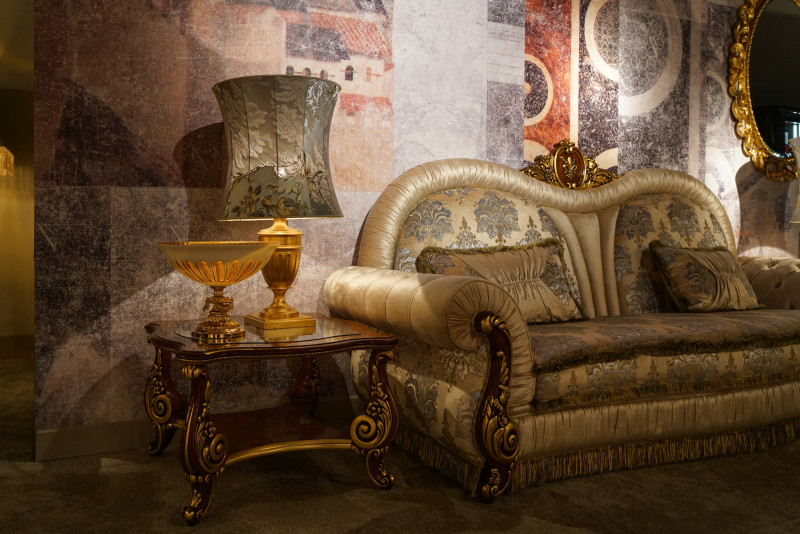
A Curved Sofa With Rolled Arms and Fringe
An elaborate sofa combines a high curved back with thick rolled arms, floral upholstery, and gold-toned carved wood. Decorative fabric covers the inner back and seat, while pleated trim follows the outer edge of the frame. Fringe hangs along the lower front, concealing the space beneath the seat cushions.
Beside the sofa, a dark wooden table supports a gold lamp with a floral-patterned shade and a shallow decorative bowl. A textured wall covering with large geometric and architectural forms creates an unexpected background for the traditional furniture. The pairing shows how furniture with historical ornament can sit against artwork and wall finishes that do not imitate the same period.
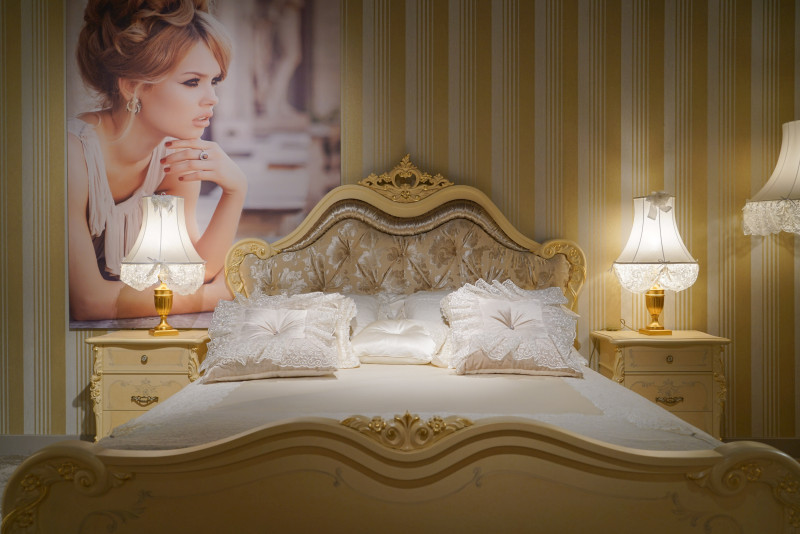
A Cream Bedroom With Carved Furniture and Striped Wallpaper
Vertical cream and gold stripes cover the bedroom wall behind a carved bed frame. The upholstered headboard includes padded sections, floral fabric, and a gold crest, while the matching footboard repeats its curved upper outline and decorative details. Cream bedding with lace-trimmed pillows extends the pale palette across the sleeping area.
Matching bedside tables hold lamps with gold-colored bases, lace borders, and shaped shades. Instead of hanging a conventional painting above the headboard, the arrangement places a large portrait beside the bed. Its scale interrupts the repeated patterns of the furniture and wallpaper, introducing a different visual element into a room built around coordinated pieces.
Would you bring carved furniture, gold ornament, or elaborate drapery into your home, or do you prefer simpler designs?
Image credits Homedit.com
The post Not Minimalist, Not Modern: These Rooms Bring Back the Kind of Decorating Most Homes Have Left Behind appeared first on Homedit.
























Maximalism isn’t mere excess; it’s an embrace of life’s texture. We don’t just decorate rooms—we curate experiences, letting every surface whisper a story of history and human grandeur.
Exactly, Maxime! That’s precisely why Baroque and Rococo styles resonate today. We aren’t just adding ornament; we are weaving narratives into our daily lives. Thank you for capturing the soul of this design movement so beautifully.