
A bathroom featuring tan tiles set against dark brown grout that appears perpetually dirty despite scrubbing. The space includes a beige toilet, a dark brown vanity, chrome fixtures, and a busy pink stone countertop. Since the unit is rented, removing any of these elements is not an option.
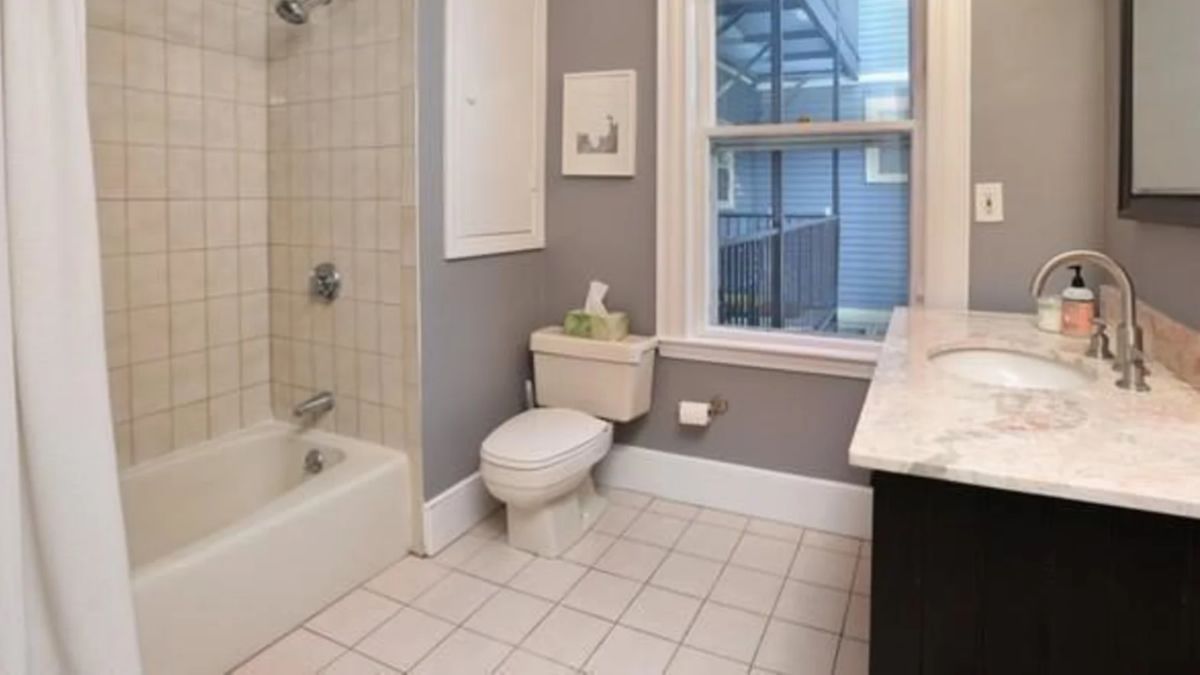
The issue lay with the grout rather than the tiles. Liz Ferguson, who writes the blog Hello From Liz, and her husband Grant rent a city apartment where the bathroom has remained unchanged since it became a rental in the 1980s. Ferguson appreciates the apartment’s size and layout. Her strategy was straightforward: she believed a major cleanup and hardware swap could transform the space by 90 percent.
How dark grout drags light tile down
Dark brown lines surrounding every tan tile create a grid pattern that the eye interprets as grime. The couple previously attempted to fix the grout but failed, making success this time crucial. Ferguson noted that completing this task was the primary reason the makeover felt successful. The formerly dull beige tiles suddenly acquired a new hue.
Grout color influences perception in both directions. On a wood-look porcelain floor, replacing white grout with a brown shade called Mocha allows the tiles to read as continuous wood planks rather than individual pieces.
Grout, paint and brass for under $500
- Dye the grout. Liz and Grant changed the grout from dark brown to a clean, bright white by following an online tutorial. The specific dye used is unnamed, so readers should check the label of their chosen colorant for prep and cure times before exposing the shower to water.
- Paint the dark wood. The dark brown vanity and medicine cabinet frame received a coat of General Finishes Milk Paint in Coastal Blue, a rich, deep blue shade.
- Swap the hardware. Drawer pulls, door hooks, the towel rack, the toilet paper holder, and the overhead light were all changed to brass. Ferguson described these hardware swaps as highly transformative. The $169 light fixture represented one of the two largest expenses.
- Tie the colors together. A $75 runner featuring pink and blue accents connects the pink countertop to the new blue tones and the lighter grout.
- Keep the rest. The toilet, tile, countertop, and appliances remained in place. The couple performed all labor themselves and kept the total cost under $500.
Ferguson stated that from a sustainability perspective, avoiding renovation is often the better choice. The result suits them well, as she enjoys entering the space and feeling that it reflects her personality. If grout dye is not a viable option for your rental, start with the hardware. It is the easiest change to reverse when moving out, and Ferguson found it made a significant difference.
What a renter should settle before touching the grout
Obtain written approval from your landlord first. Ferguson’s story does not specify whether she asked, and regulations vary by state. In Massachusetts, for instance, the attorney general’s guide indicates that landlords may retain security deposit funds to repair damage beyond normal wear and tear. This is not legal advice, so review your lease and state rules.
Dye alters color but not condition. If the grout is cracked, crumbling, or hiding mold, it requires repair or regrouting. A stubborn leak behind the tile is a job for a plumber.
Allow time for paint and dye to set. Open a window or run the fan while working, and keep the bathroom dry for the duration specified on the product label. Changing the lines rather than the tile transforms the entire room. That is the key.
Source: Homedit.





































Did you actually test the dye on a hidden tile first? I’ve heard these stains often just sit on the surface and wash away in a month. What brand did you use, and will it hold up in a humid rental bathroom without peeling?
Yes, I tested it in the shower corner first! I used Dyeing Grout. It has held up perfectly in our humid bathroom for months without peeling. The key is thorough cleaning before application. It’s definitely more durable than a simple surface stain.