
A backsplash often looks outdated due to aging tiles, even if the tiles themselves are undamaged. The standard replacement method involves stripping the old surface, handling the adhesive, and installing fresh materials. You can, however, transform the wall's look without removing any tiles by simply changing the grout.
One homeowner tested this approach on her white backsplash. Instagram creator @k.pimenava shared the project, which involved mixing blue pigment into white cement grout. This mixture replaced the old gray joints with bright blue lines. The original tiles remained in place while she scraped, mixed, applied, and cleaned the new material.
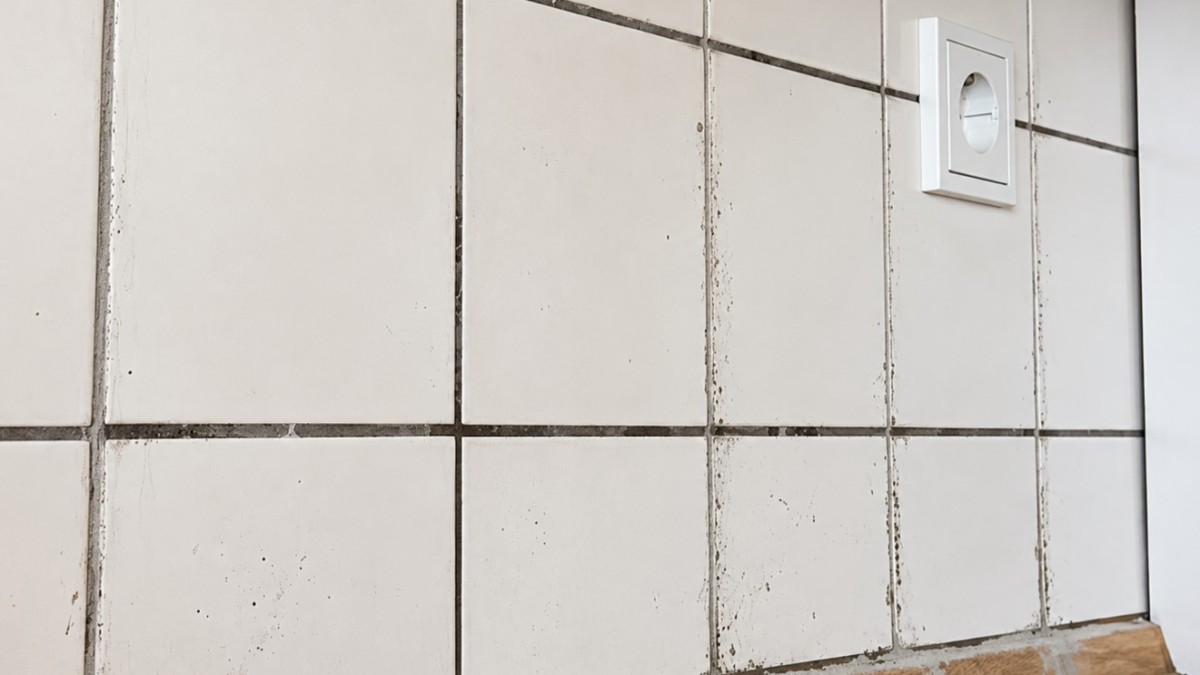
Old White Tiles Had Gray Grout Between Every Square
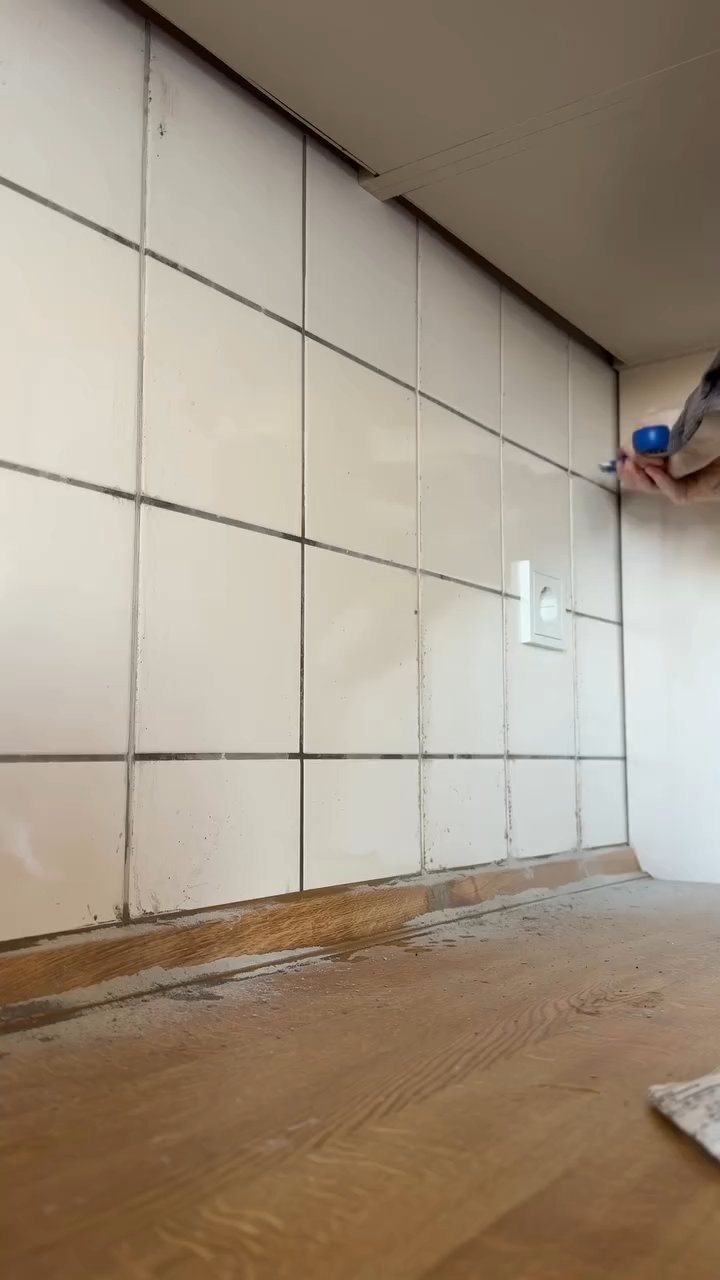
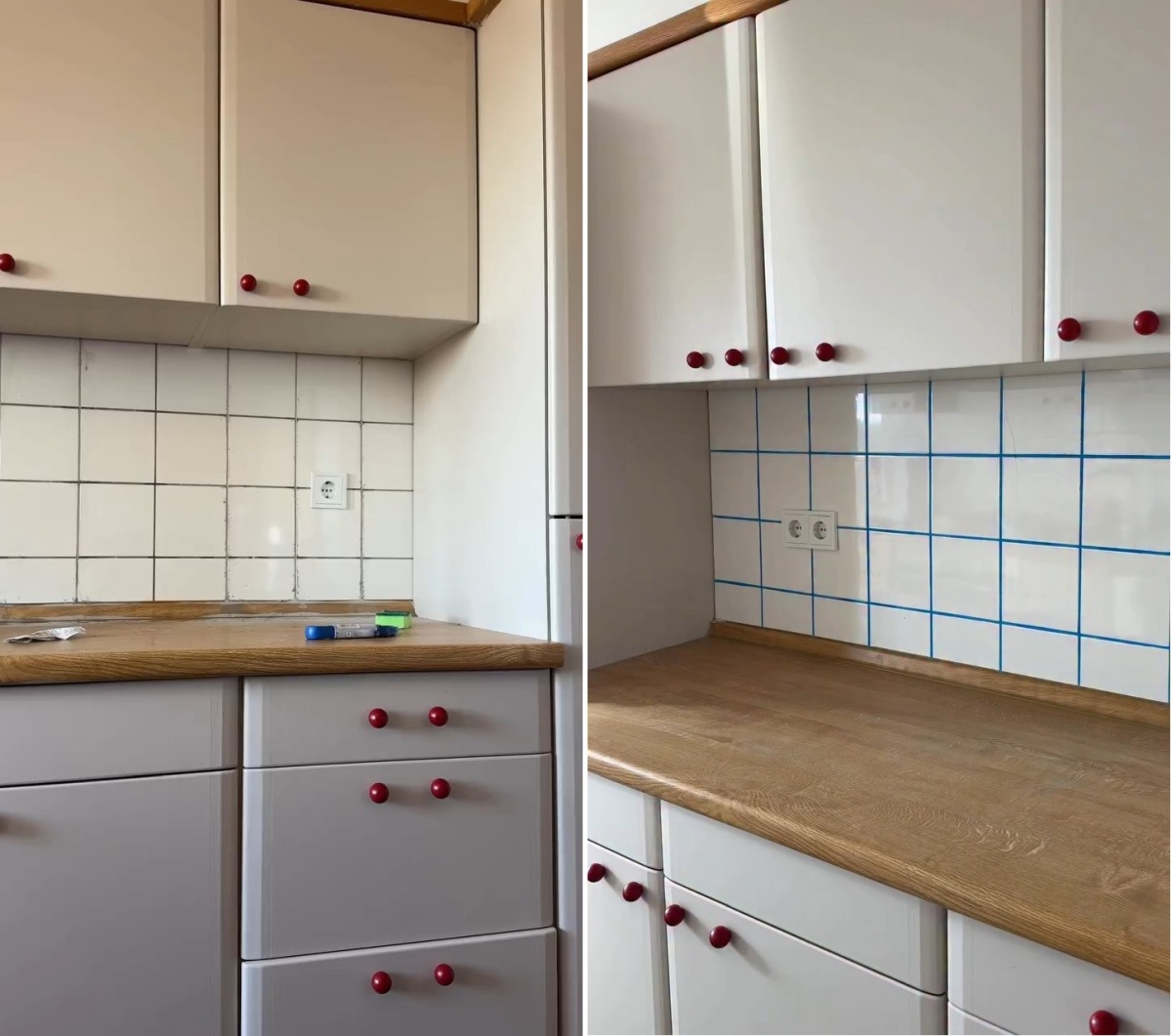
The backsplash beneath the upper cabinets was covered in white square tiles. These tiles stretched from the wood countertop up to the cabinetry's underside. A grid of gray grout spanned the wall, and dark residue was visible along several joints and near the countertop trim.
The work area was framed by white cabinet doors with red round knobs. Rather than altering these finishes or tearing out the backsplash, she targeted the narrow lines between the tiles.
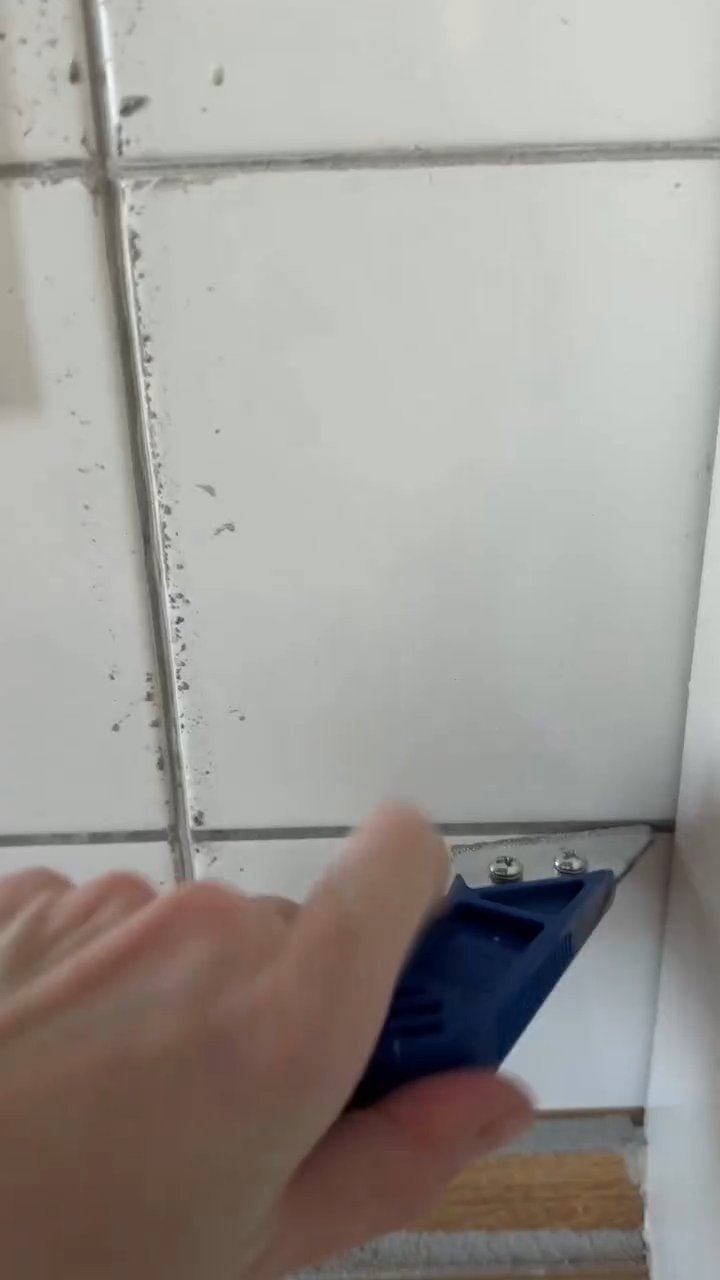
She Scraped Along the Existing Grout Lines
She used a small scraping tool to clean the joints before applying anything new. The blade traced the tile edges, reaching into narrow spaces where old grout and residue had gathered.
This preparation allowed the new material to settle into the joints instead of coating the tile faces.
White Cement Grout and Blue Pigment Created the New Color
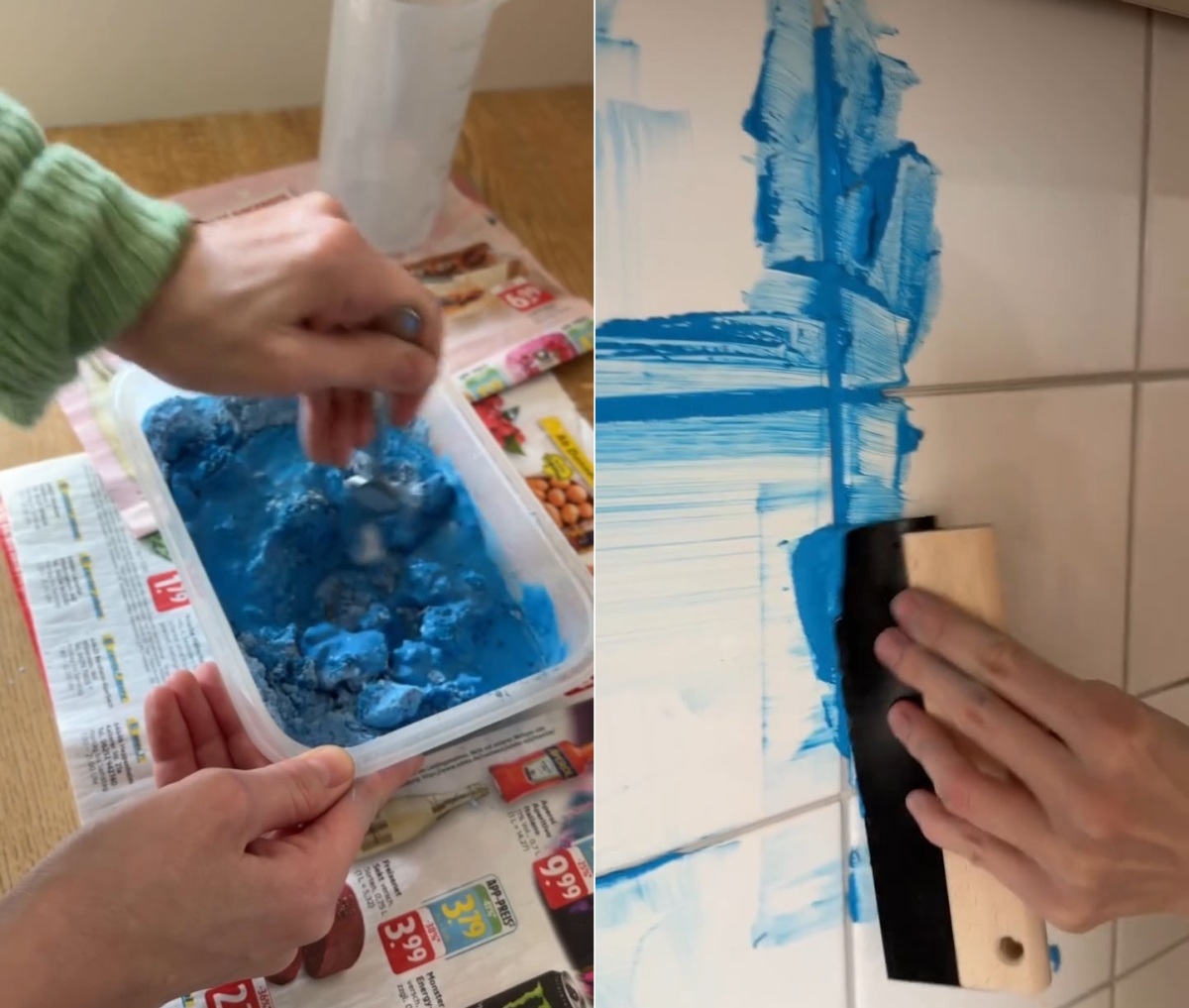
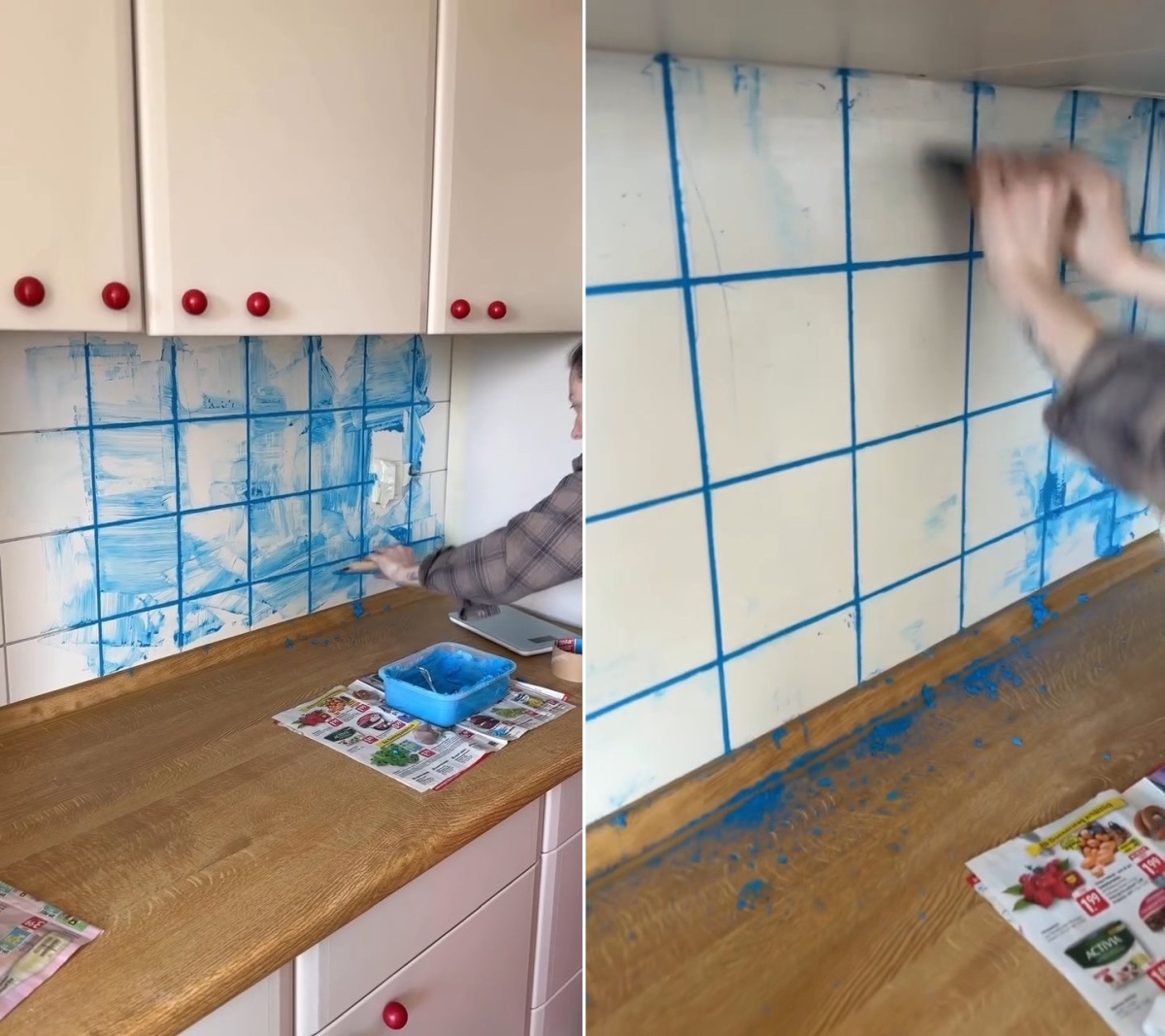
Inside a plastic container, she stirred blue pigment into white cement grout. She continued stirring until the blend formed a thick blue paste.
She pressed this mixture into the joints using a grout float. Dragging the tool across the tiles spread the blue grout beyond the lines, covering parts of the white squares as she worked.
Blue Grout Spread Across the Backsplash
Beneath the upper cabinets, she filled both horizontal and vertical joints. The blue mixture covered areas around electrical outlets and extended to the bottom row above the wood countertop.
The blue grid started to emerge against the white tiles as she scraped away excess material with the float.
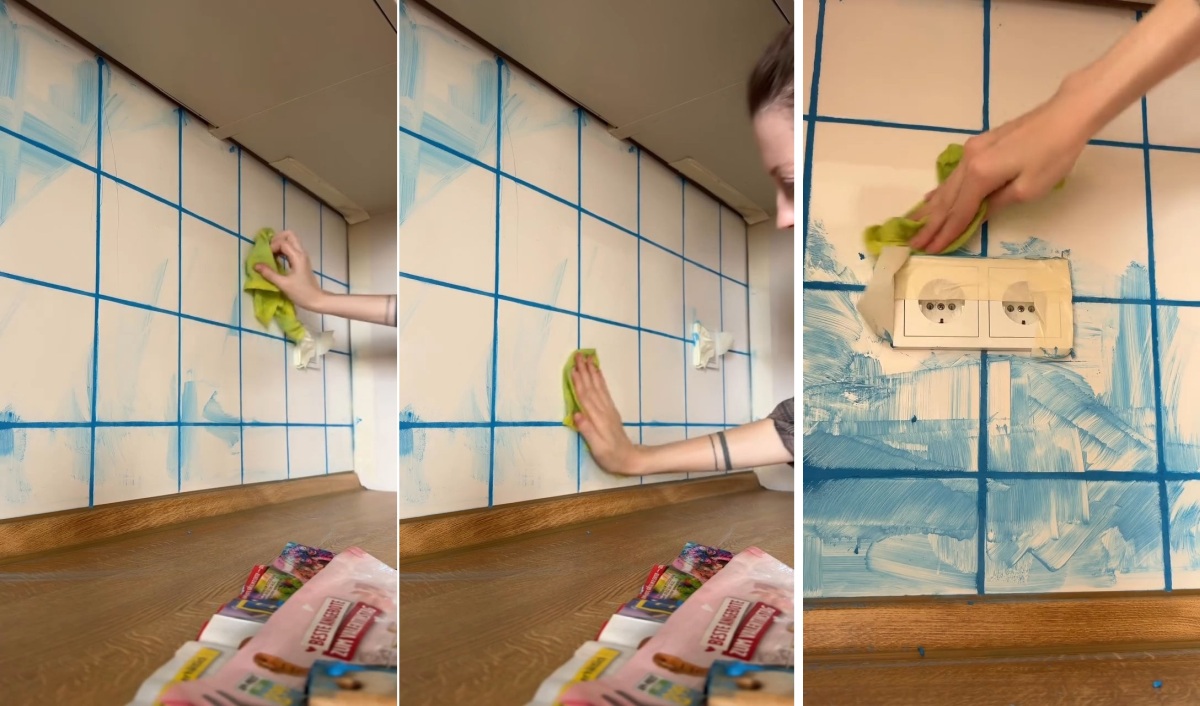
Wiping the Tiles Exposed the Blue Lines
She used a damp cloth to wipe away blue residue from the ceramic surfaces. By clearing streaks from individual tiles, she left the colored grout intact within the joints.
Additional cleaning was necessary around electrical outlets and along the wood trim, where the mixture had spread onto adjacent surfaces.
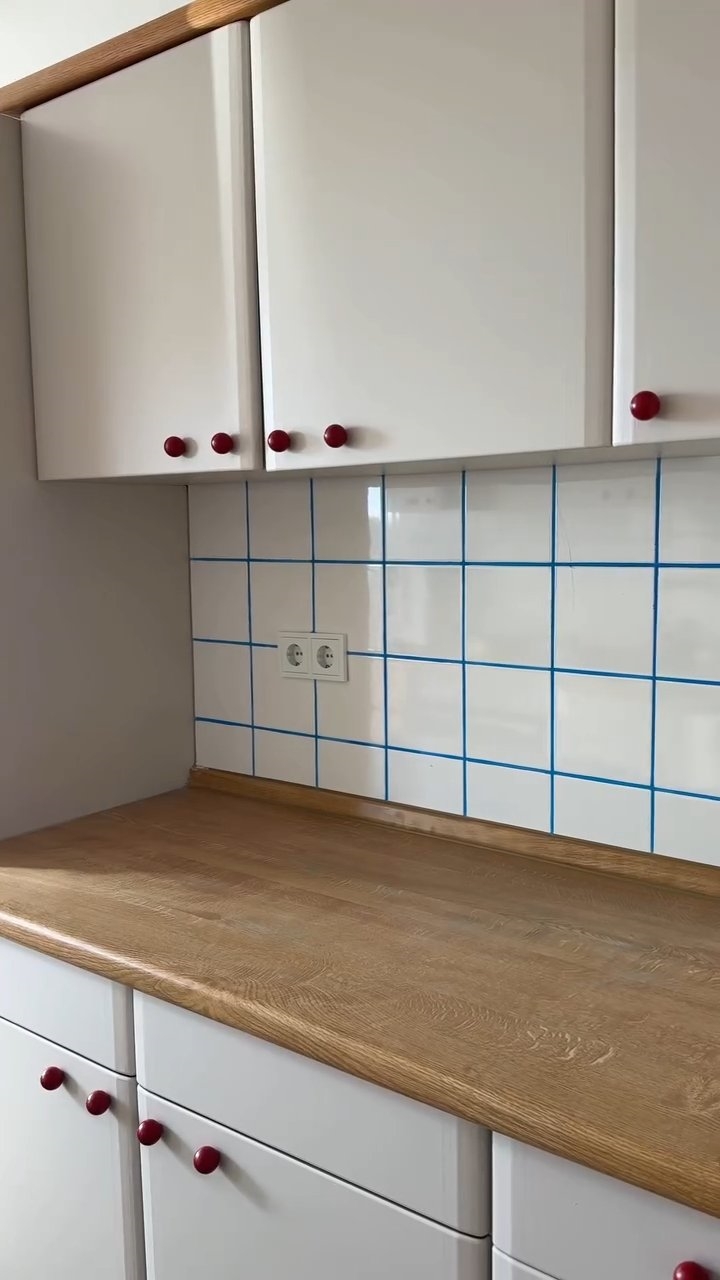
Same White Tiles, Bright Blue Grout
The finished joints form a blue grid under the white upper cabinets. The original tile layout is unchanged, with horizontal and vertical lines running across the backsplash above the wood countertop.
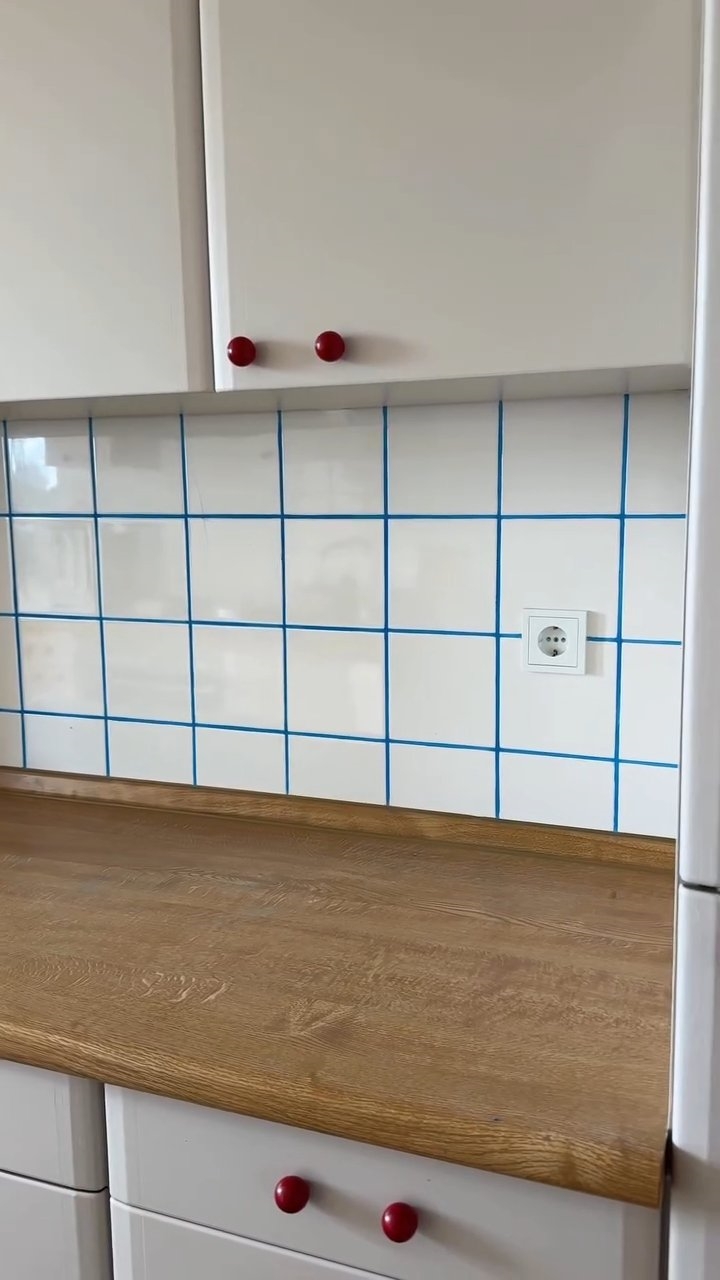
From the other end, the blue grout extends along the wall next to the tall cabinet. The red knobs on the surrounding doors offer a strong color contrast against the white cabinetry.
Before and After Shows What Changed
Side-by-side images display the backsplash before and after the blue grout application. The finished section no longer shows gray lines or dark marks; instead, a blue grid covers the same white squares.
The homeowner intends to treat the remaining side of the kitchen. This project illustrates that changing grout color can update a backsplash without tile removal, provided the joints are sound and have enough space for the new grout to bond for a lasting result.
Would you choose bright blue or black grout for white kitchen tiles, or keep the original gray?
Image credits go to @k.pimenava
The post Instead of Replacing Her Old Kitchen Tiles, She Turned the Gray Grout Bright Blue appeared first on Homedit.













































This is such a clever hack! I’m curious how the blue pigment holds up against kitchen grease and heat over time. Does it require sealing, or is the new grout durable enough on its own?
Great question! The dye itself isn’t waterproof, so applying a grout sealer is essential for kitchen durability. This creates a protective barrier against grease and heat, ensuring the blue color stays vibrant and the grout remains stain-resistant over time.