
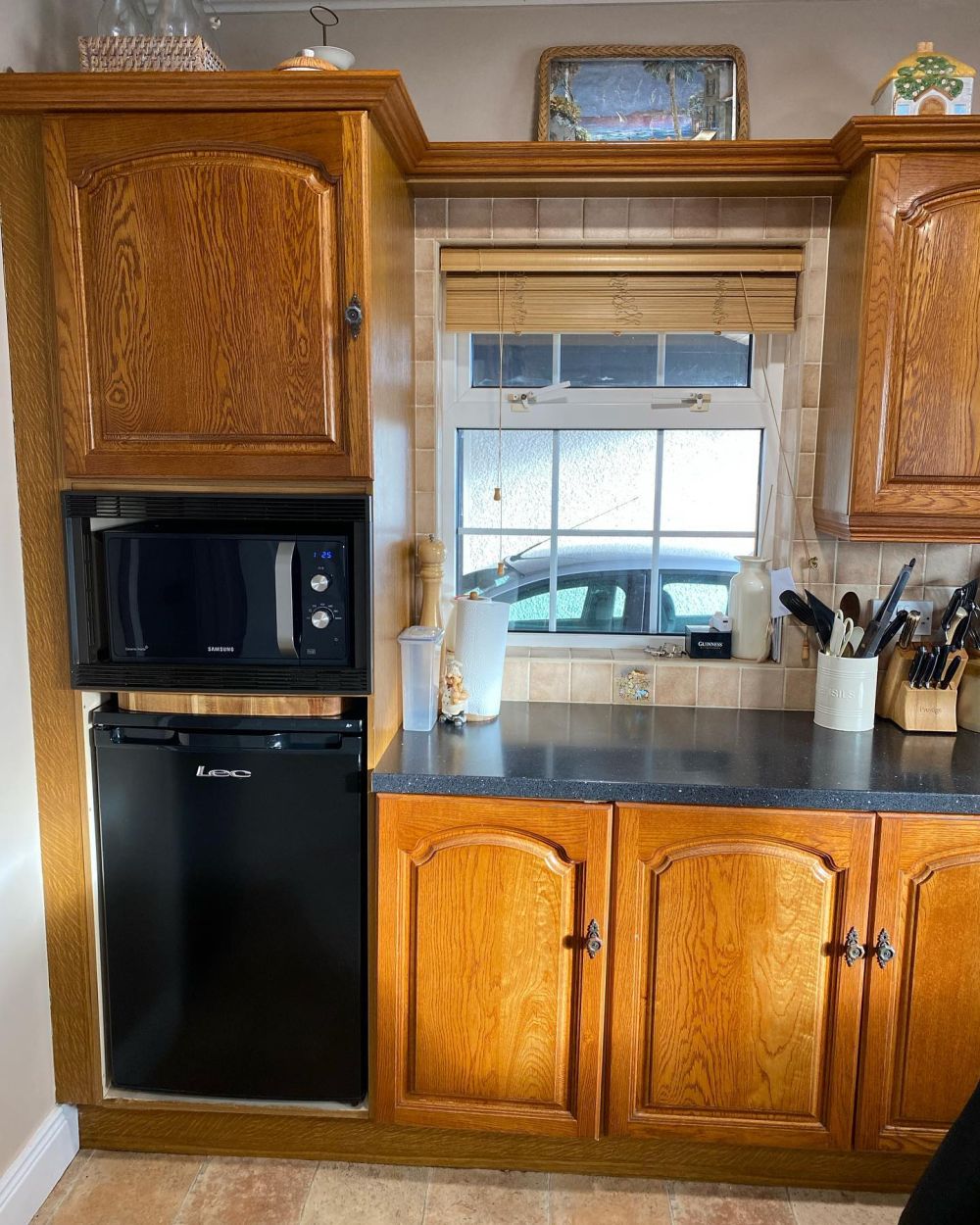
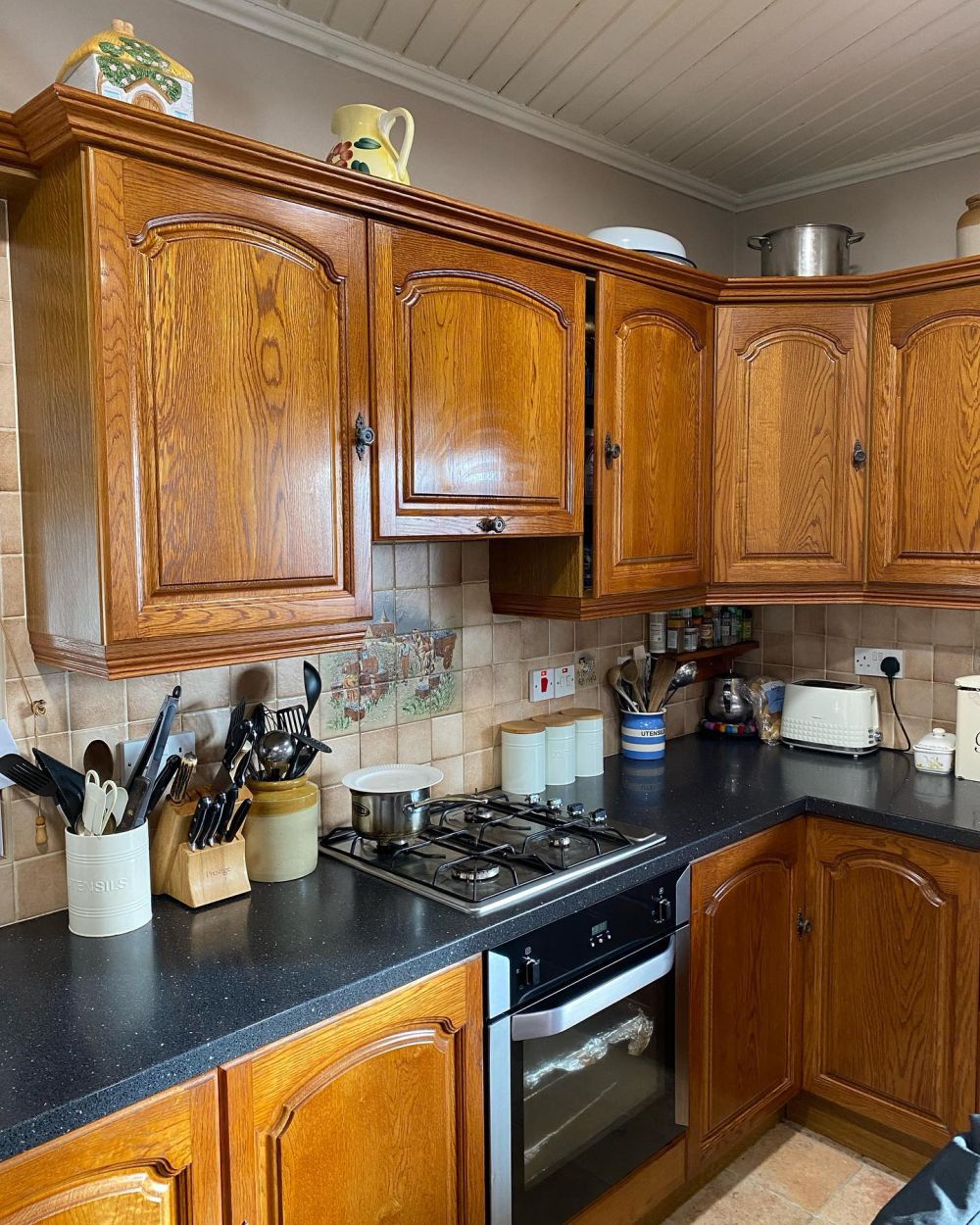
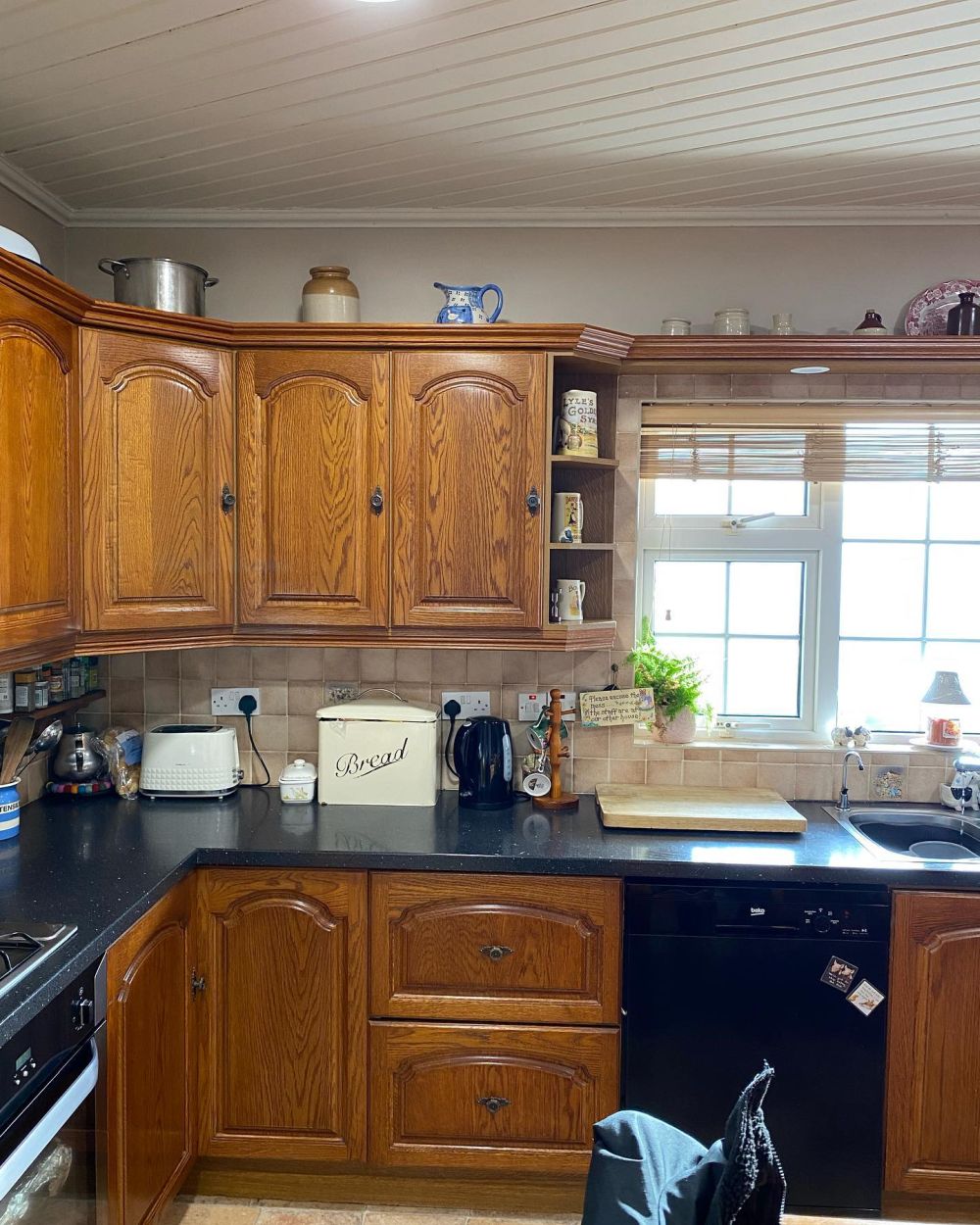
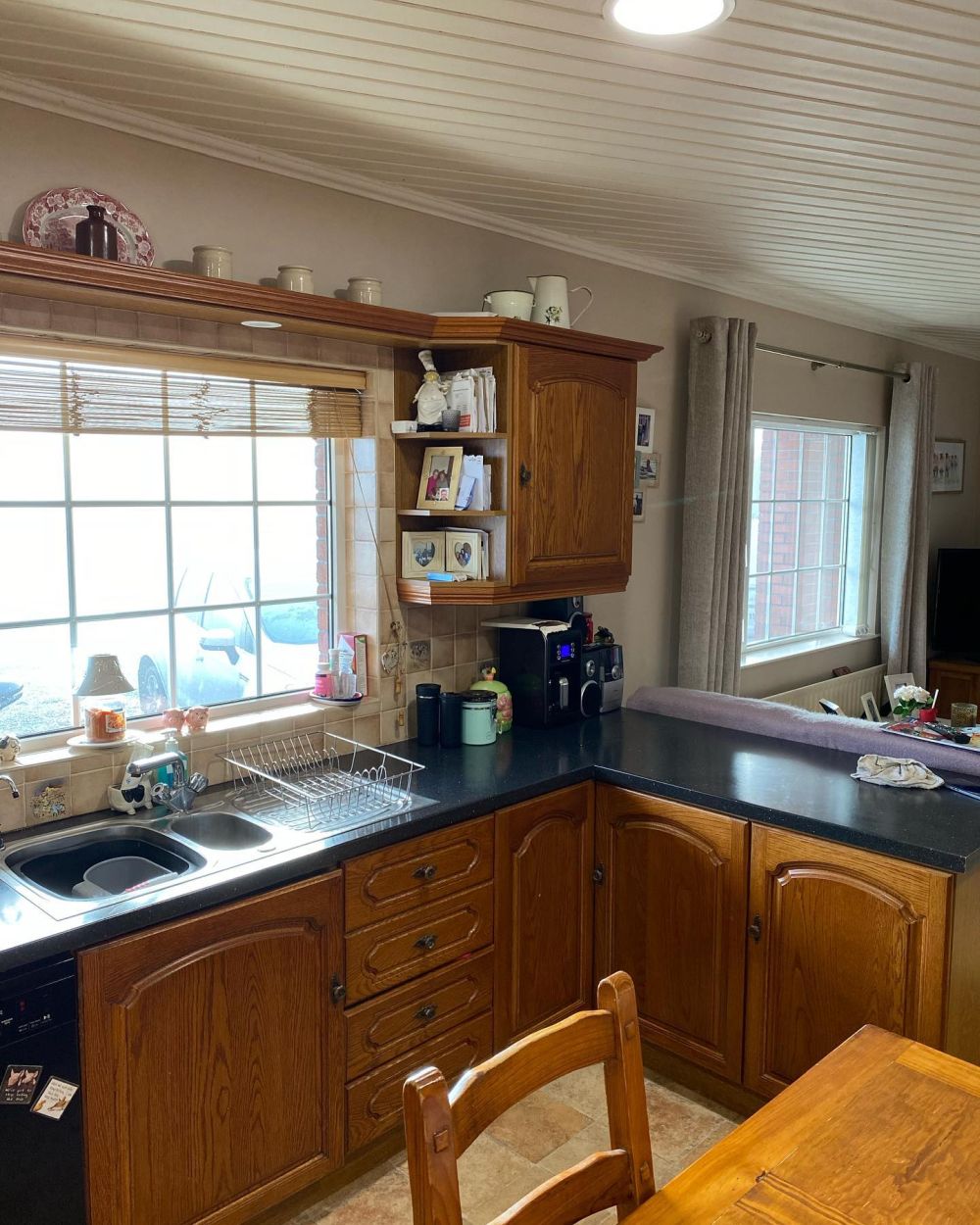
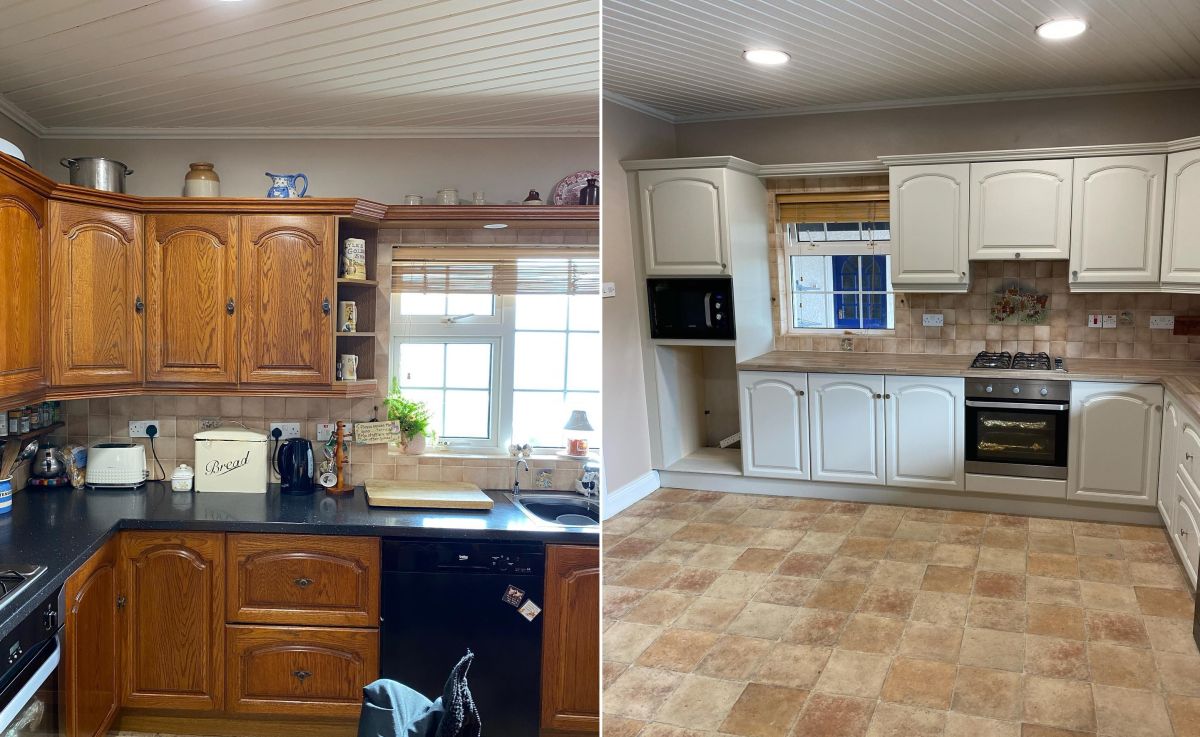
Orange oak cabinetry spanned the entire kitchen, from the cooking zone to the sink and peninsula. These units featured raised-panel doors, dark decorative handles, and black worktops. Beige square tiles clad both the backsplash and floor, while the wooden cabinetry wrapped around windows and into corners.
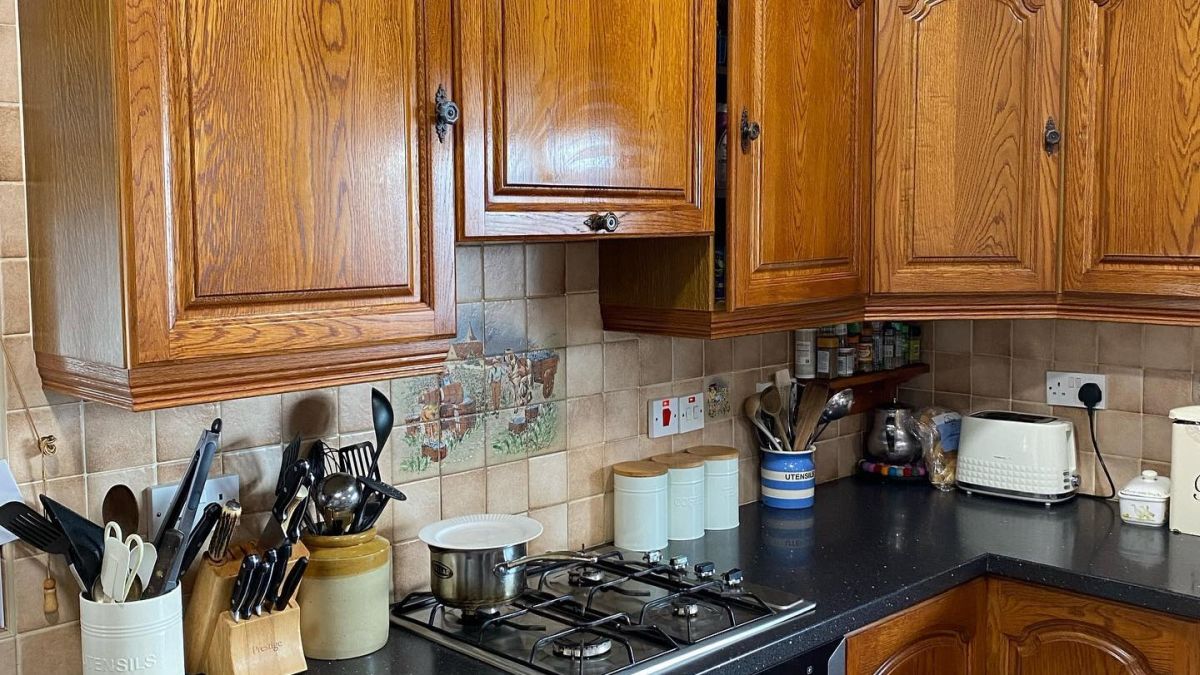
A tall oak unit contained a black microwave positioned above a compact refrigerator, with additional raised-panel cupboards situated beneath the window. Dark worktops extended below the beige tiled window recess, and the decorative handles complemented the traditional style of the cabinet doors. The cooking wall featured oak cabinets above and below the black surfaces, incorporating a built-in gas hob and an oven underneath. Matching doors continued around the corner, minimizing the open wall space between the upper cabinets and the tiled backsplash.
On the sink side, more oak storage was available, including a narrow open shelf next to the window. Decorative picture tiles broke up the square beige backsplash, while the black dishwasher coordinated with the dark worktops. Cabinets extended beneath the sink and around the short peninsula facing the adjacent room. The floor consisted of beige, tan, and brown tiles that aligned more closely with the backsplash than the orange cabinet finish.
Beige Tiles and Black Worktops Surrounded the Oak
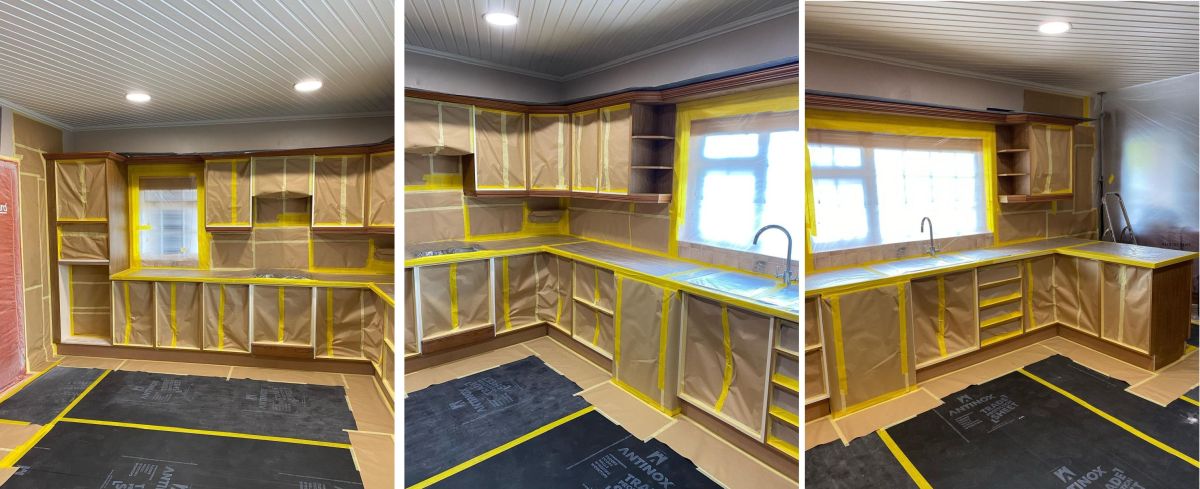
The preparation phase involved fitting masking paper across cabinet openings, with yellow tape safeguarding edges and surrounding surfaces. The floor, worktops, and windows were also covered prior to spraying. Existing cabinet boxes remained in place, allowing the frames and detached fronts to be painted. This method enabled the new finish to cover the original oak without requiring replacement of the raised-panel doors.
Portland Stone Replaced the Orange Oak Finish
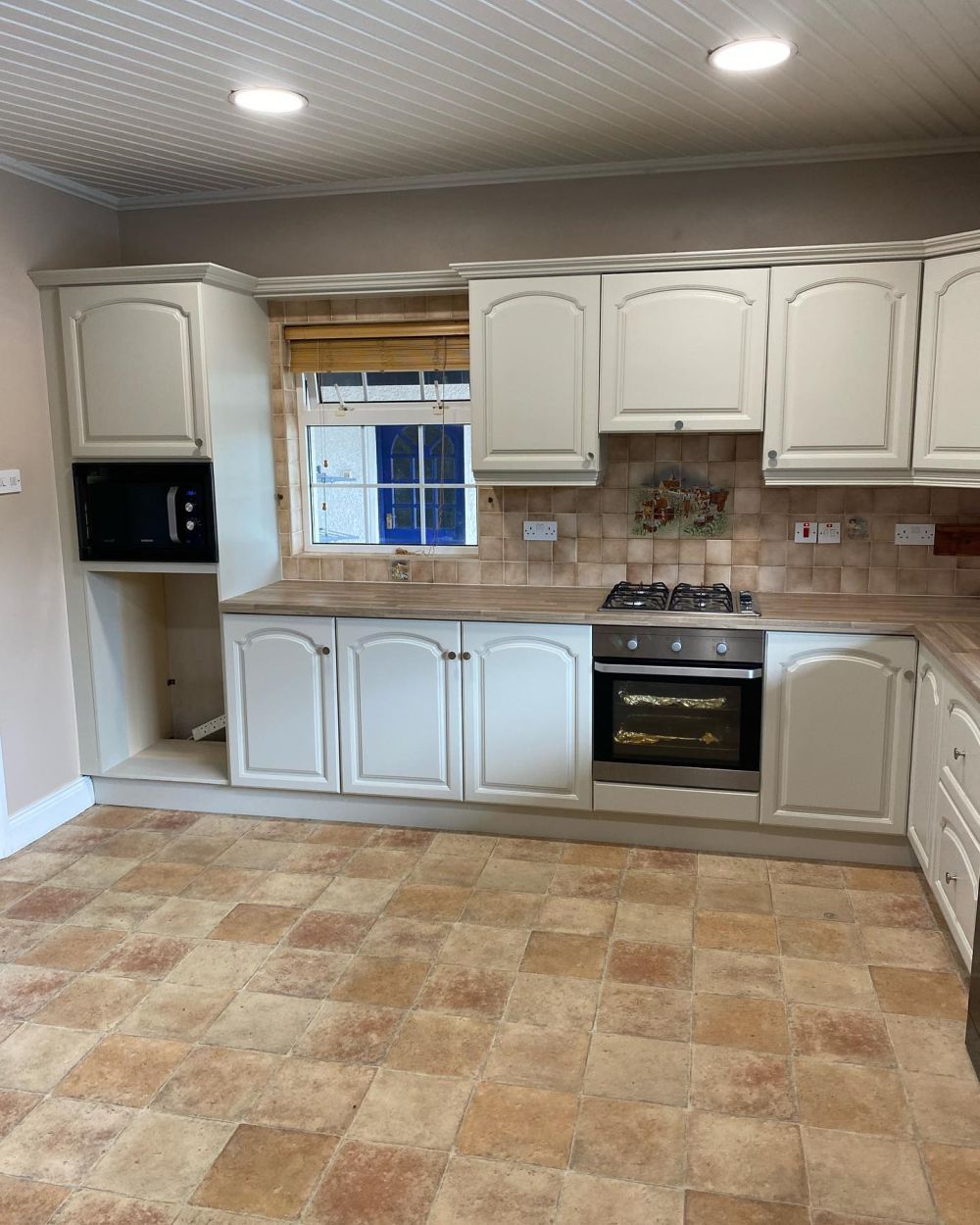
Cabinet doors received a pale stone finish matched to Portland Stone. While the curved raised panels remained, the orange grain became invisible beneath the paint. Small round knobs substituted for the dark decorative handles. Black worktops were swapped for a light wood-look finish, altering the contrast between the cabinet doors and counters.
This new color scheme extended across the cooking wall, covering upper cabinets, base units, and corner doors. The original gas hob, oven, and beige tiled backsplash stayed in their original positions. Decorative picture tiles above the cooking area were retained, with their brown and cream tones positioned between the painted cupboards and new worktops.
The Original Beige Tiles Stayed With the New Cabinets
The kitchen retained its beige tiled floor, preserving the different shades and square pattern visible before the respray. The tile backsplash also remained, avoiding further changes to the walls behind the counters. The painted cabinets now sit closer in color to these surfaces, while the light worktops replace the dark band that previously ran across the room.
Before and After Shows What Changed
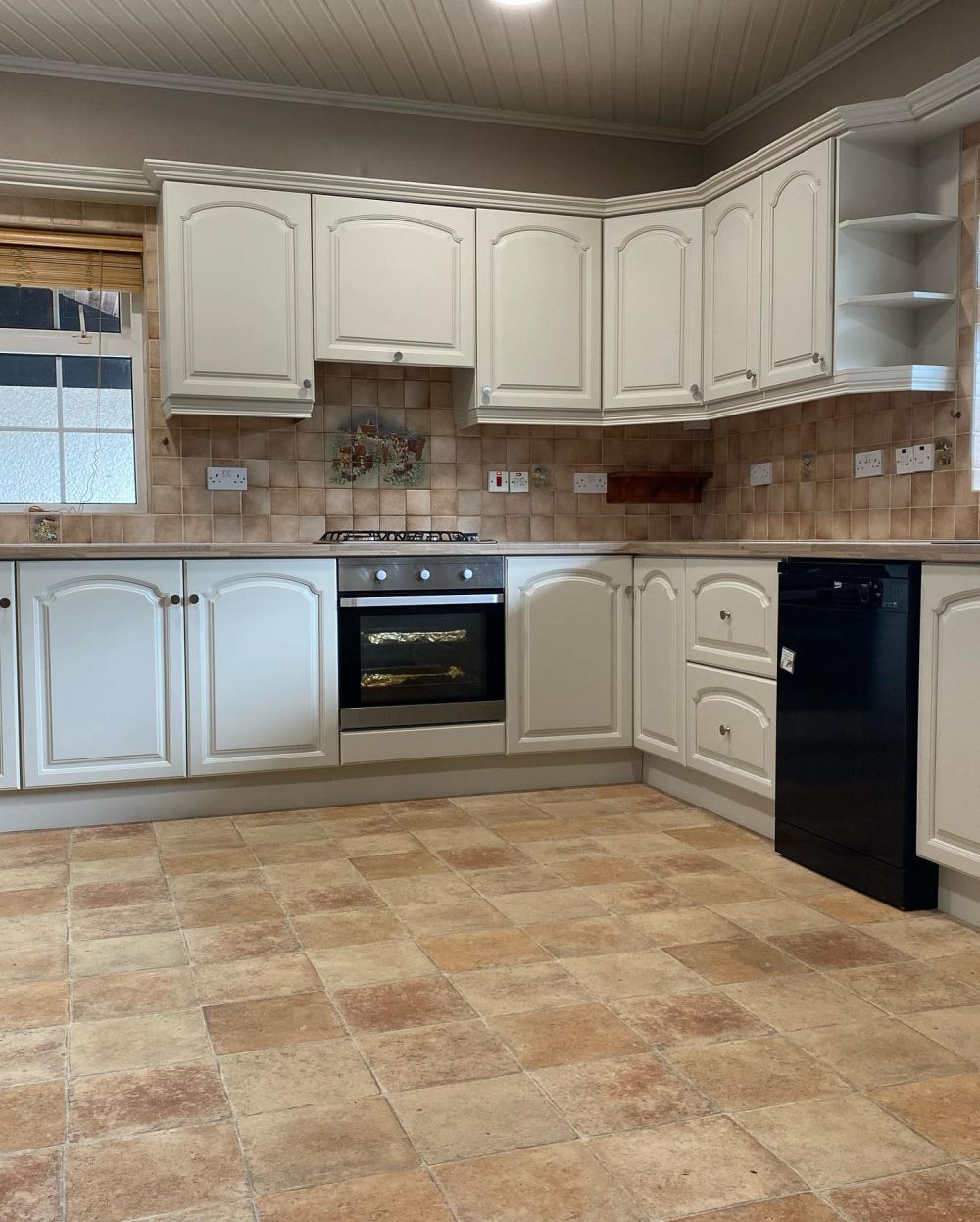
To maximize visual transformation without a full replacement, the renovation focused on modifying the surfaces that most significantly influenced the room’s aesthetic. The raised-panel cabinets, previously characterized by orange oak doors, black worktops, and dark decorative handles, now boast a Portland Stone finish paired with round knobs. While the beige backsplash, tiled flooring, gas hob, oven, windows, and layout remain consistent with the original design, the countertops have been changed to a light wood-look material.
Featured on Homedit, a kitchen makeover involved spraying Farrow & Ball Skimming Stone paint onto golden oak cabinets, while the original dark countertops and backsplash tiles were left untouched.
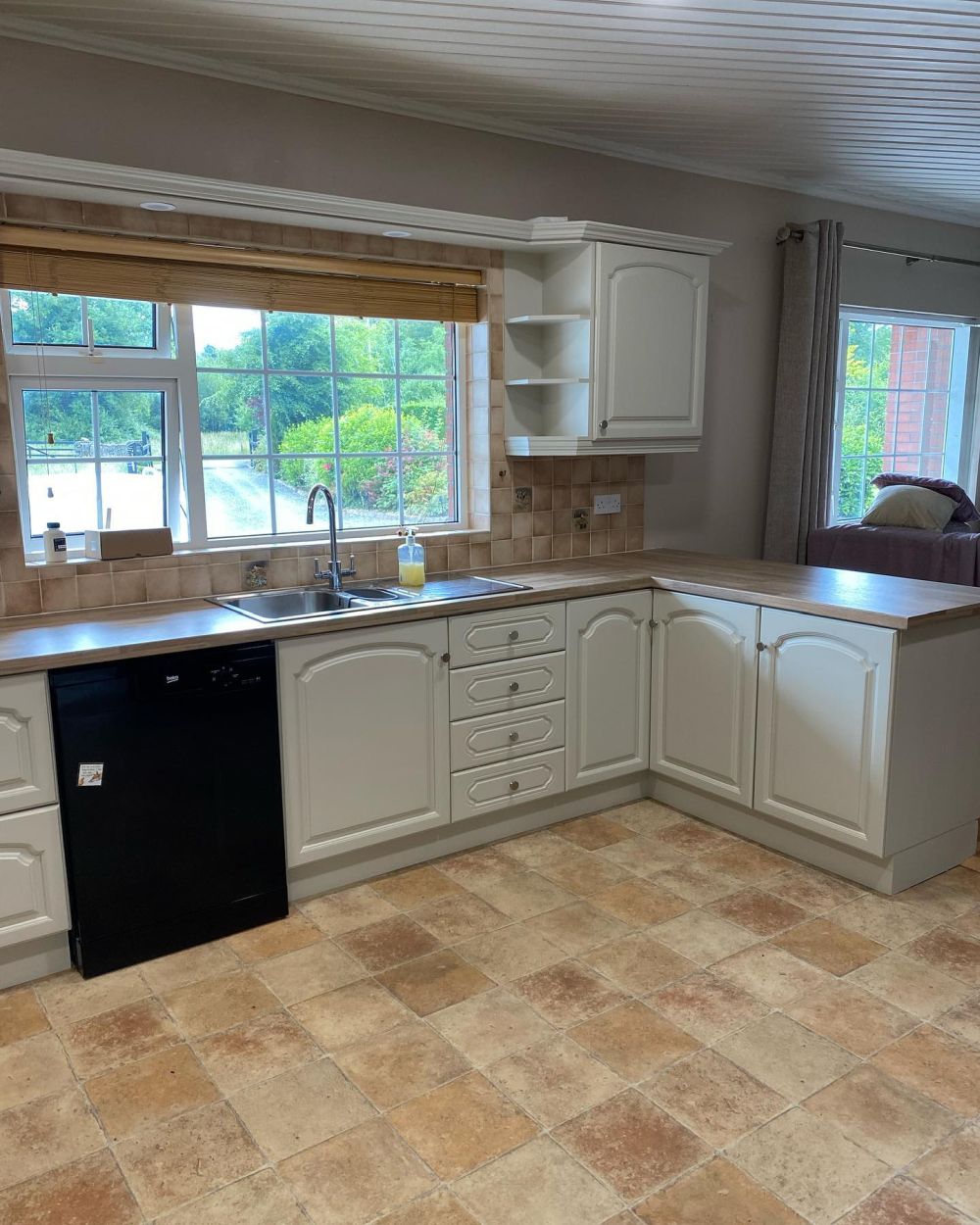
While the layout remained largely unchanged—with the peninsula, appliance locations, corner shelves, and raised-panel doors all staying put—the room’s look was altered by the new cabinet finish. This update, which included the preparation and completed cabinets, was highlighted by @mariusz_plesner in a post detailing the kitchen transformation.
All project and photo credits go to Instagram creator @mariusz_plesner.
Source: Homedit.










This orange oak looks so bold! How did you choose the Portland Stone shade? I’m curious if the spray paint holds up well against kitchen heat near the hob.
Thanks! I chose Portland Stone to soften the bold orange oak, creating a warm, balanced contrast. The spray paint handles kitchen heat surprisingly well, though I always recommend avoiding direct contact with the hot hob to ensure long-lasting durability.