
The traditional headboard no longer stops at the mattress edges. Modern designs stretch out to cover the space behind nightstands. This approach merges the bed, two side tables, and the wall into a single, unified element, replacing the older layout of separate pieces against an empty wall.
Designers vary the execution of this trend. Some install continuous upholstered panels that span the entire width of the bed. Others integrate wooden elements, built-in shelving, and lighting fixtures. Other variations wrap around the mattress sides or cover large portions of the rear wall.
The true impact of these designs is visible when you look past the pillows. Seven specific bedrooms demonstrate how extending the headboard transforms the entire wall area. These installations achieve a new aesthetic without requiring a new bed or a complete room rearrangement.
Navy Upholstery Extends Into Gray Wood Panels and Floating Nightstands
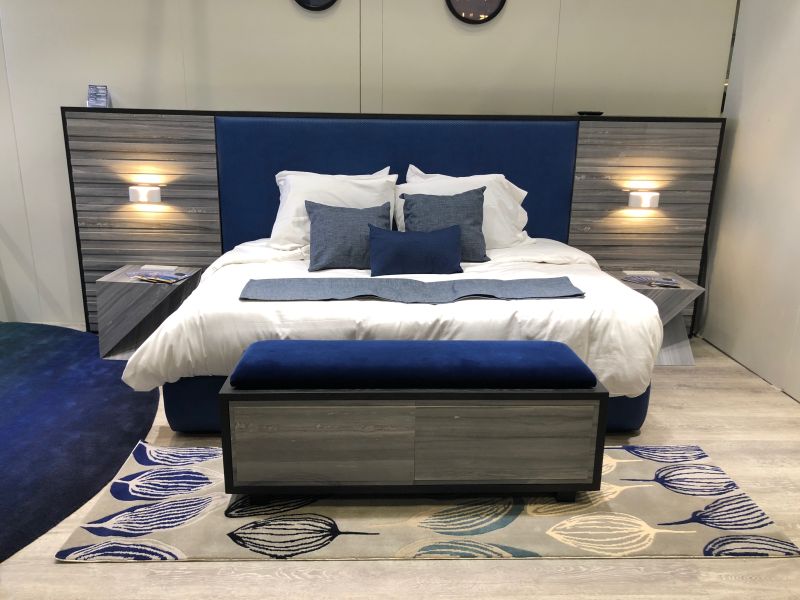
An oversized headboard features deep navy upholstery in its center. Horizontal gray wood panels extend outward on both sides of the mattress. Wall-mounted lights are embedded within these wooden sections, positioned directly above floating nightstands that share the same finish.
This layout removes the usual gaps between the bed and bedside furniture. A storage bench at the foot of the bed mirrors the gray wood and navy upholstery. This repetition visually connects the head and foot of the sleeping area.
Upholstered Center Panels Meet Dark Wood Behind the Nightstands
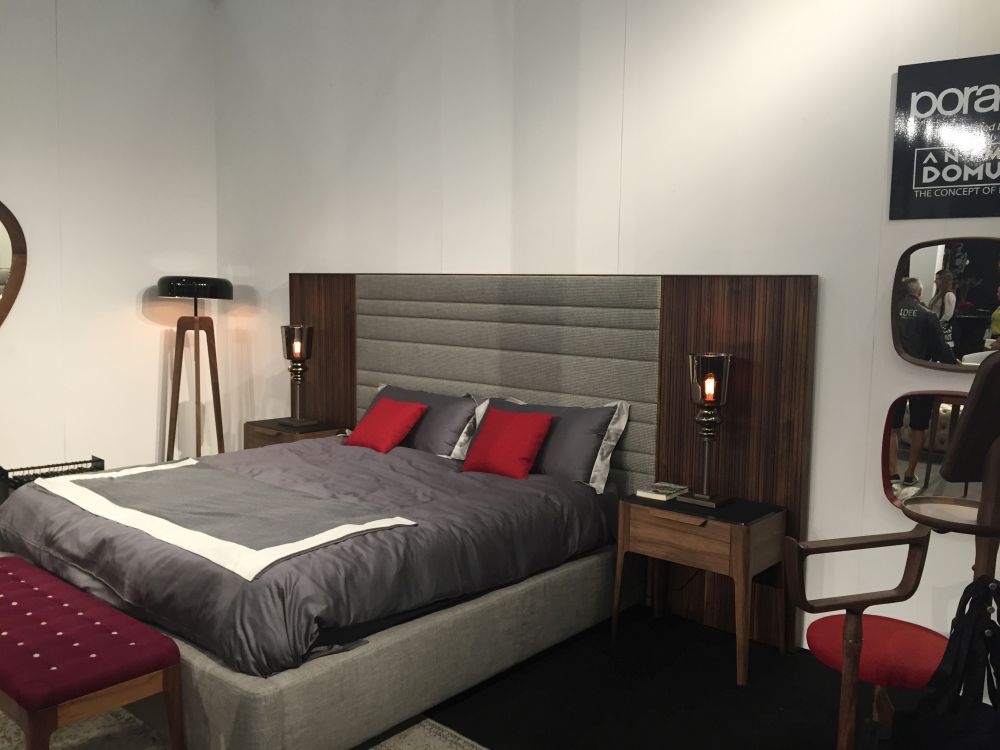
Horizontal gray upholstered channels rise behind the pillows. Tall, dark wood panels frame these channels and stretch behind the nightstands. The wood displays a fine vertical grain, which contrasts sharply with the broad horizontal lines of the padded center section.
Matching bedside lamps are placed in front of the wood sections. This placement keeps the bed wall visually connected without incorporating the nightstands into the headboard frame. Gray bedding and two small red pillows complete the visual arrangement.
Different Fabric Panels Turn the Headboard Into a Wall Feature
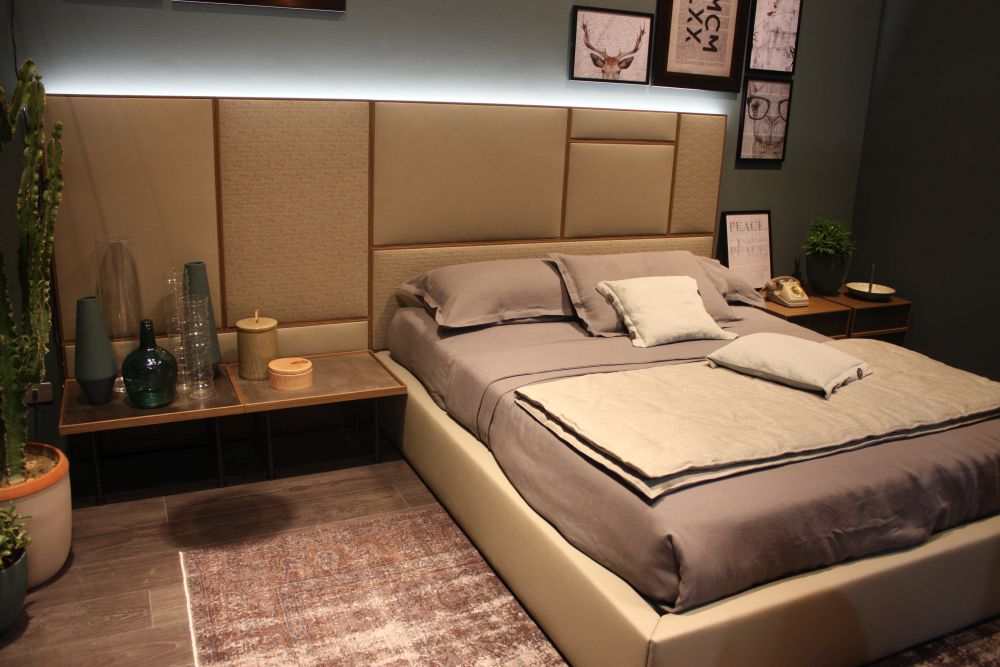
An uneven grid of beige and tan upholstered rectangles sits behind the bed. Some of these panels feature a woven texture, while others have a smooth finish. Thin brown borders separate each section, creating the look of custom upholstered wall paneling.
This design extends beyond the mattress and rises above the bedside furniture. An LED strip runs along the upper edge, directing light toward the wall above rather than illuminating the pillows directly.
Geometric Wood Replaces the Usual Padded Headboard
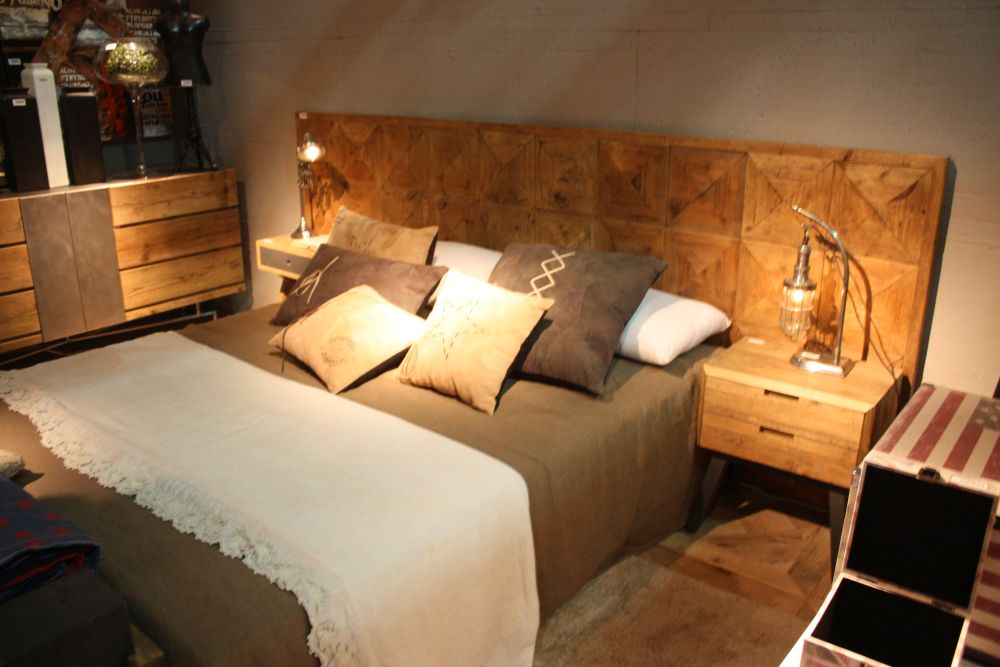
Wood panels with triangular grain patterns stretch continuously from one bedside area to the other. This creates a solid surface behind the bed. Varying the direction of the wood grain generates a geometric pattern without the need for paint or fabric.
Small metal reading lamps are positioned near each end of the panel. The bedside tables remain as separate pieces of furniture. This design complements existing wood furniture in the bedroom, as demonstrated by the matching drawer unit placed beside the bed.
Upholstered Side Panels Wrap Around the Bed
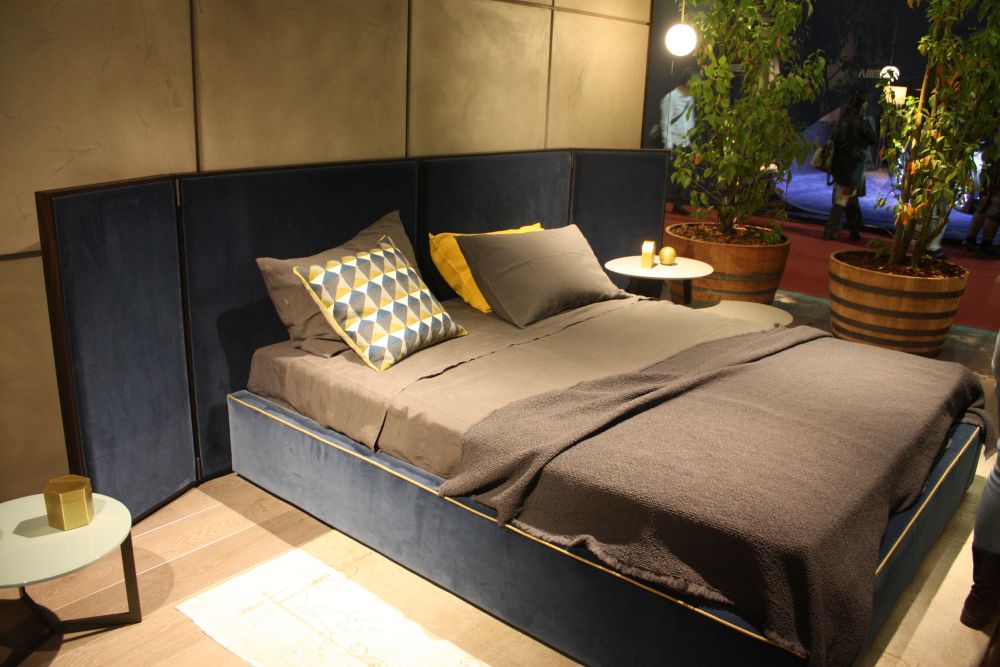
Not all oversized headboards follow a straight line along the wall. Dark blue upholstered panels extend past the mattress and turn inward on both sides. This creates short wings that wrap around the head of the bed.
These side sections create a visual border between the bed and the rest of the room. Thin gold piping along the upholstered base adds a contrasting detail. Gray bedding and geometric pillows help keep the blue panels as the focal point.
Built-In Shelves Take the Place of a Separate Nightstand
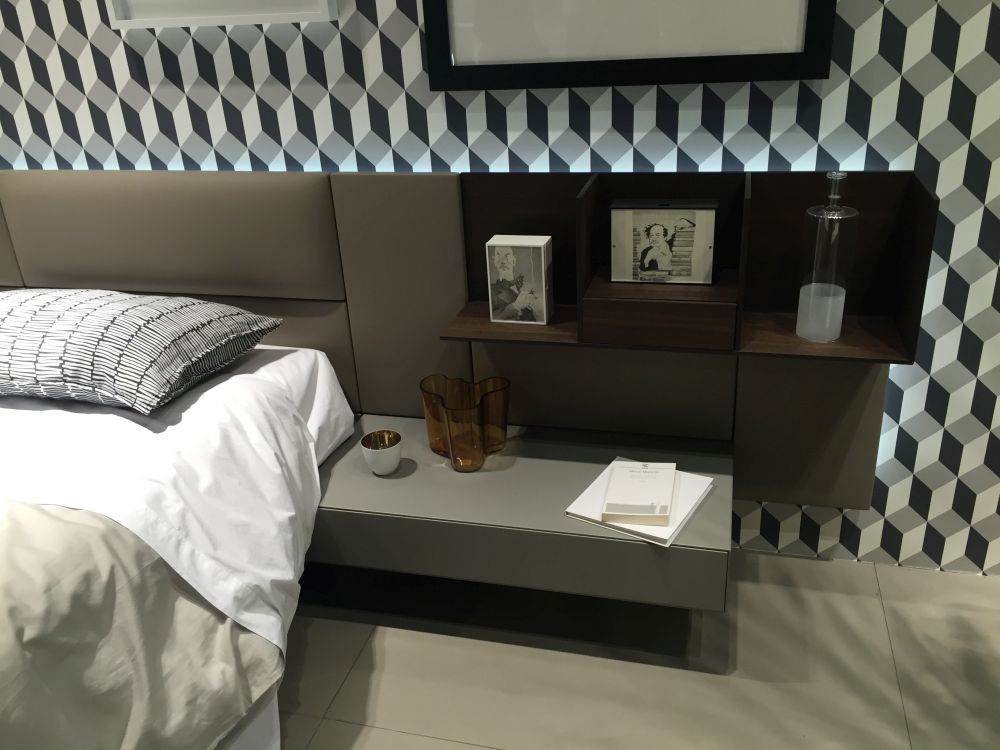
In this design, the upholstered headboard connects directly to a dark wood shelving unit on one side. Open compartments display framed photographs and decorative objects. A wide gray drawer below provides closed storage.
Black, white, and gray geometric wallpaper covers the wall behind this installation. Without the extended upholstered and storage sections, the bed would be set against a busy background. The padded panels create a plain surface next to the pillows, simplifying the visual field.
Extended Padded Panels Frame a Bed Against Dark Walls
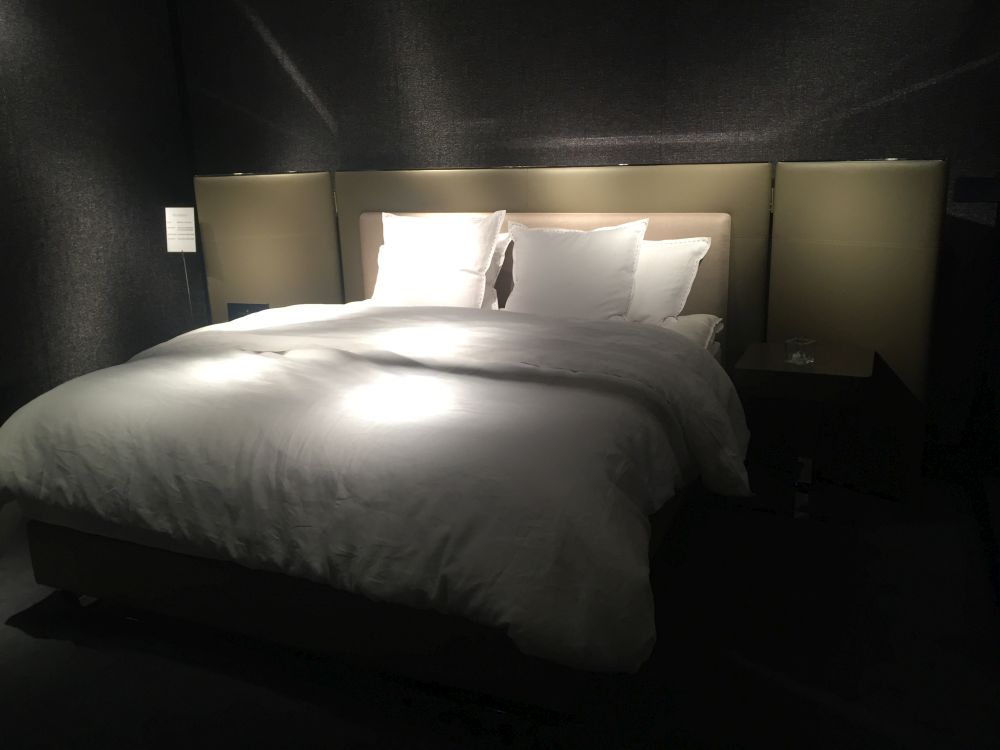
Three tall upholstered sections stretch across the wall behind the bed. A lower padded center section is positioned where the pillows rest. The side panels rise higher than the central section and continue toward the nightstands.
Olive-gray upholstery contrasts against near-black walls, while white bedding provides the primary contrast. Unlike designs with wood or shelving, this approach keeps the wall free of extra storage and decorative items. It relies on varying panel heights to frame the bed.
What to Consider Before Choosing an Extra-Wide Headboard
Extending a headboard behind nightstands is feasible in residential bedrooms, but precise dimensions are crucial. You must measure the combined width of the bed and bedside furniture. Ensure there is sufficient space for drawers, doors, and easy access around the mattress.
Wall-mounted lighting, outlets, and switches must also be accounted for before installing upholstered panels or a full-width wood structure. Thick panels might cover existing sockets or interfere with the placement of bedside lamps.
The most significant change is not the height or the fabric choice, but the endpoint of the headboard. Once the design extends behind the nightstands, the bed and surrounding furniture are perceived as a single, connected installation.
Would you extend your headboard across the entire bed wall, or keep the nightstands separate?
The post Goodbye to Traditional Headboards: The New Bedroom Trend Extends Behind the Nightstands appeared first on Homedit.



















Extending headboards behind nightstands sounds like a clever way to unify the space. But does this trend actually improve functionality, or is it purely aesthetic? I need more data on durability and maintenance before I buy in.
Great question! While visually cohesive, extended headboards can trap dust and complicate vacuuming. Durability depends on material; solid wood holds up best. For maintenance, choose easy-to-clean fabrics and ensure proper airflow behind the unit. It’s a style-first trend, so prioritize practical materials if daily cleaning is a priority.