
A compact space that was intended to be cozy ended up resembling a cave. Every wall featured faux wood paneling, while worn green carpet covered the floor beneath piles of books and stacks of paper that had nowhere to rest.
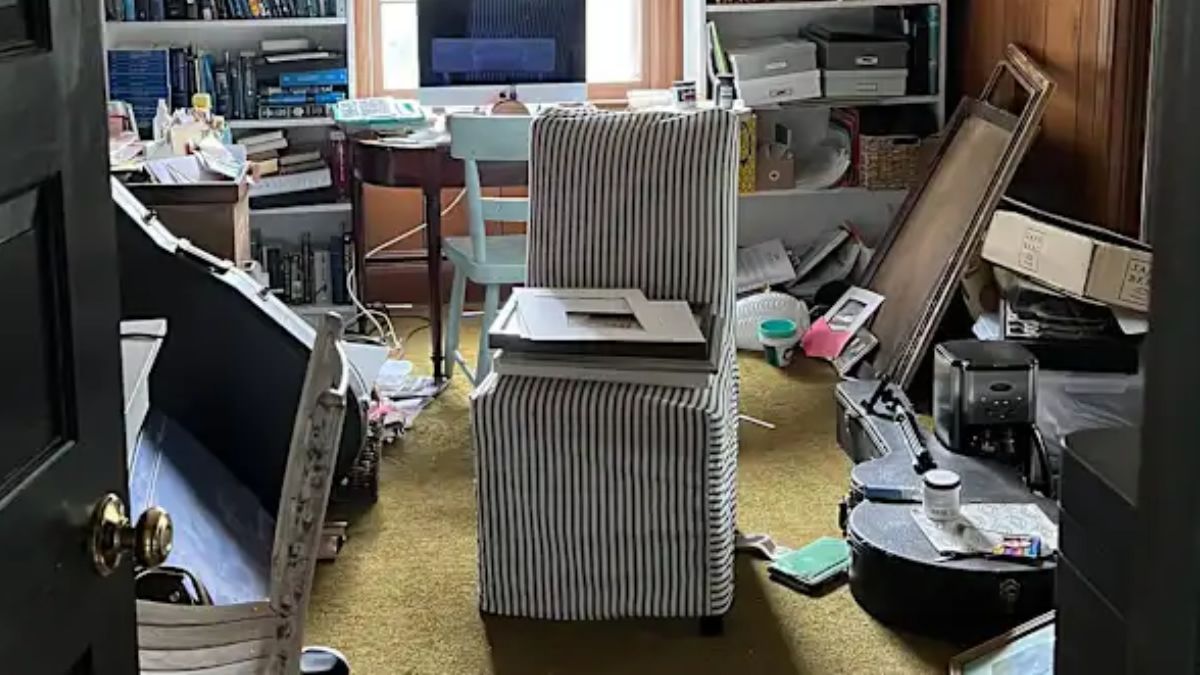
The issue lay not with the room itself, but with the paneling. Katie Bowling, who documents her home on Instagram as @katiebowlinghome, and her husband Philip had an office that matched this description. Although they appreciated the cozy atmosphere of the small room, the old faux wood paneling made it feel dark. Rather than removing anything, they retained the room and altered every surface within it.
Why painting paneling proved superior to removal

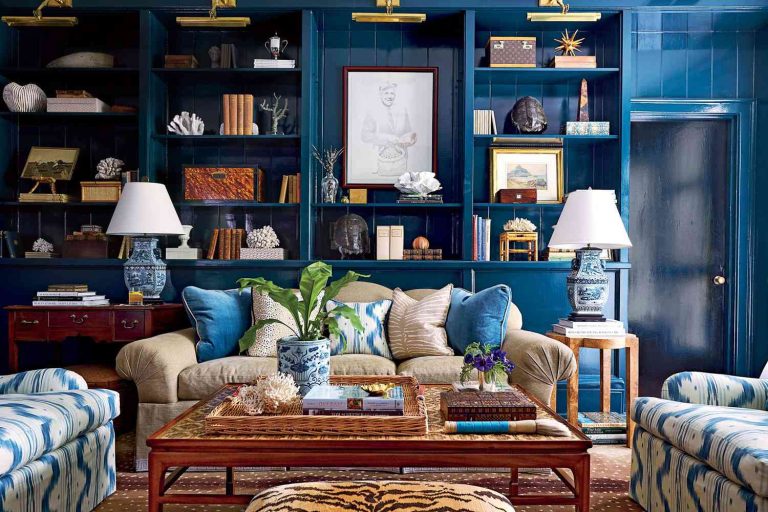
Dark paneling absorbs light across all walls simultaneously. Painting preserves the texture of the grooves while changing the color that reflects light. The couple filled holes with wood filler and repaired damaged areas before painting everything, including the paneling, in Benjamin Moore Smoke, 2122-40, a light blue-green shade.
Removing paneling represents an alternative approach that involves more work. One couple removed dark vertical paneling and replaced it with boards from approximately ten weathered pallets, leaving them unsanded so nail holes and knots remained visible.
A BILLY wall, a window seat, and a painted harlequin floor
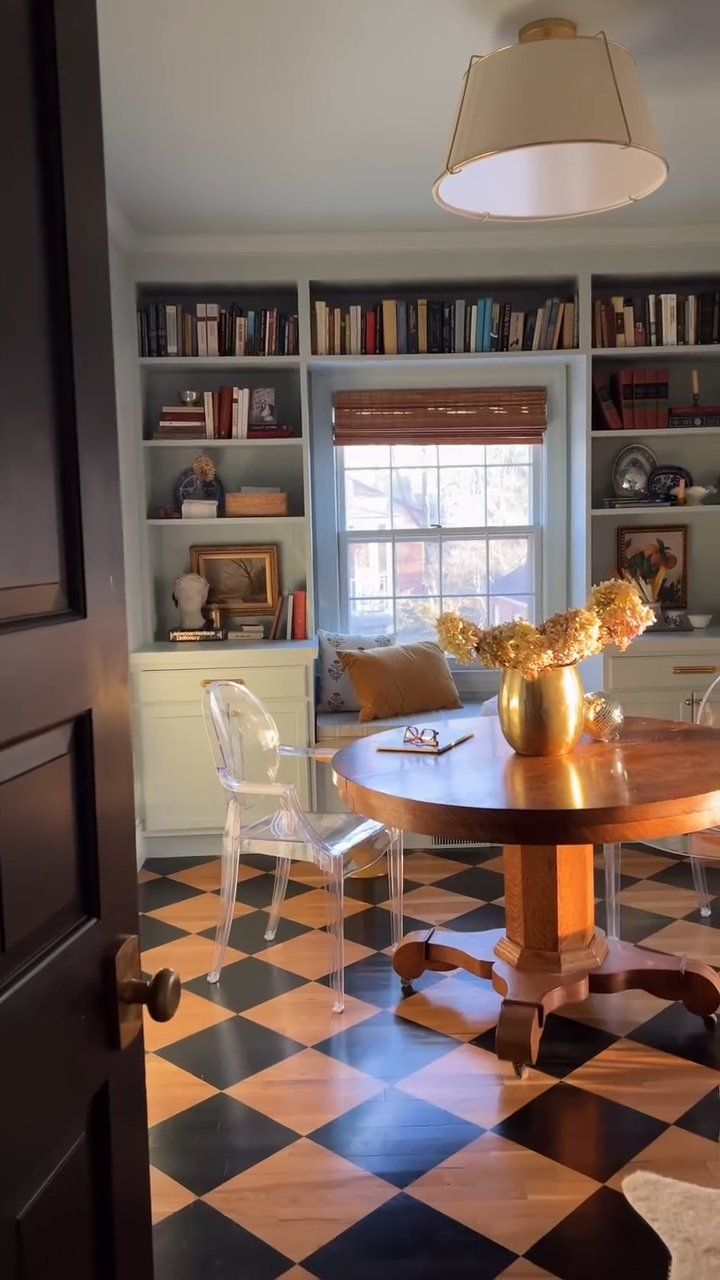
- Clear the room. All items were removed, including the old carpet.
- Lay a new floor. White oak flooring replaced the carpet.
- Map the pattern. Katie desired herringbone floors, but a painted pattern served as the budget-friendly option. They established a harlequin grid using delicate painter’s tape and a 12-by-12-inch FloorPops tile as a template. Using the straight floorboards as a guide, they placed a dot of tape on every other square to indicate which ones to paint.
- Paint and seal. The marked squares received Benjamin Moore Black, 2132-10, after which the floor was sealed with water-based polyurethane. Katie noted that they watched approximately 100 YouTube videos beforehand.
- Paint the walls. Smoke was applied to every wall and the paneling.
- Build around existing items. Two white IKEA BILLY bookcases the couple already owned were positioned to the left of the door frame, with shelving constructed around them.
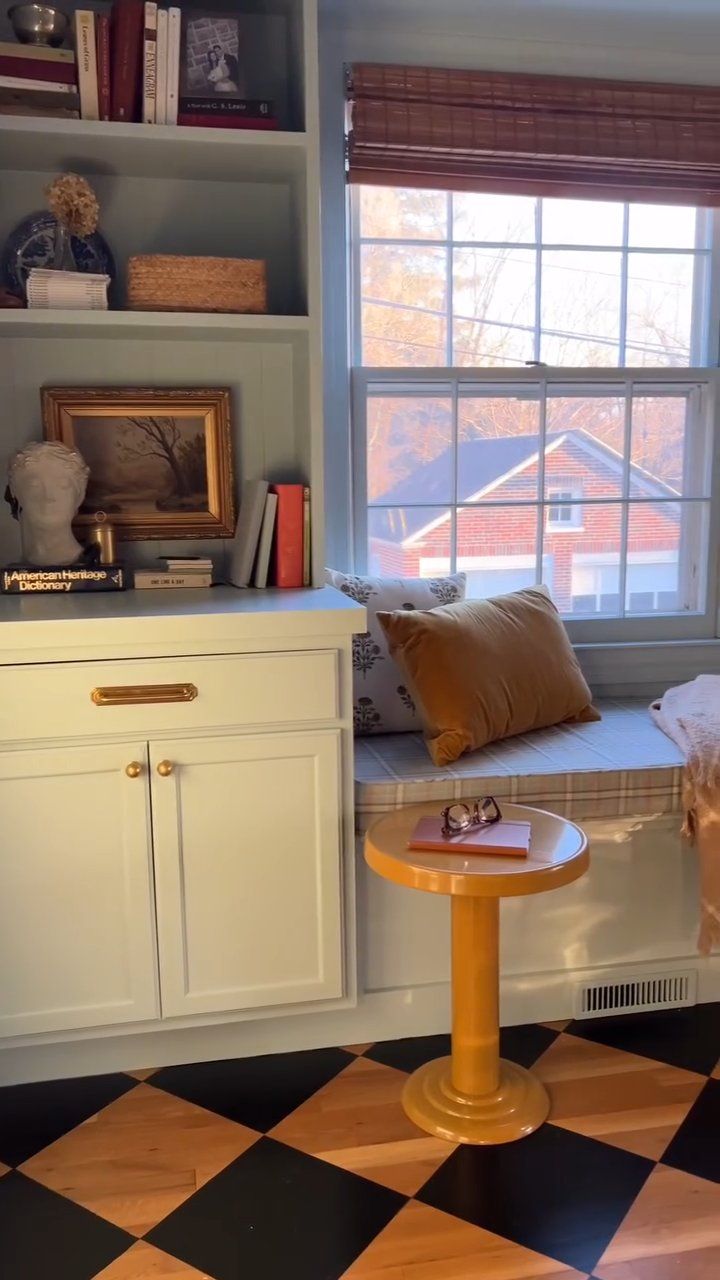
- Add the built-ins. Philip installed a window seat, stock cabinets from Lowe’s, and shelving above the cabinets.
- Finish the room. A brass semi-flush light was installed, and a thrifted table now floats in the center of the room as a desk, leaving space for the window seat.
The entire makeover cost approximately $2,000. Katie admits she is not overly concerned with perfection, whereas Philip is more of a perfectionist, which aided in the details.
If a new floor is not yet within budget, Plan B involves starting with the walls. Painting the paneling removed the darkness from the room, allowing the floor to be addressed later.
What paint on paneling and floors requires in a small room
A small office with paint on the walls, paneling, and floor contains significant fumes. Thurston County Public Health in Washington recommends selecting water-based paint whenever possible, keeping windows open with an exhaust fan in the window, and ventilating freshly painted areas for two to three days.
Paneling is often slick. Since the project did not mention using a primer, readers should check their paint label for preparation instructions regarding glossy surfaces and test a small patch first.
A painted floor requires time before furniture can be returned. Follow the cure time specified on the polyurethane label and add felt pads under chair and table legs. Anchor the bookcases, as tall shelves loaded with books should be secured to the wall, whether built-in or not. Keep the room you love and change the surfaces that make it dark. That is the trick.
Source: Homedit.























We mistake texture for depth. Painting the paneling didn’t just lighten the room; it revealed the light trapped within the grooves. Sometimes, transformation requires not removal, but a shift in perspective.
Spot on! That subtle shift in tone truly let the original architectural character shine through without overwhelming the space. I’m so glad the smoke paint captured that interplay of light and shadow—it’s exactly the cozy, textured vibe I hoped to achieve. Thanks for sharing your insight!