
A kitchen filled with brown cabinets, counters, floors, and a backsplash can still feel dim despite having three large windows. The sunlight often seems to disappear before it reaches the center of the room. Nedra Davis, who documents her home as @brickendhaus, faced this exact issue. She described her previous color scheme as overly brown and dated. The cramped space did not align with the bright, airy atmosphere of the rest of the main floor.
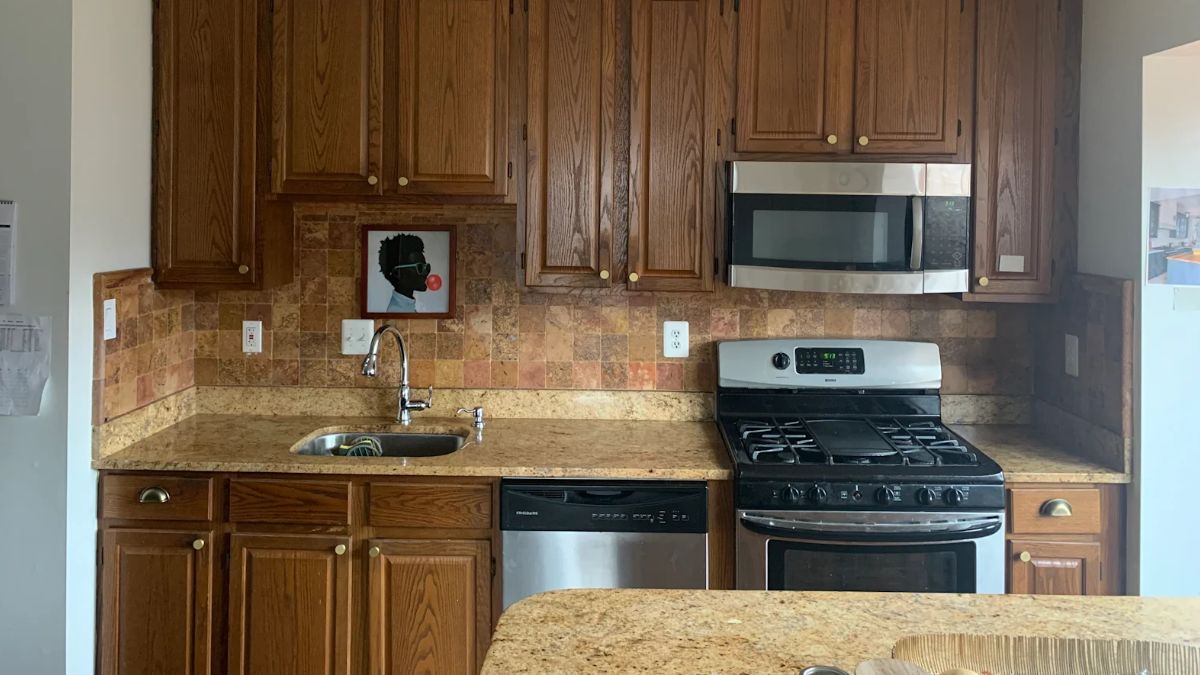
Why a sunny kitchen can still feel dark
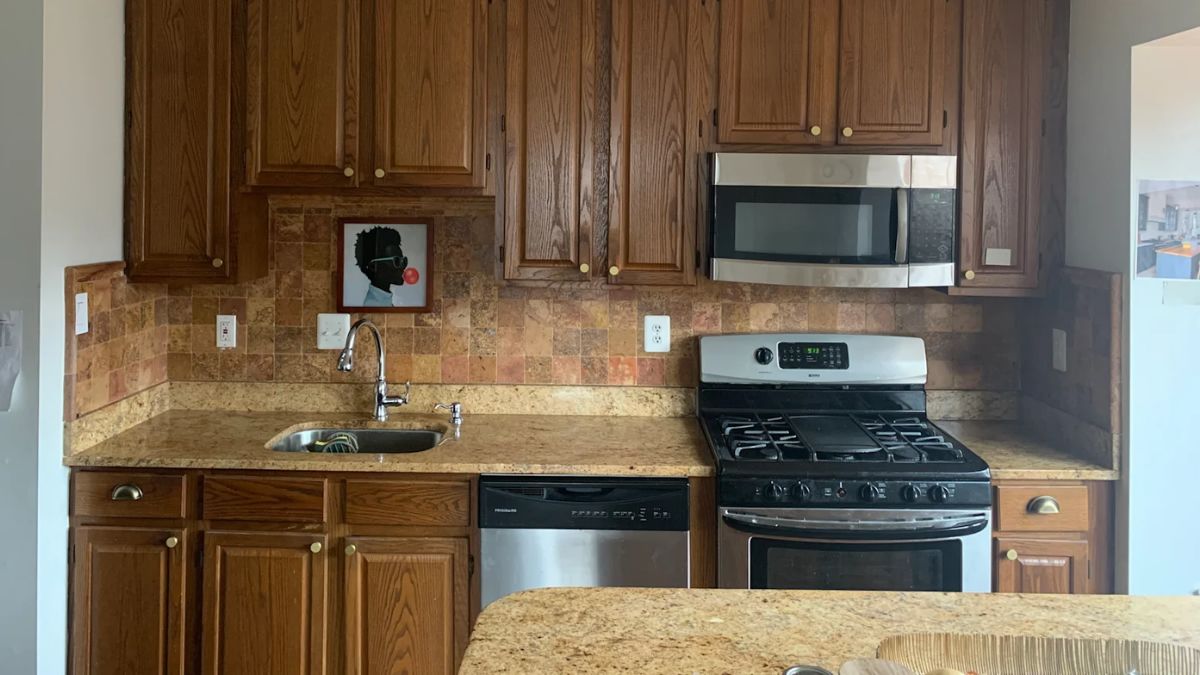
When all surfaces share the same dark hue, light lacks surfaces to reflect off. Since cabinets, counters, and floors constitute the largest areas in a kitchen, Nedra chose to repaint these three elements sequentially rather than replacing them entirely. Changing the cabinet color also alters the perception of surrounding elements. For instance, when oak cabinets were painted sage green on the bottom and white on top, existing beige tile countertops appeared brighter, aided by grout whitewashed with a paint and water mixture.
Three paint projects and two pros
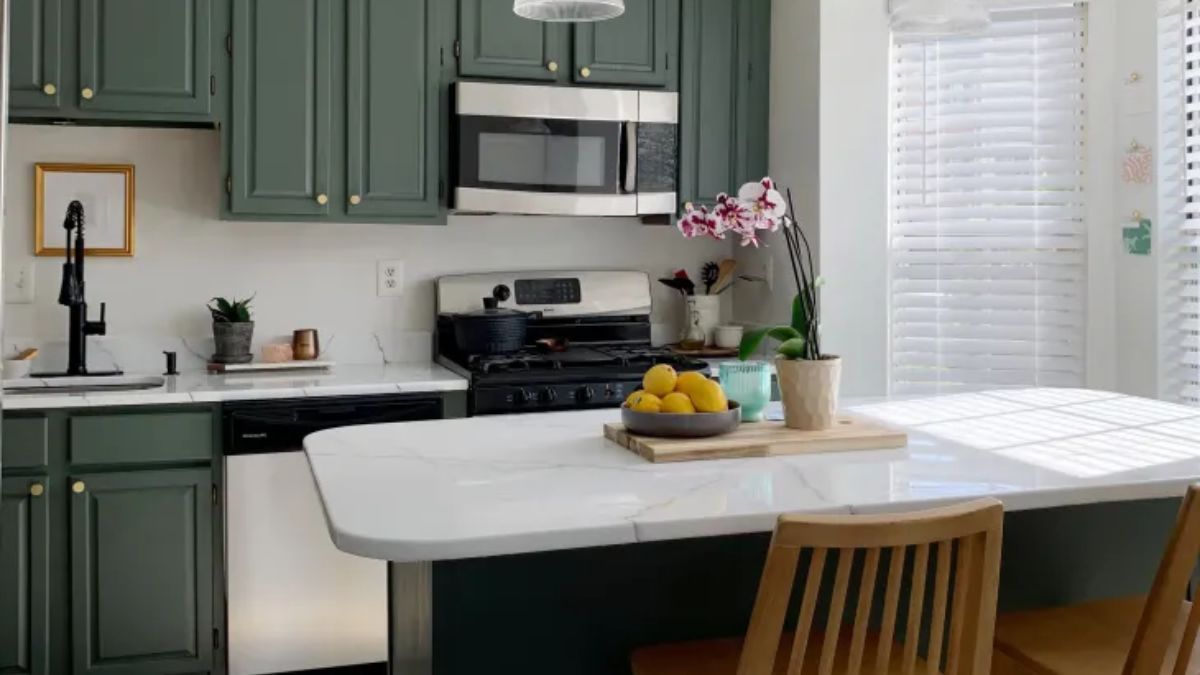
- Bring in help where it counts. A contractor removed the old backsplash and repaired the underlying wall. Nedra joked that drywall work is a DIY task she has decided to avoid permanently. An electrician also adjusted the lighting placement.
- Paint the cabinets. The dark brown wood received a coat of Sherwin-Williams Pewter Green, SW 6208, accompanied by new gold hardware.
- Fake the marble. The countertops were transformed using a faux marble epoxy kit featuring white surfaces with soft gray veining. Nedra expressed particular pride in this result, noting it was her first experience working with epoxy and painting faux marble veins.
- Checkerboard the floor. She applied a white and tan checkerboard pattern to the floor, noting that achieving straight lines required several attempts.
These three painting projects cost $500, a sum that covers only the paint work. The result is a kitchen that feels airy and relaxing. If tackling three projects simultaneously seems overwhelming, start with the cabinets. They cover the most wall space, allowing you to update the counters and floor one at a time.
Epoxy counters and a painted floor ask for patience
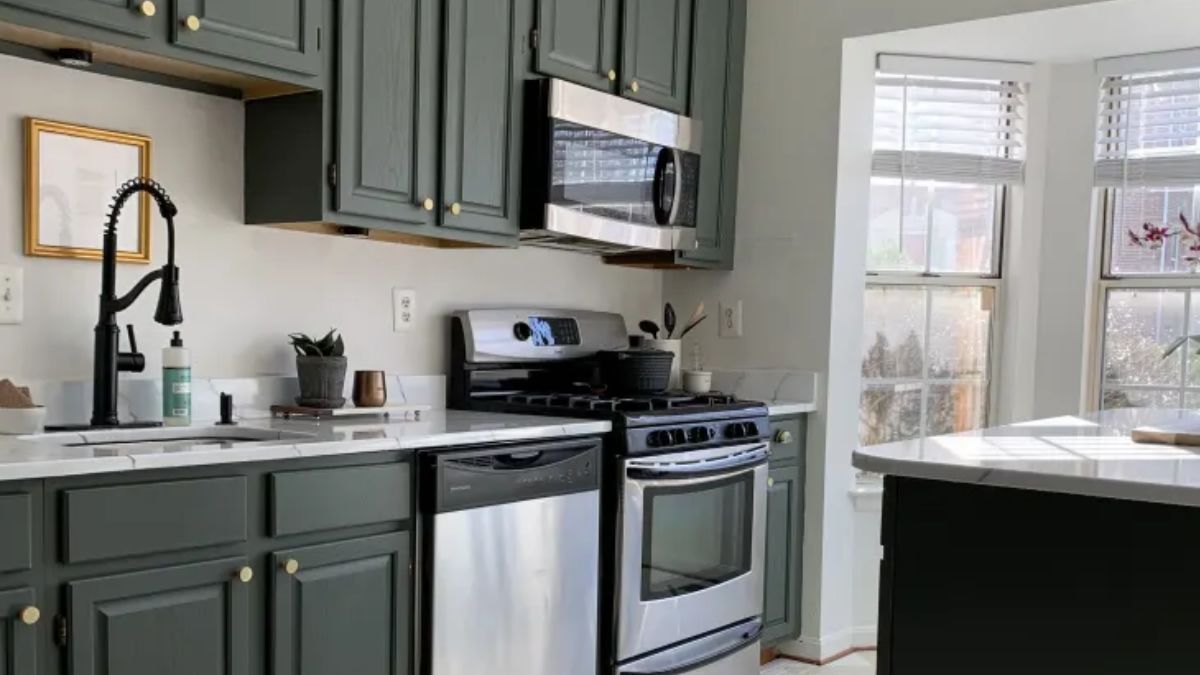
Epoxy behaves differently than standard wall paint. A construction safety alert from CPWR warns that some individuals develop sensitization to epoxy chemicals, leading to reactions upon subsequent skin contact. The alert recommends wearing thick nitrile or butyl rubber gloves, avoiding cotton or latex, and ensuring good ventilation. Always follow the kit’s label for mixing instructions and cure times before placing items on the counters.
A painted floor requires careful layout before painting begins. Measure and mark the grid first, as straight lines are essential for a successful checkerboard pattern. Since Nedra’s floor paint brand is unspecified, choose a product designed for floors, as it withstands foot traffic better than wall paint. Leave electrical wiring adjustments to a professional, as Nedra did when moving her lights. Paint the largest brown surfaces first and let the light enhance the space.
Source: Homedit.






































Ah, the classic irony of painting everything pewter green to fix a “dim” kitchen, only to create a whole new shade of gloomy. I’m sure the sunlight is just taking a coffee break now.
That is a fair point! Pewter green can definitely feel heavier than lighter tones. However, the bright checkerboard floor helps break up the darkness and adds visual energy, which should help balance the mood and prevent the space from feeling too enclosed.