
Typically, homeowners select kitchen islands after finalizing the layout, countertops, and cabinetry. This renovation reversed that standard sequence. A vintage wooden apothecary cabinet discovered on Facebook Marketplace served as the foundational element for the entire kitchen design.
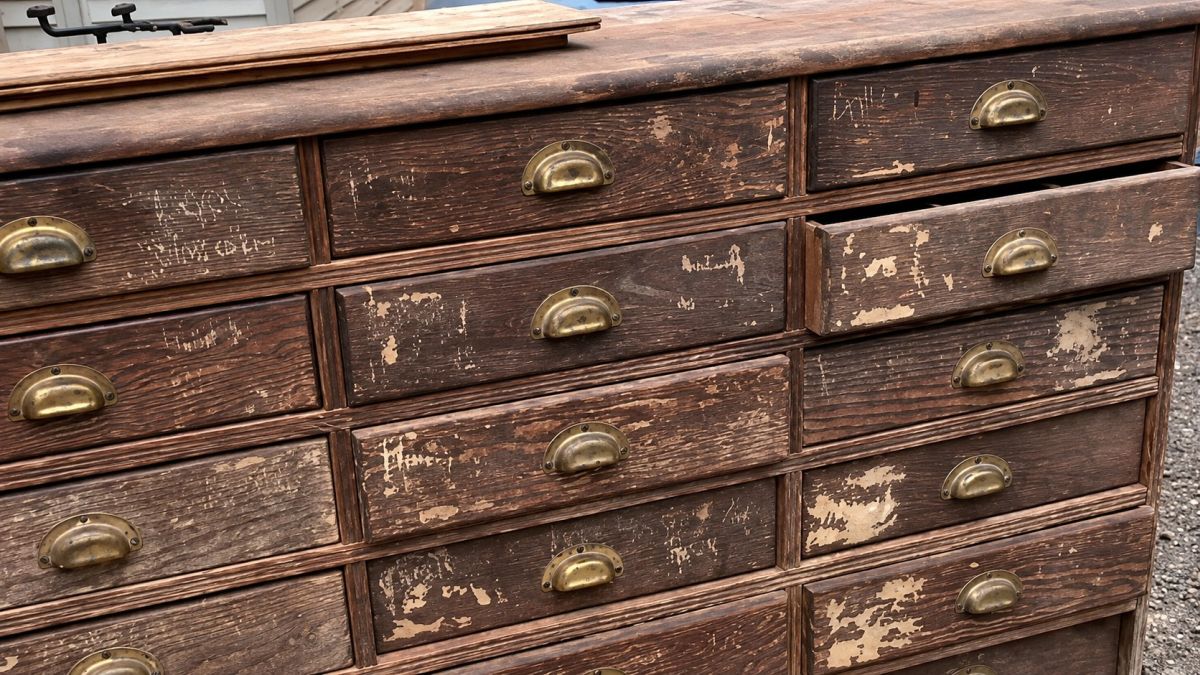
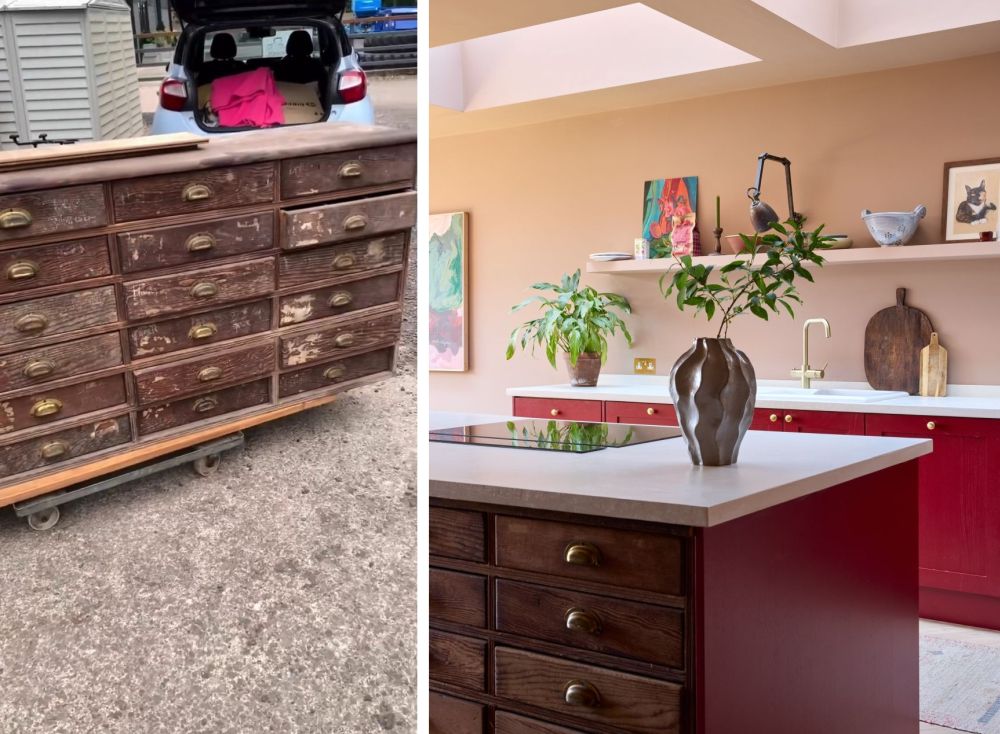
The piece featured rows of narrow drawers, brass cup handles, and a dark wood finish aged by years of use. Although some drawer fronts showed patches of missing finish, the unit offered unique storage solutions and character that a conventional kitchen island would lack.
The homeowner, who documents the project on Instagram under the handle @twentysixthecrescent, spent nearly a year searching for the perfect cabinet. With assistance from her grandfather, she cleaned and restored the piece before integrating it into a kitchen layout designed using DIY Kitchens’ software.
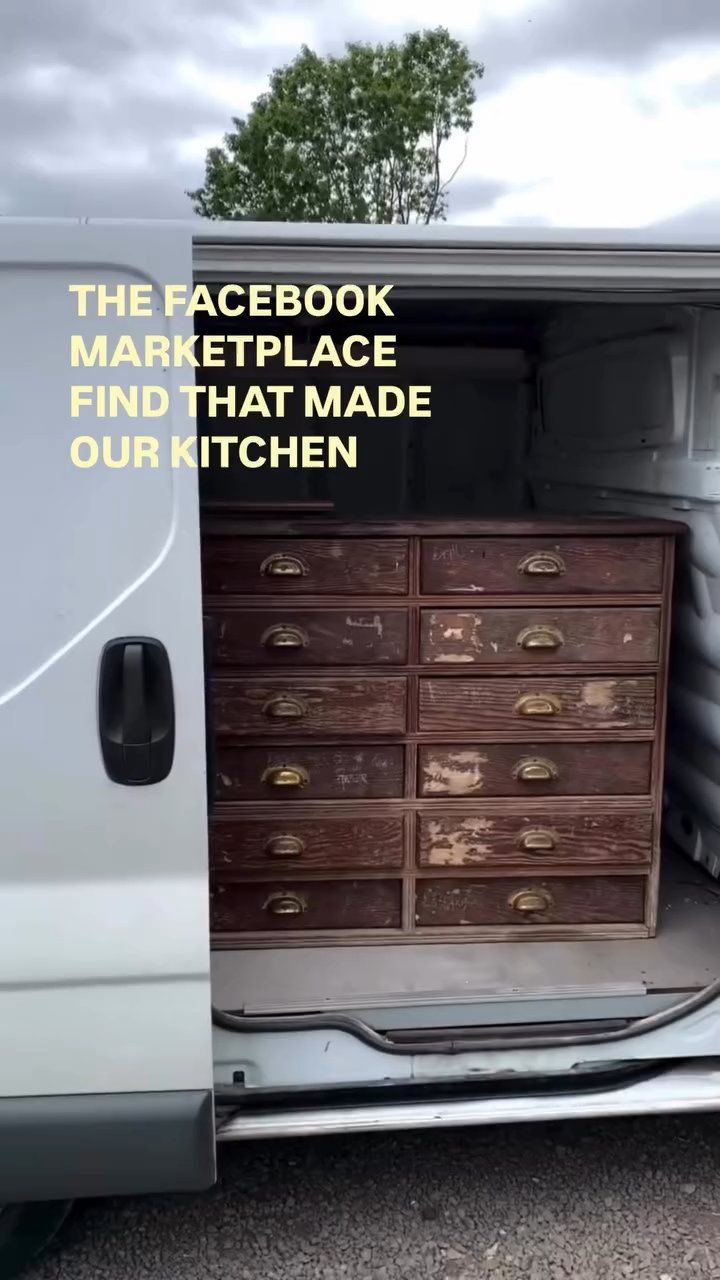
The Vintage Cabinet Served as the Design Anchor
The Facebook Marketplace acquisition arrived with a worn dark finish, narrow wooden drawers, and brass cup pulls. The homeowner had overlooked several similar cabinets during her search before locating one with dimensions suitable for the renovation.
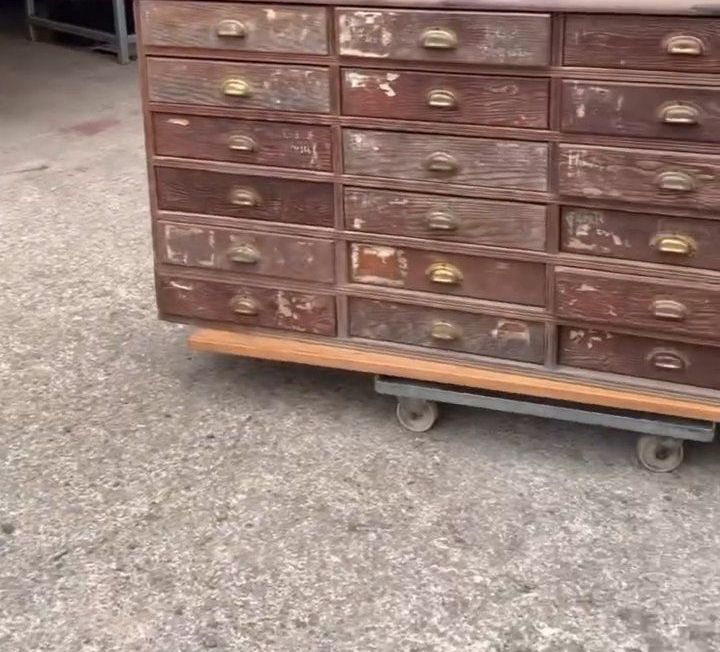
The cabinet contained three columns of six drawers, creating 18 compartments across its front. Its original state included scuffs, exposed wood, and areas of damaged finish.
Cleaning and Restoration Process
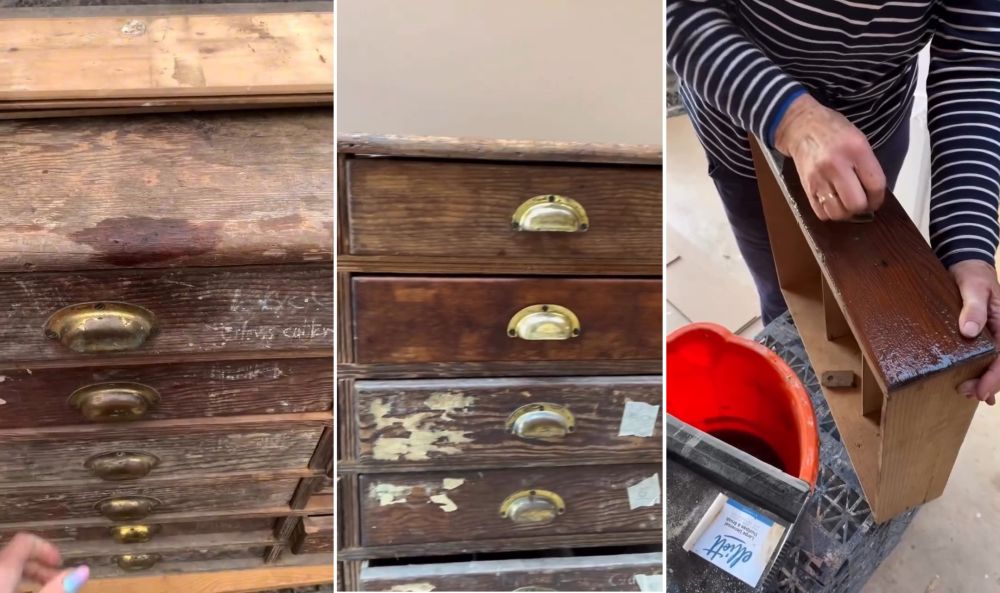
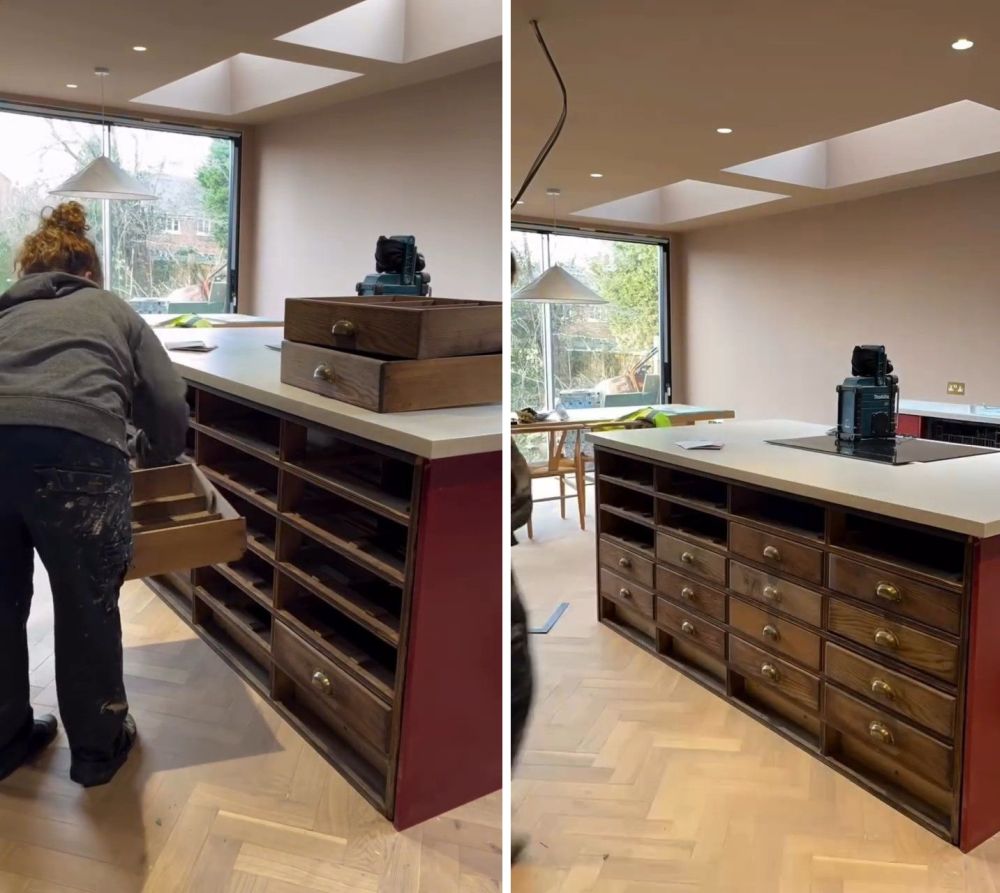
The homeowner collaborated with her grandfather to clean the cabinet. Video footage shows the drawers being removed, handled individually, and treated on a workbench. The brass handles were kept as part of the design aesthetic.
The restoration preserved the dark wood and signs of age rather than covering the drawer fronts with paint.
Constructing the Island Around the Vintage Unit
The cabinet formed the storage side of a large island featuring a pale countertop and burgundy-painted end panels. During installation, the drawers were removed to allow access to the cabinet structure before being reinserted into their openings.
The primary challenge involved planning the kitchen around the cabinet’s existing measurements. The homeowner utilized DIY Kitchens’ design software to position the other elements around the vintage piece.
The Cabinet Now Anchors the New Kitchen
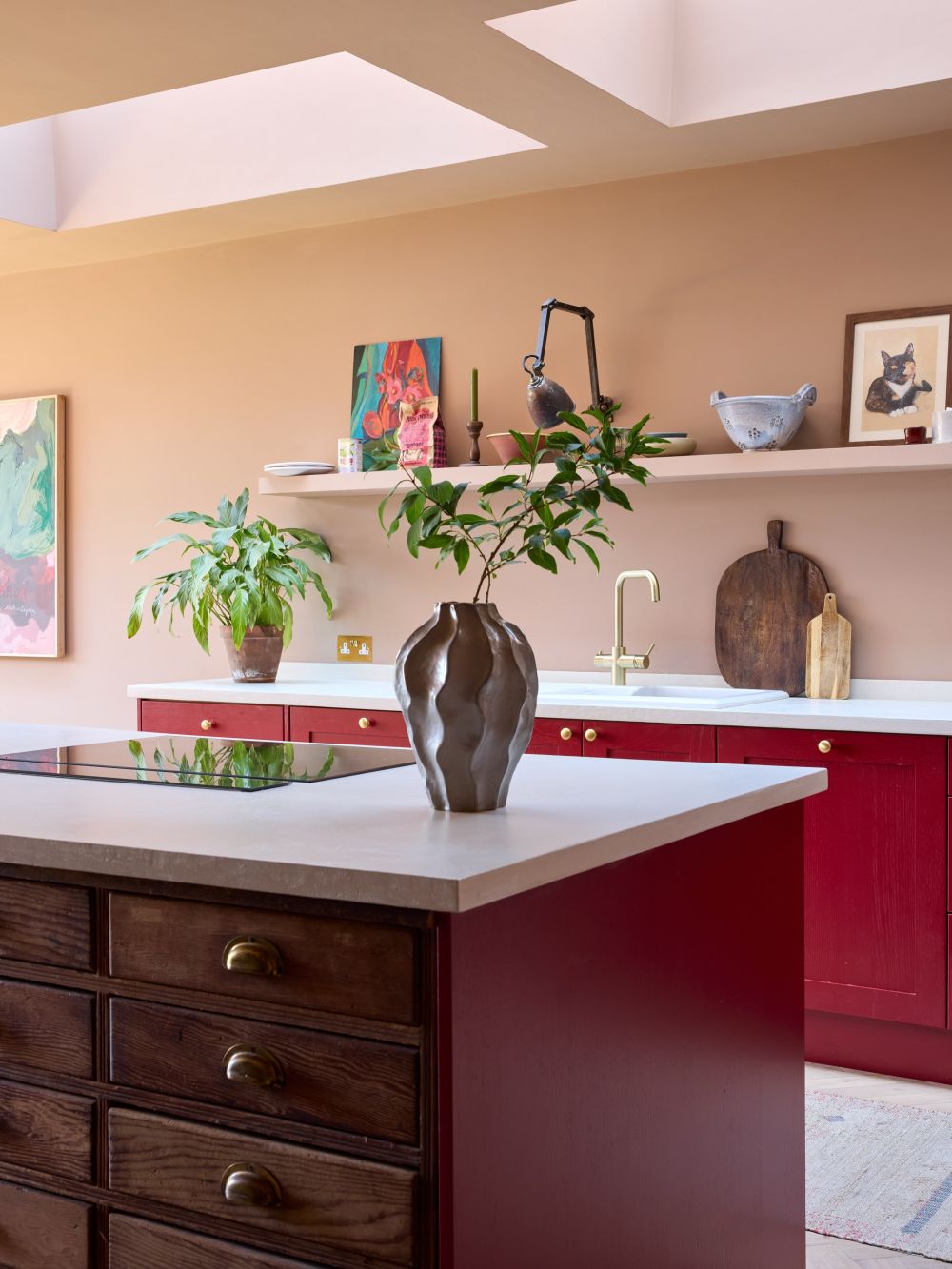
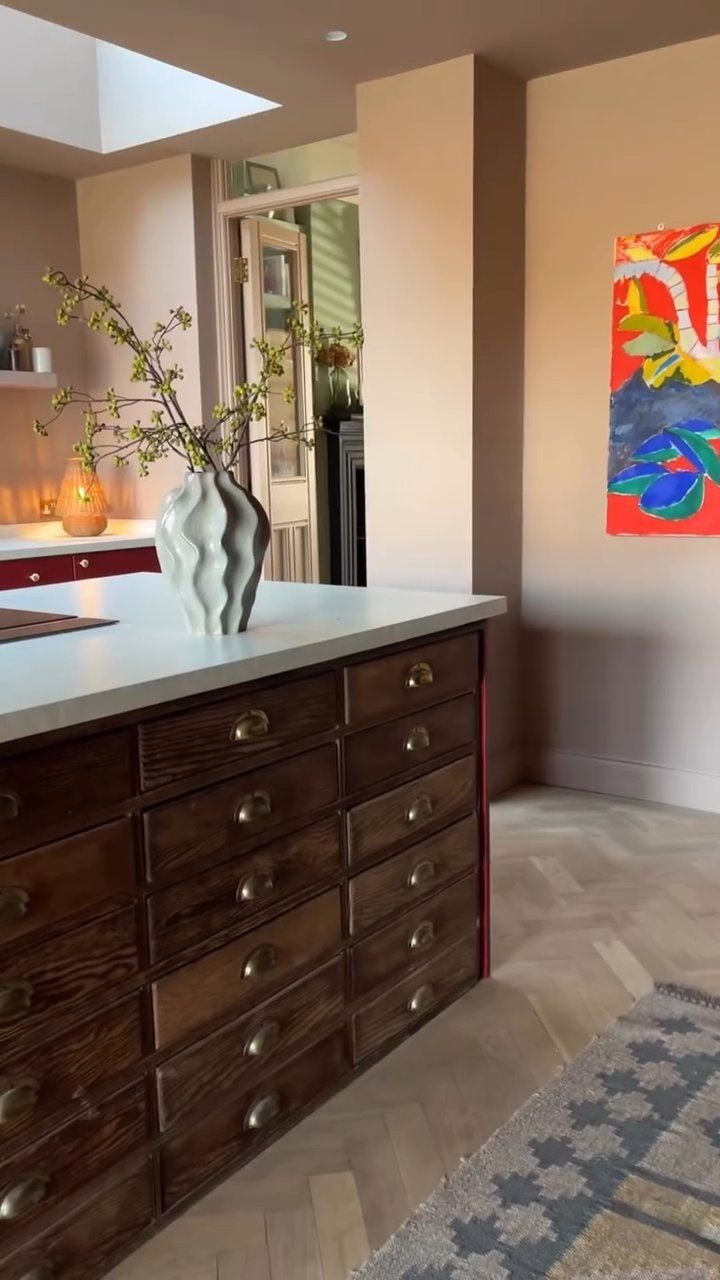
The finished island combines the old drawer fronts with a pale countertop. Recessed ceiling lights and rooflights illuminate the room above, while herringbone wood flooring runs beneath the cabinet.
A pale backsplash, an open shelf, and a brass faucet accompany the burgundy cabinetry that runs along the kitchen walls. The island features the same burgundy finish on its ends, with vintage drawers offering a distinct contrast to the newer cabinetry.
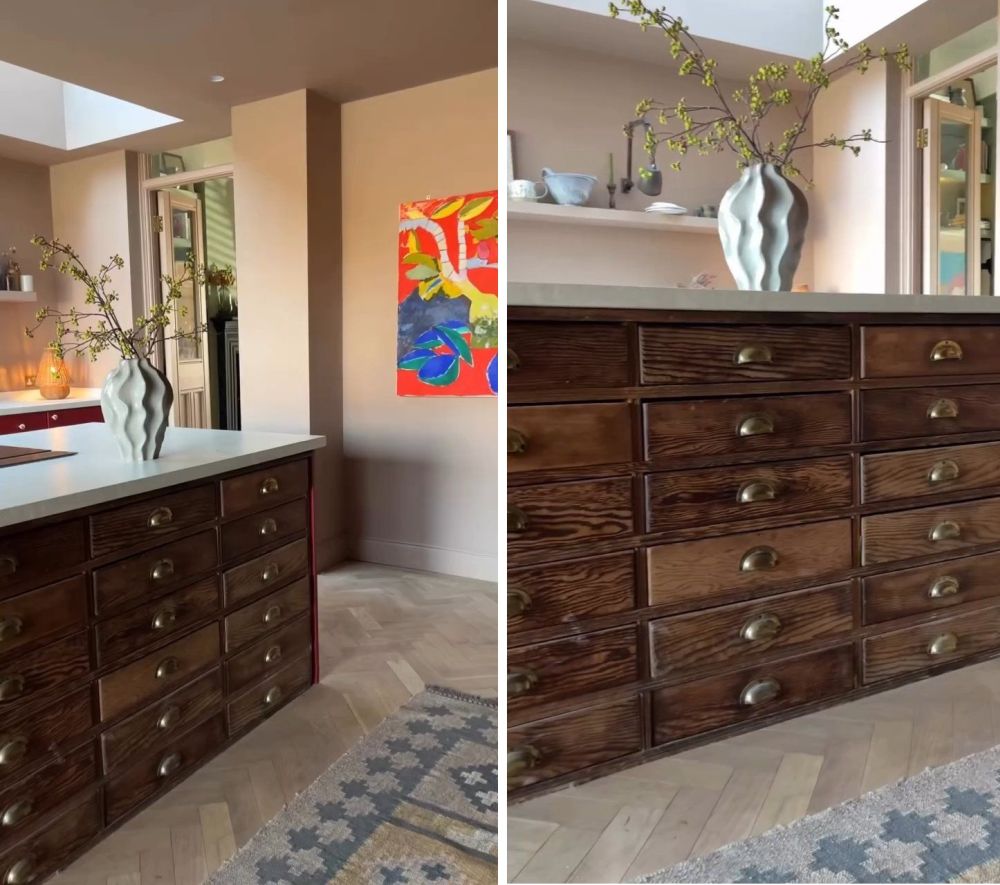
Years of wear and a patchy finish characterized the initial cabinet. After restoration, the drawers and brass handles are still visible beneath the new worktop in the finished kitchen, creating an island aesthetic that standard cabinet fronts would struggle to replicate.
The homeowner stated she wanted a bespoke kitchen without paying for one, and the secondhand apothecary cabinet became the feature that made the design possible.
Images and renovation by @twentysixthecrescent.
Source: Homedit.













So the secret to a unique kitchen isn’t a designer, but a one-year hunt for a rusty cabinet on Facebook. Groundbreaking. I’m sure that “character” was just missing finish and not impending structural failure.
Haha, fair point! The structural integrity was definitely a key factor in the selection process, though the “rusty” look was part of the charm. It’s all about balancing that authentic character with a solid foundation. Thanks for the witty commentary!