
A living room required space for a sofa, television, and two computer desks, yet the homeowner desired a distinct work zone without constructing permanent walls. Although the floor area accommodated both functions, the desks and office gear remained visible from the seating area.
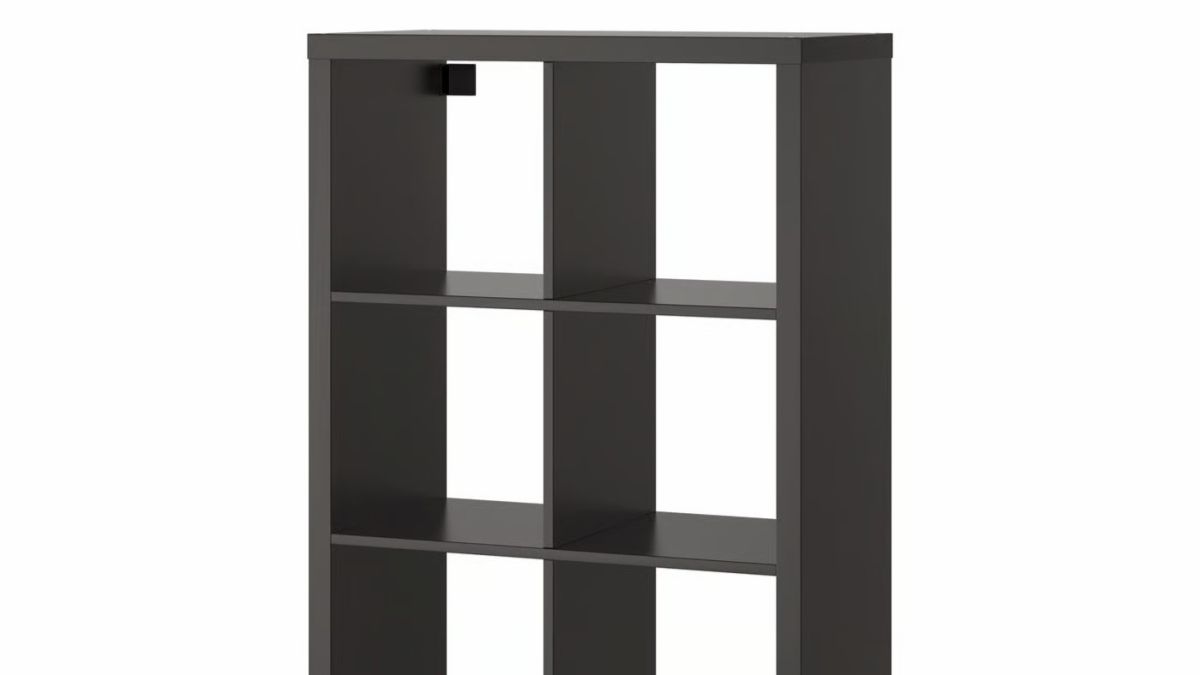
Six black IKEA KALLAX bookcases offered an alternative solution. Arranged in an L-shaped formation and stacked two units high, the shelving established a boundary between the seating and work zones while offering storage for LEGO models, books, and collectibles. The office area resides behind these shelves, linked to the main space via an open passage.
Reddit user u/lordzeel presented this project in r/ikeahacks, noting that six 3×3 KALLAX units were secured together using metal brackets. Adhesive rubber strips placed under the lower bookcases prevent sliding, and the right-angle configuration allows for an existing sliding barn-door rail.
Six IKEA KALLAX Bookcases Form an L-Shaped Divider
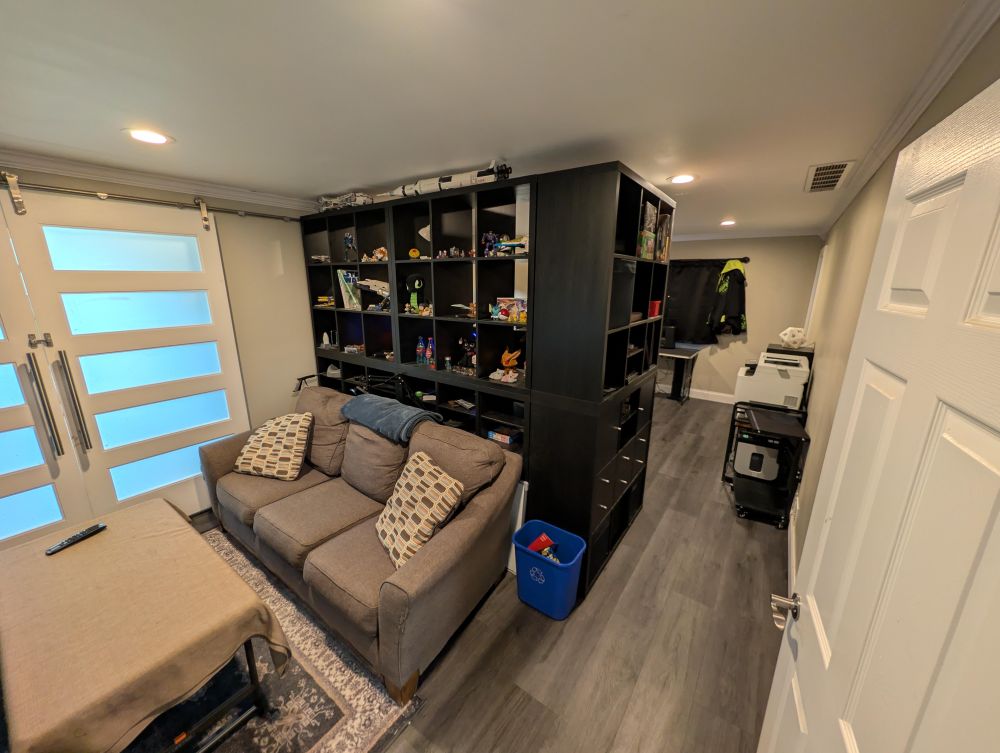
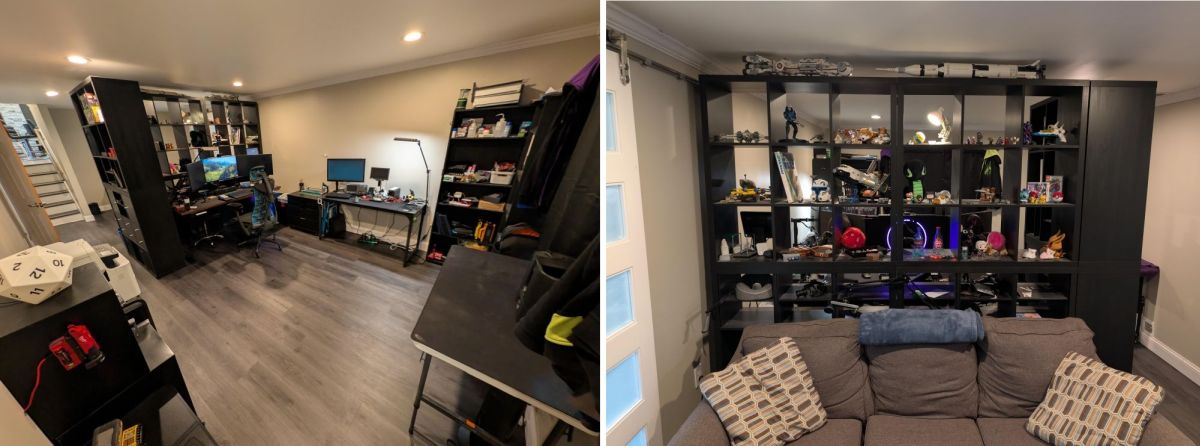
Viewed from the living area, the black shelving extends behind the gray sofa and angles toward the room’s rear. Each KALLAX unit features nine square compartments, with the upper units resting on the lower ones to create a tall partition.
The homeowner joined the units with metal brackets and added adhesive rubber to their bases. This L-shaped design defines two sides of the office area while leaving a walkway beside the shelving unobstructed.
Two Computer Desks Sit Behind the Bookcases
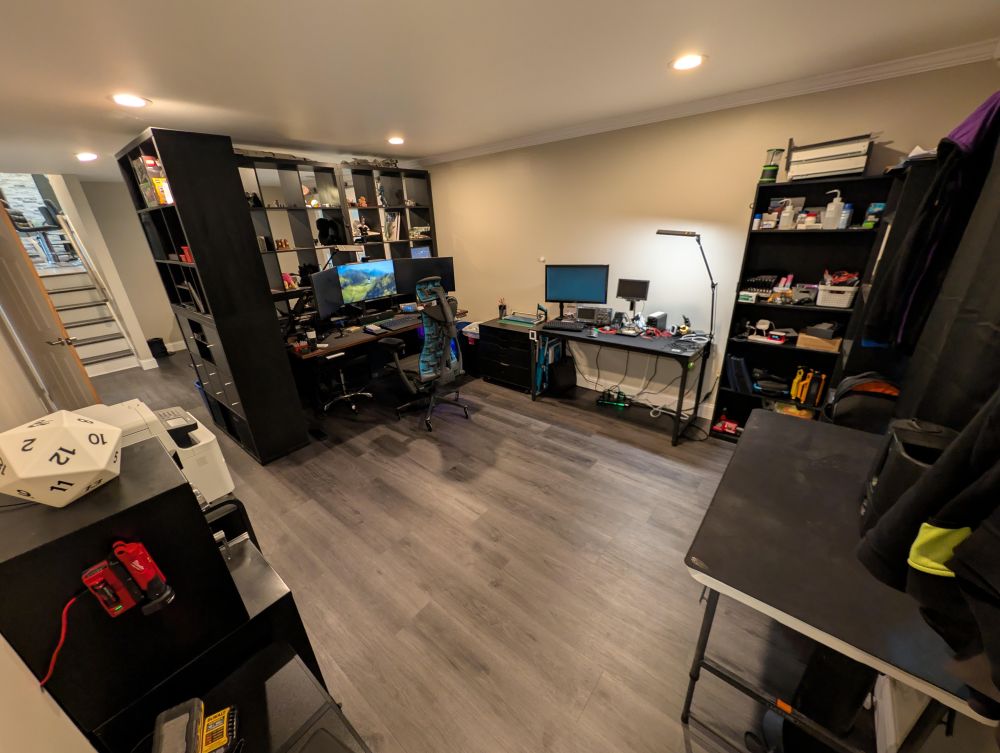
The opposite perspective shows two workstations: one placed against the bookcase divider and another along the wall. Computer monitors, office chairs, and equipment fill the space behind the sofa, with a walkway providing access to the rest of the room.
The homeowner noted that some lower compartments between the sofa and desk are hard to reach. These sections support the upper units, while the side shelves offer accessible storage from the office side.
The Living Room Side Becomes a Display Wall
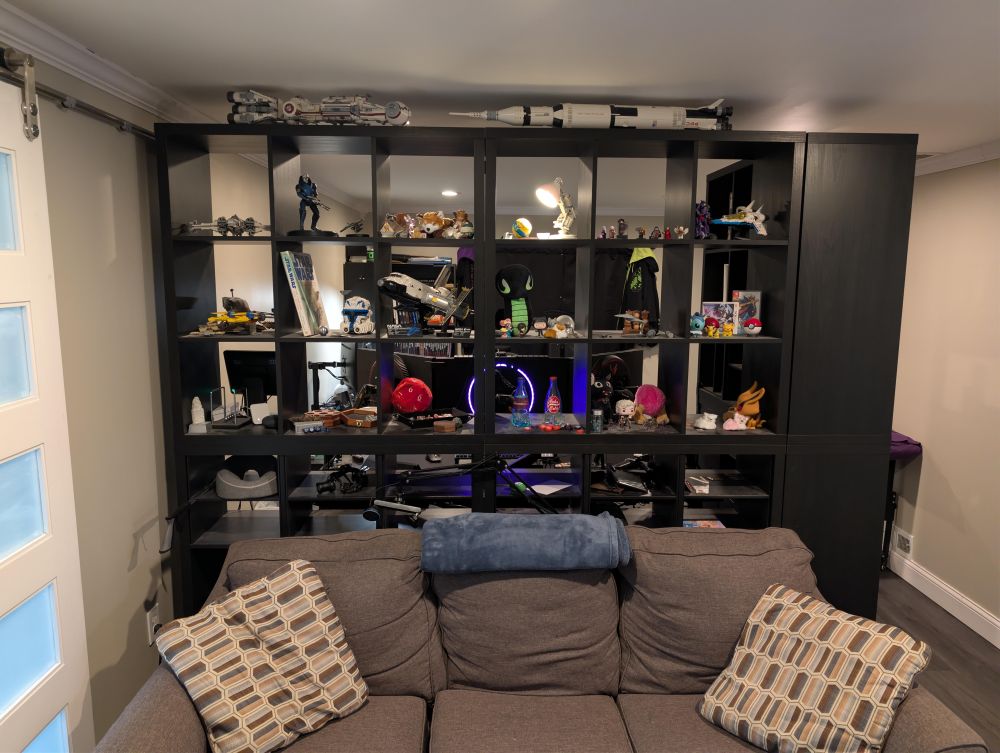
The bookcases face the seating area, with LEGO spacecraft, figurines, books, and other collectibles filling the square openings. The lower compartments sit behind the sofa, while the upper rows provide display space across most of the divider.
Some openings allow views through to the office, meaning the shelving separates the two areas without forming a solid wall. The black finish coordinates with the desks and other storage furniture in the workspace.
The L-Shaped Arrangement Keeps the Office Separate
The homeowner stated that the connected units felt stable without wall anchors, but this does not confirm the structure’s resistance to tipping. Stacked KALLAX units require appropriate restraints and installation that follows IKEA’s safety instructions.
Six bookcases function as both a display wall and a divider, creating a living area on one side and a home office on the other within the finished arrangement. The shelving unit is surrounded by the existing room, which stays open, thereby avoiding the need for a permanent partition.
To establish a bedroom within a studio apartment, one resident utilized IKEA items, specifically positioning a SKYTTA sliding door alongside six BILLY bookcases to partition off the sleeping zone.
Images and project details courtesy of Reddit user u/lordzeel, who shared the project in r/ikeahacks.
Source: Homedit.


























Six KALLAX units? That’s a lot of shelf space for just two desks. How stable is this structure really? Did they anchor it to the wall, or does it just lean? I need more details on the long-term durability before I buy in.
Great question! They anchored the outer units to the wall for stability. The inner units interlock tightly, creating a sturdy, freestanding structure. For long-term durability, just ensure you level the feet properly. It holds up well over time, especially with that wall support!