
In many kitchen renovations, orange-toned oak cabinets are painted over, with colors like white, green, or navy replacing the natural wood grain. Often, raised-panel doors are swapped for Shaker-style fronts. However, a couple in Brandon, Manitoba, faced a different situation. Their red oak cabinets had suffered from wear and sun-bleaching over more than 15 years, but the homeowners wished to retain the original kitchen aesthetic.
Rather than altering the color or cabinet style, they commissioned @refreshedandrefurbishedmb to replicate the original cathedral doors and match the existing stain. The objective was to restore the damaged cabinets to a like-new condition while preserving the red oak grain.
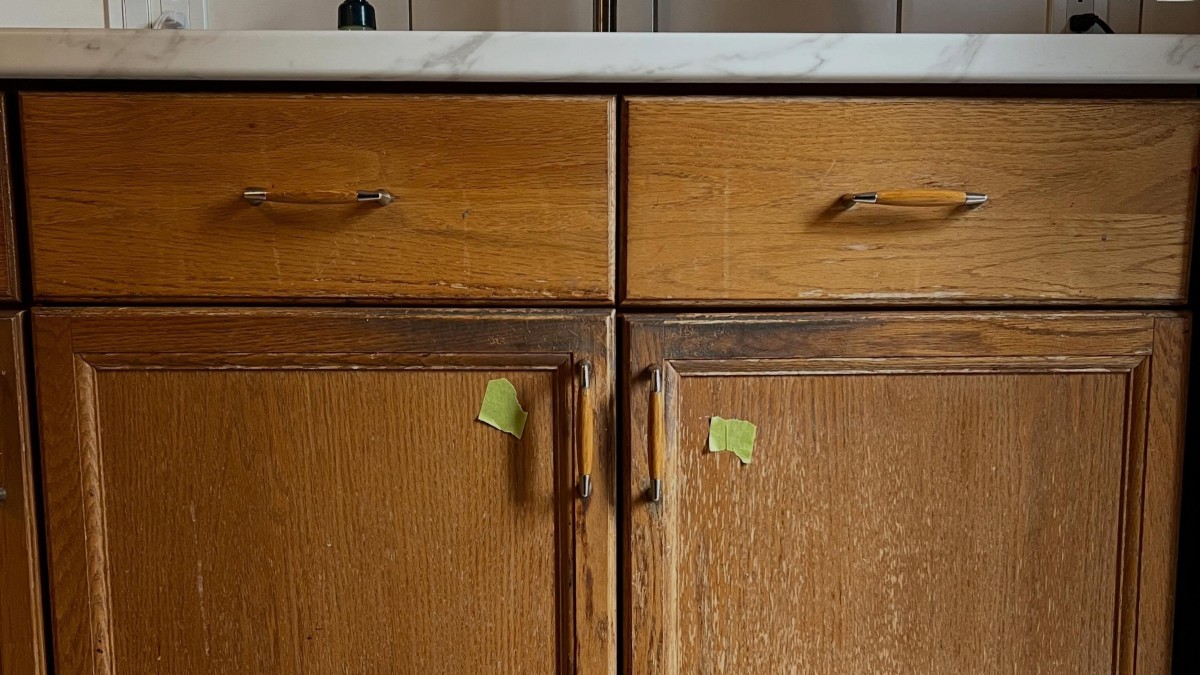
Years of use resulted in uneven coloration on the oak cabinet doors.
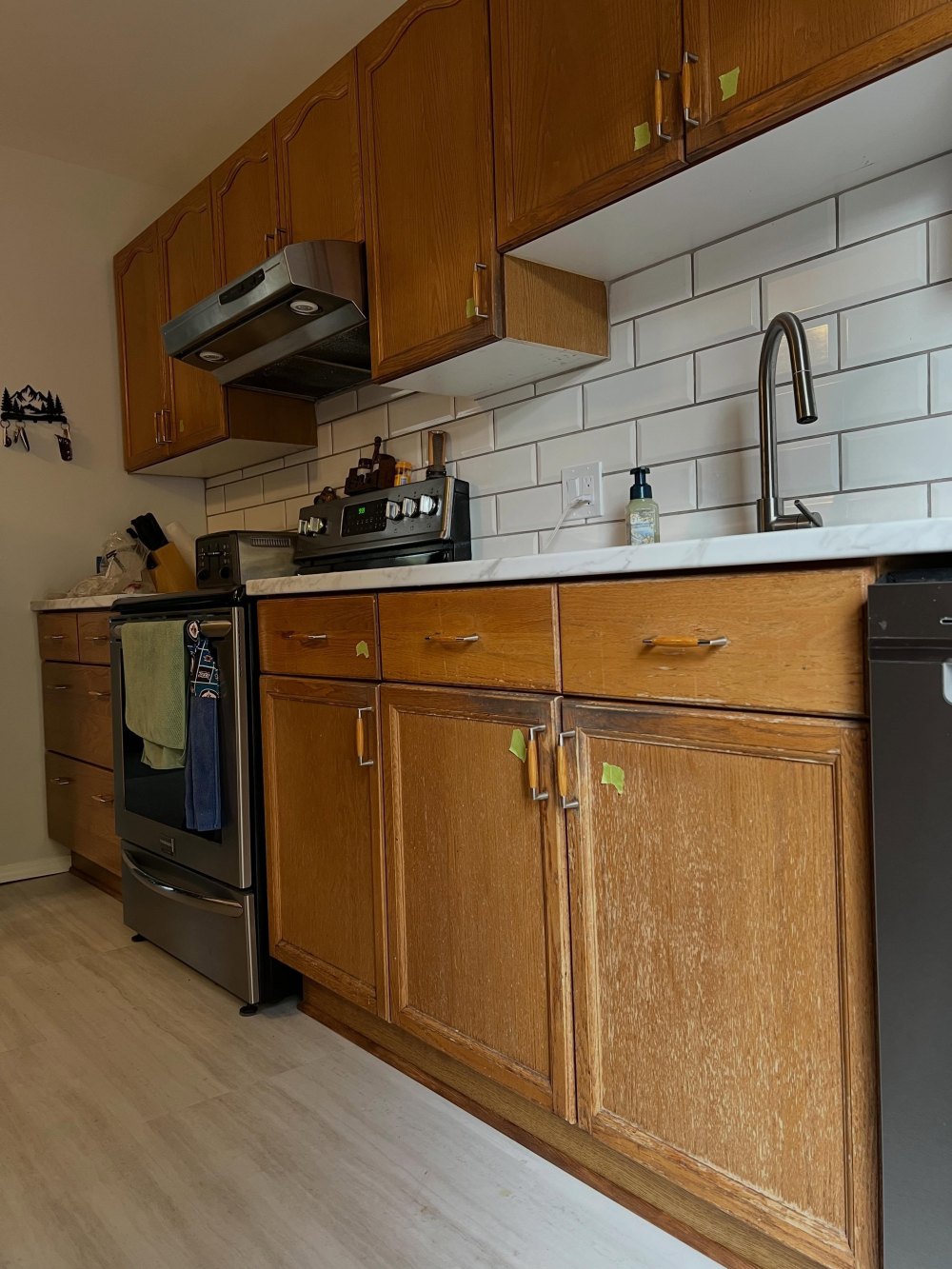
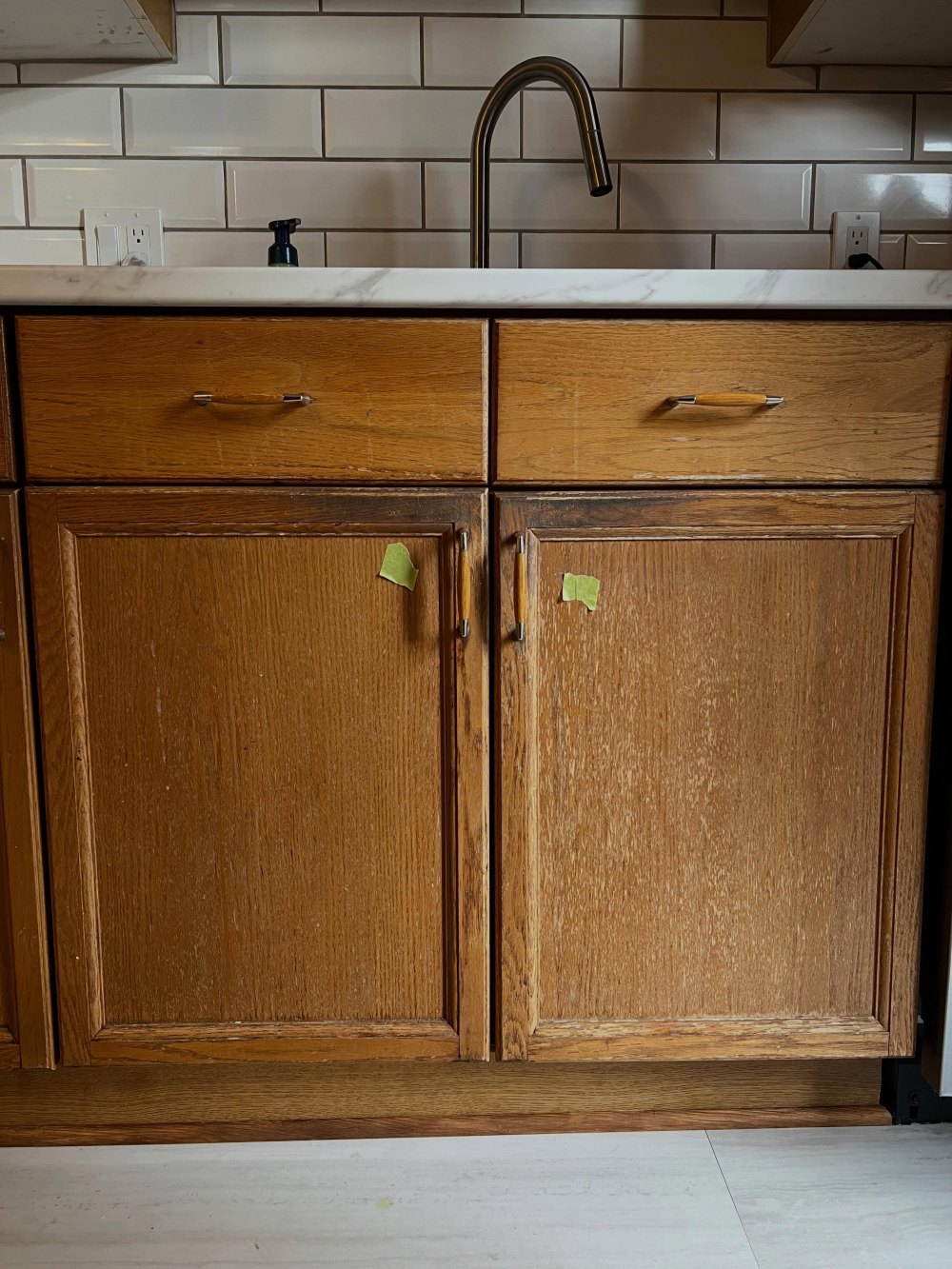
Prolonged sun exposure and daily use had degraded the lower cabinets. Many doors had lost significant portions of their finish, resulting in pale, worn patches on the raised panels and edges. While some areas retained the original brown stain, the faded sections were distinctly visible.
The cabinets surrounding the sink exhibited the most severe damage. One door displayed extensive discoloration across its surface, whereas the adjacent door maintained a darker finish. Although the drawers above showed scratches and wear, the cabinets remained integral to the kitchen the owners wished to preserve.
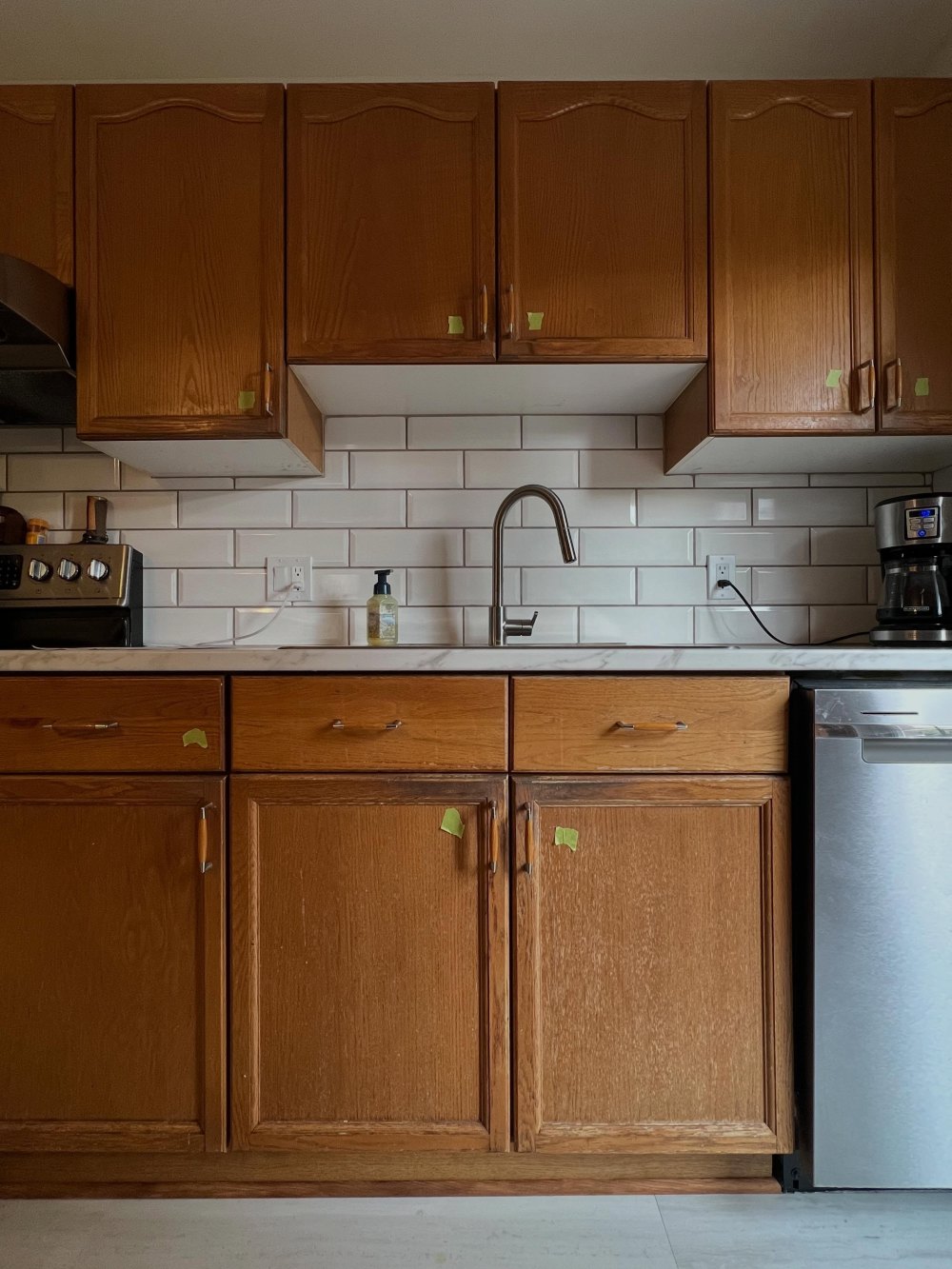
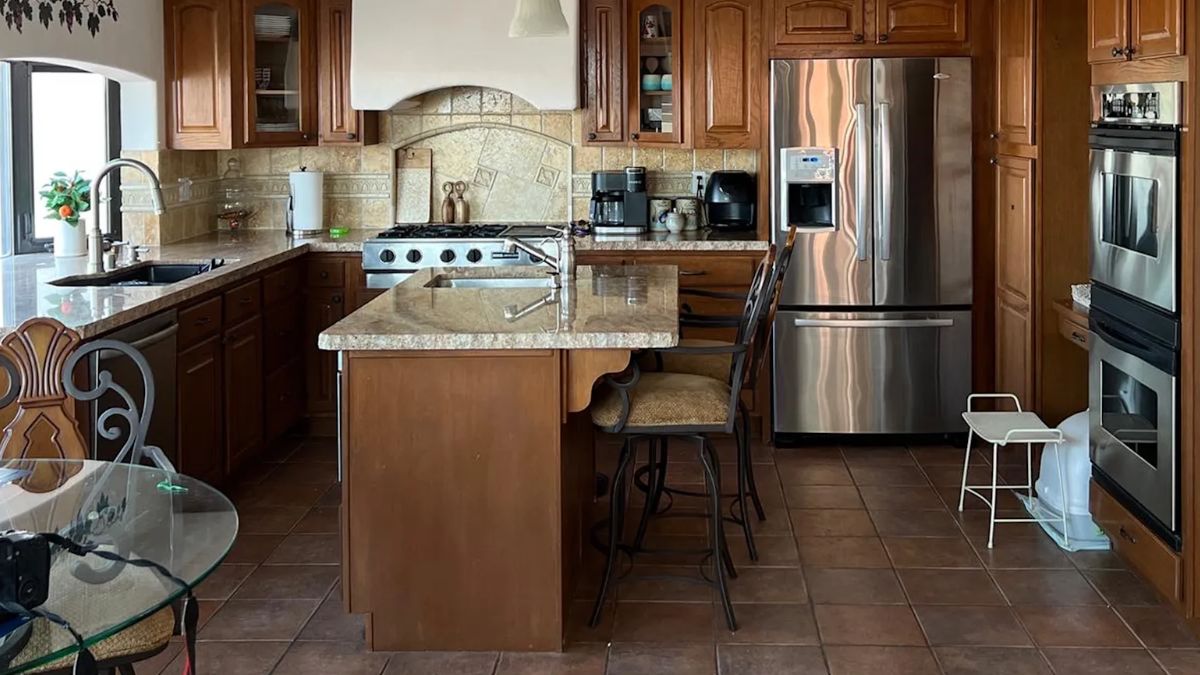
Green tape identified the cabinet fronts chosen for restoration. The existing stainless steel appliances, white subway tile backsplash, marble-look countertops, and double-basin sink were left in place.
Matching the red oak stain without altering the cabinet style was a key focus.
Replacing the worn doors with new wood posed a challenge: the new fronts had to visually match the existing cabinets.
Instead of selecting a different door design, the refacing team copied the original cathedral profile. This design, featuring a curved upper rail and a raised center panel, had been a feature the homeowners appreciated since their initial kitchen renovation over 15 years ago.
The team also color-matched the stain to replicate the existing red oak finish. Preserving the visible grain was essential to the project, as the homeowners did not wish to conceal it.
New cabinet doors successfully restored the red oak finish.
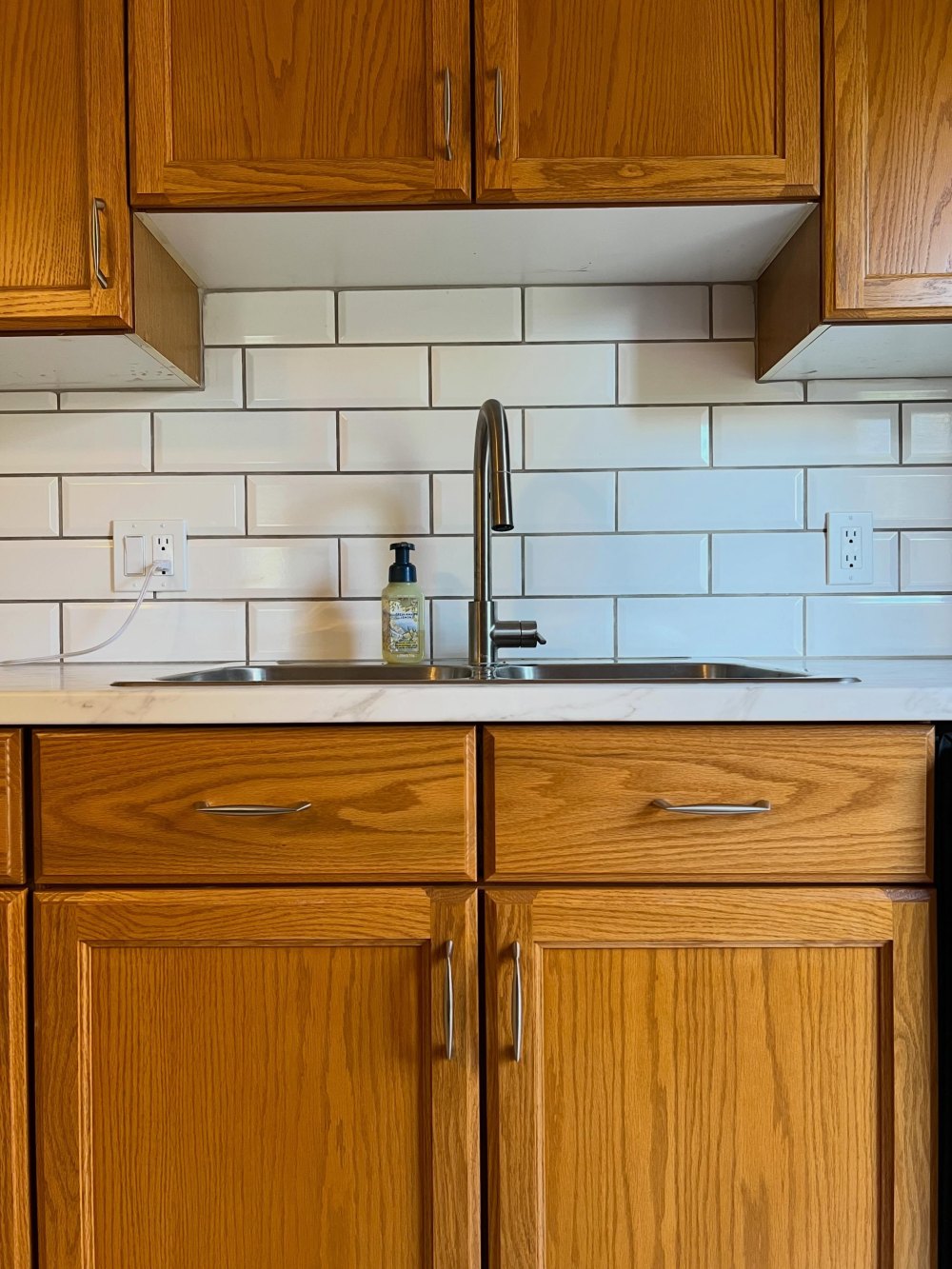
The finished doors beneath the sink demonstrate the success of the stain matching. The red oak grain is visible across the raised panels and surrounding frames, and the replacement fronts exhibit a consistent golden-brown hue.
Chrome handles completed the project without introducing a new cabinet style. The same hardware design was applied to both drawers and doors, unifying the upper and lower sections.
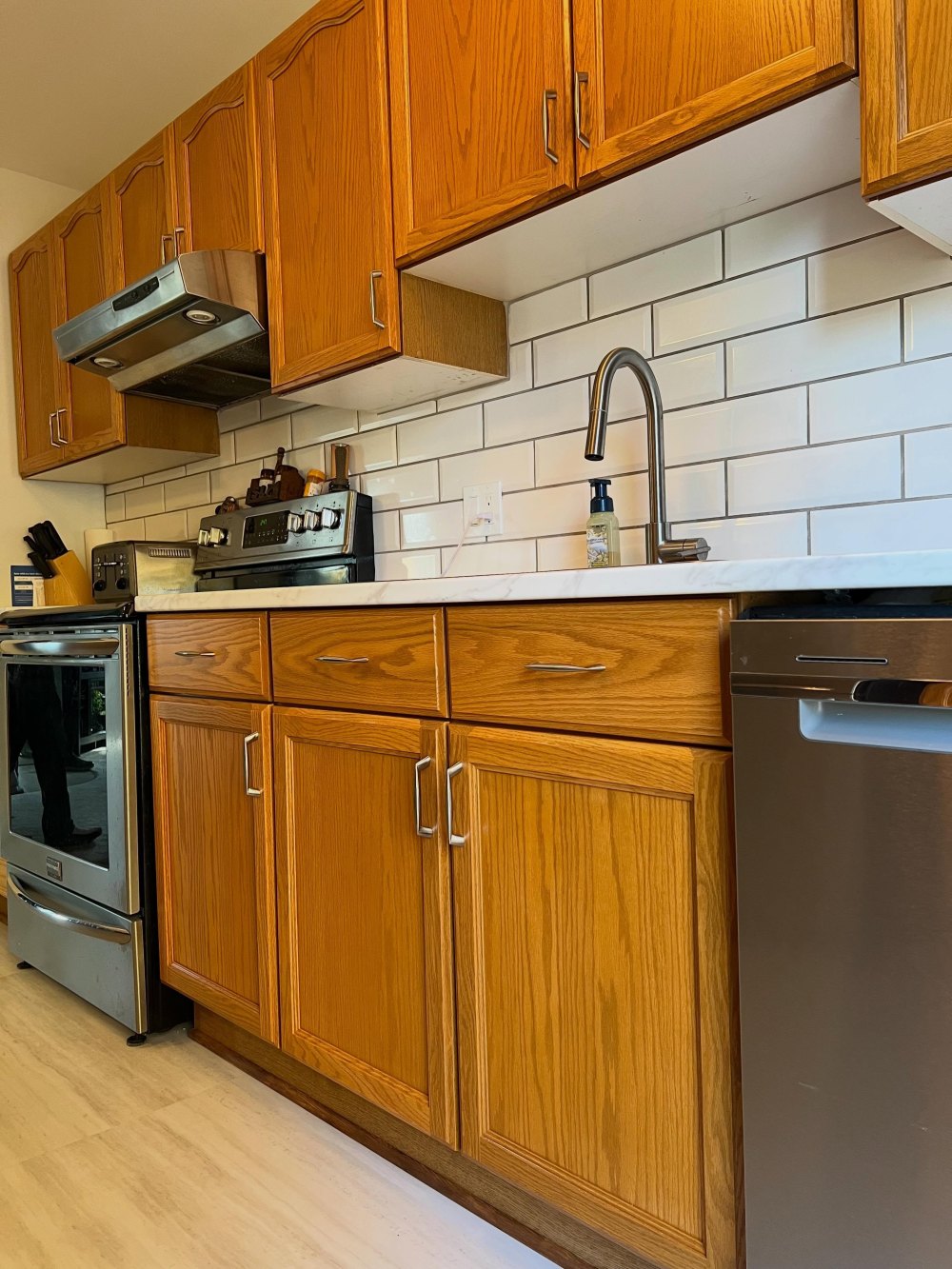
Viewed from an angle, the renewed lower cabinets sit beneath the existing countertop and next to the stainless steel range and dishwasher. The red oak finish remains the primary material, with white tile providing contrast behind the sink and cooking area.
The original cathedral cabinets remain a part of the kitchen.
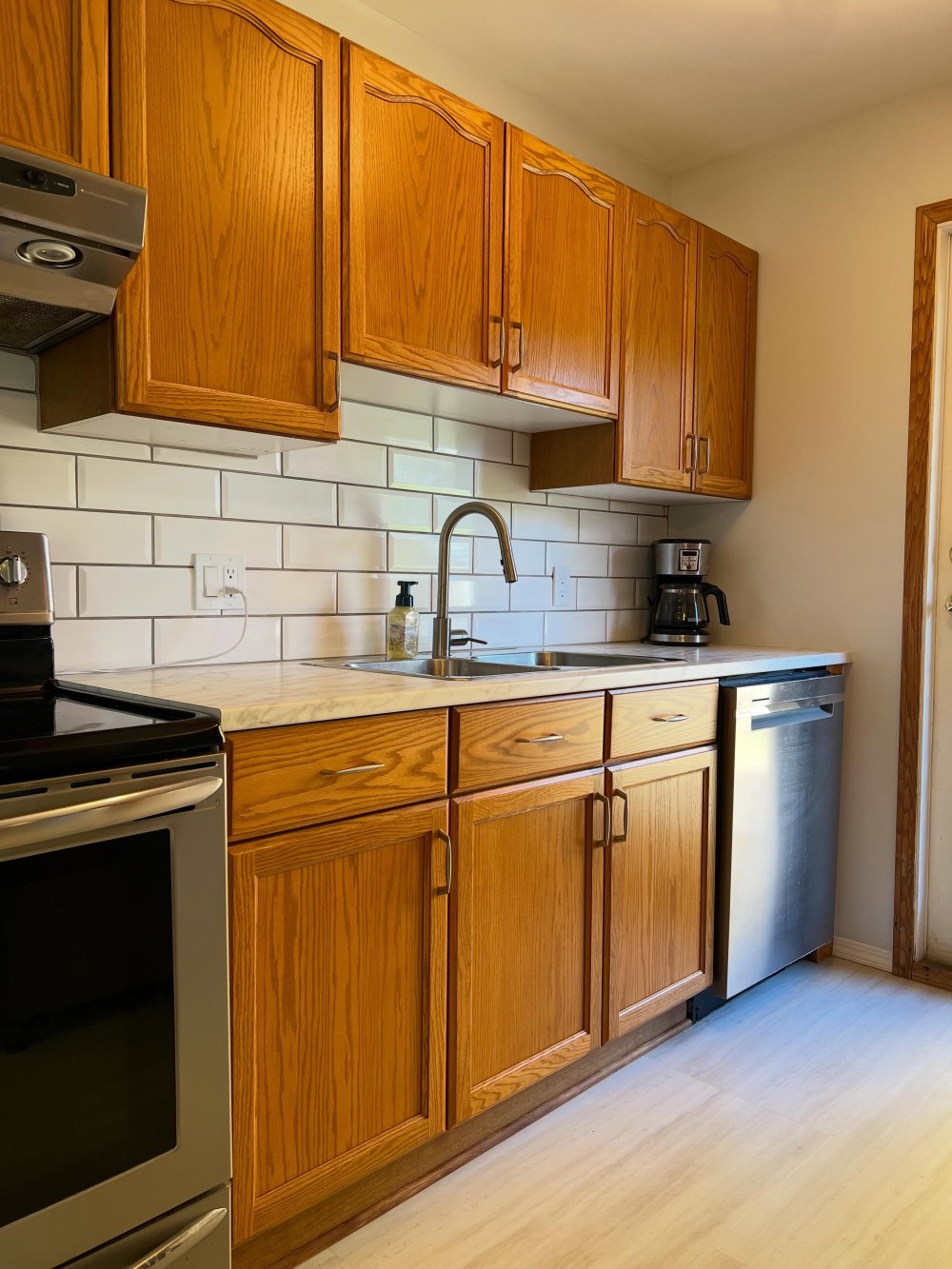
The upper cabinets still feature their curved cathedral rails, while the lower doors utilize raised rectangular panels. Matching the stain allowed both styles to coexist within the same cabinet arrangement.
No new cabinet color was introduced, and the renovation did not necessitate a change in layout. The backsplash and countertops, installed by Contractors Corner, offer a white backdrop for the restored wood appearance.
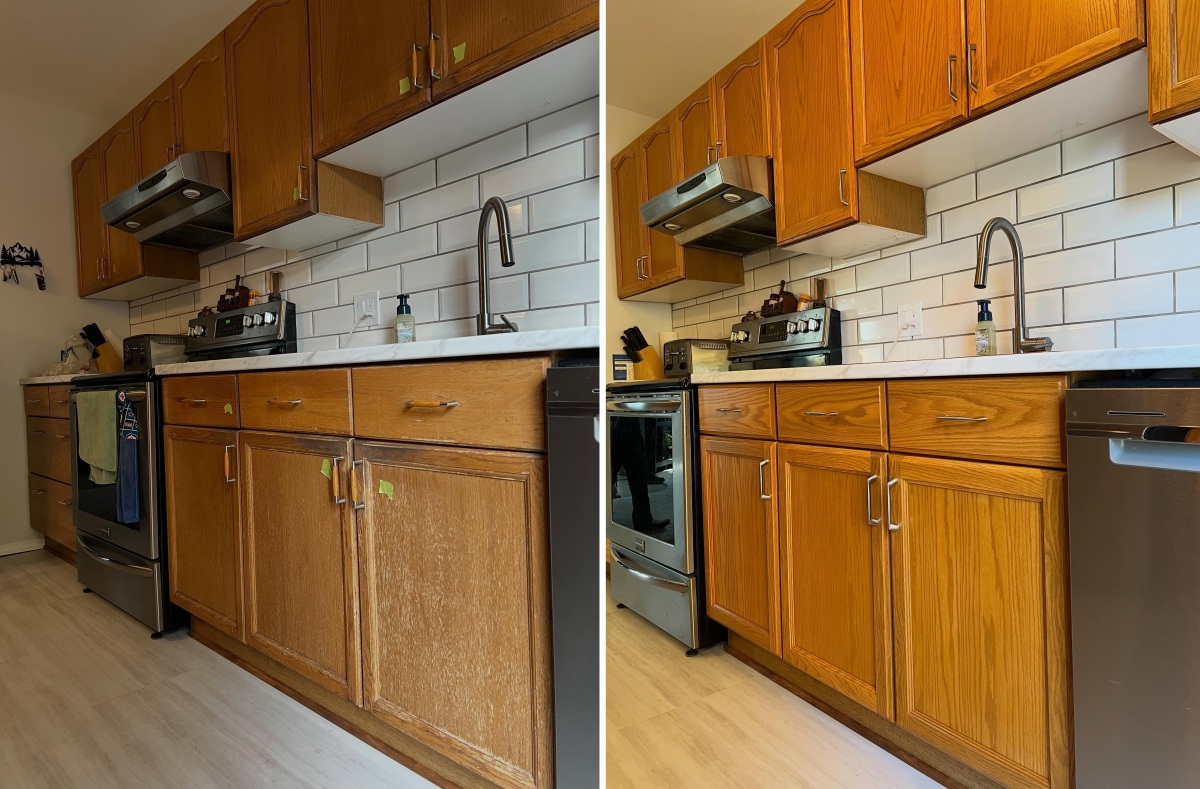
Before and After: The same red oak look is achieved without the worn finish.
Side-by-side photos highlight the changes around the sink. Previously, the lower doors featured faded surfaces, worn edges, and uneven stain. After the work, the renewed fronts display a consistent red oak finish, visible grain, and chrome handles.
Instead of painting over the wood, the homeowners opted to preserve the cabinet design from their earlier renovation.
Would you preserve the original red oak appearance or seize the opportunity to paint the cabinets a different color?
Image credits go to @refreshedandrefurbishedmb
The post Instead of Painting Their Worn Red Oak Cabinets, They Matched the Original Stain and Recreated the Cathedral Doors appeared first on Homedit.









































What exact stain formula was used? “Matching” is vague. Did they test the finish durability in that high-traffic sink area, or is that just cosmetic? Show me the long-term results, not just the immediate fix.
Great questions! We used a custom blend of Minwax Early American and Jacobean. For durability, we applied three coats of polyurethane over the sink area, not just cosmetic stain. Long-term photos will be added to the post next week to show how the finish holds up over time.