
A front entrance can appear outdated when its concrete porch is marred by dark stains, cracks, and years of wear. While stone pavers are a common solution for covering such surfaces, there is an alternative method that avoids both pouring new concrete and laying down fresh stones.
Natasha, the DIY creator behind The Smart Momma, transformed her front porch by using a stepping-stone mold as a stencil and six colors of spray paint. Rather than filling the mold with cement to cast stones, she inverted it and sprayed paint through the openings.
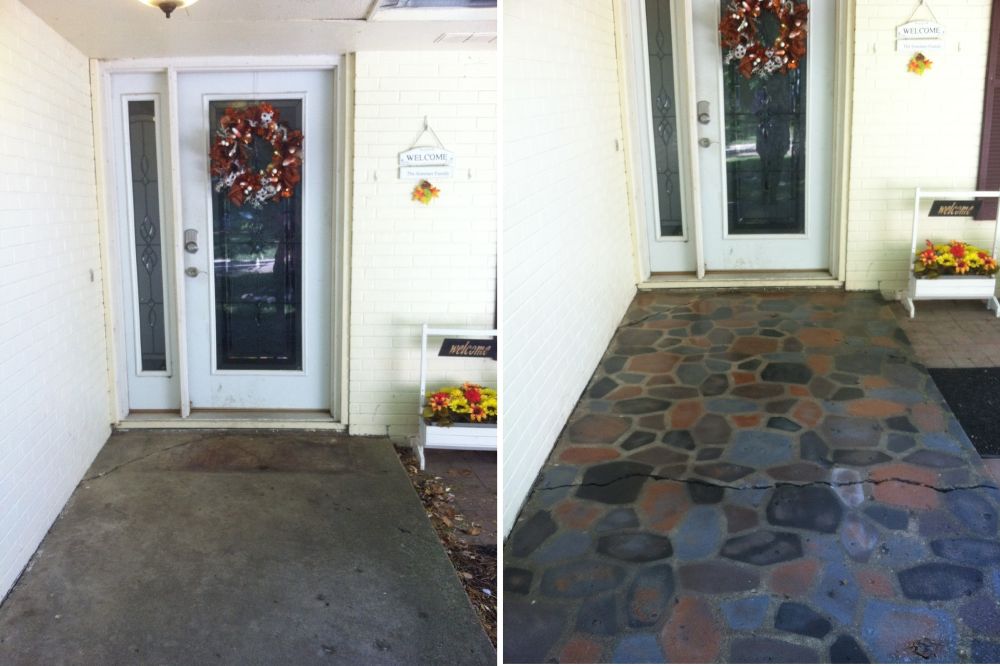
The project required approximately two hours of labor, not counting drying time, and cost around $60 in 2012. After sealing, the concrete resembled irregular stone paving, featuring varied colors across the painted shapes with the original surface visible in the gaps between them.
The Front Porch Started With Stained Concrete
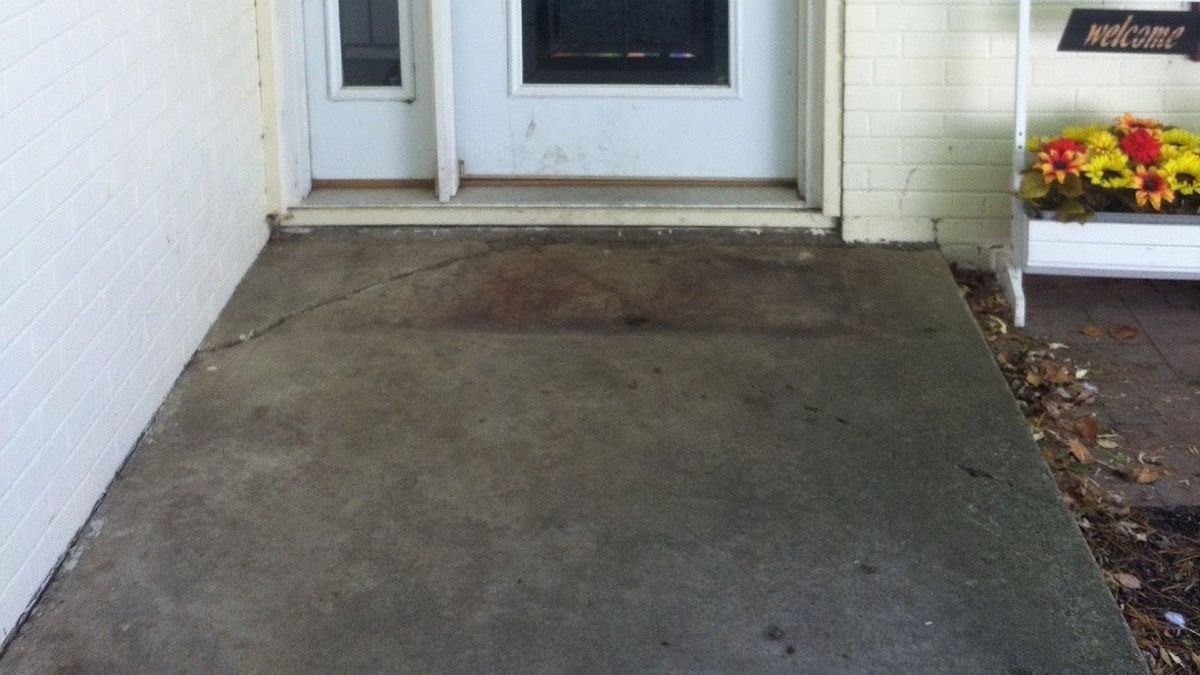
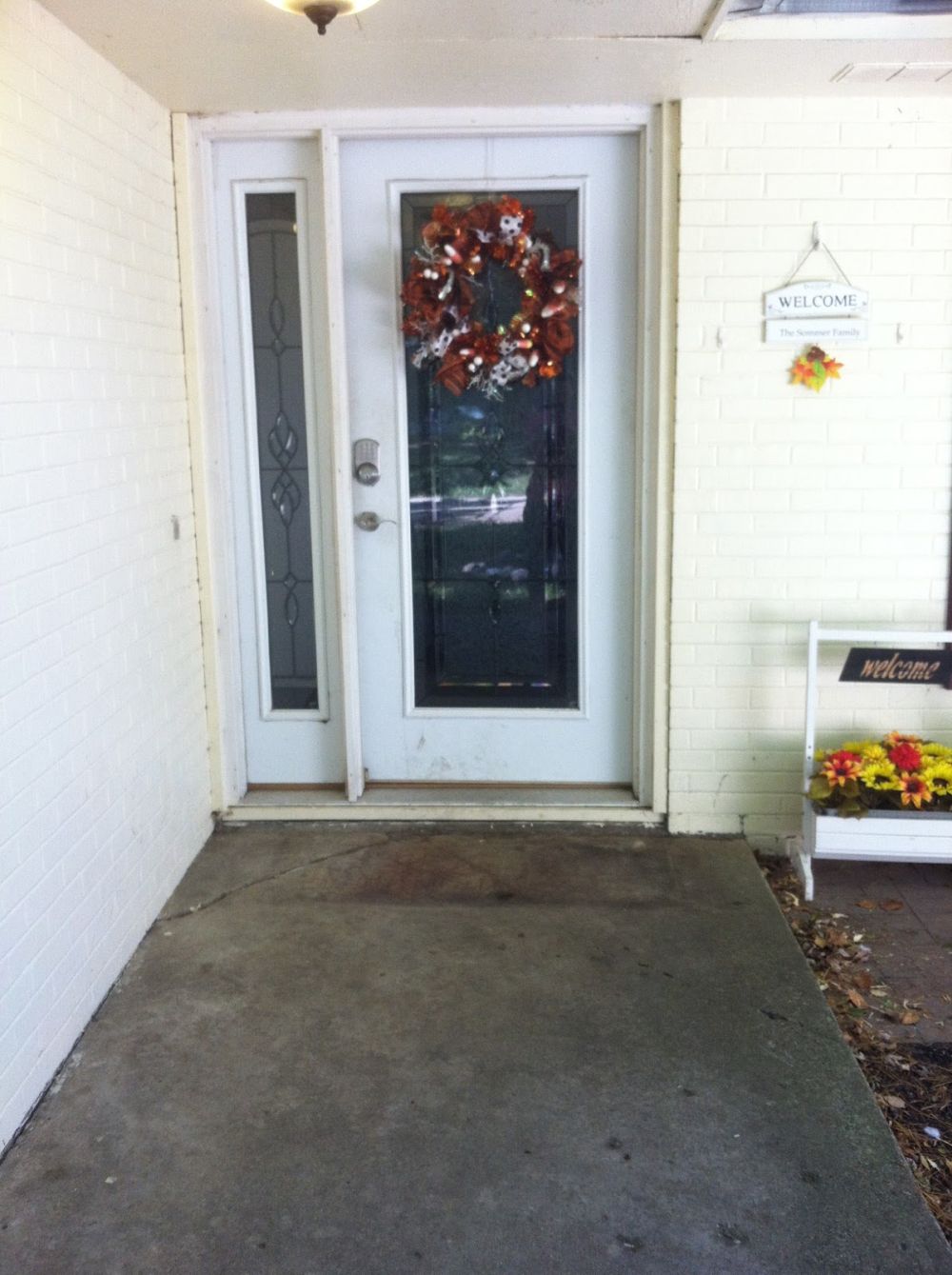
The original entrance featured a rectangular concrete slab leading to a white front door, flanked by painted brick walls. Dark stains were present on parts of the surface, and a crack extended across the porch near the outer edge.
Throughout the project, the concrete remained structurally intact. The objective was to alter the visual appearance of the slab rather than removing or replacing it.
Cleaning the Concrete Before Painting
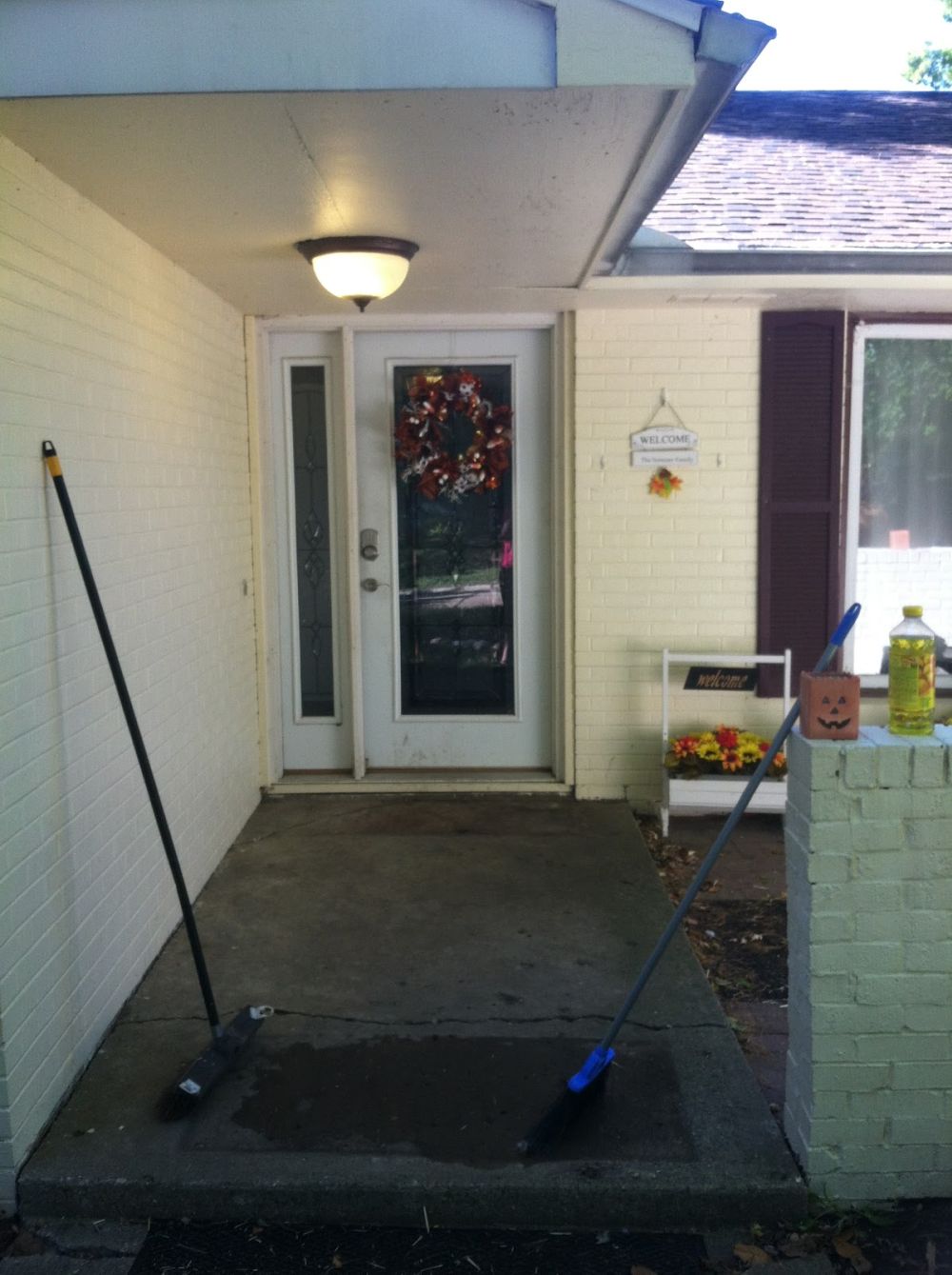
The initial step involved scrubbing the porch using a push broom, water from a hose, and bleach. This cleaning process removed surface dirt prior to the application of paint.
The concrete required time to dry before the stencil work could begin, as trapped moisture can interfere with paint adhesion.
A Stepping-Stone Mold Became a Paint Stencil
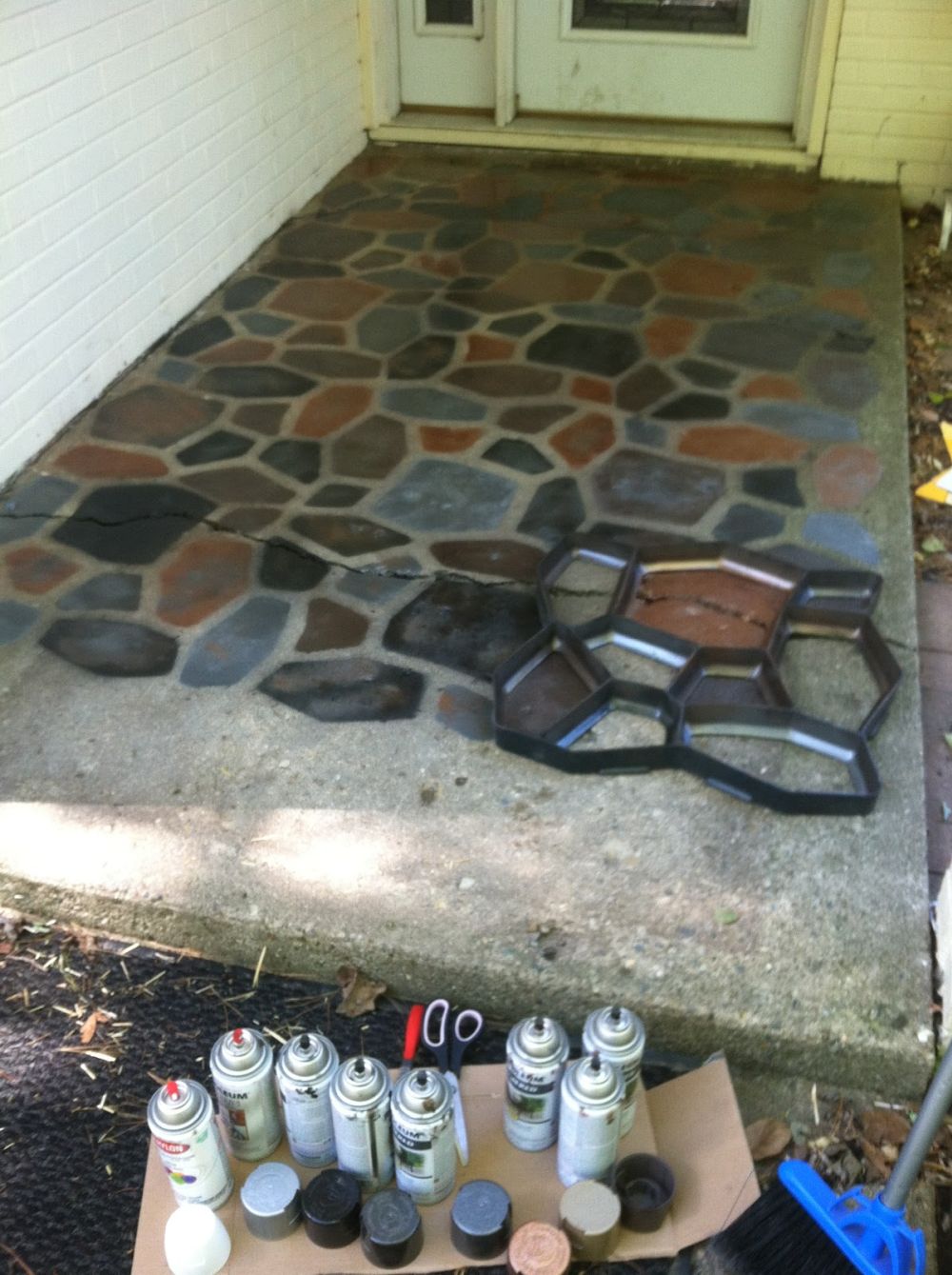
The tool responsible for the pattern was a plastic mold typically used for pouring concrete stepping stones. Instead of casting stones, the mold was flipped upside down and positioned against the porch surface.
Natasha sprayed paint through the individual openings, repositioned the mold to the next section, and continued across the slab. The plastic dividers left strips of exposed concrete between the colored shapes, creating the appearance of joints without the use of mortar.
Six Spray Paint Colors Created the Stone Pattern
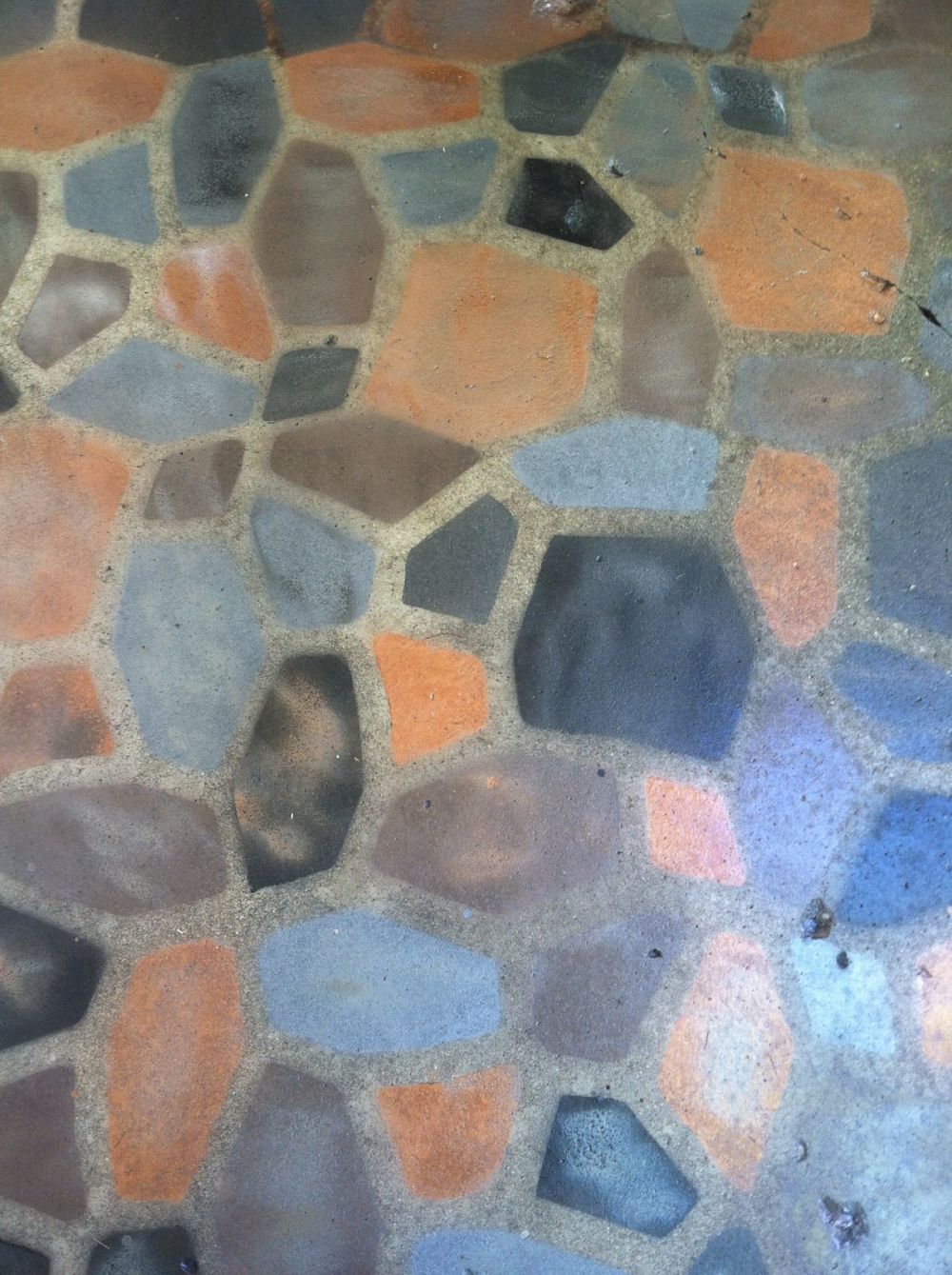
The project utilized six shades of Rust-Oleum Hammered spray paint, including gray, brown, and reddish tones. Some colors were blended within individual shapes to create variation across the surface.
Close-up views reveal how the shapes differ in size, color, and outline. Dark charcoal sections sit adjacent to blue-gray and terracotta-colored pieces, while the exposed concrete forms the lighter lines between them.
Concrete Sealer Protected the Painted Surface
Once the spray paint had dried, a concrete sealer was applied over the finished design.
In a later response to readers, Natasha reported that the porch had withstood snow and ice. Years after completing the project, she also recommended resealing the surface every other year.
That was her experience with this installation. Outdoor paint performance depends on the product, surface preparation, weather exposure, and compatibility with the sealer.
The Finished Porch Looks Like Irregular Stone Paving
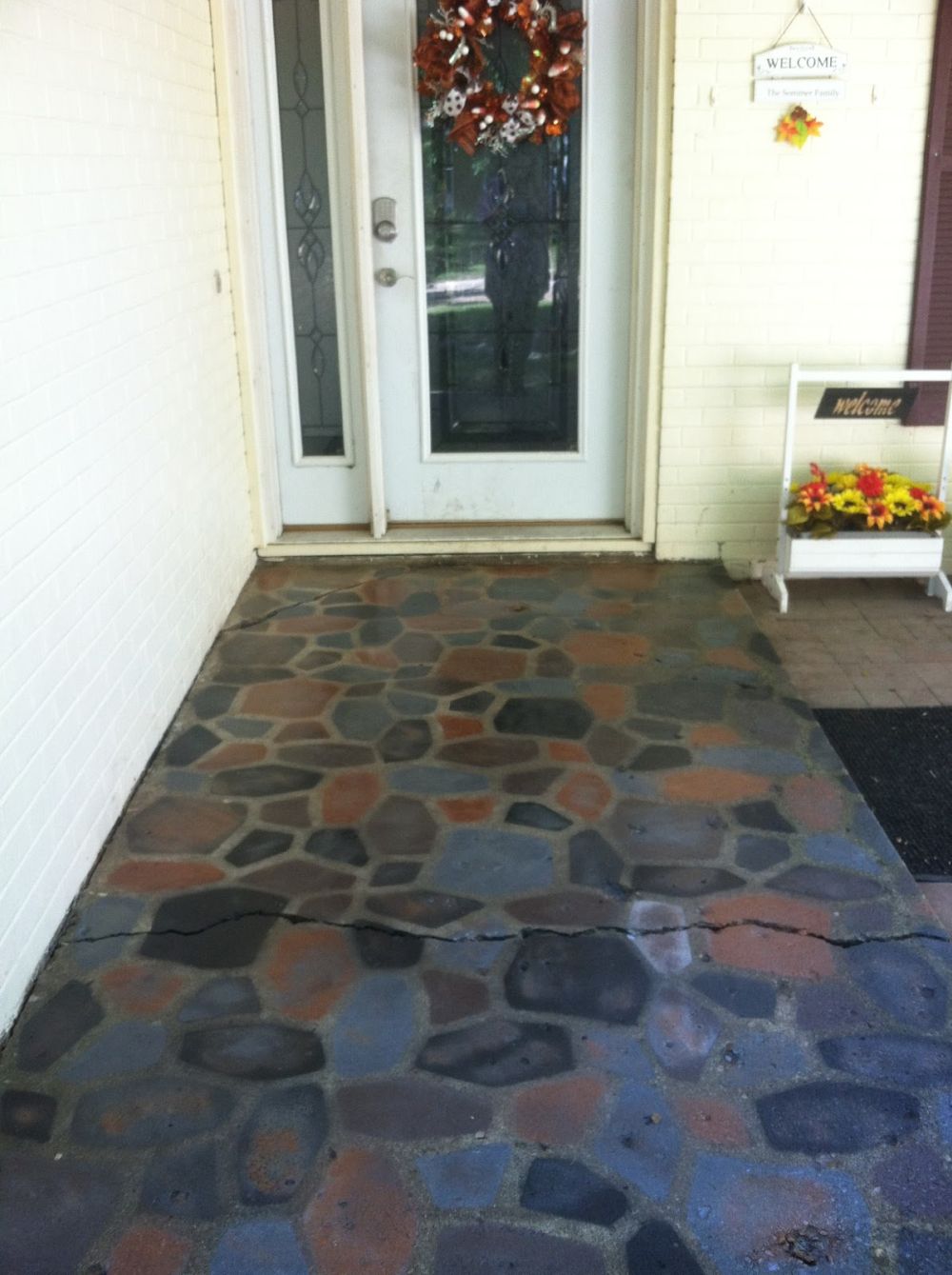
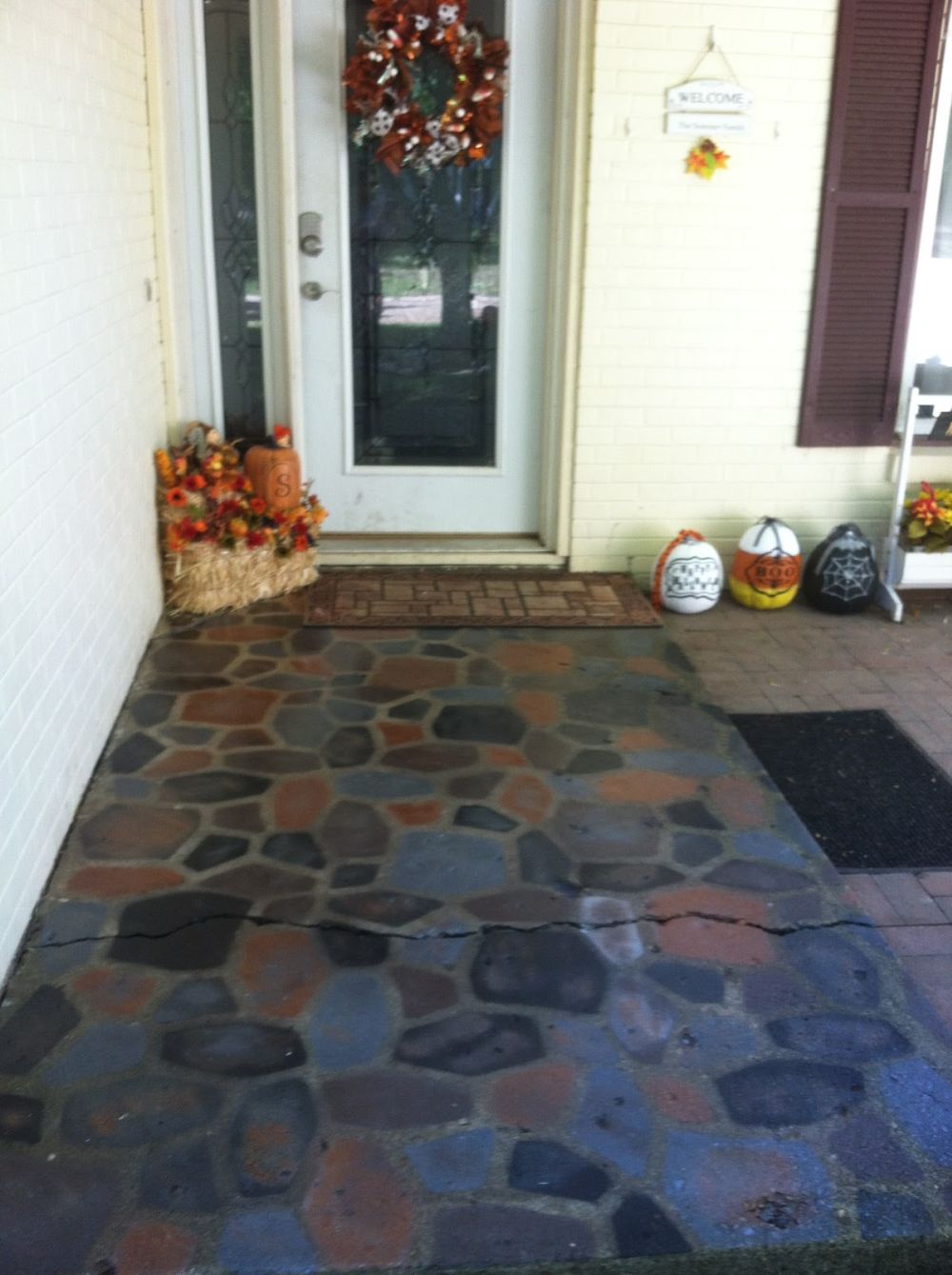
The completed pattern covers most of the concrete slab, extending from the front step toward the doorway. The individual shapes resemble a random arrangement of flagstones, although no actual stone was installed.
The original crack remains visible across the painted surface. The makeover changed the appearance of the concrete without repairing that damage.
With a doormat and seasonal decorations added, the entry demonstrates how the painted pattern complements the white brick exterior and glass-paneled front door.
The project also leaves the existing porch height and doorway threshold unchanged, since the design was applied directly to the concrete rather than built above it.
Would you paint a stone pattern onto an existing concrete porch, or prefer installing real pavers?
Image credits go to @thesmartmomma.
The post Instead of Laying Stone Pavers, She Turned a Concrete Mold Upside Down and Spray-Painted Her Porch appeared first on Homedit.




















So, we’re paying sixty dollars to spray paint a slab? Groundbreaking. I suppose if you enjoy watching paint dry for hours, this “innovative” trick is truly revolutionary. Bravo.
I get the sarcasm! It’s actually a specialized concrete coating, not just paint, that mimics natural stone texture. While the upfront cost might feel steep, it eliminates the heavy labor and material costs of real stone. It’s a budget-friendly compromise for that high-end look without the hardscape price tag.