
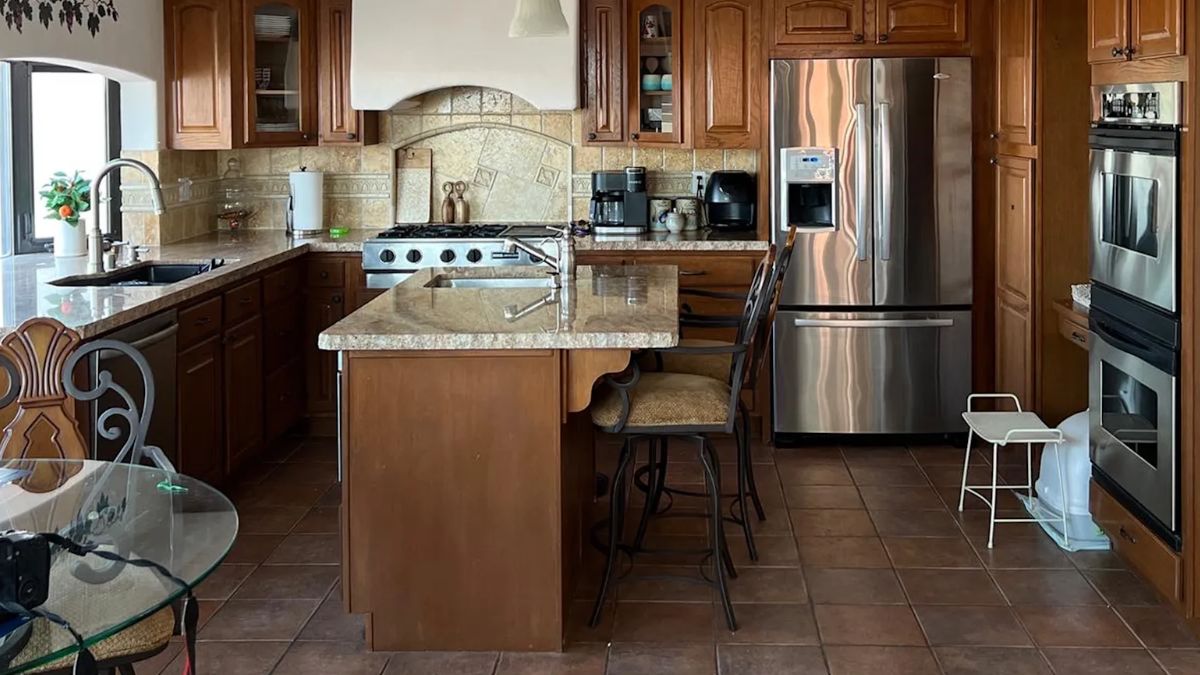
Stainless steel appliances and a refrigerator were flanked by dark wood cabinets that covered almost every wall in the kitchen. Although white countertops and subway tile were already installed, the brown cabinetry and golden wood floors were the dominant features of the space. The renovation altered one of these elements while leaving the other unchanged.
According to an Instagram post by @pezzottipainting from Norwalk, Connecticut, the existing cabinets were painted with SW Bright White using Renner Wood Coatings 851 in a 25-sheen finish. The update was finalized with the addition of new black hardware and soft-close mechanisms.
Dark Wood Cabinets Covered the Original Kitchen
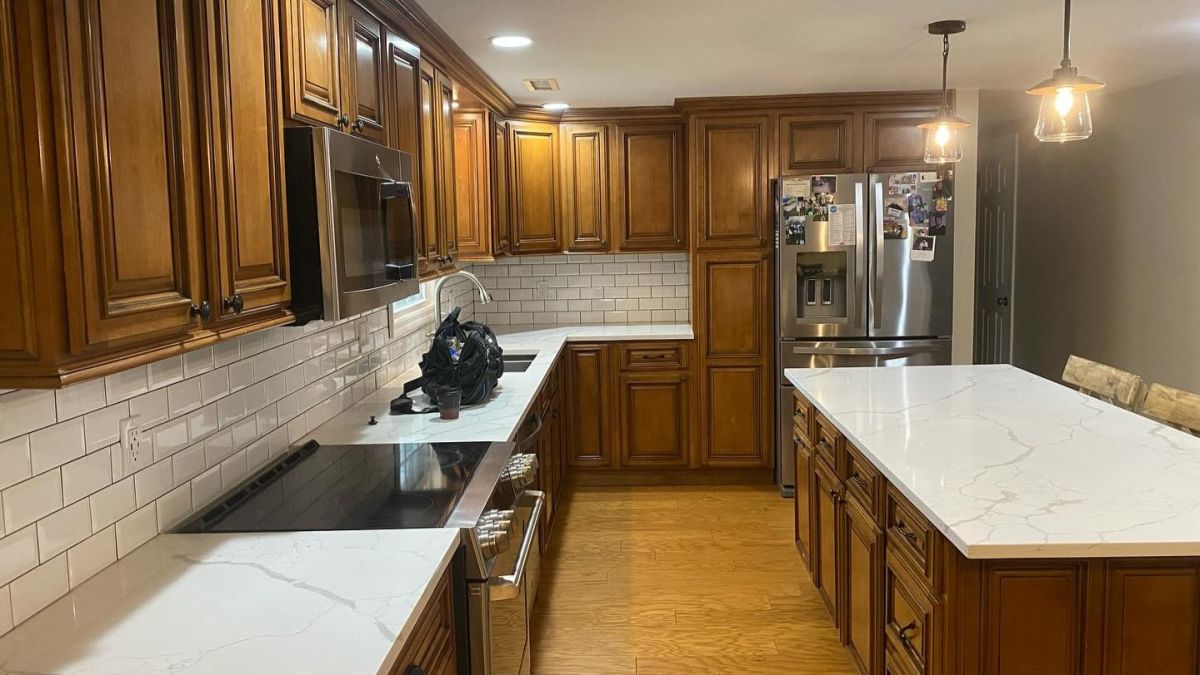
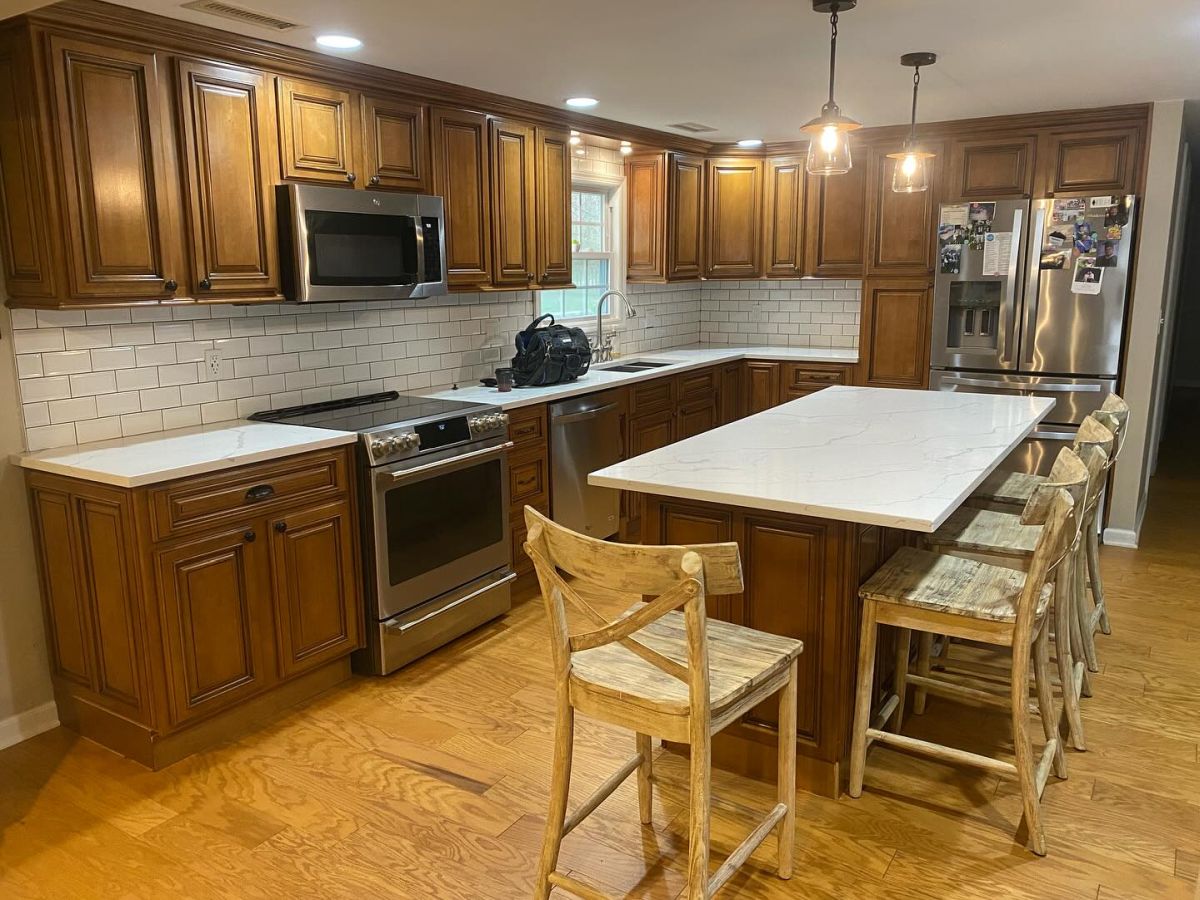
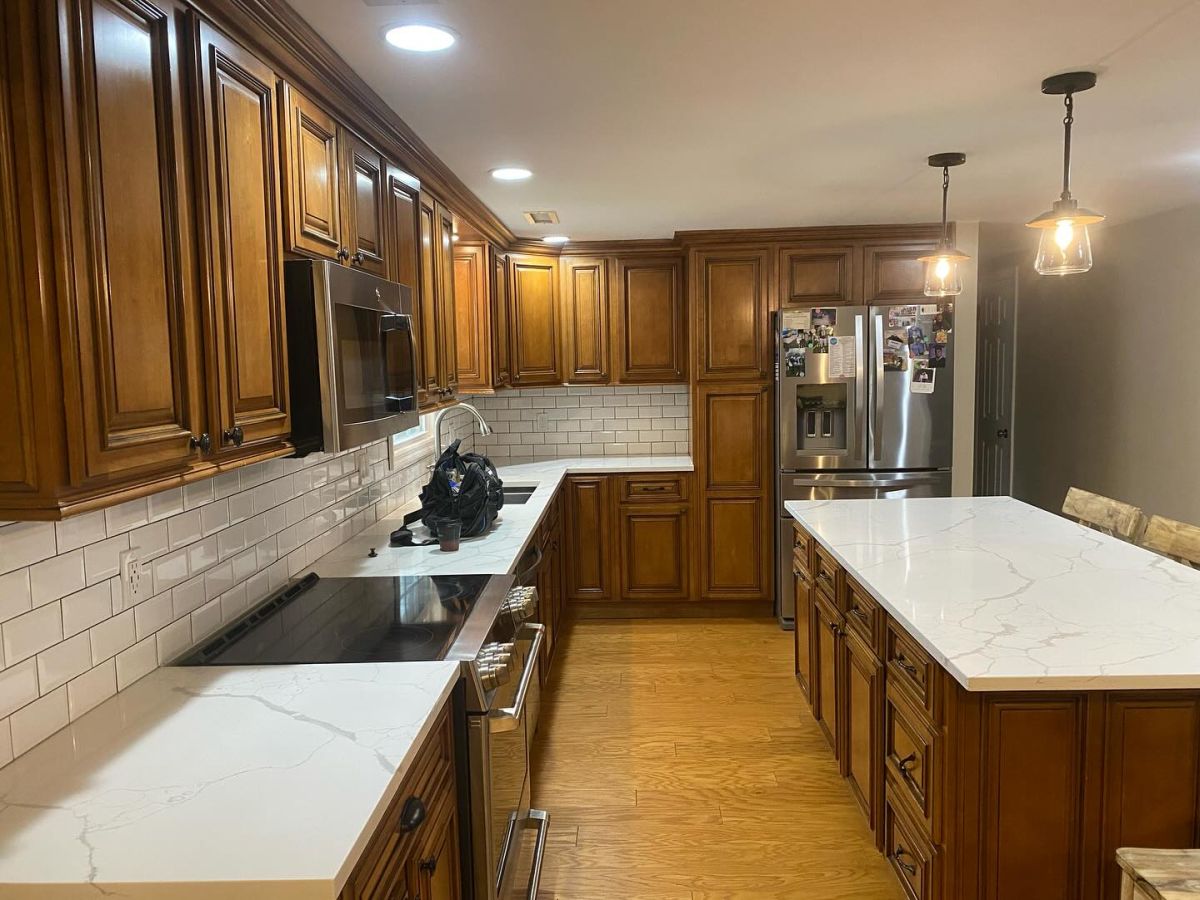
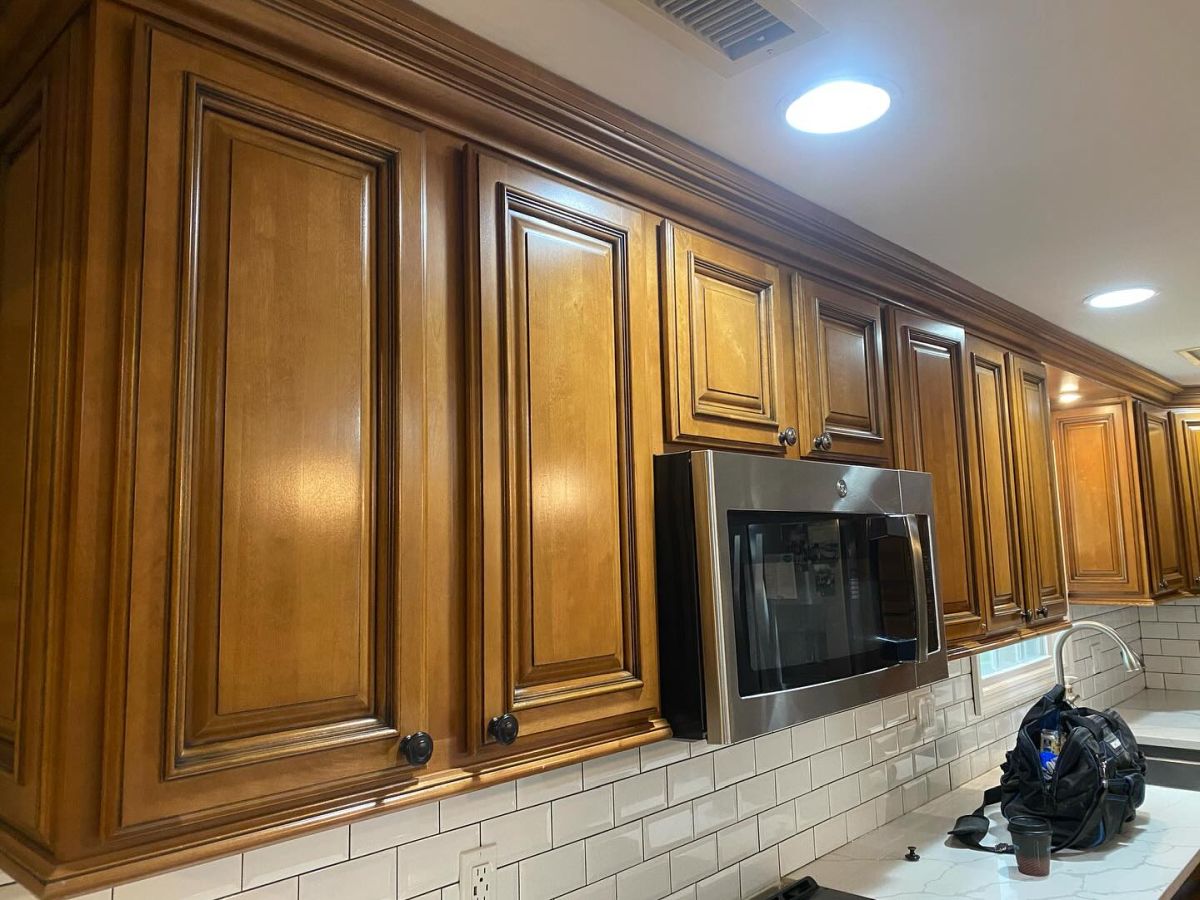
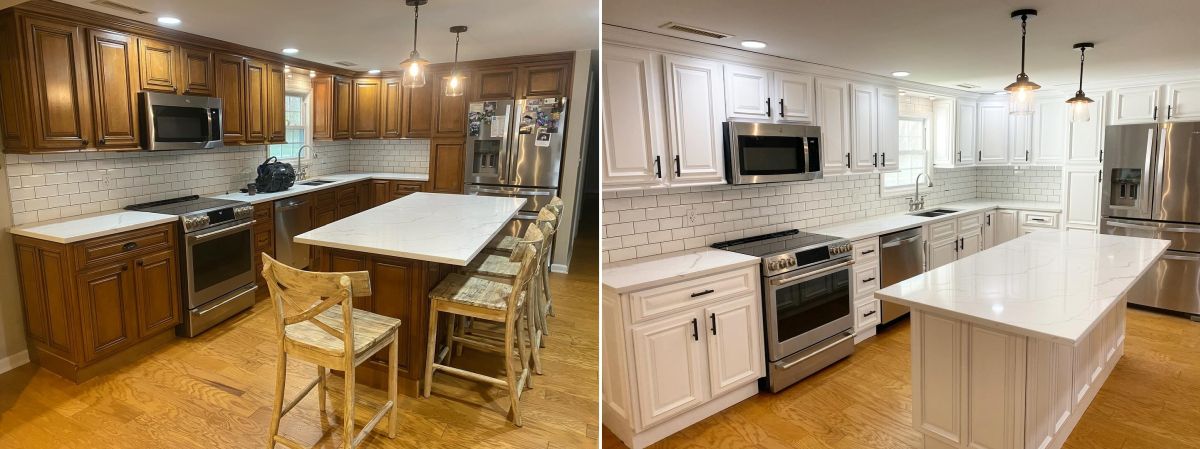
Brown raised-panel cabinets extended along the cooking wall, wrapped around the back corner, and framed the refrigerator. Crown molding matched the cabinetry and reached the ceiling, while a large island featured the same stained finish.
White stone-look countertops with gray veining, stainless steel appliances, and glass pendant lights provided a contrast to the traditional cabinetry. Wooden counter stools were arranged along the seating side of the island.
A wide aisle separated the perimeter cabinets from the island, starting from the range. Storage space continued around the sink area toward a tall pantry located next to the refrigerator, with a dishwasher installed under the counter.
White Countertops and Subway Tile Were Already There
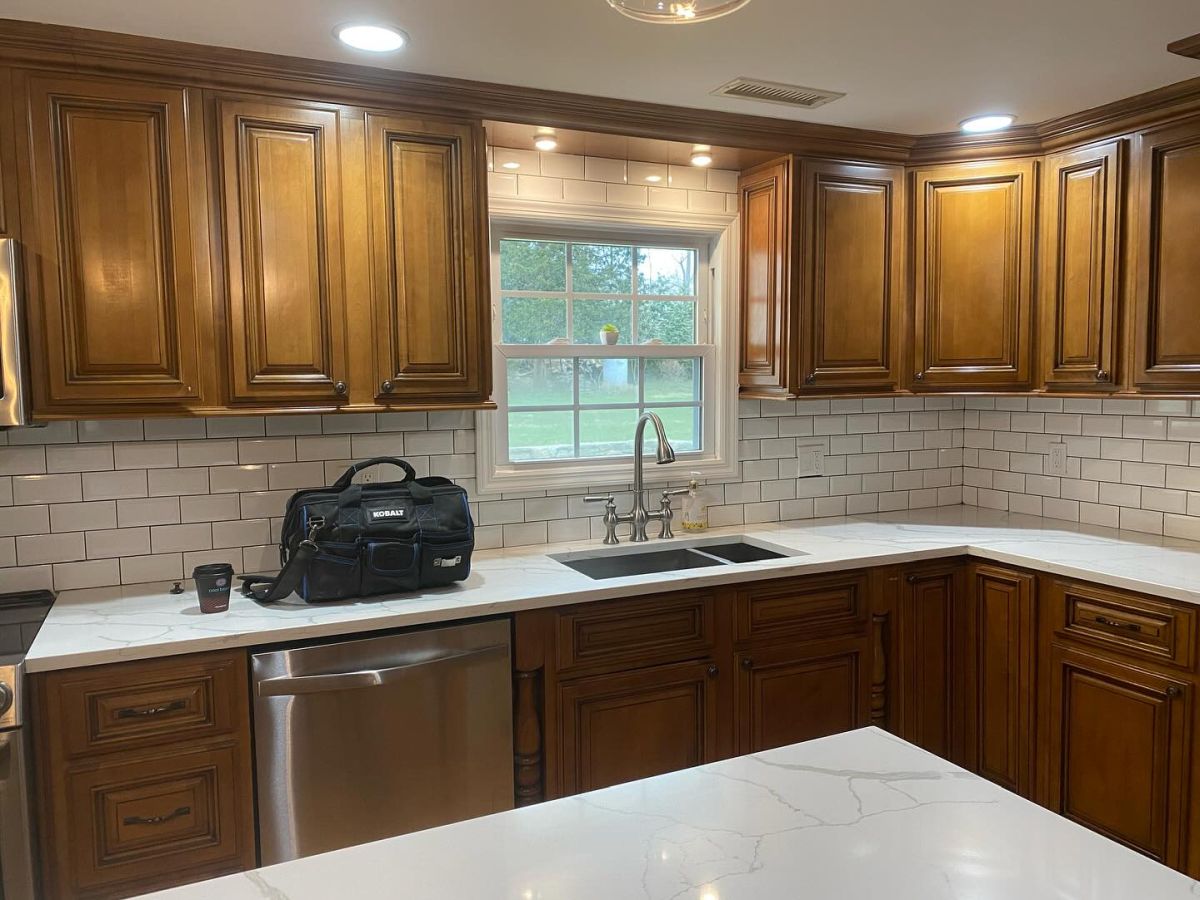
The wall behind the sink featured a white subway tile backsplash with contrasting grout lines. A black double-bowl sink and a traditional faucet were installed beneath the window.
Decorative turned supports framed the cabinet under the sink, and the countertop extended around the corner to create additional workspace. None of these elements needed to be replaced for the cabinet renovation.
Raised-Panel Cabinet Doors Stayed in Place
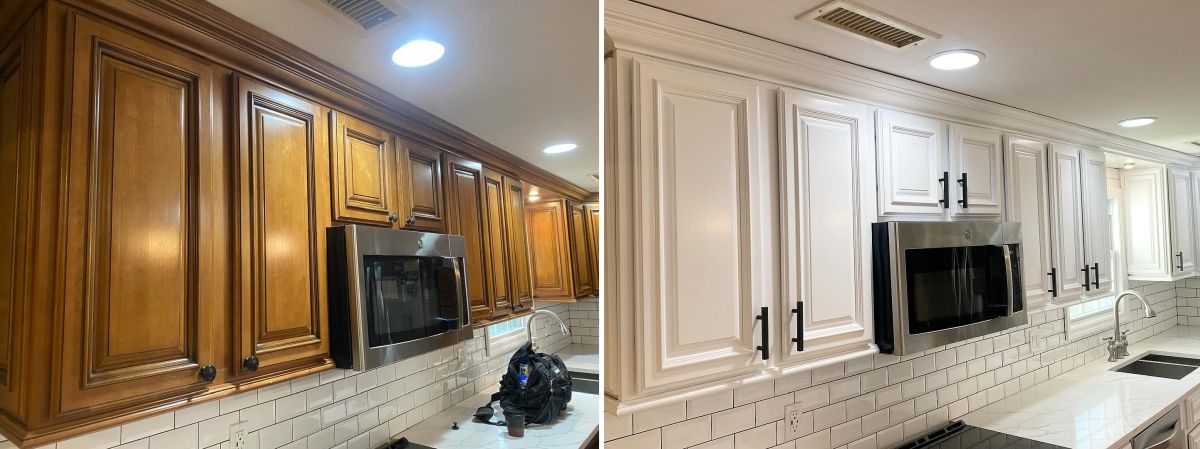
Close-up images revealed detailed door profiles, raised center panels, and molding on the upper cabinets. Small round knobs matched the dark finish, and narrow doors surrounded the built-in microwave.
Instead of replacing these fronts, the painter kept the existing cabinet structure and prepared it for a new coating.
SW Bright White Changed the Entire Kitchen
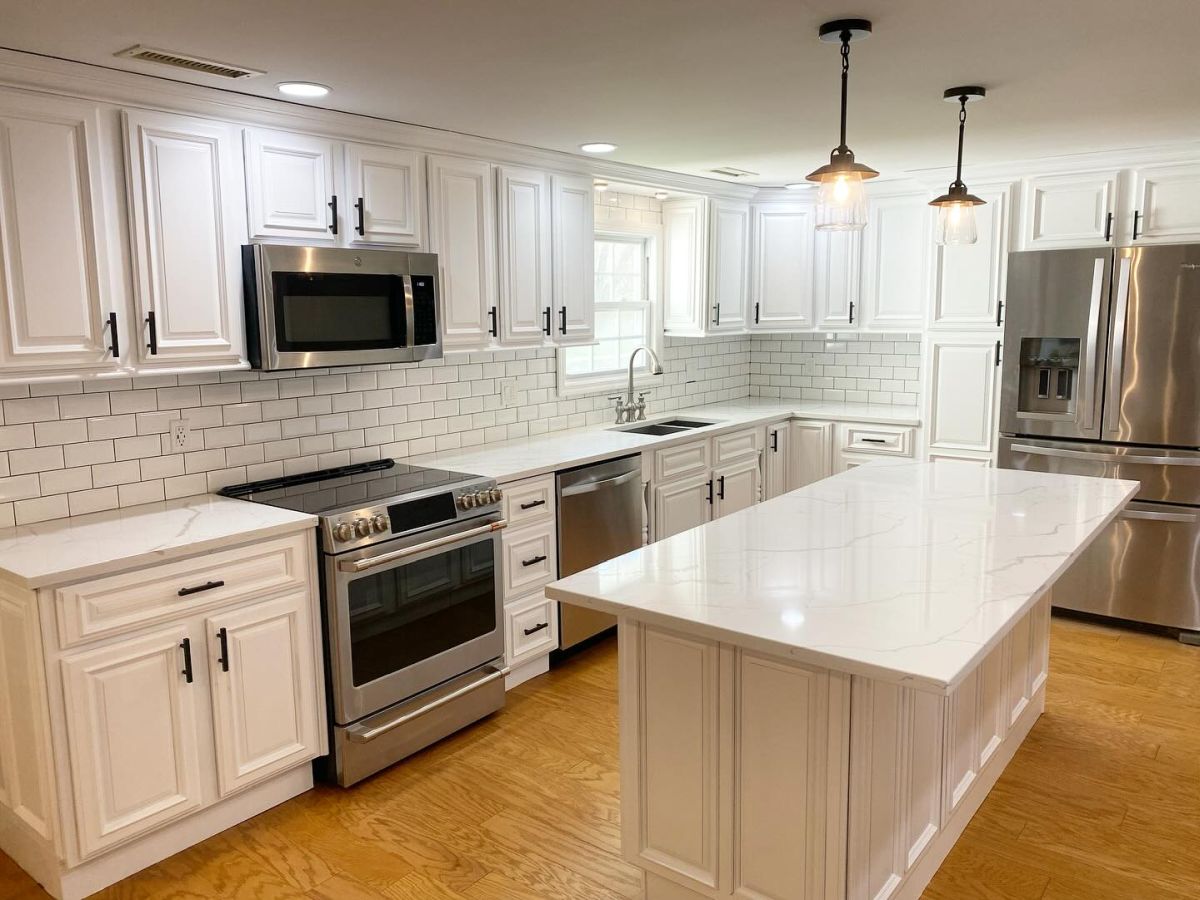
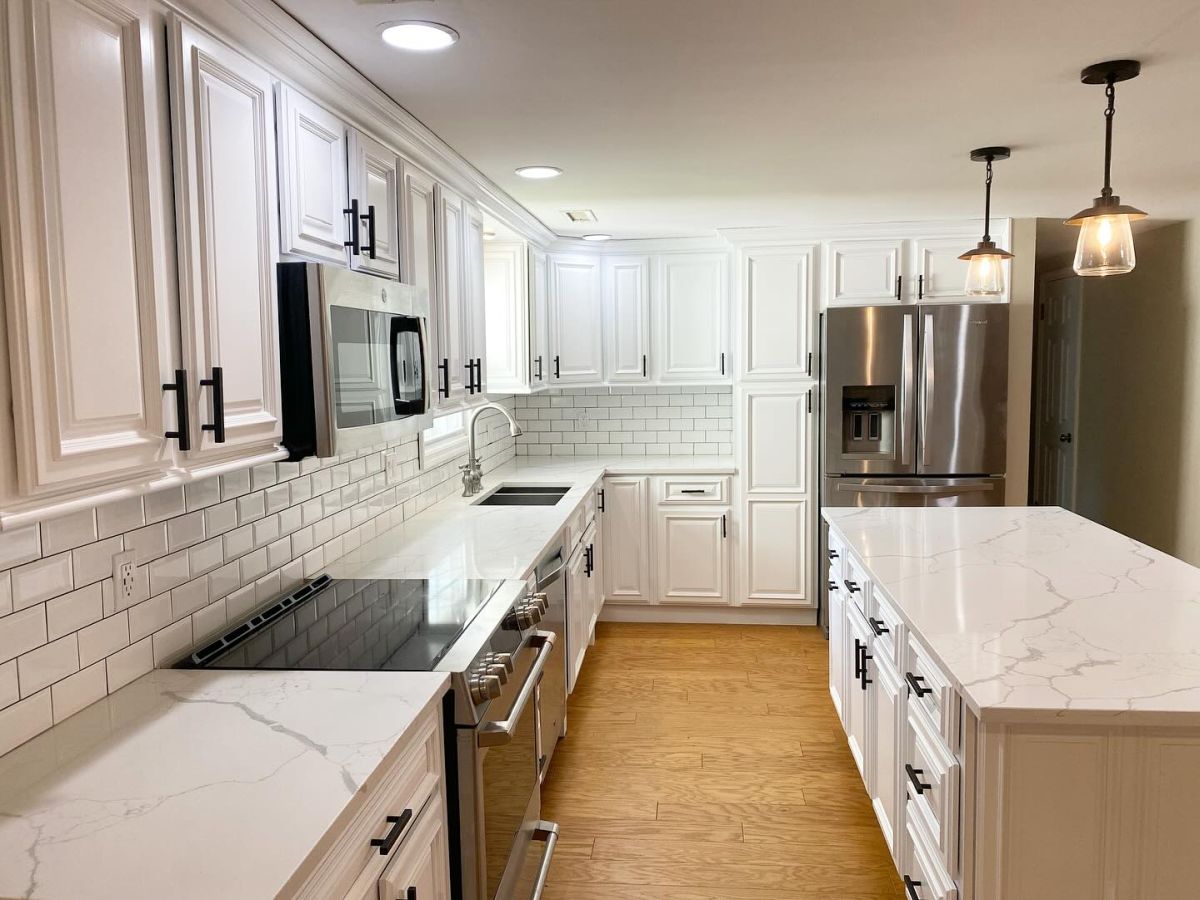
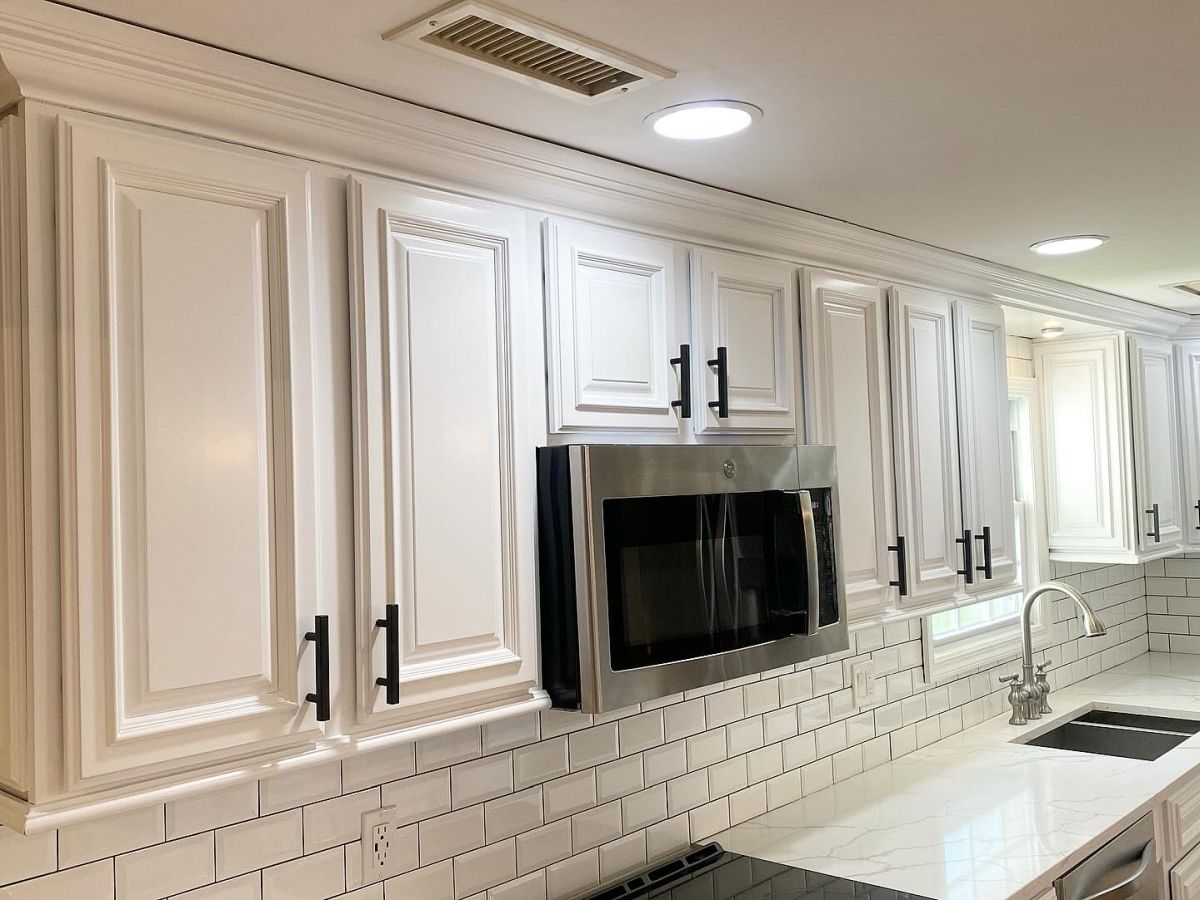
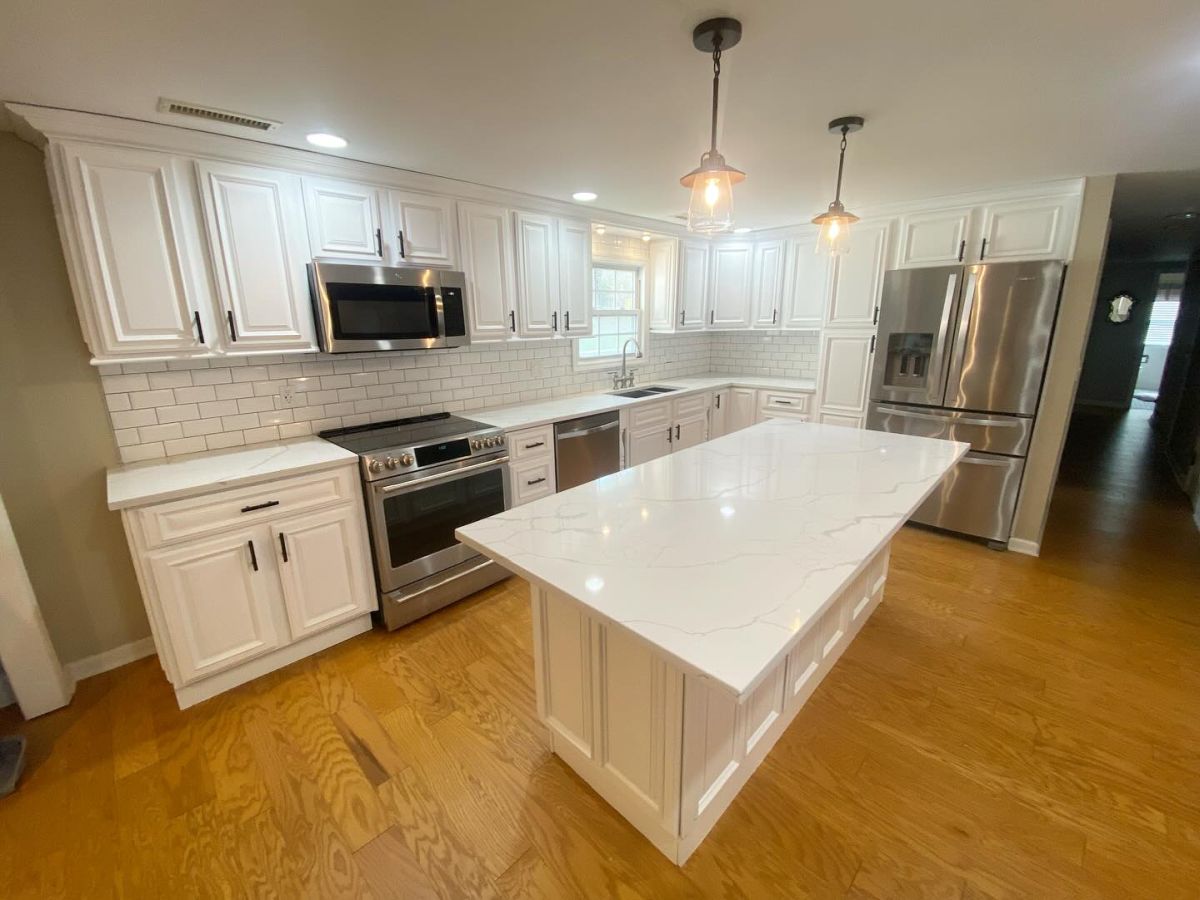
After the painting, white cabinetry extended from the range wall across the sink and refrigerator sections. The island received the same finish, replacing the large brown cabinet surfaces with white panels.
Black bar pulls added contrast to the new paint, while the original countertops, stainless steel appliances, and pendant lights remained in place.
The cooking aisle demonstrates how the new finish covers the drawers, lower cabinets, and tall pantry. The existing cabinet dimensions and appliance positions were maintained, preserving the kitchen's established layout.
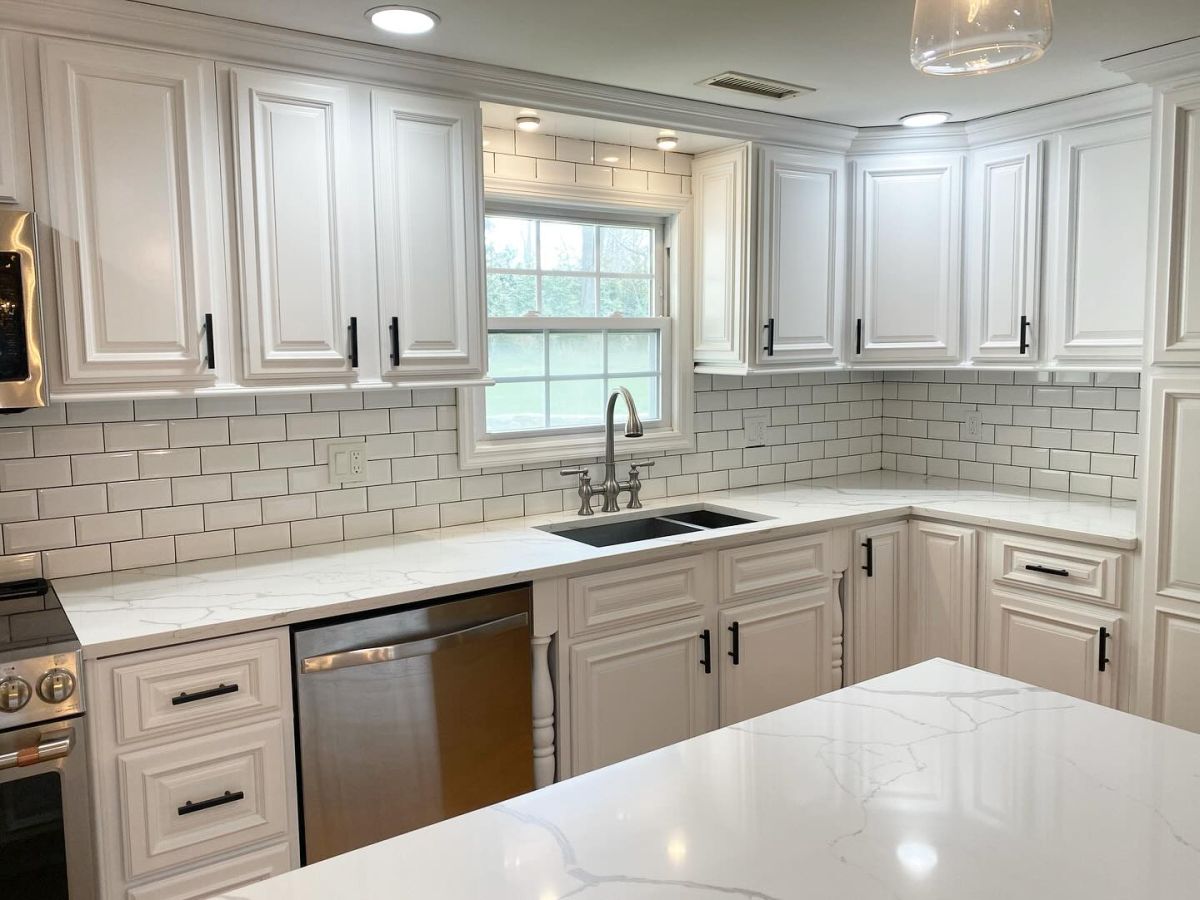
The Sink Wall Now Matches the Countertops
White paint covers the cabinet doors and turned supports beneath the sink, linking them with the existing countertop and subway tile.
The black sink, stainless steel dishwasher, faucet, and window trim remain, offering contrast against the painted cabinetry.
Black Hardware Replaced the Original Knobs
Long black pulls replaced the small dark knobs on the cabinet doors. The upper cabinets kept their raised panels and decorative trim, while the white finish made the profiles visible without the contrasting brown stain.
Pezzotti also installed soft-close mechanisms for the doors and drawers, enhancing the functionality of the existing cabinetry.
Golden Wood Floors Were Left Untouched
The renovated kitchen still features honey-gold flooring with prominent wood grain. Against the white island and perimeter cabinets, the floor serves as the room's primary wood finish.
The island's seating overhang remains, and the open floor area around it highlights the contrast between the retained wood and the painted cabinet bases.
Before and After: Brown Cabinets to Bright White
The side-by-side comparison illustrates the impact of replacing the dark cabinet finish without altering the countertops, backsplash, flooring, appliances, or layout.
A closer comparison of the upper cabinets confirms that the raised-panel doors, crown molding, and microwave surround were preserved. Bright White paint and black bar pulls give the existing cabinetry a new appearance without replacing the doors.
The renovation kept the golden wood floors instead of refinishing them to match the new cabinet color. With the brown cabinetry removed, the white counters and tile no longer compete with dark wood surfaces throughout the room.
Would you have kept the golden wood floors, or changed them to match the new white cabinets?
Image credits go to @pezzottipainting.
The post He Painted the Dark Wood Cabinets Bright White, but Kept the Golden Wood Floors appeared first on Homedit.












SW Bright White on raised-panel cabinets with crown molding? Sounds like a lot of prep work. Did the wood stain bleed through, or is that sheen hiding imperfections? I need proof this didn’t look cheap.
Great question! We used a high-quality primer specifically designed to block tannin bleed, ensuring no yellowing. The satin sheen is actually a pro choice—it softens light and effectively camouflates minor imperfections, creating a warm, inviting look rather than a sterile, cheap appearance.