
Brass is moving beyond the knobs and taps where it is familiar. In these interiors, it supplies the framework for furniture, covers large stretches of cabinetry or shapes the lighting itself. Wood and glass still feature, but the metal takes a larger role.
The 11 designs include shelving, storage, kitchen work areas, dressing furniture and lights. Some use brass itself, while others show brass-colored fittings or quieter metallic finishes. The distinction matters when looking at how much of a room the finish occupies.
Dark timber on a brass framework
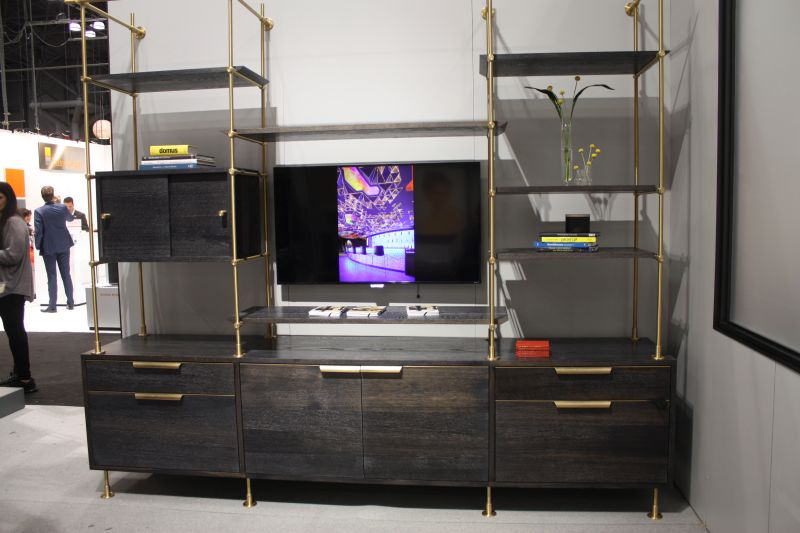
Amuneal pairs dark wood cupboards and open shelves with thin brass rods that run upward from the floor toward the ceiling. The shelves sit at different heights around a television, and closed storage runs below. The rods provide support without the broad side panels of a standard bookcase.
Glass shelving above the kitchen counter
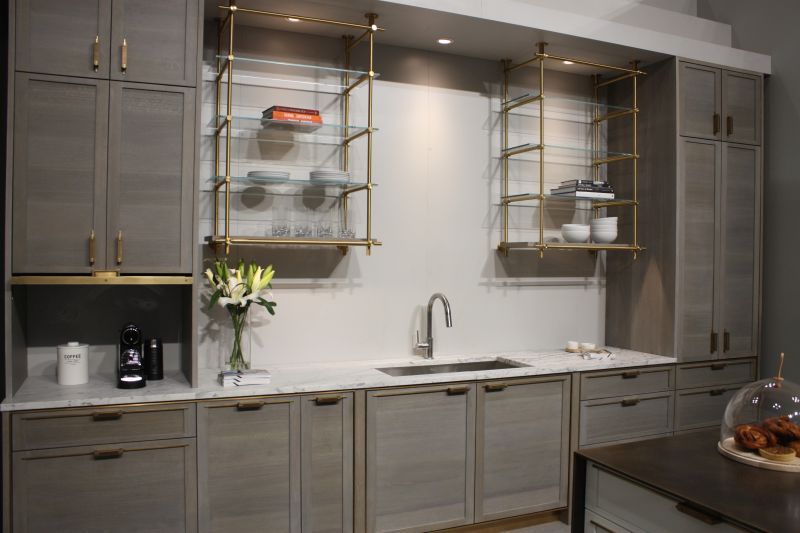
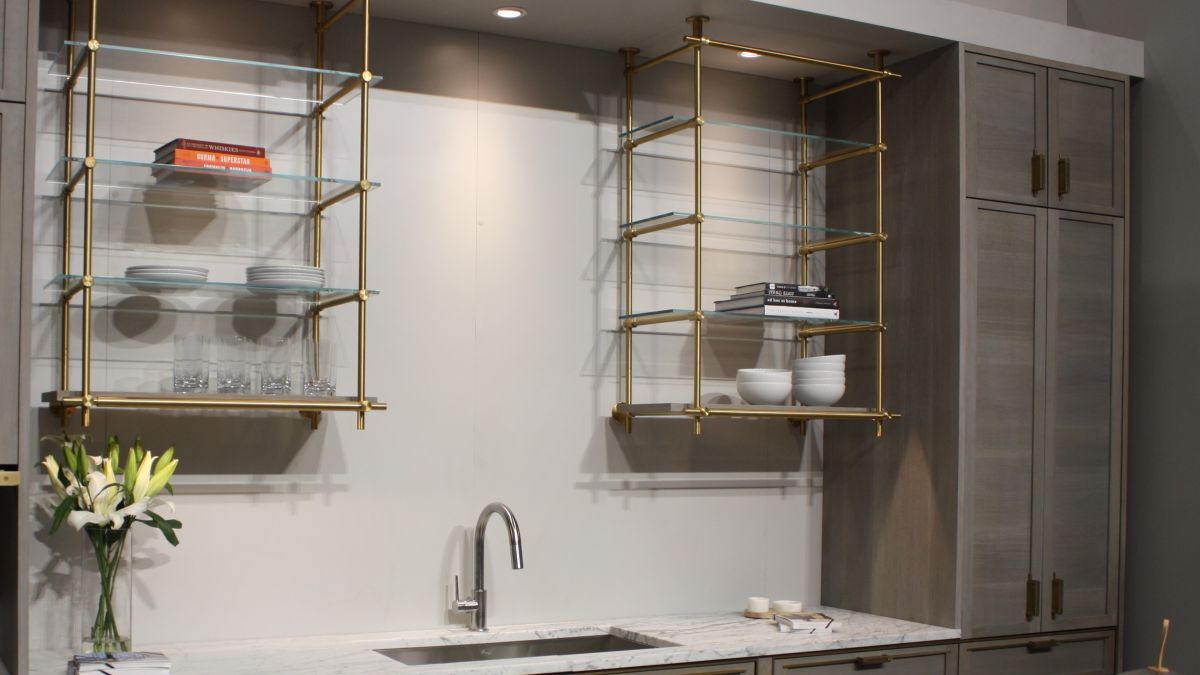
In another kitchen, two suspended units place transparent shelves within brass frames above a marble-look worktop. Dishes and books can sit there while the wall remains visible behind them. Metallic handles on the surrounding gray wood cabinets connect the open and closed storage visually.
A modular wall with a writing area
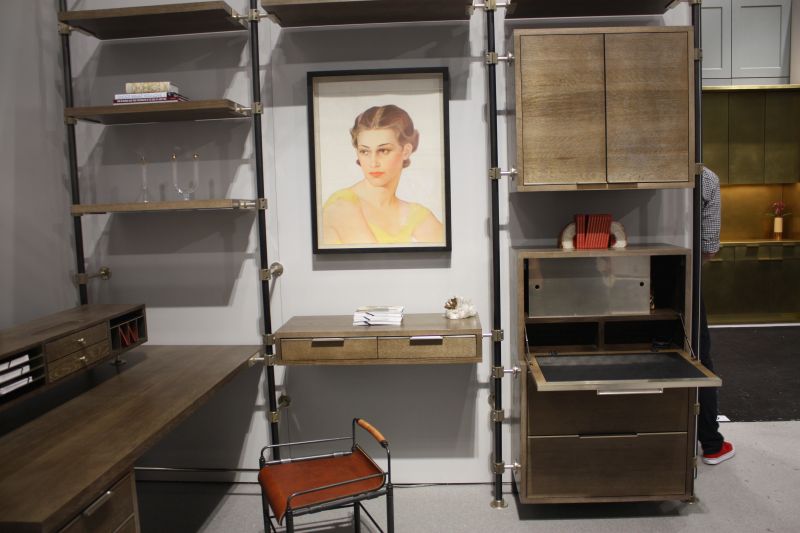
Metal uprights and brackets join wooden shelves, drawers and a work surface into one system. A small desk spans the supports. At the right, a tall cabinet has a panel that folds down above the lower drawers. The framework accommodates these different functions along the same wall.
A kitchen wall finished in metal
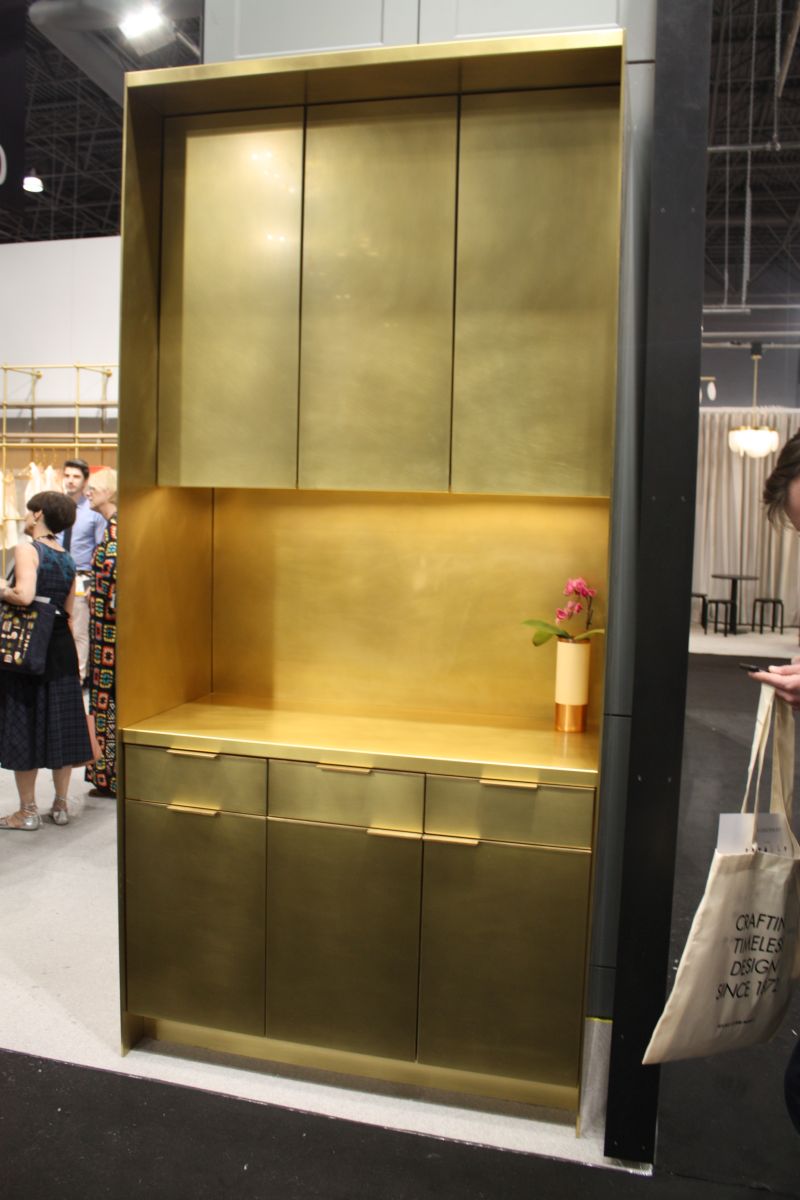
Here, the metal treatment extends across the cabinet fronts and frame as well as the backsplash and counter. Three doors sit over the open work area, with drawers and lower cupboards underneath. Slim handles repeat the color, while recessed lighting changes the appearance of the brushed surface.
A darker metallic island
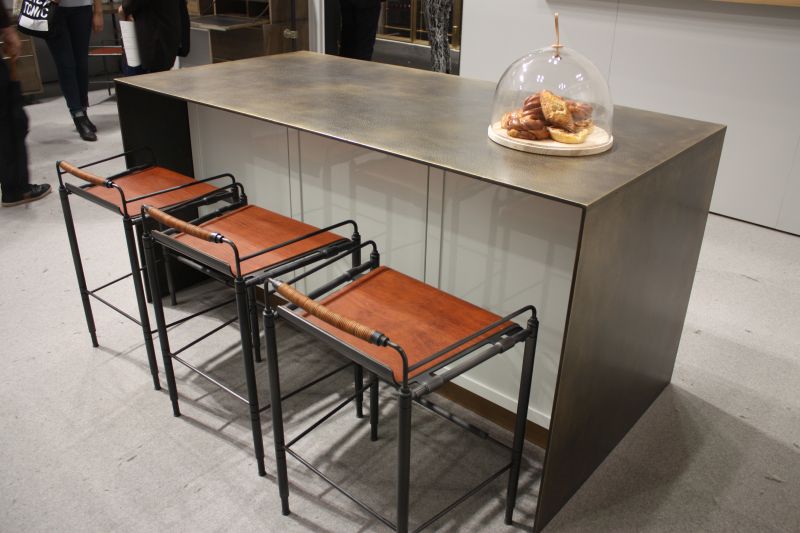
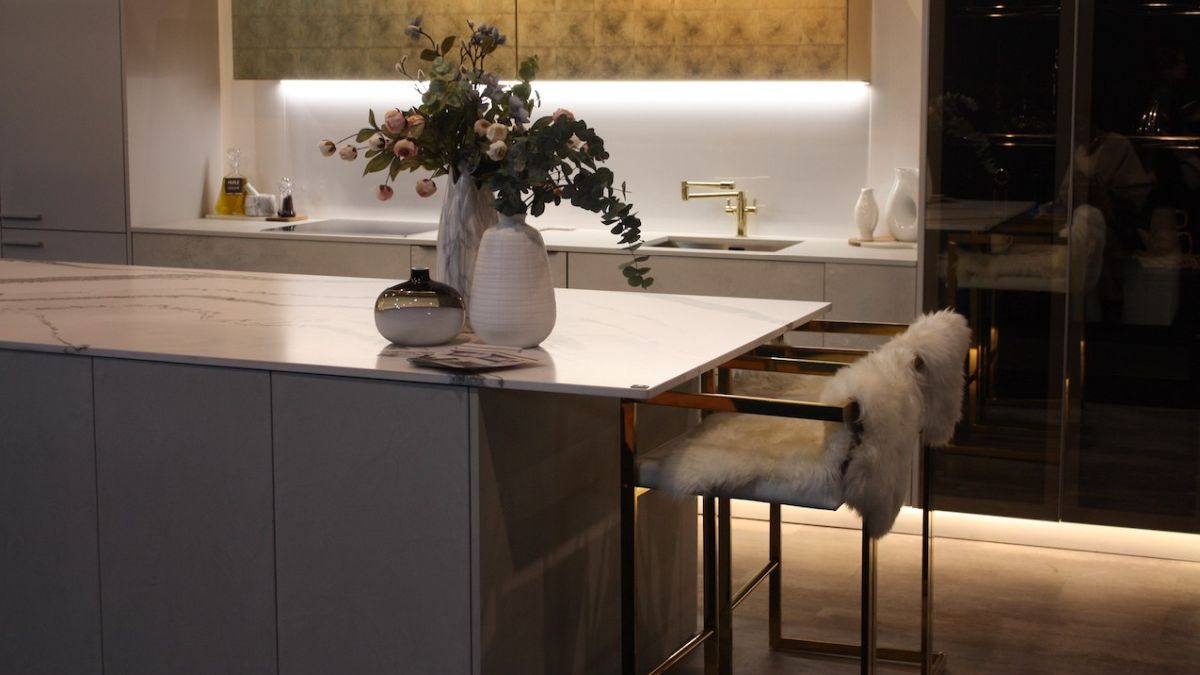
The island in this example uses dark, metal-looking panels and a matching worktop over a row of pale fronts on its seating side. Along the long edge are three stools with leather seats on black frames. The broad, subdued finish produces a different effect from the brighter brass cabinet wall.
A concealed place for coffee
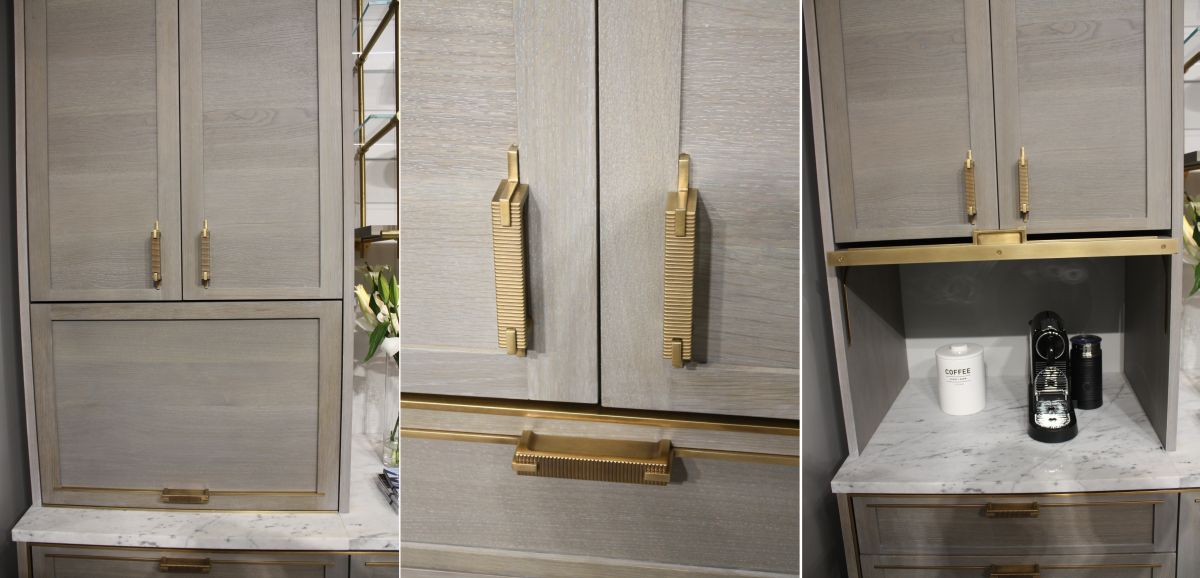
Gray wood doors enclose a coffee station underneath the upper cabinets. A brass-colored horizontal panel separates the storage above from the appliance opening. Ribbed metal handles repeat on nearby doors and drawers. During use, the coffee machine can stay in its compartment rather than occupy the main worktop or sit behind a shut door.
Clothing storage and a dressing table
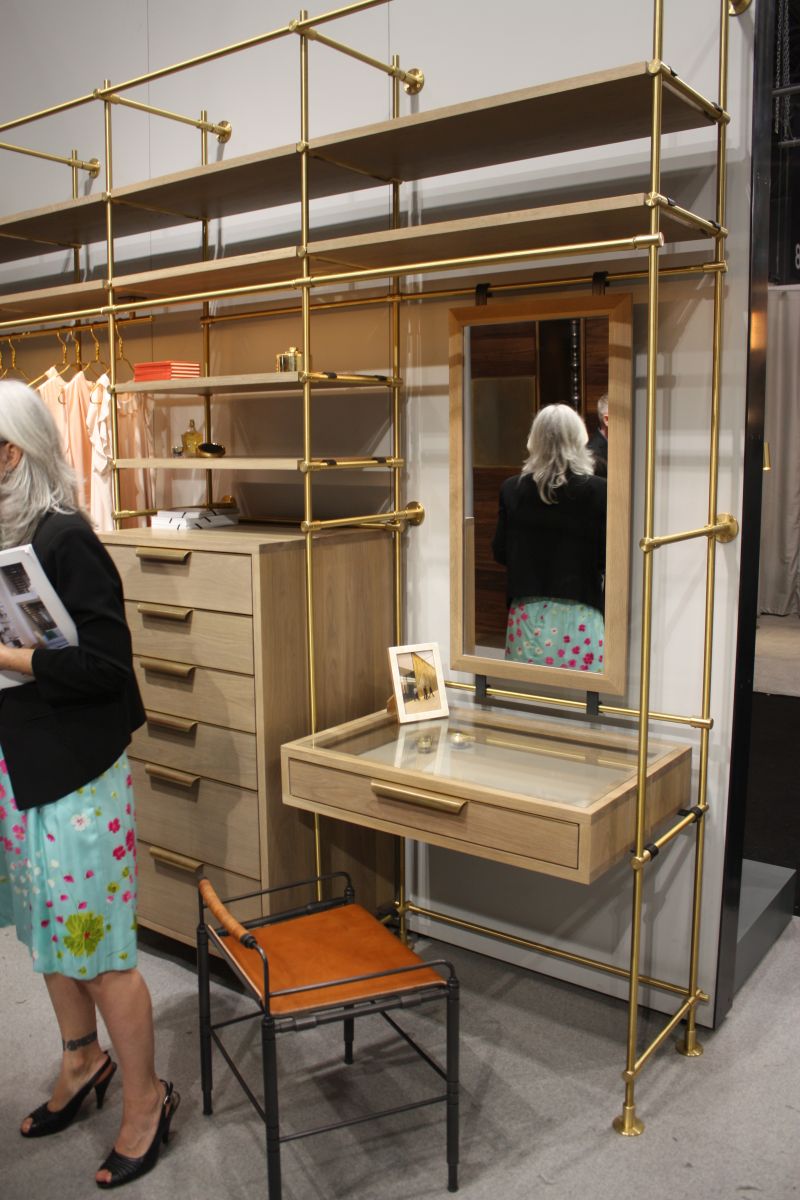
A brass framework holds wood shelves, a drawer unit and a clothes rail. It also includes a glass-topped dressing surface. The supports continue around a framed mirror on the right, combining a vanity and clothing storage without a conventional wardrobe enclosure.
Textured glass on flat wall brackets
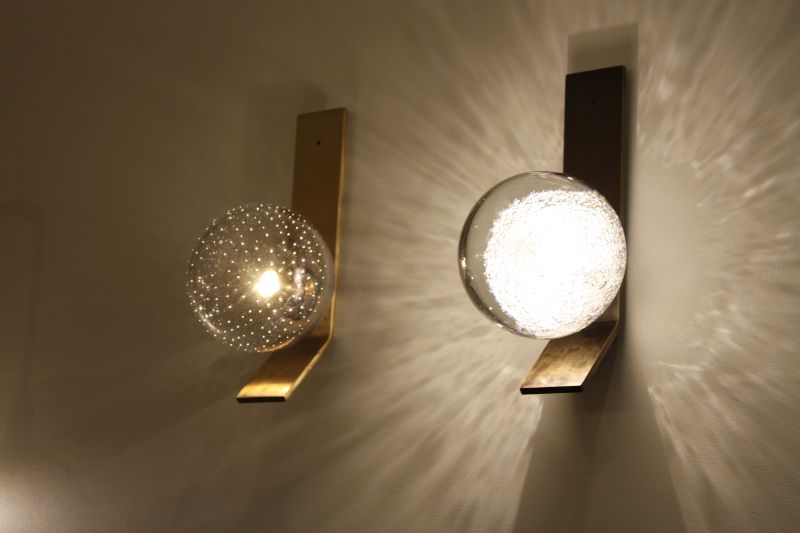
These lights put rounded glass globes against flat metal mounts. One backplate has a brass color and the other a darker finish. The differing glass textures scatter light into different patterns on the wall.
Wide pendant shades over a dining table
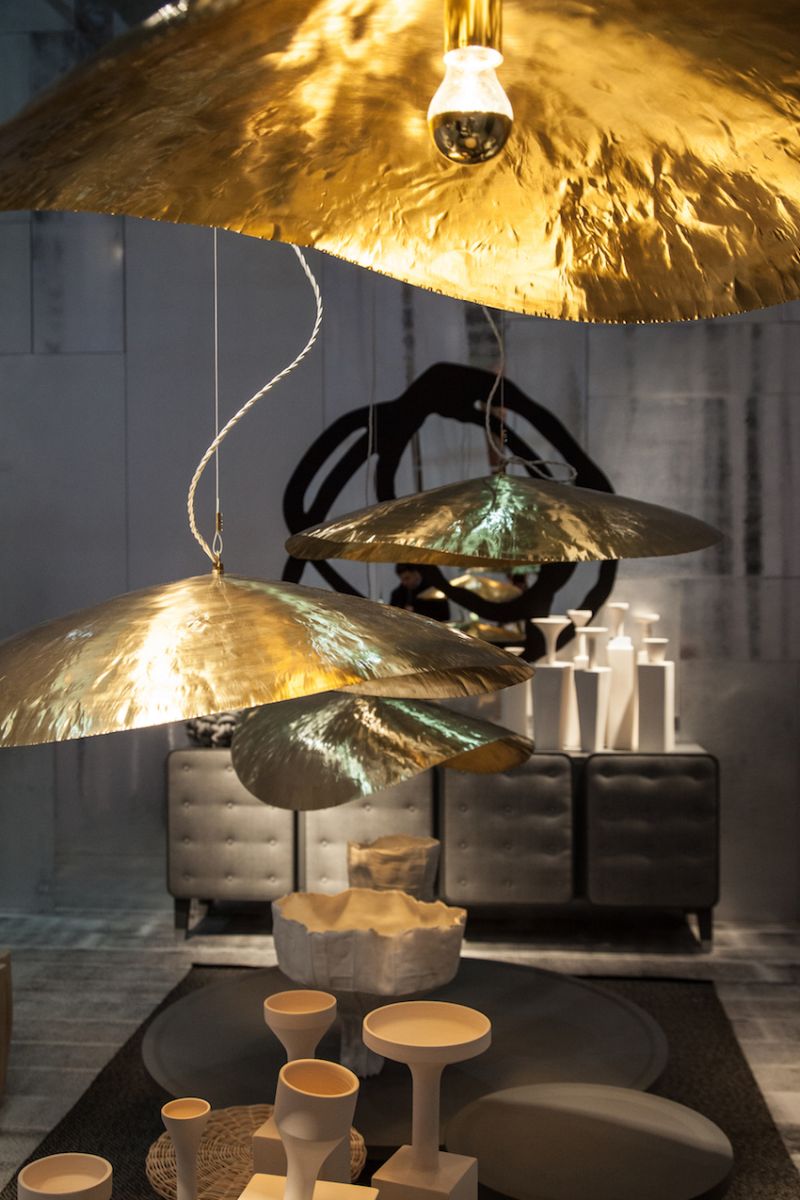
Broad metal domes hang at several levels. Their hammered interiors reflect the exposed bulbs. The shallow circular shapes keep the bulbs visible underneath, making the reflective surface part of the light’s appearance.
A branching ceiling fixture
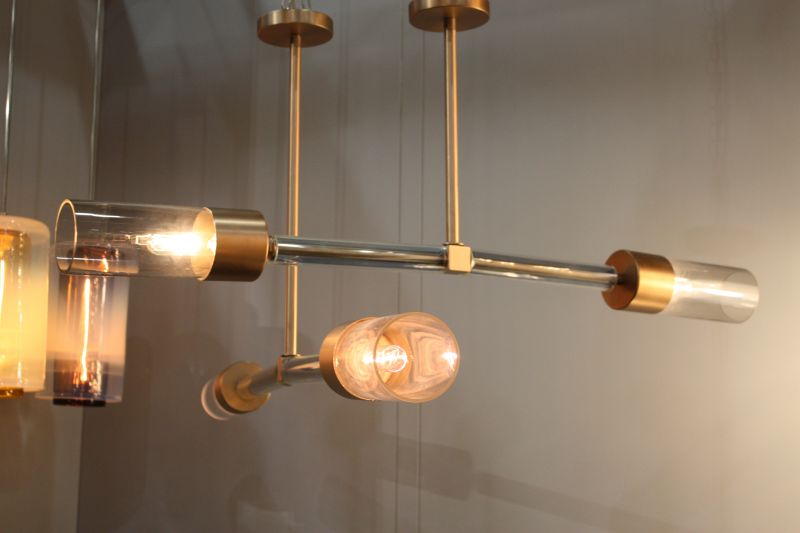
Horizontal metal arms project in different directions from central supports. Brass-colored connections join the sections, while clear glass cylinders reveal the bulbs and lamp holders. Spreading the arms puts light at separate points instead of gathering the bulbs under a single large shade.
A highly polished bathroom tap
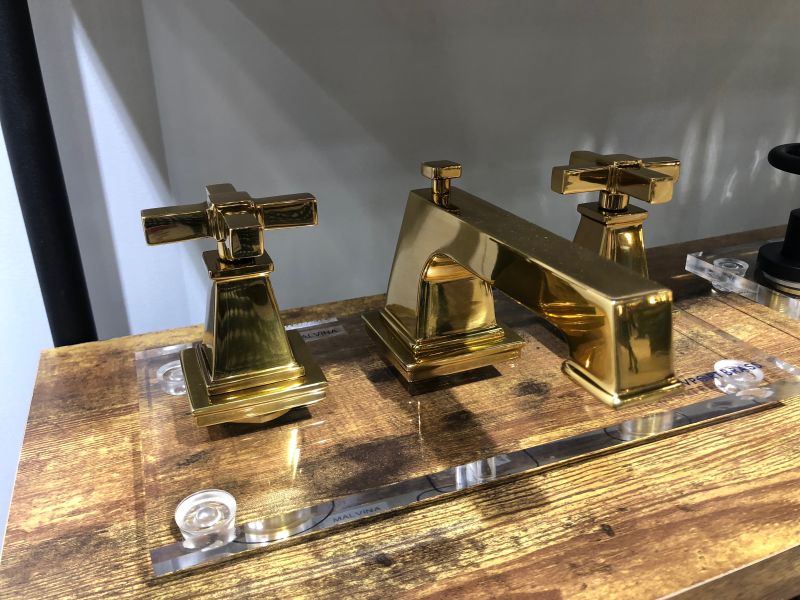
Two cross handles control a broad rectangular spout. Polished brass covers the bases, outlet and handles, reflecting the nearby worktop and light. It has a more reflective appearance than a brushed brass surface.
Together, the examples show the range of scale available, from a complete metal cabinet front to the supports around glass shelving. Their finishes occupy much more of the design than a set of drawer pulls alone.
Image credits: Homedit.
Source: Homedit.



















Oh, look. Another article telling us to turn our homes into expensive museum displays. Go ahead, buy the brass rods. Just remember to polish them daily, because dust loves a shiny surface as much as I love explaining the obvious.
Brass does need care, but it’s about balancing warmth and maintenance. You don’t need daily polishing—just a weekly wipe-down keeps that golden glow without the museum vibe. It’s meant to add life, not just shine. Let’s find that sweet spot together!
Oh, look. Brass is finally escaping the faucet. How groundbreaking. I suppose we’re all just terrified of plain wood now? Enjoy your metallic dominance, I guess.
Brass adds warmth and depth that wood can’t replicate, acting as a sophisticated accent rather than a replacement. It’s not about dominance, but balance. Thanks for reading!