
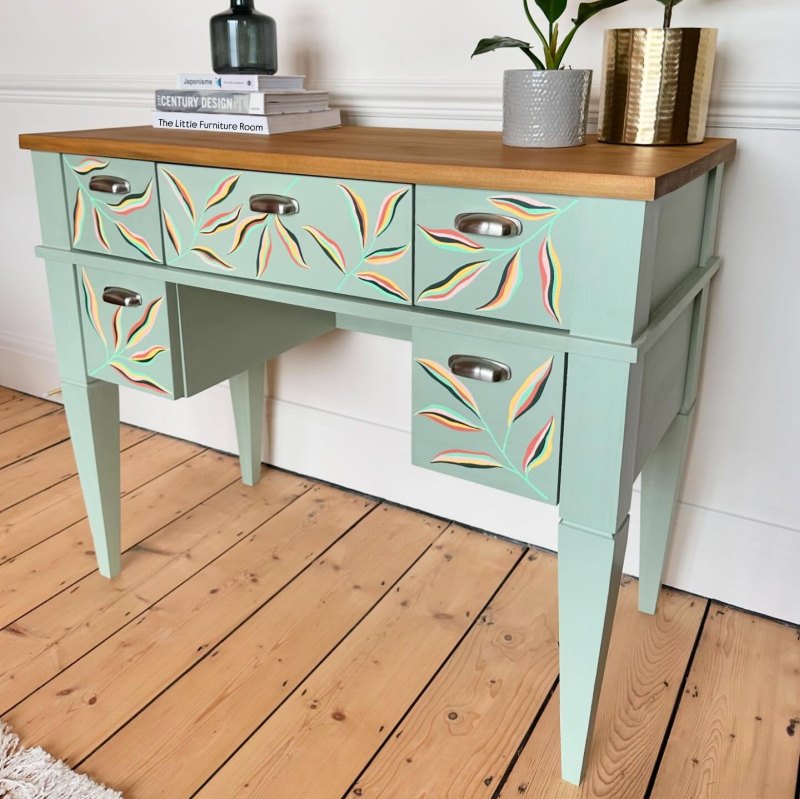
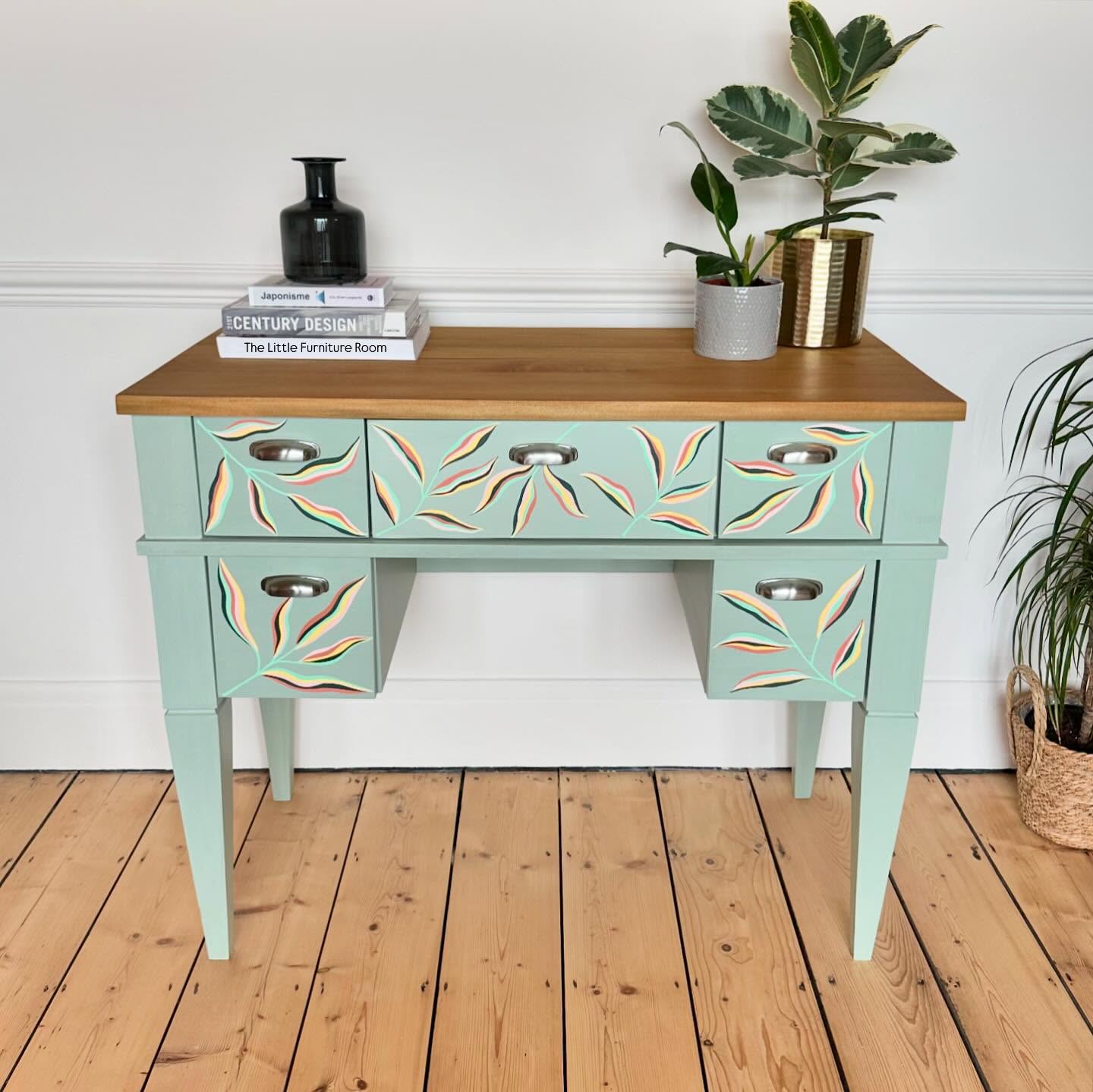
A wooden desk with tapered legs and metal cup handles was originally coated in gray paint. It featured three drawers across the top and two larger drawers on either side of the knee space below. The piece was destined for a young girl's bedroom, but she was not satisfied with its gray finish.
After seeing another desk painted by the same artist, the girl requested a similar hand-drawn leaf design in light green. During the renovation, the artist stripped the gray paint from the desktop and decided to leave the natural wood exposed rather than painting it the requested color.
Bristol-based furniture artist @thelittlefurnitureroom painted the frame and drawers with Ingilby Paints Moot green. She added multicolored leaves using acrylic paint pens and treated the wooden top with English Light Oak dye and Danish oil. The final piece retained all five drawers and the original hardware.
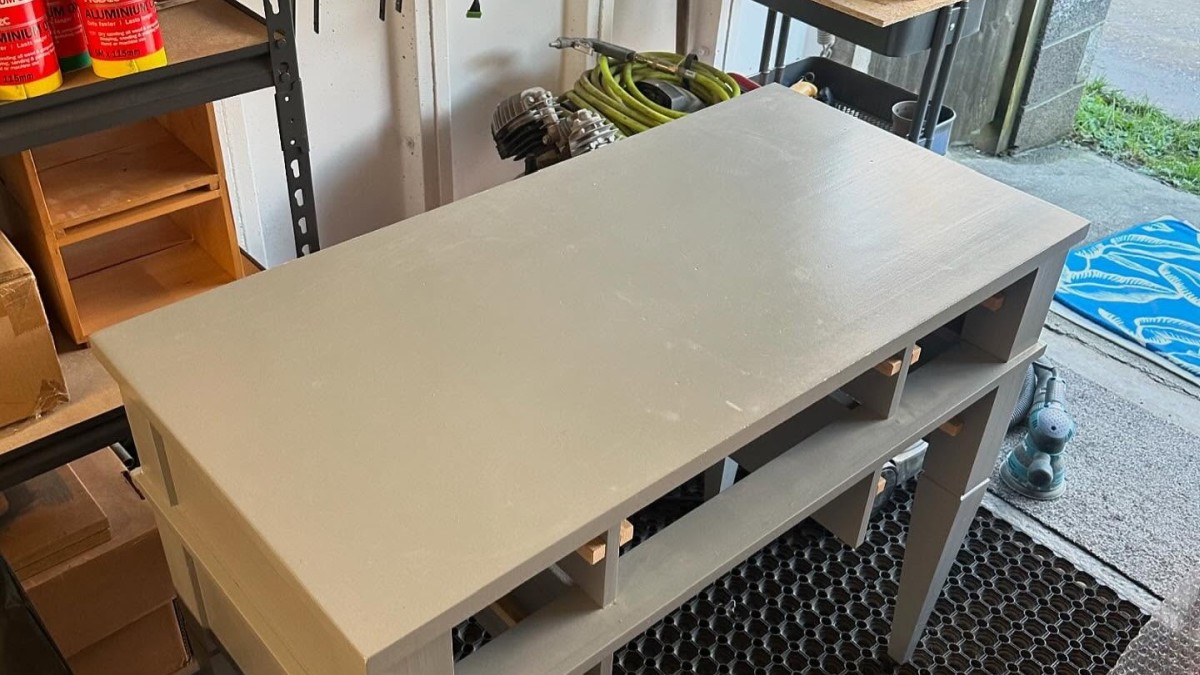
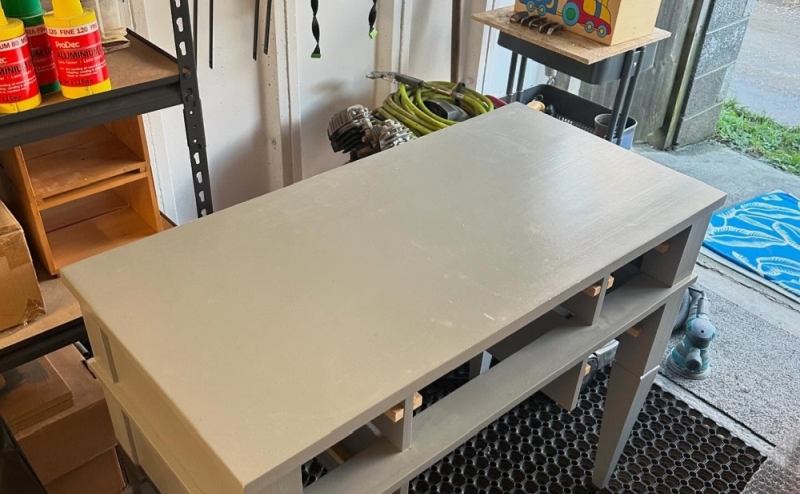
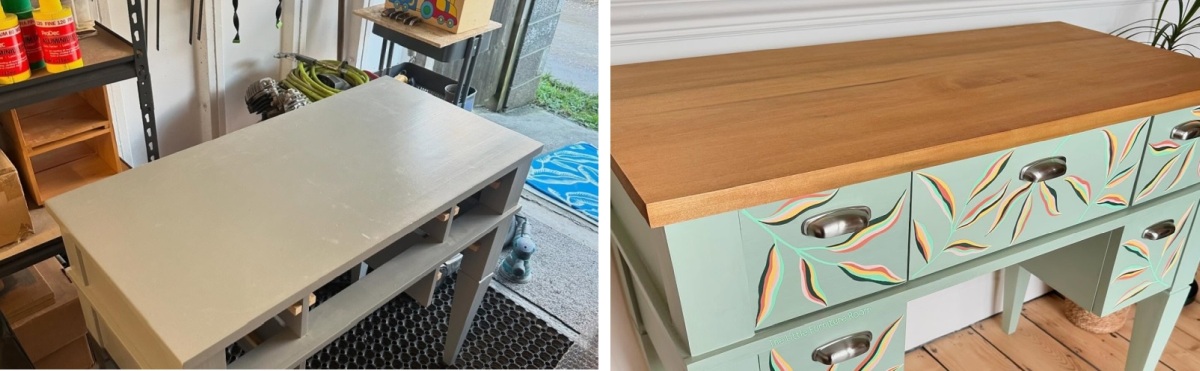
The original five-drawer desk was covered in gray paint.
Gray paint coated the rectangular top, legs, and drawer frames. Three shallow drawers were positioned across the front, with two deeper drawers located beneath them on either side of the knee space.
The desk featured an intact frame and tapered legs, with the original drawer pulls available for reuse. The artist sanded the exterior before repainting to remove marks and prepare the surfaces for a new coat.
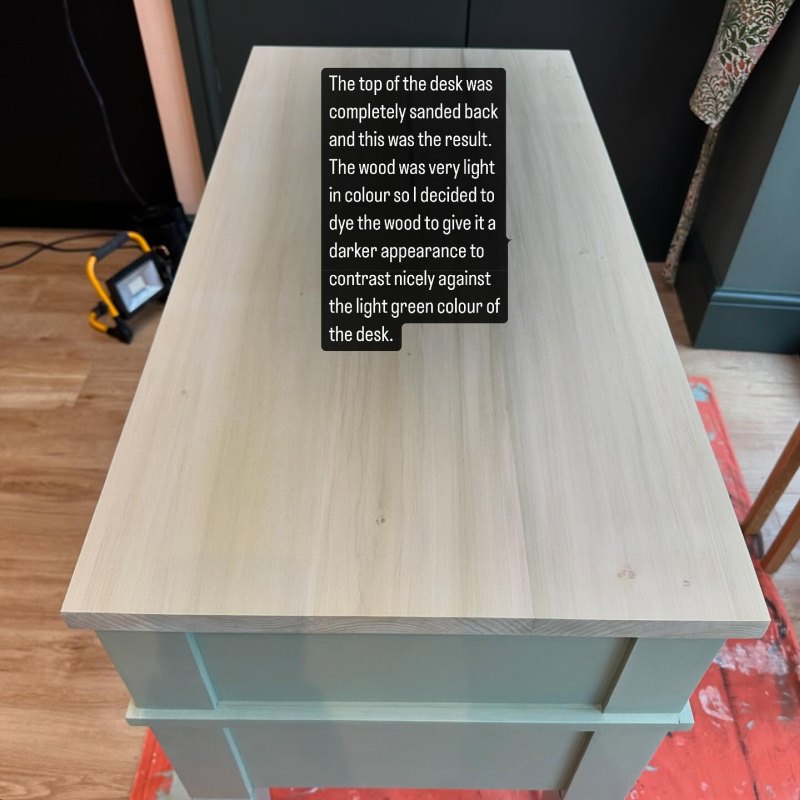
Sanding revealed the wood, leading to a decision not to paint the top.
Stripping the gray finish exposed the pale wood grain. Although the artist initially planned to repaint the desk in light green, the condition of the exposed wood altered her approach.
She left the desktop unpainted and opted to darken the wood, creating a visual contrast with the green frame and drawers.
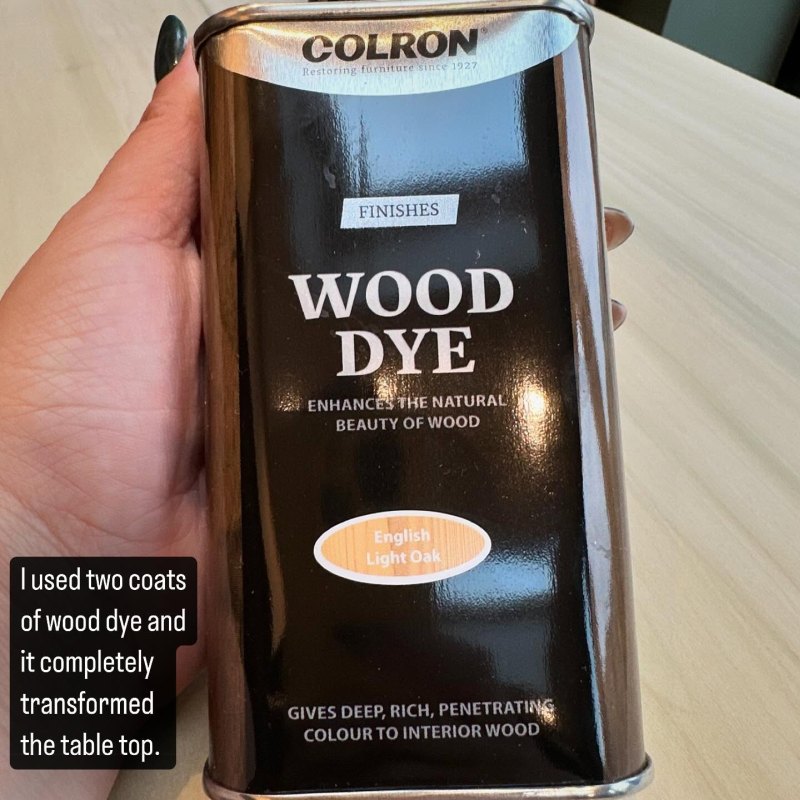
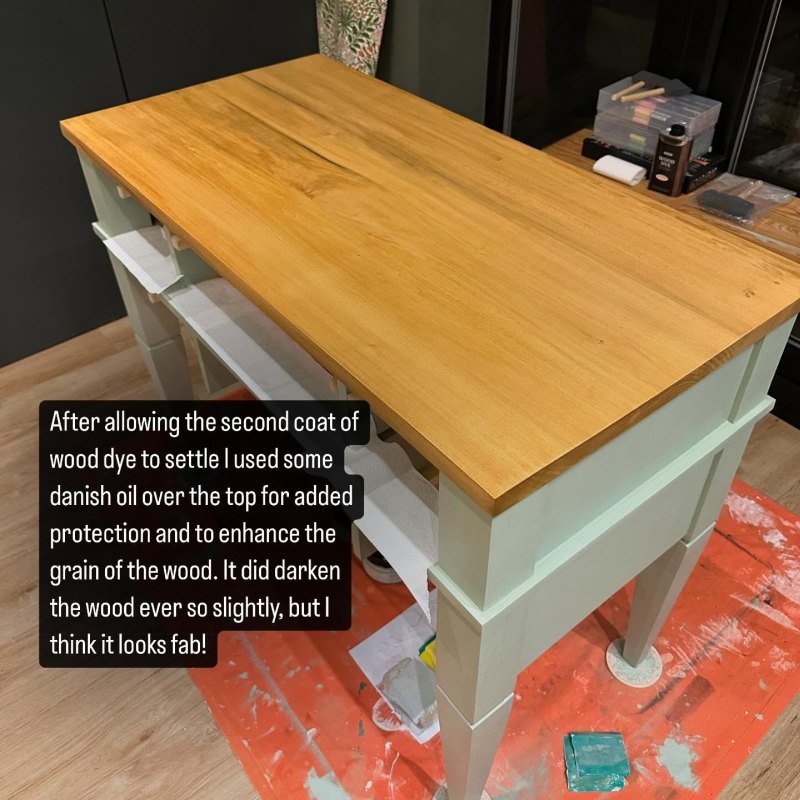
Two coats of English Light Oak wood dye transformed the top.
Colron English Light Oak wood dye provided a darker finish to the sanded surface. The artist applied two coats to alter the color of the pale wood while preserving its grain.
After the dye settled, she applied Danish oil from Furniture Clinic to protect the surface. The oil deepened the wood's color slightly, resulting in a golden-brown top above the green frame.
Light green paint was applied to the frame and drawers.
The young client requested a light green shade called Moot by Ingilby Paints, matching a previous desk the artist had completed.
Paint covered the legs, drawer fronts, and frame, while the refinished desktop remained exposed. The artist sealed the painted surfaces with Ingilby Paints Matt wax finish coat.
Hand-drawn leaves introduced several colors to the five drawers.
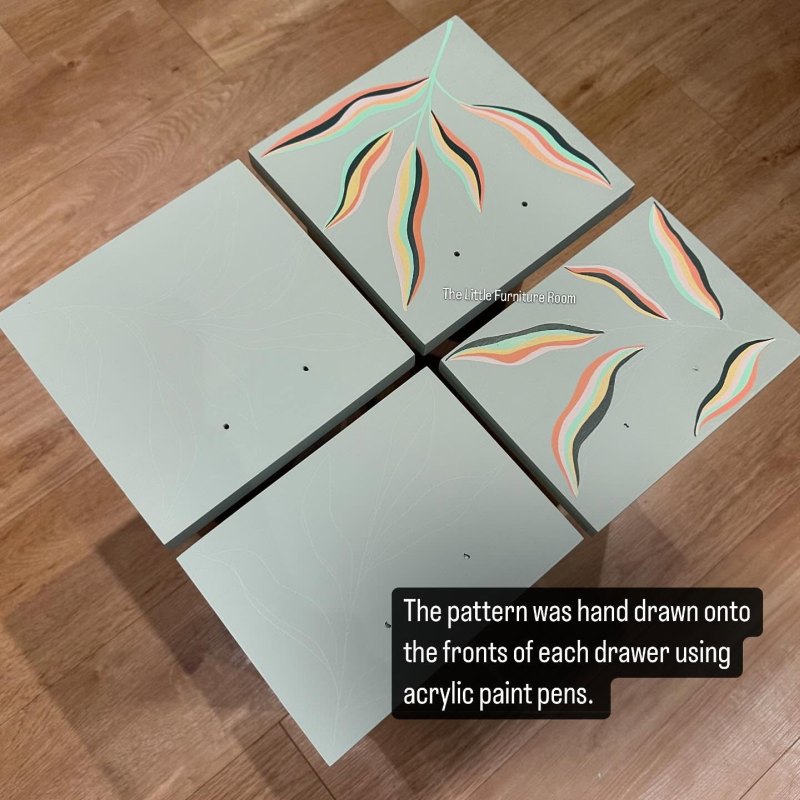
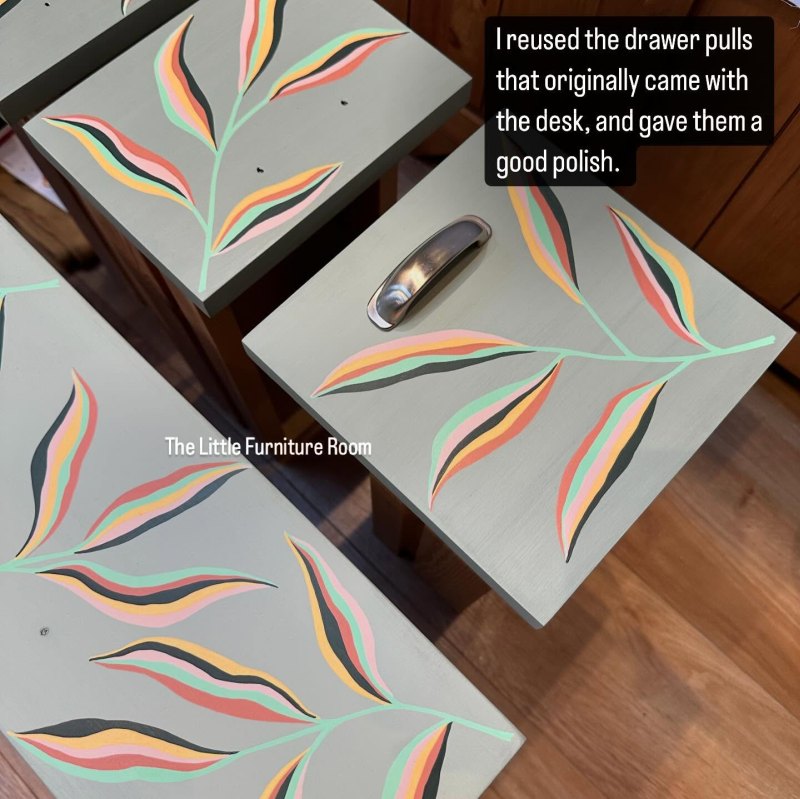
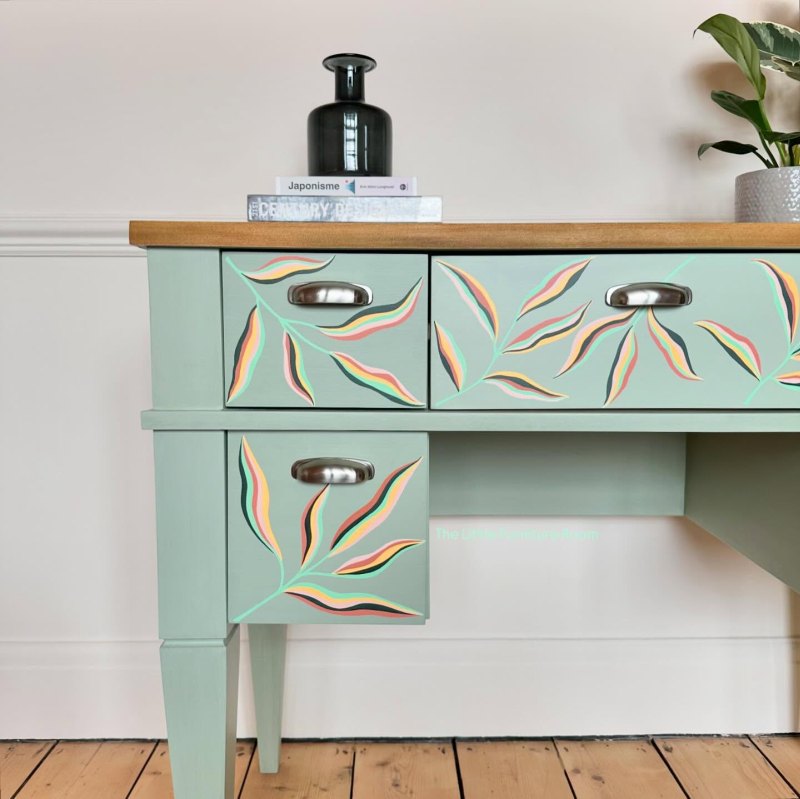
The client requested the leaf design from the earlier desk. Using acrylic paint pens, the artist drew branches across the drawer fronts and filled the leaves with bands of pink, yellow, coral, mint, and dark green.
Each leaf featured several narrow bands of color instead of a single solid fill. Some branches extended across the three upper drawers, while separate designs adorned the two lower fronts.
The original metal cup pulls were polished and reattached to the drawers. The artist sealed the painted designs with the same Matt finish coat used on the rest of the desk.
Five painted drawers sit beneath the refinished wooden top.
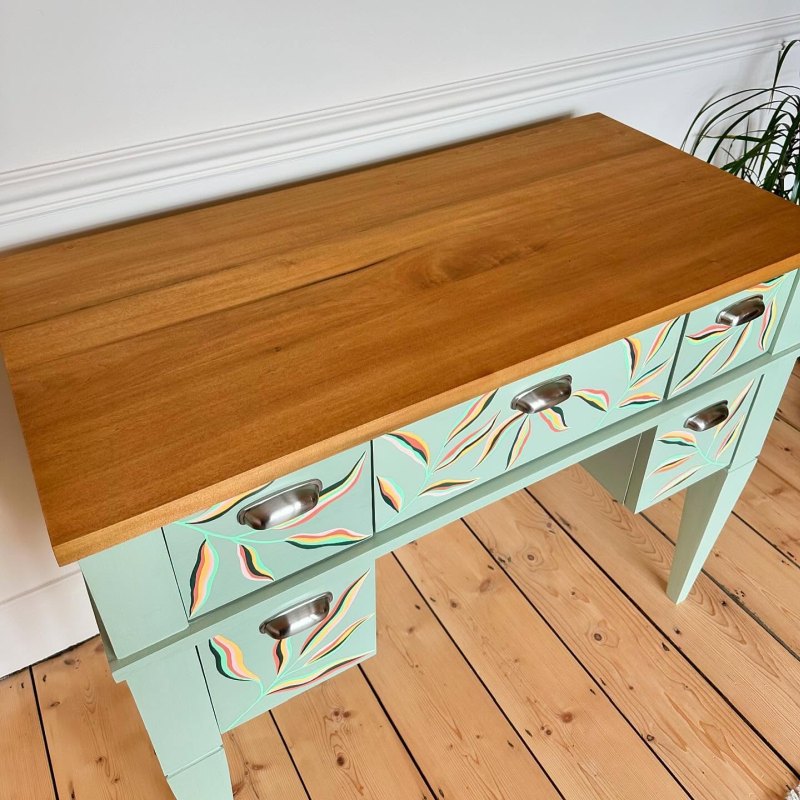
The finished desk combines a golden-brown wooden top with light green legs and drawers. Silver cup pulls interrupt the painted leaves, and the open knee space separates the two lower drawers.
Branches spread across the upper drawer fronts, with individual leaves positioned around the hardware. The green base remains visible between the colored shapes.
The side view shows the stained desktop extending beyond the painted frame, with wood grain visible across the top and front edge.
The finished desk retains its original frame and hardware.
The five-drawer arrangement, tapered legs, and original handles remained in place. Gray paint was replaced with Moot green, while the desktop received English Light Oak dye and Danish oil instead of additional paint.
The artist noted this was her first commissioned piece for a child's bedroom and shared that the young client was excited to receive the finished desk.
This was not the artist's first furniture project inspired by a child. In another makeover, she asked her three-year-old daughter how to paint a 1960s dresser. Her daughter's request for rainbows led to a finish made with 14 chalk paint colors, replacing the dresser's original gray paint.
Would you have painted the entire desk light green, or kept the wooden top exposed?
Images and project details courtesy of @thelittlefurnitureroom
The post A Young Girl Asked for a Light Green Desk, but the Painter Used Several More Colors Across Its Five Drawers appeared first on Homedit.





































You claim the top was left natural, yet the snippet says English Light Oak dye was applied. Does dye count as the same finish? Provide proof it isn’t painted.
Great catch! The dye penetrates the wood grain, enhancing its natural texture without forming a surface film like paint. This confirms it remains a natural finish, just tinted. I’ll clarify this distinction in the next update to avoid confusion. Thanks for keeping us precise!