
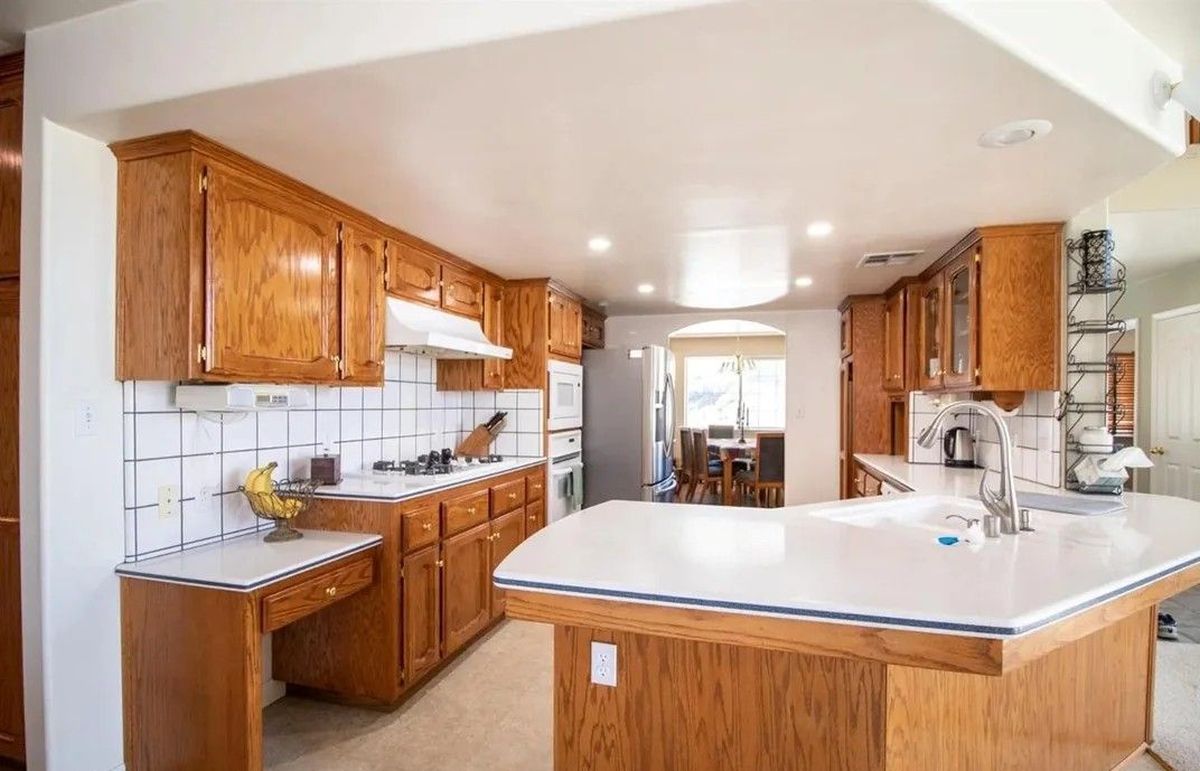
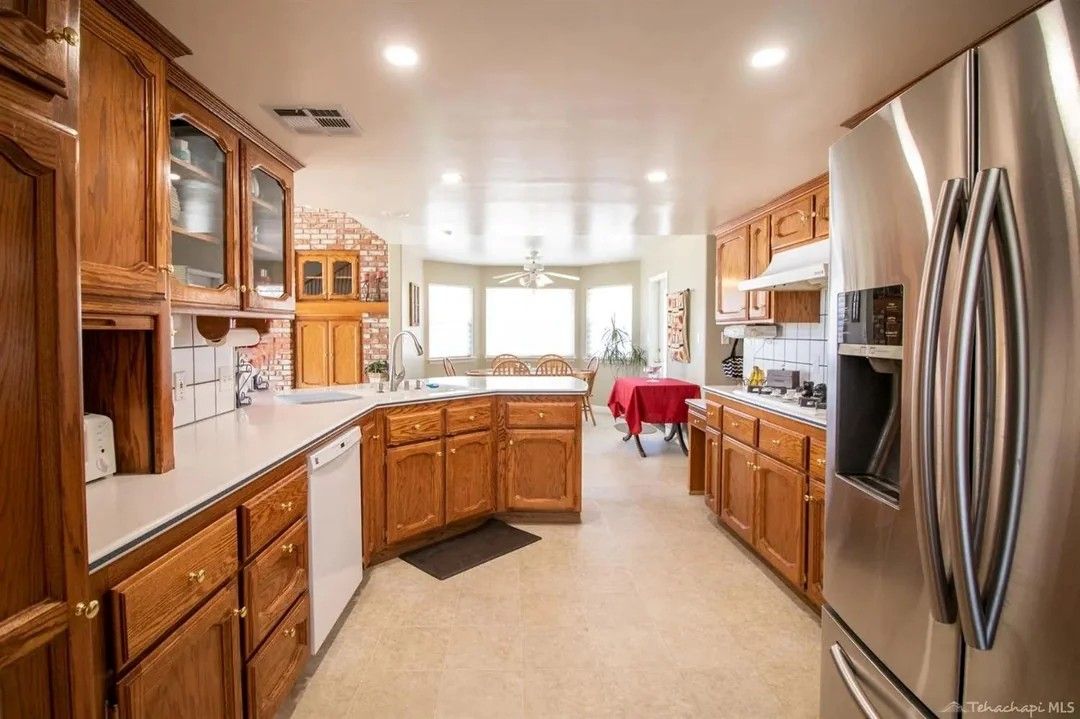
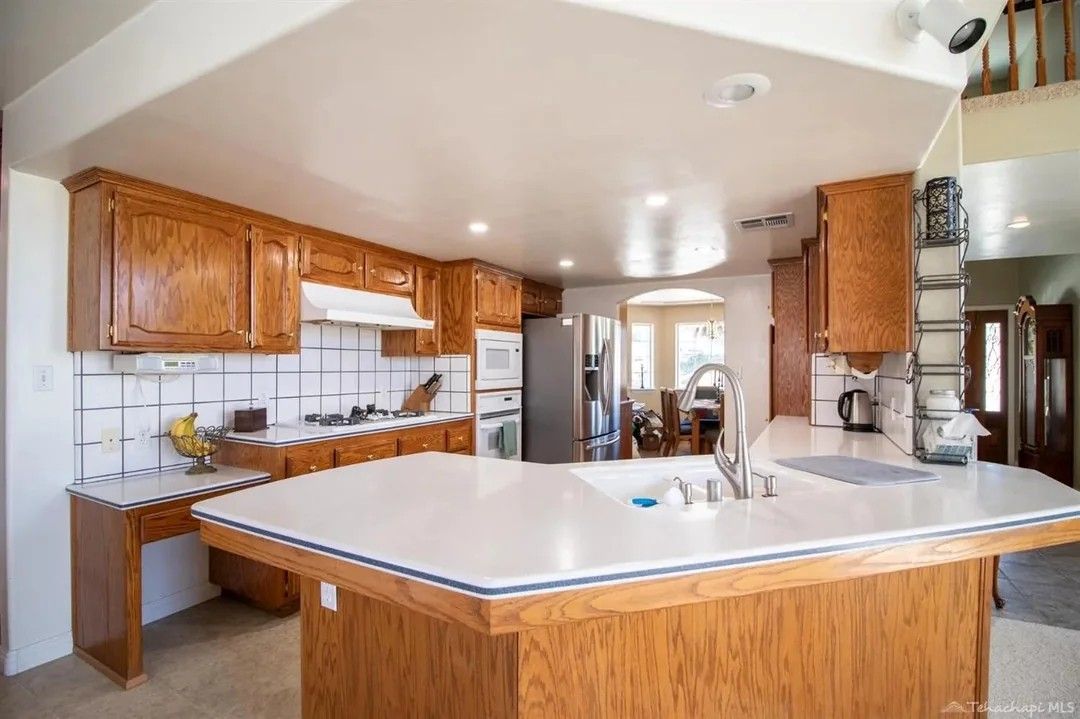
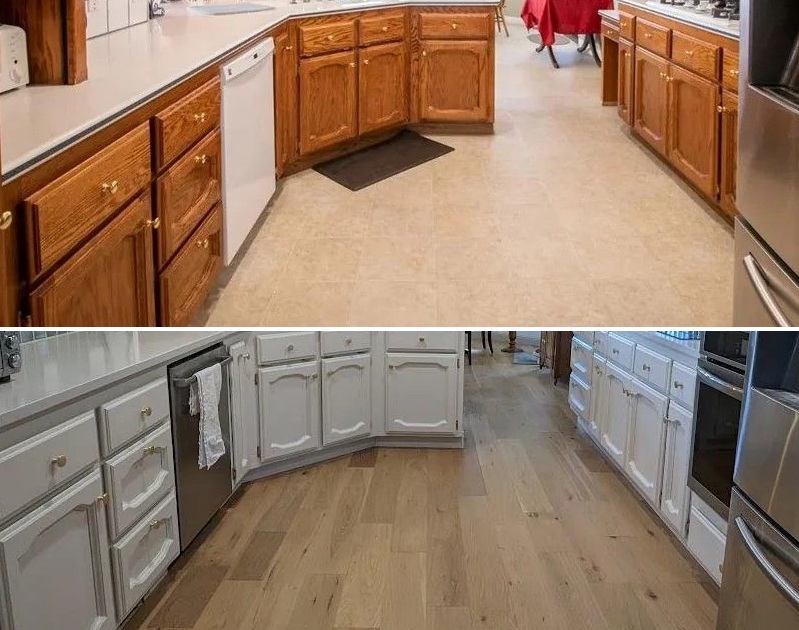
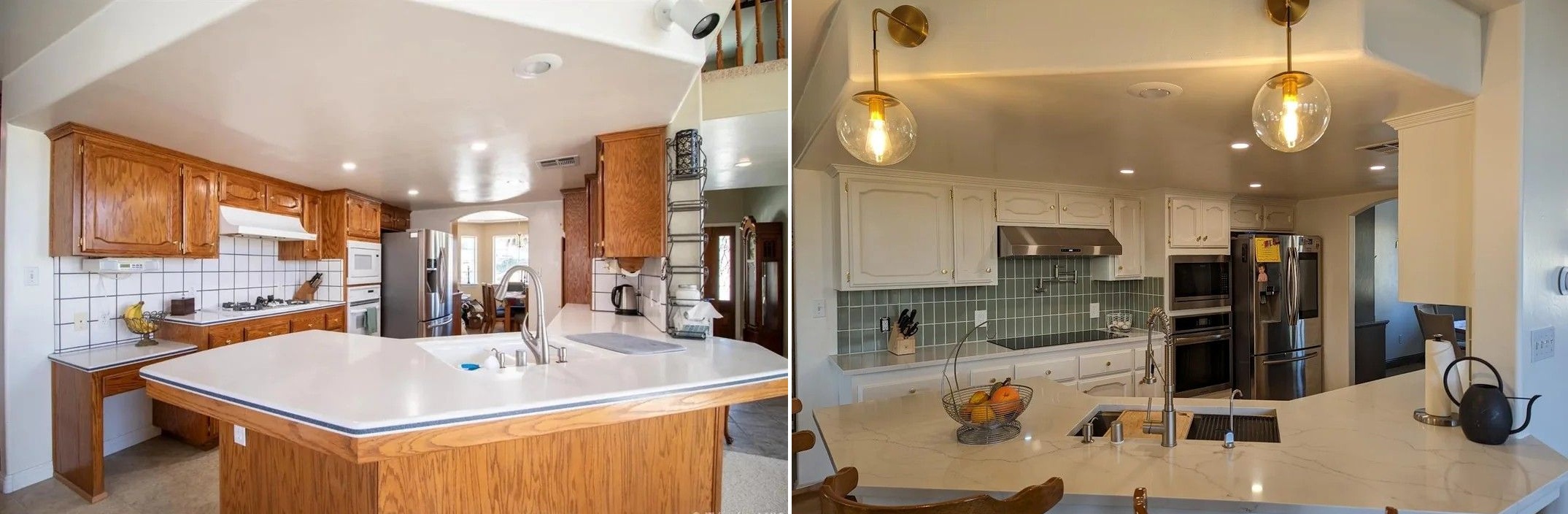
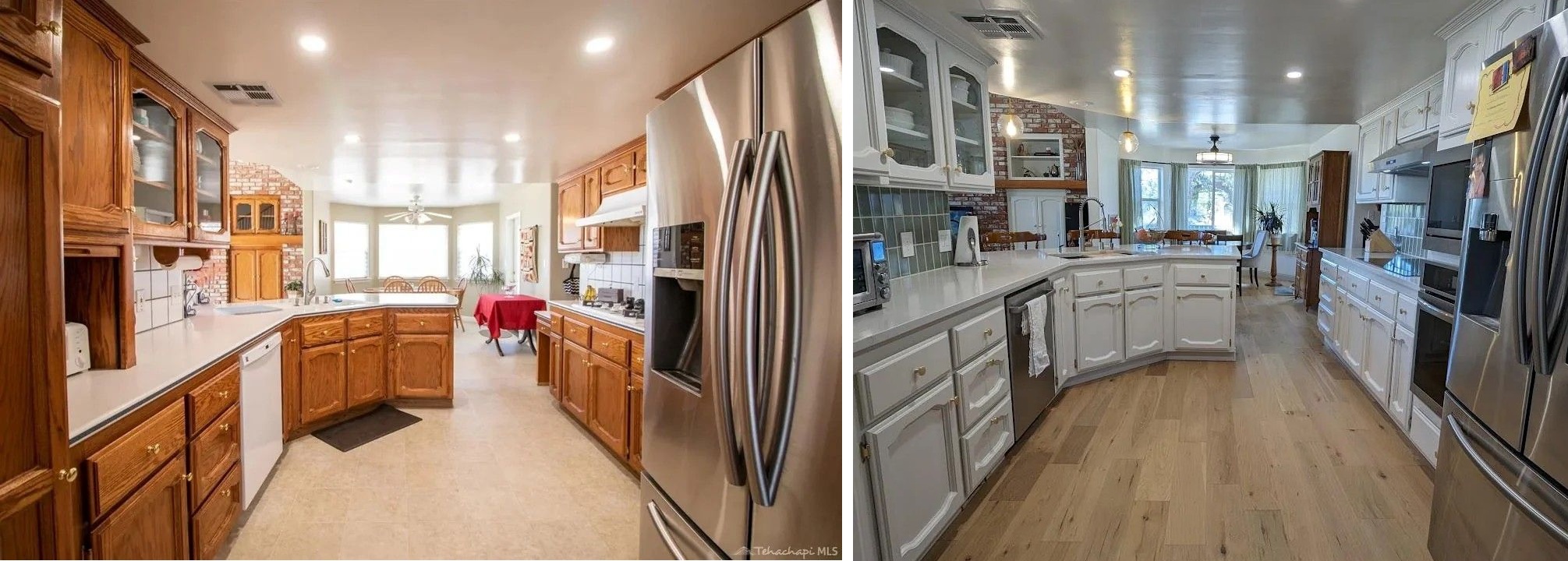
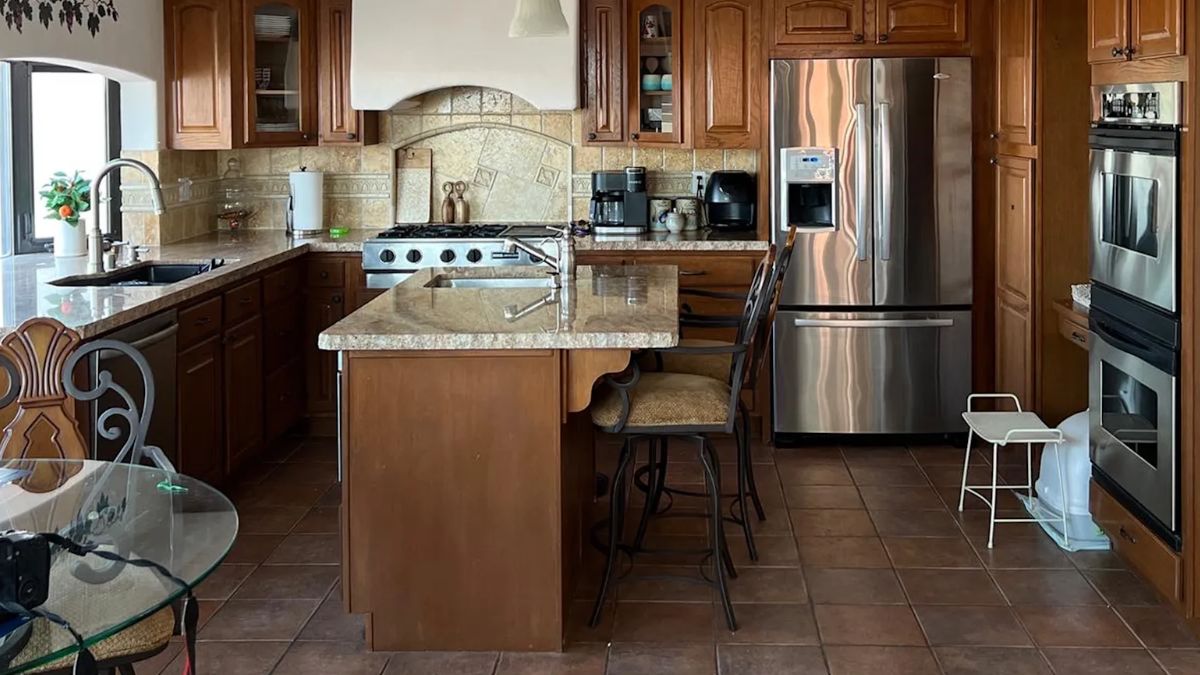
This 1990s kitchen featured orange oak cabinetry that spanned nearly every wall, encompassing the island, a dedicated desk nook, and the area surrounding appliances. The visual impact of the wood was amplified by white square backsplash tiles, laminate countertops, and flooring with yellow-beige hues. Although the space offered ample storage and a substantial island, the overall aesthetic appeared outdated.
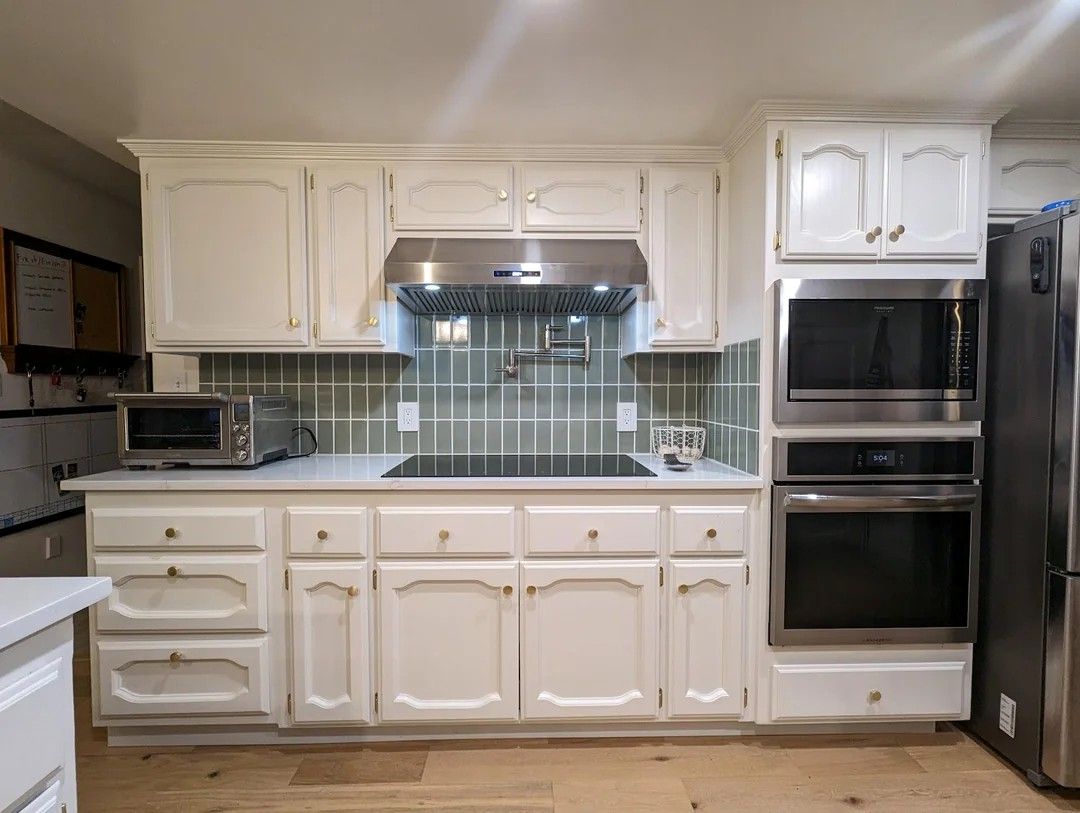
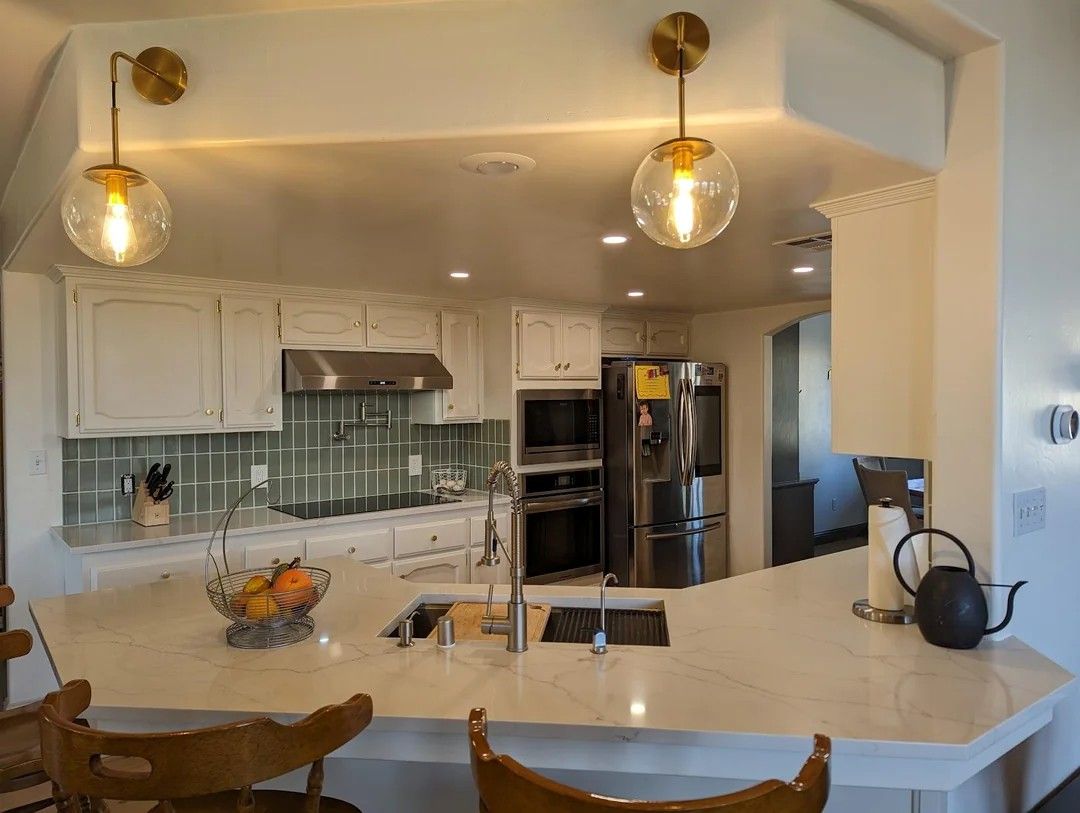
Rather than undertaking a full replacement, the homeowners opted to refinish the existing cabinets. They applied white paint to the orange oak, swapped the old backsplash for sage green Fireclay tiles, and installed quartz countertops to replace the laminate surfaces. The renovation was finalized with the addition of white oak flooring, brass hardware, and modern fixtures.
User Not_l0st shared this transformation on Reddit, demonstrating how a kitchen can undergo a significant visual shift without the need to replace the entire cabinet structure.
The Original Kitchen Had Oak Cabinets From Wall to Wall
Oak cabinetry was installed across almost every wall in the original layout, extending to the island, upper storage units, the desk section, and the appliance enclosure.
The strong orange undertones in the wood caused the cabinetry to absorb natural light rather than reflect it. This absorption, combined with the high contrast from white square backsplash tiles and laminate counters against the oak grain, created a visually fragmented look rather than a cohesive one.
An oversized soffit positioned above the island lowered the ceiling line, which compressed the center of the room. Consequently, despite the kitchen’s large footprint, the space felt darker and heavier than its actual dimensions suggested.
White Cabinet Paint Removed the Heavy Wood Tone
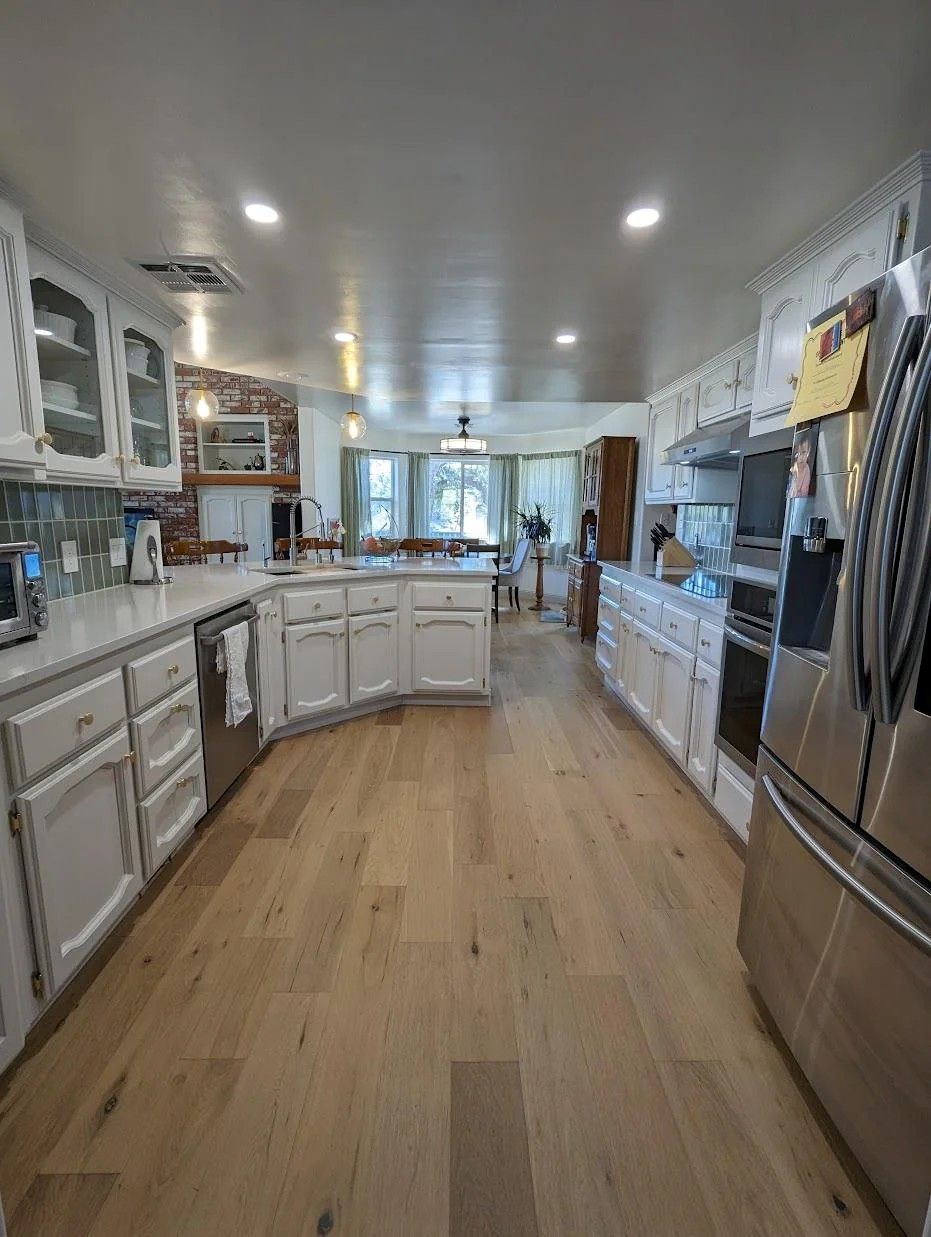
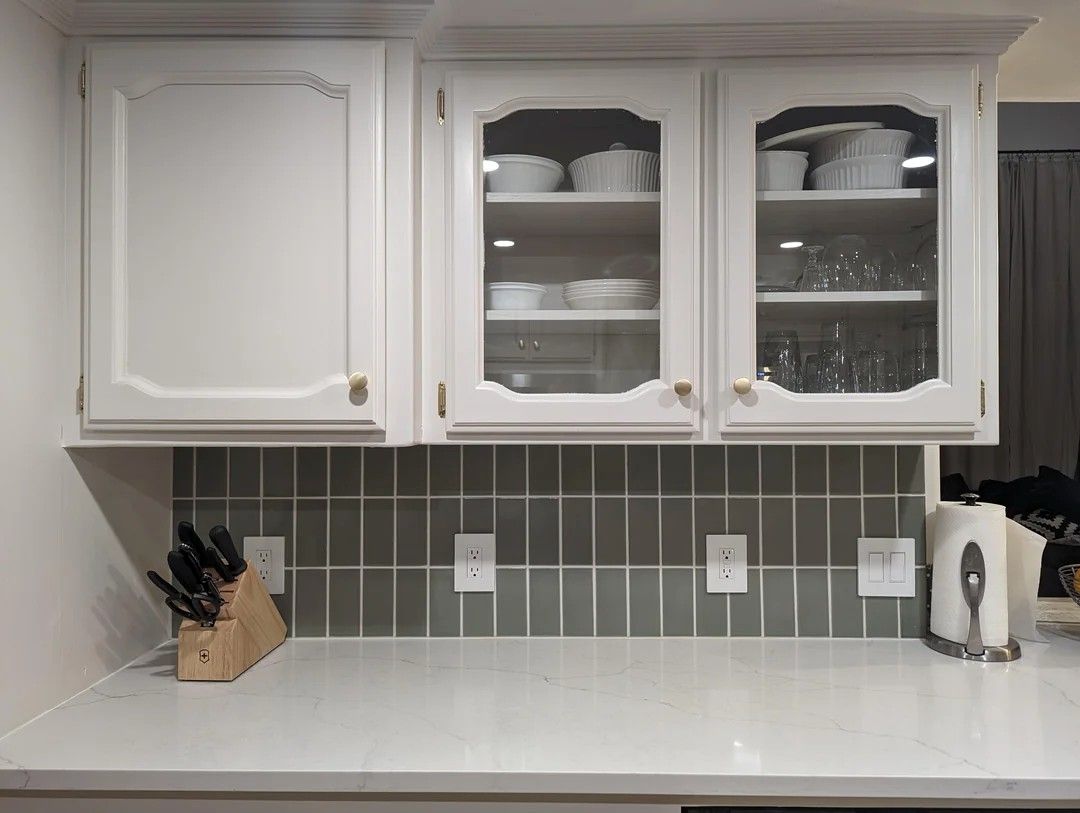
The remodel preserved the original cabinet structure but applied a coat of white paint instead of replacing the units.
This change immediately altered the room’s interaction with light. The walls no longer appeared as a single, continuous mass of oak, allowing the kitchen to feel wider and calmer from all perspectives.
While the raised-panel doors retained their traditional detailing, the white finish softened the visual depth that had previously made the cabinetry seem bulky. Brass hardware added a warmer contrast, preventing the room from sliding back into darker tones.
The Sage Green Tile Changed the Entire Back Wall
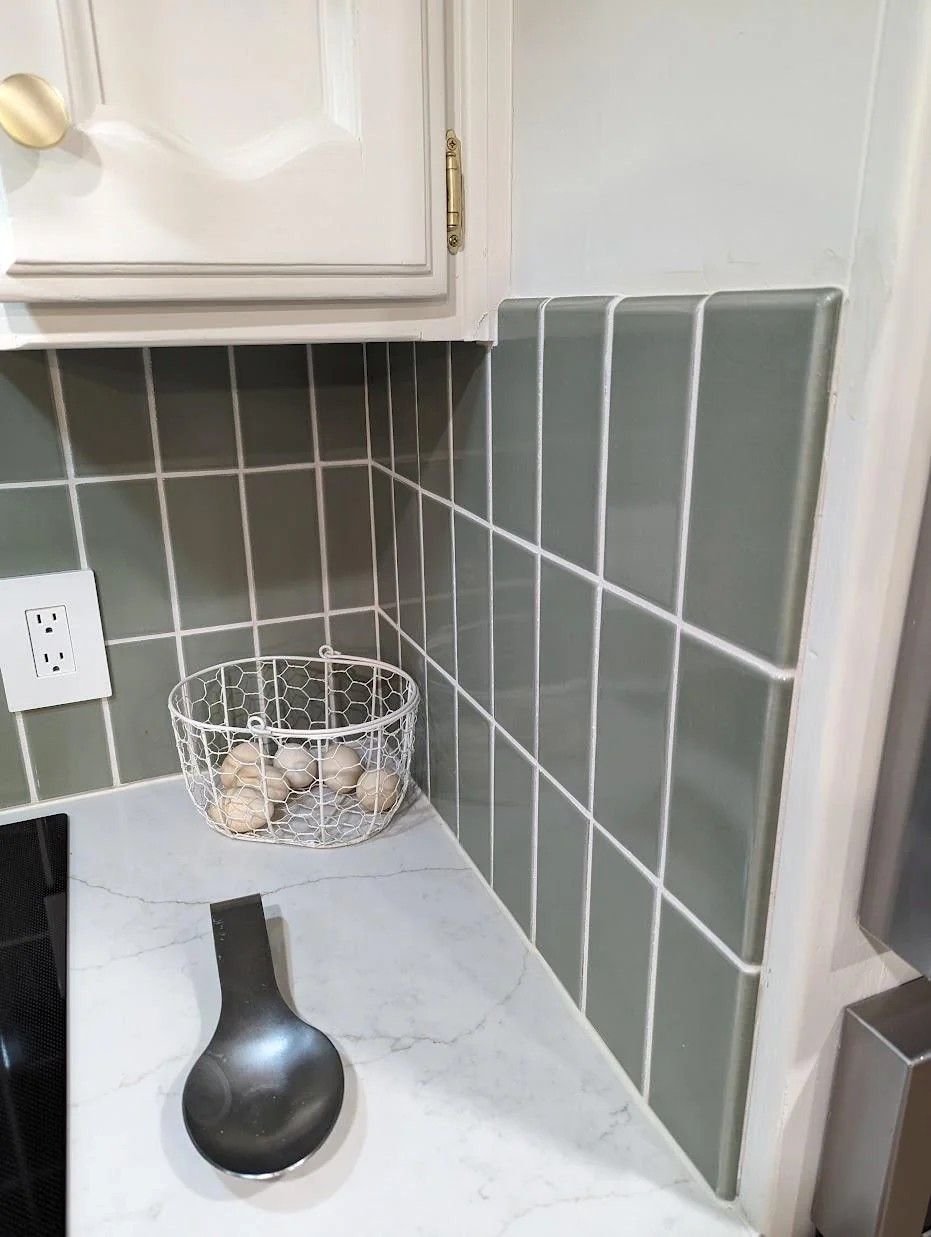
A major transformation occurred with the installation of the new backsplash.
The original white grid tile appeared flat and distinctly builder-grade. In contrast, the vertically stacked sage green tile introduced movement, reflection, and softer color variations behind the counters after the renovation.
Since the tile extends continuously across the walls without decorative inserts or accent strips, the backsplash now reads as an architectural element rather than mere decoration. Its glossy finish reflects light from under the cabinets and the ceiling throughout the kitchen, rather than absorbing it.
The muted green hue maintains a warm atmosphere in the space while ensuring the white cabinetry does not appear sterile.
Quartz Counters Softened the Layout Around the Island
Dark edge trim on the original laminate counters outlined each surface distinctly.
Post-remodel, white quartz counters established longer, uninterrupted planes across the kitchen. The subtle waterfall-style veining ensures the counters do not overpower the cabinetry or the backsplash.
This cleaner surface also transformed the island’s presence. Instead of appearing as a large, isolated oak block in the center of the room, the island now blends seamlessly with the surrounding cabinetry, allowing the eye to travel deeper into the space.
The New Flooring Brightened the Entire Kitchen Footprint
The original laminate flooring featured yellow-beige undertones that merged visually with the oak cabinetry.
Wide-plank white oak engineered flooring completely altered the lower half of the room. This softer wood tone introduced warmth without repeating the heavy orange finish of the previous design.
Because the planks extend into the dining area, the renovation established stronger continuity between the two spaces. The room now feels longer and more open, avoiding the visual division into separate zones.
Stainless Steel and Matte Metal Fixtures Sharpened the Kitchen
Updated appliances and fixtures provided stronger definition against the lighter cabinetry.
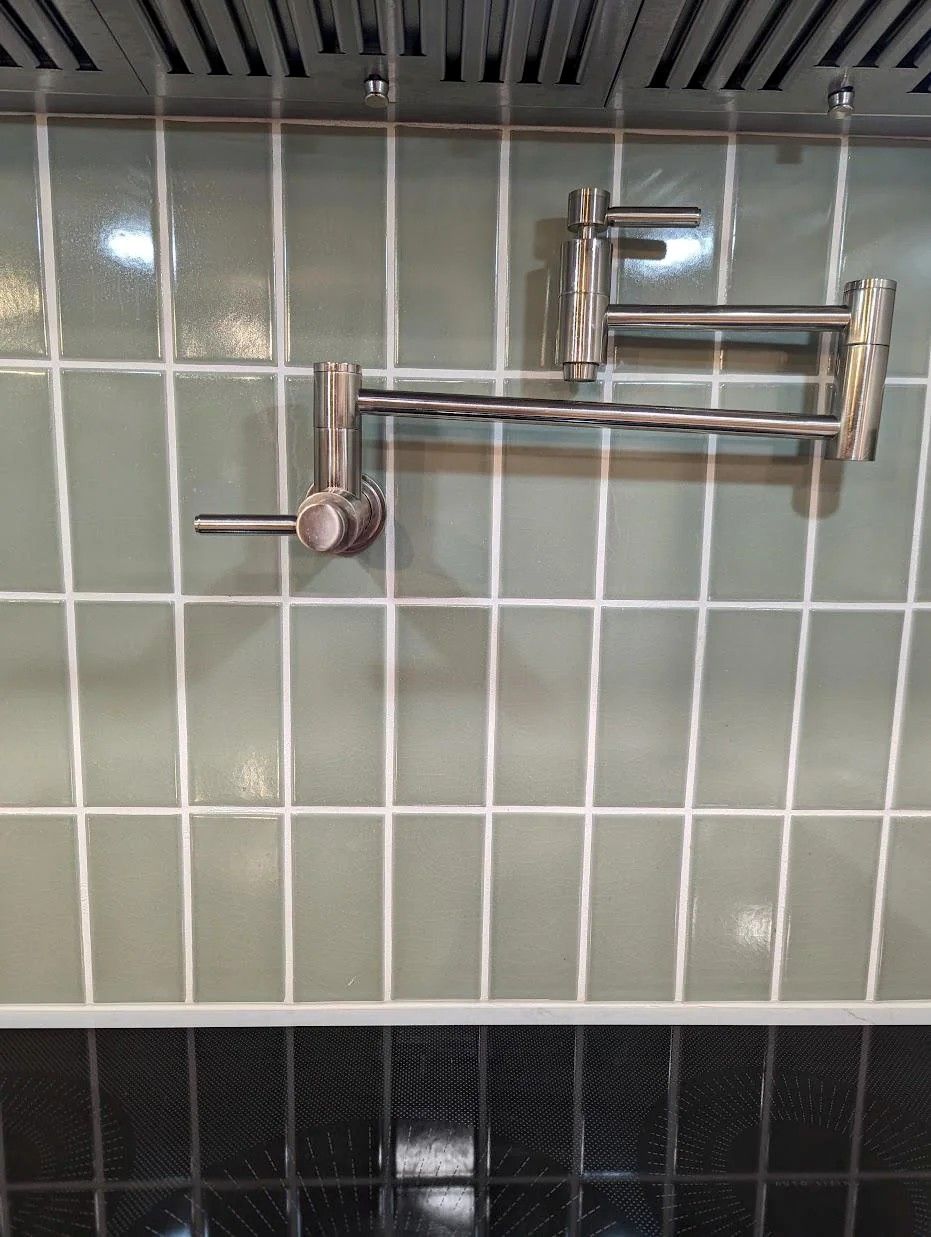
A stainless steel vent hood replaced the older white hood surround, establishing a cleaner focal point along the cooking wall. The addition of a pot filler introduced a professional kitchen detail without overwhelming the overall design.
Instead of relying on decorative trim or ornate finishes, the remodel utilizes metal accents to create contrast through shape and texture.
The Kitchen Feels Taller Even Though the Layout Barely Changed
The renovation maintained the original footprint, with most cabinet locations, wall openings, and work zones remaining almost identical.
However, the combination of lighter cabinetry, reflective tile, brighter flooring, and cleaner surfaces altered how the room handles height and light. The eye now flows through the kitchen rather than halting at dark cabinet walls and heavy horizontal breaks.
White cabinet paint, sage tile, and lighter flooring completely reshaped how this kitchen feels. Would you try this approach in your own kitchen?
Related: White and Navy Kitchen Cabinets Sage Green: Same Layout, but Now the Whole Kitchen Looks Custom-Built
All images and credits go to Reddit user Not_l0st and are available in the original Reddit thread.
The post They Kept the Orange Oak Cabinets in Their ’90s Kitchen but Painted Them White and Added Sage Green Tile appeared first on Homedit.







This is a stunning transformation! Painting those orange cabinets white instantly brightened the space, and the sage green tiles are a gorgeous choice. Love how you kept the original structure but completely refreshed the aesthetic. Truly inspiring work!
Thank you so much! I’m thrilled you love the transformation. Keeping the original structure while refreshing the colors was exactly the goal. The sage green tile really ties the new white cabinets together beautifully. Glad it inspires you too!