
In a small kitchen where every inch of wall space is claimed, the fridge takes up one stretch, the range another, and cookbooks often end up stacked on the counter alongside a crowd of spice jars and oil bottles with nowhere else to go.
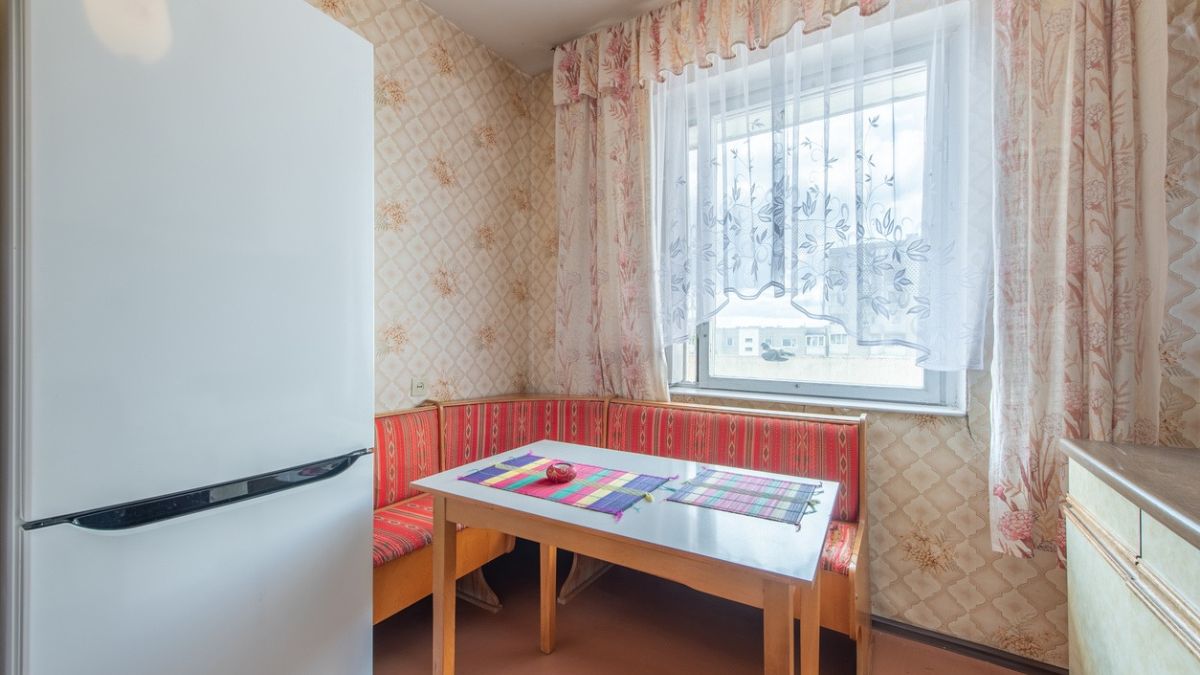
© Mindaugas Dulinskas
The kitchen layout wasn’t the problem; the unused side of the fridge was. DIY creator Alissa Steinbrugge had little free wall space, so in an Instagram video she demonstrated how she turned that tall panel into storage: an arched, five-tier wooden bookshelf standing against the side of her refrigerator.
Why the side of a fridge works as a wall
The side of a refrigerator is a tall, flat, mostly empty surface made of metal. That second detail matters because it allows a shelf to hold on without screws. Steinbrugge attached heavy-duty adhesive magnets to the back of the bookshelf to keep it from falling over.
The shelf she used is shallow enough to work in that space. It measures 63 inches tall, 23.6 inches wide, and just 3.9 inches deep, so it adds storage without protruding far into the room. It comes in dark or light wood and costs about $130.
Une publication partagée par Alissa Steinbrugge – Home Style & Simple DIYs (@popofcolorproject)
Before you cover any part of a fridge, remember it needs to breathe. Dust in the openings behind the grille at the bottom of the refrigerator can restrict airflow around the coils, and the owner’s manual specifies how much clearance each side of your model needs.
From empty panel to spice and cookbook shelf
- Measure the side. Check the height and depth of the fridge side, and how far it sits from the wall or cabinets next to it.
- Pick a slim shelf. A shelf about 4 inches deep keeps the walkway clear. Steinbrugge’s has an arched top and five tiers.
- Add the magnets. Attach heavy-duty adhesive magnets to the back of the shelf so it stays against the metal.
- Stand it in place. Set it flat on the floor against the side of the fridge.
- Load it bottom-heavy. She filled hers with decor, including framed prints and small vases of flowers, plus cookbooks and spices and oils decanted into pretty bottles. Heavier books belong on the lowest shelves.
The styled version reads more like a vanity than a kitchen, but the same shelf could just as easily hold seasonings, cooking tools, or cleaning supplies.
Plan B, if your fridge sits tight against a wall or cabinet: skip the shelf and use a few magnetic spice racks on the side instead. They take up an inch or two, not four.
What magnets can’t do for a tall shelf
Magnets keep the shelf close to the fridge, but they aren’t an anchor. A 63-inch shelf loaded with books and glass bottles can tip if a child climbs it or tugs on a shelf. The federal Anchor It campaign says anchoring furniture with shelves to the wall prevents tip-over injuries and deaths, so in a home with young kids, secure the shelf properly or skip the heavy items.
The project’s source doesn’t give a weight limit for the shelf or the magnets. Keep glass bottles and heavy cookbooks low, and check the magnet packaging for its holding strength.
Watch the fridge itself, too. Don’t block vents the manual says to keep clear, and make sure the shelf doesn’t interfere with the door swing or a water line behind the fridge.
Look at the side of the fridge as wall space, and keep the heavy things low. That’s the trick.
The post DIY creator turns fridge side into storage with magnetic 5-tier bookshelf appeared first on Homedit.

















































Sixty-three inches tall on a fridge side? That’s a massive, unstable tower held by glue. What’s the weight limit? Did it actually hold five heavy cookbooks, or just a few paperbacks? Show me the load test evidence.
Great point! It’s mounted with industrial-strength magnetic strips, not just glue. I tested it with three heavy hardcover cookbooks, and it held firm without shifting. The base is wide enough to keep the center of gravity stable. I’ll add a weight capacity note in the next update!