
Decorating multiple rooms with traditional Christmas stars made of metal, glass, or plastic often results in high costs. A single sheet of metallic wrapping paper, however, can be transformed into an eight-pointed star featuring raised sections and reflective surfaces, eliminating the need to purchase a pre-made ornament or construct a cardboard base.

To form the pointed sections of the star, the paper needs to sustain folds without ripping, so the material must be able to hold creases. This metallic gift-wrapping paper features a red patterned side and a silver reverse side, and the project starts by using a square of this material.
A flat work surface helps keep the edges aligned during assembly.
Metallic Wrapping Paper Serves as the Base Material
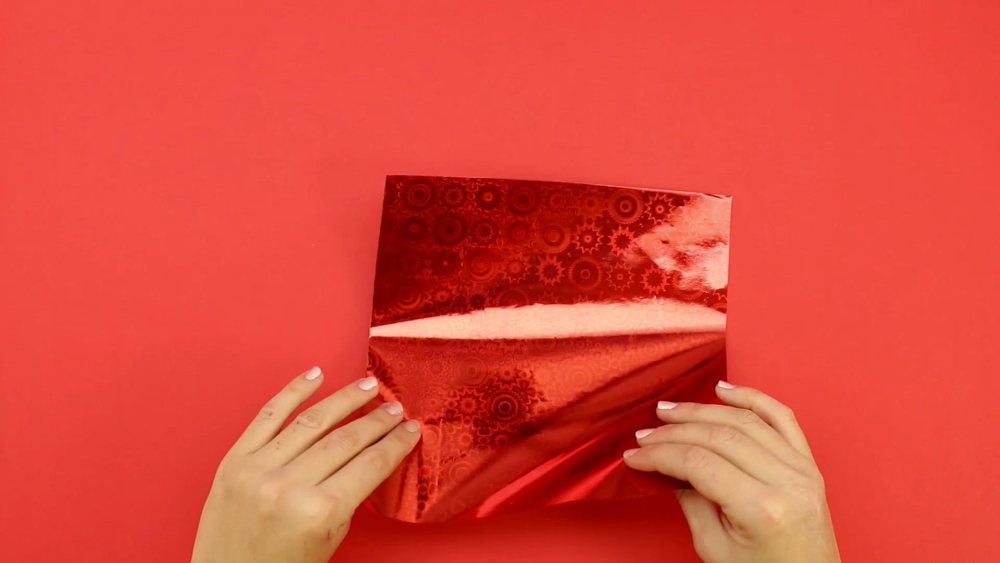
To create the pointed sections of the star, the folds must hold their shape without tearing, which is why the starting material is a square of metallic gift-wrapping paper that features a red patterned surface on one side and a silver reverse on the other.
A flat work surface helps keep the edges aligned during assembly.
Folding the Paper Creates a Smaller Rectangle
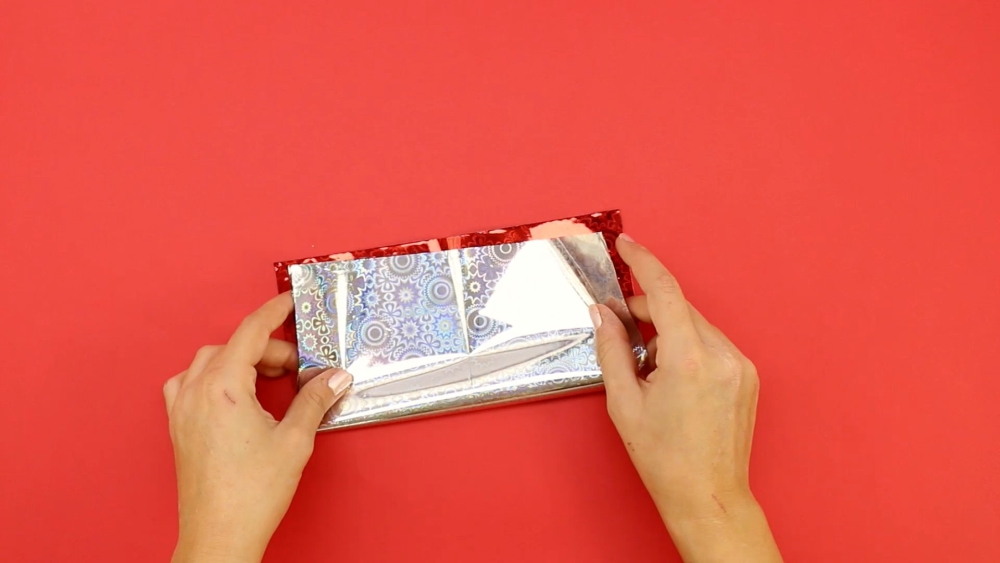
The square is folded in half by bringing opposite edges together and pressing the crease across the center. The paper is then turned to expose the silver side before proceeding with the next folds.
These initial creases establish the center lines used to form the star.
Four Folded Sections Meet at the Center
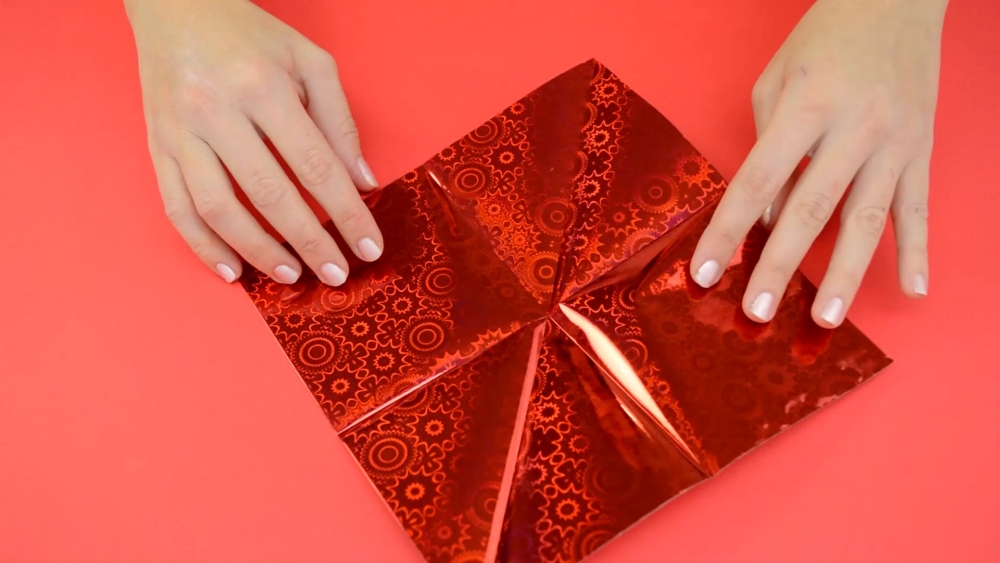
The sheet is opened, and the corners are brought toward the center, creating triangular sections that meet at one point. The red patterned surface remains visible across the outer portions of the folded paper.
The folds divide the square into sections that will become the star’s arms.
The Paper Is Folded Into a Large Triangle
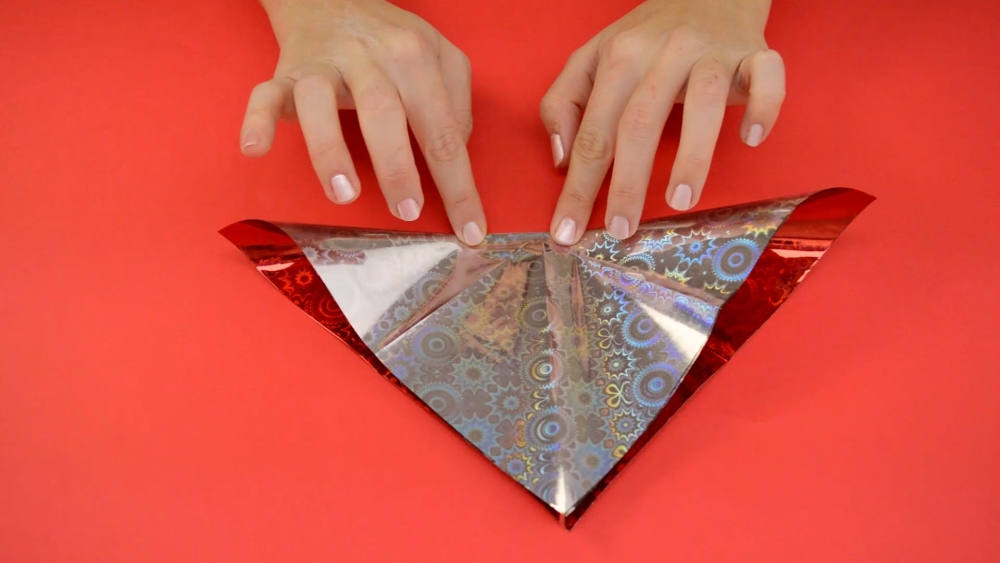
The paper is folded along a diagonal crease, forming a large triangle with the silver patterned reverse facing upward.
The edges are pressed flat to retain the shape before the next sections are opened and refolded.
Repeated Folds Prepare the Star’s Points
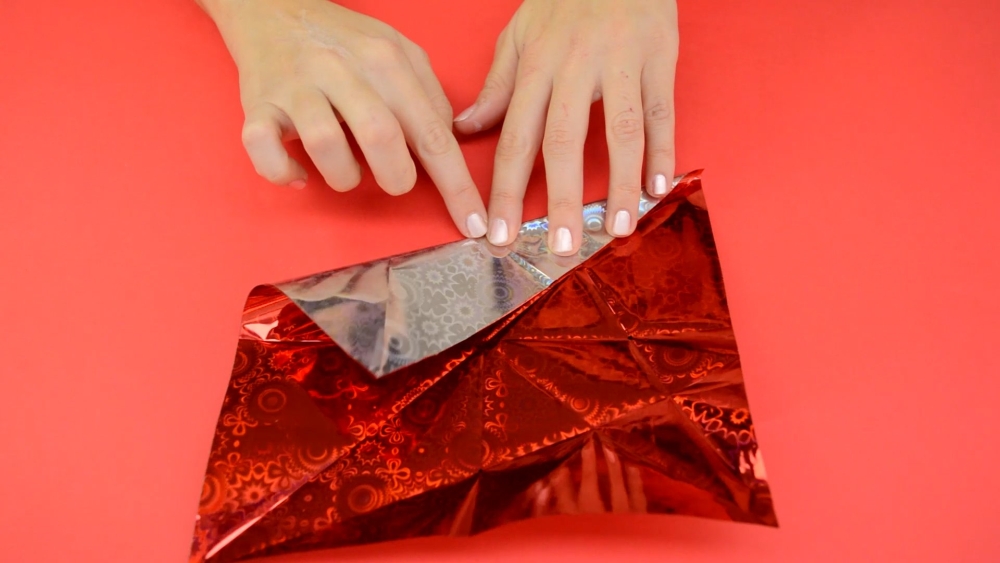
The triangular layers are brought toward the center, with the folds forming narrow sections along the edges.
The metallic paper alternates between red and silver as the overlapping pieces are repositioned.
The Folded Paper Forms a Square With Multiple Triangles
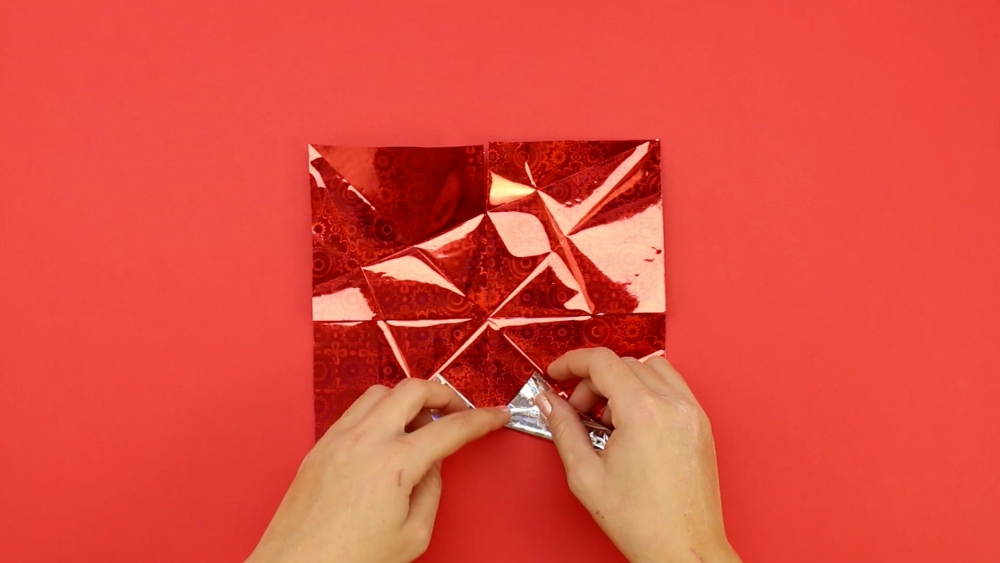
The paper is opened into a square arrangement, with triangular flaps extending from the central section.
The maker presses the lower flaps into place, keeping the pointed edges aligned before opening the star into its final form.
Four Large Points Begin to Take Shape
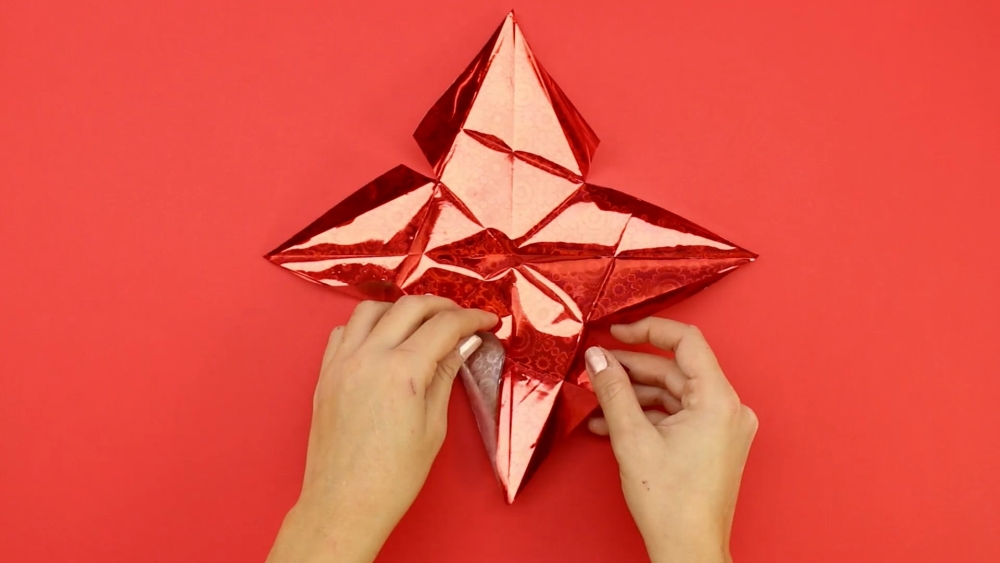
To achieve the eight-point configuration, additional sections are generated by the smaller triangular folds that persist between the four large points created when the folded sections are drawn outward.
The red and silver surfaces remain visible on different sides of the developing ornament.
Glue Secures the Folded Sections
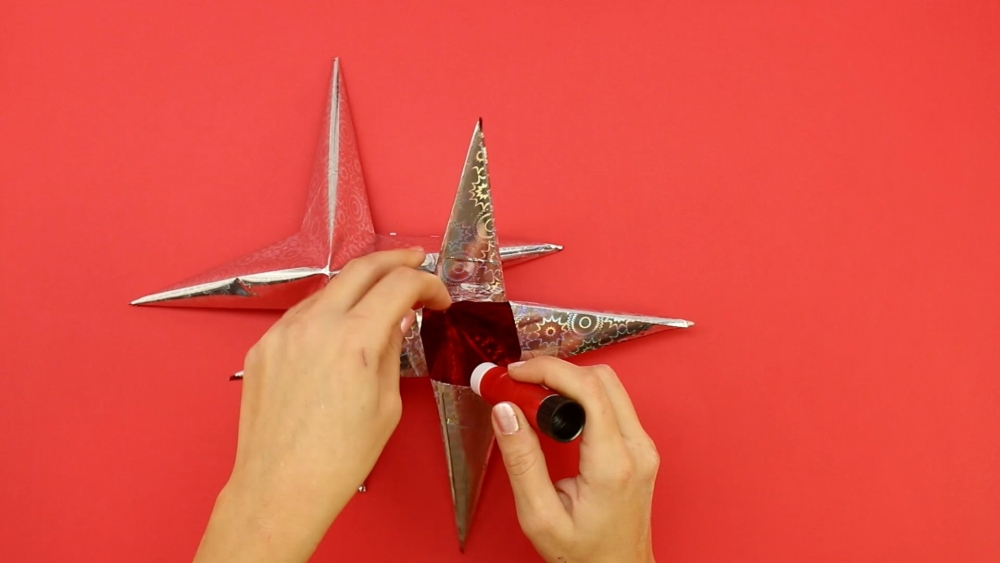
Once the paper is shaped, the adhesive secures the raised points. This is achieved by applying glue to the inner sections where the folded paper overlaps.
The construction uses the original sheet rather than attaching separate paper triangles or adding a cardboard frame.
The Finished Star Has Eight Pointed Arms
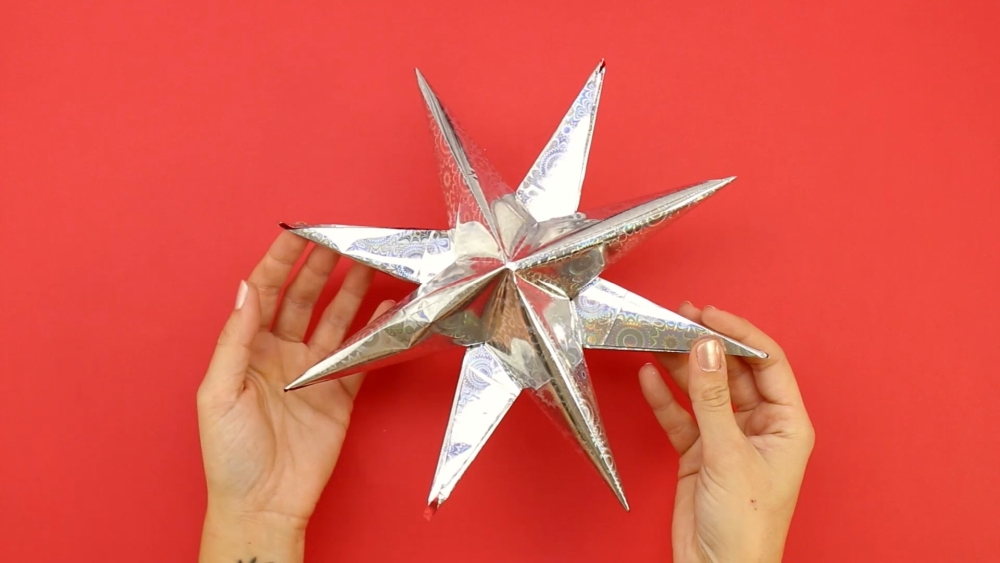
Radiating from a central protrusion are eight arms that form the completed ornament. The visual effect shifts based on the observer’s perspective, as segments of patterned metallic paper alternate with silver reflective surfaces.
The folds give the ornament its three-dimensional structure, while the pointed edges retain the shape established during assembly.
The Metallic Star Hangs Among Christmas Decorations

Suspended by a slender strand, the completed star hangs before a backdrop of gold tinsel, red poinsettias, and green garlands. Its pointed sections stretch outward instead of lying flat against the background.
The silver surface reflects the surrounding light, making the folds visible when the ornament moves.
The Star Has a Different Appearance From Every Angle

The silver faces partially conceal the raised center, yet the red patterned reverse remains visible in the gaps between them, revealing how the eight points overlap around this central feature.
The finished star can be used as a hanging Christmas decoration, with the thread attached to one of its upper points.
The full video below shows the folding sequence, the glue application, and the finished ornament.
Video: How to Fold an Eight-Point Christmas Star From Wrapping Paper
Discover how to transform a red cloth napkin into a festive tree for every dinner plate by folding, eliminating the need for cutting, sewing, or glue. This method offers an alternative Christmas decoration crafted from folded materials.
Images and video: Homedit Christmas craft tutorial.
Source: Homedit.






















































Oh, so this is how we survive the holiday season now? Just folding paper until it doesn’t scream “poverty.” At least the irony is as sharp as the creases.
Haha, I love that perspective! While folding paper is definitely more budget-friendly than buying expensive decorations, there’s a unique charm in crafting something beautiful with your own hands. It’s less about poverty and more about the joy of creating a personalized touch for the holidays.