
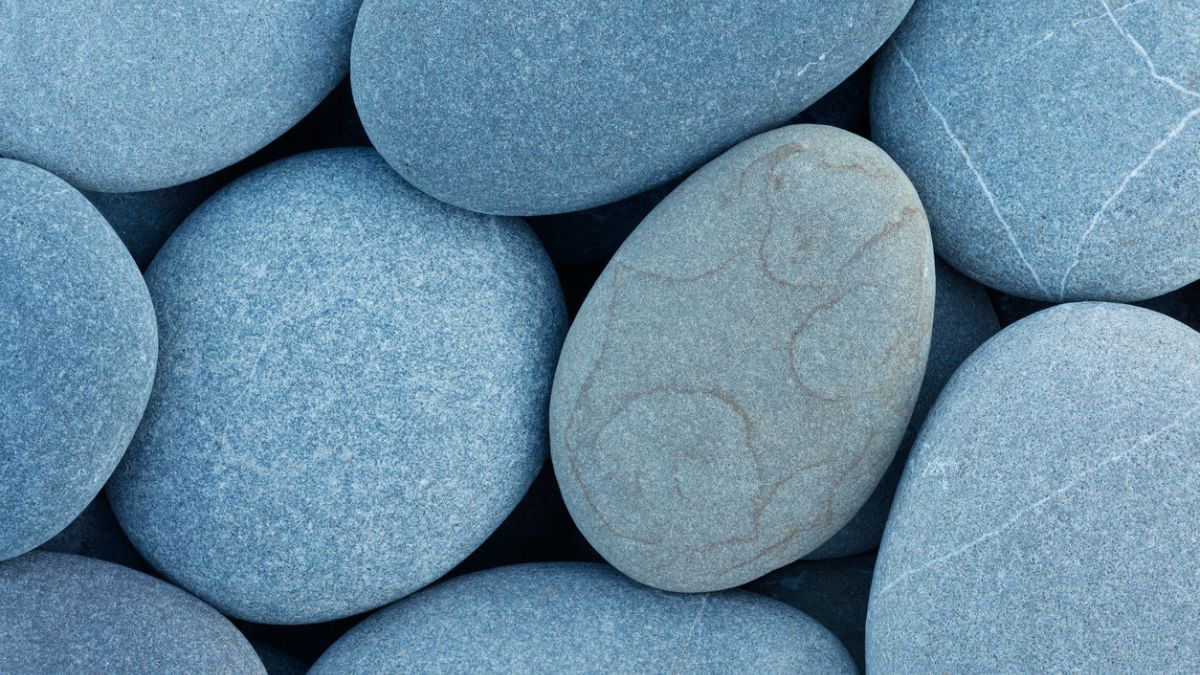
A carved stone bowl displayed on a console or dinner table often looks like a gallery piece, and its price tag reflects that aesthetic. Large bowls typically start around $100, while even small ones sell for $20 or more, making a matching set feel out of reach for many.
© Daria Matveeva
The high price of finished stone bowls is largely due to labor costs. Woodworker Ben Uyeda demonstrated in a TikTok tutorial how he transforms smooth river rocks into bowls using an angle grinder, a hammer, and a chisel. He noted that these bowls are intended for the restaurant at a hotel he is building, and he can produce four to five bowls in an hour.
Why a river rock is a bowl waiting to happen
River stones are already shaped and smoothed by water, meaning the exterior of the bowl is essentially finished before work begins. The labor is concentrated on two areas: creating a flat bottom so the bowl sits level, and hollowing out the top. Uyeda uses smooth stones weighing between 6 and 12 pounds, purchased from a local landscape materials supplier at $0.35 to $0.40 per pound. This amounts to roughly $2 to $5 worth of stone per bowl.
Stone work rewards careful planning before the first cut. For example, when one builder turned a single travertine slab into a bathroom vanity, he marked every piece before cutting, including the sink opening, to ensure the veining ran continuously across the entire piece without interruption.
From river rock to bowl in about 15 minutes
- Hold the stone still. Clamp it in a vise on a workbench, or place a stone that is too curved for the vise into a small box filled with sand.
- Flatten the bottom. Use an angle grinder fitted with a diamond tile-cutting blade to grind a flat spot, ensuring the bowl won’t rock or tip.
- Score the top. Turn the stone over and make a series of straight cuts across the center, leaving small triangular sections.
- Chip out the middle. Remove the triangular sections using a hammer and chisel.
- Smooth the hollow. Switch to a ball grinder on an extension shaft and grind the interior until it reaches the desired smoothness.
- Seal it. For bowls intended to hold food, rub them with food-grade mineral oil to limit moisture absorption and facilitate cleaning.
At a rate of four to five bowls per hour, each one takes roughly 12 to 15 minutes once you establish a rhythm. If you prefer to avoid using an angle grinder, you can skip the hollowing process and simply flatten the bottom of a stone to use as a sculptural paperweight or bookend. Alternatively, you can paint a finished bowl with acrylic for decorative purposes, though note that most acrylic paints are not food-safe.
What grinding stone does to the air in your shop
The primary hazard in this project is stone dust. According to OSHA, stone, rock, sand, and concrete contain crystalline silica. Cutting, grinding, and drilling these materials releases respirable crystalline silica particles, which can cause silicosis—an incurable lung disease—as well as lung cancer and COPD.
As the tutorial advises, wear an N95 respirator, safety goggles, and gloves. Work outdoors if possible, keep children and pets away, and clean up using a vacuum or a damp cloth rather than a broom to prevent dust from becoming airborne again.
An angle grinder also demands respect. Keep the guard in place, use a blade rated for stone, and ensure the stone cannot shift while you are cutting. Reserve painted or unsealed bowls for keys and decor rather than for serving food.
Let the river do the shaping, and save your effort for the hollow. That is the key to the process.
The post DIY Stone Bowls: Turn Cheap River Rocks into Decor for a Fraction of the Cost appeared first on Homedit.


















Ben’s efficiency is staggering. How do you decide which rock to hollow first? Does the stone’s natural shape dictate the bowl’s final form, or do you force it into a specific silhouette?
Great question! I always start with the stone’s natural shape. It guides the hollowing process, ensuring the bowl feels organic rather than forced. This approach saves time and preserves the rock’s unique character, resulting in a more authentic and beautiful final piece.