
While a vintage dining buffet offers ample storage for kitchen needs, converting it into a functional island requires more than simply relocating it. The structure must reach proper prep height, the rear needs a finished look, and the surface must endure daily wear.
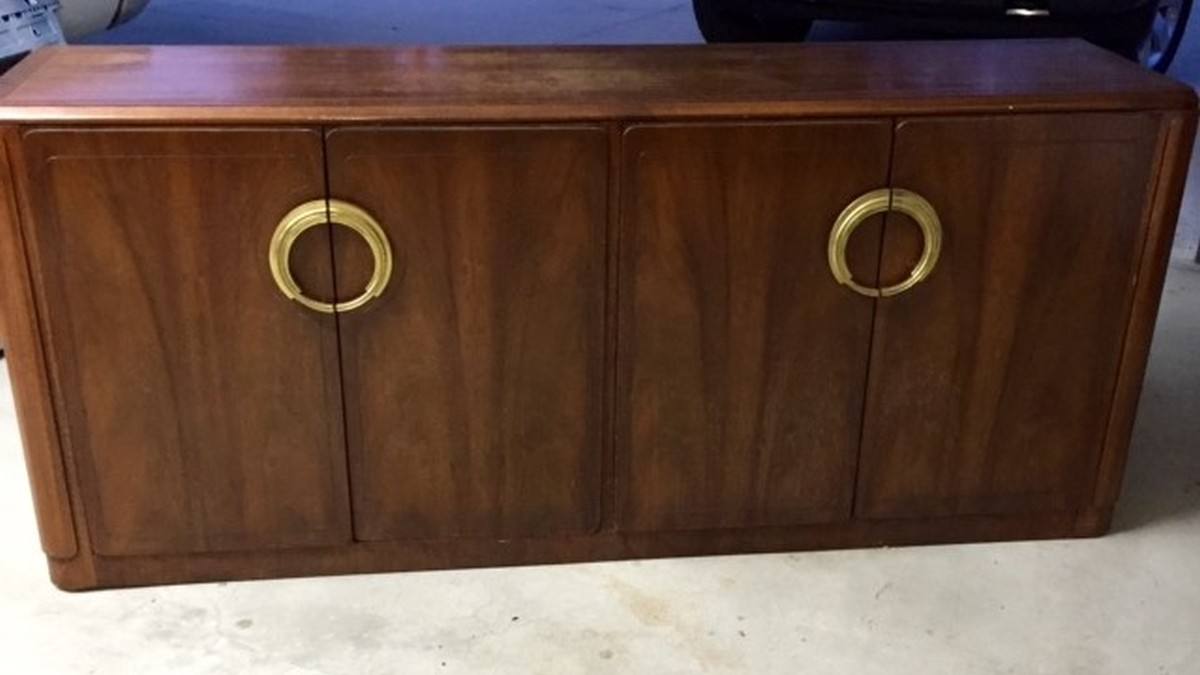
This dark wood piece featured four doors, a substantial cabinet body, and large circular brass handles. Rather than purchasing a new manufactured island, the homeowners opted for a coral finish, a stone countertop, and a shiplap back that harmonized with their existing kitchen decor.
Julie Peterson, a furniture refinisher from Simple Redesign, executed the transformation for a client alongside designer Mindi Freng. The project involved installing six new feet, modifying the cabinet’s rear, and updating the finish on the original hardware.
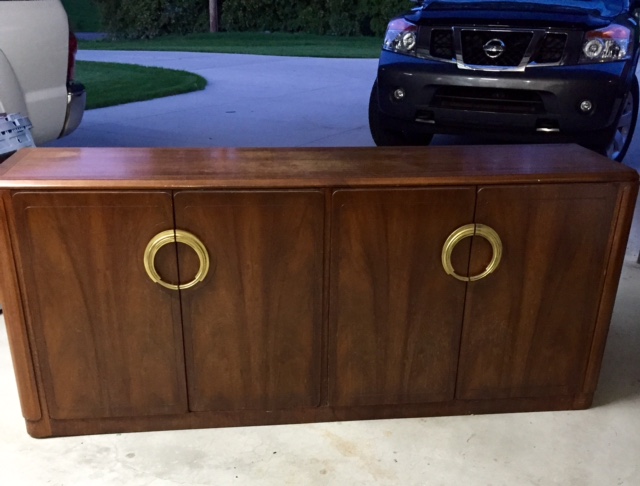
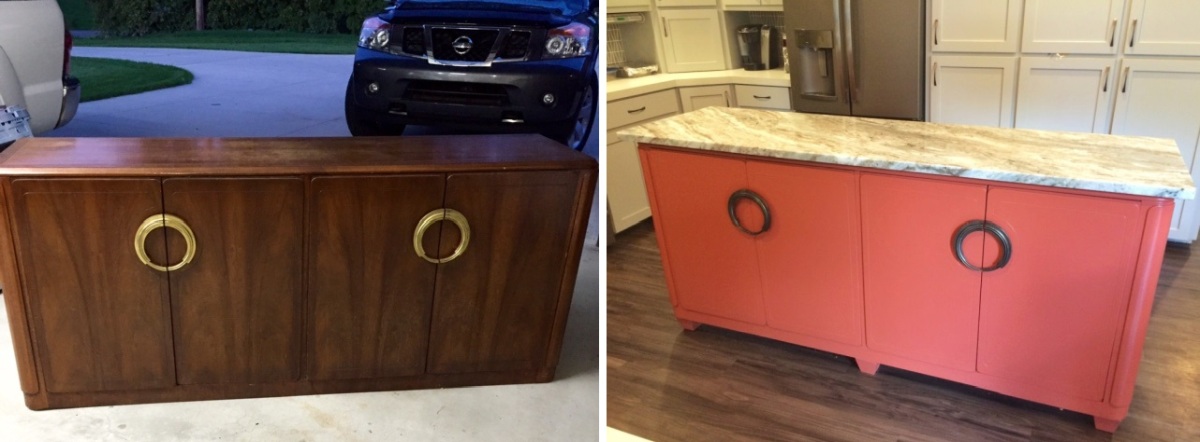
The original buffet offered island-sized storage
The dark wood unit possessed a wide top, four doors, and two circular brass pulls that operated each pair of doors. Although its low profile suited a dining room, the height required adjustment to function as a kitchen work surface.
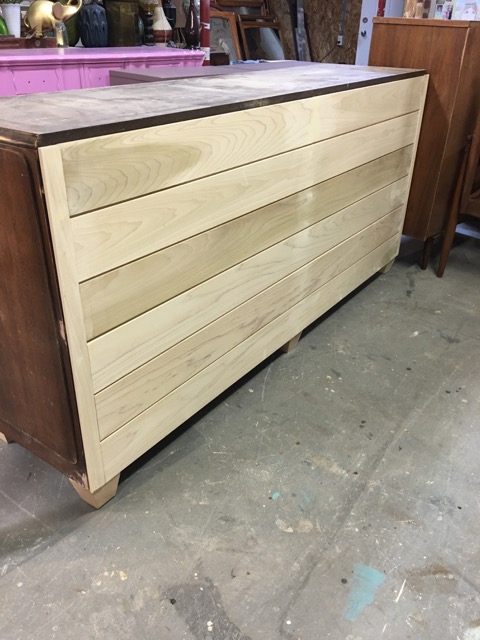
The cabinet’s significant weight made transporting it between the workshop and the client’s home a notable challenge during the project.
New feet adjusted the height
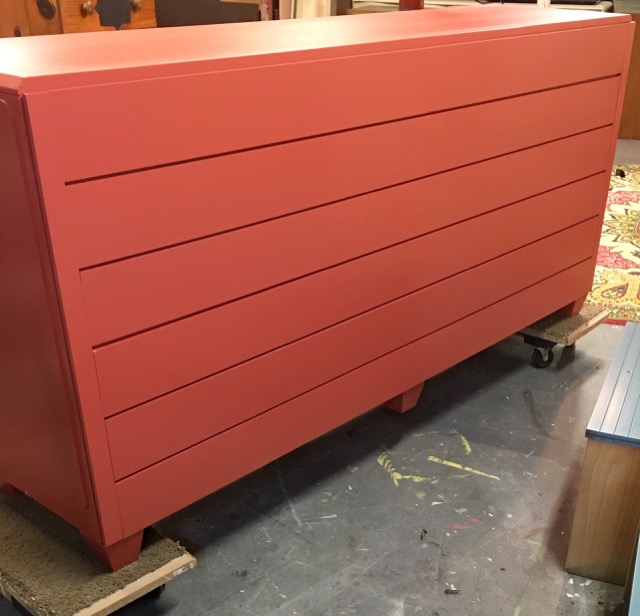
Adding feet brought the buffet closer to standard counter height. Given its length and anticipated usage, the refinisher installed six supports rather than the usual four, including an extra pair beneath the center for stability.
Wooden blocks were placed underneath to create mounting points for the foot brackets, enabling the new supports to attach securely to the existing cabinet structure.
Shiplap finished the exposed back
Buffets typically sit against walls, keeping their backs hidden. Once positioned in the center of a kitchen, that surface becomes visible from the opposite side.
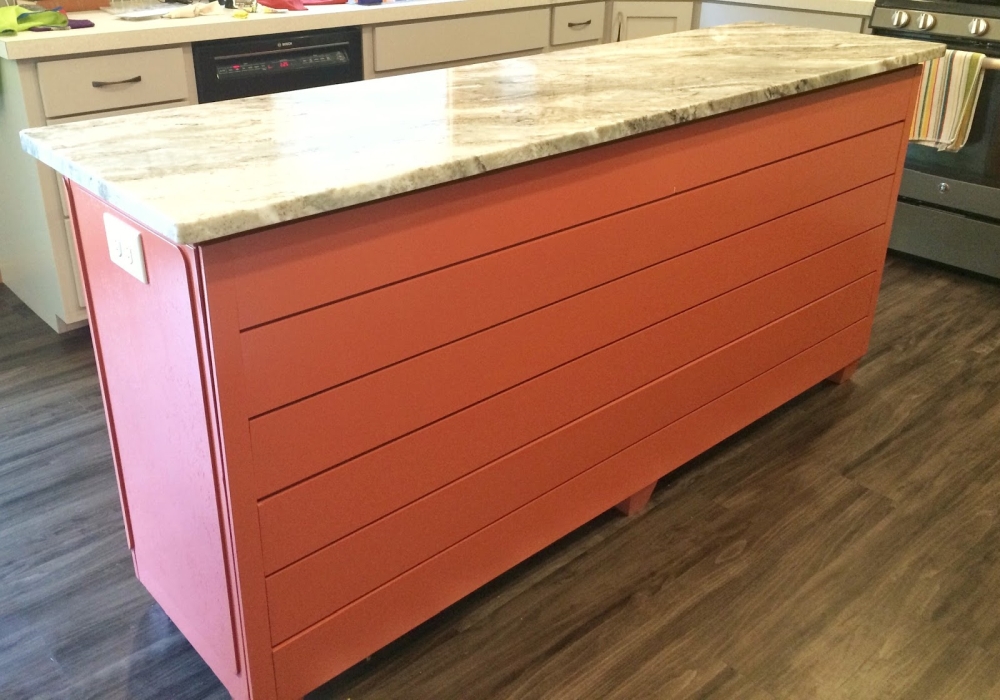
Since the client’s contractor was installing shiplap near the eating area, extra boards were ordered for the island. Fitting these into the rear panel created horizontal lines that matched the surrounding design.
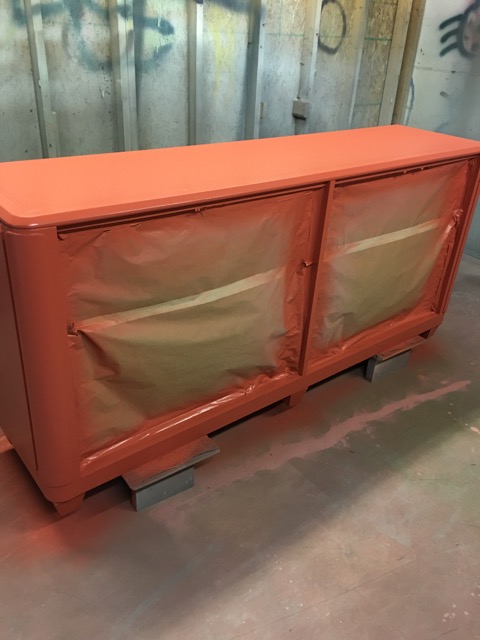
Coral paint was applied to the doors, sides, and top of the cabinet before the final finish was added. While the back was shielded during part of the painting, the new feet were completed to coordinate with the body.
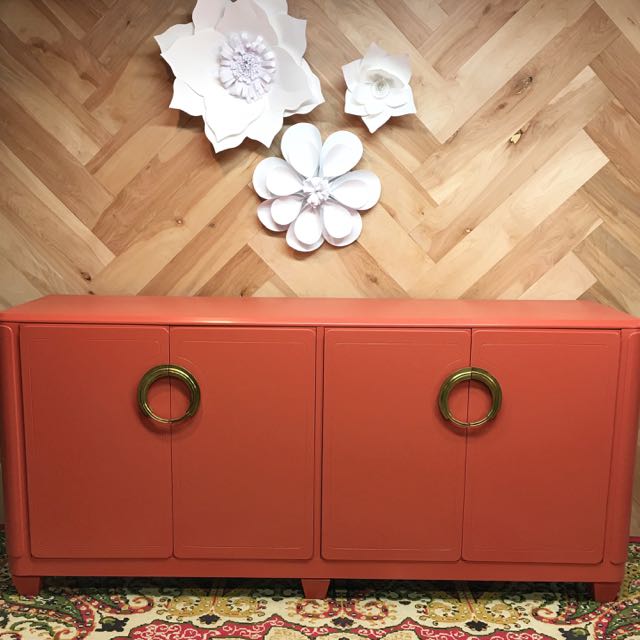
Coral paint and bronze hardware updated the look
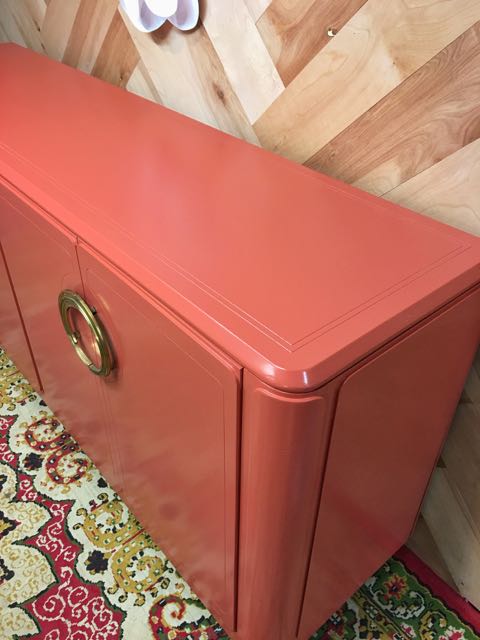
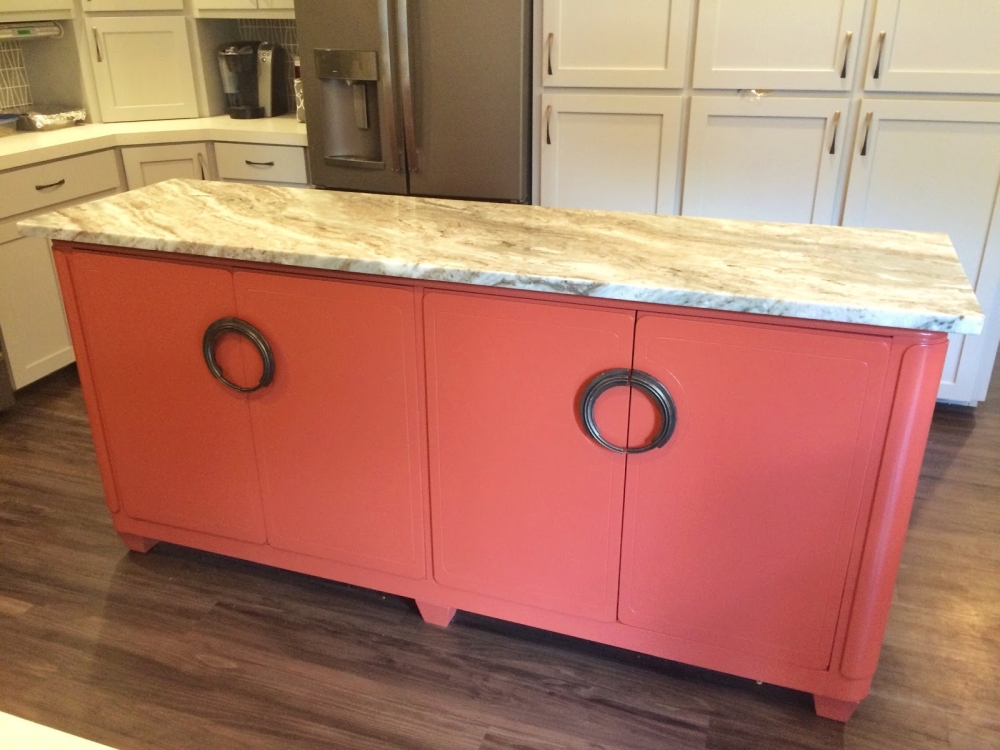
The brass rings emerged as a striking feature against the fresh paint, standing out prominently instead of blending into the dark wood as they might have otherwise. This visual effect occurred in the coral-hued cabinet, which maintained its initial layout of doors and circular handles.
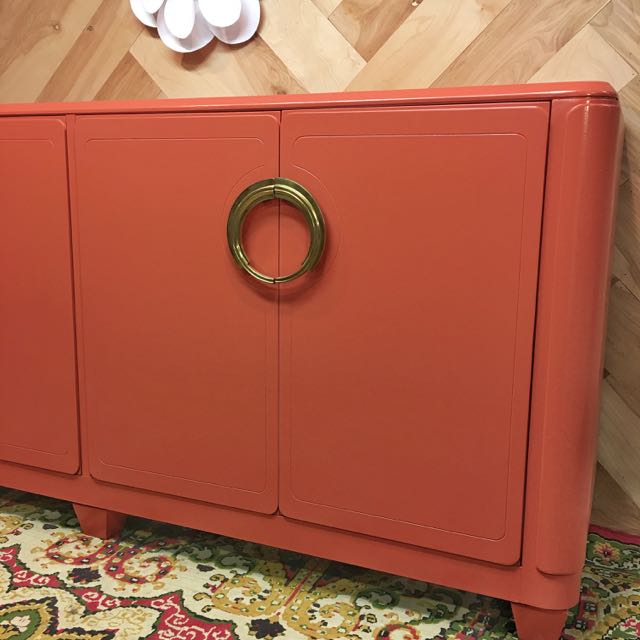
The painted top, rounded corners, and recessed door panels remained visible beneath the finish. Instead of altering the cabinet’s construction, the makeover retained these details and gave them a new color.
Because the initial brass-plated handles exhibited signs of wear, they were treated with a darker bronze coating, allowing some of the underlying brass to remain visible, a finish that successfully aligned with the client’s kitchen cabinet hardware.
A stone countertop completed the island
After the buffet was put in place, a stone countertop was added which stretched past the cabinet frame. This design choice expanded the workspace without blocking access to the doors from the other side.
Viewed from behind, the horizontal shiplap planks hide the underlying buffet structure, while their painted finish links with the coral sides to ensure the island looks complete from both sides.
Storage was provided by the initial cabinet, which transformed into a coral kitchen island featuring stone counters and bronze ring pulls after receiving added feet, a finished back, and a countertop to serve a new purpose, as demonstrated by the contrast between the original dark wood dining room buffet and the updated piece.
Image credits go to @simpleredesign.
Source: Homedit.







We chase novelty, forgetting that true elegance lies in honoring what already exists. This buffet proves that with vision and patience, the past can be elevated, not just replaced.
Thank you for that thoughtful insight! You’re absolutely right—true elegance often comes from honoring existing beauty rather than simply replacing it. I’m thrilled this buffet resonated with you. It’s all about seeing the potential and giving it a new purpose.