
Guests are on their way, the house is clean, and the living room smells like the candle you lit an hour ago. Then you open the front door and catch it: a damp, musty smell right at the entrance, where the boots, the wet mat and the cold air all meet.
The entryway isn’t dirtier than the rest of the house. It just gets the worst of the weather. Shoes bring in moisture, the mat stays damp, and the smell settles there first. A spray bottle of water with a little vanilla extract is a simple way to make that spot smell warm instead of wet.
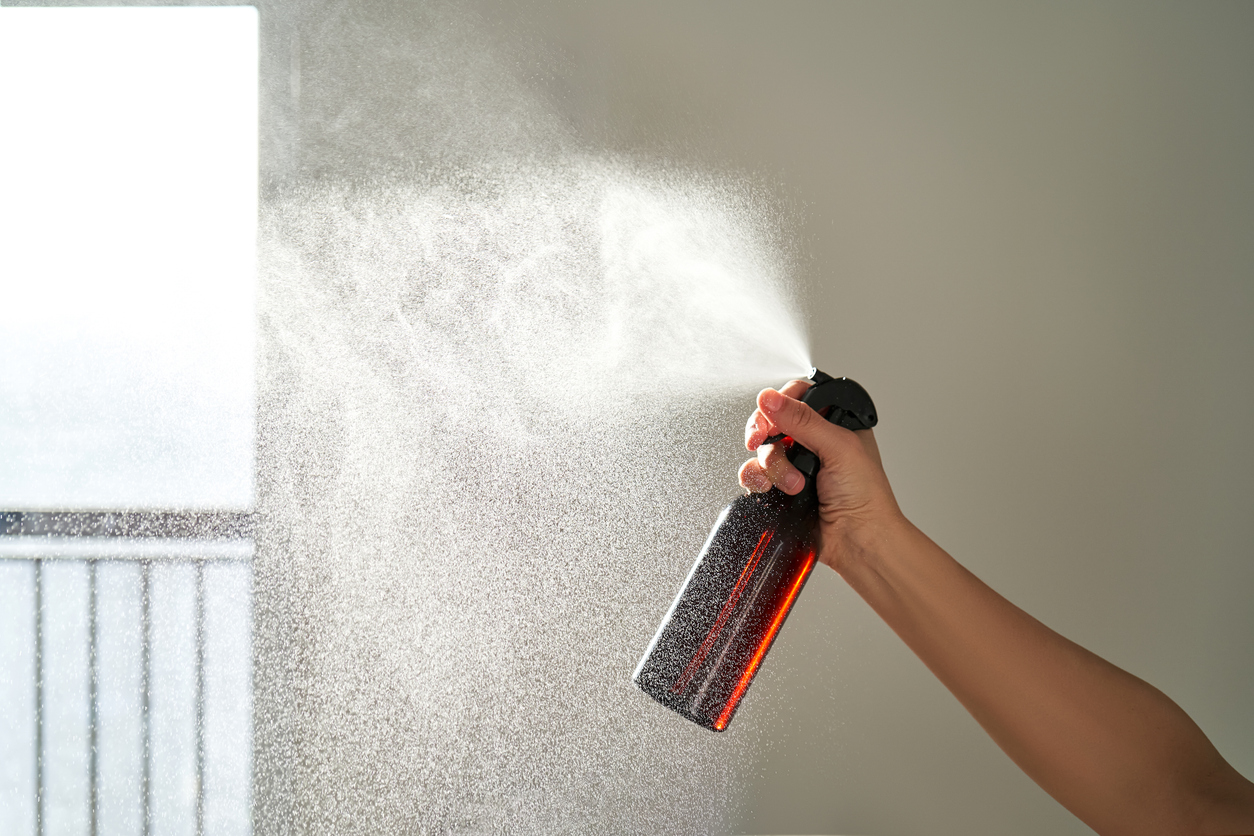
A woman’s hand sprays an air freshener in a room. High quality photo. Istock : Mariya Borisova
Why the entryway smells first
The entrance is where outside humidity and shoes left by the door come together. Damp fabric and rubber hold onto odors, and a closed door in winter keeps them there.
Vanilla doesn’t clean anything. It works by changing what you notice when you walk in, covering the faint mustiness with a soft, familiar scent that lasts. That’s why it’s recommended as a quick refresh rather than a fix.
It also explains a detail worth knowing: real vanilla extract is made with alcohol. Under federal rules, vanilla extract must contain not less than 35 percent ethyl alcohol by volume.
How to make and use a vanilla entry spray
You need a clean spray bottle, water and vanilla extract:
- Mix it. Add about 1 teaspoon of vanilla extract to roughly 2 cups of water.
- Shake before every use. Give the bottle a good shake so the vanilla mixes back into the water.
- Spray lightly. Mist the entry rug or floor, and the curtains near the door if you have them.
- Adjust the strength. Use a little more vanilla for a stronger scent, or a little less if it feels too sweet.
- Refresh as needed. A light mist before guests arrive is usually enough.
Test it on a hidden corner of any rug or curtain first. Vanilla extract is tinted, and a fabric that doesn’t like water or alcohol is better left alone.
If you’d rather scent the whole house, the stove does it better than a spray bottle. Simmering bay leaves, cloves and a cinnamon stick sends the smell through the rooms in the steam, as long as you top up the water about every 30 minutes and never leave the pot unattended.
What a pleasant scent can’t cover up
Vanilla only masks a smell. If the entryway keeps going musty, find the source: wash or replace the mat, let wet boots dry somewhere ventilated, and wipe up melted snow before it soaks in.
A smell that returns no matter what you do can point to a moisture problem at the entrance. That calls for a closer look, not more spray.
Label the bottle and keep it out of reach of children, like any homemade spray.
Two cups of water, a teaspoon of vanilla and a quick mist by the door. That’s the trick.
The post Spraying water with a few drops of vanilla extract by the front door: what is it for and why is it recommended appeared first on Homedit.





















































Ah, vanilla. The olfactory equivalent of wearing a winter coat indoors. It doesn’t remove the dampness, it just politely asks you to ignore it while your shoes rot. Brilliant.
Haha, you nailed it! Vanilla definitely masks rather than eliminates. It’s the olactory equivalent of a cozy blanket over a drafty window—pleasant, but the dampness is still there. Thanks for the laugh!