
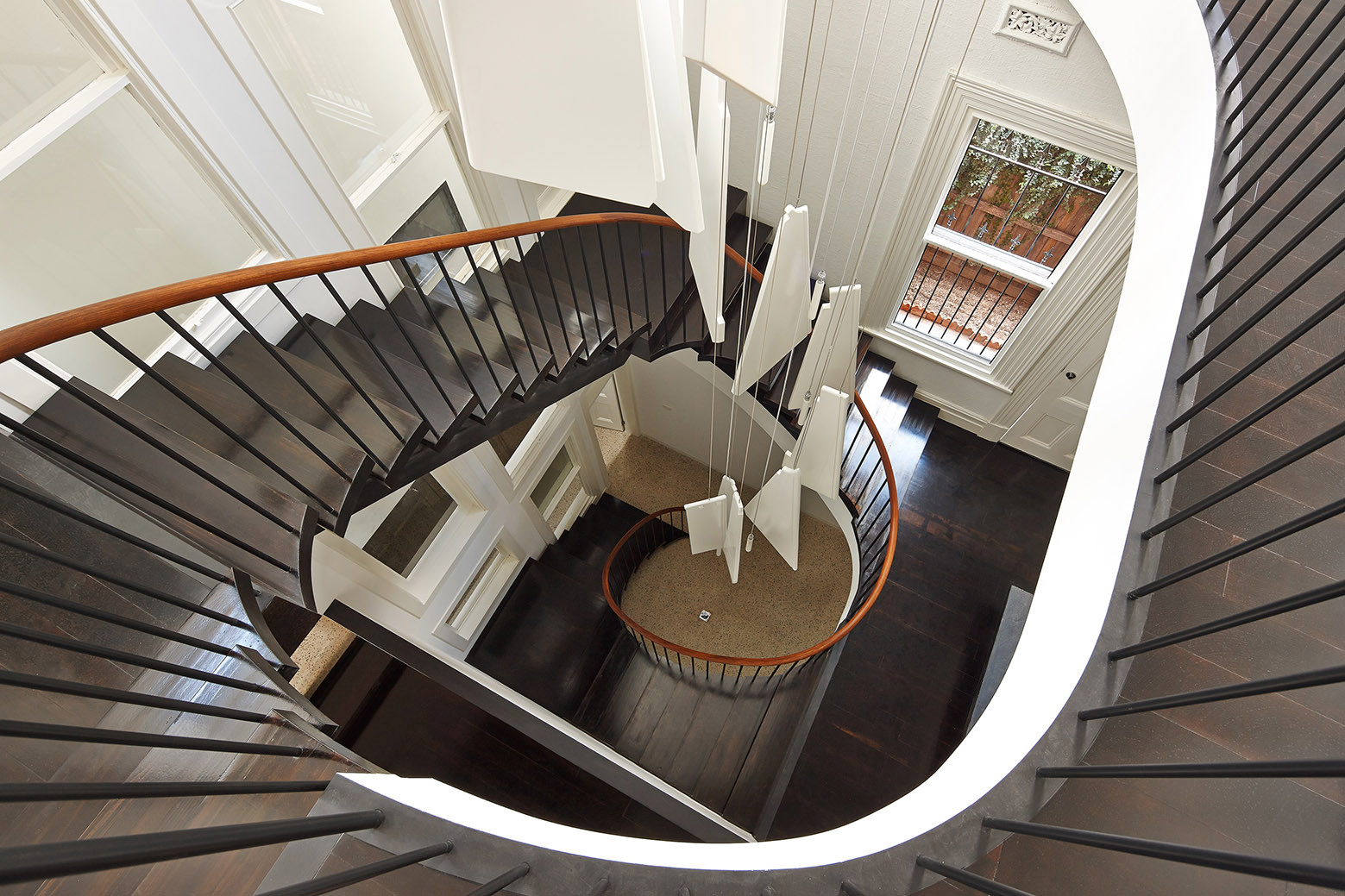
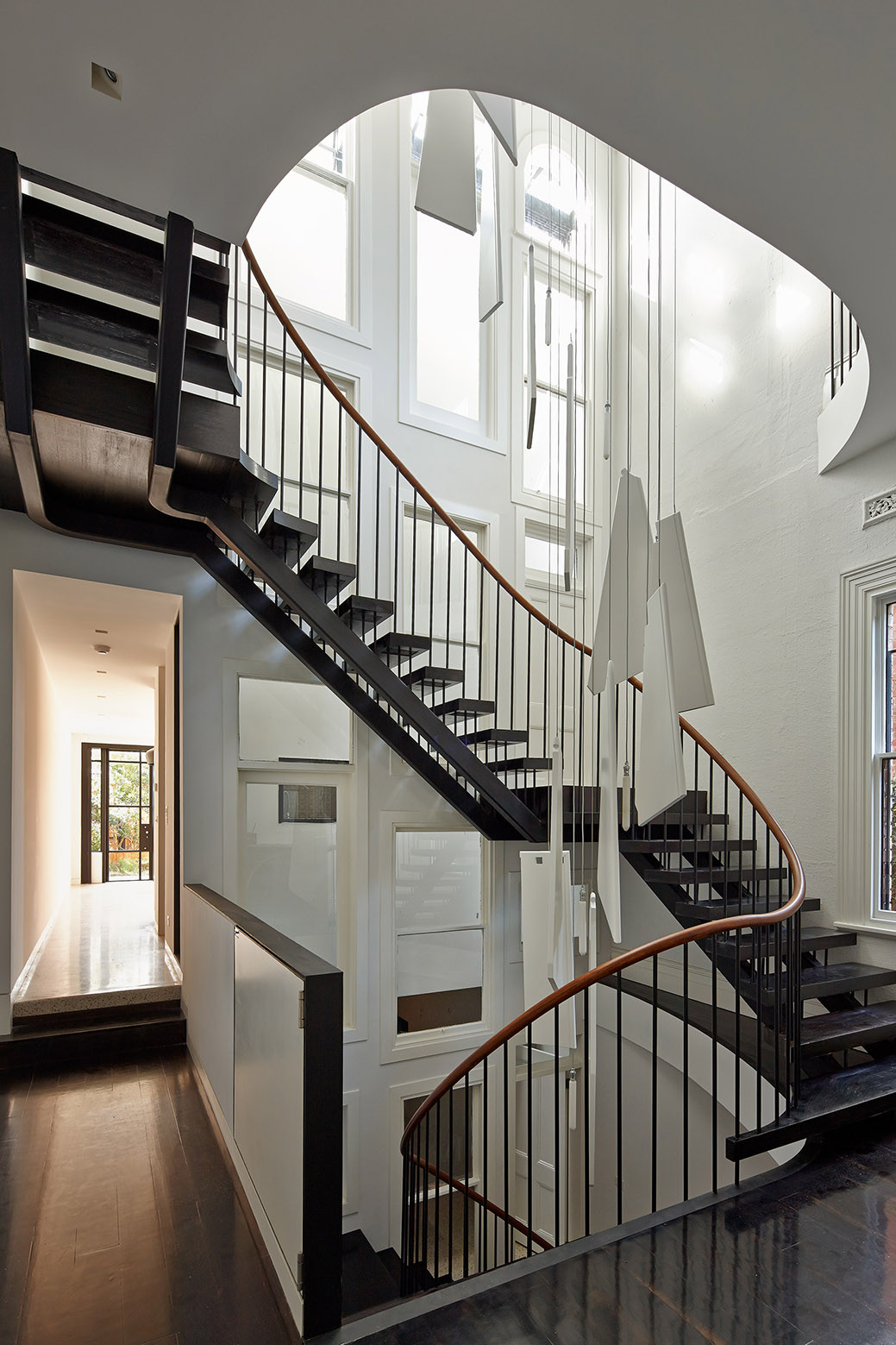
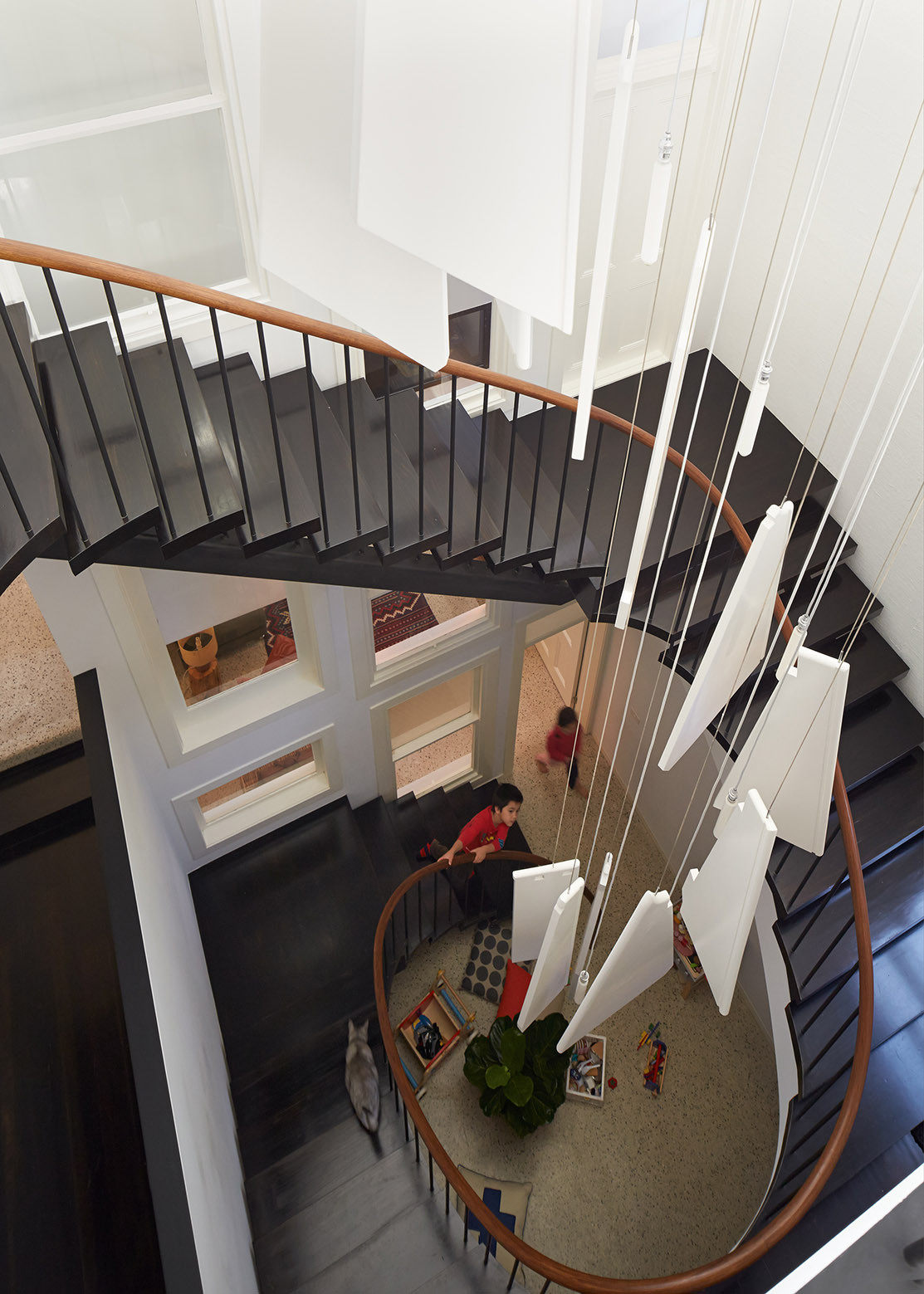
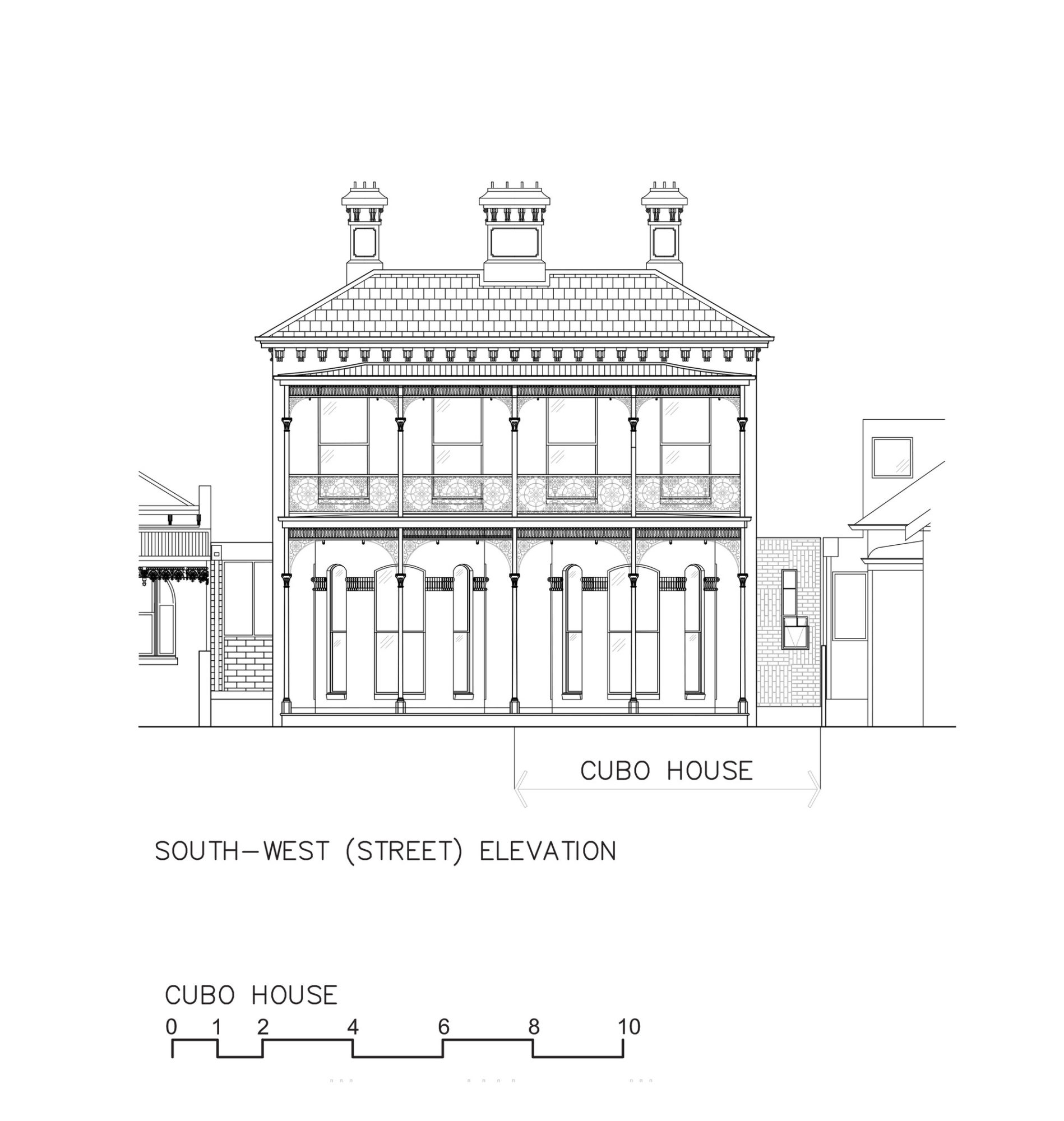
The Cubo House represents the result of a successful renovation and expansion project that was carried out by PHOOEY Architects for a young family in Melbourne, Australia. The original home was a double-story Victorian-era terrace house, which was entered via a dark corridor located under a staircase. The architects placed a welcoming entry foyer in the corridor’s place, which opens up to a multi-level void that receives plenty of natural light and ventilation. The three levels are linked by a feature staircase, which offers easy access to some of the most important rooms.
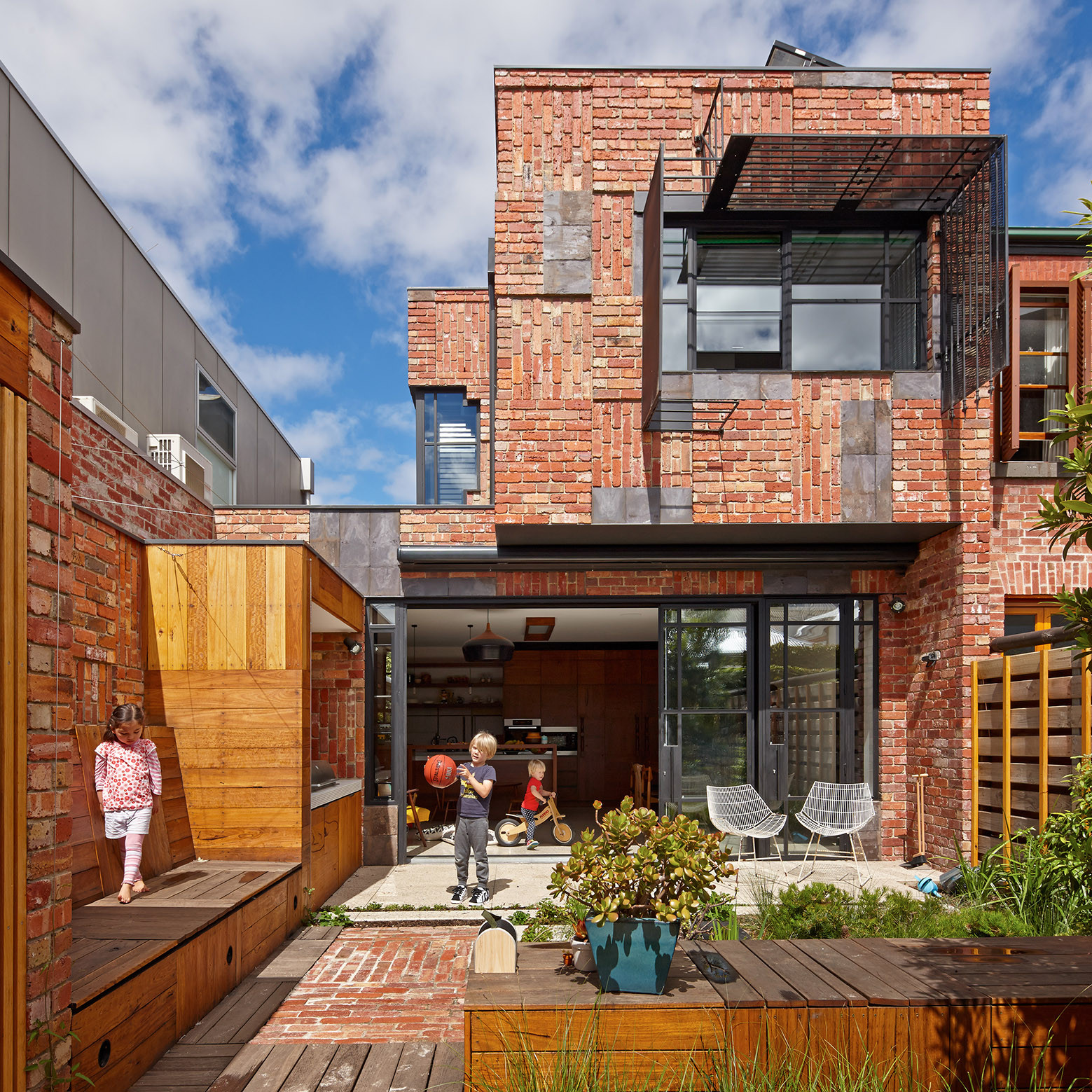
Some of the materials resulted from the demolition were stored on site for upcycling purposes. For example, leftover stair balustrades are now used to screen a kid’s loft bed, while some of the existing windows are now a part of a feature wall and a lightwell. As far as sustainability goes, photovoltaic cells and water collection tanks are the main highlights, but they are hidden away from sight.
From the architect:
PHOOEY Architects transformed an existing double storey Victorian-era heritage-listed attached terrace house in Melbourne into a bespoke & sustainable home for a young family.
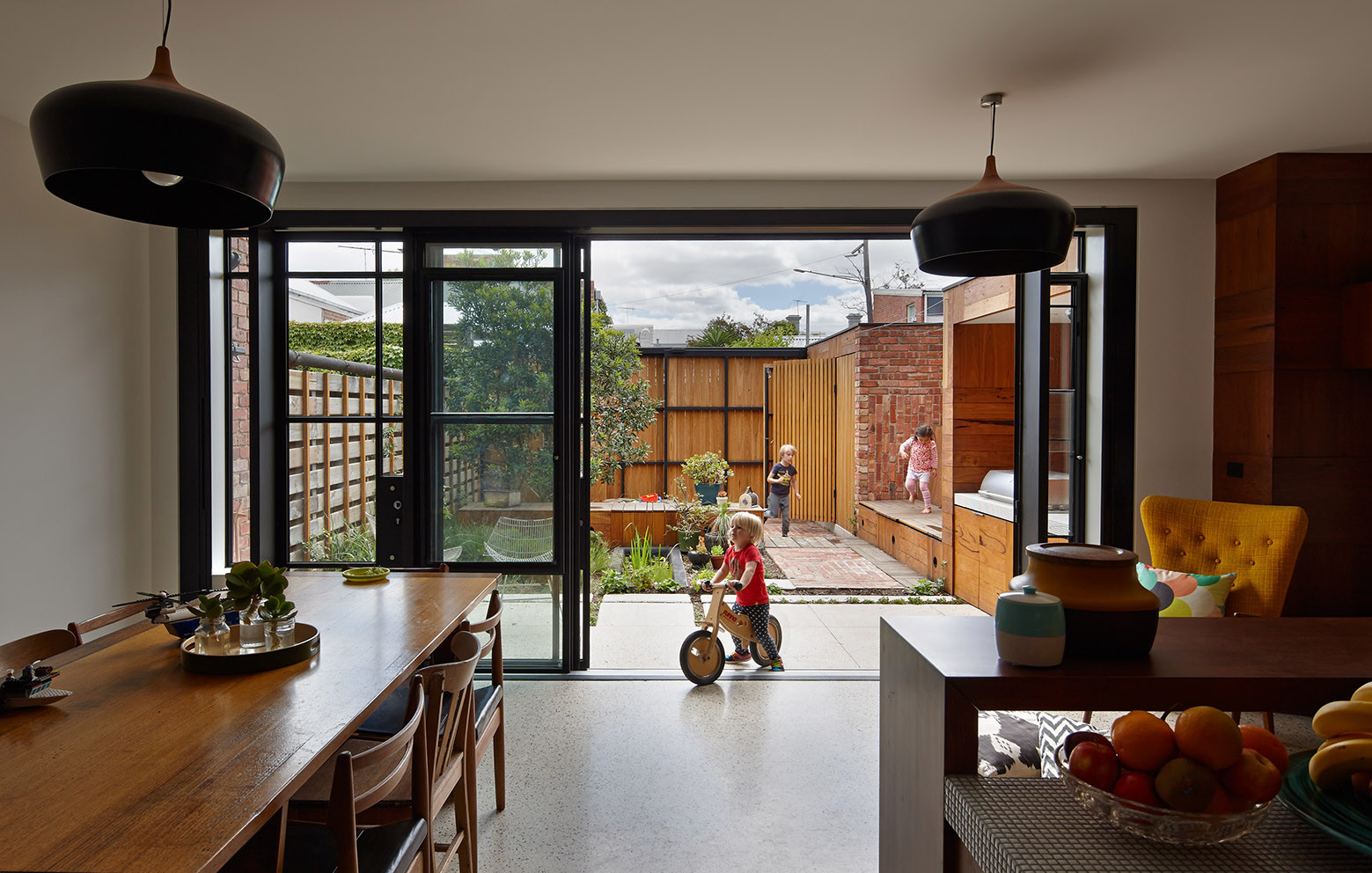
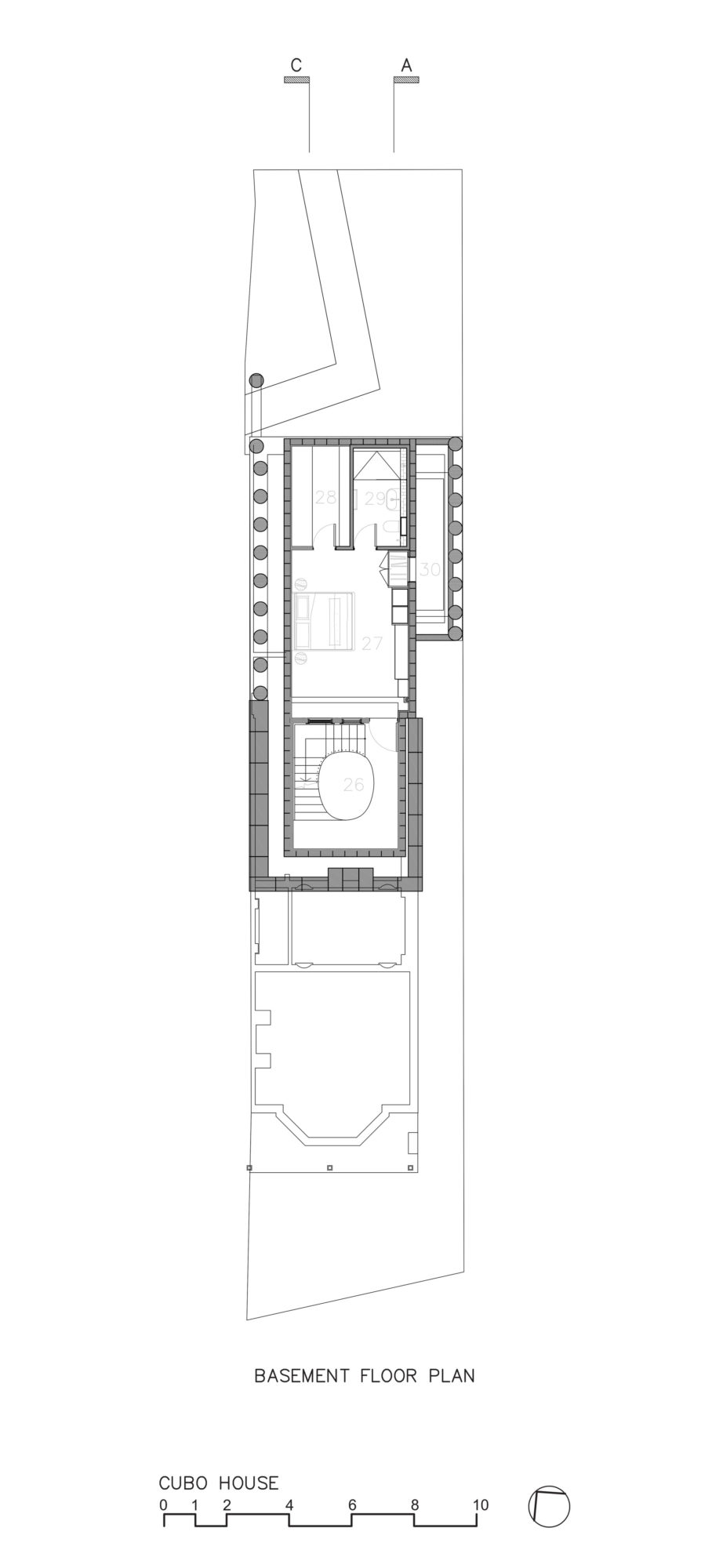
Originally, the house was entered via a dark, stuffy corridor located under a staircase. In its place, a new welcoming entry foyer now opens into a sunlight drenched multi-level void with natural ventilation. Centrally located in the re-planned house, a feature stair climbs & descends between three levels. Landings are large enough to work, play or just hang out on.
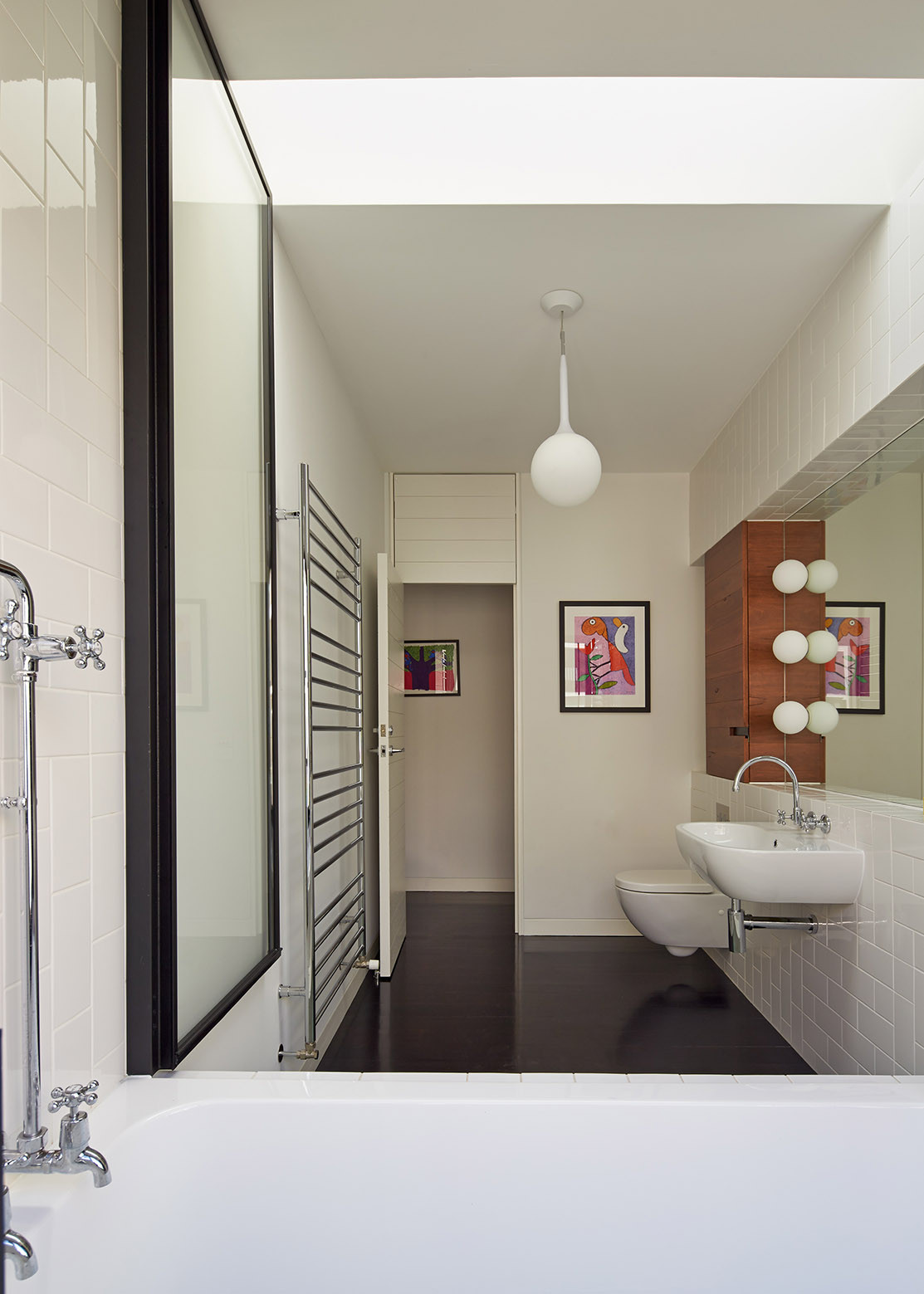
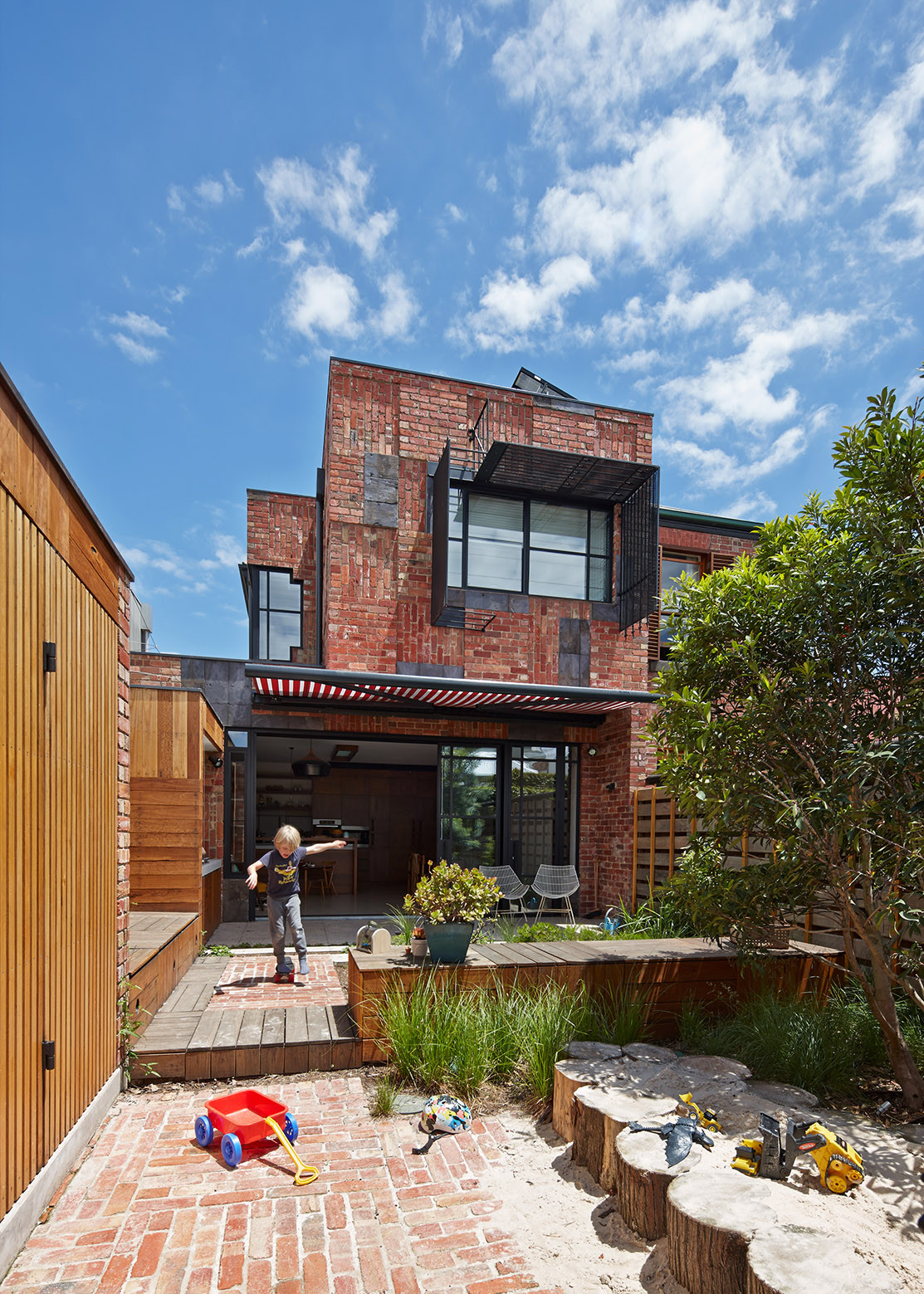
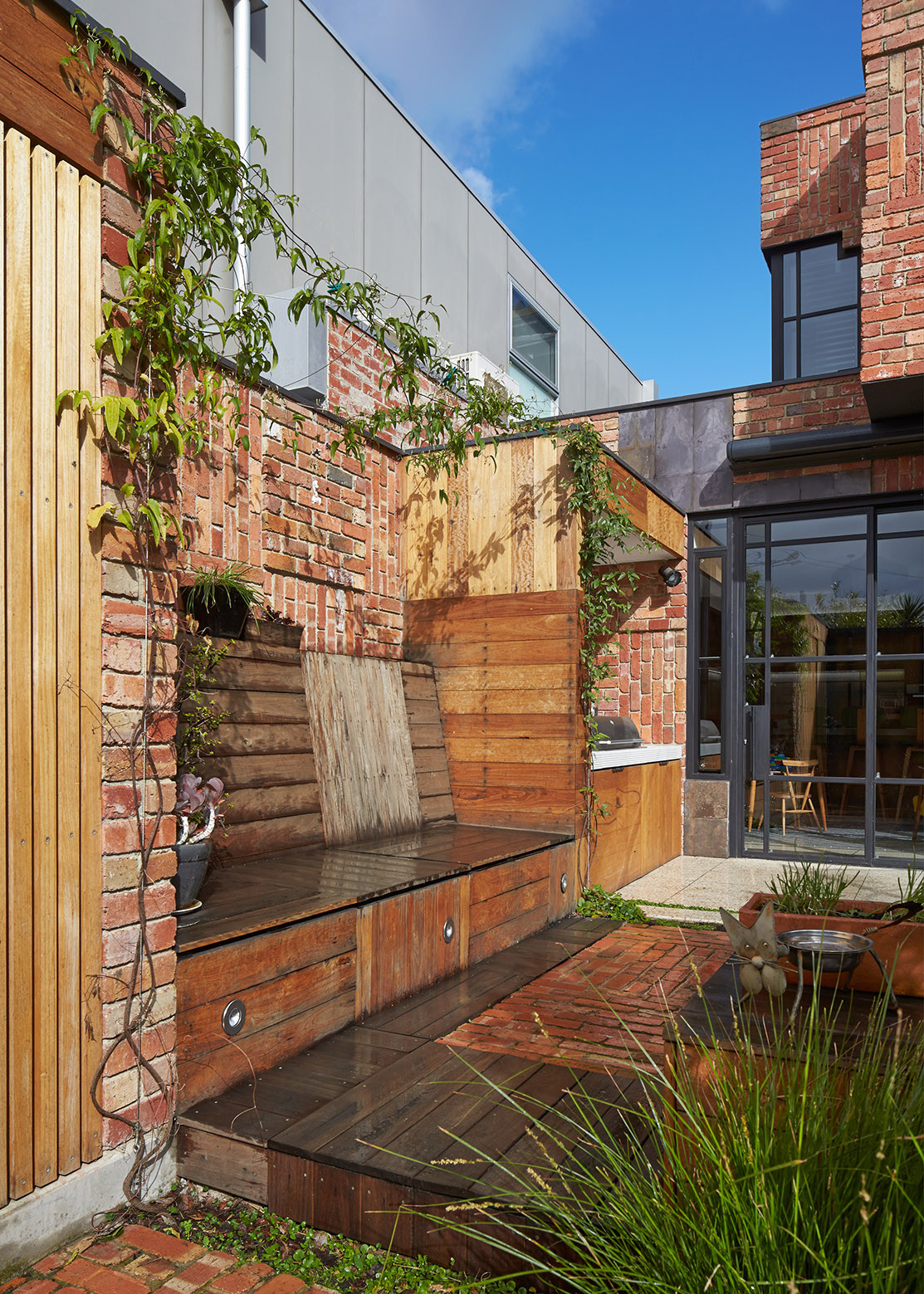
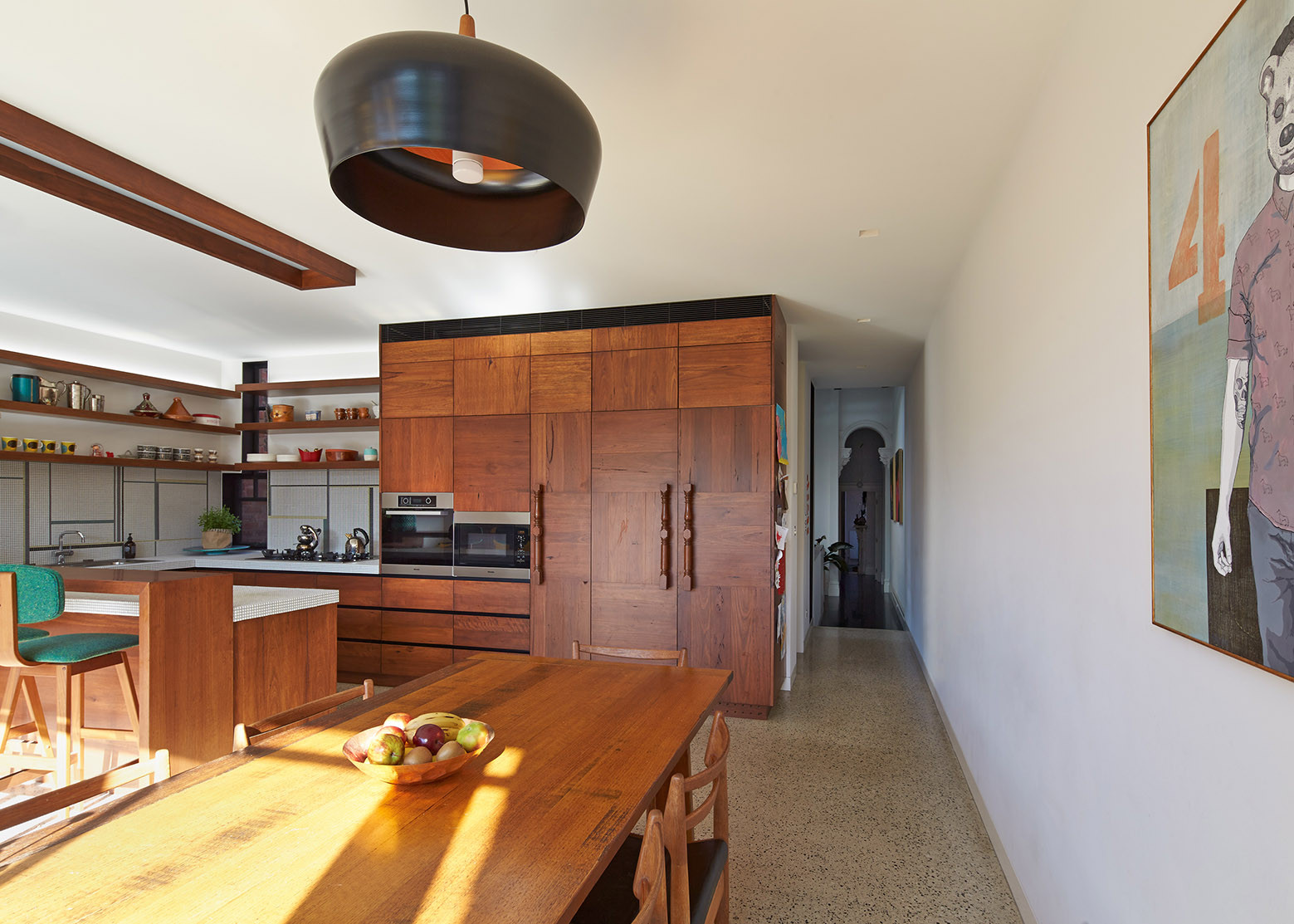
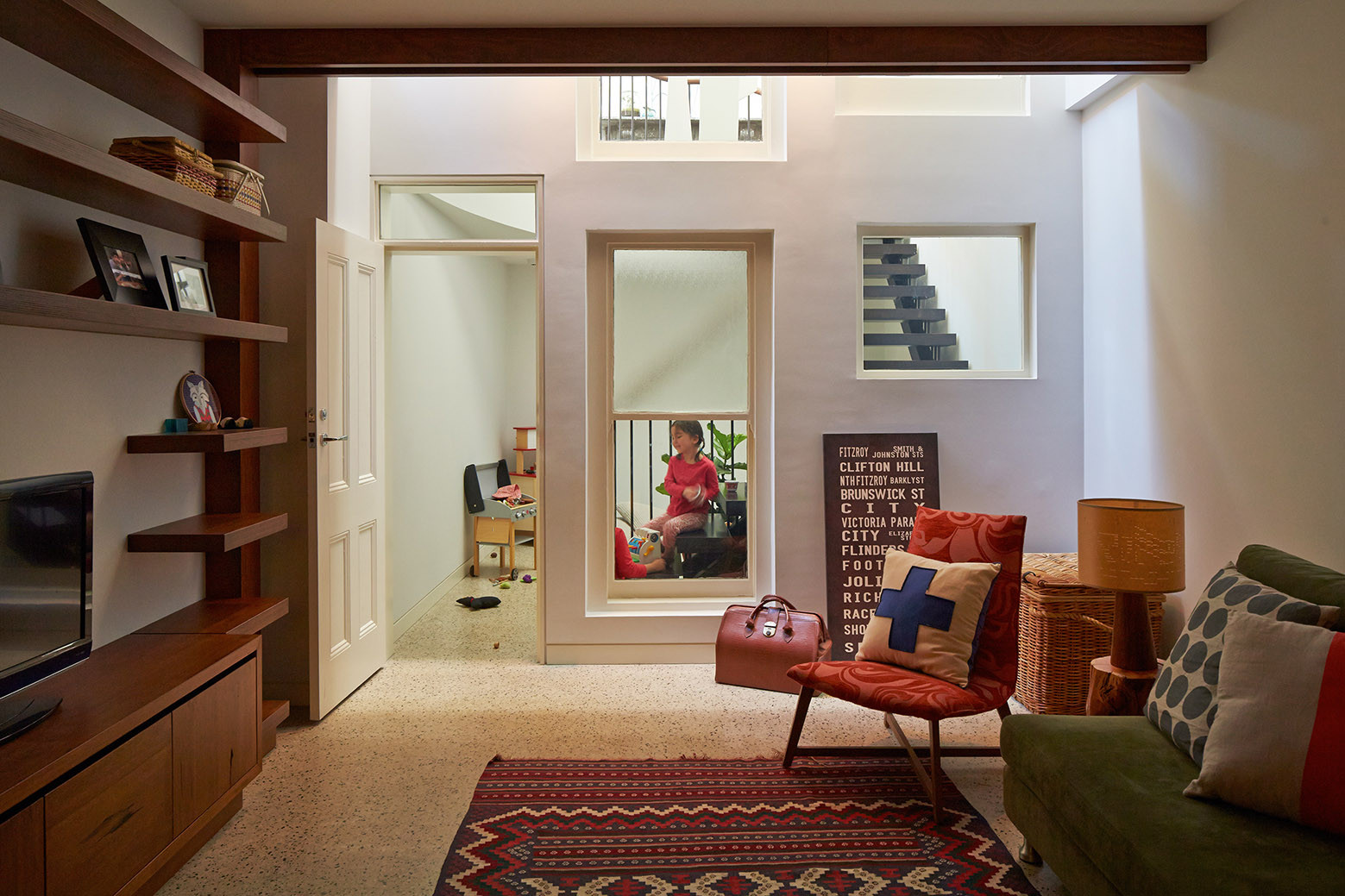
Material pieces salvaged from the demolition were stored on site for upcycling. From the original staircase, existing steps & balustrades became a chandelier suspended in the void. Existing windows became a feature wall & lightwell. Leftover stair balustrades screened a kid’s loft bed & became joinery handles in the kitchen. Metal security doors became external privacy & sun shading devices. Slate roof tiles became window sills & feature elements in the external facade. The existing rear & dysfunctional portions of the house were replaced by habitable environments opening onto the rear garden.
Embodied memory & energy lost from the demolished red brick rear facade was fragmented onto the new building envelope. Demolition drawings of the existing rear portion of the house were cut up into equal squares & re-arranged in a surrealist cubomania manner. Tinkering together with the owner produced a resolved floor & facade layout.
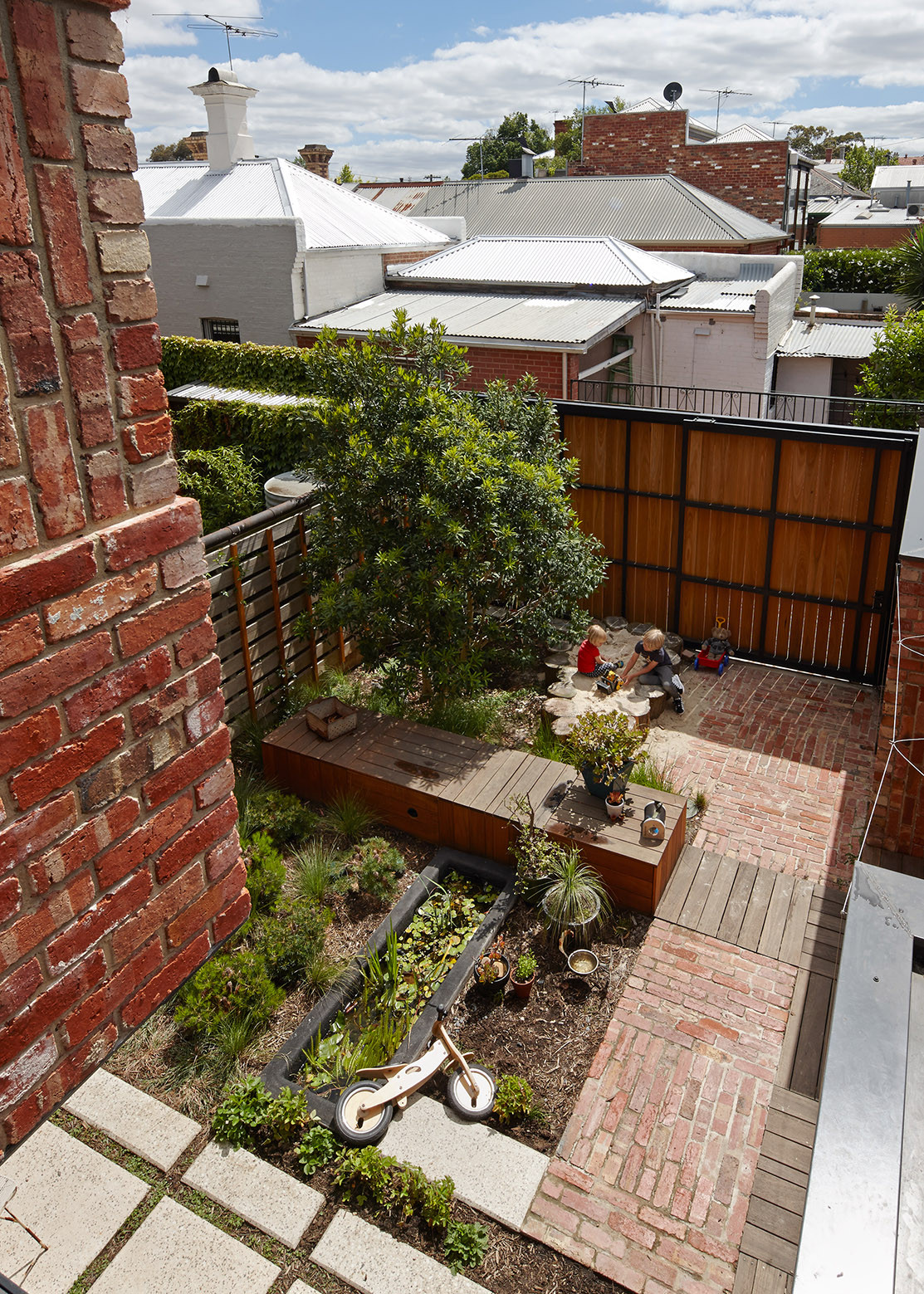
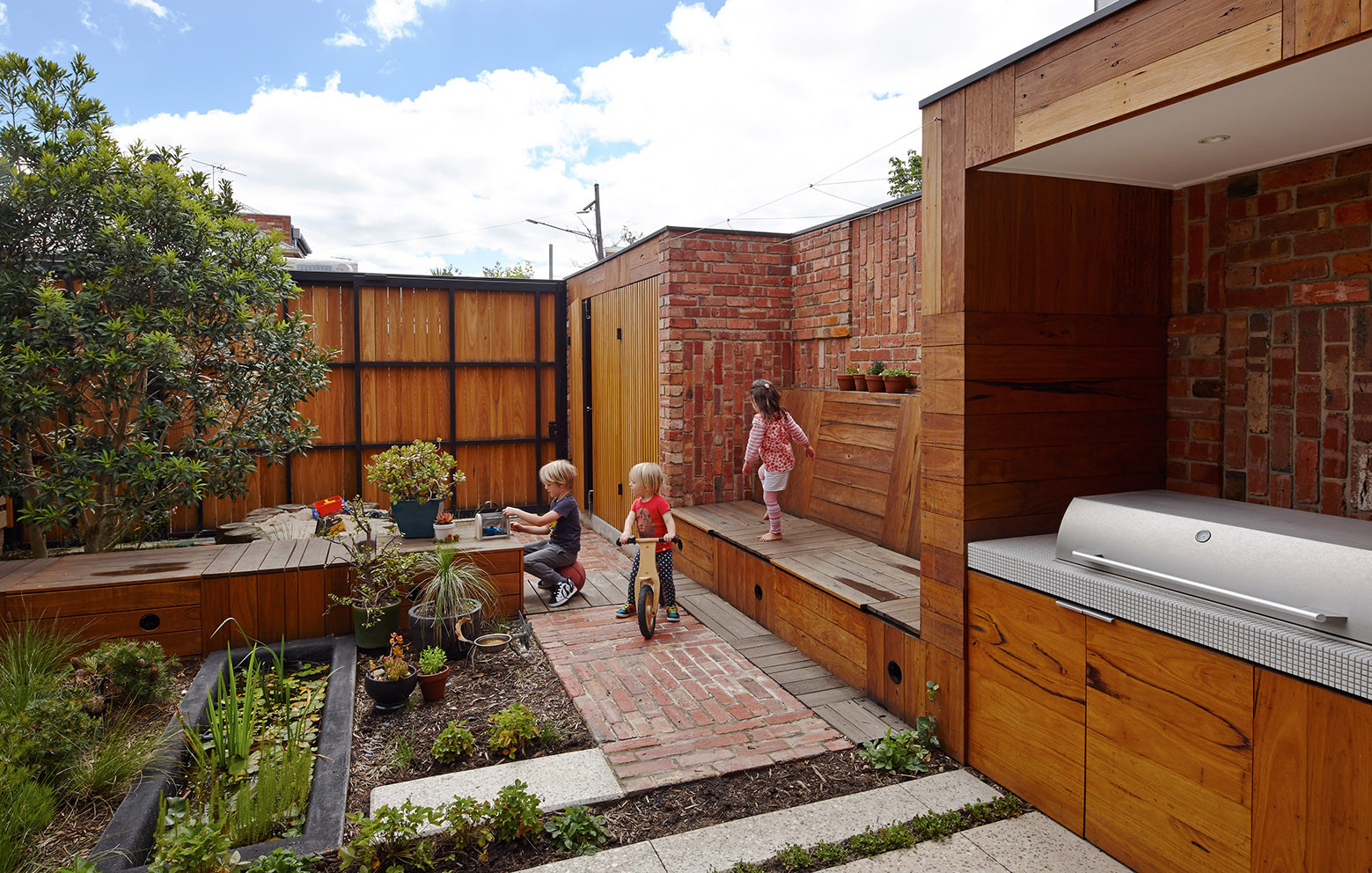
The language of the house additions extends into a small child friendly garden filled with productive pockets. Photovoltaic cells, solar hot water & water collection tanks are hidden from view. Whereas on display are the upcycled memories from the old house, contextualised by efficient planning & infused with natural air & sunlight.
Architects: PHOOEY Architects
Location: Melbourne VIC, Australia
Design Team: Emma Young, Peter Ho , Adam Gordon, Jessie Cook, Rob Chittleborough, Helen Duong, Anne-Claire Deville & Lucinda Arundel.
Area: 410.0 sqm
Project Year: 2013
Photographs: Peter Bennetts Photographer
Structural Engineer: Perrett Simpson Stantin
Landscape Architect: Simon Ellis
Builder: Conterno Group

























More Similar Articles Like This
Spectacular Luxury House in Sarasota, Florida by DSDG Inc. Architects
Pure Perfection: Discover the Top White Paint Colors for a Flawless Décor
Santa Barbara Style Home in Paradise Valley, Phoenix
Different Types Of Foundations For Summer Houses and Garden Buildings
These Top Tips Will Help You to Turn Your Garden into the Ultimate Glamping Site!
How Seattle Lawn Care Service Deals With Overgrown Lawns
Exploring the New World of Luxury Hoteling
10 Different Types of Blue Paint Colors